

Brief

한눈에 보기
- Serving surging data center power consumption could require more than $2 trillion in new energy generation resources worldwide, according to Bain analysis.
- US energy demand could outstrip supply within the next few years; meeting demand would require utilities to boost annual generation by up to 26% by 2028.
- Big investments in data center projects come with risks, but there’s also risk in missing out on the growth opportunity.
- Leading utilities are developing feasible resource plans that protect existing customers while working to make their organizations nimbler and more collaborative.
Facing potentially overwhelming demand from data centers, US utilities are grappling with a challenge few executives anticipated: After years of navigating flat or shrinking demand, many organizations have forgotten what it takes to grow. What’s more, they’re finding that capitalizing on this new opportunity will require a rapid, unprecedented transformation of their operating and business models.
For nearly two decades, efficiency and operational nimbleness were paramount while US electricity demand plateaued as a result of advances in energy efficiency and distributed generation offsetting economic growth. But the era of stagnant demand is over. The late 2022 breakthrough in generative AI and the ensuing data center boom blindsided utilities just as demand was also rising because of repatriated manufacturing, industrial policy, and vehicle electrification.
Now, US utilities are bracing for demand to outstrip supply during the next few years, with data centers accounting for the bulk of the increase (see Figures 1 and 2). Supply, both in generation and transmission, will take years to catch up under all but the most conservative scenarios. By 2028, utilities would need to increase annual energy generation by between 7% and 26% above the 2023 total to meet projected demand. That’s far beyond the largest five-year generation boost of about 5% that US utilities achieved from 2005 through 2023.
Figure 1
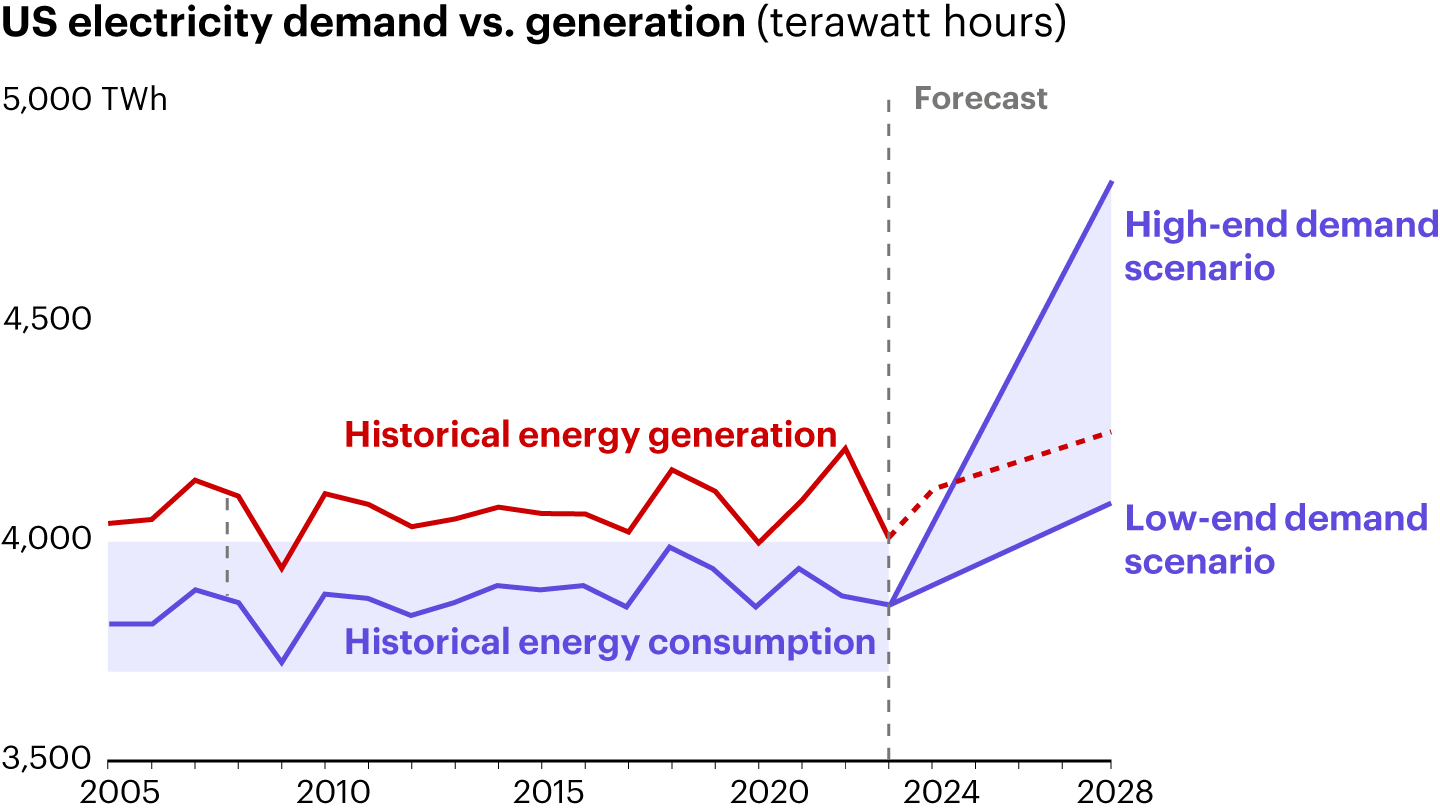

참고: Demand forecast is an aggregate of multiple industry forecasts; historical numbers and generation forecast based on EIA data; historical gap between energy generation and consumption necessary to ensure sufficient load that accounts for some energy loss in transmission
Sources: EIA 2023–2025 Short-Term Energy Outlook (May 2024); EIA 2025–2028 Energy Outlook (March 2023); ISO reports (H2 2023 – H1 2024); FERC; Grid Strategies; Goldman Sachs and Bank of America analyst forecasts (April 2024); Bain analysis
Figure 2
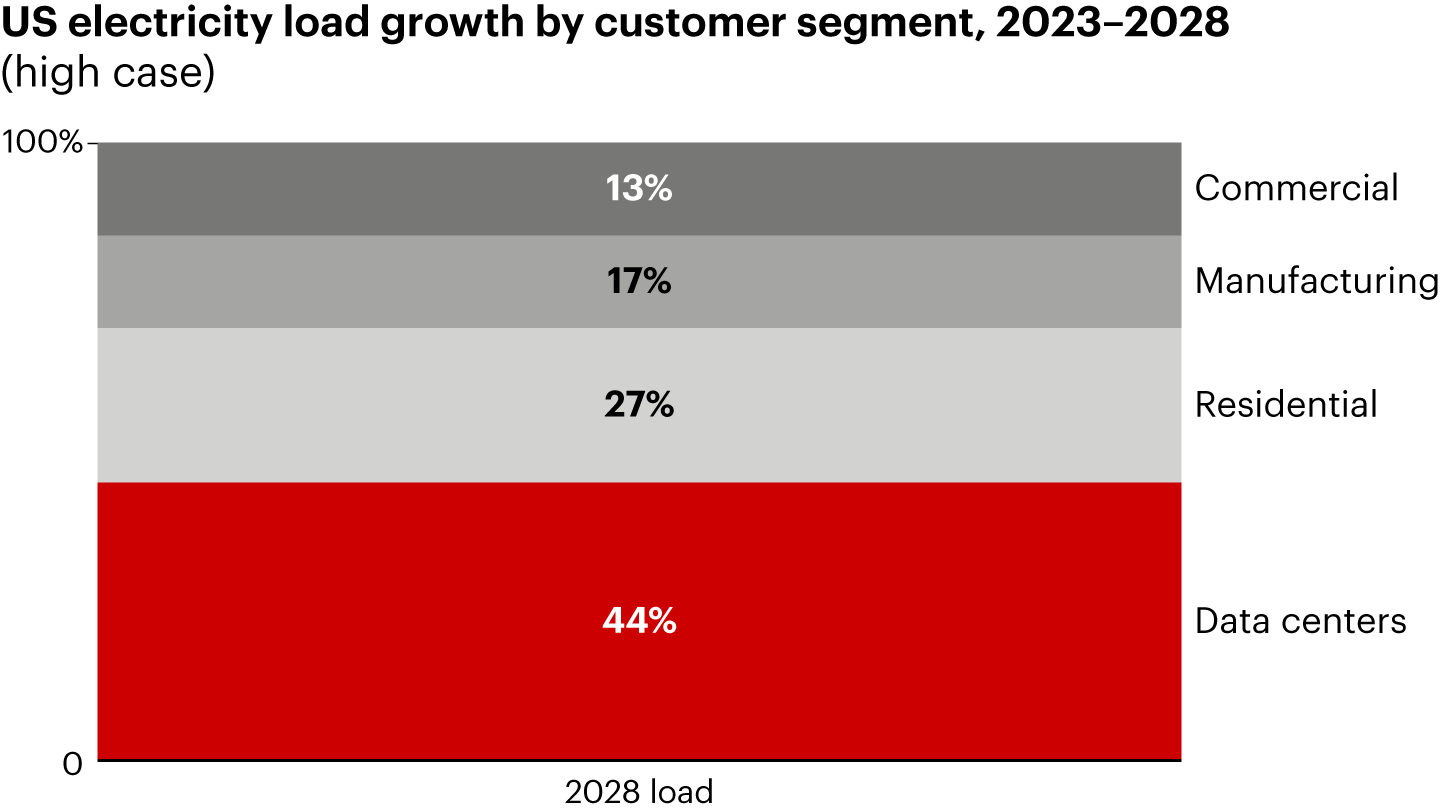

참고: Values are rounded; commercial excludes data centers; residential includes electric vehicles
Sources: Bank of America and Goldman Sachs analyst forecasts (April 2024); EIA Short-Term Energy Outlook (May 2024); EIA 2023 Outlook; IDC Datacenter Deployment and Spend Forecast (H2 2023); Bain analysisUtilities worldwide face the same pressing issue. Data centers’ annual global energy consumption could more than double by 2027 from 2023 levels, growing at a compound annual rate of 10% to 24% and potentially surpassing 1 million gigawatt hours in 2027, according to the latest forecasts as of this writing (though forecasts vary widely and are constantly being revised upward). These facilities need eye-popping amounts of power. Serving a 1-gigawatt data center requires the capacity of about four natural gas plants or around half of a large nuclear plant.
All told, meeting global data center demand could cost more than $2 trillion in new energy generation resources, according to Bain estimates.
In the US alone, adequately funding the capital investments to serve data center growth over the next decade would require utilities to generate 10% to 19% in additional revenue each year than previously forecast (see Figure 3). That could incrementally increase customer bills by 1% annually through 2032, according to our analysis.
Figure 3
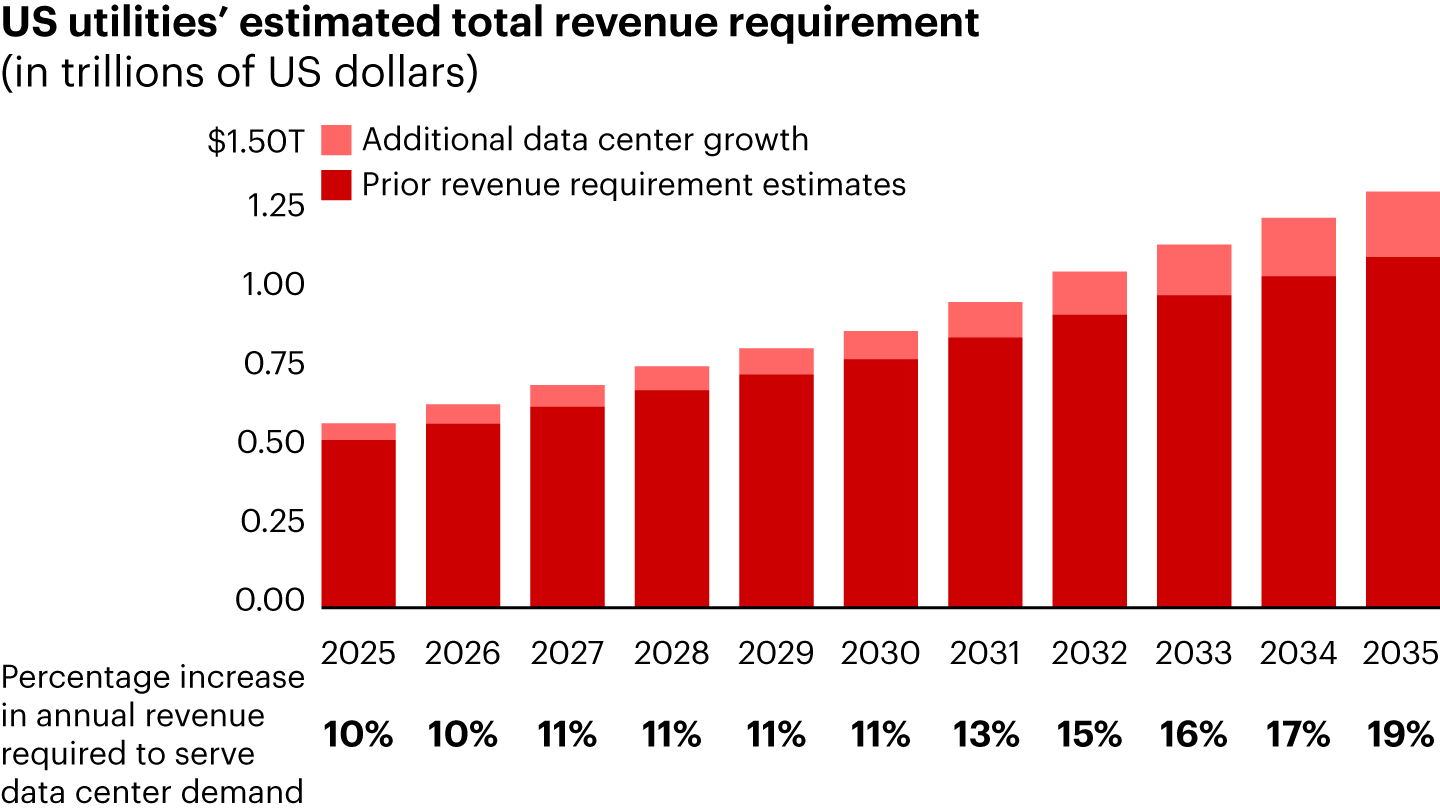

참고: Only includes fuel expense at regulated utilities, not at independent power producers; assumes inflation of about 3% and a 20-year depreciation schedule
Sources: Princeton University Net-Zero America study; S&P SNL Energy; S&P Capital IQ; US Bureau of Labor Statistics Consumer Price Index; EIA; Bain analysisGlobal challenge, global opportunity
We expect US utilities to be disproportionately affected because most of the biggest data center investors are based in the US, and North America is expected to add significant new data center capacity. This is a global competition, however. Utilities across Canada, Ireland, Germany, the United Arab Emirates, India, and beyond are weighing the same opportunities, risks, and strategic decisions. Their choices—along with those of governments and regulators—will influence where data centers ultimately get built, with enormous implications for tech and energy ecosystems.
Utility executives face a high-wire balancing act. Data center demand is the most significant catalyst of load growth in decades, and harnessing it could fund energy transition investments and potentially reduce residential rates. At the same time, how can utilities ensure reliability, protect affordability, finance the required capital, meet sustainability commitments, and move at the necessary pace?
Executives recognize that there are trade-offs, and the opportunity cost and risks of massive investments in data center projects may outweigh the benefits for some utilities. Yet, missing out on the growth opportunity is also a big risk. Speed to market is vital for data center providers. They have options and will move on to other locations or behind-the-meter solutions (such as on-site renewable energy and energy storage) if a utility moves too slowly in delivering generation or transmission and distribution (T&D) connections.
This confluence demands that utilities revamp their business models to better align incentives for themselves and their customers and to support a rapid scale-up of energy resources. The good news for utilities is that many data center customers have substantial financial resources and are willing to collaborate to find creative solutions such as innovative rate structures, long-term contracts, and joint ventures.
Utilities must also modernize their operating model to accelerate resource planning and construction of new or upgraded power generation, transmission, and distribution lines. This is a tall order in this highly regulated industry, requiring utilities to make difficult strategic choices amid greater uncertainty than ever.
Leading US utilities are focused on determining what level of demand they can reasonably serve, protecting electricity reliability and affordability for existing customers, and building more robust commercial capabilities to engage effectively with data center customers. Crucially, they recognize they can’t do this alone. Everyone in the power ecosystem—developers; independent power producers; T&D companies; engineering, procurement, and construction firms; infrastructure investors; and equipment manufacturers—has a role in making the most of this opportunity.
Five steps to harness the demand boom
Emerging leaders are concentrating on five critical steps.
Step No. 1. Rationalizing the customer pipeline based on who’s most serious. In this new landscape where some of their largest potential customers are shopping around, utilities must discern serious buyers from those merely hedging bets. Emerging leaders are engaging in deep conversations with data center providers to assess project readiness and prioritize customers with firm plans and strong commitment. (For instance, have they scoped out land and developed a schematic for the new facility? Are they willing to commit to minimum demand charges and long-term contracts?) Utilities can’t afford the financial strain of a massive capital investment that goes mostly unused, but they must also recognize that insufficient supply will force potential customers to look elsewhere.
Step No. 2. Developing a feasible resource plan with scenarios that meet stakeholders’ goals. Utilities have decades of expertise in resource planning, but the scale of demand and data centers’ willingness to shop around necessitates rapid modeling of multiple resource scenarios, focusing on execution over the next 2 to 5 years in addition to the historical 5- to 20-year view. Emerging leaders are assessing the necessary energy generation and transmission infrastructure for each scenario, ensuring that they meet the needs of customers, regulators, and the utility while also staying within the utility’s financial and operational constraints.
After years of flat demand, one utility quickly adapted to growing interest from technology hyperscalers, data center colocators, and power infrastructure developers by refining a 10-year data center business forecast. It started with rigorous diligence discussions with each prospective customer, clarifying plans, load requirements, and commitment levels (including their willingness to participate in demand response programs and fund up-front capital).
Simultaneously, the utility modeled various demand levels to determine the necessary resource portfolios and associated costs. Each scenario forecasted supply in tranches, including the next 2 to 5 years (accounting for existing capacity in the system and easy-to-add resources) and 5-plus years (relying on generation and transmission additions with longer lead times). This revealed that over the next 10 years, some scenarios would require building more than twice the capacity the utility had added over the previous two decades. This assessment helped the utility determine the load demand it could serve and inform the capital investments required to meet data centers' rapid timelines.
Step No. 3. Getting creative on pricing and financing to protect the balance sheet and existing customers. Traditional rate structures, which spread costs evenly across customer groups, are inadequate for the vast energy demands of data centers. Some utilities are developing new rate designs that ensure data centers bear the full incremental costs of their energy usage, including long-term contracts with minimum charges. These deals help protect other customer groups’ rates and ensure that the utility can recoup its investment in case data center energy consumption fluctuates. While such practices aren’t entirely new, the scale of the required investments has led to stricter contractual terms.
Furthermore, utilities are exploring partnerships and contracting models in which large customers can contribute directly to funding clean energy projects and grid infrastructure improvements, further aligning interests and helping utilities manage their balance sheets.
Step No. 4. Innovating for speed and efficiency. Delivering on data center customers’ rapid timelines requires utilities to innovate and work differently. It will be imperative to engage stakeholders earlier in the process of building new generation, transmission, and distribution infrastructure and to leverage newer technologies (e.g., advanced conductors).
Capitalizing on the opportunity also demands unprecedented coordination, speed, and expertise across all utility functions. Resource planning and rate design teams will need to shrink their typical timelines from years to months. Commercial teams may need to revamp their processes and upskill employees to manage more complex negotiations with sophisticated data center operators. Leading utilities are replacing some proven (but at times, slow) project management methods with Agile approaches that synchronize efforts, expedite decision making, and allow teams to complete steps in parallel.
One utility created a program management team to coordinate data center business activities across its customer, generation, regulatory, and resource planning functions. This small team developed and advanced creative ideas to overhaul the utility’s traditional practices so that it could better serve the growing needs of data center customers. By coordinating activities and encouraging a change mindset, the utility helps ensure that it can respond to these customers swiftly and effectively.
Step No. 5. Working more closely with industry partners. It may feel uncomfortable and out of character for many utilities, but the reality is that they can’t handle the data center demand surge on their own. Effective utilities will form consortiums to leverage industry partners’ expertise and resources. For instance, working with developers who can bring projects online faster and at lower cost would allow utilities to meet ambitious timelines without overstretching their own capabilities. Leading these collaborative efforts can help utilities ensure that they not only meet the immediate demands of data centers but also build a resilient and scalable power ecosystem for the future.
Utilities face decisions about what they should and shouldn’t keep in-house. Allowing some customers to pursue behind-the-meter solutions may be prudent, but it requires careful structuring to protect system reliability and customer affordability. These dynamics are already playing out: See, for instance, Amazon Web Services’ $650 million acquisition announced this year of a nuclear-powered 960-megawatt data center campus from Talen Energy.
The Data Revolution
Power has underpinned past economic transformations and will serve as the foundation of this next era. The most successful utilities will establish a long-term strategy that strikes the right balance for their organizations between pursuing the data center opportunity and maintaining a reliable, safe, affordable, and sustainable energy grid.
They also won’t fear reimagining what a utility company could be. Will they become primarily asset managers or even be reborn as technology companies? These possibilities might sound extreme today, but the emerging leaders are looking toward the future with open eyes, open minds, and a willingness to challenge existing paradigms and transform to seize the opportunity.
The authors wish to thank Paul Bockwoldt for his contributions to this article.
First published in 10월 2024