
Skip to Content
  • 오피스

    오피스

    미주
    • Atlanta
    • Austin
    • Bogota
    • Boston
    • Buenos Aires
    • Chicago
    • Dallas
    • Denver
    • Houston
    • Los Angeles
    • Mexico City
    • Minneapolis
    • Monterrey
    • Montreal
    • New York
    • Rio de Janeiro
    • San Francisco
    • Santiago
    • São Paulo
    • Seattle
    • Silicon Valley
    • Toronto
    • Washington, DC
    유럽, 중동, 아프리카
    • Amsterdam
    • Athens
    • Berlin
    • Brussels
    • Copenhagen
    • Doha
    • Dubai
    • Dusseldorf
    • Frankfurt
    • Helsinki
    • Istanbul
    • Johannesburg
    • Kyiv
    • Lisbon
    • London
    • Madrid
    • Milan
    • Munich
    • Oslo
    • Paris
    • Riyadh
    • Rome
    • Stockholm
    • Vienna
    • Warsaw
    • Zurich
    아시아, 호주
    • Bangkok
    • Beijing
    • Bengaluru
    • Brisbane
    • Ho Chi Minh City
    • Hong Kong
    • Jakarta
    • Kuala Lumpur
    • Manila
    • Melbourne
    • Mumbai
    • New Delhi
    • Perth
    • Seoul
    • Shanghai
    • Singapore
    • Sydney
    • Tokyo
    오피스 전체보기
  • 얼럼나이
  • 미디어 센터
  • 구독
  • 연락처
  • Korea | 한국어

    지역 및 언어 선택

    글로벌
    • Global (English)
    미주
    • Brazil (Português)
    • Argentina (Español)
    • Canada (Français)
    • Chile (Español)
    • Colombia (Español)
    유럽, 중동, 아프리카
    • France (Français)
    • DACH Region (Deutsch)
    • Italy (Italiano)
    • Spain (Español)
    • Greece (Elliniká)
    아시아, 호주
    • China (中文版)
    • Korea (한국어)
    • Japan (日本語)
  • Saved items (0)
    Saved items (0)

    You have no saved items.

    관심 있는 내용을 북마크하여 Red 폴더에 저장할 수 있습니다. Red 폴더 에서 저장된 내용을 읽거나 공유해보세요.

    Explore Bain Insights
  • 산업
    메인 메뉴

    산업

    • 우주항공, 방산 및 정부 서비스
    • 농업 관련 산업
    • 화학
    • 인프라, 건설 및 건축 자재
    • 소비재
    • 금융 서비스
    • 헬스케어
    • 산업용 기계 및 장비
    • 미디어 및 엔터테인먼트
    • 금속
    • 광업
    • 석유 및 가스
    • 제지 및 패키징 산업
    • 사모펀드
    • 사회 및 공공 부문
    • 유통
    • 기술
    • 텔레콤
    • 운송
    • 여행·여가
    • 유틸리티 및 재생가능 에너지
  • 컨설팅 서비스
    메인 메뉴

    컨설팅 서비스

    • Customer Experience
    • ESG
    • Innovation
    • M&A
    • 운영
    • 조직
    • 사모펀드
    • 고객 전략 및 마케팅
    • 전략
    • AI, 인사이트 및 솔루션
    • Technology
    • 변화 혁신
  • Digital
  • 인사이트
  • 베인 소개
    메인 메뉴

    베인 소개

    • 업무 소개
    • 베인의 신념
    • 구성원 및 리더십 소개
    • 고객 성과
    • 주요 수상 경력
    • 글로벌 파트너사
    Further: Our global responsibility
    • 다양성과 포용
    • 사회 공헌 활동
    • Sustainability
    • World Economic Forum
    Learn more about Further
  • Careers
    메인 메뉴

    Careers

    • Work with Us
      Careers
      Work with Us
      • Find Your Place
      • Our Work Areas
      • Integrated Teams
      • Students
      • Internships & Programs
      • Recruiting Events
    • Life at Bain
      Careers
      Life at Bain
      • Blog: Inside Bain
      • Career Stories
      • Our People
      • Where We Work
      • Supporting Your Growth
      • Affinity Groups
      • Benefits
    • Impact Stories
    • Hiring Process
      Careers
      Hiring Process
      • What to Expect
      • Interviewing
    FIND JOBS
  • 오피스
    메인 메뉴

    오피스

    • 미주
      오피스
      미주
      • Atlanta
      • Austin
      • Bogota
      • Boston
      • Buenos Aires
      • Chicago
      • Dallas
      • Denver
      • Houston
      • Los Angeles
      • Mexico City
      • Minneapolis
      • Monterrey
      • Montreal
      • New York
      • Rio de Janeiro
      • San Francisco
      • Santiago
      • São Paulo
      • Seattle
      • Silicon Valley
      • Toronto
      • Washington, DC
    • 유럽, 중동, 아프리카
      오피스
      유럽, 중동, 아프리카
      • Amsterdam
      • Athens
      • Berlin
      • Brussels
      • Copenhagen
      • Doha
      • Dubai
      • Dusseldorf
      • Frankfurt
      • Helsinki
      • Istanbul
      • Johannesburg
      • Kyiv
      • Lisbon
      • London
      • Madrid
      • Milan
      • Munich
      • Oslo
      • Paris
      • Riyadh
      • Rome
      • Stockholm
      • Vienna
      • Warsaw
      • Zurich
    • 아시아, 호주
      오피스
      아시아, 호주
      • Bangkok
      • Beijing
      • Bengaluru
      • Brisbane
      • Ho Chi Minh City
      • Hong Kong
      • Jakarta
      • Kuala Lumpur
      • Manila
      • Melbourne
      • Mumbai
      • New Delhi
      • Perth
      • Seoul
      • Shanghai
      • Singapore
      • Sydney
      • Tokyo
    오피스 전체보기
  • 얼럼나이
  • 미디어 센터
  • 구독
  • 연락처
  • Korea | 한국어
    메인 메뉴

    지역 및 언어 선택

    • 글로벌
      지역 및 언어 선택
      글로벌
      • Global (English)
    • 미주
      지역 및 언어 선택
      미주
      • Brazil (Português)
      • Argentina (Español)
      • Canada (Français)
      • Chile (Español)
      • Colombia (Español)
    • 유럽, 중동, 아프리카
      지역 및 언어 선택
      유럽, 중동, 아프리카
      • France (Français)
      • DACH Region (Deutsch)
      • Italy (Italiano)
      • Spain (Español)
      • Greece (Elliniká)
    • 아시아, 호주
      지역 및 언어 선택
      아시아, 호주
      • China (中文版)
      • Korea (한국어)
      • Japan (日本語)
  • Saved items  (0)
    메인 메뉴
    Saved items (0)

    You have no saved items.

    관심 있는 내용을 북마크하여 Red 폴더에 저장할 수 있습니다. Red 폴더 에서 저장된 내용을 읽거나 공유해보세요.

    Explore Bain Insights
  • 산업
    • 산업

      • 우주항공, 방산 및 정부 서비스
      • 농업 관련 산업
      • 화학
      • 인프라, 건설 및 건축 자재
      • 소비재
      • 금융 서비스
      • 헬스케어
      • 산업용 기계 및 장비
      • 미디어 및 엔터테인먼트
      • 금속
      • 광업
      • 석유 및 가스
      • 제지 및 패키징 산업
      • 사모펀드
      • 사회 및 공공 부문
      • 유통
      • 기술
      • 텔레콤
      • 운송
      • 여행·여가
      • 유틸리티 및 재생가능 에너지
  • 컨설팅 서비스
    • 컨설팅 서비스

      • Customer Experience
      • ESG
      • Innovation
      • M&A
      • 운영
      • 조직
      • 사모펀드
      • 고객 전략 및 마케팅
      • 전략
      • AI, 인사이트 및 솔루션
      • Technology
      • 변화 혁신
  • Digital
  • 인사이트
  • 베인 소개
    • 베인 소개

      • 업무 소개
      • 베인의 신념
      • 구성원 및 리더십 소개
      • 고객 성과
      • 주요 수상 경력
      • 글로벌 파트너사
      Further: Our global responsibility
      • 다양성과 포용
      • 사회 공헌 활동
      • Sustainability
      • World Economic Forum
      Learn more about Further
  • Careers
    최근 검색어
      최근 방문 페이지

      Content added to saved items

      Saved items (0)

      Removed from saved items

      Saved items (0)

      Technology Report

      Why Software Companies’ Customer Success Is Failing

      Why Software Companies’ Customer Success Is Failing

      Spending on customer success is up, but customer retention is down. Post-sales teams must evolve.

      글 Matt Eldridge, Greg Fiore, Simon Heap, and Kenzie Haygood

      • 읽기 소요시간
      }

      Report

      Why Software Companies’ Customer Success Is Failing
      en
      한눈에 보기
      • Despite increased customer success investments, net revenue retention rates have declined for 75% of software firms in a recent Bain survey.
      • In addition, nearly two-thirds of software customers feel their post-sales needs are only being moderately addressed or worse.
      • There’s a mismatch between how vendors provide support and what customers value, particularly in technical implementation assistance.
      • Leading firms are developing a clear product and customer journey blueprint, better defining and coordinating post-sales roles, and investing in AI-enabled self-service tools.

      This article is part of Bain's 2024 Technology Report.

      Explore the report

      Software companies are grappling with a surprising disconnect: Despite significant investments in post-sales personnel since the pandemic, customer retention has suffered. Net revenue retention (NRR) rates, a measure of how well companies retain and expand revenue from existing customers over a certain period, decreased for 75% of software companies in a recent Bain survey, even as nearly 60% increased customer success spending (see Figure 1). Frustrated executives are questioning why these investments haven’t paid off and, worse yet, may have exacerbated the problem.

      Figure 1
      Net revenue retention rates have decreased for many software companies despite spending more on customer success

      It turns out a huge disconnect exists between how customers want to be served and what vendors think they need. Additionally, many vendors silo the customer success function and miss the opportunity of a streamlined post-sales package with cohesion across tech support, customer success, and professional services.

      Effective post-sales activities help buyers implement software, increase adoption, adapt their use as needed, and achieve ROI, all of which are more important than ever with the acceleration of software purchases during the pandemic and the increasing complexity of software-as-a-service (SaaS) products. Slowing post-pandemic sales and a shift from subscription- to customer usage-based pricing have further raised the stakes for retaining customers and enticing them to spend more.

      Software vendors have largely relied on customer success teams to maximize product use. In addition to customer success practitioners’ increased spending, more software companies are creating a dedicated customer success team. The share of US enterprise software companies with a customer success team reached 60% this year, up from about 40% four years ago, according to Bain analysis of LinkedIn and other data.

      To deepen customer relationships, vendors have also emphasized more proactive, specialized customer success roles, including customer success managers, technical account managers, and success architects. Meanwhile, they’ve reduced spending on reactive tech support roles through automation, which generative AI could further accelerate. Consequently, customer success roles now constitute a larger portion of the post-sales workforce (see Figure 2).

      Figure 2
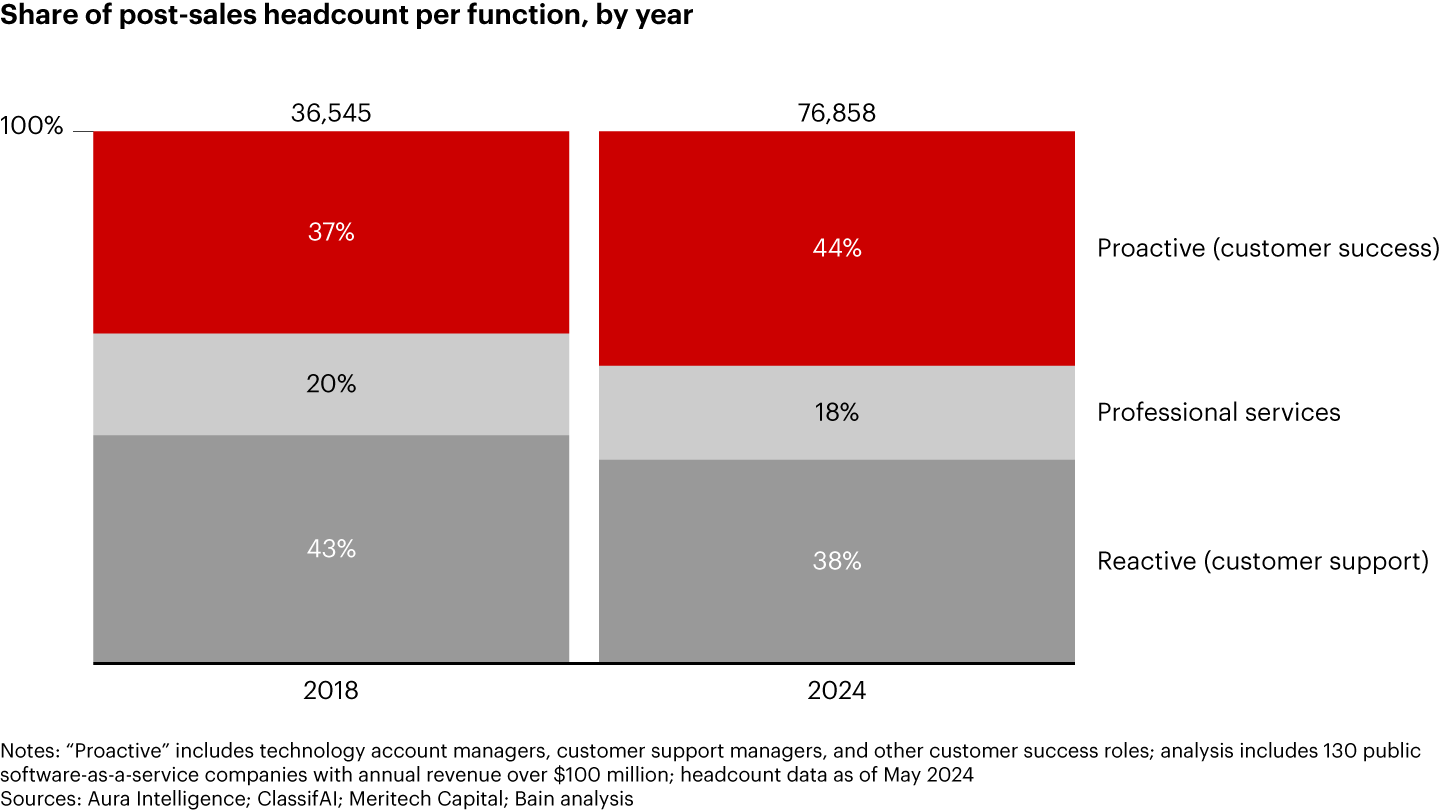
      Software vendors are emphasizing more proactive, specialized customer success roles

      However, these investments haven’t delivered the desired results. Software vendors’ deteriorating NRR rates align with our customer success survey data: nearly two-thirds of software customers feel their post-sales needs are only being moderately addressed or worse (see Figure 3).

      Figure 3
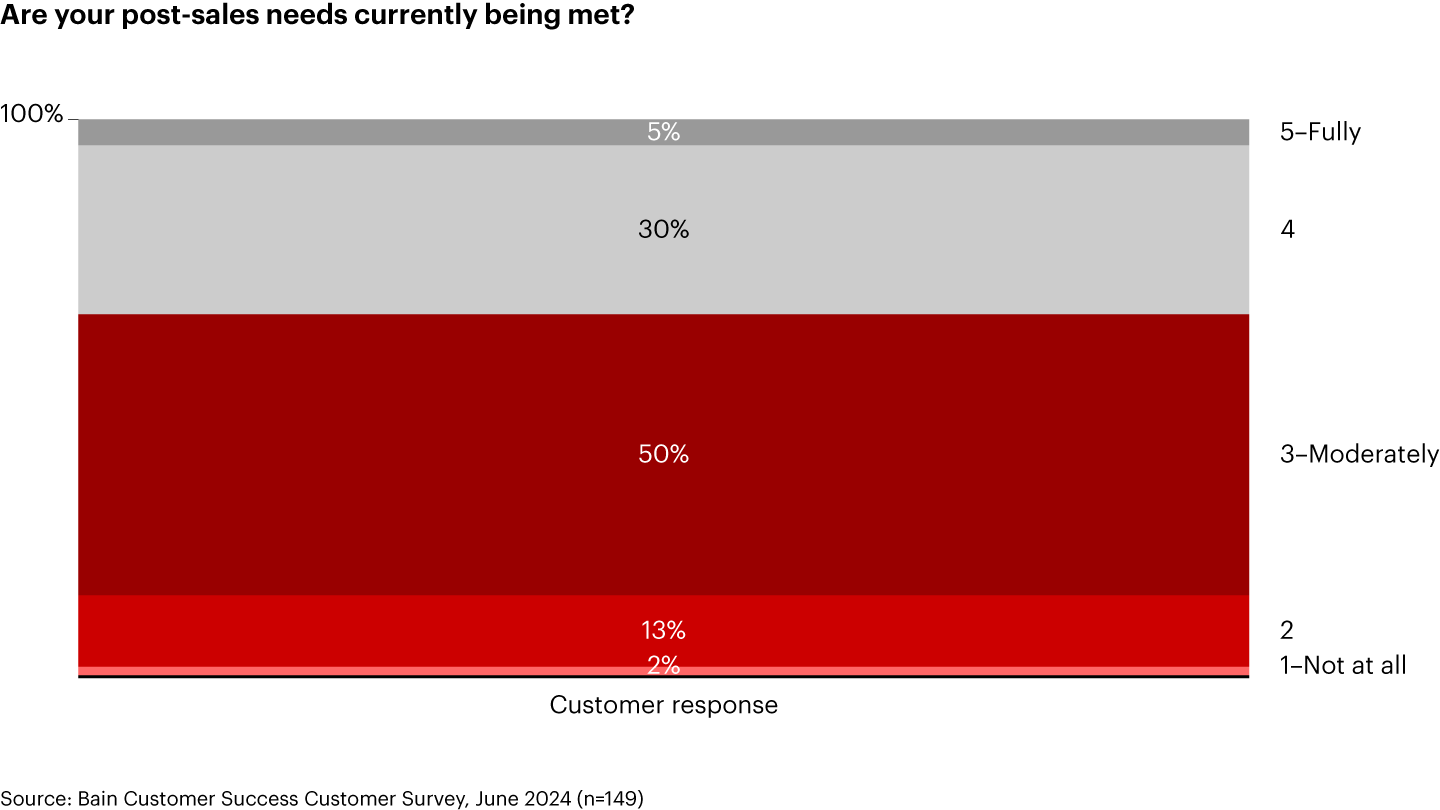
      About 65% of customers feel their post-sales needs are only being moderately addressed or worse

      Why? Our research found a mismatch between how vendors provide support and what customers value. In our recent survey, software buyers ranked assistance with technical implementation or deployment as their highest priority for customer success, while practitioners ranked it sixth (see Figure 4). Vendors often provide general assistance but have abdicated too much technical implementation to systems integration partners. Clearly, customers see a role for vendors to provide architectural support and technical implementation best practices, even if systems integrators continue to do the heavy lifting.

      Figure 4
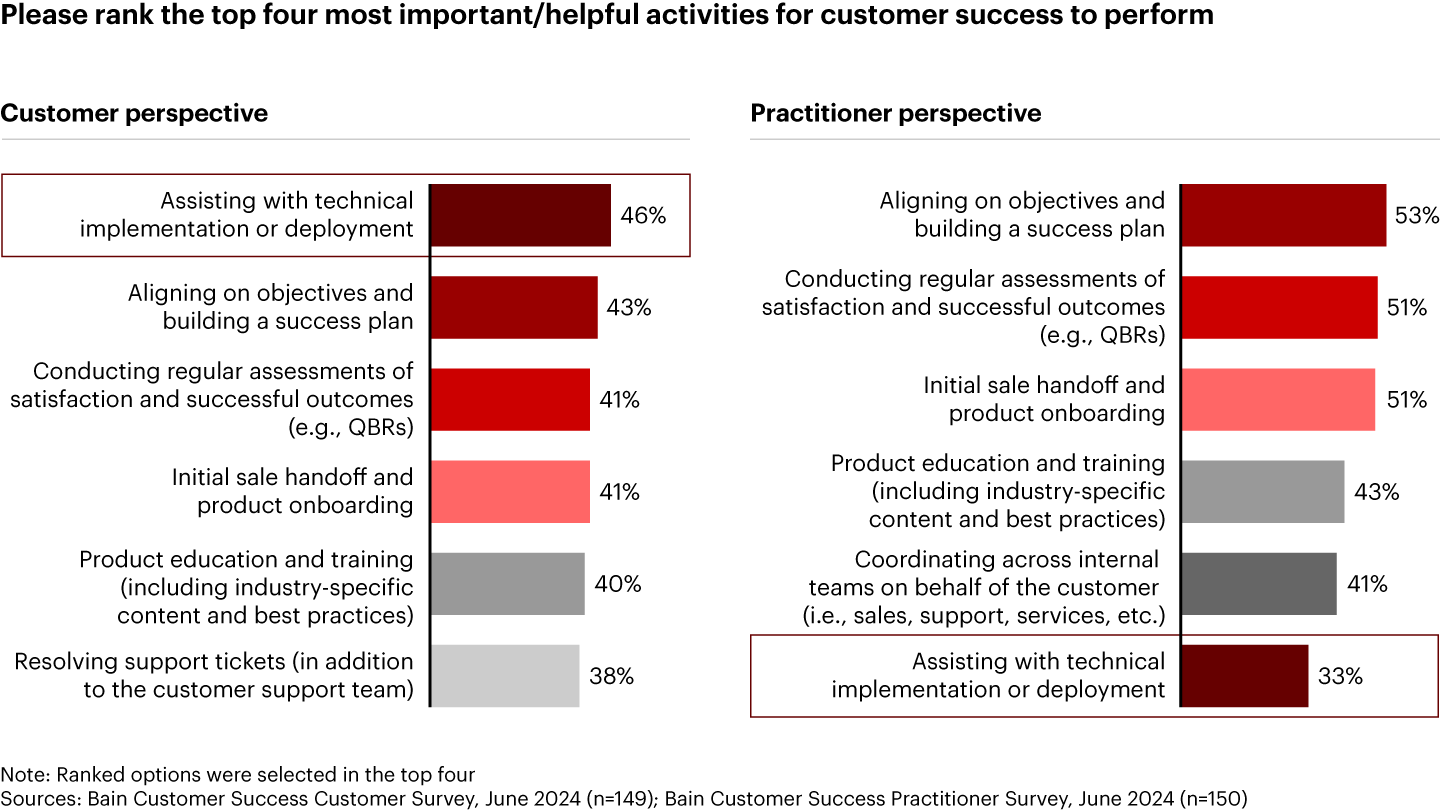
      Software buyers highly value assistance with technical implementation, but vendors see it as a lower priority in their customer success activities

      Another disconnect is that customers prefer a technical role as their primary contact for customer success, while vendors often assign a non-technical customer success manager instead, according to our survey.

      To be fair, customer success functions face intense pressure due to a broader push to reduce IT costs, increased scrutiny of internal budgets, and client procurement teams challenging add-on services such as paid, premium customer success offerings. These headwinds are compounding two long-standing challenges: It remains difficult to prove the return on customer success investments, and many of these teams are perceived as cost centers rather than revenue generators.

      That said, many vendors have hired excessively in customer success without validating their post-sales model, missing opportunities to deploy all post-sales functions more efficiently.

      What does good look like?

      Based on our work with software companies worldwide and analysis of companies with high NRR, we’ve found that the emerging leaders are focusing on the following key steps.

      1. Step into your customer’s shoes. Emerging leaders first map how customers interact with and derive value from the product, followed by mapping the broader customer journey from initial consideration through purchase, post-sales support, and renewal. It sounds like a given, but many companies’ product and engineering teams don’t articulate what the product’s value realization journey looks like or work to deeply understand customers’ needs, desired outcomes, and key touchpoints. This understanding will help post-sales teams not only focus on the moments that matter, but also identify where the product falls short. Leading companies don’t lose sight of the basic principle that product excellence is the true foundation of customer success.
      2. Redefine post-sales roles to better deliver on the customer success mandate. Blurring lines between post-sales functions has created confusion for customers and inefficiency for vendors. Leading companies are taking a blank-sheet approach: They clearly define all activities required for the customer journey, rationalizing roles from the customer’s perspective. Each role should have distinct responsibilities that collectively leave no gaps in customer success deliverables.

        Many leading companies are creating outcome-based success plans that ask customers to define what success looks like to them, which enables vendors to develop a catalog of post-sales service jobs that closely match customer needs. This improves efficiency while avoiding overly standardized activities that lose sight of the nuances of delivering value for individual customers with individual products.
      1. Coordinate the front lines. Reorganization alone won't solve customer success issues; companies must better coordinate frontline teams. A chief customer officer can help oversee coherence across the customer success, tech support, and professional services teams, but simply creating the role isn’t enough. The company must break down communication silos and design fluid handoffs between post-sales functions and partners that ensure a seamless customer experience.

        One key is to define the “swim lanes” within which each role supporting an account—including sales and post-sales—has a clear set of activities and interaction points with colleagues. This helps ensure clear accountability and a blueprint for collaboration. Leading firms have also prioritized effectively training, empowering, and managing customer success managers, recognizing their integral role in a successful customer engagement model.

        Because emerging leaders apply the right resource to the right activity at the right time, many have reduced spending while achieving better results. Unsurprisingly, our analysis found that companies with high NRR are much better than lower performers at cost-effectively deploying customer success resources.
      1. Don’t jump into generative AI applications before reassessing the underlying business process. Customer success teams that are extracting the most benefits from generative AI start by thoroughly evaluating existing business processes to identify pain points and transformational opportunities. With this foundation in place, they redesign key processes to take full advantage of generative AI and other advanced tools, ensuring that inefficiencies and existing problems aren’t automated (and thereby amplified). Leading companies are creating a comprehensive AI roadmap that strategically prioritizes use cases and quantifies the sources of productivity gains.
      2. Empower customers with digital self-service tools. Many customers prefer self-service options for training, onboarding, and support. Robust digital self-service tools can improve customer satisfaction and allow post-sales employees to spend the bulk of their time helping customers solve their greatest challenges. Generative AI can be transformational in this arena, but only if the company has a well-defined product and customer journey blueprint.

      The starting point

      Going forward, the most effective post-sales organizations will nimbly adapt to customer needs and market trends. To identify the right strategy, customer success practitioners can start by asking themselves the following questions: 

      • Which activities most affect customers’ return on software investments and subsequent purchase decisions, and how can we measure this?
      • Are we packaging monetized customer success services in a way that doesn't lose sight of the activities that spur ROI for customers?
      • Which activities are suitable for automation and digital self-service?
      • How can post-sales functions be effectively coordinated to ensure a seamless customer experience?

      Read the Next Chapter

      Updating Enterprise Technology to Scale to “AI Everywhere”

      Read our 2024 Technology Report

      Download the PDF Explore the report

      More from the report

      • Commercializing Innovation

      • Investing in a Shifting Market

      • Scope M&A

      • Sovereign AI

      • Top AI Functions

      • The AI Opportunity

      • Big and Small Computing

      • The AI Chip Shortage

      • The Software Cycle

      • AI in Tech Services

      • Deploying Generative AI

      • Software Development Efficiency

      • Customer Success

      • AI Everywhere

      저자
      • Headshot of Matt Eldridge
        Matt Eldridge
        파트너, New York
      • Headshot of Greg Fiore
        Greg Fiore
        파트너, San Francisco
      • Headshot of Simon Heap
        Simon Heap
        어드바이저 파트너, Silicon Valley
      • Headshot of Kenzie Haygood
        Kenzie Haygood
        파트너, San Francisco
      문의하기
      관련 산업
      • 기술
      • Software
      관련 컨설팅 서비스
      • Customer Experience
      Technology Report
      Five Functions Where AI Is Already Delivering

      Spurred on by early success, companies of all sizes are increasing their spending on generative AI.

      자세히 보기
      Technology Report
      Quantum Computing Moves from Theoretical to Inevitable

      Quantum will likely become part of a mosaic, working with classical computing to solve big problems.

      자세히 보기
      기술
      Software M&A

      The good news: Most deal best practices still apply to AI acquisitions.

      자세히 보기
      Customer Experience
      Weight-Loss Drug Users Spend Less on Groceries, Fast Food

      GLP-1 drugs result in notable drops in food spending. By 2030, as many as one in four Americans may have tried them.

      자세히 보기
      Technology Report
      Will AI Disrupt Tech’s Most Valuable Companies?

      Hyperscalers and other market leaders have adapted well to technology shifts, but generative AI poses new challenges.

      자세히 보기
      First published in 9월 2024
      태그
      • 기술
      • Customer Experience
      • Software
      • Technology Report

      프로젝트 사례

      Helping a Midsize ERP Player Compete against the Giants

      See more related case studies

      고객 전략 및 마케팅 Video: A Marketing Transformation Puts a Software Leader Back on Top

      See more related case studies

      성과 개선 Aggressively growing an IT service provider with a high-performance culture

      See more related case studies

      베인에 궁금하신 점이 있으신가요?

      베인은 주저 없이 변화를 마주할 줄 아는 용감한 리더들과 함께합니다. 그리고, 이들의 담대한 용기는 고객사의 성공으로 이어집니다.

      급변하는 비즈니스 환경에서 살아남기 위한 선도자의 시각. 월간 Bain Insights에서 글로벌 비즈니스의 핵심 이슈를 확인하십시오.

      *개인정보 정책을 읽었으며 그 내용에 동의합니다.

      Privacy Policy를 읽고 동의해주십시오.
      Bain & Company
      문의하기 환경정책 Accessibility 이용약관 개인정보 보호 쿠키 사용 정책 Sitemap Log In

      © 1996-2026 Bain & Company, Inc.

      문의하기

      무엇을 도와드릴까요?

      • 프로젝트 문의
      • 채용 정보
      • 언론
      • 제휴 문의
      • 연사 초청
      오피스 전체보기