

Retail Holiday Newsletter

한눈에 보기
- As retailers and brands prepare for the world’s largest annual sales event, they are building a new consumer base in China’s lower-tier cities while trying to earn a greater share of wallet among consumers in higher-tier cities.
- The Covid-19 pandemic has hit retail sales particularly hard, with foot traffic still 20% lower than last year’s level, suggesting an unclear road ahead for retailers’ Double 11 sales growth as they try to recover lost sales from the first half of 2020.
- Winning retailers will need to develop different strategies for shoppers in higher-tier and lower-tier cities while investing in critical omnichannel capabilities. They will rely on Double 11 consumer data and spending behavior to identify high-potential new products, trending brands and top categories.
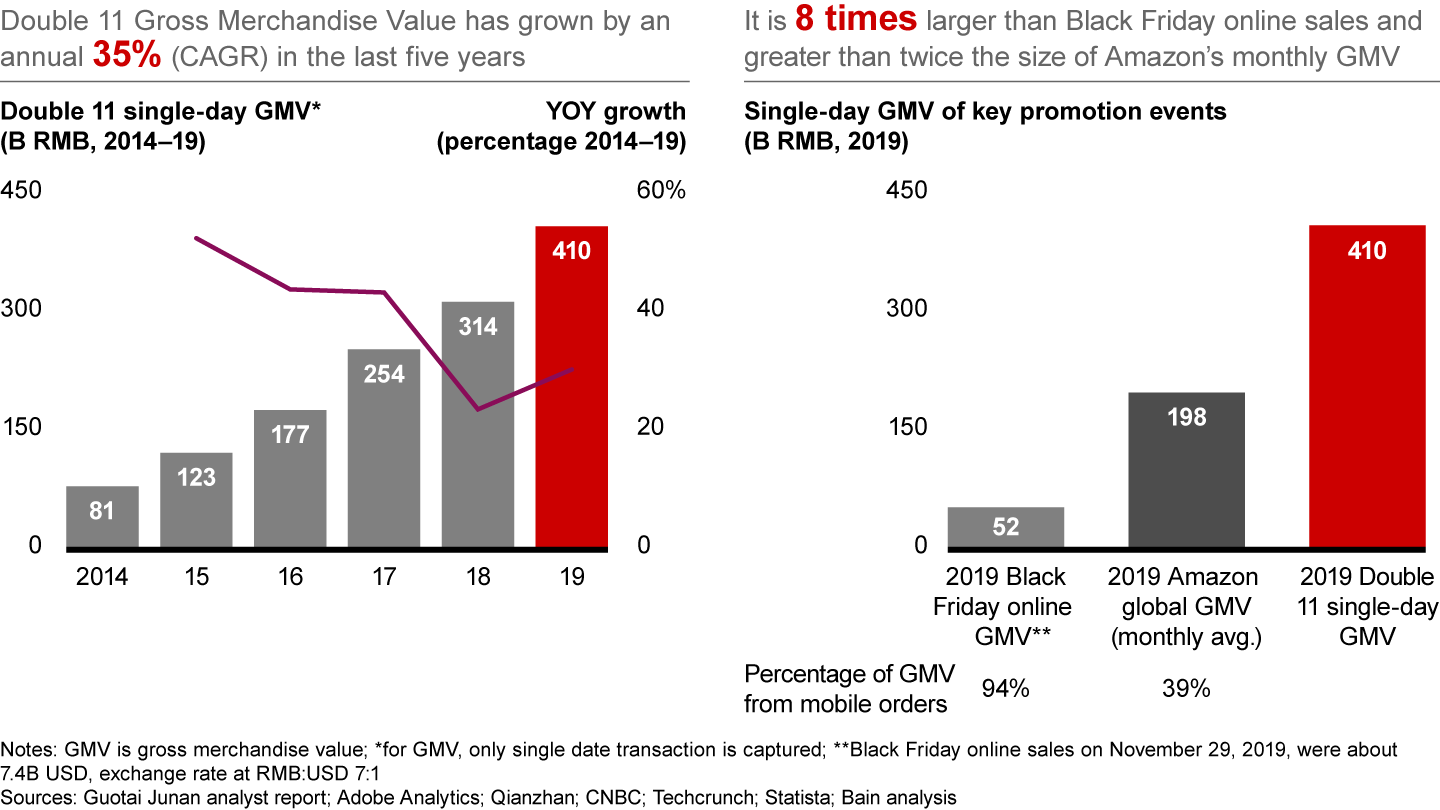
For sheer sales volume, nothing even comes close to China’s annual November 11 Singles Day discount festival. Sales in the 24-hour period are double what Amazon generates in an entire month (see Figure 1). What started in 2009 with only a single category (apparel) on a single platform (TMall) has expanded to 10 million SKUs in everything from home electronics to cosmetics sold to consumers in more than 100 countries outside of China. Over the past five years, the “Double 11” sales event has grown by an annual 35%, generating RMB 410 billion (approximately $60.4 billion) in gross merchandise value (GMV) for retailers and brands, who used the occasion to launch more than one million new products last year to re-excite and build memorable, long-lasting relationships with their customer base.
Figure 1

But the world’s largest and most successful shopping festival may be generating something else beyond record sales and greater loyalty: growing pains that now cause retailers and brands to adapt to post–Covid-19 realities and prepare for future uncertainties.

Macro Surveillance Platform
For more detail on the business implications of coronavirus from Bain’s Macro Trends Group, log on to the Macro Surveillance Platform. Learn more about the platform >
Among the biggest issues: The Covid-19 pandemic has hit retail sales particularly hard, with foot traffic still 20% lower than last year’s level despite significant lifting of restrictions, suggesting an unclear road ahead for Double 11 sales growth and introducing a few critical questions for retail and brand owner executives. How can we prepare for a Double 11 that continues to merely shift sales online without boosting overall retail market spending—a trend we have observed for the past two years? How should we hone our strategy for converting November buyers to year-round purchasers, in line with how the best companies optimize their Double 11 investment (see Figure 2)? As Double-11 has grown, it has advanced through three stages (see Figure 3).
Figure 2
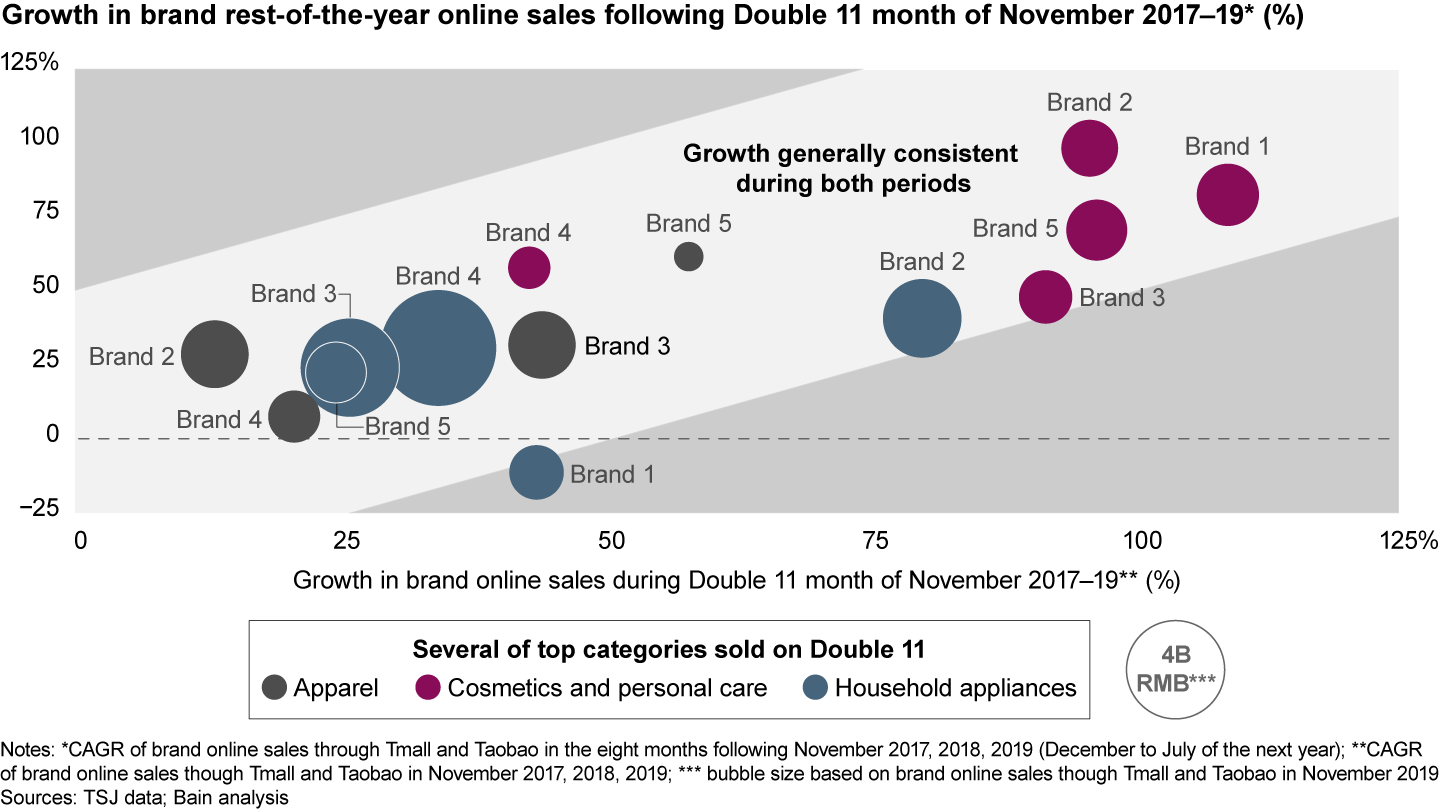

Figure 3
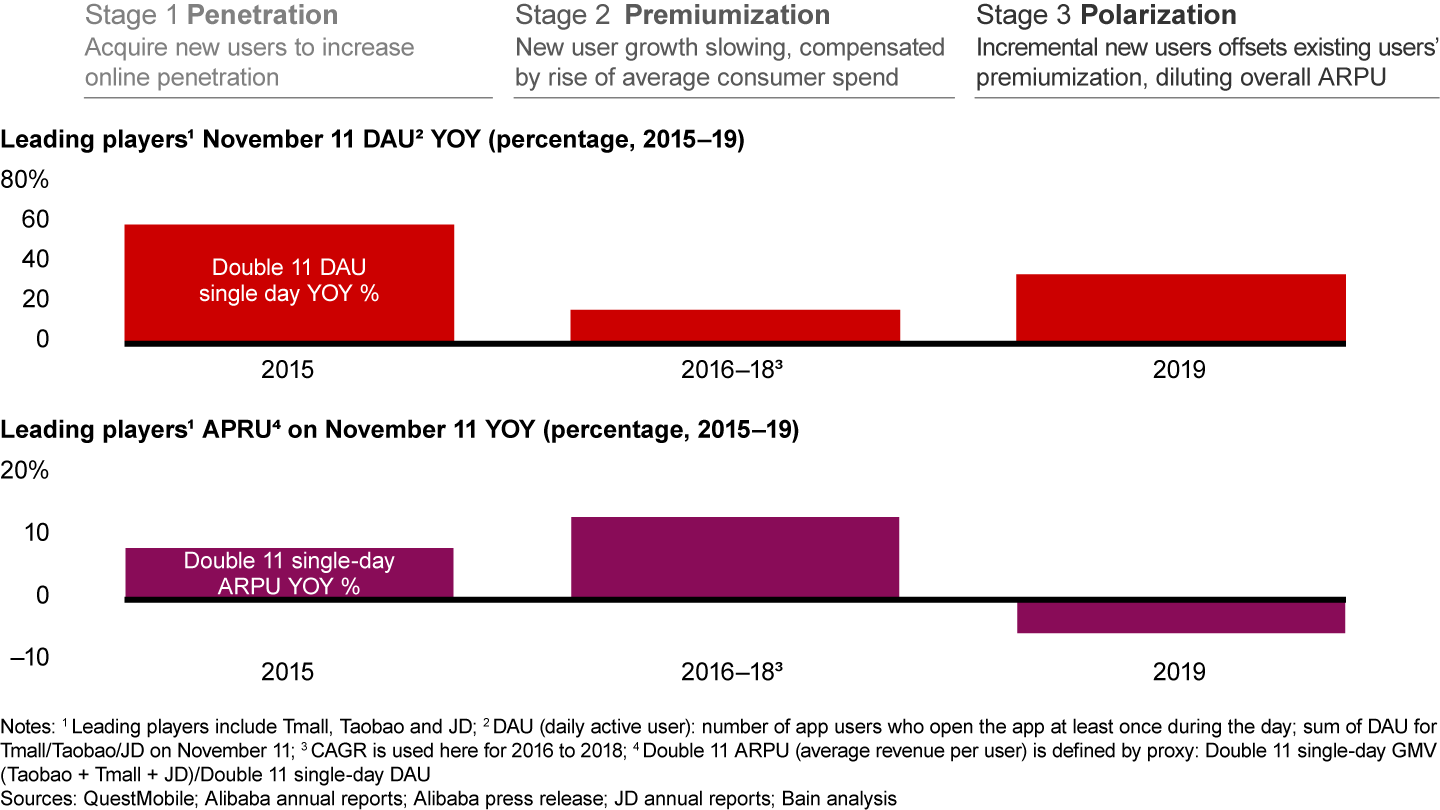

Penetration. In its earliest years, retailers sold goods on Double 11 with the hopes of attracting new users. The annual event proved to be an extremely effective way of educating coveted consumers in China’s Tier-1 and Tier-2 cities about online platforms and encouraging them to move from physical stores to e-commerce. Singles Day 2015 saw 60% growth in the number of daily active users (DAU) over the same day in 2014. But as consumer penetration neared a penetration plateau, retailers quickly became a victim of their own success. By 2016, the number of new online shoppers had grown by 15%.
Premiumization. Having approached the limits of penetration for consumers in higher-tier cities in 2016, retailers and brands pivoted to a new way to spur growth on Double 11: encouraging consumers to increase spending by buying higher-priced goods or by shopping from a wider variety of product categories with higher average selling prices. It worked. Year on year, average revenue per user (ARPU) on Singles Day 2016 rose 20% compared with 8% in 2015.
Polarization. Even as they achieved spending gains, retailers felt mounting competitive pressure from disrupters like Pinduoduo (PDD), the third-largest online shopping platform behind Alibaba and JD. The new competitors were undercutting prices to appeal to consumers in lower-tier cities. Providing significant discounts enabled PDD to double its GMV market share from 3% to 6% in a year. In response, bigger retailers also used aggressive discounts to grow a new user base in lower-tier cities. Doubling down on the lower-tier market helped boost DAU by 29% in those markets, but it led to a 5% drop in average revenue per user growth. In tandem, bigger retailers also encouraged consumers in higher-tier cities to spend more.
All of this makes 2020 a pivotal year for Double 11, with retailers preparing for three major uncertainties.
Can Double 11 maintain its momentum in generating new users and boosting prices?
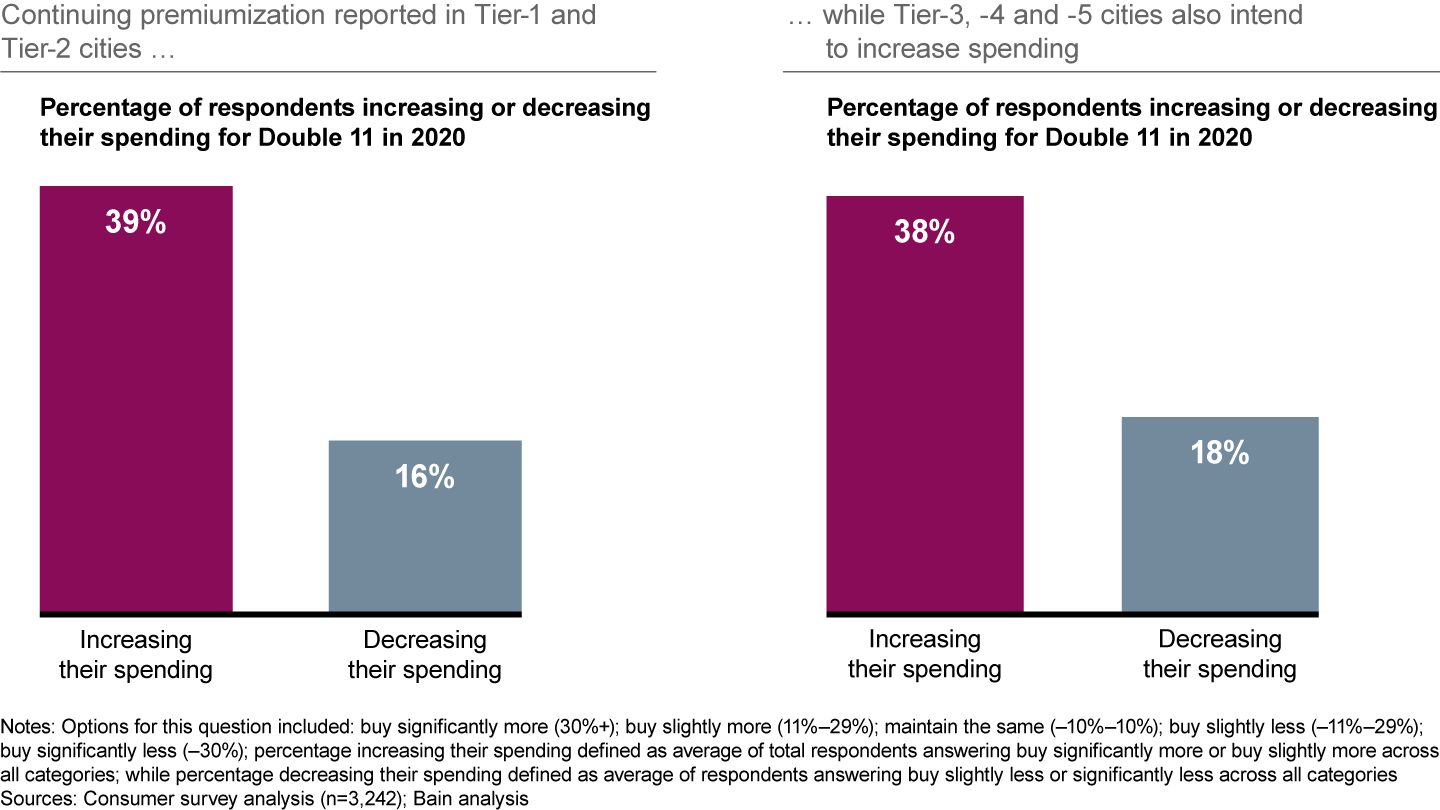
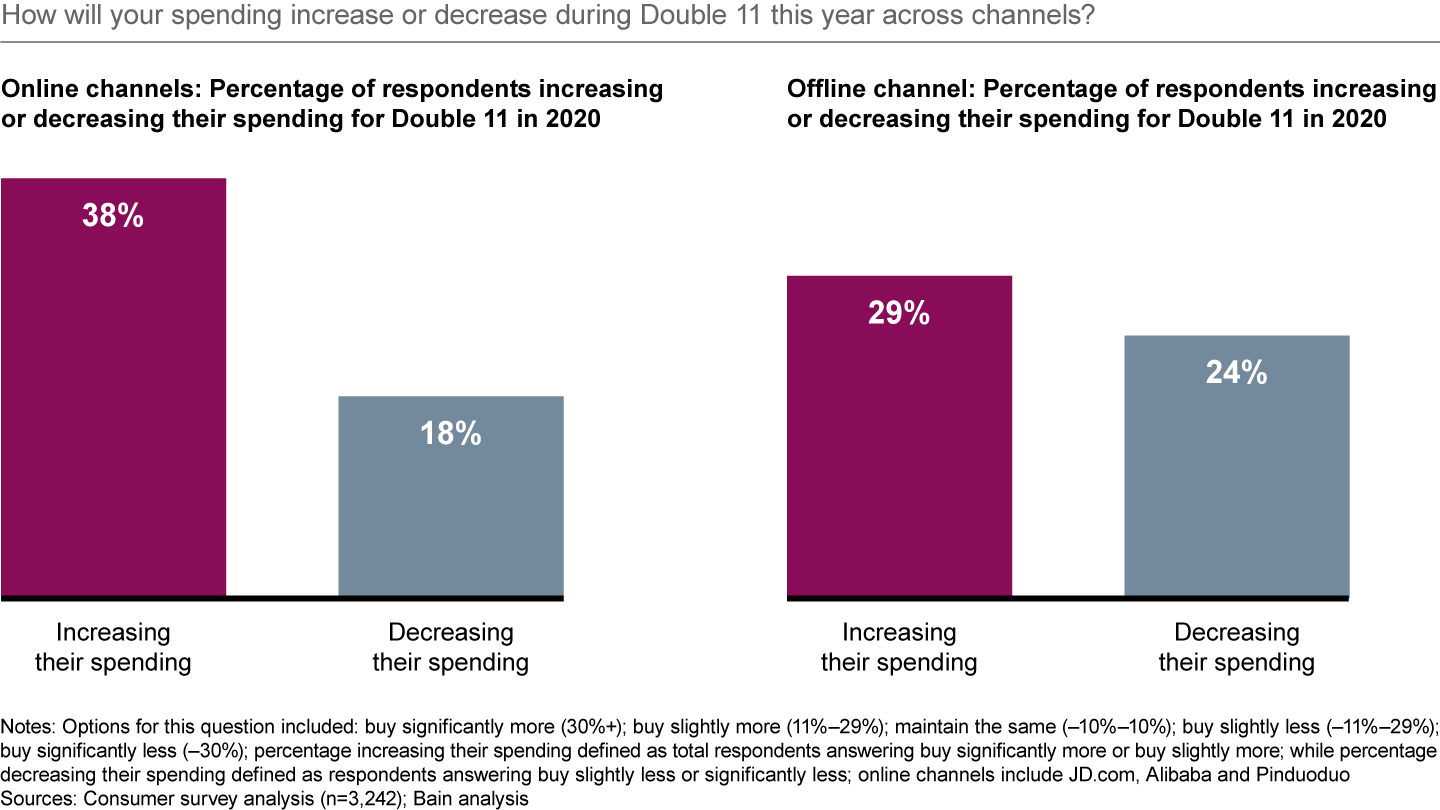
Brand owners expect to invest and sell more in Double 11 this year. Meanwhile, consumers tell us they will spend more (see Figure 4). Bain’s survey determined that 40% of consumers will spend more, while only 20% of consumers will reduce spending. Indications are that male consumers are more likely than female consumers to increase their spending.
Figure 4

Our survey suggests that new user growth from lower-tier markets will remain strong, accounting for the majority of total DAU growth. While higher-tier markets start to hit the ceiling on saturation, lower-tier markets continue to grow online shopper penetration as a percentage of total web users, reaching roughly 54% in the first quarter of 2020 (up from around 45% in the first half of 2019).
However, these new users will spend about 60% less than the average of existing users and 50% less than the lower-tier market average. Depending on the new user mix, overall ARPU may decelerate in 2020.
Which channels, brands and categories will emerge as winners and losers?
Online vs. offline. Covid-19 increased online penetration but decreased foot traffic to physical stores. Double 11 is likely to accelerate these trends (see Figure 5). In higher-tier markets with almost full penetration, winners will be retail platforms that can cultivate loyal customers and increase stickiness. In lower-tier markets, winners will be the platforms that can attract the most new users through competitive pricing and great value product offerings.
Figure 5

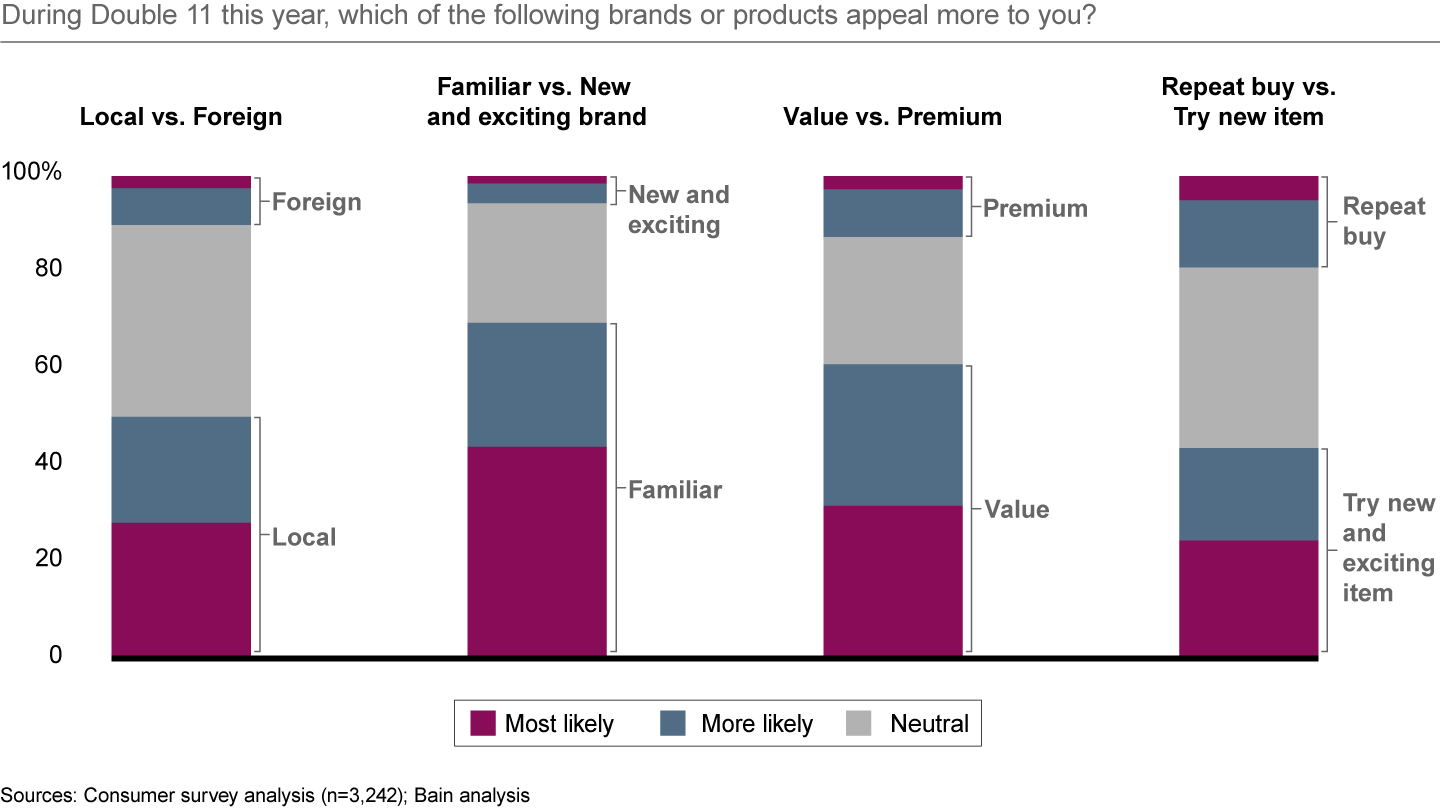
Brands vs. brands. Our survey found that consumers show a preference for local brands (see Figure 6). After several years during which local brands outgrew foreign brands, 2019 was the first year in which this historical trend reversed, with foreign brands outpacing local brands. However, local brands suffered less than the foreign brands in the Covid-19 period. One of the reasons for this movement to local brands is renewed consumer interest in great value and low prices arising from economic uncertainty. In fact, 35% of Chinese consumers surveyed earlier in the year expected to be more mindful of their expenditures (see the Bain Brief “The Future of Retail in Asia-Pacific”). Another factor is rising national pride amid global tensions. Chinese consumers also prefer familiar brands over new and exciting brands, reversing momentum made by insurgent brands. More than 60% favor value brands over premium brands. More than twice as many consumers want to buy new and exciting products instead of repeating products purchased.
Figure 6

Categories vs. categories. Consumers tell us that they will be spending more across both essential and nonessential categories. The two categories with the highest likely spending increases on Double 11 are consumer electronics products and health and wellness products. With people spending more time indoors, they also are spending more time online—it was not surprising that 41% of those surveyed intend to increase spending in electronics. Also, the pandemic has accelerated a trend that had steadily been gaining momentum: consumer interest in health and wellness. As evidence, 42% of consumers expect to spend more on fresh food on Singles Day.
Will the new users from lower-tier cities result in a virtuous cycle of increased spending or a vicious cycle of decreased ARPU?
In the first two stages of Double 11, retailers created—and benefited from—a virtuous cycle. They brought on new users from Tier-1 and Tier-2 cities and succeeded in selling products with increasingly higher average prices. As they reaped higher and higher returns, retailers reinvested to improve the customer experience, earning customer loyalty and steadily building scale.
Now, the income gap between higher- and lower-tier cities makes it unclear if a new base of users from the lower tier joining in the third stage of Double 11’s evolution will deliver the level of ARPU gains that retailers and brands achieved with existing users brought online in the first stage. The speed to premiumization could be slower than it was with consumers from Tier-1 and Tier-2 cities. This may be especially challenging as the costs to acquire and serve new users keep rising.
What does this mean for online platforms, offline retailers and brands?
Online platforms
Online platforms can make the most of their Double 11 investment by taking different approaches for mature buyers and new buyers.
For mature consumers, the goal is to cultivate lifetime value. Platforms can achieve this by offering an enriched engagement experience and establishing a relationship that transcends GMV to earn loyalty, for example. One way to boost the engagement experience: create content especially for best-selling “hero" SKUs. Alibaba platforms have recommended that merchants produce short videos for 70% of their SKUs, with three to five videos for each SKU. Platforms can rigorously measure progress with mature users in terms of engagement, new products launched and new formats introduced.
To grow with new users in lower-tier cities, the most successful platforms will focus on creating a tailored customer proposition.
That means a customized product assortment for this segment, with a more cost-efficient supply chain and route to market, to account for the expensive customer acquisition costs and last-mile delivery required to serve.
For both existing users and new users, platforms can create more value by capturing Double 11 consumer intelligence to optimize decisions around product assortment, focusing on high-potential new products as well as trending brands and categories.
Offline retailers
With the steady march of consumers from offline to online, physical store retailers need to reengage consumers lost during Double 11 with the goal of converting them into loyal omnichannel consumers. However, given the higher cost to serve these omnichannel consumers, companies need to adapt their product assortment and supply chains for cost and efficiency to ensure acceptable online economics. That means streamlining store networks, fulfillment and logistics as well as outsourcing or working with ecosystem partners when it makes the most sense to simplify and manage costs effectively.
Offline retailers can enhance the physical store experience by starting with the basics and renovating their locations to make them more visually appealing, especially to attract younger shoppers. They can also focus on categories with low-online penetration (fresh food is a good example), with curated SKUs and competitive pricing to differentiate from the online platforms.
Winning back online shoppers also requires physical retailers to cultivate a new and exciting product assortment, relying on Double 11 consumer data to identify high-potential new products, trending brands and categories.
It is also critical to double down on omnichannel capabilities—to go big or go home. That means learning efficient ways to source and convert online traffic. It also means investing in the IT, data and supply chain infrastructure to support omnichannel retailing while building strategic ecosystem partnerships to coinvest in and sustain rapid growth.
Brand owners
Brand owners need to differentiate between the distinct growth drivers for consumers in higher-tier and lower-tier cities—and then pick the right battles. For most brands, the aim will be to increase share of wallet in higher-tier markets and gain penetration in lower-tier markets, while managing brand and product portfolios accordingly.
The best brands will establish direct relationships with the most valuable consumers, tracking success not only in terms of Double 11 GMV but also in engagement, loyalty and lifetime value. They will generate a 360-degree view of customers through their own transaction and engagement data, as well as data from ecosystem sources. They will engage directly with consumers through an arsenal of channels while also redesigning route-to-market capabilities for cross-channel synergy. Meanwhile, they will embrace hyperlocal options, creating a single path to consumers that optimizes cost and speed, launching new products as easily in offline channels as online.
The ultimate long-term value of Double 11 as China retailing’s most important 24 hours will depend on how successfully online platforms, offline retailers and brands rise to the occasion—this November 11 and in the 364 days that follow.

Coronavirus
The global Covid-19 pandemic has extracted a terrible human toll and spurred sweeping changes in the world economy. Across industries, executives have begun reassessing their strategies and repositioning their companies to thrive now and in the world beyond coronavirus.
First published in 10월 2020