Skip to Content
  • Bureaux

    Bureaux

    Amérique du Nord et Amérique du Sud
    • Atlanta
    • Austin
    • Bogota
    • Boston
    • Buenos Aires
    • Chicago
    • Dallas
    • Denver
    • Houston
    • Los Angeles
    • Mexico City
    • Minneapolis
    • Monterrey
    • Montreal
    • New York
    • Rio de Janeiro
    • San Francisco
    • Santiago
    • São Paulo
    • Seattle
    • Silicon Valley
    • Toronto
    • Washington, DC
    Europe, Moyen-Orient et Afrique
    • Amsterdam
    • Athens
    • Berlin
    • Brussels
    • Copenhagen
    • Doha
    • Dubai
    • Dusseldorf
    • Frankfurt
    • Helsinki
    • Istanbul
    • Johannesburg
    • Kyiv
    • Lisbon
    • London
    • Madrid
    • Milan
    • Munich
    • Oslo
    • Paris
    • Riyadh
    • Rome
    • Stockholm
    • Vienna
    • Warsaw
    • Zurich
    Asie et Australie
    • Bangkok
    • Beijing
    • Bengaluru
    • Brisbane
    • Ho Chi Minh City
    • Hong Kong
    • Jakarta
    • Kuala Lumpur
    • Manila
    • Melbourne
    • Mumbai
    • New Delhi
    • Perth
    • Seoul
    • Shanghai
    • Singapore
    • Sydney
    • Tokyo
    Voir tous les bureaux
  • Alumni
  • Presse
  • S’abonner
  • Contacter
  • France | Français

    Sélectionnez votre région et votre langue

    Global
    • Global (English)
    Amérique du Nord et Amérique du Sud
    • Brazil (Português)
    • Argentina (Español)
    • Canada (Français)
    • Chile (Español)
    • Colombia (Español)
    Europe, Moyen-Orient et Afrique
    • France (Français)
    • DACH Region (Deutsch)
    • Italy (Italiano)
    • Spain (Español)
    • Greece (Elliniká)
    Asie et Australie
    • China (中文版)
    • Korea (한국어)
    • Japan (日本語)
  • Saved items (0)
    Saved items (0)

    You have no saved items.

    Bookmark content that interests you and it will be saved here for you to read or share later.

    Explore Bain Insights
  • Expertises Sectorielles
    Menu principal

    Expertises Sectorielles

    • Aerospace et Défense
    • Agroalimentaire
    • Chimie
    • Infrastructures, BTP et Matériaux de Construction
    • Grande Consommation
    • Services Financiers
    • Santé
    • Engins & Equipements Industriels
    • Media et Divertissement
    • Metals
    • Mining
    • Pétrole & Gaz
    • Papier et Emballage
    • Private Equity
    • Secteur Public
    • Distribution
    • Technologie
    • Télécommunications
    • Transportation
    • Travel & Leisure
    • Utilities & Energies Renouvelables
  • Expertises Fonctionnelles
    Menu principal

    Expertises Fonctionnelles

    • Expérience Client
    • ESG
    • Innovation
    • Fusions et Acquisitions
    • Opérations
    • People & Organization
    • Private Equity
    • Sales & Marketing
    • Stratégie
    • IA, Perspectives et Solutions
    • Technology
    • Transformation
  • Digital
  • Points de Vue
  • À propos
    Menu principal

    À propos

    • Notre Activité
    • Nos Valeurs
    • Nos Collaborateurs et Notre Équipe Dirigeante
    • Notre Impact
    • Prix & Récompenses
    • Partenariats Internationaux
    • Evénements
    Further: Our global responsibility
    • Diversité et Inclusion
    • Impact Social
    • Sustainability
    • World Economic Forum
    Learn more about Further
  • Carrières
    Menu principal

    Carrières

    • Rejoignez-nous
      Carrières
      Rejoignez-nous
      • Find Your Place
      • Nos domaines d’expertise
      • Equipes multidisciplinaires
      • Étudiants
      • Stages et programmes
      • Événements de recrutement
    • La vie chez Bain
      Carrières
      La vie chez Bain
      • Blog: Inside Bain
      • Récits de carrière
      • Nos collaborateurs
      • Nos bureaux
      • Soutenir votre évolution professionnelle
      • Groupes d’affinités
      • Avantages chez Bain
    • Histoires d’impact
    • Notre processus de recrutement
      Carrières
      Notre processus de recrutement
      • Ce que vous pouvez attendre
      • Entretiens
    Trouver un poste
  • Bureaux
    Menu principal

    Bureaux

    • Amérique du Nord et Amérique du Sud
      Bureaux
      Amérique du Nord et Amérique du Sud
      • Atlanta
      • Austin
      • Bogota
      • Boston
      • Buenos Aires
      • Chicago
      • Dallas
      • Denver
      • Houston
      • Los Angeles
      • Mexico City
      • Minneapolis
      • Monterrey
      • Montreal
      • New York
      • Rio de Janeiro
      • San Francisco
      • Santiago
      • São Paulo
      • Seattle
      • Silicon Valley
      • Toronto
      • Washington, DC
    • Europe, Moyen-Orient et Afrique
      Bureaux
      Europe, Moyen-Orient et Afrique
      • Amsterdam
      • Athens
      • Berlin
      • Brussels
      • Copenhagen
      • Doha
      • Dubai
      • Dusseldorf
      • Frankfurt
      • Helsinki
      • Istanbul
      • Johannesburg
      • Kyiv
      • Lisbon
      • London
      • Madrid
      • Milan
      • Munich
      • Oslo
      • Paris
      • Riyadh
      • Rome
      • Stockholm
      • Vienna
      • Warsaw
      • Zurich
    • Asie et Australie
      Bureaux
      Asie et Australie
      • Bangkok
      • Beijing
      • Bengaluru
      • Brisbane
      • Ho Chi Minh City
      • Hong Kong
      • Jakarta
      • Kuala Lumpur
      • Manila
      • Melbourne
      • Mumbai
      • New Delhi
      • Perth
      • Seoul
      • Shanghai
      • Singapore
      • Sydney
      • Tokyo
    Voir tous les bureaux
  • Alumni
  • Presse
  • S’abonner
  • Contacter
  • France | Français
    Menu principal

    Sélectionnez votre région et votre langue

    • Global
      Sélectionnez votre région et votre langue
      Global
      • Global (English)
    • Amérique du Nord et Amérique du Sud
      Sélectionnez votre région et votre langue
      Amérique du Nord et Amérique du Sud
      • Brazil (Português)
      • Argentina (Español)
      • Canada (Français)
      • Chile (Español)
      • Colombia (Español)
    • Europe, Moyen-Orient et Afrique
      Sélectionnez votre région et votre langue
      Europe, Moyen-Orient et Afrique
      • France (Français)
      • DACH Region (Deutsch)
      • Italy (Italiano)
      • Spain (Español)
      • Greece (Elliniká)
    • Asie et Australie
      Sélectionnez votre région et votre langue
      Asie et Australie
      • China (中文版)
      • Korea (한국어)
      • Japan (日本語)
  • Saved items  (0)
    Menu principal
    Saved items (0)

    You have no saved items.

    Bookmark content that interests you and it will be saved here for you to read or share later.

    Explore Bain Insights
  • Expertises Sectorielles
    • Expertises Sectorielles

      • Aerospace et Défense
      • Agroalimentaire
      • Chimie
      • Infrastructures, BTP et Matériaux de Construction
      • Grande Consommation
      • Services Financiers
      • Santé
      • Engins & Equipements Industriels
      • Media et Divertissement
      • Metals
      • Mining
      • Pétrole & Gaz
      • Papier et Emballage
      • Private Equity
      • Secteur Public
      • Distribution
      • Technologie
      • Télécommunications
      • Transportation
      • Travel & Leisure
      • Utilities & Energies Renouvelables
  • Expertises Fonctionnelles
    • Expertises Fonctionnelles

      • Expérience Client
      • ESG
      • Innovation
      • Fusions et Acquisitions
      • Opérations
      • People & Organization
      • Private Equity
      • Sales & Marketing
      • Stratégie
      • IA, Perspectives et Solutions
      • Technology
      • Transformation
  • Digital
  • Points de Vue
  • À propos
    • À propos

      • Notre Activité
      • Nos Valeurs
      • Nos Collaborateurs et Notre Équipe Dirigeante
      • Notre Impact
      • Prix & Récompenses
      • Partenariats Internationaux
      • Evénements
      Further: Our global responsibility
      • Diversité et Inclusion
      • Impact Social
      • Sustainability
      • World Economic Forum
      Learn more about Further
  • Carrières
    Recherches les plus fréquentes
    • Agile
    • Digital
    • Stratégie
    Vos recherches précédentes
      Pages récemment visitées

      Content added to saved items

      Saved items (0)

      Removed from saved items

      Saved items (0)

      Etude

      Consumer-to-Business Payments: A Strong Growth Outlook, but Only for the Well-Prepared

      Consumer-to-Business Payments: A Strong Growth Outlook, but Only for the Well-Prepared

      In this hotly contested market, 90% of today’s revenue pool could migrate to software vendors, major technology firms, and other contenders.

      Par Karim Ahmad, David Gunn, Antonio Cerqueiro, et Erin McCune

      • min
      }

      Etude

      Consumer-to-Business Payments: A Strong Growth Outlook, but Only for the Well-Prepared
      en
      En Bref
      • Consumer-to-business payments will increase 6% over the next five years, we project, including growth in digital wallets, account to account, and cards.
      • Competition is intensifying for retail merchant and consumer accounts, and as much as 90% of today’s retail payments revenue is at risk of changing ownership to independent software vendors, major technology firms, and others.
      • Emerging web3 applications could open participation in payments to a much broader swath of nonfinancial businesses and consumers.
      • Incumbent banks and card schemes need to substantially revise their strategy, marketing and sales programs, and technology investments.

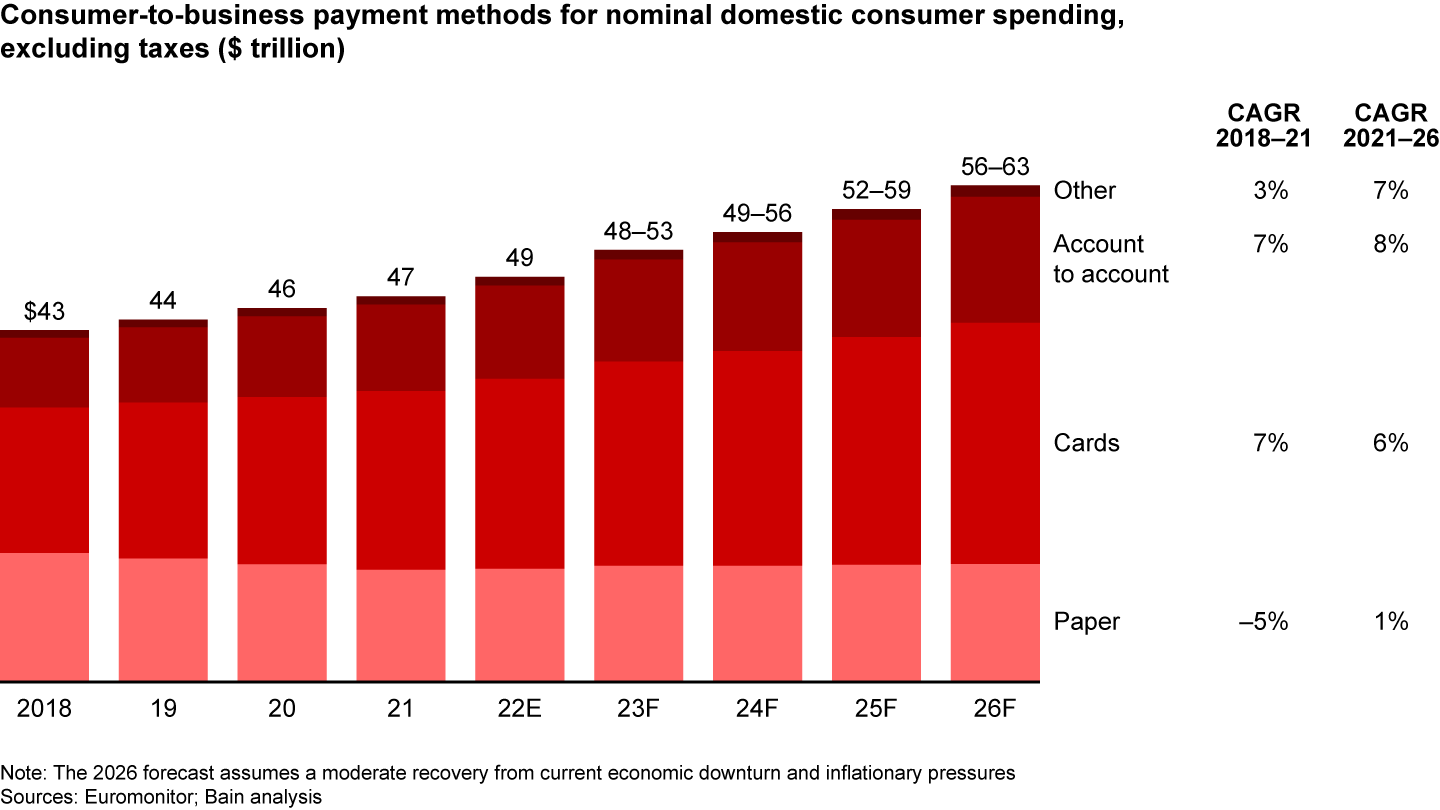
      Retail payments is a rich and promising industry, earning what Bain & Company estimates as $356 billion in global revenue in 2021, with projected annual growth of 6% to $480 billion by 2026 (see Figure 1). It’s not just alternative payment methods such as digital wallets and account-to-account arrangements that are growing; traditional credit and debit cards are still thriving (see Figure 2). Consumers in many markets continue to replace cash, while cards are expanding in major developing markets such as India and Brazil despite the introduction of real-time account-to-account payments infrastructure by central banks.

      Figure 1
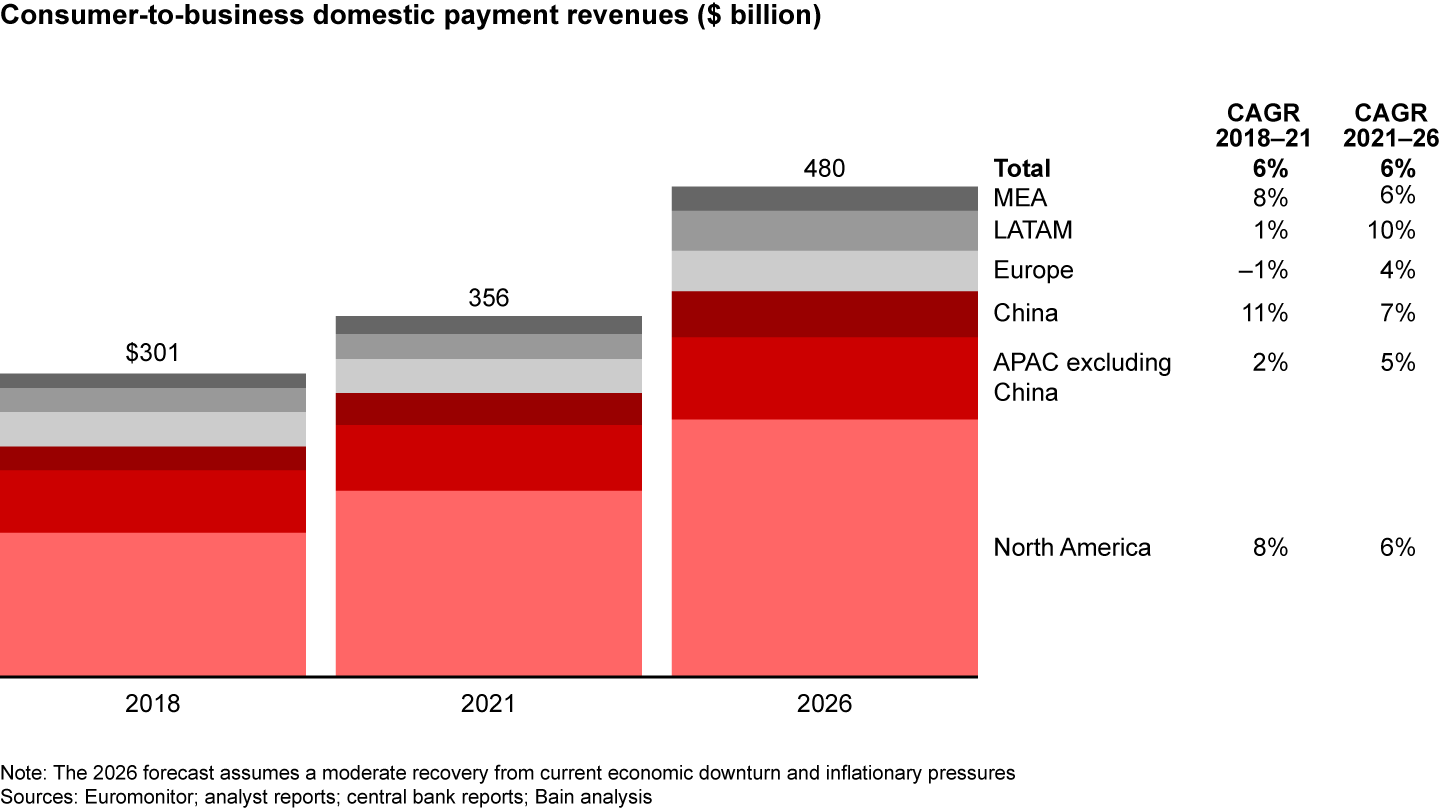
      The retail payments industry is projected to grow steadily in most regions
      Figure 2
      Digital payments continue to replace cash and paper

      Yet behind the overall growth trend, competition has intensified for retail merchant and consumer accounts. Over the next decade, we expect software companies and major technology firms to take a material share of payment origination volume and revenues in many markets. We estimate that as much as 90% of today’s payments revenue is at risk of changing ownership. To fend off innovative insurgents and stay relevant to customers, incumbent banks, processors, and card schemes will be forced to substantially revise their strategy, marketing and sales programs, partnerships, and technologies. 

      Software plus payments: better together

      The momentum of embedded finance to merchants demonstrates the value of a “better together” proposition of software and payments. We estimate that US payments revenues flowing through independent software vendors (ISVs) such as Lightspeed and Toast will grow 66% to $17.4 billion by 2026 (see Figure 3). The rollout of ISV offerings will be slower in the UK and EU because of the fragmented, local-language nature of European markets.

      Figure 3
      Independent software vendors will grow through strong merchant relationships

      Major technology firms have also launched payments businesses, poaching profit pools, bringing down prices to merchants, and carving out e-wallet positions that help them own the customer relationship. Some, such as Apple and Google, are now using proprietary payment methods to good effect. Apple Pay, for instance, ranks second in Net Promoter Score℠, trailing only PayPal among digital wallets, and half of Apple Card users age 25 to 34 cite it as their main credit card, a Bain NPS Prism® survey found.

      Yet even these tech and card powerhouses face challenges as government regulators have stepped up oversight, slowing the expansion of these companies into payments. Meta, parent of Facebook and Instagram, moved aggressively into payments for a number of years, including the push to enable payments through its WhatsApp platform in India and Brazil. However, delayed approval and stalled rollout restrictions have dampened WhatsApp Pay’s entry into these markets.

      Account to account is here to stay

      Central banks and regulatory agencies will continue to promote development of public payments infrastructure to enable viable alternative to cards and hasten the replacement of cash. India’s government, for instance, launched the Unified Payments Interface in 2016, and its ongoing enhancements have helped transaction value to grow steadily and displace cash, mostly from peer-to-peer and small-ticket transactions. Pix in Brazil has taken a similar trajectory, forming the backbone for new payment products and facilitating the replacement of cash with electronic payments, which will be further advanced through the recent payment initiation service of the Open Finance platform.

      Web3 could further change the game

      Emerging web3 applications could further spur a new generation of technologies to move money, opening participation in payments to a much broader swath of nonfinancial businesses and their consumers.

      Web3 tools include digital wallets that enable persistent digital identity and high-capacity blockchain-based processing platforms, as well as features such as smart contracts that will likely enhance efficiency and functionality. The first commercially viable and scalable uses are already emerging. While consumer applications such as paying with cryptocurrency will generate the most publicity, a quieter and more profound shift will unfold in wholesale money movement among banks and large companies. The earliest areas of disruption likely will be funds settlement, peer-to-peer money movement, and cross-border remittances.

      A wide variance in card use by country

      Cards will remain the largest payment revenue pool for years to come, but their growth will slow.

      Our analysis projects that global consumer card payment volume will grow about 6% annually through 2026. But that’s lower than the 7% annual growth since 2018 and the 8% annual growth we project for account to account.

      Moreover, card volume will have varying trajectories in different country markets.

      • Card-heavy and high-interchange markets. The high cost of cards in the US, for instance, should propel growth in alternative payments, causing card growth to slow. We expect US credit and debit cards to peak at just over 80% of transaction value in 2029, based on current trends (see Figure 4). Cards usage may peak earlier if consumers accelerate adoption of alternative payments.
      • Card-heavy and low-interchange markets. In the UK, France, Germany, Australia, and several other markets, cash has been almost completely displaced. The fees that merchants pay to card companies are low, so incentives to switch to alternative electronic payments are weaker, causing cards to maintain their share.
      • Cash-displacement markets. In India and Brazil, we expect significant electronic payments growth, with account-to-account rails—the part of the network infrastructure that enables digital money transfers—becoming stronger, eventually achieving greater share than cards.
      • Entrenched digital wallets. China is a notable example of a market where cards growth will continue through digital wallets as well as standalone card transactions.
      Figure 4
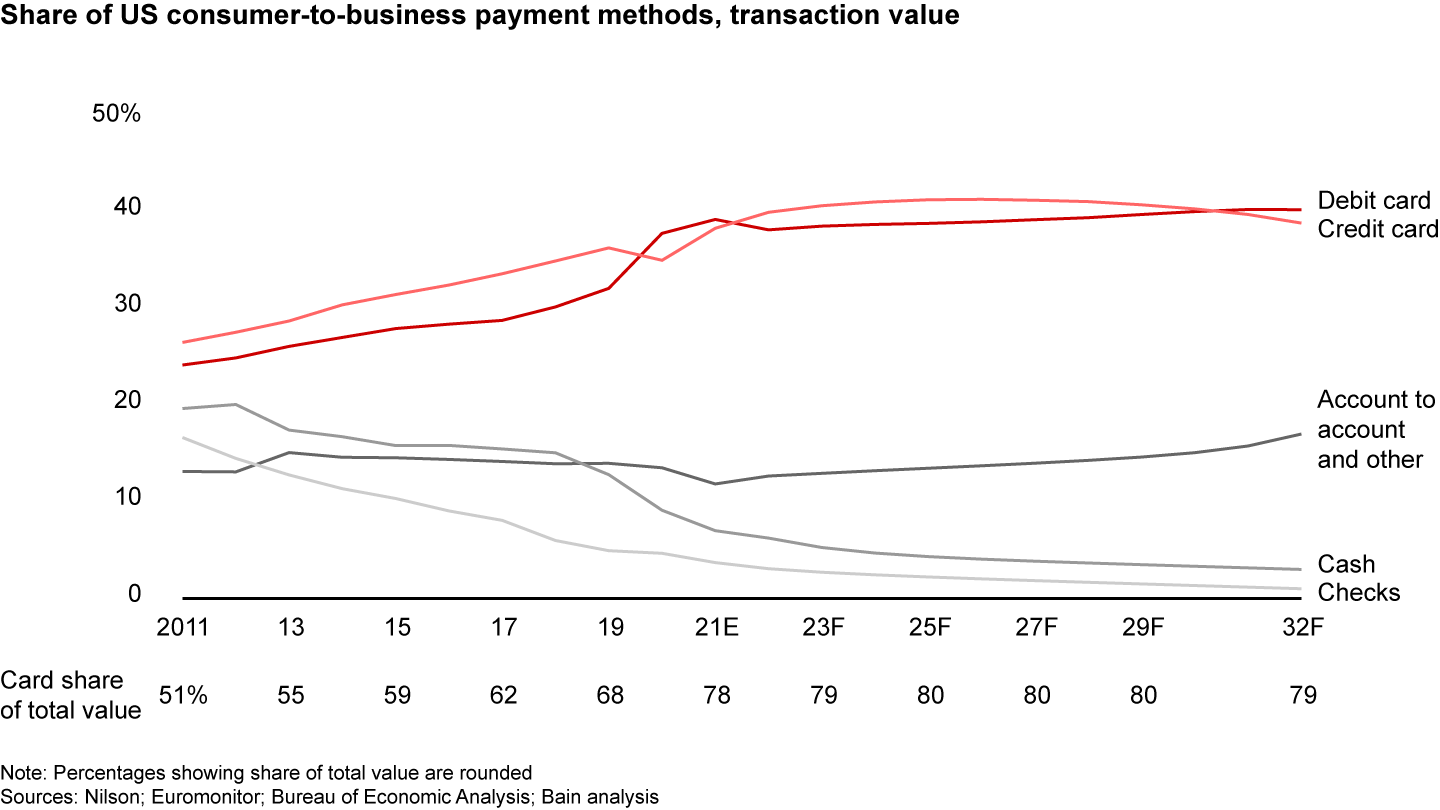
      US card penetration is expected to peak in 2029 at just over 80% of transaction value

      Continued replacement of cash will increase cards’ revenue through higher card penetration. But the spread of account-to-account digital payments will limit cards’ growth over the long term. The challenge for card companies thus will be to develop and expand services beyond simple transaction processing and eventually become agnostic to payment type.

      A no-regrets, fourfold program

      The high degree of change ahead for consumer-to-business payments has implications for traditional competitors. Banks can build defenses against big technology firms by investing more in the user experience. They should prepare for account-to-account payments, becoming rail agnostic to protect connected lending streams, even if that means cannibalizing card transaction revenues.

      For card schemes, new sources of international growth will be essential, adding valuable services such as fraud management and tapping into underserved or new uses. They need to become payment-type agnostic and reinvent their businesses to facilitate and provide value-added services that complement crypto and account-to-account transactions as well as cards. They could partner with large tech firms to keep scheme credentials at the top of the consumer’s wallet, with a seamless customer and merchant experience defending against the shift to account-to-account offerings. 

      Bain’s work with banks, payment schemes, and established payments firms has identified four key areas that demand a sharper focus.

      Strategy with a future-back perspective. Amid such fast-paced change, it may seem impossible to know which payment methods consumers will prefer several years in the future. But a future-back approach to strategy, which defines the desired future state and then works backward to establish tangible, practical milestones, can help identify and seize new opportunities.

      Breakthrough insights come from examining extreme but plausible scenarios, such as consumers delegating purchases to artificial intelligence–powered avatars. Early adopters have created plugins for ChatGPT, the artificial intelligence chatbot developed by OpenAI, which enables purchasing based on the model’s recommendations. The goal here is not to understand which outcome is most probable but to uncover different ways to compete and win given a plethora of possible outcomes and to reveal moves that should prove worthwhile under most scenarios.

      As part of this approach, the investment approval process will need to get simpler to allow for quick redeployment of capital. And because retail payments require a breadth of capabilities and an extensive reach, companies will want to shore up their competence in acquisitions and partnerships.

      Highly targeted sales and marketing. Retail payments, like many other industries, has put a greater premium on personalization and nuanced customer segmentation. A restaurant, for instance, clearly needs a different payments proposition than a legal firm. New generative language AI models will further improve personalized marketing.  For each segment, banks and card schemes will have to equip the sales team with the relevant playbooks that are continually enhanced and field-tested. It’s also critical to know where the money is, so a data-driven assessment of opportunities will ensure that companies focus on the highest-value market spaces.

      Technology transformation, not incremental tweaks. Legacy stacks and infrastructure will have to be replaced by more flexible systems to accommodate always-on real-time payments, web3, and related new payments technologies. Companies should consolidate technical platforms and integrate acquired businesses to avoid bloated “keep the lights on” spending. They can then speed up product development by restructuring any code monoliths into a microservices architecture and investing in the processes and tooling to support a modern platform architecture.

      Selective cost reductions. Most established firms will be forced to reckon with shrinking profit margins and the need to dramatically reduce operating costs. Neglected areas such as operations, customer support, and compliance will require investments in systems upgrades and automation. Unresolved technology debt, unintegrated acquisitions, and incoherent platform architecture will compete with growth initiatives at a time when investment in technology resources will be harder to come by as shrinking profit margins squeeze the amount of funding available.

      *  *  *

      Young firms will keep on innovating and making incursions, so traditional firms cannot count on riding a wave of overall payments growth. Now is the time to determine where to play and how to win in those chosen spots. Getting clear on where and how to outcompete, as well as which leaps in capabilities to make, is essential to staying relevant in a fast-changing industry.

      Learn more

      Bain x OpenAI

      Our services alliance combines OpenAI’s industry-leading AI tools and platforms and Bain’s strategic guidance and digital implementation capabilities, helping you harness the power of generative artificial intelligence to transform your business.

      Auteurs
      • Headshot of Karim Ahmad
        Karim Ahmad
        Associé, London
      • Headshot of David Gunn
        David Gunn
        Alumni, London
      • Headshot of Antonio Cerqueiro
        Antonio Cerqueiro
        Associé, São Paulo
      • Headshot of Erin McCune
        Erin McCune
        Alumni, San Francisco
      Contactez-nous
      Synergies sectorielles
      • Fintech
      • Payments
      • Services Financiers
      Expertises fonctionnelles transverses
      • Digital
      Services Financiers
      Why Banks Should Treat Payments as a Business

      As payment volumes grow at a healthy clip, banks must manage payments cohesively to retain customer loyalty and expand into other offerings.

      Voir plus
      Services Financiers
      Can US Banks Protect Their Card-Issuing Business?

      Consumer payments have been gravitating to neobanks and technology firms.

      Voir plus
      Digital
      Want More Out of Your AI Investments? Think People First

      To unlock AI’s exponential productivity potential, companies must modernize workflow and workforce in tandem.

      Voir plus
      Services Financiers
      The Fragmentation of Wholesale Payments Calls for Banks to Remake Their Approach

      Banks have a dominant position, but competitors look set to take market share.

      Voir plus
      Digital
      Life Sciences’ AI Momentum Requires a Workforce Redesign

      AI scalers aren't waiting for new talent—they're building it.

      Voir plus
      First published in avril 2023
      Mots clés
      • Digital
      • Fintech
      • Payments
      • Services Financiers

      Comment nous avons aidé nos clients

      IA, Perspectives et Solutions Blockchain-enabled Payment Flows: A Payments Company Reviews its Strategy

      Lire l’étude de cas

      IA, Perspectives et Solutions A Digital-First Bank Finds a Customer-Driven Path to Profitability

      Lire l’étude de cas

      Conduite du Changement The change process unlocks potential and profits

      Lire l’étude de cas

      Vous souhaitez continuer cette conversation ?

      Nous aidons des dirigeants du monde entier à matérialiser des impacts et des résultats pérennes et créateurs de valeur dans leurs organisations.

      Net Promoter®, NPS®, NPS Prism®, and the NPS-related emoticons are registered trademarks and Net Promoter Score℠ and Net Promoter System℠ are service marks of Bain & Company, Inc., Satmetrix Systems, Inc., and Fred Reichheld.

      Les points de vue de Bain : notre perspective sur des problématiques auxquelles sont confrontées les entreprises à travers le monde, envoyés chaque mois dans votre boîte de réception. 

      *J’ai lu la politique de confidentialité et j’accepte les conditions.

      Merci de lire notre politique de confidentialité.
      Bain & Company
      Contactez-nous Sustainability Accessibility Conditions d’utilisation Politique de Confidentialité Cookie Policy Mentions Légales Sitemap Log In

      © 1996-2026 Bain & Company, Inc.

      Contacter Bain

      Comment pouvons-nous vous aider ?

      • Business inquiry
      • Career information
      • Press relations
      • Partnership request
      • Speaker request
      Voir tous les bureaux