

Rapport

En Bref
- Over the past century, companies in the energy and natural resources sectors have helped lift billions out of poverty and made the modern consumer economy possible.
- Even so, many investors are betting against them in the energy transition, counting on insurgent companies with fewer legacy challenges to bring about change.
- But these incumbents have the capabilities to drive the energy transition at scale.
- To become important contributors to the essential changes, these companies need to get three things right: innovation, impact, and economics.
This article is part of Bain's 2021 Energy and Natural Resources Report.
The next five years are going to be critical for the industries that supply energy and natural resources to the world’s economies. In that short span, while they keep their current businesses running, most will begin reinventing themselves as businesses that also move the world closer to a lower-carbon, sustainable future.
Some investors are betting against them, shifting money from these incumbents to new companies that have less baggage and appear to be more innovative and more capable of solving the world’s most important issues.
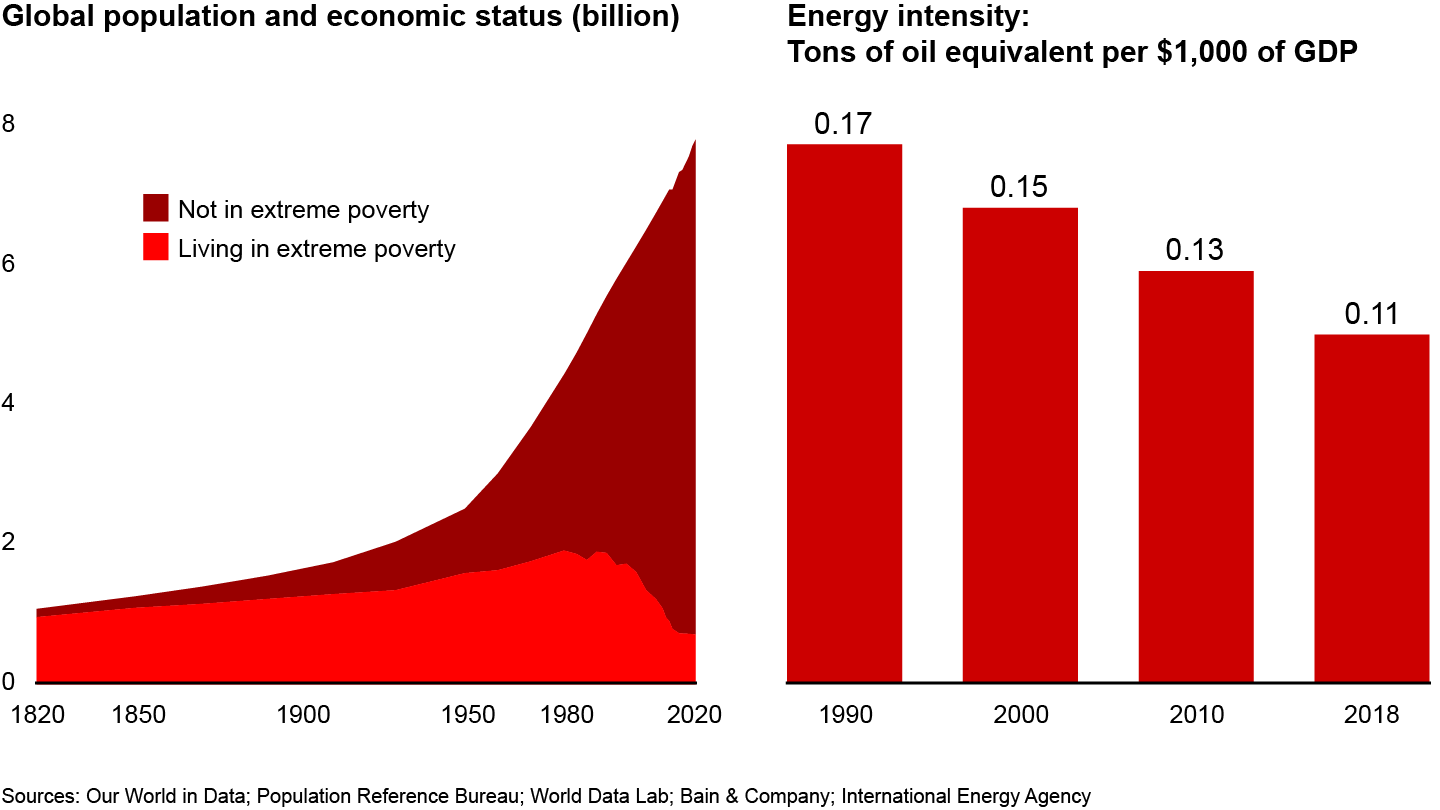
But it would be a mistake to count the incumbents out. These industries have already helped drive monumental shifts over the past century, delivering reliable and affordable energy that powers the world’s markets, supplying raw materials that make the consumer economy possible, and ensuring a steady food supply that feeds billions (see Figure 1). Even so, many energy and natural resources (ENR) companies that transformed the world are caught on the wrong side of a story line, legacy players in a sector that’s ripe for disruption.
Figure 1

The question being asked in boardrooms is: How do we fix that?
One way is to change our thinking about the role of energy and natural resources companies in this transition. The industries under the most pressure to change are the same ones that have the experience and organizations necessary to transform the world’s use of energy and resources. Their achievements underscore their unique capabilities and also serve as the foundation for their next phase of growth.
It helps that the opportunities tied to the transition are compelling. Trillions of investment dollars are up for grabs, as the world rebuilds the infrastructure for a more sustainable and lower-carbon economy―renewable energy generation and greater electric grid capacity; industry and transportation that run more on electricity and hydrogen and less on fossil fuels; a circular path for consumer plastics that are more recyclable or more biodegradable; and an agriculture system that leaves a lighter footprint.
The adversarial stance we’ve grown accustomed to between many stakeholders (investors, customers, community members) and these companies has accomplished what it needed to: defining the necessary changes and spurring governments and industries into action. The Covid-19 pandemic introduced another element to the discussion: the determination to build back better. Now is the time to work collaboratively, develop partnerships, and address the immense challenges inherent in the energy and resource transition.
Bain Partners Peter Parry and Joe Scalise discuss how investors and companies can accelerate progress toward sustainable solutions.
Under scrutiny and squeezed for capital
ENR firms face two related challenges. One is that greater scrutiny from the public over sustainability and greenhouse gas (GHG) emissions is making it harder to obtain capital for expansion. The second is that capital is flowing to their insurgent competitors, which are disrupting these industries and beginning to take market share.
Attention to the damage from ENR industries―primarily carbon and other GHG emissions―poses an existential threat to existing business models, one that’s more serious than in previous cycles of scrutiny. Weather events and wildfires are occurring more often and with greater intensity, and that’s made climate change appear more imminent to people who once saw it as a far-off threat. Many energy and natural resources firms have found ways to reduce their environmental impact over the past few decades, as in mining, where newer techniques have made extraction more precise, with lower impact. But most of these were targeted to discrete issues, usually at a local level.
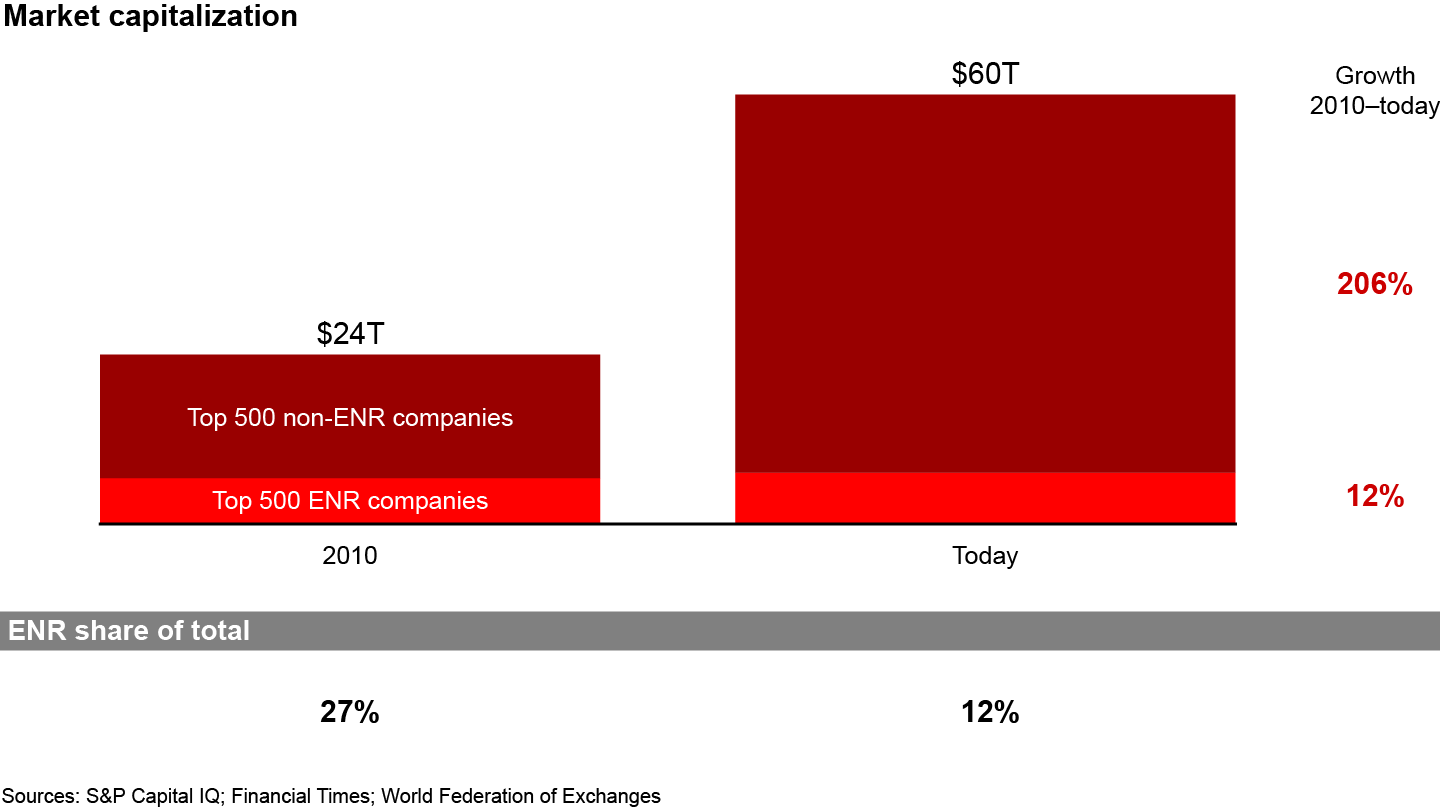
Carbon emissions are more diffuse and the effects are more distributed, without a direct link to the source. Addressing them requires coordinated efforts across firms, sectors, and nations, since no single company can change the course of an entire industry. As the links to emission-intensive industries and their products become clearer, public pressure mounts and investment capital for future projects becomes more difficult to obtain. Market caps have not kept pace with other industries, and so these industries represent a smaller portion of the economy (see Figure 2). ENR firms need to find ways to respond while continuing to provide the materials and services necessary for consumers to enjoy the same level of personal consumption.
Figure 2

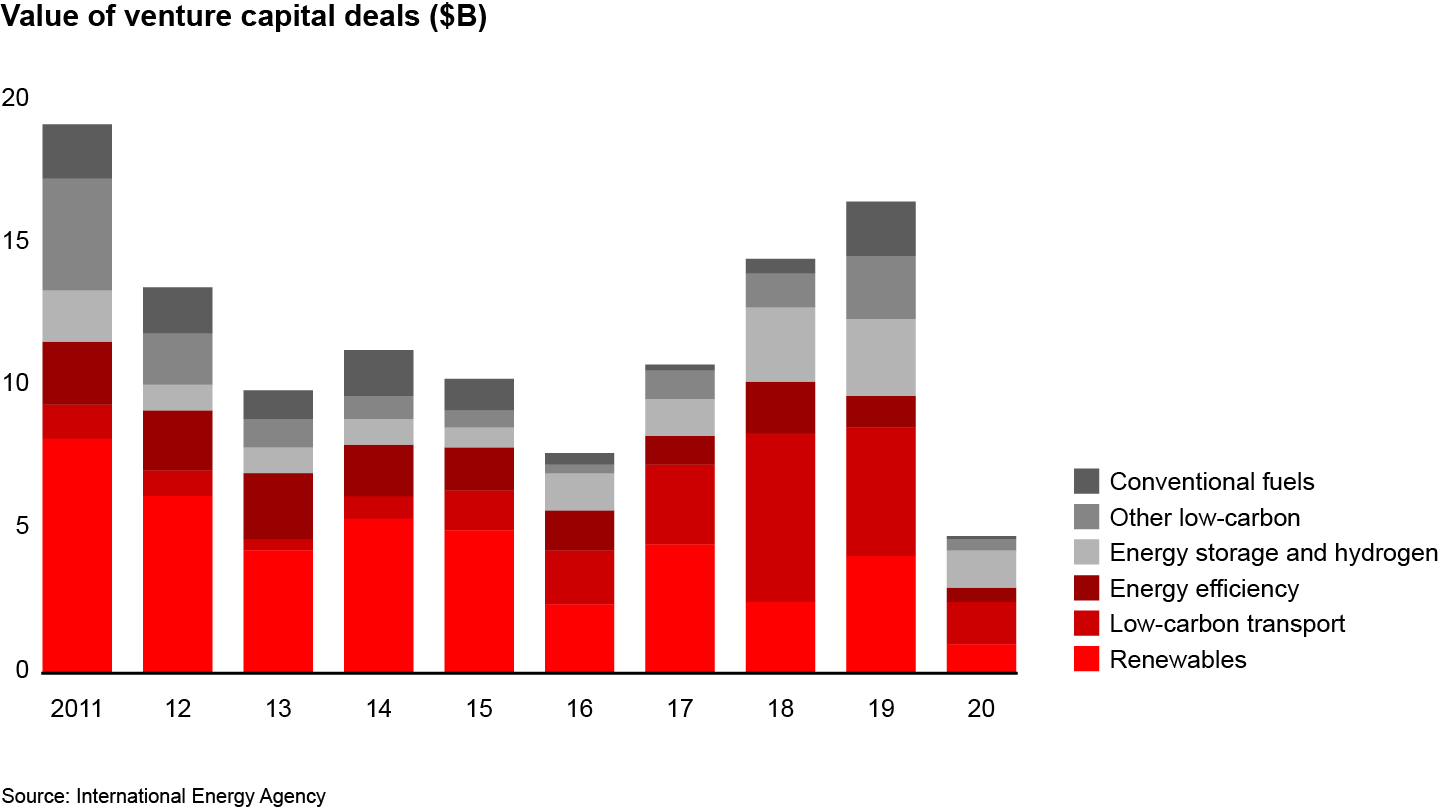
At the same time, these firms must meet the needs of investors who control the price and flow of capital. The last decade has seen equity investors shift capital away from energy and natural resources firms and into technology, a sign that they lack confidence in the sector’s ability to adapt to changing demands (see Figure 3).
Figure 3

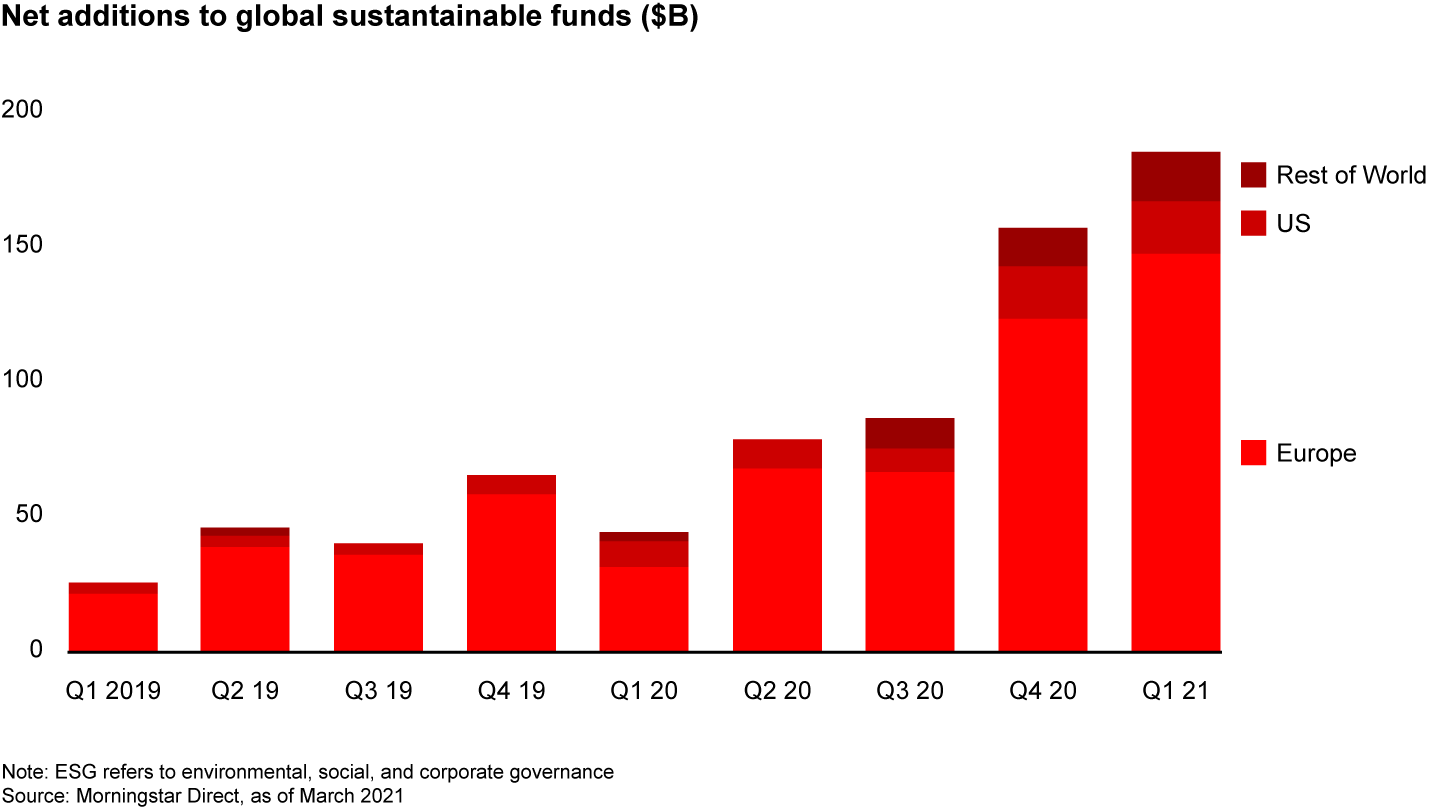
Restrictions on where and how capital can be deployed complicate this challenge. Funds focused on environmental, social, and corporate governance (ESG) objectives have grown (see Figure 4). By April 2021, BlackRock, Vanguard, State Street, and 84 other fund managers had committed $37 trillion of assets to the Net Zero Asset Managers initiative, calling for net-zero GHG emissions by 2050. These firms can use their voting power to push proposals calling for meaningful changes. Banks and other financial institutions are also more reluctant to finance or insure assets or companies that aren’t sustainable. JP Morgan Chase, for example, has said it would begin to measure the carbon intensity of its clients and use its influence to urge them toward more sustainable businesses. For ENR companies to maintain their access to capital markets and thrive over the next few decades, they’ll need to show they can profitably execute a robust, multifaceted vision of global sustainability.
Figure 4

Innovation, impact, and economics
Progress over the next five years will set the course. Incumbent players in energy and natural resources will either become leaders or continue to lose the public’s faith and the support of the capital markets. Companies are showing early signs of effectively making the transition when they get three things right: innovation, impact, and economics.
Innovation. Energy and resource firms are constantly innovating to create changes in society and markets, such as improving extraction methods to draw more hydrocarbons out of stubborn rock or developing more sophisticated plastics to replace heavier and more resource-intensive materials in vehicles. Now they’re investing in innovation that will change their operations, supply chains, and products, moving toward a more sustainable, lower-carbon future. In some cases, they’re fast followers of insurgents that have pioneered new techniques and technologies that could threaten existing business models. In other cases, they’re developing their own innovations.
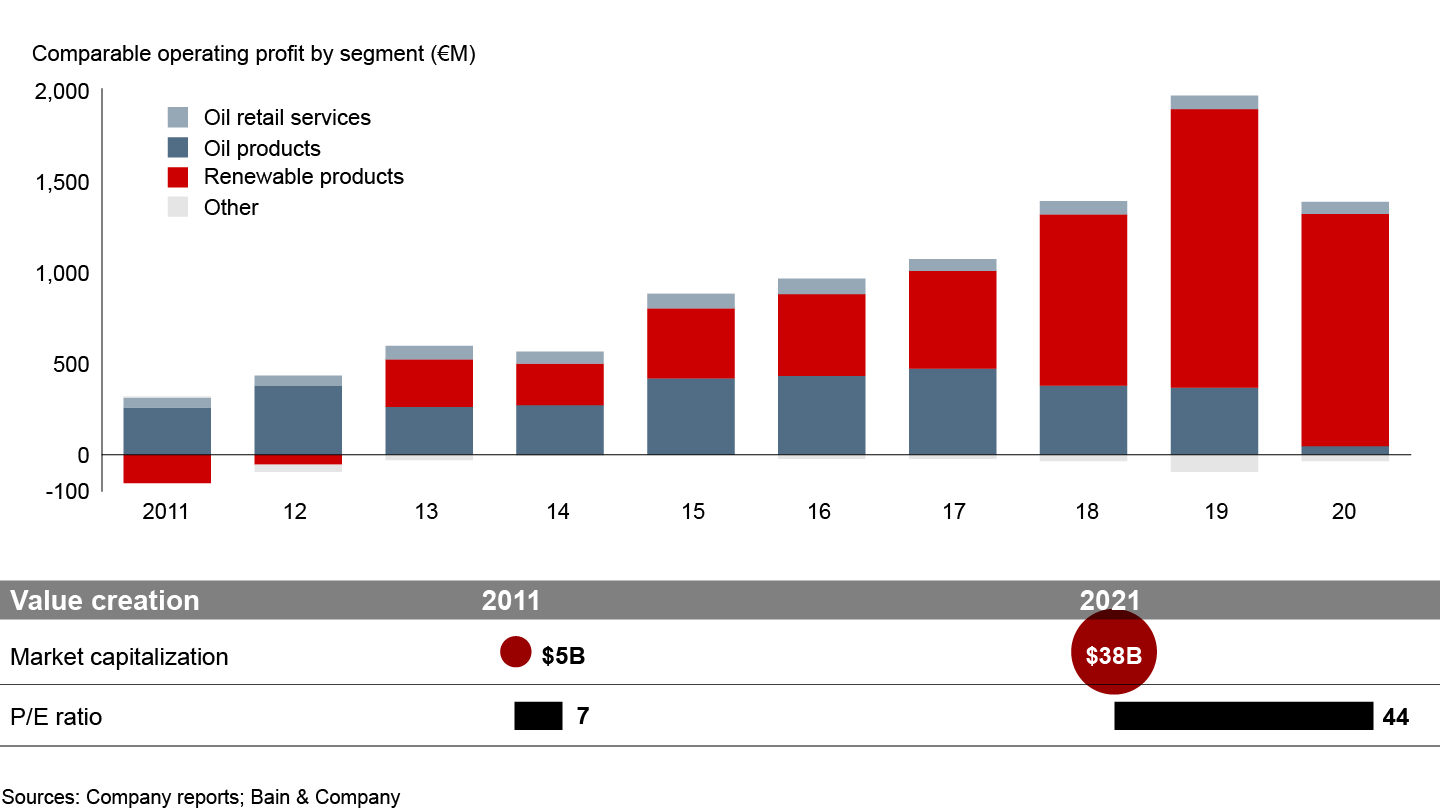
In Finland, refiner and chemical producer Neste has invested in innovative technologies and business lines to become the world’s largest producer of renewable diesel fuel. More than a decade ago, Neste’s leadership recognized the mounting risks of depending on traditional petroleum products as the fuel source of the future. Predictions of peak oil weren’t just academic; they spelled the end of growth. In response, the company invested in technologies to produce diesel from renewable sources. Renewable diesel now furnishes most of Neste’s profits, but its eightfold increase in market valuation over the past decade results not only from this major new business line, but from other prospects stemming from it, including alternative aviation fuels (see Figure 5).
Figure 5

Impact. Pressure is increasing on nearly every company to reevaluate its role in the local and global communities, and to become better corporate citizens. For ENR firms, most of the scrutiny focuses on emissions and other ESG issues like water use, waste, recycling, and transparency. In the long term, however, they’re likely to be judged on a broader scorecard that includes their impact on native lands, environmental justice, and issues of diversity, equity, and inclusion. Most will need to retrain their workforces for a more automated future. To navigate this transition, ENR leadership teams must work with investors, customers, and communities to ensure they maintain the social license required to operate complex businesses in the world’s most vulnerable places.
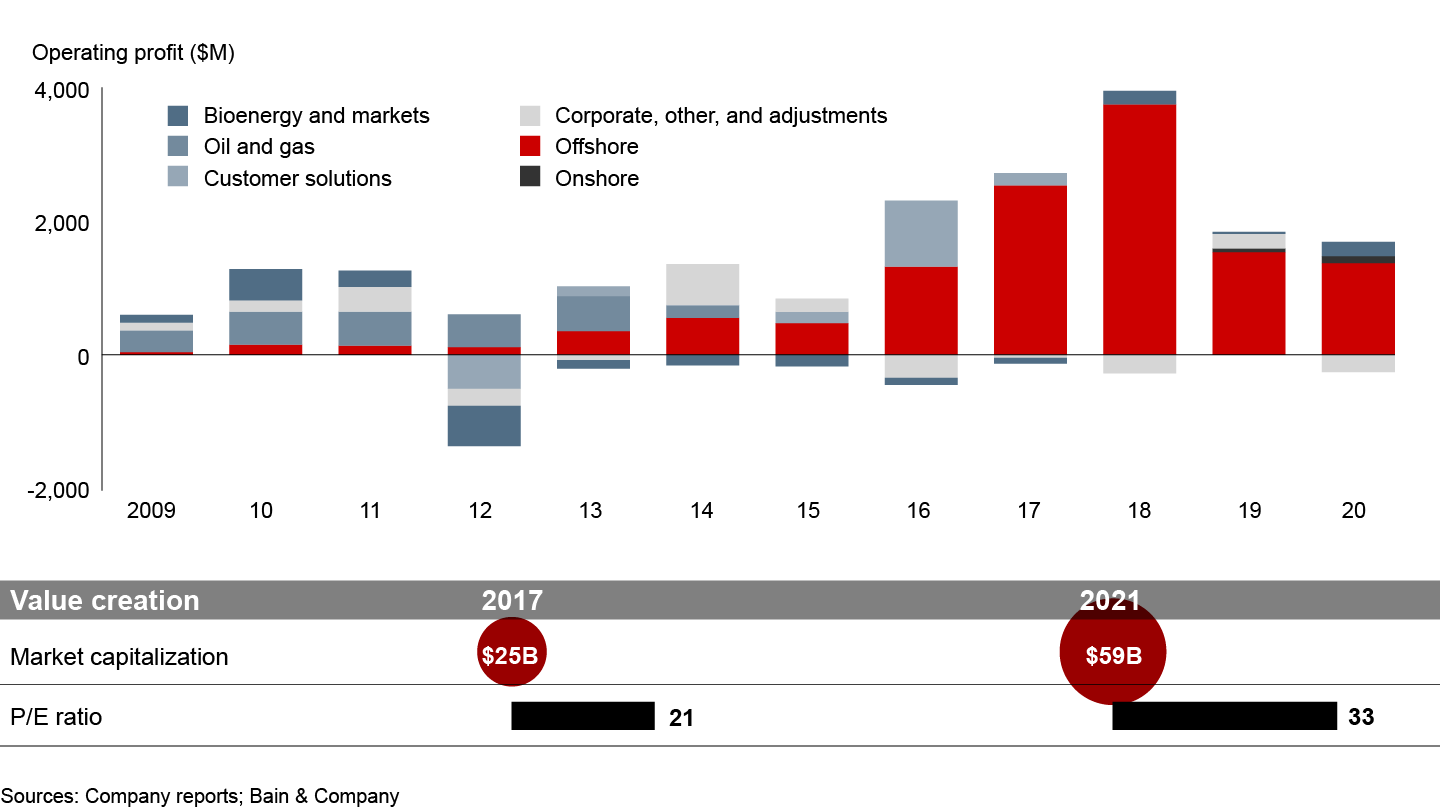
In Denmark, the state oil and natural gas company, Dansk Olie og Naturgas, found that shareholders, customers, and other citizens were increasingly hostile to large carbon emitters, putting its long-term existence in doubt. In the first decade of the 2000s, after having already increased its presence in power generation and distribution, its leaders adopted a climate strategy that eventually led it to recapitalize the company, divest its oil and gas assets, and invest heavily in wind farms. Now rebranded as Ørsted, the company is a global leader in renewable energy delivery, with nearly all of its profits from wind (see Figure 6).
Figure 6

Economics. You can’t change the world if you can’t fund the change. But forming the capital for new investments in the energy and resource transition increasingly requires not just hitting your marks on performance and earnings, but also telling a credible investor story, showing real leadership and the potential to create new value.
Meanwhile, the funding and underwriting bars are rising. The six largest banks in the US have pledged to provide financing only to zero-carbon projects by 2050, and combined they have set aside trillions of dollars to fund green projects. Major insurers have balked at underwriting coal projects, and coal companies are reporting higher debt costs. Oil sands players in Alberta are also reporting challenges getting insurance. With more reporting requirements related to climate risk, and more discussions about stranded costs, the challenges in forming capital in fossil fuels will continue to grow.
However, the energy and resource transition can also be a real opportunity for those willing to embrace it. Duke Energy, a large multistate utility in the southeastern US, has improved its operational performance and announced the largest power generation transition in the country. This transition, which will reduce Duke’s active coal units by 50% to 70% by 2030, is an important component of a $124 billion to $134 billion capital plan for 2021 to 2029. Duke’s announcement, accompanied by an ESG Investor Day and a higher rate of growth for earnings, helped drive share prices from the mid-$80s in May 2020 to more than $100 in May 2021.
So far, Neste, Ørsted, and Duke Energy are among the exceptions. Few other companies have moved quite so assertively to confront these issues. It’s worth noting that the fast movers play in industries where the externalities are most obvious and the threats to success seem most imminent: energy and power generation. But others aren’t immune. In agriculture, for example, the popularity of Beyond Meat and Impossible Burger have spurred nearly every major food company to invest in alternative proteins.
While there’s no repeatable blueprint, we’re already seeing patterns that can set companies up for success. Firms with steady core businesses are using revenues to invest in second engines of growth, new lines that make good use of their capabilities while tapping into new markets. Others with products that remain in high demand are investing in R&D and product development that will allow them to continue selling into growth markets while reducing emissions or other harmful effects. And nearly every firm is developing a roadmap for achieving the ambitious sustainability goals that most have announced in recent years.
We wrote this report to share what we’re seeing in the marketplace and to show what some companies are doing to make the most of it.
The first section describes some of the important trends affecting energy and resource companies today:
- Public-private cooperation in climate policy
- Other, nonenergy transitions that are occurring
- Redesigning the value chain to meet consumers’ evolving preferences
- The need for a more collaborative relationship between ESG investors and ENR firms
- Early business cases for hydrogen
The second section outlines some important tools and capabilities to help manage these transitions, equipping executives with:
- More effective methods for managing capital projects
- Ways to measure operations and supply chains on more parameters than just cost efficiency
- Strategies for developing an Engine 2 of growth
- A four-step process for accelerating the journey to net zero
- Digital technology’s role in freeing up capital for investment in the energy transition
The task ahead may appear daunting, even for the most capable energy or natural resources executive. But the tools to thrive in this period of rapid change―the capabilities to innovate, an understanding of the impact on shareholders and communities, and the ambition to pursue the economic opportunities inherent in the transitions—are all within reach. Those who continue to deliver on their current business while developing longer-term plans will be the ones who turn an existential threat into the opportunity of a generation.
Read our 2021 Energy and Natural Resources Report
More from the report
-
Two out of Three Won’t Do
-
Harnessing the Energy and Resource Transition
-
Net Zero: From Political Targets to Industry Action
-
Energy Is Only One Part of the Sustainability Transition
-
Redesigning Value Chains to Deliver More Sustainable Goods
-
Time for ESG Investors and Energy and Natural Resources Companies to Work Together
-
Business Opportunities in Low-Carbon Hydrogen
-
Raising Productivity in Energy and Natural Resources Capital Projects
-
Creating Resilience, Sustainability, and Accountability in Supply Chains
-
Engine 2: How to Grow a Sustainable New Business
-
Accelerating the Journey to Net Zero
-
Four Ways to Scale Digital in Energy and Natural Resources Companies
First published in juin 2021