
Skip to Content
  • Bureaux

    Bureaux

    Amérique du Nord et Amérique du Sud
    • Atlanta
    • Austin
    • Bogota
    • Boston
    • Buenos Aires
    • Chicago
    • Dallas
    • Denver
    • Houston
    • Los Angeles
    • Mexico City
    • Minneapolis
    • Monterrey
    • Montreal
    • New York
    • Rio de Janeiro
    • San Francisco
    • Santiago
    • São Paulo
    • Seattle
    • Silicon Valley
    • Toronto
    • Washington, DC
    Europe, Moyen-Orient et Afrique
    • Amsterdam
    • Athens
    • Berlin
    • Brussels
    • Copenhagen
    • Doha
    • Dubai
    • Dusseldorf
    • Frankfurt
    • Helsinki
    • Istanbul
    • Johannesburg
    • Kyiv
    • Lisbon
    • London
    • Madrid
    • Milan
    • Munich
    • Oslo
    • Paris
    • Riyadh
    • Rome
    • Stockholm
    • Vienna
    • Warsaw
    • Zurich
    Asie et Australie
    • Bangkok
    • Beijing
    • Bengaluru
    • Brisbane
    • Ho Chi Minh City
    • Hong Kong
    • Jakarta
    • Kuala Lumpur
    • Manila
    • Melbourne
    • Mumbai
    • New Delhi
    • Perth
    • Seoul
    • Shanghai
    • Singapore
    • Sydney
    • Tokyo
    Voir tous les bureaux
  • Alumni
  • Presse
  • S’abonner
  • Contacter
  • France | Français

    Sélectionnez votre région et votre langue

    Global
    • Global (English)
    Amérique du Nord et Amérique du Sud
    • Brazil (Português)
    • Argentina (Español)
    • Canada (Français)
    • Chile (Español)
    • Colombia (Español)
    Europe, Moyen-Orient et Afrique
    • France (Français)
    • DACH Region (Deutsch)
    • Italy (Italiano)
    • Spain (Español)
    • Greece (Elliniká)
    Asie et Australie
    • China (中文版)
    • Korea (한국어)
    • Japan (日本語)
  • Saved items (0)
    Saved items (0)

    You have no saved items.

    Bookmark content that interests you and it will be saved here for you to read or share later.

    Explore Bain Insights
  • Expertises Sectorielles
    Menu principal

    Expertises Sectorielles

    • Aerospace et Défense
    • Agroalimentaire
    • Chimie
    • Infrastructures, BTP et Matériaux de Construction
    • Grande Consommation
    • Services Financiers
    • Santé
    • Engins & Equipements Industriels
    • Media et Divertissement
    • Metals
    • Mining
    • Pétrole & Gaz
    • Papier et Emballage
    • Private Equity
    • Secteur Public
    • Distribution
    • Technologie
    • Télécommunications
    • Transportation
    • Travel & Leisure
    • Utilities & Energies Renouvelables
  • Expertises Fonctionnelles
    Menu principal

    Expertises Fonctionnelles

    • Expérience Client
    • ESG
    • Innovation
    • Fusions et Acquisitions
    • Opérations
    • People & Organization
    • Private Equity
    • Sales & Marketing
    • Stratégie
    • IA, Perspectives et Solutions
    • Technology
    • Transformation
  • Digital
  • Points de Vue
  • À propos
    Menu principal

    À propos

    • Notre Activité
    • Nos Valeurs
    • Nos Collaborateurs et Notre Équipe Dirigeante
    • Notre Impact
    • Prix & Récompenses
    • Partenariats Internationaux
    • Evénements
    Further: Our global responsibility
    • Diversité et Inclusion
    • Impact Social
    • Sustainability
    • World Economic Forum
    Learn more about Further
  • Carrières
    Menu principal

    Carrières

    • Rejoignez-nous
      Carrières
      Rejoignez-nous
      • Find Your Place
      • Nos domaines d’expertise
      • Equipes multidisciplinaires
      • Étudiants
      • Stages et programmes
      • Événements de recrutement
    • La vie chez Bain
      Carrières
      La vie chez Bain
      • Blog: Inside Bain
      • Récits de carrière
      • Nos collaborateurs
      • Nos bureaux
      • Soutenir votre évolution professionnelle
      • Groupes d’affinités
      • Avantages chez Bain
    • Histoires d’impact
    • Notre processus de recrutement
      Carrières
      Notre processus de recrutement
      • Ce que vous pouvez attendre
      • Entretiens
    Trouver un poste
  • Bureaux
    Menu principal

    Bureaux

    • Amérique du Nord et Amérique du Sud
      Bureaux
      Amérique du Nord et Amérique du Sud
      • Atlanta
      • Austin
      • Bogota
      • Boston
      • Buenos Aires
      • Chicago
      • Dallas
      • Denver
      • Houston
      • Los Angeles
      • Mexico City
      • Minneapolis
      • Monterrey
      • Montreal
      • New York
      • Rio de Janeiro
      • San Francisco
      • Santiago
      • São Paulo
      • Seattle
      • Silicon Valley
      • Toronto
      • Washington, DC
    • Europe, Moyen-Orient et Afrique
      Bureaux
      Europe, Moyen-Orient et Afrique
      • Amsterdam
      • Athens
      • Berlin
      • Brussels
      • Copenhagen
      • Doha
      • Dubai
      • Dusseldorf
      • Frankfurt
      • Helsinki
      • Istanbul
      • Johannesburg
      • Kyiv
      • Lisbon
      • London
      • Madrid
      • Milan
      • Munich
      • Oslo
      • Paris
      • Riyadh
      • Rome
      • Stockholm
      • Vienna
      • Warsaw
      • Zurich
    • Asie et Australie
      Bureaux
      Asie et Australie
      • Bangkok
      • Beijing
      • Bengaluru
      • Brisbane
      • Ho Chi Minh City
      • Hong Kong
      • Jakarta
      • Kuala Lumpur
      • Manila
      • Melbourne
      • Mumbai
      • New Delhi
      • Perth
      • Seoul
      • Shanghai
      • Singapore
      • Sydney
      • Tokyo
    Voir tous les bureaux
  • Alumni
  • Presse
  • S’abonner
  • Contacter
  • France | Français
    Menu principal

    Sélectionnez votre région et votre langue

    • Global
      Sélectionnez votre région et votre langue
      Global
      • Global (English)
    • Amérique du Nord et Amérique du Sud
      Sélectionnez votre région et votre langue
      Amérique du Nord et Amérique du Sud
      • Brazil (Português)
      • Argentina (Español)
      • Canada (Français)
      • Chile (Español)
      • Colombia (Español)
    • Europe, Moyen-Orient et Afrique
      Sélectionnez votre région et votre langue
      Europe, Moyen-Orient et Afrique
      • France (Français)
      • DACH Region (Deutsch)
      • Italy (Italiano)
      • Spain (Español)
      • Greece (Elliniká)
    • Asie et Australie
      Sélectionnez votre région et votre langue
      Asie et Australie
      • China (中文版)
      • Korea (한국어)
      • Japan (日本語)
  • Saved items  (0)
    Menu principal
    Saved items (0)

    You have no saved items.

    Bookmark content that interests you and it will be saved here for you to read or share later.

    Explore Bain Insights
  • Expertises Sectorielles
    • Expertises Sectorielles

      • Aerospace et Défense
      • Agroalimentaire
      • Chimie
      • Infrastructures, BTP et Matériaux de Construction
      • Grande Consommation
      • Services Financiers
      • Santé
      • Engins & Equipements Industriels
      • Media et Divertissement
      • Metals
      • Mining
      • Pétrole & Gaz
      • Papier et Emballage
      • Private Equity
      • Secteur Public
      • Distribution
      • Technologie
      • Télécommunications
      • Transportation
      • Travel & Leisure
      • Utilities & Energies Renouvelables
  • Expertises Fonctionnelles
    • Expertises Fonctionnelles

      • Expérience Client
      • ESG
      • Innovation
      • Fusions et Acquisitions
      • Opérations
      • People & Organization
      • Private Equity
      • Sales & Marketing
      • Stratégie
      • IA, Perspectives et Solutions
      • Technology
      • Transformation
  • Digital
  • Points de Vue
  • À propos
    • À propos

      • Notre Activité
      • Nos Valeurs
      • Nos Collaborateurs et Notre Équipe Dirigeante
      • Notre Impact
      • Prix & Récompenses
      • Partenariats Internationaux
      • Evénements
      Further: Our global responsibility
      • Diversité et Inclusion
      • Impact Social
      • Sustainability
      • World Economic Forum
      Learn more about Further
  • Carrières
    Recherches les plus fréquentes
    • Agile
    • Digital
    • Stratégie
    Vos recherches précédentes
      Pages récemment visitées

      Content added to saved items

      Saved items (0)

      Removed from saved items

      Saved items (0)

      Etude

      Do you see what we see? The future of independent optometry

      Do you see what we see? The future of independent optometry

      Eye care professionals need to adapt as retailers and online pure plays redefine vision care.

      Par Elizabeth Spaulding

      • min

      Etude

      Do you see what we see? The future of independent optometry
      en

      Melanie just got a call from her local optometrist’s office, reminding her it is time for her annual eye exam. She likes Dr. Calderon a lot. He takes time with her and keeps a watch on the effect her diabetes has on her vision. She really needs to get both glasses and contact lenses at this visit, but her vision plan will cover only one. Melanie does some Internet research and discovers that she can buy her contacts online at 1-800 Contacts at a price that is significantly lower than the one Dr. Calderon’s office offers. She decides to get her exam done at Dr. Calderon’s but goes elsewhere for the contacts. 

      Independent optometry faces a major challenge. Will the industry remain stable, with approximately 50% market share for overall vision care (including optometric services as well as materials like glasses and contact lenses), or will it be forever changed by the same market pressures that have disrupted other industries like books, consumer electronics and independent pharmacies?

      Independent optometrists (eye care professionals, or ECPs) and the managed vision care plans with which they contract face pressures similar to other industries:

      • The growth of large national chains and mass players that use aggressive and innovative marketing strategies to bring consumers into their channel;

      • Increased consumer comfort with buying products online because of rapid improvements in site navigation, product selection and free shipping and returns;

      • A desire for greater price transparency on products, hastened by Internet juggernaut Amazon.com and mobile innovations such as RedLaser; and

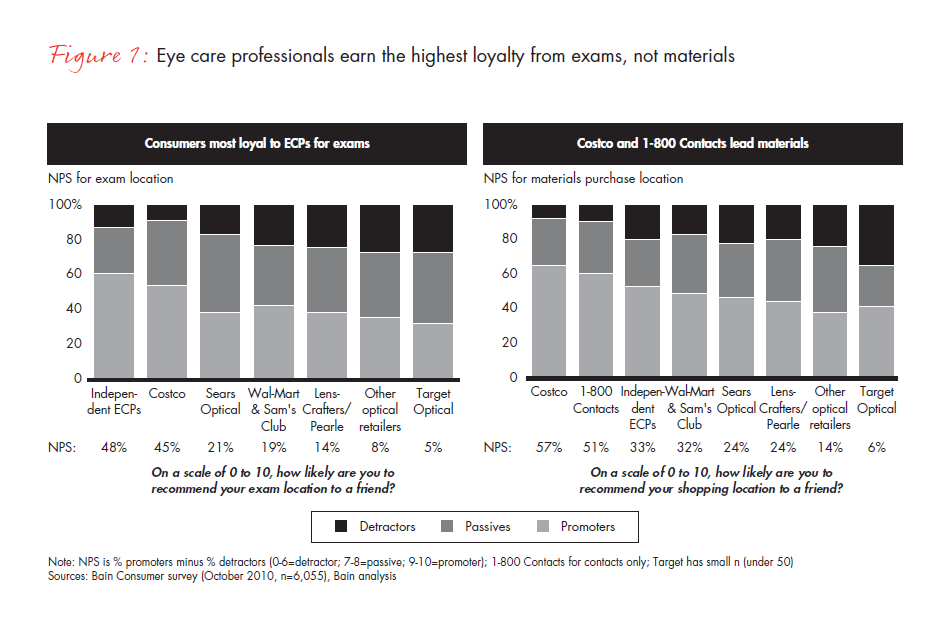
      • A shift from the personalized shopping experience toward more efficient retail environments, as characterized by Wal-Mart and other big-box retailers (see Figure 1).

      the-next-retail-disruption-v2-fig-01_embed

      Meanwhile, the broader vision industry profit pool continues to shift to retail. Vision benefits providers, such as VSP, see vertically integrated player EyeMed/ Luxottica aggressively pricing its plans in order to move consumers to its own retail stores (LensCrafters and Pearle Vision, for example), putting pressure on reimbursement rates for exams—with Luxottica’s underlying desire to increase sell-through of company-owned products as the leading licensor of brands for sunglasses and vision wear. That gradual evolution has focused the employer and consumer on the materials experience, rather than on the exam or the quality of care. Yet eye exams have long been known as one of the best sources for early detection of health risks such as diabetes. For example, 77.7% of adults who had an eye exam at an independent eye care provider’s office within the last six months received a glaucoma test during their exam, compared with 66.6% who went to a chain.1 As some of the larger companies like Wal-Mart hire or contract with their own optometrists and offer exams in their stores, the independent doctor may encounter even more competition for that service.

      The fact that revenue for optometrists has not declined substantially—yet—may be lulling doctors into a false sense of security. The optometrists’ share of exams versus materials has hovered around 65% for independent eye doctors, while materials have gradually eroded to about 40%.2 Doctors and their managed-care partners must investigate ways to increase relevance and consumer trust in the materials they sell, facing the reality that theirs is a retail business as well.

      The independent optometrist is operating in a highly dynamic retail environment, as online sales growth rapidly outpaces physical retail across categories. For example, nearly 20% of contact lenses sales are now moving online, a fact that “Melanie” has discovered but that “Dr. Calderon” may not fully realize. Eye doctors also need to emphasize and further differentiate the quality of care and personal service they offer—service that is unlikely to be matched by their online competitors.

      The growth of chains, both in the US and internationally, has put significant pressure not only on the independent optometrist but also on the vision insurance providers with whom they contract. Retail profits represent as much as two-thirds of the dollars generated in vision care— squeezing the vision benefits providers—as companies like EyeMed/Luxottica lower the price of their benefit plans to entice employers and consumers into their chains. The biggest retailers continue to expand, with the top 50 optical retailers gaining share dramatically from 2003 to 2010.3

      Likewise, international markets have experienced shifts to chain retail, with roll-ups of independent optometrists into consistent offerings by retail companies such as Specsavers. In the UK alone, Specsavers gained 3.3% in compounded annual growth rate between 2007 and 2009, while the independents and small chains actually lost 3.9%.4 As a share of the market, independent optometrists in the UK dropped from 45% in 2007 to 41% in 2009, while the independents lost even more dramatically in Australia when Specsavers entered the market in 2008. Stunningly, the independent share is estimated to have dropped from 73% to 55% between 2004 and 2009.

      The primary source of revenue and profits for independent optometry is the patient-feeder capability of managed vision care providers like VSP Vision Care, Spectera and others. If these provider networks cannot give the care and shopping experience that consumers demand, then the large-scale employer purchasers of managed vision care plans will shift their purchasing dollars to plans that can.

      For employers, the second-most influential factor (after cost) in selecting a managed vision care plan is the retail network the plan provides. Benefits managers not only want but need to provide employees with options for optometry services, given an often diverse employee base; and they often do not even consider contracting with managed vision care plans that do not provide a retail component. Employees want choice, and 80% of managers now report making purchasing decisions that are directed by employee requests. In 2000, only 65% of benefits managers made the same type of purchasing decisions.5

      While the role of the employer purchaser remains central to the future of managed vision care service providers, individual consumer preferences increasingly influence both vision benefits plan selection (with growing adoption of voluntary plans) and the ultimate decision of where to go for both exams and materials. In 2010, Bain & Company surveyed 6,000 US consumers, testing preferences for eye care services and identified three consumer segments:6

      • Independent Loyalists: Consumers who receive eye exams and purchase glasses or contacts from independent optometrists;
      • Hybrid Spenders: Consumers who receive eye exam services from one type of location (typically independent optometrists) and purchase glasses or contacts from another type of location (such as retail chains);
      • Chain Loyalists: Consumers who receive eye exams and purchase glasses or contacts from retail chains.

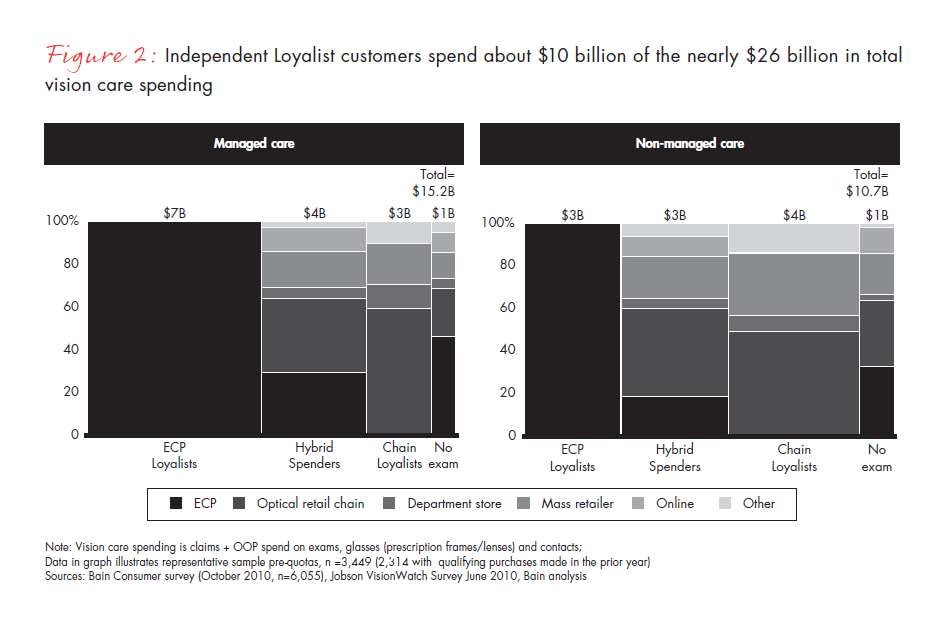
      Independent Loyalists spend approximately $10 billion of the $26 billion spent by consumers on vision materials at an independent optometrist (see Figure 2). These highly loyal consumers have been the most stable segment of the consumer market up to now. The Hybrid Spenders, who split their dollars between the independent optometrist and other retailers, are most at risk in terms of loyalty, with $7 billion to $10 billion of spending power residing with this segment. Consumers like Melanie may have started out as Independent Loyalists, but they can quickly migrate to Hybrids or even Chain Loyalists if the independent optometrist doesn’t meet the competition and cost of the more sophisticated retail players.

      the-next-retail-disruption-v2-fig-02_embed

      While the trends may seem daunting for independent optometrists, a number of factors continue to provide a solid base from which to build. Consumers by and large prefer their local independent optometrists for comprehensive eye exams: more than 80% for those in managed vision care programs; more than 60% among hybrid spenders; and more than 40% of chain loyalists.

      However, independent optometrists cannot afford to remain complacent. The Bain & Company consumer survey revealed that in the coming 12 months, consumers will be willing to do a lot more purchasing, not only from chain retailers, but also online. Forty-one percent said they would purchase contacts online, 22% would research products online and 21% said they would even purchase glasses online (from upstart companies such as Warby Parker, which offers glasses at $95 with free shipping and free returns).7

      Independent optometrists like Dr. Calderon will need to change their behavior in order to survive. They will need to have a stronger materials offering, more transparent pricing, online scheduling for exams, availability of materials to buy or pick up easily in store and faster production of new glasses, while continuing to provide the same personalized service that has won them loyalty up to this point. Category disrupters such as Zappos for footwear or the new upstarts such as Warby Parker for eye glasses are changing the way glasses are purchased and will continue to evolve and deliver higher levels of convenience and value. The independent optometrist must act or be left behind.

      Elizabeth Spaulding is a partner in Bain & Company’s San Francisco office and a member of the firm’s Global Retail and Consumer Products practices.


      1 Jobson Research, 2010 Adult Consumer Eye Exam Experience Survey

      2 Jobson Visionwatch Survey, 2010, accessed October 27, 2011 http://www.thevisioncouncil.org/members/content_13052.cfm?navID=754

      3 US Optical Retailer Report, 2005 and 2010

      4 Mintel, “Optical Goods and Eyecare,” UK Market Research Report, February 2010, accessed October 27, 2011, http://bit.ly/smwBYN; Euromonitor, “Eyewear in Australia,” May 2010, accessed October 27, 2011, http://www.euromonitor.com/eyewear-in-australia/report

      5 Hay Group Vision Prevalence survey, 2009; US Census employment by firm size for 2000; Bain experience

      6 Bain analysis

      7 Bain Consumer survey, October 2010; Warby Parker website, accessed October 24, 2011, http://store.warbyparker.com/how-we-do-it


      the-next-retail-disruption-v2-fig-01_full

      the-next-retail-disruption-v2-fig-02_full
      Auteurs
      • Elizabeth Spaulding
        Former Partner, San Francisco
      Contactez-nous
      Synergies sectorielles
      • Distribution
      • Santé
      Pharmaceuticals
      The Cure for Pharma's Commercial Productivity Woes

      To earn greater loyalty and raise productivity, figure out what really matters for doctors.

      Voir plus
      Santé
      Weight-Loss Drug Users Spend Less on Groceries, Fast Food

      GLP-1 drugs result in notable drops in food spending. By 2030, as many as one in four Americans may have tried them.

      Voir plus
      Top Digital Use Cases by Industry

      Bain’s research identifies the most useful digital applications, including those that offer the best opportunities for competitive advantage.

      Voir plus
      Digital Transformation: What Matters Most in Your Sector?

      Bain Digital GPS Benchmark 2021 reveals the most relevant digital applications for business leaders across 10 sectors.

      Voir plus
      It’s in the Contract, or Is It?

      Improving contract management can yield 100 basis points of restored revenue, which drops right to the bottom line.

      Voir plus
      First published in mars 2012
      Mots clés
      • Distribution
      • Santé

      Comment nous avons aidé nos clients

      With Sophisticated Customer Segmentation, a Travel Company Sets Sail

      Lire l’étude de cas

      Stratégie Speed at Scale: The Thermo Fisher story

      Lire l’étude de cas

      Taking Shared Services to a New Level at a Healthcare Company

      Lire l’étude de cas

      Vous souhaitez continuer cette conversation ?

      Nous aidons des dirigeants du monde entier à matérialiser des impacts et des résultats pérennes et créateurs de valeur dans leurs organisations.

      Les points de vue de Bain : notre perspective sur des problématiques auxquelles sont confrontées les entreprises à travers le monde, envoyés chaque mois dans votre boîte de réception. 

      *J’ai lu la politique de confidentialité et j’accepte les conditions.

      Merci de lire notre politique de confidentialité.
      Bain & Company
      Contactez-nous Sustainability Accessibility Conditions d’utilisation Politique de Confidentialité Cookie Policy Mentions Légales Sitemap Log In

      © 1996-2026 Bain & Company, Inc.

      Contacter Bain

      Comment pouvons-nous vous aider ?

      • Business inquiry
      • Career information
      • Press relations
      • Partnership request
      • Speaker request
      Voir tous les bureaux