
Skip to Content
  • Bureaux

    Bureaux

    Amérique du Nord et Amérique du Sud
    • Atlanta
    • Austin
    • Bogota
    • Boston
    • Buenos Aires
    • Chicago
    • Dallas
    • Denver
    • Houston
    • Los Angeles
    • Mexico City
    • Minneapolis
    • Monterrey
    • Montreal
    • New York
    • Rio de Janeiro
    • San Francisco
    • Santiago
    • São Paulo
    • Seattle
    • Silicon Valley
    • Toronto
    • Washington, DC
    Europe, Moyen-Orient et Afrique
    • Amsterdam
    • Athens
    • Berlin
    • Brussels
    • Copenhagen
    • Doha
    • Dubai
    • Dusseldorf
    • Frankfurt
    • Helsinki
    • Istanbul
    • Johannesburg
    • Kyiv
    • Lisbon
    • London
    • Madrid
    • Milan
    • Munich
    • Oslo
    • Paris
    • Riyadh
    • Rome
    • Stockholm
    • Vienna
    • Warsaw
    • Zurich
    Asie et Australie
    • Bangkok
    • Beijing
    • Bengaluru
    • Brisbane
    • Ho Chi Minh City
    • Hong Kong
    • Jakarta
    • Kuala Lumpur
    • Manila
    • Melbourne
    • Mumbai
    • New Delhi
    • Perth
    • Seoul
    • Shanghai
    • Singapore
    • Sydney
    • Tokyo
    Voir tous les bureaux
  • Alumni
  • Presse
  • S’abonner
  • Contacter
  • France | Français

    Sélectionnez votre région et votre langue

    Global
    • Global (English)
    Amérique du Nord et Amérique du Sud
    • Brazil (Português)
    • Argentina (Español)
    • Canada (Français)
    • Chile (Español)
    • Colombia (Español)
    Europe, Moyen-Orient et Afrique
    • France (Français)
    • DACH Region (Deutsch)
    • Italy (Italiano)
    • Spain (Español)
    • Greece (Elliniká)
    Asie et Australie
    • China (中文版)
    • Korea (한국어)
    • Japan (日本語)
  • Saved items (0)
    Saved items (0)

    You have no saved items.

    Bookmark content that interests you and it will be saved here for you to read or share later.

    Explore Bain Insights
  • Expertises Sectorielles
    Menu principal

    Expertises Sectorielles

    • Aerospace et Défense
    • Agroalimentaire
    • Chimie
    • Infrastructures, BTP et Matériaux de Construction
    • Grande Consommation
    • Services Financiers
    • Santé
    • Engins & Equipements Industriels
    • Media et Divertissement
    • Metals
    • Mining
    • Pétrole & Gaz
    • Papier et Emballage
    • Private Equity
    • Secteur Public
    • Distribution
    • Technologie
    • Télécommunications
    • Transportation
    • Travel & Leisure
    • Utilities & Energies Renouvelables
  • Expertises Fonctionnelles
    Menu principal

    Expertises Fonctionnelles

    • Expérience Client
    • ESG
    • Innovation
    • Fusions et Acquisitions
    • Opérations
    • People & Organization
    • Private Equity
    • Sales & Marketing
    • Stratégie
    • IA, Perspectives et Solutions
    • Technology
    • Transformation
  • Digital
  • Points de Vue
  • À propos
    Menu principal

    À propos

    • Notre Activité
    • Nos Valeurs
    • Nos Collaborateurs et Notre Équipe Dirigeante
    • Notre Impact
    • Prix & Récompenses
    • Partenariats Internationaux
    • Evénements
    Further: Our global responsibility
    • Diversité et Inclusion
    • Impact Social
    • Sustainability
    • World Economic Forum
    Learn more about Further
  • Carrières
    Menu principal

    Carrières

    • Rejoignez-nous
      Carrières
      Rejoignez-nous
      • Find Your Place
      • Nos domaines d’expertise
      • Equipes multidisciplinaires
      • Étudiants
      • Stages et programmes
      • Événements de recrutement
    • La vie chez Bain
      Carrières
      La vie chez Bain
      • Blog: Inside Bain
      • Récits de carrière
      • Nos collaborateurs
      • Nos bureaux
      • Soutenir votre évolution professionnelle
      • Groupes d’affinités
      • Avantages chez Bain
    • Histoires d’impact
    • Notre processus de recrutement
      Carrières
      Notre processus de recrutement
      • Ce que vous pouvez attendre
      • Entretiens
    Trouver un poste
  • Bureaux
    Menu principal

    Bureaux

    • Amérique du Nord et Amérique du Sud
      Bureaux
      Amérique du Nord et Amérique du Sud
      • Atlanta
      • Austin
      • Bogota
      • Boston
      • Buenos Aires
      • Chicago
      • Dallas
      • Denver
      • Houston
      • Los Angeles
      • Mexico City
      • Minneapolis
      • Monterrey
      • Montreal
      • New York
      • Rio de Janeiro
      • San Francisco
      • Santiago
      • São Paulo
      • Seattle
      • Silicon Valley
      • Toronto
      • Washington, DC
    • Europe, Moyen-Orient et Afrique
      Bureaux
      Europe, Moyen-Orient et Afrique
      • Amsterdam
      • Athens
      • Berlin
      • Brussels
      • Copenhagen
      • Doha
      • Dubai
      • Dusseldorf
      • Frankfurt
      • Helsinki
      • Istanbul
      • Johannesburg
      • Kyiv
      • Lisbon
      • London
      • Madrid
      • Milan
      • Munich
      • Oslo
      • Paris
      • Riyadh
      • Rome
      • Stockholm
      • Vienna
      • Warsaw
      • Zurich
    • Asie et Australie
      Bureaux
      Asie et Australie
      • Bangkok
      • Beijing
      • Bengaluru
      • Brisbane
      • Ho Chi Minh City
      • Hong Kong
      • Jakarta
      • Kuala Lumpur
      • Manila
      • Melbourne
      • Mumbai
      • New Delhi
      • Perth
      • Seoul
      • Shanghai
      • Singapore
      • Sydney
      • Tokyo
    Voir tous les bureaux
  • Alumni
  • Presse
  • S’abonner
  • Contacter
  • France | Français
    Menu principal

    Sélectionnez votre région et votre langue

    • Global
      Sélectionnez votre région et votre langue
      Global
      • Global (English)
    • Amérique du Nord et Amérique du Sud
      Sélectionnez votre région et votre langue
      Amérique du Nord et Amérique du Sud
      • Brazil (Português)
      • Argentina (Español)
      • Canada (Français)
      • Chile (Español)
      • Colombia (Español)
    • Europe, Moyen-Orient et Afrique
      Sélectionnez votre région et votre langue
      Europe, Moyen-Orient et Afrique
      • France (Français)
      • DACH Region (Deutsch)
      • Italy (Italiano)
      • Spain (Español)
      • Greece (Elliniká)
    • Asie et Australie
      Sélectionnez votre région et votre langue
      Asie et Australie
      • China (中文版)
      • Korea (한국어)
      • Japan (日本語)
  • Saved items  (0)
    Menu principal
    Saved items (0)

    You have no saved items.

    Bookmark content that interests you and it will be saved here for you to read or share later.

    Explore Bain Insights
  • Expertises Sectorielles
    • Expertises Sectorielles

      • Aerospace et Défense
      • Agroalimentaire
      • Chimie
      • Infrastructures, BTP et Matériaux de Construction
      • Grande Consommation
      • Services Financiers
      • Santé
      • Engins & Equipements Industriels
      • Media et Divertissement
      • Metals
      • Mining
      • Pétrole & Gaz
      • Papier et Emballage
      • Private Equity
      • Secteur Public
      • Distribution
      • Technologie
      • Télécommunications
      • Transportation
      • Travel & Leisure
      • Utilities & Energies Renouvelables
  • Expertises Fonctionnelles
    • Expertises Fonctionnelles

      • Expérience Client
      • ESG
      • Innovation
      • Fusions et Acquisitions
      • Opérations
      • People & Organization
      • Private Equity
      • Sales & Marketing
      • Stratégie
      • IA, Perspectives et Solutions
      • Technology
      • Transformation
  • Digital
  • Points de Vue
  • À propos
    • À propos

      • Notre Activité
      • Nos Valeurs
      • Nos Collaborateurs et Notre Équipe Dirigeante
      • Notre Impact
      • Prix & Récompenses
      • Partenariats Internationaux
      • Evénements
      Further: Our global responsibility
      • Diversité et Inclusion
      • Impact Social
      • Sustainability
      • World Economic Forum
      Learn more about Further
  • Carrières
    Recherches les plus fréquentes
    • Agile
    • Digital
    • Stratégie
    Vos recherches précédentes
      Pages récemment visitées

      Content added to saved items

      Saved items (0)

      Removed from saved items

      Saved items (0)

      Etude

      The Transformational Power of Career-Connected Learning in Healthcare

      The Transformational Power of Career-Connected Learning in Healthcare

      Health systems starved for talent are forging close partnerships with local high schools to fill pipelines and jump-start careers.

      Par Chris Bierly, Eric Berger, et Abigail Smith

      • min
      }

      Etude

      The Transformational Power of Career-Connected Learning in Healthcare
      en
      At a Glance
      • Health systems across the US are facing chronic talent shortages that drive up costs and make it challenging to deliver on their missions.
      • Using a $250 million grant from Bloomberg Philanthropies, 10 of them are forging deep partnerships with local school districts to develop new high schools that offer students clear pathways to healthcare careers.
      • What makes them work is a career-connected learning model designed to benefit both employers and students—one that spurs economic growth and provides students with multiple pathways to a promising career. 

      The US economy’s enduring mismatch between good, available jobs and strong candidates to fill them plays out daily at Houston’s Memorial Hermann Health System (MHHS).

      Over the course of a year, MHHS could be looking to fill around 3,000 openings, many of them critical positions like nurse, surgical assistant, or radiologic technologist—attractive jobs that offer good wages and a clear path to a family-sustaining career.

      Qualified candidates are chronically scarce, largely because the US education system isn’t turning out enough of them (see Figure 1). “We’re short of the people we need now and into the future,” said David Callender, MHHS president and chief executive. “The pipeline just isn’t big enough.”

      Figure 1
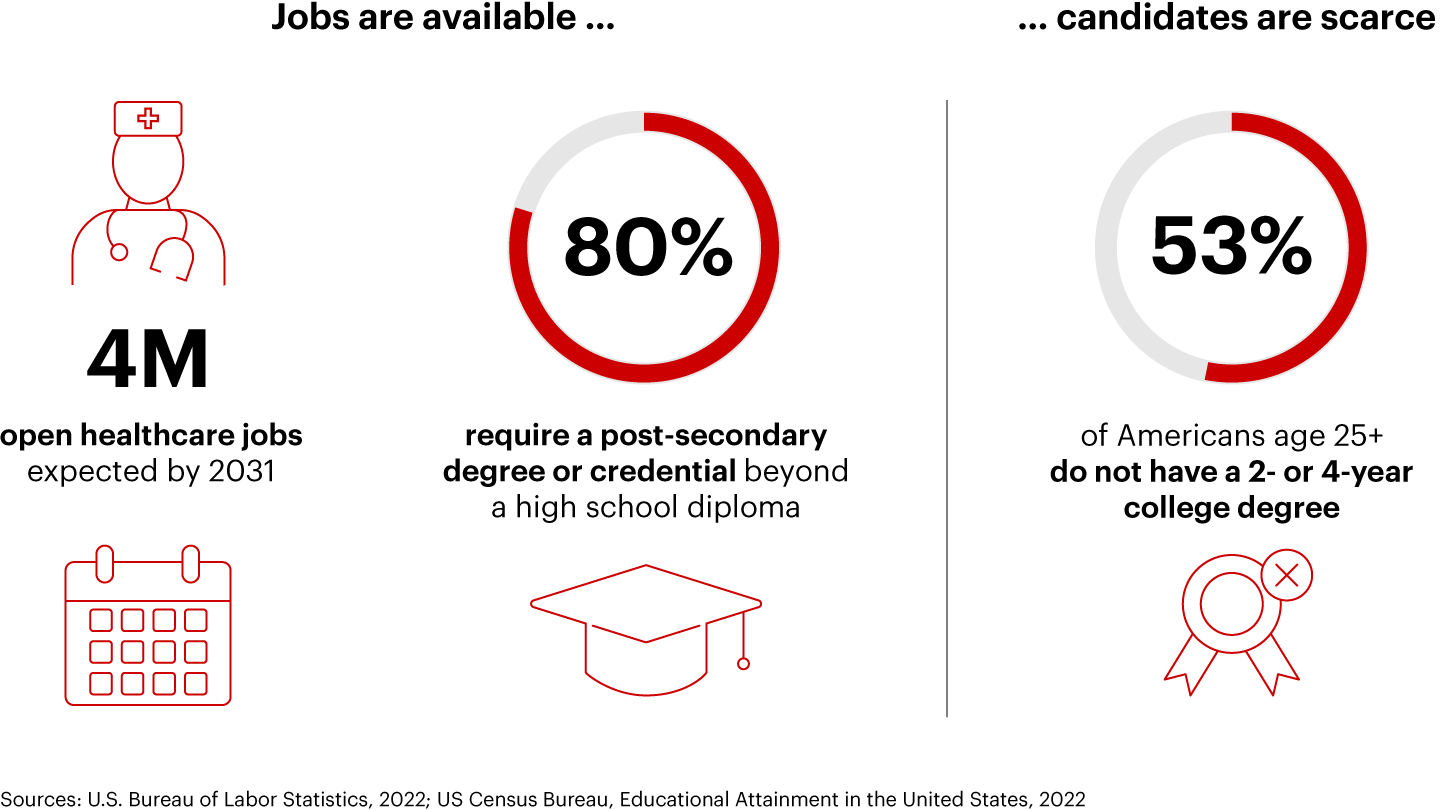
      Healthcare has a critical talent shortage partly because the US education system isn’t producing enough qualified candidates

      Confronting the talent gap

      With talent issues threatening their ability to meet the needs of their communities, MHHS and health systems in nine other US geographies are engaged in a foundational rethink of how employers and educators can work together to prepare young people for healthcare careers.

      Sparked by $250 million in seed money from Bloomberg Philanthropies, these health systems have joined with local school districts to co-create a set of new (or newly reimagined) healthcare-focused high schools that offer students clear pathways to in-demand, well-paid healthcare careers. In addition to Houston, they are located in Boston, New York, Philadelphia, Charlotte and Durham, North Carolina, Dallas, and Nashville, as well as in rural Alabama and northeast Tennessee.

      The schools build on the growing career-connected learning movement (CCL), which has been winning converts among educators and employers across the US. They are designed to combine classroom learning with on-the-job work experiences that include paid internships and mentoring at the healthcare systems.

      This “study-and-work” approach turns out to be a better way to learn for many students than the traditional “study-then-work” model. Many find the opportunity to combine classroom learning with real-world work experience a better match for how they learn, allowing them to dream bigger and have a fair shot at achieving those dreams. The payoff for employers is a steady stream of young, motivated job candidates prepared to succeed in the jobs health systems most need to fill.

      Market driven, student centered

      Developing career pathways in high schools is a hot trend. What makes these 10 schools stand out is the depth of the partnerships forged between the employers, school districts, post-secondary institutions, and government officials behind them. Driving this close collaboration is a CCL model that is both market driven and student centered. That balance is critical. These new partnerships are neither corporate philanthropy nor vocational training. They are new-to-the-world schools designed to address the employer’s pressing need for talent, while offering students a great education and agency via multiple pathways to a good job, continued education, and a promising career (see Figure 2).

      Figure 2
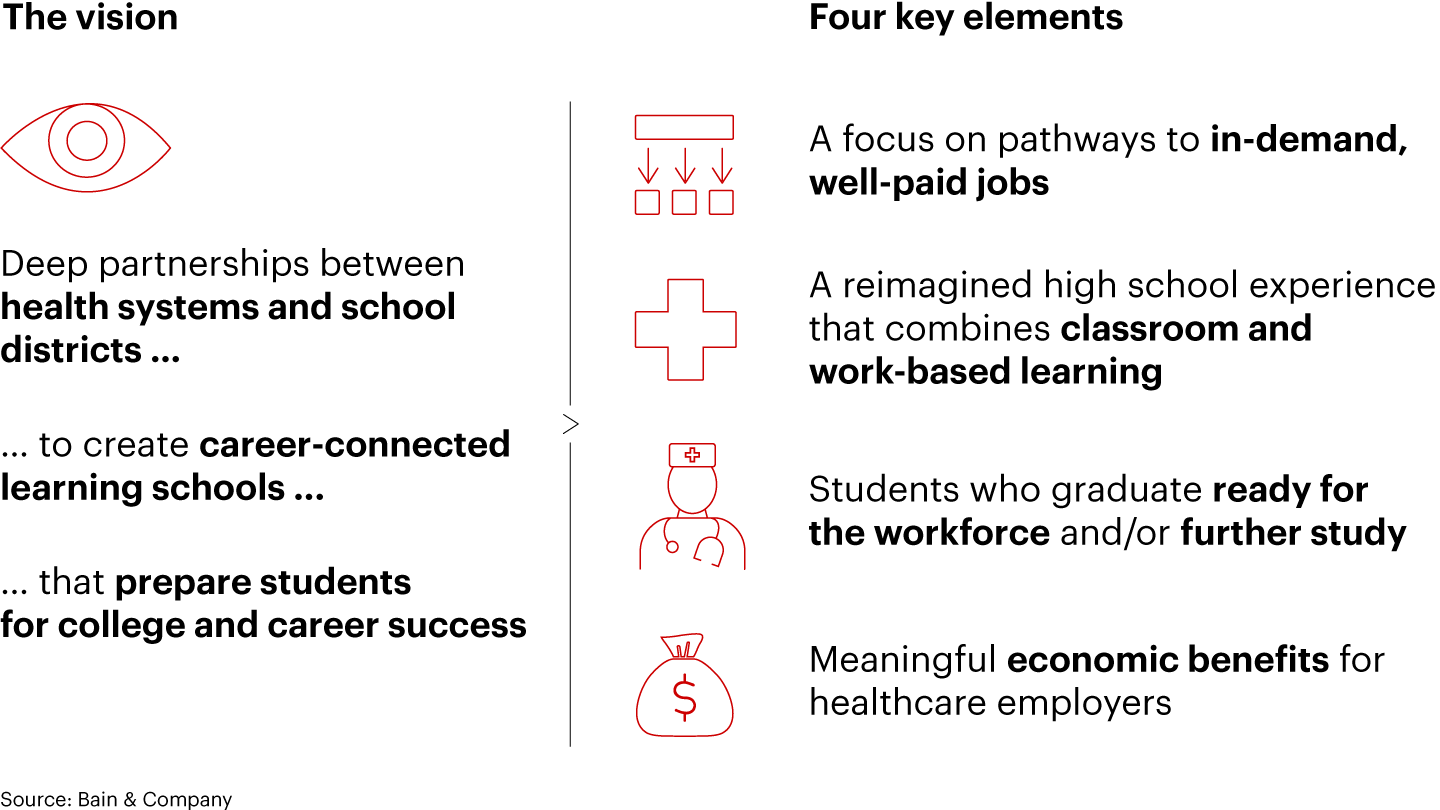
      Healthcare-focused high schools are built on a career-connected learning model that is market driven and student centered

      Leaders hoping to develop such an innovative educational model need to design around four essential elements.

      1. Focus on good jobs, not just any jobs

      A CCL model with broad, scalable appeal has to focus on jobs that promise a family-sustaining career—not just any jobs. We define good jobs as those that pay a living wage, provide opportunities for upward progression, and aren’t at risk of obsolescence. Focusing on good jobs addresses the needs of employers and students alike. For health systems, jobs like registered nurse, clinical lab technician, or respiratory therapist are mission-critical functions essential for maintaining capacity levels and providing high-quality care at the heart of the system’s mission. For students with the right preparation, these jobs are accessible and attractive, and offer a path to economic self-sufficiency.

      A good example is the nursing pathway at Health Education and Learning (HEAL) High School, which is part of the Aldine, Texas, school district and partnered with MHHS. It is designed as a launchpad for registered nursing positions at the health system, ranging from $71,000 to $135,000 in annual salary. Students in Boston taking the surgery pathway co-developed by Mass General Brigham (MGB) and Edward M. Kennedy (EMK) Academy for Health Careers qualify right away for a surgical technician role starting at $57,000 annually. The hospital operations pathway co-sponsored by Children’s Hospital of Philadelphia and nearby Mastery High School qualifies students for sterile processing tech jobs that start at more than $24 an hour.

      2. Reimagine the high school experience

      Making these pathways work for students requires rethinking their journey through high school. Pathways combine classroom study with clinical work experiences in a program that is hands on and motivational for students. Critically, the resulting school experience isn’t somehow “less than” a traditional college prep pathway—students still meet all requirements in math, English, and history. But in addition to completing a college-prep curriculum, students in these programs receive industry-recognized credentials in their given area of focus while earning college-level credits toward a next-level degree (see Figure 3).

      Figure 3
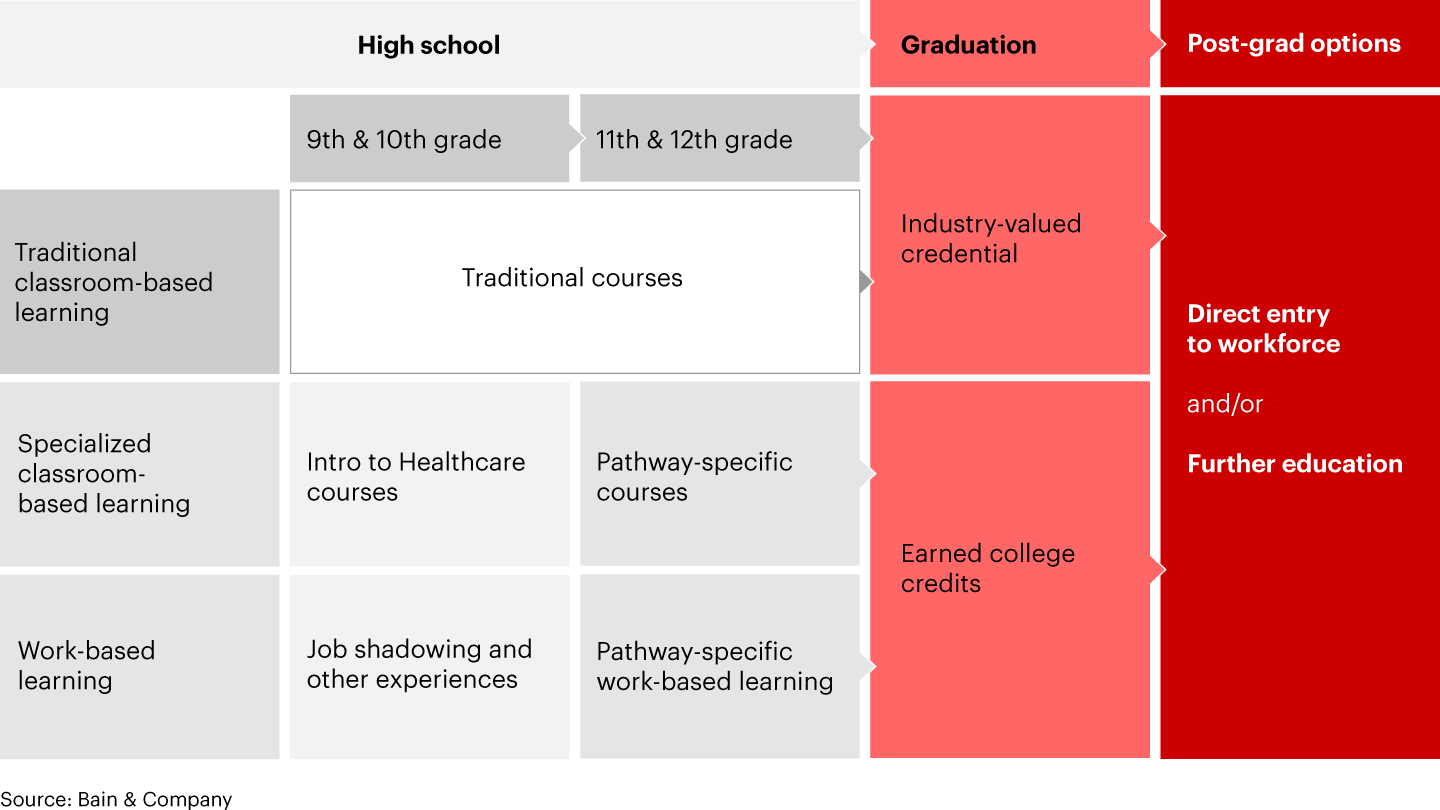
      Pathways combine classroom learning with on-the-job experiences to prepare graduates to succeed in the workforce

      Boston’s EMK, for instance, offers ninth- and tenth-grade students the chance to gain hands-on exposure to a variety of disciplines at MGB before choosing a specific pathway. Those who choose nursing then go on to take Patient Care Technician I and II courses during Grades 11 and 12, alongside college-level courses such as anatomy, physiology, or Introduction to Psychology.

      At the same time, nursing students intern on an MGB hospital floor or at a long-term care facility, supporting acting nurses under watchful supervision of a clinical preceptor—a trained clinician-turned-coach. These experiences earn students like Salma Sharif a certified nursing assistant (CNA) credential upon graduation, while opening their eyes to a world of possibilities. Sharif, who graduates this year, says the pathway “made me realize there are so many people in healthcare that are so supportive and willing to mentor me.” Classroom learning is one thing, but the real-life clinical experience “really motivates you to actually pursue (a career in healthcare).”

      3. Create student choice

      The intent of CCL pathways is to offer an alternative to the near-singular focus most high schools place on moving directly into full-time attendance at a four-year college—an emphasis that simply isn’t working for too many young people. The most effective pathways offer students the choice of moving into a job that pays right away or to continue their education in the way that best suits their needs. Often, this means mixing work and post-secondary education, an approach that can make study more affordable and impactful, while making work progressively more fulfilling and lucrative.

      In 10th grade at EMK, Sharif had an anesthesia tech support internship that put her in the operating room with patients and sparked her interest in surgery. She did job shadowing in departments throughout MGH and developed a strong interest in neurology. Staffed in the Alzheimer’s and dementia unit, she met a woman whose battle with memory issues fascinated her and left her wanting to understand more about the disease and how she could help. Now Sharif is aiming for a neurology-related internship at MGB after she graduates, and her goal is to go on to earn an undergraduate degree in neurology.

      4. Deliver economic benefits for employers

      The healthcare systems attracted to these partnerships are seeking a return on their investment and long-term sustainability. They each have meaningful skin in the game and a commitment to develop a new talent pool excited to pursue career opportunities in their system. They are invested in making the partnership pay off.

      Improving education, hiring locally, and making a meaningful contribution to workforce development are all consistent with a health system’s community mission. But a market-driven model also has to address critical business and quality-of-care objectives by reducing HR-related costs and boosting capacity for revenue-generating procedures.

      Children’s Hospital of Philadelphia, for instance, has identified several metrics that contribute to the return on investment (ROI) from its partnership with Mastery High School. One of them is job churn: Reducing turnover on just 100 jobs saves $4 million in training and recruitment costs. MHHS in Houston likewise projects that reducing turnover 3% will save $3 million.

      Boston’s MGB developed a sophisticated ROI model that quantified the system’s proposed commitments to the project against a range of potential benefits, pathway by pathway. It quantified staff time, access to hospital space, direct financial contributions to student post-secondary tuition, etc. Anticipated returns came largely from avoiding the cost of premium-price temporary staffing, reduced training costs, and less turnover. MGB modeled a range of financial scenarios, assuming different levels of temporary labor costs, and found that even in the most conservative scenario, the program yielded more than sufficient returns. That led the finance team to sign off on the investment and get fully behind the effort.

      Catalyst required

      The collaboration driving these 10 initiatives didn’t emerge in a vacuum. Career-connected learning is a compelling idea: an innovative version of high school that provides students with a better education and employers with a stronger workforce. But it requires multiple parties to come together in a way they normally don’t. The clear catalyst was Bloomberg’s $250 million investment, which brought all actors to the table with the shared objective of proving out the benefits of the model and making it work long term.

      Critically, the money was contingent on the healthcare systems and school districts partnering as equals to co-develop and co-lead a solution. That required identifying in-demand good jobs, deciding on a set of initial pathways, and then co-designing the student experience in each pathway while codifying the resources, staff, and work opportunities to which the health system would commit. It also required clear buy-in and sponsorship from C-suite executives at the health system and school district leadership.

      The opportunity Bloomberg catalyzed, however, is far greater than these 10 new partnerships. It will provide inspiration and a shining example of what’s possible through career-connected learning—within and beyond healthcare—for other communities and employers looking to build a better version of high school for their students and a stronger workforce for employers. The success of these new schools—and their deep employer and post-secondary partnerships—will make the benefits more certain and the roadmap more clear. 

      The opportunity is compelling, and those leading the charge are brimming with enthusiasm for what they will accomplish. “It's the right thing to do for patients, for our communities, for our children, for our system, for our state,” says Anne Klibanski, MGB president and CEO. “This will dramatically enhance our ability to train, educate, and diversify the next generation of healthcare professionals.”

      Auteurs
      • Headshot of Chris Bierly
        Chris Bierly
        Associé, Boston
      • Headshot of Eric Berger
        Eric Berger
        Alumni, Boston
      • Headshot of Abigail Smith
        Abigail Smith
        Associé, San Francisco
      Contactez-nous
      Synergies sectorielles
      • Santé
      • Services Publics
      Santé
      How to Advance Health Equity While Improving Your Bottom Line

      For US healthcare companies, a pragmatic, well-resourced strategy can not only help close the racial health equity gap but also create tangible business value.

      Voir plus
      Santé
      A New Challenge: Reimagining Pathways to Solve the NHS Waiting List Crisis

      A potential waiting list of up to 10 million by the end of FY 2021–22 demands a new way of thinking.

      Voir plus
      Santé
      Doing Well and Doing Good at Fullerton Health

      David Sin discusses Fullerton Health's mission to make healthcare affordable and accessible to people in need.

      Voir plus
      Santé
      India Philanthropy Report 2014

      Supporting efforts to improve healthcare for mothers and children through public, private and philanthropic partnerships.

      Voir plus
      Santé
      Accelerating Growth and Innovation in European Mid-Sized Pharma

      Insights from the last decade of growth and portfolio innovation can help crack the growth code for EU mid-size pharma.

      Voir plus
      First published in juin 2024
      Mots clés
      • Santé
      • Services Publics

      Comment nous avons aidé nos clients

      Amélioration de la Performance Turning bottlenecks into growth opportunities

      Lire l’étude de cas

      Opérations Full-potential prescription makes pharmacy client better

      Lire l’étude de cas

      Stratégie Pharma oncology growth strategy

      Lire l’étude de cas

      Vous souhaitez continuer cette conversation ?

      Nous aidons des dirigeants du monde entier à matérialiser des impacts et des résultats pérennes et créateurs de valeur dans leurs organisations.

      Les points de vue de Bain : notre perspective sur des problématiques auxquelles sont confrontées les entreprises à travers le monde, envoyés chaque mois dans votre boîte de réception. 

      *J’ai lu la politique de confidentialité et j’accepte les conditions.

      Merci de lire notre politique de confidentialité.
      Bain & Company
      Contactez-nous Sustainability Accessibility Conditions d’utilisation Politique de Confidentialité Cookie Policy Mentions Légales Sitemap Log In

      © 1996-2026 Bain & Company, Inc.

      Contacter Bain

      Comment pouvons-nous vous aider ?

      • Business inquiry
      • Career information
      • Press relations
      • Partnership request
      • Speaker request
      Voir tous les bureaux