Skip to Content
  • Bureaux

    Bureaux

    Amérique du Nord et Amérique du Sud
    • Atlanta
    • Austin
    • Bogota
    • Boston
    • Buenos Aires
    • Chicago
    • Dallas
    • Denver
    • Houston
    • Los Angeles
    • Mexico City
    • Minneapolis
    • Monterrey
    • Montreal
    • New York
    • Rio de Janeiro
    • San Francisco
    • Santiago
    • São Paulo
    • Seattle
    • Silicon Valley
    • Toronto
    • Washington, DC
    Europe, Moyen-Orient et Afrique
    • Amsterdam
    • Athens
    • Berlin
    • Brussels
    • Copenhagen
    • Doha
    • Dubai
    • Dusseldorf
    • Frankfurt
    • Helsinki
    • Istanbul
    • Johannesburg
    • Kyiv
    • Lisbon
    • London
    • Madrid
    • Milan
    • Munich
    • Oslo
    • Paris
    • Riyadh
    • Rome
    • Stockholm
    • Vienna
    • Warsaw
    • Zurich
    Asie et Australie
    • Bangkok
    • Beijing
    • Bengaluru
    • Brisbane
    • Ho Chi Minh City
    • Hong Kong
    • Jakarta
    • Kuala Lumpur
    • Manila
    • Melbourne
    • Mumbai
    • New Delhi
    • Perth
    • Seoul
    • Shanghai
    • Singapore
    • Sydney
    • Tokyo
    Voir tous les bureaux
  • Alumni
  • Presse
  • S’abonner
  • Contacter
  • France | Français

    Sélectionnez votre région et votre langue

    Global
    • Global (English)
    Amérique du Nord et Amérique du Sud
    • Brazil (Português)
    • Argentina (Español)
    • Canada (Français)
    • Chile (Español)
    • Colombia (Español)
    Europe, Moyen-Orient et Afrique
    • France (Français)
    • DACH Region (Deutsch)
    • Italy (Italiano)
    • Spain (Español)
    • Greece (Elliniká)
    Asie et Australie
    • China (中文版)
    • Korea (한국어)
    • Japan (日本語)
  • Saved items (0)
    Saved items (0)

    You have no saved items.

    Bookmark content that interests you and it will be saved here for you to read or share later.

    Explore Bain Insights
  • Expertises Sectorielles
    Menu principal

    Expertises Sectorielles

    • Aerospace et Défense
    • Agroalimentaire
    • Chimie
    • Infrastructures, BTP et Matériaux de Construction
    • Grande Consommation
    • Services Financiers
    • Santé
    • Engins & Equipements Industriels
    • Media et Divertissement
    • Metals
    • Mining
    • Pétrole & Gaz
    • Papier et Emballage
    • Private Equity
    • Secteur Public
    • Distribution
    • Technologie
    • Télécommunications
    • Transportation
    • Travel & Leisure
    • Utilities & Energies Renouvelables
  • Expertises Fonctionnelles
    Menu principal

    Expertises Fonctionnelles

    • Expérience Client
    • ESG
    • Innovation
    • Fusions et Acquisitions
    • Opérations
    • People & Organization
    • Private Equity
    • Sales & Marketing
    • Stratégie
    • IA, Perspectives et Solutions
    • Technology
    • Transformation
  • Digital
  • Points de Vue
  • À propos
    Menu principal

    À propos

    • Notre Activité
    • Nos Valeurs
    • Nos Collaborateurs et Notre Équipe Dirigeante
    • Notre Impact
    • Prix & Récompenses
    • Partenariats Internationaux
    • Evénements
    Further: Our global responsibility
    • Diversité et Inclusion
    • Impact Social
    • Sustainability
    • World Economic Forum
    Learn more about Further
  • Carrières
    Menu principal

    Carrières

    • Rejoignez-nous
      Carrières
      Rejoignez-nous
      • Find Your Place
      • Nos domaines d’expertise
      • Equipes multidisciplinaires
      • Étudiants
      • Stages et programmes
      • Événements de recrutement
    • La vie chez Bain
      Carrières
      La vie chez Bain
      • Blog: Inside Bain
      • Récits de carrière
      • Nos collaborateurs
      • Nos bureaux
      • Soutenir votre évolution professionnelle
      • Groupes d’affinités
      • Avantages chez Bain
    • Histoires d’impact
    • Notre processus de recrutement
      Carrières
      Notre processus de recrutement
      • Ce que vous pouvez attendre
      • Entretiens
    Trouver un poste
  • Bureaux
    Menu principal

    Bureaux

    • Amérique du Nord et Amérique du Sud
      Bureaux
      Amérique du Nord et Amérique du Sud
      • Atlanta
      • Austin
      • Bogota
      • Boston
      • Buenos Aires
      • Chicago
      • Dallas
      • Denver
      • Houston
      • Los Angeles
      • Mexico City
      • Minneapolis
      • Monterrey
      • Montreal
      • New York
      • Rio de Janeiro
      • San Francisco
      • Santiago
      • São Paulo
      • Seattle
      • Silicon Valley
      • Toronto
      • Washington, DC
    • Europe, Moyen-Orient et Afrique
      Bureaux
      Europe, Moyen-Orient et Afrique
      • Amsterdam
      • Athens
      • Berlin
      • Brussels
      • Copenhagen
      • Doha
      • Dubai
      • Dusseldorf
      • Frankfurt
      • Helsinki
      • Istanbul
      • Johannesburg
      • Kyiv
      • Lisbon
      • London
      • Madrid
      • Milan
      • Munich
      • Oslo
      • Paris
      • Riyadh
      • Rome
      • Stockholm
      • Vienna
      • Warsaw
      • Zurich
    • Asie et Australie
      Bureaux
      Asie et Australie
      • Bangkok
      • Beijing
      • Bengaluru
      • Brisbane
      • Ho Chi Minh City
      • Hong Kong
      • Jakarta
      • Kuala Lumpur
      • Manila
      • Melbourne
      • Mumbai
      • New Delhi
      • Perth
      • Seoul
      • Shanghai
      • Singapore
      • Sydney
      • Tokyo
    Voir tous les bureaux
  • Alumni
  • Presse
  • S’abonner
  • Contacter
  • France | Français
    Menu principal

    Sélectionnez votre région et votre langue

    • Global
      Sélectionnez votre région et votre langue
      Global
      • Global (English)
    • Amérique du Nord et Amérique du Sud
      Sélectionnez votre région et votre langue
      Amérique du Nord et Amérique du Sud
      • Brazil (Português)
      • Argentina (Español)
      • Canada (Français)
      • Chile (Español)
      • Colombia (Español)
    • Europe, Moyen-Orient et Afrique
      Sélectionnez votre région et votre langue
      Europe, Moyen-Orient et Afrique
      • France (Français)
      • DACH Region (Deutsch)
      • Italy (Italiano)
      • Spain (Español)
      • Greece (Elliniká)
    • Asie et Australie
      Sélectionnez votre région et votre langue
      Asie et Australie
      • China (中文版)
      • Korea (한국어)
      • Japan (日本語)
  • Saved items  (0)
    Menu principal
    Saved items (0)

    You have no saved items.

    Bookmark content that interests you and it will be saved here for you to read or share later.

    Explore Bain Insights
  • Expertises Sectorielles
    • Expertises Sectorielles

      • Aerospace et Défense
      • Agroalimentaire
      • Chimie
      • Infrastructures, BTP et Matériaux de Construction
      • Grande Consommation
      • Services Financiers
      • Santé
      • Engins & Equipements Industriels
      • Media et Divertissement
      • Metals
      • Mining
      • Pétrole & Gaz
      • Papier et Emballage
      • Private Equity
      • Secteur Public
      • Distribution
      • Technologie
      • Télécommunications
      • Transportation
      • Travel & Leisure
      • Utilities & Energies Renouvelables
  • Expertises Fonctionnelles
    • Expertises Fonctionnelles

      • Expérience Client
      • ESG
      • Innovation
      • Fusions et Acquisitions
      • Opérations
      • People & Organization
      • Private Equity
      • Sales & Marketing
      • Stratégie
      • IA, Perspectives et Solutions
      • Technology
      • Transformation
  • Digital
  • Points de Vue
  • À propos
    • À propos

      • Notre Activité
      • Nos Valeurs
      • Nos Collaborateurs et Notre Équipe Dirigeante
      • Notre Impact
      • Prix & Récompenses
      • Partenariats Internationaux
      • Evénements
      Further: Our global responsibility
      • Diversité et Inclusion
      • Impact Social
      • Sustainability
      • World Economic Forum
      Learn more about Further
  • Carrières
    Recherches les plus fréquentes
    • Agile
    • Digital
    • Stratégie
    Vos recherches précédentes
      Pages récemment visitées

      Content added to saved items

      Saved items (0)

      Removed from saved items

      Saved items (0)

      The Visionary CEO’s Guide to Sustainability

      The Sustainability Puzzle: What Do Consumers Really Want?

      The Sustainability Puzzle: What Do Consumers Really Want?

      How businesses can unlock the challenge of helping consumers live sustainably.

      Par John Blasberg, Jean-Charles van den Branden, Harry Morrison, David Zehner, et Leah Johns

      • min
      }

      Rapport

      The Sustainability Puzzle: What Do Consumers Really Want?
      en
      En Bref
      • In our global study, roughly 60% of consumers say their concerns about climate change have increased in the past two years.
      • The best companies will develop solutions that help consumers live more sustainably, not just buy more sustainably.
      • Companies can’t market “sustainability” as a single concept or address consumers as a monolithic group, but value can be created by targeting specific customer segments with category-relevant claims.
      • Packaging and recyclability have surfaced as key concerns for consumers.

      This article is part of Bain's 2024 CEO Sustainability Guide

      EXPLORE THE REPORT

      The last year has given consumers much to worry about. From wars to heightened political tensions to lingering inflation, new reasons for unease have gained mindshare around the world. But these worries have barely dislodged a major issue in consumers’ consciousness: Concerns about sustainability remain high and are competing with cost of living, political, and household finance worries. This comes at a time when many global CEOs are turning their attention to pressing matters such as disruptive AI technology, the need for growth, and geopolitical uncertainty.

      Even as CEOs deal with competing priorities, the message from people around the world in our second annual global study is clear. Among the nearly 19,000 consumers in 10 countries who participated in our recent survey, roughly 60% say that their concerns about climate change have increased over the past two years, often sparked by personal experience of extreme weather (see Figure 1)—the same as when we asked the question last year. In a broad-ranging study that included a survey, in-depth interviews, and shopping trips with global consumers, many told us that they want to live sustainably and that they believe their personal actions make a difference (see Figure 2).

      Figure 1
      When asked, most consumers say their concerns about climate change have increased in the past two years
      Figure 2
      A majority of consumers believe that a sustainable lifestyle is important because their actions have an impact

      However, consumers have trouble figuring out how to live sustainably and look to brands and retailers, in addition to government, to help them. This opens up opportunities for companies that can support consumers’ continuing quest for a sustainable lifestyle. But it also surfaces some fundamental issues that raise the stakes for businesses in the current economic climate.

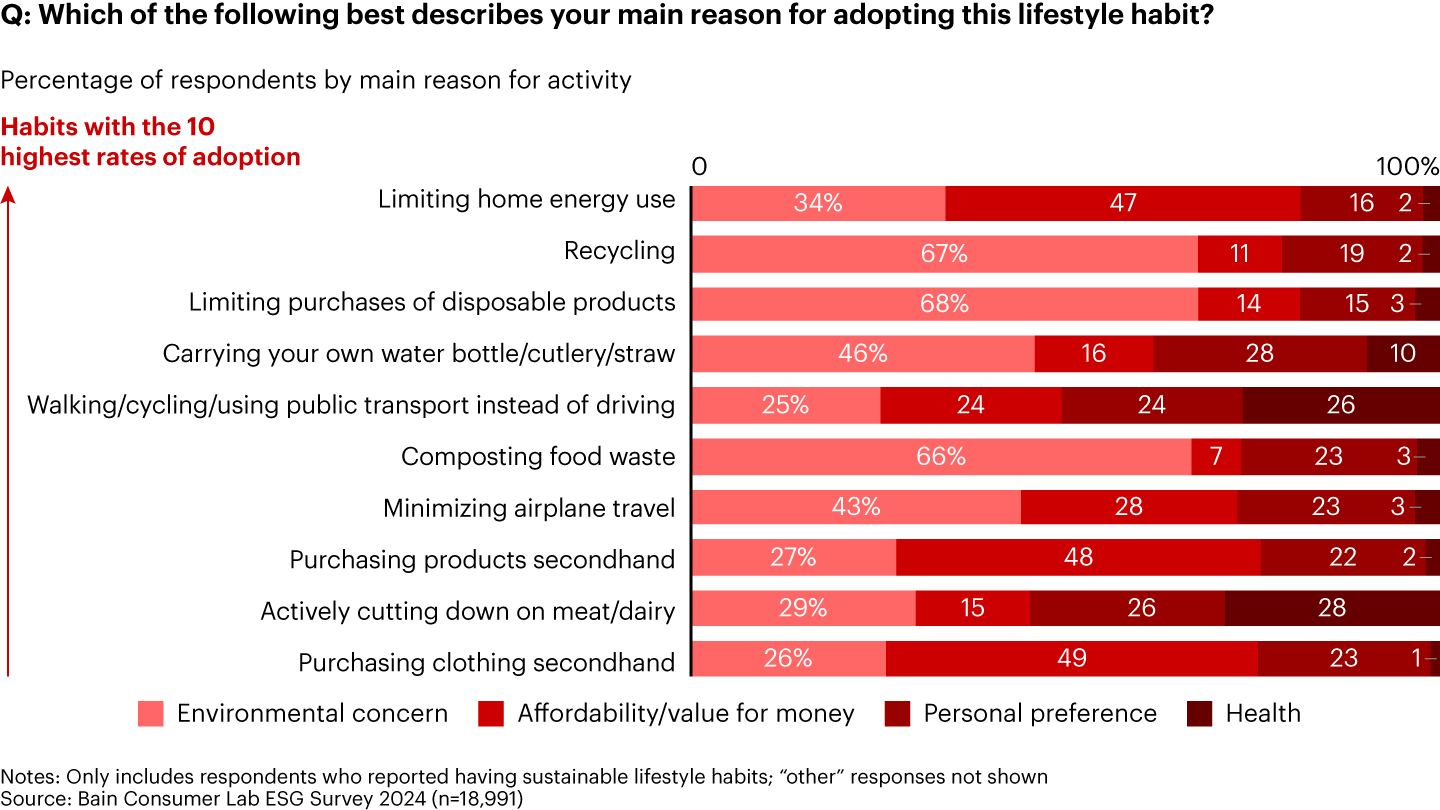
      For example, there is a consistent view in developed markets that living sustainably is inherently more expensive (see Figure 3). That isn’t always true. Some consumers, while trying to save money, are adopting habits that also happen to be more sustainable, such as driving less, buying secondhand clothing, and, in some cases, actively cutting down on meat and dairy (see Figure 4). But the common perception that a sustainable lifestyle is expensive poses a challenge for brands, especially amid intensified cost-of-living worries. Conversely, consumers in some fast-growing markets believe that living more sustainably would actually cost them less. The frugal behavior they associate with sustainability could lead to an overall reduction in demand and consumption, complicating companies’ growth plans.

      Figure 3
      In most developed countries, consumers say it would be more expensive to live a sustainable lifestyle
      Figure 4
      When adopting lifestyle habits that support sustainability, consumers cite motivations beyond environmental concerns

      The need to deaverage consumers

      Just as these beliefs vary by geography, approaches to sustainable lifestyles diverge based on factors ranging from cultural norms to political leanings. Our research also helped us identify how people value different sustainability attributes across product categories (see Figure 5).

      Figure 5
      Consumers prefer different sustainability attributes depending on the product category, but “natural” is always No. 1

      The division extends to where consumers learn about sustainability. Gen Zers in the US turn to a variety of sources for information about sustainability, with 37% relying on social media—the predominant source for them. Only 3% of US baby boomers rely on social media. There’s also a division among consumers in the types of businesses they trust to sell them sustainable products. In most countries, consumers are more likely to trust smaller businesses, but in China and Japan, big companies are more trusted. And consumers are more likely to pay a premium in certain categories with certain benefits. In the US, for example, consumers say they’re willing to pay up to 10% more for products that have minimal environmental impact and up to 15% more for products that have health benefits.

      Infographic

      Ten Takeaways from Our 2024 Sustainability Survey of Consumers

      We asked nearly 19,000 consumers globally about their efforts to live a sustainable lifestyle. Here’s what’s changed—and what hasn’t—since last year.

      This means that it isn’t effective for companies to market “sustainability” as a single concept or to target consumers as a monolithic group. Businesses need to understand what different consumer segments are after on a category-by-category basis. Yet appealing to specific sustainability priorities means taking a targeted approach to product development and marketing that runs counter to the movement toward simplicity. We call this smart complexity: striking the right balance between agility and scale to maximize the benefits of streamlining without sacrificing responsiveness to consumer needs.

      Indeed, companies need a more flexible and agile supply chain that allows for more variations—enabling, for example, flexible modular designs and packaging with targeted messages. Smart complexity also allows companies to target consumers based on their specific sustainability needs. And with the right products in hand, some companies have begun relying on digital and AI tools to experiment with and customize their messaging to consumers.

      As they develop new products and services, the best companies will consider how those offerings will help consumers live more sustainably, not just buy more sustainably. It’s one thing to introduce a greener version of an existing product at a higher price point than many consumers are willing to pay. There’s much more value to be created if that new product meets other key purchasing criteria—for example, if it saves the consumer time, helps lower their energy bill, or improves their health. Take wool dryer balls, which serve as a chemical-free alternative to dryer sheets or fabric softener while also cutting down on drying time and energy costs.

      Consumers say that brands and retailers play a big role in their sustainability journey: 28% indicate that awareness campaigns by brands and retailers prompted them to start buying more sustainable products. As a sign of retailers’ part in the equation, 33% of consumers report that they started buying sustainable products because they became available in the places they shop (see Figure 6).

      Figure 6
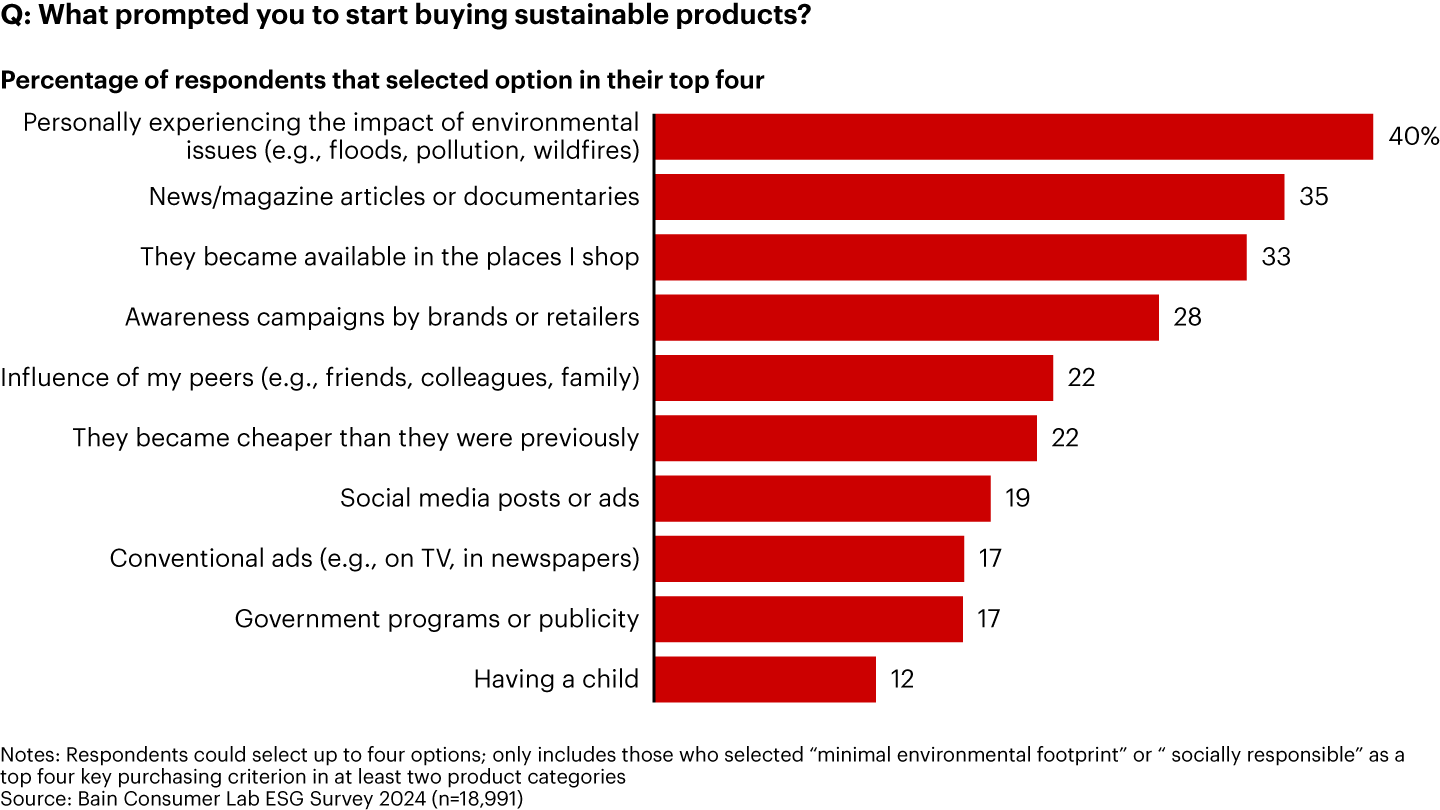
      Consumers cite environmental issues, media articles, local availability, and brand campaigns as main drivers for shopping sustainably

      Consider the full product life cycle

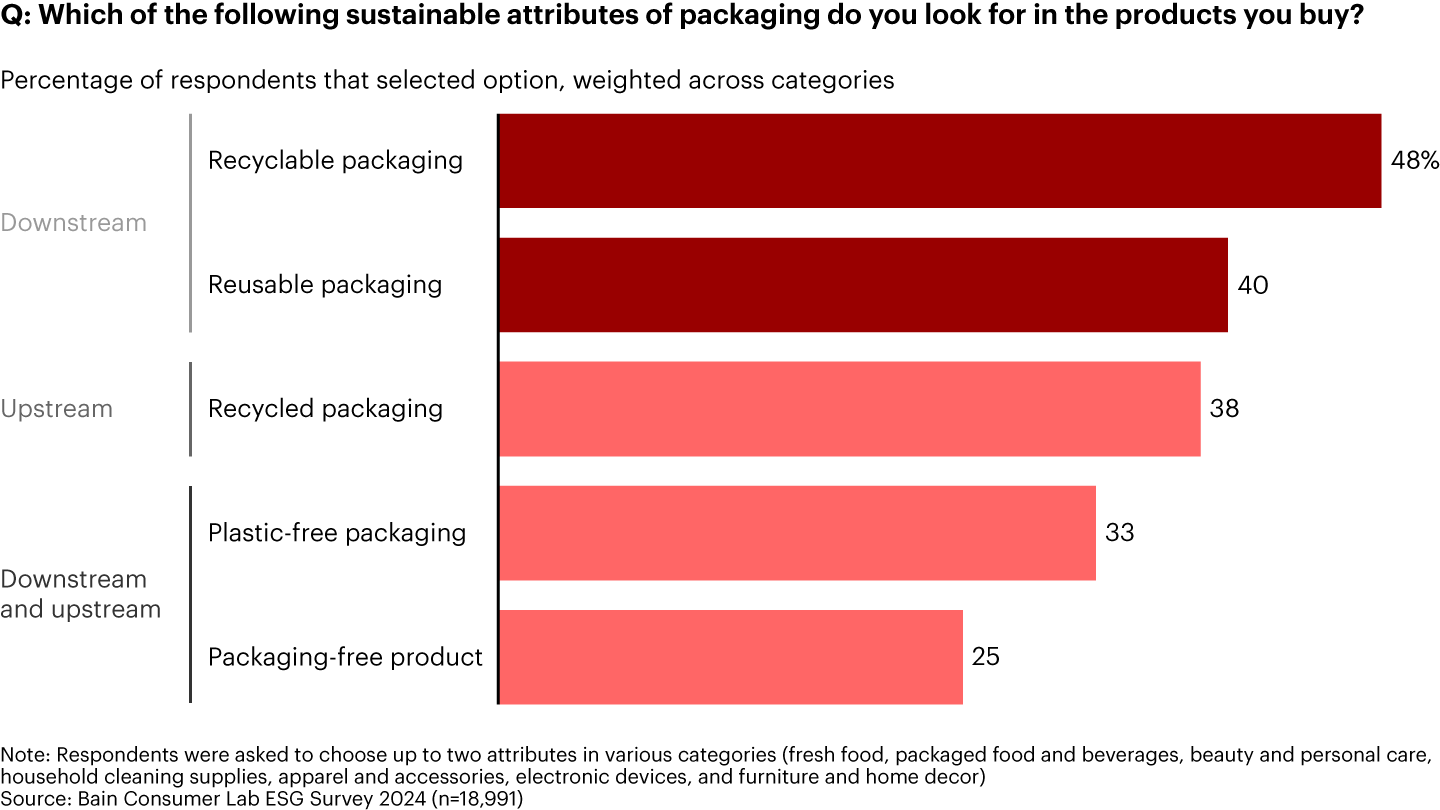
      This year’s research also highlights the growing importance of packaging in consumers’ perception of sustainability (see Figure 7). This finding raises the pressure on companies (many of which report being behind schedule to meet 2025 recycling targets) both for recycled packaging and for the recyclability of their packaging. Consumers determine whether or not packaging is sustainable primarily from the perspective of what happens to it once they are ready to dispose of it—for example, if it is recyclable. In fact, consumers tell us that the ability to recycle packaging is significant to them and that the choice of material and use of recycled content also matter (see Figure 8).

      Figure 7
      Consumers care about the environmental impact of packaging, giving it relatively higher importance in Brazil, China, and Indonesia
      Figure 8
      For packaging attributes, consumers are most concerned about what happens to packaging after using the product

      Because consumers care about what happens to their waste, companies can distinguish themselves by leaning into the entire packaging value chain, including the downstream segment. As they do, they must face the big question of how to finance the collection, sorting, and recycling infrastructure, especially in less developed markets. They also must tackle the challenge of educating consumers. For example, consider that most surveyed consumers believe that the production of single-use, virgin glass has a lower carbon footprint than plastic, yet the opposite is true. Adding to the complexity for global companies, there’s a wide disparity in recycling regulations and infrastructure among markets.

      Unlocking the challenges

      What to do? We see five critical steps.

      Size the opportunity to seize the opportunity. Brands can help consumers in their sustainability quest and spur profitable volume growth by drawing on their well-honed ability to segment and target consumers. Companies need to be willing to invest in identifying and developing products that meet untapped sustainability needs—and create the right messaging. That means determining where people are willing to pay more (and their limits) and where the company can gain share, and then taking a test-and-learn approach to innovation and marketing.

      Organize for results. Many traditional companies’ operating models are not set up to serve the needs of sustainability-minded consumers. A simple example of the disconnect: The costs of developing new sustainable formats or purchasing more sustainable input materials are often assumed by supply chain and operations. However, these teams are detached from marketing and an understanding of what consumers value. Too often, the costs and benefits are misaligned, and companies miss opportunities to use sustainability to gain value with consumers.

      Prepare to manage complexity. Be ready to acknowledge the fragmented market, both in production and in marketing. Companies need a more agile supply chain to make more variations, for example. And in many situations, marketing complexity arises from the new imperative to use different messaging for different consumer segments. For example, a plant-based spread could be promoted with one set of messages to a consumer group whose primary concern is animal welfare and with completely different messages to those who are focused on healthy food.

      Tackle the packaging challenge. Not only do companies need to make packaging sustainable, they need to communicate that value to consumers while also educating them about the nuances of material choices. They also can work to solve the downstream piece of the puzzle, addressing the recycling infrastructure where it’s necessary.

      For example, the best companies will avoid making packaging out of multiple different materials so that it needs to be disassembled to recycle. Nestlé is actively working in this direction. The company’s Purina brand launched its first designed-to-be-recyclable mono-material pet food pouch in 2022, and Nescafé debuted its first refillable paper pouch for coffee in 2024—all part of Nestlé’s promise to introduce reusable or recyclable packaging by 2025. (The Consumer Goods Forum’s Golden Design Rules for plastic packaging are an industry standard in packaging design.)

      Brands also can ensure that information about packaging is transparent. Being clear about recyclability, for example, makes it easy for consumers to make the right disposal choice. Together, retailers and brands can reduce confusion and help consumers understand what the sustainable options are and why.

      Build channel partnerships. Companies can help speed consumers’ paths to achieving a sustainable lifestyle by forging the right partnerships across the value chain. That includes brand owner and retailer collaboration. With so many consumers telling us that accessibility is one of the key barriers preventing them from purchasing sustainable products, companies can collaborate to ensure prominent product placement and encourage new behavior in areas like refills or packaging returns. For example, The Perfume Shop partnered with L’Oréal to launch the UK’s first multi-brand fragrance refill station, including YSL, Prada, Armani, Mugler, and Lancôme brands.

      Will such moves spur consumers to action? If we’ve learned anything about sustainability over the years, it’s that consumers will change their behavior if stakeholders make it easier for them or provide incentives. Despite their many other worries, consumers tell us they still are concerned about living and shopping sustainably. They have different preferences and even different definitions of sustainability. But they are uniform in their need for others—governments, industry organizations, brands, and retailers—to pave the way.

      Read the Next Section

      How to Master the Art of Selling Sustainability

      Read our 2024 CEO Sustainability Guide

      EXPORE THE REPORT DOWNLOAD THE PDF

      More from the report

      • Four Questions for Every CEO

      • What Consumers Want

      • Selling Sustainability in B2B

      • Accelerating Decarbonization

      • AI and Sustainability

      • Voice of the CFO

      • Energy

      • Circularity

      • Food

      Auteurs
      • Headshot of John Blasberg
        John Blasberg
        Associé, Boston
      • Headshot of Jean-Charles van den Branden
        Jean-Charles van den Branden
        Associé, Brussels
      • Headshot of Harry Morrison
        Harry Morrison
        Associé, London
      • Headshot of David Zehner
        David Zehner
        Associé, Sydney
      • Headshot of Leah Johns
        Leah Johns
        Practice Director, Global Consumer Lab, Lisbon
      Contactez-nous
      Synergies sectorielles
      • Distribution
      • Grande Consommation
      Expertises fonctionnelles transverses
      • Customer Experience
      • Développement Durable et Responsabilité Sociétale des Entreprises (RSE)
      Comment pouvons-nous vous aider ?
      • Climate Change
      Grande Consommation
      What’s Still Stopping Consumers from Living Sustainably?

      Overloaded consumers want to act sustainably, but underwhelming solutions leave them wishing for better choices.

      Voir plus
      CEO's Guide to Sustainability
      From Sustainability Commitments to Impact: Four Pragmatic Questions for Visionary CEOs

      Amid competing priorities, CEOs and consumers still say sustainability matters. By acting now, companies can set the stage for profitable growth.

      Voir plus
      Grande Consommation
      US Consumer Health Update

      Upper-income earners seem to be adopting a defensive position but are not yet reporting negative spending intentions.

      Voir plus
      Climate Change
      Financing Climate Solutions in Brazil

      A study conducted by Bain, in partnership with BNDES, highlights both the challenges and the opportunities to accelerate the climate transition.

      Voir plus
      CEO's Guide to Sustainability
      How to Master the Art of Selling Sustainability

      Our survey of 500 B2B buyers and sellers shows a widening chasm on sustainability. A new industrial sales model is needed to close this buy-sell gap.

      Voir plus
      First published in septembre 2024
      Mots clés
      • CEO's Guide to Sustainability
      • Climate Change
      • Customer Experience
      • Développement Durable et Responsabilité Sociétale des Entreprises (RSE)
      • Distribution
      • Grande Consommation

      Comment nous avons aidé nos clients

      Développement Durable et Responsabilité Sociétale des Entreprises (RSE) A Manufacturer Vows to “Push to Zero” Carbon Emissions

      Lire l’étude de cas

      Stratégie Client et Marketing Inspiring retail employees to think and act like owners

      Lire l’étude de cas

      Stratégie Focus on core delivers growth for retailer

      Lire l’étude de cas

      Vous souhaitez continuer cette conversation ?

      Nous aidons des dirigeants du monde entier à matérialiser des impacts et des résultats pérennes et créateurs de valeur dans leurs organisations.

      Les points de vue de Bain : notre perspective sur des problématiques auxquelles sont confrontées les entreprises à travers le monde, envoyés chaque mois dans votre boîte de réception. 

      *J’ai lu la politique de confidentialité et j’accepte les conditions.

      Merci de lire notre politique de confidentialité.
      Bain & Company
      Contactez-nous Sustainability Accessibility Conditions d’utilisation Politique de Confidentialité Cookie Policy Mentions Légales Sitemap Log In

      © 1996-2026 Bain & Company, Inc.

      Contacter Bain

      Comment pouvons-nous vous aider ?

      • Business inquiry
      • Career information
      • Press relations
      • Partnership request
      • Speaker request
      Voir tous les bureaux