
Skip to Content
  • Bureaux

    Bureaux

    Amérique du Nord et Amérique du Sud
    • Atlanta
    • Austin
    • Bogota
    • Boston
    • Buenos Aires
    • Chicago
    • Dallas
    • Denver
    • Houston
    • Los Angeles
    • Mexico City
    • Minneapolis
    • Monterrey
    • Montreal
    • New York
    • Rio de Janeiro
    • San Francisco
    • Santiago
    • São Paulo
    • Seattle
    • Silicon Valley
    • Toronto
    • Washington, DC
    Europe, Moyen-Orient et Afrique
    • Amsterdam
    • Athens
    • Berlin
    • Brussels
    • Copenhagen
    • Doha
    • Dubai
    • Dusseldorf
    • Frankfurt
    • Helsinki
    • Istanbul
    • Johannesburg
    • Kyiv
    • Lisbon
    • London
    • Madrid
    • Milan
    • Munich
    • Oslo
    • Paris
    • Riyadh
    • Rome
    • Stockholm
    • Vienna
    • Warsaw
    • Zurich
    Asie et Australie
    • Bangkok
    • Beijing
    • Bengaluru
    • Brisbane
    • Ho Chi Minh City
    • Hong Kong
    • Jakarta
    • Kuala Lumpur
    • Manila
    • Melbourne
    • Mumbai
    • New Delhi
    • Perth
    • Seoul
    • Shanghai
    • Singapore
    • Sydney
    • Tokyo
    Voir tous les bureaux
  • Alumni
  • Presse
  • S’abonner
  • Contacter
  • France | Français

    Sélectionnez votre région et votre langue

    Global
    • Global (English)
    Amérique du Nord et Amérique du Sud
    • Brazil (Português)
    • Argentina (Español)
    • Canada (Français)
    • Chile (Español)
    • Colombia (Español)
    Europe, Moyen-Orient et Afrique
    • France (Français)
    • DACH Region (Deutsch)
    • Italy (Italiano)
    • Spain (Español)
    • Greece (Elliniká)
    Asie et Australie
    • China (中文版)
    • Korea (한국어)
    • Japan (日本語)
  • Saved items (0)
    Saved items (0)

    You have no saved items.

    Bookmark content that interests you and it will be saved here for you to read or share later.

    Explore Bain Insights
  • Expertises Sectorielles
    Menu principal

    Expertises Sectorielles

    • Aerospace et Défense
    • Agroalimentaire
    • Chimie
    • Infrastructures, BTP et Matériaux de Construction
    • Grande Consommation
    • Services Financiers
    • Santé
    • Engins & Equipements Industriels
    • Media et Divertissement
    • Metals
    • Mining
    • Pétrole & Gaz
    • Papier et Emballage
    • Private Equity
    • Secteur Public
    • Distribution
    • Technologie
    • Télécommunications
    • Transportation
    • Travel & Leisure
    • Utilities & Energies Renouvelables
  • Expertises Fonctionnelles
    Menu principal

    Expertises Fonctionnelles

    • Expérience Client
    • ESG
    • Innovation
    • Fusions et Acquisitions
    • Opérations
    • People & Organization
    • Private Equity
    • Sales & Marketing
    • Stratégie
    • IA, Perspectives et Solutions
    • Technology
    • Transformation
  • Digital
  • Points de Vue
  • À propos
    Menu principal

    À propos

    • Notre Activité
    • Nos Valeurs
    • Nos Collaborateurs et Notre Équipe Dirigeante
    • Notre Impact
    • Prix & Récompenses
    • Partenariats Internationaux
    • Evénements
    Further: Our global responsibility
    • Diversité et Inclusion
    • Impact Social
    • Sustainability
    • World Economic Forum
    Learn more about Further
  • Carrières
    Menu principal

    Carrières

    • Rejoignez-nous
      Carrières
      Rejoignez-nous
      • Find Your Place
      • Nos domaines d’expertise
      • Equipes multidisciplinaires
      • Étudiants
      • Stages et programmes
      • Événements de recrutement
    • La vie chez Bain
      Carrières
      La vie chez Bain
      • Blog: Inside Bain
      • Récits de carrière
      • Nos collaborateurs
      • Nos bureaux
      • Soutenir votre évolution professionnelle
      • Groupes d’affinités
      • Avantages chez Bain
    • Histoires d’impact
    • Notre processus de recrutement
      Carrières
      Notre processus de recrutement
      • Ce que vous pouvez attendre
      • Entretiens
    Trouver un poste
  • Bureaux
    Menu principal

    Bureaux

    • Amérique du Nord et Amérique du Sud
      Bureaux
      Amérique du Nord et Amérique du Sud
      • Atlanta
      • Austin
      • Bogota
      • Boston
      • Buenos Aires
      • Chicago
      • Dallas
      • Denver
      • Houston
      • Los Angeles
      • Mexico City
      • Minneapolis
      • Monterrey
      • Montreal
      • New York
      • Rio de Janeiro
      • San Francisco
      • Santiago
      • São Paulo
      • Seattle
      • Silicon Valley
      • Toronto
      • Washington, DC
    • Europe, Moyen-Orient et Afrique
      Bureaux
      Europe, Moyen-Orient et Afrique
      • Amsterdam
      • Athens
      • Berlin
      • Brussels
      • Copenhagen
      • Doha
      • Dubai
      • Dusseldorf
      • Frankfurt
      • Helsinki
      • Istanbul
      • Johannesburg
      • Kyiv
      • Lisbon
      • London
      • Madrid
      • Milan
      • Munich
      • Oslo
      • Paris
      • Riyadh
      • Rome
      • Stockholm
      • Vienna
      • Warsaw
      • Zurich
    • Asie et Australie
      Bureaux
      Asie et Australie
      • Bangkok
      • Beijing
      • Bengaluru
      • Brisbane
      • Ho Chi Minh City
      • Hong Kong
      • Jakarta
      • Kuala Lumpur
      • Manila
      • Melbourne
      • Mumbai
      • New Delhi
      • Perth
      • Seoul
      • Shanghai
      • Singapore
      • Sydney
      • Tokyo
    Voir tous les bureaux
  • Alumni
  • Presse
  • S’abonner
  • Contacter
  • France | Français
    Menu principal

    Sélectionnez votre région et votre langue

    • Global
      Sélectionnez votre région et votre langue
      Global
      • Global (English)
    • Amérique du Nord et Amérique du Sud
      Sélectionnez votre région et votre langue
      Amérique du Nord et Amérique du Sud
      • Brazil (Português)
      • Argentina (Español)
      • Canada (Français)
      • Chile (Español)
      • Colombia (Español)
    • Europe, Moyen-Orient et Afrique
      Sélectionnez votre région et votre langue
      Europe, Moyen-Orient et Afrique
      • France (Français)
      • DACH Region (Deutsch)
      • Italy (Italiano)
      • Spain (Español)
      • Greece (Elliniká)
    • Asie et Australie
      Sélectionnez votre région et votre langue
      Asie et Australie
      • China (中文版)
      • Korea (한국어)
      • Japan (日本語)
  • Saved items  (0)
    Menu principal
    Saved items (0)

    You have no saved items.

    Bookmark content that interests you and it will be saved here for you to read or share later.

    Explore Bain Insights
  • Expertises Sectorielles
    • Expertises Sectorielles

      • Aerospace et Défense
      • Agroalimentaire
      • Chimie
      • Infrastructures, BTP et Matériaux de Construction
      • Grande Consommation
      • Services Financiers
      • Santé
      • Engins & Equipements Industriels
      • Media et Divertissement
      • Metals
      • Mining
      • Pétrole & Gaz
      • Papier et Emballage
      • Private Equity
      • Secteur Public
      • Distribution
      • Technologie
      • Télécommunications
      • Transportation
      • Travel & Leisure
      • Utilities & Energies Renouvelables
  • Expertises Fonctionnelles
    • Expertises Fonctionnelles

      • Expérience Client
      • ESG
      • Innovation
      • Fusions et Acquisitions
      • Opérations
      • People & Organization
      • Private Equity
      • Sales & Marketing
      • Stratégie
      • IA, Perspectives et Solutions
      • Technology
      • Transformation
  • Digital
  • Points de Vue
  • À propos
    • À propos

      • Notre Activité
      • Nos Valeurs
      • Nos Collaborateurs et Notre Équipe Dirigeante
      • Notre Impact
      • Prix & Récompenses
      • Partenariats Internationaux
      • Evénements
      Further: Our global responsibility
      • Diversité et Inclusion
      • Impact Social
      • Sustainability
      • World Economic Forum
      Learn more about Further
  • Carrières
    Recherches les plus fréquentes
    • Agile
    • Digital
    • Stratégie
    Vos recherches précédentes
      Pages récemment visitées

      Content added to saved items

      Saved items (0)

      Removed from saved items

      Saved items (0)

      World Economic Forum

      Why Sustainability Is the New Digital

      Why Sustainability Is the New Digital

      Businesses that ignore the environmental concerns of their investors and consumers will get left behind.

      Par Orit Gadiesh et Jenny Davis-Peccoud

      • min
      }

      Article

      Why Sustainability Is the New Digital
      en
      En Bref
      • COVID-19 has created a sense of urgency for businesses to improve their sustainability credentials.
      • Some companies aren’t adapting quickly enough to this “disrupt or be disrupted” mindset.
      • Lessons must be learned from the digital revolution to enable businesses to adapt, innovate and ultimately prosper in the future.

      This article originally appeared in the World Economic Forum.

      Even in a year dominated by a global pandemic, the sustainability revolution has accelerated faster than expected, while also expanding to include a wider range of environmental and social issues.

      With consumers and investors demanding significant change, profit pools shifting away from incumbents to insurgents, and even the most carbon-heavy companies making net-zero pledges, executives ignore this revolution at their peril. And make no mistake: this is a real revolution. With every industry—nearly every product and most of our habits under scrutiny—it would be downplaying it to call it anything else.

      Like the digital revolution before it, the sustainability revolution promises to change everything. Yet, just as with digital, many companies are moving too slowly, taking an incremental approach to a challenge that demands a radical rethink.

      Remember in the early 2000s, when companies realized they needed to go digital, they would hire a web developer? They soon learned that was a woefully inadequate response to the enormous task at hand: the need to reshape their organizations, their products, their entire industries to meet the demands and opportunities of a digital economy.

      Something similar is happening today when the executive suite hires a sustainability expert to shepherd this transformation. It’s a start, but it barely begins the work needed to navigate the impending revolution.

      The task is daunting and there’s no time to lose. We need to transform a global economy founded on the principles of unlimited access to resources and the primacy of shareholders to one that recognizes the limits and consequences of everything we extract, manufacture, consume and waste, and the impacts on the people involved in doing so.

      Rapid disruption

      Some companies are grasping this change faster than others, and consumers and investors are rewarding them. For example, Unilever’s Sustainable Living Brands portfolio is growing nearly twice as fast as other brands in its portfolio. In energy, even before the COVID-19 economic slowdown, shares of lower carbon energy companies were outperforming those of the oil and gas majors.

      These disruptions are spreading more quickly than most expected. Who could have envisioned that electric cars would disrupt the automotive industry so quickly, or that Burger King would sell its iconic Whopper alongside the plant-based Impossible Burger? Such evidence of sustainability disruption is everywhere (see Figure 1).

      Figure 1
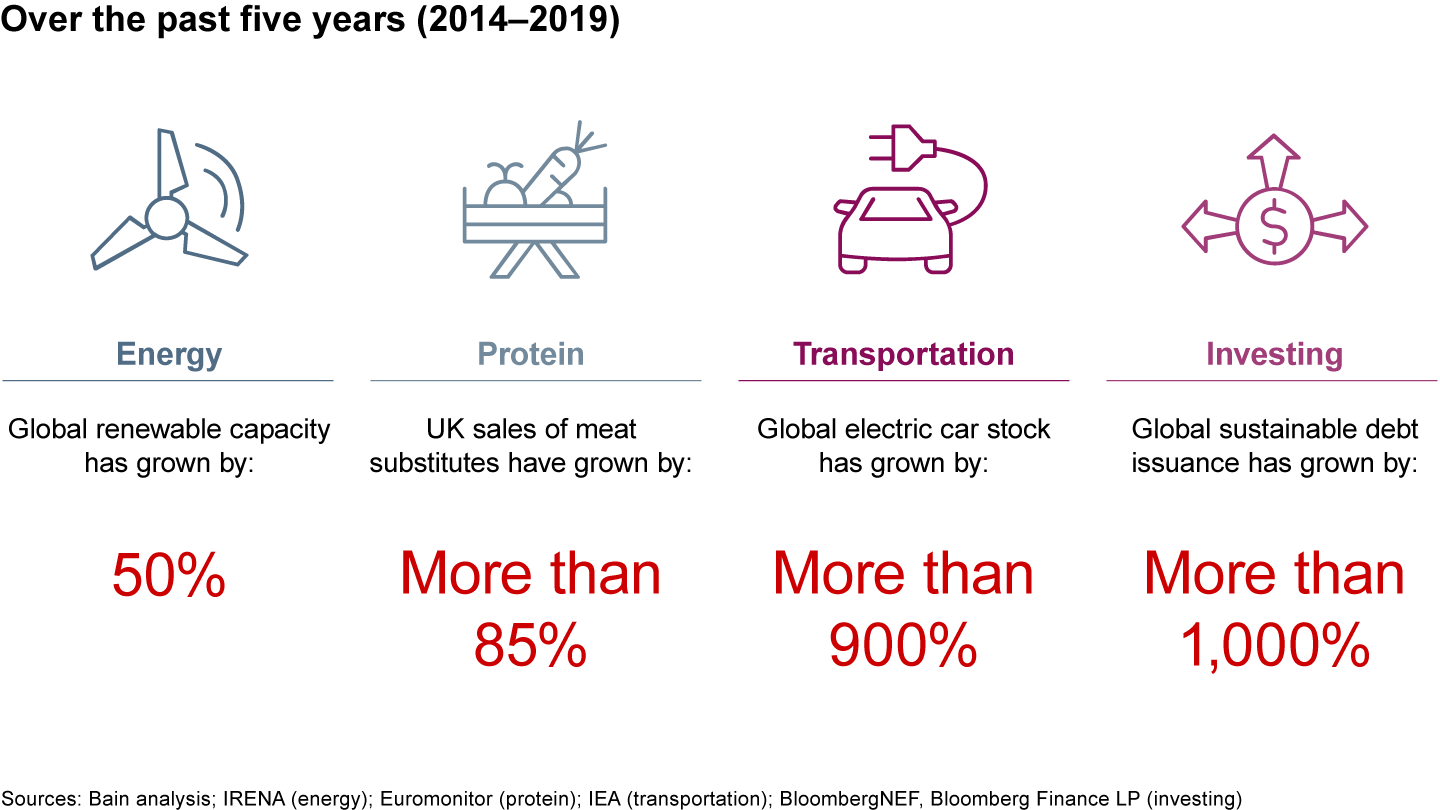
      Many categories are being disrupted by sustainability trends
      Many categories are being disrupted by sustainability trends
      Many categories are being disrupted by sustainability trends

      Seeing this movement, most executives now support sustainability objectives, but they remain wary of the costs. For example, in many industry sectors they’re searching for ways to minimize plastic waste, but they find the cost of setting up collection and recycling systems or replacing current volumes with bio-based materials prohibitive. They know they must prepare for the day when the price of carbon balloons to US$75 per ton or more, but they are also cautious about the cost of renewables and other low-carbon technologies.

      However, if they want to lead, they need to think not just about the short-term costs associated with sustainability, but also the long-term benefits. Just as with digital, sustainability is shifting profit pools to open up multibillion-dollar industries. Plant-based meat could be a US$140 billion business by the end of this decade, and the retail nutrition and wellness market could grow to US$50 billion by 2025. The current market value of the plant-based beverage category (things like almond milk and coconut water) is US$13 billion and growing at 12% per year.

      Yet many companies fail to account adequately for such huge opportunities during their planning. Sustainability-linked consumer products now grow nearly six times faster than other brands, and 73% of global consumers say they would definitely or probably change their consumption habits to reduce their impact on the environment, according to a 2018 Nielsen study Sustainability-friendly projects and companies are attracting a lower cost of capital.

      Decisive action

      Companies will need to reinvent themselves to capture these opportunities. All transitions are tough; this one’s even tougher. Bain’s global research found that only 12% of all corporate change efforts fully succeed, but the success rate for sustainability initiatives is substantially lower—a paltry 4%. So, what can companies do to improve their chances of success?

      1. Make bold strategic choices

      The scope of change is extensive, so leaders should adopt a “disrupt or be disrupted” mindset. Just as the emergence of innovative fintechs forced banks to shift their strategies, food companies need to get out ahead of their customers’ changing habits. Whether their concerns centered around health, carbon emissions or animal welfare, the number of vegans increased by 600% in the US from 2014 to 2017. In Germany and Poland, 1 in 10 young adults followed a vegan diet in 2017, and the number is even higher in France.

      2. Reinvent products

      Sustainable innovation is creating new products that can be produced with fewer carbon emissions, less waste and an emphasis on enhancing wellness. For instance, Unilever makes toothpaste tablets in reusable containers, and Procter & Gamble sells soap swatches that become cleaning products (hand soap, shampoo, laundry detergent) when you add water. These dry products are lighter, and so when transported emits less carbon. Even building materials companies are working hard on low-carbon steel and cement.

      3. Rethink operations

      Digital technologies transformed operations across industries; now sustainability requires the same. In an effort to understand which channels are more efficient, Walmart measured the greenhouse gas emissions and costs to fulfill a range of products ordered online vs. sold in stores. Shipping to homes was more efficient if customers were buying just a few things, but in-store purchases were more efficient if they had a longer shopping list or combined the trip with other errands. These insights helped Walmart identify ways to mitigate emissions by reducing split shipments and encouraging a shift to the most carbon-efficient channel when possible.

      4. Form innovative partnerships

      Sustainability issues are broad and complex—beyond the capacity of any single company to manage—so teaming up is essential. For example, about 40 companies across the plastic value chain (including energy, chemicals and consumer goods companies) formed the Alliance to End Plastic Waste, which supports innovative solutions to minimize plastic waste and encourage recycling, especially in developing countries.

      As the sustainability revolution expands, accelerates and disrupts, it is forcing companies to reassess themselves with an unwavering honesty in order to deliver a future that few imagined. Keeping the digital parallel in mind can help guide them to move quickly and boldly through the coming transformation.

      Auteurs
      • Headshot of Orit Gadiesh
        Orit Gadiesh
        Partner & Chair Emeritus, London
      • Headshot of Jenny Davis-Peccoud
        Jenny Davis-Peccoud
        Associé, Amsterdam
      Contactez-nous
      Expertises fonctionnelles transverses
      • Développement Durable et Responsabilité Sociétale des Entreprises (RSE)
      • Digital
      Comment pouvons-nous vous aider ?
      • Commercial Operations
      • Transformation Catalyst
      Commercial Operations
      Sustainability Is the Next Digital

      In the sustainability revolution, no company will be left unchanged, and those that act quickest will be those that end up leading.

      Voir plus
      World Economic Forum
      Circular Business Models Unlock New Profit and Growth

      Companies are using circular strategies to reap economic benefits.

      Voir plus
      Développement Durable et Responsabilité Sociétale des Entreprises (RSE)
      AI and Power: A Marriage of Necessity

      Tech and utilities are an unlikely pair, but how well they balance data center electricity demand and finite energy resources will have huge implications.

      Voir plus
      World Economic Forum
      Circular Transformation of Industries: Unlocking Economic Value

      In collaboration with the World Economic Forum and the University of Cambridge, this report explores how circularity can boost resilience, revenues, and cost savings.

      Voir plus
      Commercial Operations
      Customer Acquisition Model

      Customer acquisition models automatically identify the best potential leads and set up strategies to convert them into active customers.

      Voir plus
      First published in janvier 2021
      Mots clés
      • Commercial Operations
      • Développement Durable et Responsabilité Sociétale des Entreprises (RSE)
      • Digital
      • Transformation Catalyst
      • World Economic Forum

      Comment nous avons aidé nos clients

      Développement Durable et Responsabilité Sociétale des Entreprises (RSE) Voluntary Carbon Markets: A Bank Moves Early to Seize the Opportunity

      Lire l’étude de cas

      Développement Durable et Responsabilité Sociétale des Entreprises (RSE) A Personal Care and Cosmetics Brand Charts a Course for Sustainability

      Lire l’étude de cas

      Digital Omnichannel strategy boosts fashion company

      Lire l’étude de cas

      Vous souhaitez continuer cette conversation ?

      Nous aidons des dirigeants du monde entier à matérialiser des impacts et des résultats pérennes et créateurs de valeur dans leurs organisations.

      Les points de vue de Bain : notre perspective sur des problématiques auxquelles sont confrontées les entreprises à travers le monde, envoyés chaque mois dans votre boîte de réception. 

      *J’ai lu la politique de confidentialité et j’accepte les conditions.

      Merci de lire notre politique de confidentialité.
      Bain & Company
      Contactez-nous Sustainability Accessibility Conditions d’utilisation Politique de Confidentialité Cookie Policy Mentions Légales Sitemap Log In

      © 1996-2026 Bain & Company, Inc.

      Contacter Bain

      Comment pouvons-nous vous aider ?

      • Business inquiry
      • Career information
      • Press relations
      • Partnership request
      • Speaker request
      Voir tous les bureaux