

Bain Classic | Brief

In the wake of the historic “dotcom” bull market that redefined the brokerage business in the late 1990s, Charles Schwab & Company found itself stuck in the middle when the technology bubble burst in 2000. As the financial services industry scrambled to lure shell-shocked investors back into the market, Schwab was caught between traditional full-service brokers like Merrill Lynch at the top and a new breed of technology-enabled discounters like E*Trade attacking from below. Over the next three years, the San Francisco firm lost 60% of its commission revenue, leading to an 80% plunge in market value.
For Charles Schwab, the company’s founder, the share collapse was a defining moment. Though the firm’s strong brand and capital structure gave it ample staying power, Schwab responded with a multiyear transformation that refocused its strategy, eliminated $600 million in costs and forged much deeper loyalty among its customers. By 2008, the results were evident: Schwab’s stock price had more than tripled and the firm was consistently outperforming both its full-service and discount competitors in accumulating assets from the vast market of midlevel investors.
Great leaders thrive on such pivotal moments because they recognize them as opportunities to reshape the destiny of their companies. Anticipating change and meeting it head-on can often mean the difference between letting a company stall and launching it on what we call a Full Potential TransformationSM. A key part of that journey is identifying a “full-potential vision” and devising the right plan for realizing it. Establishing a clear purpose and approach enables the enterprise to make the deep commitment to investments, capabilities and change that results in outperforming competitors and achieving sustained growth.
Transformation is one of those overused words in business, which can mean almost anything—from a quick-and-dirty restructuring to a full-scale corporate rescue. We define Full Potential TransformationSM in the most literal sense: a cross-functional effort to alter the financial, operational and strategic trajectory of the business, with a stated goal of producing game-changing results.
Manny Maceda, who leads Bain's Global Transformation practice, outlines the responsibilities of the major players in building a transformation agenda and achieving transformation goals.
In our experience, identifying the need for a broad transformation and implementing the change itself pose two distinct challenges. The essential first step in any transformation is to define a bold vision for how the company must change based on a clear-eyed analysis of its competitiveness both now and in the future. But it is equally important to recalibrate this “ideal” vision by realistically assessing what the organization can do to align its leadership, manage change and work through the disruption.
Balancing these strategic and organizational imperatives establishes the most pragmatic context for change and will determine the right velocity and magnitude for the transformation. It will calibrate the effort to deliver results—not promises—which is crucial to securing management and investor buy-in, establishing early accountability and seeding the kind of broad organizational and cultural evolution that will make the change last. Creating the right architecture for a particular company typically relies on the answers to three interrelated questions:
- What kind of transformation do you need? Diagnosing change starts with a vision of what the company must ultimately look like if it is to revive or sustain growth amid anticipated shifts in technology, market conditions and the competitive landscape. It’s a powerful aspiration that envisions a dramatic change in the company’s business. But it also requires a pragmatic reckoning of the company’s point of departure—how healthy the company is now and how far its business model must shift to meet its goals and aspirations. That will establish how far and how fast the company must travel and help determine a point of arrival that is truly within reach.
- What is the right choreography? Each effort to transform a company requires its own set of steps and should follow a thoughtful sequence across the five core pillars of the business: strategy, operations, organization, customer orientation and capital structure. Ideally, the sequence begins with a thorough analysis or confirmation of the company’s strategy. But depending on a company’s unique organizational context and the health of its business model, it may make more sense to address other sets of capabilities first. How sound is its financial situation? Are enough of the right people in the right jobs? Is the company’s board supportive? How much change can its culture handle? Given the answers to these questions, the right path may be relatively straightforward. But it may require a flexible, incremental approach, building toward sweeping change one step at a time.
- How should change be managed? The magnitude and nature of change inevitably create a unique risk profile along each step of the change process. What, therefore, is the best way to mitigate those risks? Do they demand creating some version of a centralized transformation office to manage, coordinate and referee the change effort across the organization? Or can leadership count on existing line managers to deliver coordinated results within their defined spans of control? The right answer will depend on practical and cultural considerations. If the transformation is sweeping and must happen rapidly, a centralized effort led by a high-ranking, forceful executive is imperative. But if the company is healthy enough to contemplate a more gradual transformation, it has more options: Some organizations respond best to a centralized change management office, while others prefer to manage change through the line.
What kind of transformation do you need?
Ironically, defining the right transformation for a company in distress can be easier than for a company that is still evolving and growing. Companies that can anticipate change before growth slows afford themselves the maximum time and flexibility to build an effective transformation strategy. Yet without a burning platform for change, determining the right timing and magnitude of a transformation can be less than obvious. The solution may be both hard to discern and difficult to sell within the organization.
Corporate leaders can establish the right point of departure for a potential transformation by focusing on two vital questions: How far must the company’s business model shift to sustain (or revive) its growth? And how strong is its current business, both financially and competitively? The answers will help determine the magnitude of the required change and how quickly it must unfold. This assessment will ultimately set the stage for the transformation effort by suggesting how it should be sequenced and managed most effectively. It will also help build consensus within the organization by rooting the effort in clear, fact-based analysis.
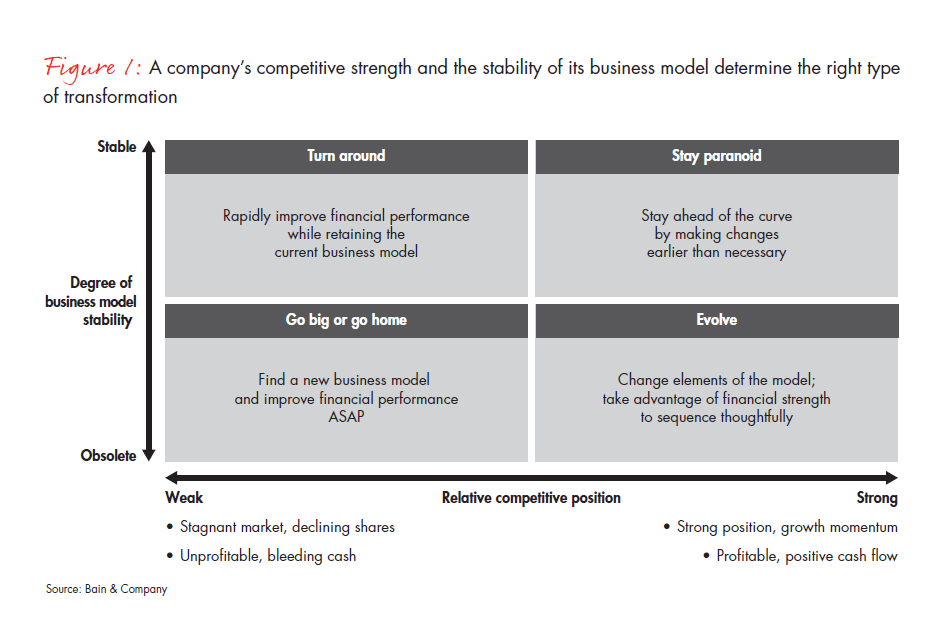
In our experience, companies tend to fall into four broad quadrants that suggest what type of transformation may be required (see Figure 1):
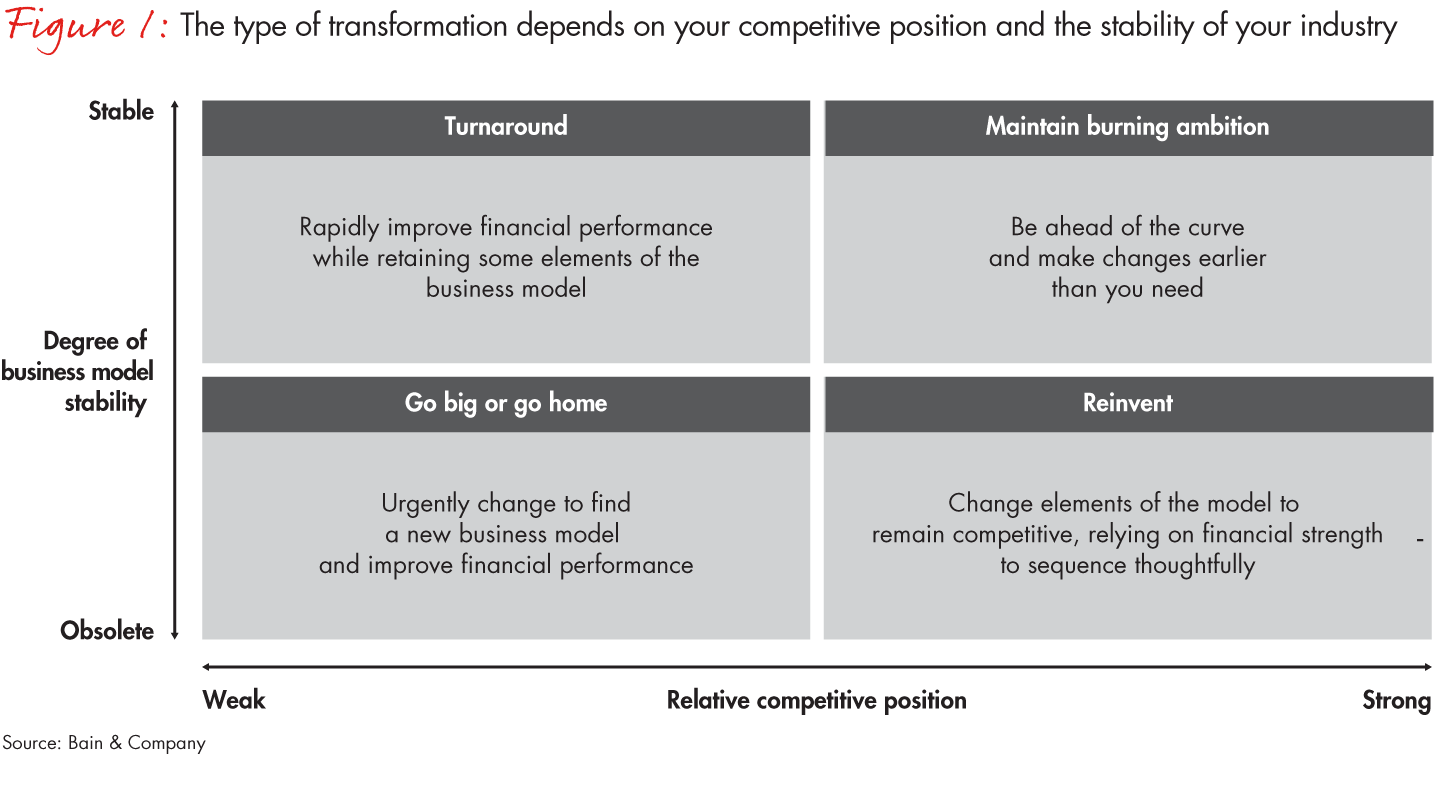
- Companies at the lower left quadrant are essentially rescue situations. In the worst cases, the combination of a deteriorating financial condition and a broken strategy means a single choice: “Go big or go home.” Transformation amounts to a high-magnitude, high-velocity effort to survive—typically a full-bore program to rebuild the company from the ground up, on a strict timetable. Think Polaroid or Blockbuster.
- For companies at the upper left, their business model remains relevant, but their financial performance is deteriorating—often drastically. The answer is typically a tightly focused turnaround to fix critical problem areas. Here, the magnitude of change may be intense and the speed of execution remains at a premium. But the effort is targeted on specific issues, not a company-wide transformation. Continental Airlines a decade ago fits this description.
- Companies at the lower right are slowing down as their business models approach maturity. Market changes may require a strategy reset soon, yet their relative financial and competitive strengths allow their leaders to take a measured approach to transforming their companies for the future. Though the competitive situation may ultimately require sweeping change, these companies have the luxury of time to diagnose and execute methodically. Consider how Ford and IBM each responded to sea changes in their industries.
- Companies at the upper right are still going strong, with ample staying power and a solid strategy. But their leaders are restless and “paranoid,” constantly striving to reach full potential. By contemplating transformation from a position of strength, they have both the time and resources to take the most thoughtful approach. While these tend to be low-magnitude, slow-motion transformations, they can often provide crucial course adjustments to keep the company pointed where it needs to go. Intel and Procter & Gamble are good examples here.
What is the right choreography?
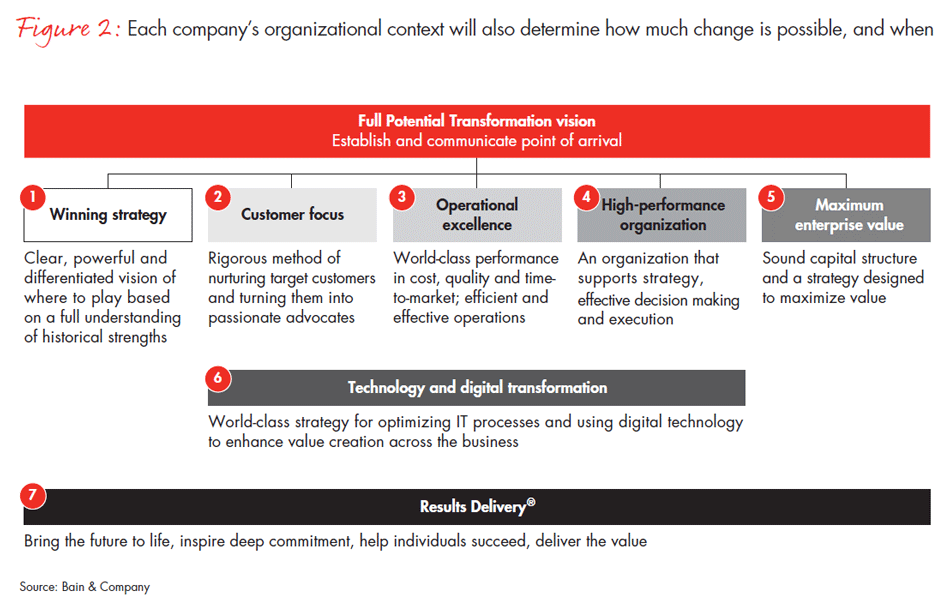
While this construct is a rough guide (few companies are so easily pigeonholed), using it to measure the magnitude and velocity of the effort ahead serves a critical purpose: It helps leaders choreograph the most logical sequence for change as transformation rolls across the enterprise. Corporate leaders have a core set of “levers” they can pull to alter their company’s trajectory: defining a winning strategy, sharpening their customer focus, building operational excellence, creating a high-performance organization, maximizing their enterprise value and using digital technology to optimize their performance. They can also strengthen their efforts to transform these capabilities with an unambiguous plan for Results Delivery®, which builds accountability, produces early wins and creates consensus across the organization (see Figure 2).
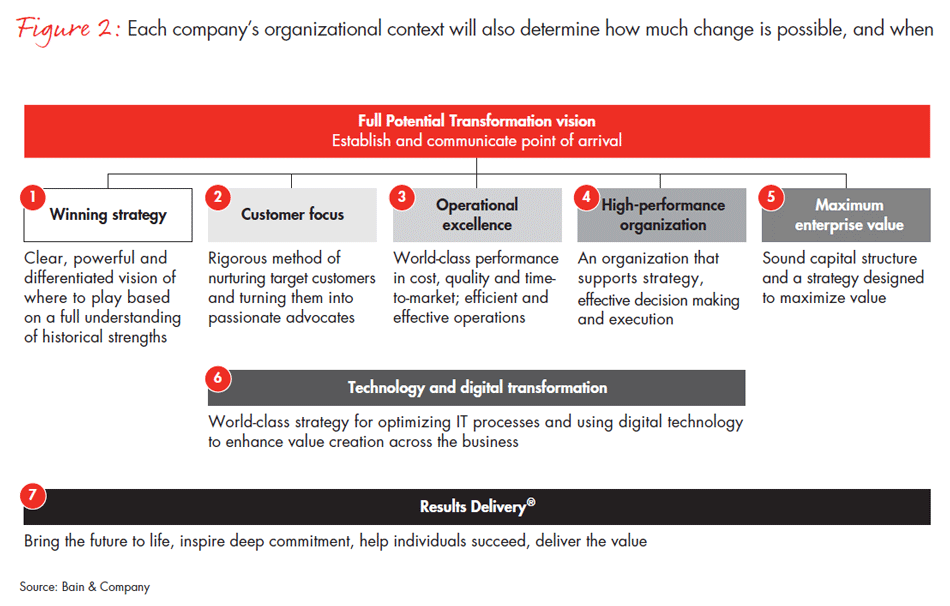
Where should the effort begin? In an ideal world, any transformation should start with establishing or confirming the right core strategy, as that determines everything else, from which customers deserve the most focus to what sort of organization can serve them best. Frequently, however, other capabilities require more immediate attention, particularly when a company’s financial situation is dire: The balance sheet may need immediate attention or the organizational structure may need to be recalibrated quickly to meet a particular threat. That means coordination is at a premium, and resetting strategy would have to occur in parallel with other initiatives.
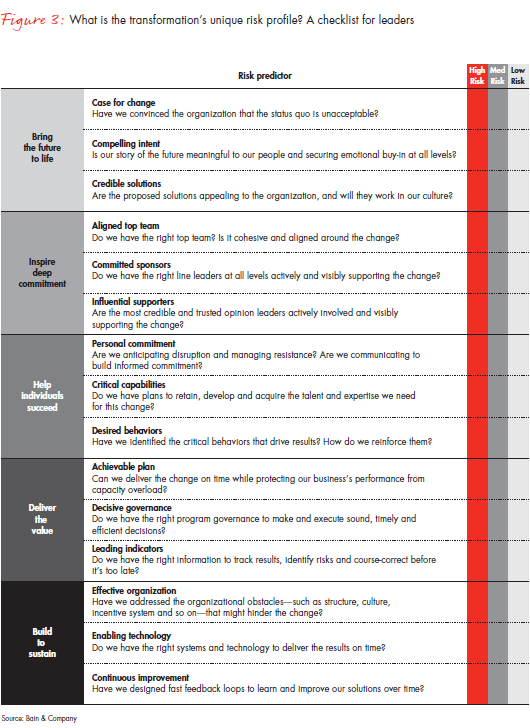
The right choreography also depends heavily on the transformation’s unique risk profile, which reflects the company’s distinct blend of organizational realities. Are the key shareholders, CEO and management team aligned on the need for sweeping change? Is there agreement on what needs fixing? Often, a company’s culture is deeply resistant to change and existing incentives support the status quo. The management bench may be too thin to implement the change effectively, or the organization may be too overburdened to tackle a new set of initiatives. Corporate leaders can assess these organizational risks at each step of the transformation by asking 15 key questions (see Figure 3).
Balancing the transformation’s ideal sequence with its real-world organizational context is an essential element of success. It may mean securing top leadership’s approval by producing early wins in a particular area. It could require replacing managers in key roles with others who are capable of executing the required change, before launching a more comprehensive set of initiatives to serve a new strategy. In such cases, the ideal choreography gives way to a more iterative approach: The point of arrival must remain in focus, but the sequence of change builds incrementally.
As Schwab found itself squeezed between discounters and full-service brokers in 2000, for example, its strong financial position afforded it time and flexibility to sequence an effective transformation. Yet even as competitors swooped in on its clients, the firm’s top leaders disagreed on exactly what needed fixing, and it was unclear how much change the broader organization could handle at once.
Given its competitive situation, the most logical choreography for Schwab involved revamping its strategy to jettison side businesses that were soaking up management time, while refocusing the firm to better serve the right core customer—the “mass-affluent” investor. But the most immediate concern was the firm’s cost problem. Creeping complexity in operations and IT made it impossible to price transactions competitively, and Schwab was spending too much to acquire new customers.
The best solution was to sequence its transformation along parallel paths. Schwab tackled some of the strategic work first by selling noncore assets, including a large trust business. At almost the same time it launched a major effort to cut $600 million in costs by simplifying the organization, improving back-end processes, reducing the number of branches and trimming inefficient advertising.
It wasn’t until a year later that the company’s leaders agreed on the second phase of strategic repositioning: refocusing its organization on two clearly defined groups of clients—retail and institutional—and embracing customer loyalty as a strategic tool. The firm worked hard to improve its customer experience along the full range of touchpoints, dramatically improving its Net Promoter ScoreSM among those crucial mass-affluent investors. That set the stage for a sharp resurgence in revenue and stock performance.
Sequencing Schwab’s transformation in phases had several important benefits. Rethinking its portfolio strategy and selling assets early on enabled the firm to focus its cost-cutting and organizational work solely on the parts of the company it intended to keep. Cutting costs freed up capital to invest in customers and delivered early wins that built support for the broader transformation. Saving the customer loyalty campaign for last gave Schwab a chance to stabilize and catch its breath after the major cost-cutting endeavor. And months of reorganizing also served to shed light on many of the key customer choke points.
What Schwab’s example makes clear is that there isn’t one right answer for how to choreograph a transformation. But in our experience, getting the sequence wrong can lead to costly and inefficient results.
Consider a leading technology company’s experience several years ago as its business stalled and it began to lose market share. Given its history of rapid growth and success, the company’s leaders were reluctant to consider the broadest of transformations. Top executives believed the company’s overarching strategy was secure and weren’t inclined to contemplate a new direction.
To combat falling revenues, the company initially restructured the organization around a set of new business units focused on key customer segments. That led to some quick wins, but it didn’t address the essential strategic work needed to determine where the company’s most sustainable future growth would come from. That analysis, which took place after restructuring the organization, showed clearly that the way to revitalize sales was to target the most promising product segments. As a result, the company had to scrap the initial organizational work and replace it with a model based on the right product segmentation. In an attempt to move quickly and tactically, the company had lost sight of the big picture. The wrong sequencing added a year or more to a crucial effort to reverse its decline.
How should transformation be managed?
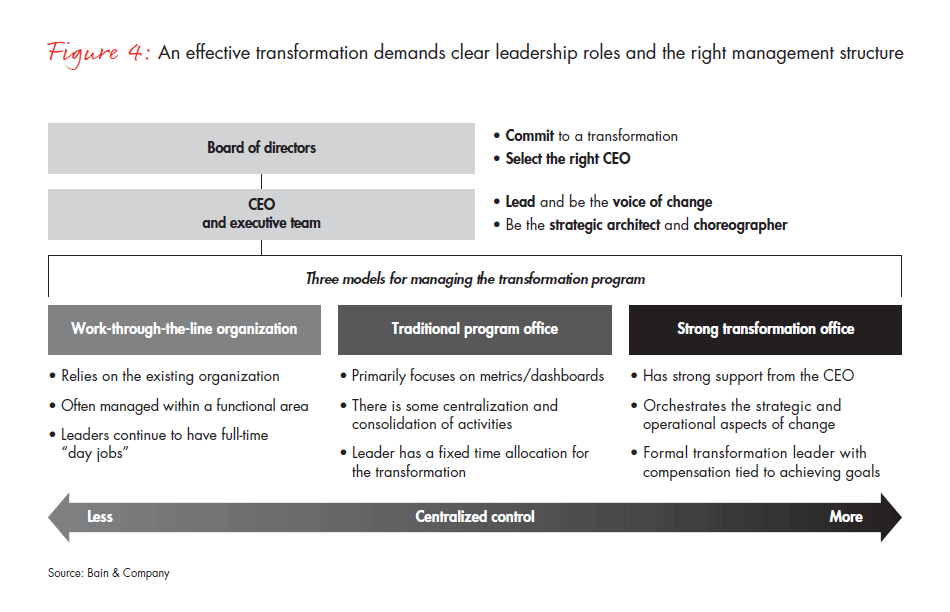
As important as determining the right choreography is deciding how the transformation should be managed. Depending on the company’s culture and the magnitude of the effort ahead, the solution tends to fall along a spectrum. At one end is a fully staffed and empowered transformation office run by a lead transformation executive. At the other, companies work directly through the existing line organization. In the middle is a hybrid: a less powerful coordinating office led by a senior manager who devotes a significant portion of time—but not all of it—to issues like tracking results and resolving disputes (see Figure 4).
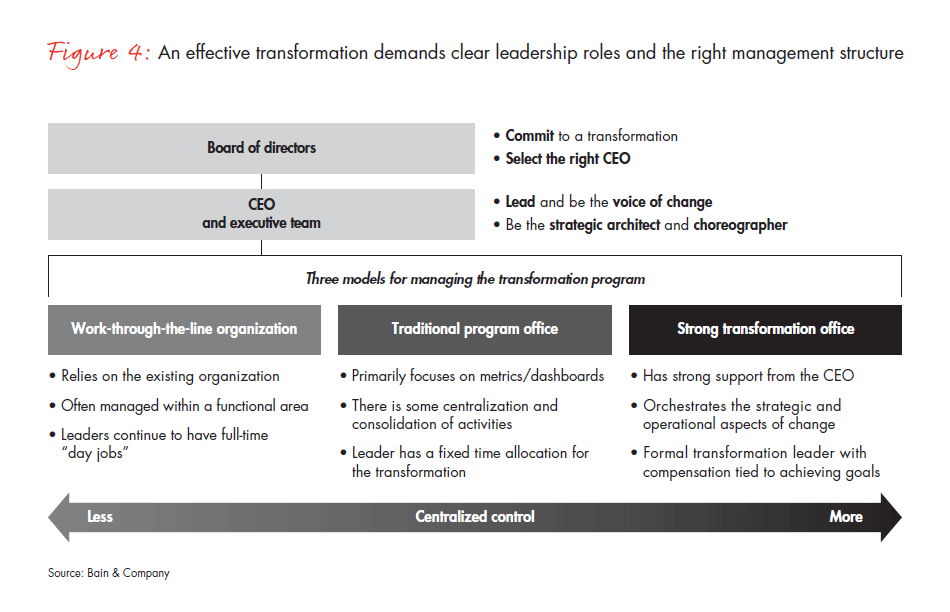
Managing change through the normal chain of command can work under some circumstances, particularly at relatively healthy companies with a culture of decentralization. If the effort is more of a turnaround involving certain parts of the business rather than a full transformation, managing through the line may be less disruptive. Or if the line management is strong and cohesive enough, top leaders may be able to count on division heads to work together to deliver the right results.
But as the scope and complexity of the transformation grow or the pace of change is “forced” by financial circumstances, the need increases for a higher degree of integration and control. Large transformations very often involve redesigning the line organization itself, which makes it impractical to work within the existing structure. It is also hard to ask line managers to restructure their businesses and manage for day-to-day results at the same time. Finally, coordination is essential: When one element of a broad transformation overlaps with others, a stronger integrated office is often best positioned to manage those dependencies.
In our experience, successful full-scale transformations require a separate organization led by a highly skilled executive and a cross-functional team of the company’s most creative and talented managers. They should be separated from the line for a defined period of time and charged with orchestrating the transformation agenda, coordinating results and resolving disputes. That frees up the rest of the business to run on a day-to-day basis with minimum disruption.
Elevating the right executive to lead the transformation program is critical. The role is a blend of hard-nosed manager, savvy politician and catalyst for change. It requires a senior executive with a wide range of skills—most notably leadership ability—and strong credibility across the organization. The transformation leader has a major hand in designing the change program and managing its many moving parts. He or she must be adept at identifying execution risk and equipped with the courage and tenacity to manage it forcefully. At the same time, this executive must sell the program to the broader organization, motivate a team, build key relationships and manage the inevitable conflict stirred up by rapid-fire change. Transformation is, by definition, disruptive. The lead’s role is to keep the effort on course, minimize the upheaval and deliver lasting results.
For one major network equipment company, assembling a team to run its transformation program was the first step in defining and choreographing a multiyear effort. The goal was to revitalize the company’s core strategy by reducing complexity, speeding up decision making and ferreting out hidden costs across the enterprise. The company’s leaders devoted a month to identifying the right candidate for lead transformation executive and chose the senior vice president in charge of supply chain because of his broad experience and close working relationships with many of the company’s key line managers.
He spent the next month recruiting his own small team to guide a transformation effort that would make significant changes across the engineering, operations and go-to-market teams. It wasn’t easy. Few executives were willing to jump off track to lead what might be a highly unpopular effort among their peers. In the end, he picked a high-performing group of relative newcomers who, in turn, built their own teams to identify and enact the change strategies within the various line organizations.
The “Transformation Management Office” had full responsibility for defining, sequencing and coordinating the change effort, while managing the resulting political and cultural complexity. That included controlling the budget and whittling an initial list of 200 projects down to around 60 that were approved by the company’s top leadership. The lead transformation executive and his team held initiative reviews to help line managers hone their business cases. They prioritized projects into a mix of long-term initiatives and a set of quick wins that would demonstrate early success to the organization. (One good example: eliminating thousands of approval transactions that were creating unnecessary complexity.) They also played a crucial role in managing cross-functional disputes and monitoring the delivery of results. And they formed essential relationships within the often circumspect finance and IT organizations, whose commitment was essential to funding and supporting a wide range of change efforts across the enterprise.
Schwab structured its transformation office in much the same way. The lead transformation officer was a seasoned veteran who was appointed to the senior leadership team. He had broad authority to sequence and set priorities, and he recruited a diverse team of other senior executives who devoted 80% of their time to diagnosing and implementing the transformation effort.
One difference in the way these companies approached their transformation, however, was that Schwab’s management effort evolved into a more decentralized structure in the second year of the transformation program. The initial, sometimes painful, push to reduce costs and reshape the organization required a central office to coordinate and enforce the high-magnitude, high-velocity change that had reached into every corner of the firm. But as the transformation shifted to building customer loyalty in the client-facing businesses, responsibility gradually reverted to the line. A new set of loyalty-related incentives gave line managers accountability for improving client relationships. That encouraged buy-in and allowed the change to stick over the long term.
Conclusion
Every company’s circumstances and culture are, of course, unique. There is no cookie-cutter solution for how a company choreographs and manages a broad, multifaceted transformation. But the right sequence and structure will always flow from a thorough analysis of the company’s health and the degree to which the business model must shift to remain (or become) world class. It will also take into account the transformation’s unique risk profile, as well as the organizational and cultural realities that can often gate change. Establishing this point of departure will determine the magnitude and velocity of the transformation in store. And it will point the way for a journey to full potential.
Manny Maceda is a partner in Bain & Company’s San Francisco office. Michael Garstka is a Bain partner based in London, and Charles Ormiston is a Bain partner in Singapore. They are leaders of the firm’s Global Transformation Group.
Published in April 2014