
Skip to Content
  • Offices

    Offices

    North & Latin America
    • Atlanta
    • Austin
    • Bogota
    • Boston
    • Buenos Aires
    • Chicago
    • Dallas
    • Denver
    • Houston
    • Los Angeles
    • Mexico City
    • Minneapolis
    • Monterrey
    • Montreal
    • New York
    • Rio de Janeiro
    • San Francisco
    • Santiago
    • São Paulo
    • Seattle
    • Silicon Valley
    • Toronto
    • Washington, DC
    Europe & Africa
    • Amsterdam
    • Athens
    • Berlin
    • Brussels
    • Copenhagen
    • Dusseldorf
    • Frankfurt
    • Helsinki
    • Istanbul
    • Johannesburg
    • Kyiv
    • Lisbon
    • London
    • Madrid
    • Milan
    • Munich
    • Oslo
    • Paris
    • Rome
    • Stockholm
    • Vienna
    • Warsaw
    • Zurich
    Middle East
    • Doha
    • Dubai
    • Riyadh
    Asia & Australia
    • Bangkok
    • Beijing
    • Bengaluru
    • Brisbane
    • Ho Chi Minh City
    • Hong Kong
    • Jakarta
    • Kuala Lumpur
    • Manila
    • Melbourne
    • Mumbai
    • New Delhi
    • Perth
    • Seoul
    • Shanghai
    • Singapore
    • Sydney
    • Tokyo
    See all offices
  • Alumni
  • Media Center
  • Subscribe
  • Contact
  • Global | English

    Select your region and language

    Global
    • Global (English)
    North & Latin America
    • Brazil (Português)
    • Argentina (Español)
    • Canada (Français)
    • Chile (Español)
    • Colombia (Español)
    Europe, Middle East, & Africa
    • France (Français)
    • DACH Region (Deutsch)
    • Italy (Italiano)
    • Spain (Español)
    • Greece (Elliniká)
    Asia & Australia
    • China (中文版)
    • Korea (한국어)
    • Japan (日本語)
  • Saved items (0)
    Saved items (0)

    You have no saved items.

    Bookmark content that interests you and it will be saved here for you to read or share later.

    Explore Bain Insights
  • Industries
    Main menu

    Industries

    • Aerospace & Defense
    • Agribusiness
    • Chemicals
    • Construction & Infrastructure
    • Consumer Products
    • Financial Services
    • Healthcare & Life Sciences
    • Industrial Machinery & Equipment
    • Media & Entertainment
      Industries
      Media & Entertainment
      • Media Lab
    • Metals
    • Mining
    • Oil & Gas
    • Paper & Packaging
    • Private Equity
      Industries
      Private Equity
      • Due Diligence
      • Exit Planning
      • Firm Strategy & Operations
      • Portfolio Value Creation
    • Social Impact
    • Retail
    • Technology
    • Telecommunications
      Industries
      Telecommunications
      • Capital Expenditure
      • Telco Digital Transformation
    • Transportation
    • Travel & Leisure
    • Utilities & Renewables
  • Consulting Services
    Main menu

    Consulting Services

    • Customer Experience
    • Sustainability
    • Innovation
    • M&A
    • Operations
    • People & Organization
    • Private Equity
    • Sales & Marketing
    • Strategy
    • AI, Insights, and Solutions
    • Technology
    • Transformation
  • Digital
  • Insights
    Main menu

    Insights

    • Industry Insights
    • Services Insights
    • Bain Books
    • Webinars
    • Bain Futures
    View all Insights
    Featured topics
    • Tariff Response
    • Artificial Intelligence
    • Thriving in Uncertainty
    • Executive Conversations
    • Macro Trends
    • M&A Report
    • Healthcare Private Equity Report
    • Paper & Packaging Report
    • Technology Report
    • CEO's Guide to Sustainability
    • CEO Insights
    • CFO Insights
    • COO Insights
    • CIO Insights
    • CMO Insights
    View all featured topics
  • About
    Main menu

    About

    • What We Do
    • What We Believe
    • Our People & Leadership
    • Client Results
    • Awards & Recognition
    • Global Affiliations
    Further: Our global responsibility
    • Sustainability
    • Social Impact
    • World Economic Forum
    Learn more about Further
  • Careers
    Main menu

    Careers

    • Work with Us
      Careers
      Work with Us
      • Find Your Place
      • Our Work Areas
      • Integrated Teams
      • Students
      • Internships & Programs
      • Recruiting Events
    • Life at Bain
      Careers
      Life at Bain
      • Blog: Inside Bain
      • Career Stories
      • Our People
      • Where We Work
      • Supporting Your Growth
      • Affinity Groups
      • Benefits
    • Impact Stories
    • Hiring Process
      Careers
      Hiring Process
      • What to Expect
      • Interviewing
    FIND JOBS
  • Offices
    Main menu

    Offices

    • North & Latin America
      Offices
      North & Latin America
      • Atlanta
      • Austin
      • Bogota
      • Boston
      • Buenos Aires
      • Chicago
      • Dallas
      • Denver
      • Houston
      • Los Angeles
      • Mexico City
      • Minneapolis
      • Monterrey
      • Montreal
      • New York
      • Rio de Janeiro
      • San Francisco
      • Santiago
      • São Paulo
      • Seattle
      • Silicon Valley
      • Toronto
      • Washington, DC
    • Europe & Africa
      Offices
      Europe & Africa
      • Amsterdam
      • Athens
      • Berlin
      • Brussels
      • Copenhagen
      • Dusseldorf
      • Frankfurt
      • Helsinki
      • Istanbul
      • Johannesburg
      • Kyiv
      • Lisbon
      • London
      • Madrid
      • Milan
      • Munich
      • Oslo
      • Paris
      • Rome
      • Stockholm
      • Vienna
      • Warsaw
      • Zurich
    • Middle East
      Offices
      Middle East
      • Doha
      • Dubai
      • Riyadh
    • Asia & Australia
      Offices
      Asia & Australia
      • Bangkok
      • Beijing
      • Bengaluru
      • Brisbane
      • Ho Chi Minh City
      • Hong Kong
      • Jakarta
      • Kuala Lumpur
      • Manila
      • Melbourne
      • Mumbai
      • New Delhi
      • Perth
      • Seoul
      • Shanghai
      • Singapore
      • Sydney
      • Tokyo
    See all offices
  • Alumni
  • Media Center
  • Subscribe
  • Contact
  • Global | English
    Main menu

    Select your region and language

    • Global
      Select your region and language
      Global
      • Global (English)
    • North & Latin America
      Select your region and language
      North & Latin America
      • Brazil (Português)
      • Argentina (Español)
      • Canada (Français)
      • Chile (Español)
      • Colombia (Español)
    • Europe, Middle East, & Africa
      Select your region and language
      Europe, Middle East, & Africa
      • France (Français)
      • DACH Region (Deutsch)
      • Italy (Italiano)
      • Spain (Español)
      • Greece (Elliniká)
    • Asia & Australia
      Select your region and language
      Asia & Australia
      • China (中文版)
      • Korea (한국어)
      • Japan (日本語)
  • Saved items  (0)
    Main menu
    Saved items (0)

    You have no saved items.

    Bookmark content that interests you and it will be saved here for you to read or share later.

    Explore Bain Insights
  • Industries
    • Industries

      • Aerospace & Defense
      • Agribusiness
      • Chemicals
      • Construction & Infrastructure
      • Consumer Products
      • Financial Services
      • Healthcare & Life Sciences
      • Industrial Machinery & Equipment
      • Media & Entertainment
      • Metals
      • Mining
      • Oil & Gas
      • Paper & Packaging
      • Private Equity
      • Social Impact
      • Retail
      • Technology
      • Telecommunications
      • Transportation
      • Travel & Leisure
      • Utilities & Renewables
  • Consulting Services
    • Consulting Services

      • Customer Experience
      • Sustainability
      • Innovation
      • M&A
      • Operations
      • People & Organization
      • Private Equity
      • Sales & Marketing
      • Strategy
      • AI, Insights, and Solutions
      • Technology
      • Transformation
  • Digital
  • Insights
    • Insights

      • Industry Insights
      • Services Insights
      • Bain Books
      • Webinars
      • Bain Futures
      View all Insights
      Featured topics
      • Tariff Response
      • Artificial Intelligence
      • Thriving in Uncertainty
      • Executive Conversations
      • Macro Trends
      • M&A Report
      • Healthcare Private Equity Report
      • Paper & Packaging Report
      • Technology Report
      • CEO's Guide to Sustainability
      • CEO Insights
      • CFO Insights
      • COO Insights
      • CIO Insights
      • CMO Insights
      View all featured topics
  • About
    • About

      • What We Do
      • What We Believe
      • Our People & Leadership
      • Client Results
      • Awards & Recognition
      • Global Affiliations
      Further: Our global responsibility
      • Sustainability
      • Social Impact
      • World Economic Forum
      Learn more about Further
  • Careers
    Popular Searches
    • Agile
    • Digital
    • Strategy
    Your Previous Searches
      Recently Visited Pages

      Content added to saved items

      Saved items (0)

      Removed from saved items

      Saved items (0)

      M&A Report

      How to Avoid the Fault Lines Sending Tremors through Cultural Integration in M&A

      How to Avoid the Fault Lines Sending Tremors through Cultural Integration in M&A

      It’s possible to predict the ways that differences in culture can upend a promising deal.

      By Erin Gillman, Sinead Mullen, Scott Nancarrow, and Marc Berman

      • min read
      }

      Report

      How to Avoid the Fault Lines Sending Tremors through Cultural Integration in M&A
      en
      At a Glance
      • Difficulty with integrating the cultures of merging companies is one of the most common factors contributing to failed M&A.
      • Although there are countless potential cultural differences in an integration, a smaller set of identifiable fault lines causes the most disruptive frictions.
      • Companies need a systematic plan for addressing differences, with a clear, actionable approach to ensure successful integration.

      This article is part of Bain's 2023 M&A Report.

      Explore the report

      Cultural integration is hard. In Bain's M&A Practitioners' 2023 Outlook Survey, nearly half of the respondents listed cultural fit or difficulty integrating management teams as a primary reason why their past deals had failed. Today’s workplace dynamics have made the joining of cultures even more difficult for several reasons. For many, the recent shift to remote work environments limits personal interactions and amplifies the differences that teams encounter when they’re working face-to-face. On top of this, a company’s purpose and values have become more important to employees, with specific concerns rising regarding an employer’s positions and actions on social and political issues—and merging companies don’t always see eye to eye. We also see critical talent more willing to look elsewhere becoming a key risk for scope and capability deals. Finally, regulatory review sometimes extends the pre-close period, creating a sense of limbo that leaves key talent uncertain about staying. Our M&A practitioners’ survey found that while culture is an early focus area for 80% of integrations, 75% of acquirers still struggle with cultural issues that require serious interventions (see Figure 1).

      Figure 1
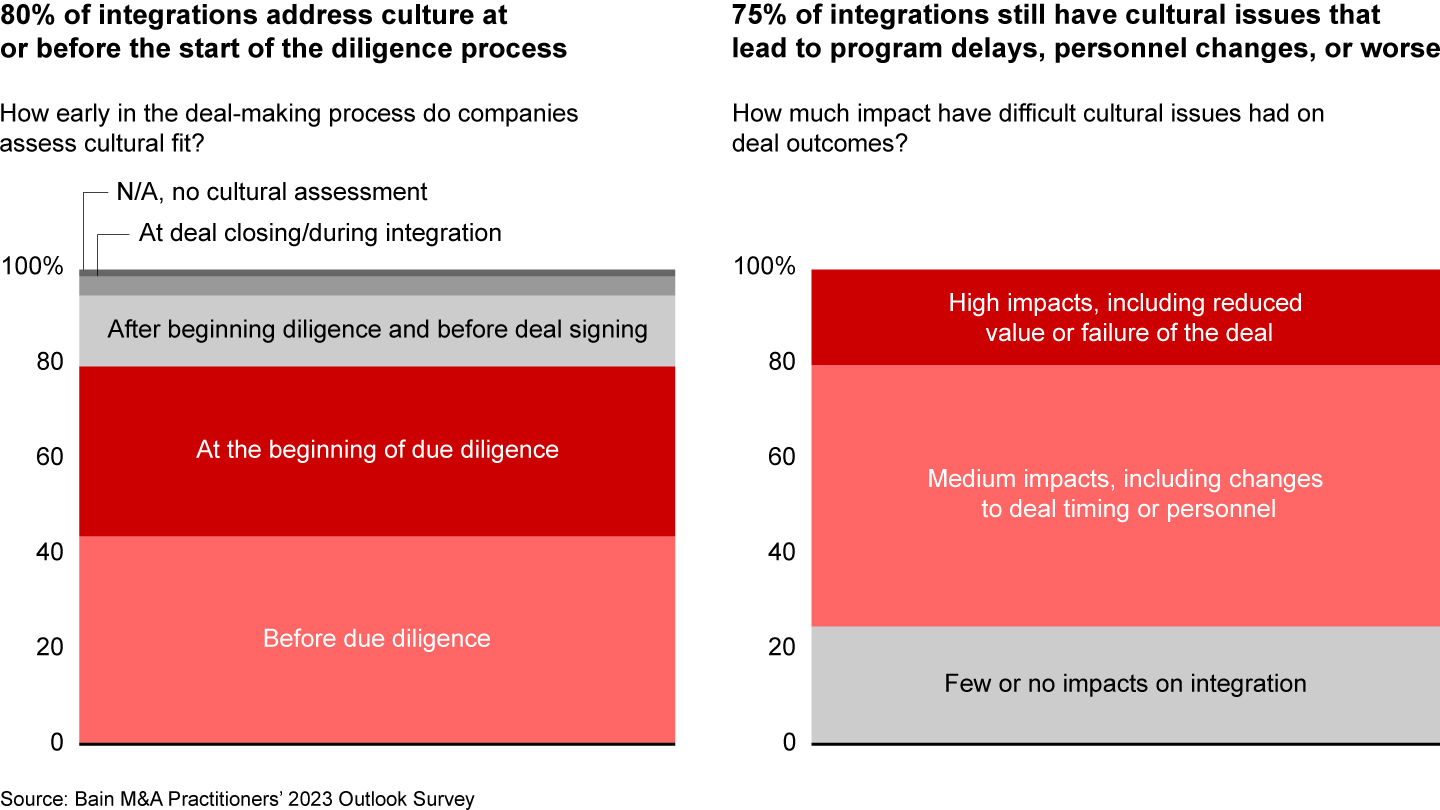
      Although culture is an early focus area for 80% of integrations, most acquirers still struggle with cultural issues that require serious interventions
      Although culture is an early focus area for 80% of integrations, most acquirers still struggle with cultural issues that require serious interventions
      Although culture is an early focus area for 80% of integrations, most acquirers still struggle with cultural issues that require serious interventions

      Three steps to successful cultural integration

      Can companies overcome these challenges plus the many familiar obstacles to cultural integration? The answer is yes, but doing so requires companies to focus on the specific issues most likely to disrupt the integration rather than the broader cultural landscape, which could take years to address. We call these specific issues "cultural fault lines," which, similar to fault lines between tectonic plates, cause foreseeable, frequent, and disruptive frictions when and where they collide (see Figure 2). There are three common types of cultural fault lines in merger integrations: differences in purpose, differences in decision making, and differences in engagement. Many integrators push forward without addressing these fault lines directly, but doing so creates frustration and resentment that taxes every interaction, creating setbacks that either seriously delay integration, drive away talent, or lower the odds of a deal’s ultimate success.

      Figure 2
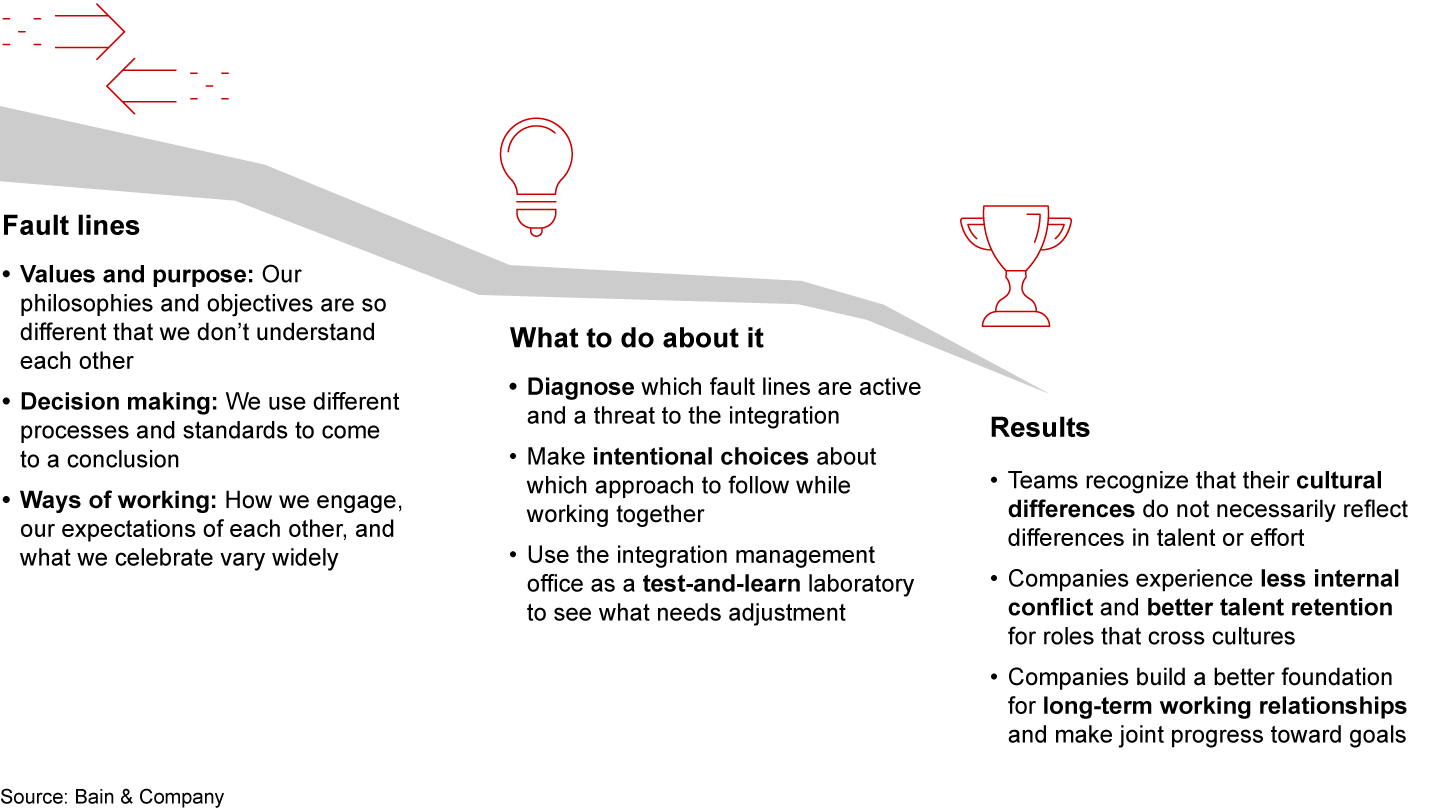
      Focus your integration efforts on cultural fault lines
      Focus your integration efforts on cultural fault lines
      Focus your integration efforts on cultural fault lines

      We see three steps companies can take to navigate cultural fault lines in any integration.

      Step No. 1: Identify and mitigate the innate fault lines most likely to cause integration disruptions. Among the countless differences across companies, certain types are more likely to create integration difficulties:

      • differences between the underlying purposes and values that guide each merging company (beyond the written mission statement);
      • differences between the expectations and processes for decision making, which typically reflect deeply rooted norms on data, risk, and power; and
      • differences between working styles on how to interact to accomplish goals, along with the expectations each company has for employee engagement.

      These fault lines are the most difficult and most important to address in an integration setting. If unaddressed, teams feel like they are talking past each other, ultimately stalling progress, and can drive away critical talent—sometimes taking their team with them.

      Identifying innate fault lines starts with looking for relevant differences during due diligence and continues throughout the pre-close period. Leaders who pinpoint these fault lines can help teams tackle them directly and realize that the issues are cultural and not personal before divisions become too great and limit the deal’s success.

      Identifying innate fault lines starts with looking for relevant differences during due diligence.

      When two professional services firms in the same field integrated, they were surprised by how differently they approached decision making. Although both saw themselves as collaborative, the acquirer lived that value by teaming individually with clients to make careful decisions only after securing broad consensus. The acquired company was more accustomed to solving urgent problems of financial distress by getting vital players in the room to make hard choices fast. These innate differences, shaped by the diverse portfolios of clients that they served, meant it was important to establish norms for the integration teams to use and to be clear that the more consensus-driven approach was an intentional, well-considered change vs. how the acquired company was accustomed to operating. Doing so helped take blame, confusion, and frustration out of the process and made it clear that this was a cultural (not personal) approach within the new parent company.

      In an integration of two technology companies, a sticking point about benefits revealed a potential fault line on values. Although both companies had generous benefits packages, the acquired company’s package was truly exceptional in its generosity. The acquirer saw reducing these down to be in line with its own benefits (still well above average for the industry) as a potential source of value, but every employee conversation seemed to gravitate back to the benefits package. The acquirer realized that the target’s benefits package was actually central to its identity; its conception of environmental, social, and corporate governance; and a part of how it sold its external brand. It was also clear that there was a lot to lose on culture and critical talent by picking a fight on the issue. The company created momentum for the integration when it announced that, instead of reducing the target’s generous benefits, it would be extending those benefits to all employees as one of many steps in preserving and expanding its unique culture.

      The best companies identify fault lines as part of diligence, assessing the degree of difficulty and potential impact to the value of the deal. They evaluate the ownership structure as well as how the company creates and measures value; they also consider outside-in data on employee engagement and company priorities, historical norms ingrained over decades, and other factors. Although it may sound extreme to walk away from a deal over innate cultural issues, that may be the best move for companies that don’t invest in a mitigation plan.

      The acquiring company team was blunt, with one asserting, “You see us as old white dudes.”

      Step No. 2: Act before misperceptions deepen the fault lines. Misperceptions can be a major obstacle to integrating teams. Teams that start with misperceptions of the other side (“they are arrogant”) may incorrectly reinforce them during the many ambiguous situations common to integrations (“they’re never available to meet live”). If not addressed early, these misperceptions will be cemented and create huge rifts. Integrators must surface misperceptions early, and quickly create opportunities for teams to interact and demonstrate how they are inaccurate.

      In a large software integration, there were clear differences between the leadership teams. The smaller, acquired company was passionate about issues of race, gender, and equal voice, and the composition of its leadership team reflected these priorities. But, at first glance, the acquirer's leadership team didn’t look like they had the same priorities regarding diversity, equity, and inclusion (DEI). There were troubling undercurrents until the companies held a perceptions workshop in which both teams were able to get the issue on the table. In the first exercise, each team separately wrote their perceptions of the other team and what they thought the other team perceived in them. The acquired company team raised the issue politely, while the acquirer team was more blunt, with one asserting, “You see us as old white dudes.” The acquirer CEO was able to handle this masterfully by simply acknowledging the gap: “You’re way ahead of us, and we can’t wait to learn from you,” he said.

      By acknowledging the difference, he was able to demonstrate authenticity and win over the other side while also dispelling the false perception that only one side cared about diversity. The acquirer company’s leadership committed to being open about issues of representation and to take the lead from the acquired company, while also empowering both sides to talk about the issue without fear or awkwardness. In this example, a situation that could have created a barrier to integration instead became a way for the leadership team to gain new credibility by embracing DEI efforts.

      How to surface perceived fault lines? Use the right kind of surveys and interviews early (well before close) that allow for the sharing of unfiltered views about the other company—its culture, skills, geographic differences, demographic differences, and priorities based on its reputation or interactions the companies had prior to integration. Talk about it. Foster dialogue. Blow up the myths. That means discussing perceptions head-on, ideally in the supportive environment of a workshop. Comparing how we perceive ourselves, how we perceive the other side, and how we think the other side perceives us opens the dialogue and enables teams to move past the wrong ideas that can be debunked by working together.

      Step No. 3: Use the integration itself to foster cultural alignment and mend fault lines. Integrations are moments of truth that can either advance how teams work together or destroy credibility. Success requires building alignment among the leaders who will carry messages to their teams and ensuring they project that alignment. Ideally, they use the integration to role model the new culture and help the teams move forward.

      The trouble is that integrations often aggravate fault lines. All integrations create stress for teams, both in terms of additional work and unanswered questions about how their jobs will change—or if they even continue. Certain elements and messages are more highly charged and, if not managed well, can lead to resentment and cultural conflicts. These self-inflicted wounds often result from insufficient planning and a basic lack of insight into the potential impact. For example, communications that are late, ambiguous, or absent will cause teams to assume the worst. Integration team planning, if not inclusive, may favor certain teams or fail to build strong relationships. And actions that are inconsistent with previous messaging create mistrust.

      What to do about it? Invest more integration effort into crucial moments of truth for employees. This spans integration activities but is especially true for communications that set the tone for the integration. Follow through with consistent actions. Also important: Use the integration as a culture lab to test and learn which cultural choices and adaptations will work best for the combined company.

      When two trade service providers merged, leadership chose to prioritize one culture and move all employees over to it. To accelerate the assimilation, every manager from the company being assimilated was fast-tracked through the other company’s leadership training. The companies created a group of integration ambassadors that became a sounding board for the field. In addition to engaging the newly trained leaders, it provided the integration team with a vital source of information (which included its blind spots) in areas such as IT integration and synergies. This was information that integration planners likely would never be able to get from a survey.

      Integration is also an opportunity to use the integration management office as a laboratory to test and learn how to work through issues together before the broader team faces them on day one. This can include mitigations such as agreeing to explicit decision-making norms and reminding teams of the desired attitude toward risk and stretch goals when target setting.

      Not all integrations present the same number of cultural fault lines and extent of risk. And many companies can muscle through with only the limited insights from traditional assessments. That approach, however, typically makes the entire process of integration harder. Unaddressed innate cultural fault lines and misperceptions as well as integration missteps result in slowed progress and diminished work quality. The traditional approach may require years (and sometimes several personnel changes) before teams are working with pre-integration efficiency and satisfaction.

      The best integrators address fault lines early. Those that wait until teams are openly complaining have a much larger problem to solve—and less credibility with which to solve it.

      Read the Next Chapter

      M&A in Aerospace and Defense: New Types of Deals in a Dynamic Industry

      Read our 2023 M&A Report

      Download the PDF Explore the report
      Authors
      • Headshot of Erin Gillman
        Erin Gillman
        Partner, San Francisco
      • Headshot of Sinead Mullen
        Sinead Mullen
        Partner, Denver
      • Headshot of Scott Nancarrow
        Scott Nancarrow
        Alumni, Chicago
      • Headshot of Marc Berman
        Marc Berman
        Alumni, London
      Contact us
      Related Consulting Services
      • Mergers and Acquisitions
      • People and Organization
      • Post-Merger Integration
      How We Can Help
      • Culture Change
      • M&A Capability
      • M&A Strategy
      M&A Report
      Consumer Products M&A

      In their quest for profitable growth, more companies are divesting brands or buying insurgents.

      Read More
      M&A Report
      Media M&A

      AI and other tech tools can boost bidding confidence in this highly competitive environment.

      Read More
      M&A Report
      Banking M&A

      As conditions shift, leading banks are fusing scale with scope to create future-ready organizations.

      Read More
      M&A Report
      Defense M&A

      Bold moves will determine the winners as a continent rearms.

      Read More
      M&A Report
      10 Takeaways from Our M&A Executive Survey

      We asked more than 300 practitioners across the globe about their deal-making efforts in today’s market. Here’s what they said.

      Read More

      Overview

      • Looking Back at M&A in 2022

      • Looking Ahead to M&A in 2023

      Hot Topics

      • M&A in Times of Turbulence: Lessons from the Last Recession

      • When Buying (vs. Building) Is the Right Move for Engine 2

      • Tougher Times: Putting the Diligence Back in Due Diligence

      • How to Avoid the Fault Lines Sending Tremors through Cultural Integration in M&A

      Industry Views

      • Aerospace and Defense M&A

      • Automotive and Mobility M&A

      • Banking M&A

      • Consumer Goods M&A

      • Diversified Industrials M&A

      • Energy and Natural Resources M&A

      • Healthcare and Life Sciences M&A

      • Insurance M&A

      • Media and Entertainment M&A

      • Payments M&A

      • Retail M&A

      • Technology M&A

      • Telecommunications M&A

      • Wealth and Asset Management M&A

      Regional Perspectives

      • Brazil M&A

      • India M&A

      • Japan M&A

      • Middle East M&A

      Published in January 2023
      Tags
      • Culture Change
      • M&A Capability
      • M&A Report
      • M&A Strategy
      • Mergers and Acquisitions
      • People and Organization
      • Post-Merger Integration

      How We've Helped Clients

      Accelerated Performance Transformation An EPC Leader Transforms Itself Amid Intense Volatility

      Read case study

      Divestitures and Spin-offs A holding company lets go to grow

      Read case study

      Performance Improvement Aggressively growing an IT service provider with a high-performance culture

      Read case study

      Ready to talk?

      We work with ambitious leaders who want to define the future, not hide from it. Together, we achieve extraordinary outcomes.

      Stay ahead in a rapidly changing world. Subscribe to Bain Insights, our monthly look at the critical issues facing global businesses.

      *I have read and understand Bain’s Privacy Notice.

      Please read and agree to the Privacy Policy.
      Bain & Company
      Contact us Sustainability Accessibility Terms of use Privacy Modern Slavery Act Statement Cookie Policy Sitemap Log In

      © 1996-2026 Bain & Company, Inc.

      Contact Bain

      How can we help you?

      • Business inquiry
      • Career information
      • Press relations
      • Partnership request
      • Speaker request
      See all offices