
Skip to Content
  • Offices

    Offices

    North & Latin America
    • Atlanta
    • Austin
    • Bogota
    • Boston
    • Buenos Aires
    • Chicago
    • Dallas
    • Denver
    • Houston
    • Los Angeles
    • Mexico City
    • Minneapolis
    • Monterrey
    • Montreal
    • New York
    • Rio de Janeiro
    • San Francisco
    • Santiago
    • São Paulo
    • Seattle
    • Silicon Valley
    • Toronto
    • Washington, DC
    Europe & Africa
    • Amsterdam
    • Athens
    • Berlin
    • Brussels
    • Copenhagen
    • Dusseldorf
    • Frankfurt
    • Helsinki
    • Istanbul
    • Johannesburg
    • Kyiv
    • Lisbon
    • London
    • Madrid
    • Milan
    • Munich
    • Oslo
    • Paris
    • Rome
    • Stockholm
    • Vienna
    • Warsaw
    • Zurich
    Middle East
    • Doha
    • Dubai
    • Riyadh
    Asia & Australia
    • Bangkok
    • Beijing
    • Bengaluru
    • Brisbane
    • Ho Chi Minh City
    • Hong Kong
    • Jakarta
    • Kuala Lumpur
    • Manila
    • Melbourne
    • Mumbai
    • New Delhi
    • Perth
    • Seoul
    • Shanghai
    • Singapore
    • Sydney
    • Tokyo
    See all offices
  • Alumni
  • Media Center
  • Subscribe
  • Contact
  • Global | English

    Select your region and language

    Global
    • Global (English)
    North & Latin America
    • Brazil (Português)
    • Argentina (Español)
    • Canada (Français)
    • Chile (Español)
    • Colombia (Español)
    Europe, Middle East, & Africa
    • France (Français)
    • DACH Region (Deutsch)
    • Italy (Italiano)
    • Spain (Español)
    • Greece (Elliniká)
    Asia & Australia
    • China (中文版)
    • Korea (한국어)
    • Japan (日本語)
  • Saved items (0)
    Saved items (0)

    You have no saved items.

    Bookmark content that interests you and it will be saved here for you to read or share later.

    Explore Bain Insights
  • Industries
    Main menu

    Industries

    • Aerospace & Defense
    • Agribusiness
    • Chemicals
    • Construction & Infrastructure
    • Consumer Products
    • Financial Services
    • Healthcare & Life Sciences
    • Industrial Machinery & Equipment
    • Media & Entertainment
      Industries
      Media & Entertainment
      • Media Lab
    • Metals
    • Mining
    • Oil & Gas
    • Paper & Packaging
    • Private Equity
      Industries
      Private Equity
      • Due Diligence
      • Exit Planning
      • Firm Strategy & Operations
      • Portfolio Value Creation
    • Social Impact
    • Retail
    • Technology
    • Telecommunications
      Industries
      Telecommunications
      • Capital Expenditure
      • Telco Digital Transformation
    • Transportation
    • Travel & Leisure
    • Utilities & Renewables
  • Consulting Services
    Main menu

    Consulting Services

    • Customer Experience
    • Sustainability
    • Innovation
    • M&A
    • Operations
    • People & Organization
    • Private Equity
    • Sales & Marketing
    • Strategy
    • AI, Insights, and Solutions
    • Technology
    • Transformation
  • Digital
  • Insights
    Main menu

    Insights

    • Industry Insights
    • Services Insights
    • Bain Books
    • Webinars
    • Bain Futures
    View all Insights
    Featured topics
    • Tariff Response
    • Artificial Intelligence
    • Thriving in Uncertainty
    • Executive Conversations
    • Macro Trends
    • M&A Report
    • Healthcare Private Equity Report
    • Paper & Packaging Report
    • Technology Report
    • CEO's Guide to Sustainability
    • CEO Insights
    • CFO Insights
    • COO Insights
    • CIO Insights
    • CMO Insights
    View all featured topics
  • About
    Main menu

    About

    • What We Do
    • What We Believe
    • Our People & Leadership
    • Client Results
    • Awards & Recognition
    • Global Affiliations
    Further: Our global responsibility
    • Sustainability
    • Social Impact
    • World Economic Forum
    Learn more about Further
  • Careers
    Main menu

    Careers

    • Work with Us
      Careers
      Work with Us
      • Find Your Place
      • Our Work Areas
      • Integrated Teams
      • Students
      • Internships & Programs
      • Recruiting Events
    • Life at Bain
      Careers
      Life at Bain
      • Blog: Inside Bain
      • Career Stories
      • Our People
      • Where We Work
      • Supporting Your Growth
      • Affinity Groups
      • Benefits
    • Impact Stories
    • Hiring Process
      Careers
      Hiring Process
      • What to Expect
      • Interviewing
    FIND JOBS
  • Offices
    Main menu

    Offices

    • North & Latin America
      Offices
      North & Latin America
      • Atlanta
      • Austin
      • Bogota
      • Boston
      • Buenos Aires
      • Chicago
      • Dallas
      • Denver
      • Houston
      • Los Angeles
      • Mexico City
      • Minneapolis
      • Monterrey
      • Montreal
      • New York
      • Rio de Janeiro
      • San Francisco
      • Santiago
      • São Paulo
      • Seattle
      • Silicon Valley
      • Toronto
      • Washington, DC
    • Europe & Africa
      Offices
      Europe & Africa
      • Amsterdam
      • Athens
      • Berlin
      • Brussels
      • Copenhagen
      • Dusseldorf
      • Frankfurt
      • Helsinki
      • Istanbul
      • Johannesburg
      • Kyiv
      • Lisbon
      • London
      • Madrid
      • Milan
      • Munich
      • Oslo
      • Paris
      • Rome
      • Stockholm
      • Vienna
      • Warsaw
      • Zurich
    • Middle East
      Offices
      Middle East
      • Doha
      • Dubai
      • Riyadh
    • Asia & Australia
      Offices
      Asia & Australia
      • Bangkok
      • Beijing
      • Bengaluru
      • Brisbane
      • Ho Chi Minh City
      • Hong Kong
      • Jakarta
      • Kuala Lumpur
      • Manila
      • Melbourne
      • Mumbai
      • New Delhi
      • Perth
      • Seoul
      • Shanghai
      • Singapore
      • Sydney
      • Tokyo
    See all offices
  • Alumni
  • Media Center
  • Subscribe
  • Contact
  • Global | English
    Main menu

    Select your region and language

    • Global
      Select your region and language
      Global
      • Global (English)
    • North & Latin America
      Select your region and language
      North & Latin America
      • Brazil (Português)
      • Argentina (Español)
      • Canada (Français)
      • Chile (Español)
      • Colombia (Español)
    • Europe, Middle East, & Africa
      Select your region and language
      Europe, Middle East, & Africa
      • France (Français)
      • DACH Region (Deutsch)
      • Italy (Italiano)
      • Spain (Español)
      • Greece (Elliniká)
    • Asia & Australia
      Select your region and language
      Asia & Australia
      • China (中文版)
      • Korea (한국어)
      • Japan (日本語)
  • Saved items  (0)
    Main menu
    Saved items (0)

    You have no saved items.

    Bookmark content that interests you and it will be saved here for you to read or share later.

    Explore Bain Insights
  • Industries
    • Industries

      • Aerospace & Defense
      • Agribusiness
      • Chemicals
      • Construction & Infrastructure
      • Consumer Products
      • Financial Services
      • Healthcare & Life Sciences
      • Industrial Machinery & Equipment
      • Media & Entertainment
      • Metals
      • Mining
      • Oil & Gas
      • Paper & Packaging
      • Private Equity
      • Social Impact
      • Retail
      • Technology
      • Telecommunications
      • Transportation
      • Travel & Leisure
      • Utilities & Renewables
  • Consulting Services
    • Consulting Services

      • Customer Experience
      • Sustainability
      • Innovation
      • M&A
      • Operations
      • People & Organization
      • Private Equity
      • Sales & Marketing
      • Strategy
      • AI, Insights, and Solutions
      • Technology
      • Transformation
  • Digital
  • Insights
    • Insights

      • Industry Insights
      • Services Insights
      • Bain Books
      • Webinars
      • Bain Futures
      View all Insights
      Featured topics
      • Tariff Response
      • Artificial Intelligence
      • Thriving in Uncertainty
      • Executive Conversations
      • Macro Trends
      • M&A Report
      • Healthcare Private Equity Report
      • Paper & Packaging Report
      • Technology Report
      • CEO's Guide to Sustainability
      • CEO Insights
      • CFO Insights
      • COO Insights
      • CIO Insights
      • CMO Insights
      View all featured topics
  • About
    • About

      • What We Do
      • What We Believe
      • Our People & Leadership
      • Client Results
      • Awards & Recognition
      • Global Affiliations
      Further: Our global responsibility
      • Sustainability
      • Social Impact
      • World Economic Forum
      Learn more about Further
  • Careers
    Popular Searches
    • Agile
    • Digital
    • Strategy
    Your Previous Searches
      Recently Visited Pages

      Content added to saved items

      Saved items (0)

      Removed from saved items

      Saved items (0)

      Brief

      Delivering China's 'New Retail' Future

      Delivering China's 'New Retail' Future

      How brands are redefining consumers, merchandise and stores for retailing’s next revolution.

      By Jason Ding, Bruno Lannes and Larry Zhu

      • min read
      }

      Brief

      Delivering China's 'New Retail' Future
      en

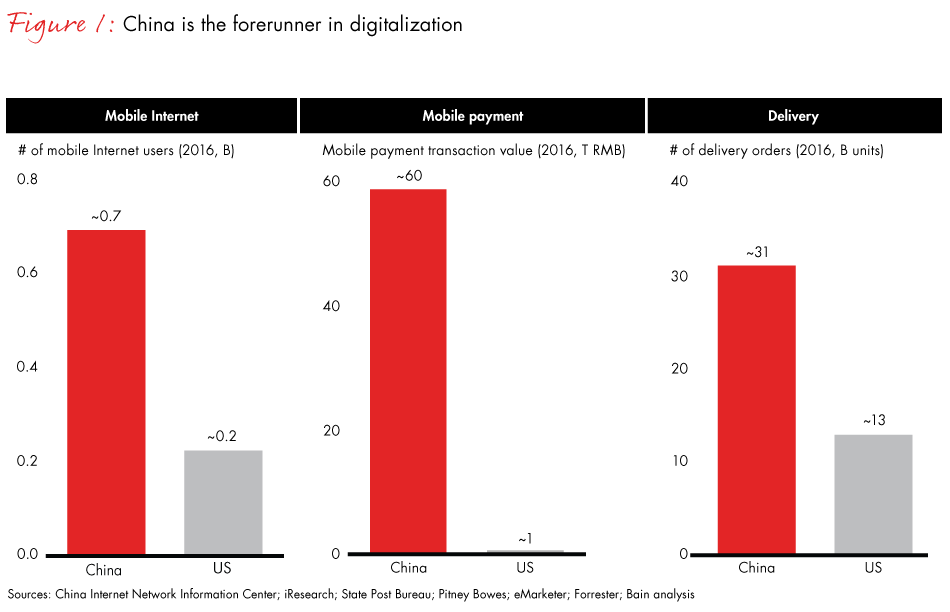
      It feels like a decade since Alibaba founder Jack Ma first introduced the term “New Retail” to describe a future in which online, offline and logistics would merge to create a dynamic new world of retailing. The reality is that he coined the name recently, in 2016. The changes he predicted are arriving so swiftly and so dramatically that each month seems to bring with it a big new preview of what retailing will look like everywhere, as China sets a pace for the rest of the world. Indeed, with millions of mom-and-pop stores now taking on new life as order-and-delivery stations for e-commerce, with food delivery platforms such as Meituan fulfilling more than 18 million orders per day, and with more than 60 times more mobile payments than the US, wherever retailing is headed, China is already there (see Figure 1).

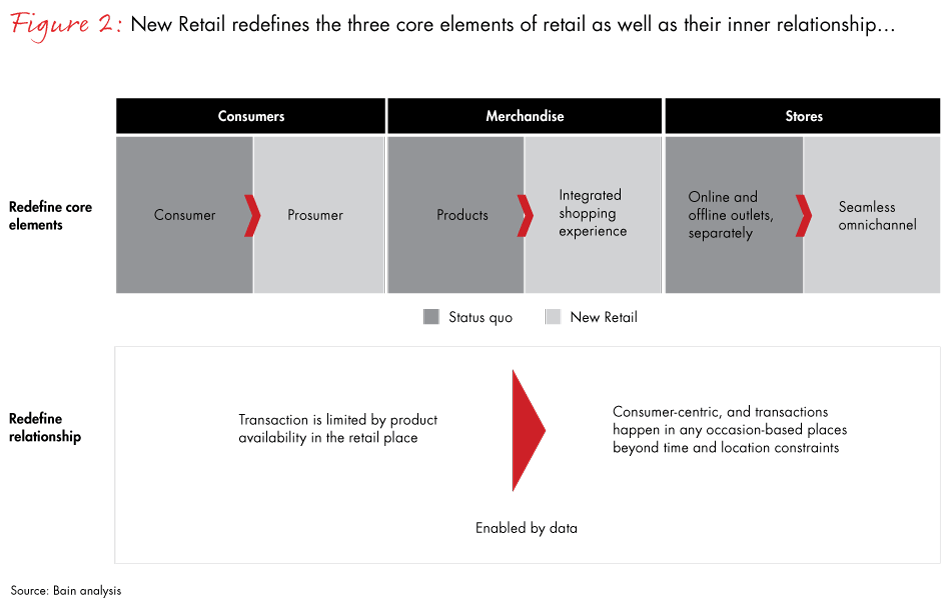
      For brands hoping to sell in China, survival means moving equally fast to capture this future ahead of competitors, both incumbents and digitally savvy upstarts. It won’t be enough merely to keep up. Brands will be required to get ahead and help shape the vast changes, even as they completely overhaul the rules of engagement. In a letter to investors, Alibaba CEO Daniel Zhang summed up the challenge when he called for using Big Data analytics to redefine the relationship among the traditional core elements of retailing—consumers, merchandise and stores—to upgrade current formats and create new retail occasions.

      Leading brands are gaining an edge by using the emergence of New Retail as an occasion to build a new consumer-centric model while at the same time creating operations that are more efficient.

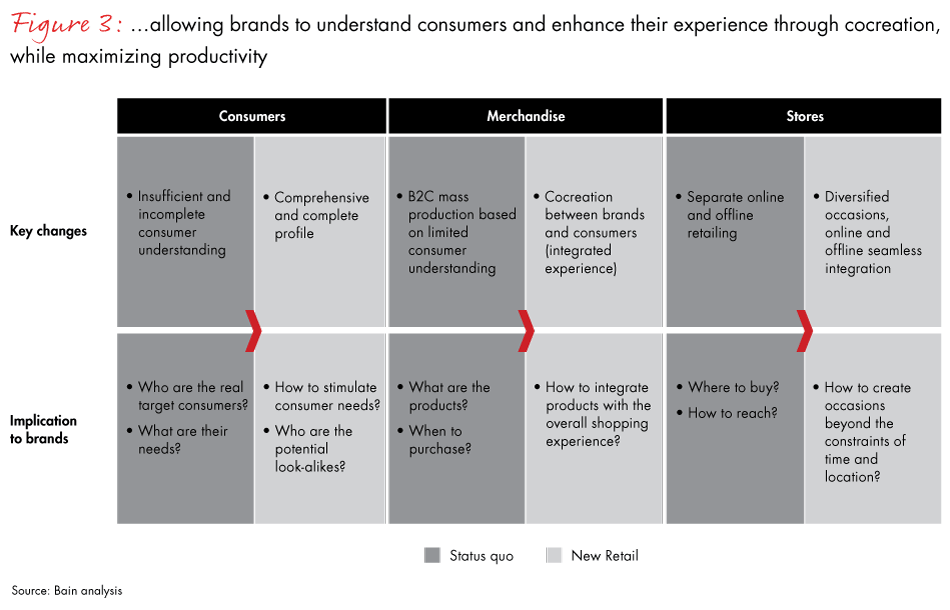
      Consider the fundamental changes and ways that the best brands are responding (see Figures 2 and 3).

      Consumers. People are no longer viewed only as consumers. The most forward-thinking brands now also see them in the role of coproducers. In the past, with relatively limited consumer insights, it was sufficient for a brand to identify target consumers and determine their needs. Now, armed with a comprehensive—and dynamic—profile, brands have new missions, such as finding ways to stimulate consumer needs, identifying look-alike consumers and turning consumers into brand ambassadors who effectively cocreate the brand.

      Merchandise. Products are advancing from commodities to being part of the consumption process and an integrated consumer experience. As the old business-to-consumer (B2C) model evolves from the simple goal of meeting mass demand to a world of consumer-data-inspired personalized products and delivery, the best brands are determining how to integrate products with the overall experience of not only shopping but learning about a product, using it and recommending it.

      Stores. Stores have extended from online-only or offline-only into a seamless omnichannel experience that’s fully integrated, in which people shop while enjoying content or while spending time on social networks, for example, as well as in stores or on e-commerce platforms. Among the new moves that winning brands are making to get ahead: creating occasions beyond the constraints of time and location.
      china-commerce-fig01_embed

      china-commerce-fig02_embed

      china-commerce-fig03_embed

      How should brands change?


      From our experience, the brands that are in the strongest position to outpace rivals in New Retail take a systematic approach.

      Build a new framework with customers and data. The best brands start by acknowledging—and acting on—two fundamentals of New Retailing. They need to put customers at the heart of their operations, with full consideration of the end-to-end customer experience, from awareness to purchase to referral. In addition, they commit to embedding data and smart technology into their operations, breaking down the data silos within their organization for cross-function interconnection and extending their links with the broader ecosystem. In the past, they may have used internal CRM data to provide insights that informed functional business decisions. Now they need to continually refine the data and engage in test-and-learn exercises to develop and act on broader, deeper and constantly changing consumer insights.

      Develop new flexibility and efficiency in R&D, supply chain, marketing and distribution. New Retail is having a big effect on every corner of a brand’s operations. Yet companies can transform those operations to take advantage of retailing’s new realities while making them more efficient in the process. For example, as they continually hone products to serve personalized consumer needs, brands must adapt to shorter R&D cycles. Pioneering companies now take an interactive approach to R&D that allows for timely changes in design and planning based on real-time consumer behavior. Importantly, they also view their consumers as participants in the R&D process, engaging with them early in product development, conducting consumer testing before production and connecting frequently before a product launch to enhance loyalty.

      Similarly, brands are reinventing supply chains, making them flexible enough to adjust to real-time frontline sales results and the more accurate estimates enabled by artificial intelligence, the Internet of Things, blockchain and other emerging technologies. Companies selling in China are at the forefront of this movement to use smart technology. The most advanced among them integrate with all parties in the supply chain, analyzing the full spectrum of available data to improve visualization, analysis and supply chain automation. They make the required investments to choose the right service providers, manage the data and improve the operating efficiency of their supply chains. Nestlé has reaped significant benefits from its “One Set Inventory” unified supply chain, which serves different channels (business to business, business to consumer, offline to online and others), sharing both logistics service and inventory. From a single hub, Nestlé ships to different channels instantly, choosing the destination based on insights generated by real-time data. The move has dramatically improved turnover efficiency, with the online product shortage rate dropping from 22% to 5%. It has lowered logistics costs, reducing cross-region delivery from 60% to 10%. In addition, the new supply chain setup has improved delivery timeliness for Nestlé. Now nearly 80% of orders are delivered the same day or next day.

      New Retail changes the game in marketing and consumer management, too. The digital ecosystem that encompasses purchase, payment, delivery and all the other customer touchpoints provides the opportunity to reach consumers whenever and wherever they are online. That is why winning brands have extended the horizons for digital marketing. For them, online is not limited to a sales channel but becomes a consumer-centric closed loop for unlocking business potential. These companies collect data whenever a consumer uses an app to hail a taxi or process a payment. They integrate offline and online data. From this composite of transactions they gain insights that help them develop and deliver personalized marketing messages to the same customer touchpoints, constantly refining what they learn and how they market. It’s a shift in philosophy that turns marketing from a brand expense to a brand asset.

      Finally, distribution is being reinvented with New Retail. Under the old and painful multilayer network, stores—especially traditional trade—had limited control and transparency, there was a lack of sufficient data and the costs of distribution were high for limited channel penetration. Leading brands now rely on streamlined electronic route-to-market (e-RTM) models that help them reduce costs with fewer levels, expand their coverage, and gain visibility into real-time inventory and sales data while improving point of sale and channel relationships. A key lesson they’ve learned as they build and adapt to these new digital route-to-market approaches: honing brand strategies to gain the most from e-RTM and thoughtfully selecting business partners based on the unique characteristics of their product categories.

      Transform the organization and operating model for digital. Building a framework and operations around customers and data are critical for brands hoping to master New Retail. However, those big moves will not yield sufficient results without redesigning the organization to make full use of New Retail’s power. Among the most important considerations: The organization structure needs to allow for seamless coordination among functions, something that traditional organizations rarely accommodate. Also, the organizational design needs to reflect the company’s stage in its digital transformation. For example, in a company in early days—in which digital’s major role is that of a new sales channel—the digital team will be most effective if it operates within the sales unit. However, for companies much further along on the digital transformation, digital should be a standalone business unit that integrates resources across all functions, with a decentralized and agile operating model that fosters fast decisions.

      While the ultimate goal is to be able to move quickly, brands need to recognize that developing enterprise-wide agility does not happen overnight. It is a multistaged journey that typically takes two to three years to complete.

      Many brands entered the era of New Retail not only with limited capabilities for acquiring and analyzing data, but also with organization structures and operating models that make it difficult to share and act on insights gained from that data. Winners understand the need to organize for data.

      As New Retail takes root, the brands that thrive will acknowledge that the changes they make today—the new capabilities they develop and the operating model they devise—won’t necessarily help them a year from now. New Retail is a work in progress that will require brands to constantly refine and reinvent themselves for new occasions, new formats and the steady flow of new ideas that will define retailing tomorrow.


      About AliResearch


      Established in 2007, AliResearch (Alibaba Research Institute) is harnessing the scale and scope of the world’s largest and most vibrant digital business ecosystem, consisting of e-commerce, logistics, cloud computing, big data and entertainment. Adhering to the spirit of openness and sharing of the Internet, we have become a think tank platform dedicated to new business, new economy and new governance through sharing of data, technology, cases and ideas for researchers and think tanks. AliResearch covers microlevel research such as consumer insights, digital transformation and business model innovation (C2B, future business organization), midlevel research on industry digitization such as supply chain, e-commerce logistics and rural e-commerce, macrolevel research on dynamics between new and old economy such as Internet and employment, consumption and globalization, Internet governance research such as network regulation and e-commerce legislation, and future research such as information economics.

      Jason Ding is a partner with Bain & Company’s Beijing office. Bruno Lannes and Larry Zhu are Bain partners based in Shanghai. All three are members of Bain’s Consumer Products and Retail practices.

      This brief is a joint effort between Bain & Company and AliResearch. It is based on a full report in Chinese, “In the Era of New Retail: Transformation of Brands.” AliResearch authors of the report are: Hongbing Gao, Vice President of Alibaba Group, Director of AliResearch; Liqi Peng, Vice President of Alibaba Group, President of UniOperation Unit; Fei Song, Vice Director of AliResearch, Senior Advisor; and Zhengwei Jiang, Senior Algorithm Expert of AliResearch.


      china-commerce-fig01_full

      china-commerce-fig02_full

      china-commerce-fig03_full
      Authors
      • Headshot of Jason Ding
        Jason Ding
        Partner, Hong Kong
      • Headshot of Bruno Lannes
        Bruno Lannes
        Advisory Partner, Shanghai
      • Headshot of Larry Zhu
        Larry Zhu
        Alumni, Hong Kong
      Contact us
      Related Industries
      • Consumer Products
      • Retail
      Related Consulting Services
      • Sales and Marketing
      • Strategy
      How We Can Help
      • Omnichannel Strategy
      Consumer Products
      Keeping Up with China's Shoppers at Two Speeds

      China's two-speed trend is forcing brands to find new ways to spur household penetration and market share growth.

      Read More
      Consumer Products
      China's Two-Speed Growth: In and Out of the Home

      Many Chinese consumer products companies are aiming to expand in high-speed markets while managing for costs in low-speed markets.

      Read More
      Consumer Products
      How Brands Can Get Ahead of China's Tectonic Shifts in Grocery Retail

      Like everything else in China, grocery retailing is changing at warp speed—with huge rewards for brands that quickly adapt to the new rules.

      Read More
      Digital Transformation
      Embracing China's New Retail

      As online, offline and logistics merge, some brands are pulling ahead by redefining consumers, merchandise and stores.

      Read More
      Digital Transformation
      What’s Powering China’s Market for Luxury Goods?

      Sales are growing at a healthy 20% rate, but not all brands are celebrating.

      Read More
      Published in December 2017
      Tags
      • Consumer Products
      • Digital Transformation
      • Emerging Markets
      • Omnichannel Strategy
      • Retail
      • Sales and Marketing
      • Strategy

      How We've Helped Clients

      Sustainability A Manufacturer Vows to “Push to Zero” Carbon Emissions

      Read case study

      Digital Omnichannel strategy boosts fashion company

      Read case study

      Strategy Focus on core delivers growth for retailer

      Read case study

      Ready to talk?

      We work with ambitious leaders who want to define the future, not hide from it. Together, we achieve extraordinary outcomes.

      Stay ahead in a rapidly changing world. Subscribe to Bain Insights, our monthly look at the critical issues facing global businesses.

      *I have read and understand Bain’s Privacy Notice.

      Please read and agree to the Privacy Policy.
      Bain & Company
      Contact us Sustainability Accessibility Terms of use Privacy Modern Slavery Act Statement Cookie Policy Sitemap Log In

      © 1996-2026 Bain & Company, Inc.

      Contact Bain

      How can we help you?

      • Business inquiry
      • Career information
      • Press relations
      • Partnership request
      • Speaker request
      See all offices