
Skip to Content
  • Offices

    Offices

    North & Latin America
    • Atlanta
    • Austin
    • Bogota
    • Boston
    • Buenos Aires
    • Chicago
    • Dallas
    • Denver
    • Houston
    • Los Angeles
    • Mexico City
    • Minneapolis
    • Monterrey
    • Montreal
    • New York
    • Rio de Janeiro
    • San Francisco
    • Santiago
    • São Paulo
    • Seattle
    • Silicon Valley
    • Toronto
    • Washington, DC
    Europe & Africa
    • Amsterdam
    • Athens
    • Berlin
    • Brussels
    • Copenhagen
    • Dusseldorf
    • Frankfurt
    • Helsinki
    • Istanbul
    • Johannesburg
    • Kyiv
    • Lisbon
    • London
    • Madrid
    • Milan
    • Munich
    • Oslo
    • Paris
    • Rome
    • Stockholm
    • Vienna
    • Warsaw
    • Zurich
    Middle East
    • Doha
    • Dubai
    • Riyadh
    Asia & Australia
    • Bangkok
    • Beijing
    • Bengaluru
    • Brisbane
    • Ho Chi Minh City
    • Hong Kong
    • Jakarta
    • Kuala Lumpur
    • Manila
    • Melbourne
    • Mumbai
    • New Delhi
    • Perth
    • Seoul
    • Shanghai
    • Singapore
    • Sydney
    • Tokyo
    See all offices
  • Alumni
  • Media Center
  • Subscribe
  • Contact
  • Global | English

    Select your region and language

    Global
    • Global (English)
    North & Latin America
    • Brazil (Português)
    • Argentina (Español)
    • Canada (Français)
    • Chile (Español)
    • Colombia (Español)
    Europe, Middle East, & Africa
    • France (Français)
    • DACH Region (Deutsch)
    • Italy (Italiano)
    • Spain (Español)
    • Greece (Elliniká)
    Asia & Australia
    • China (中文版)
    • Korea (한국어)
    • Japan (日本語)
  • Saved items (0)
    Saved items (0)

    You have no saved items.

    Bookmark content that interests you and it will be saved here for you to read or share later.

    Explore Bain Insights
  • Industries
    Main menu

    Industries

    • Aerospace & Defense
    • Agribusiness
    • Chemicals
    • Construction & Infrastructure
    • Consumer Products
    • Financial Services
    • Healthcare & Life Sciences
    • Industrial Machinery & Equipment
    • Media & Entertainment
      Industries
      Media & Entertainment
      • Media Lab
    • Metals
    • Mining
    • Oil & Gas
    • Paper & Packaging
    • Private Equity
      Industries
      Private Equity
      • Due Diligence
      • Exit Planning
      • Firm Strategy & Operations
      • Portfolio Value Creation
    • Social Impact
    • Retail
    • Technology
    • Telecommunications
      Industries
      Telecommunications
      • Capital Expenditure
      • Telco Digital Transformation
    • Transportation
    • Travel & Leisure
    • Utilities & Renewables
  • Consulting Services
    Main menu

    Consulting Services

    • Customer Experience
    • Sustainability
    • Innovation
    • M&A
    • Operations
    • People & Organization
    • Private Equity
    • Sales & Marketing
    • Strategy
    • AI, Insights, and Solutions
    • Technology
    • Transformation
  • Digital
  • Insights
    Main menu

    Insights

    • Industry Insights
    • Services Insights
    • Bain Books
    • Webinars
    • Bain Futures
    View all Insights
    Featured topics
    • Tariff Response
    • Artificial Intelligence
    • Thriving in Uncertainty
    • Executive Conversations
    • Macro Trends
    • M&A Report
    • Healthcare Private Equity Report
    • Paper & Packaging Report
    • Technology Report
    • CEO's Guide to Sustainability
    • CEO Insights
    • CFO Insights
    • COO Insights
    • CIO Insights
    • CMO Insights
    View all featured topics
  • About
    Main menu

    About

    • What We Do
    • What We Believe
    • Our People & Leadership
    • Client Results
    • Awards & Recognition
    • Global Affiliations
    Further: Our global responsibility
    • Sustainability
    • Social Impact
    • World Economic Forum
    Learn more about Further
  • Careers
    Main menu

    Careers

    • Work with Us
      Careers
      Work with Us
      • Find Your Place
      • Our Work Areas
      • Integrated Teams
      • Students
      • Internships & Programs
      • Recruiting Events
    • Life at Bain
      Careers
      Life at Bain
      • Blog: Inside Bain
      • Career Stories
      • Our People
      • Where We Work
      • Supporting Your Growth
      • Affinity Groups
      • Benefits
    • Impact Stories
    • Hiring Process
      Careers
      Hiring Process
      • What to Expect
      • Interviewing
    FIND JOBS
  • Offices
    Main menu

    Offices

    • North & Latin America
      Offices
      North & Latin America
      • Atlanta
      • Austin
      • Bogota
      • Boston
      • Buenos Aires
      • Chicago
      • Dallas
      • Denver
      • Houston
      • Los Angeles
      • Mexico City
      • Minneapolis
      • Monterrey
      • Montreal
      • New York
      • Rio de Janeiro
      • San Francisco
      • Santiago
      • São Paulo
      • Seattle
      • Silicon Valley
      • Toronto
      • Washington, DC
    • Europe & Africa
      Offices
      Europe & Africa
      • Amsterdam
      • Athens
      • Berlin
      • Brussels
      • Copenhagen
      • Dusseldorf
      • Frankfurt
      • Helsinki
      • Istanbul
      • Johannesburg
      • Kyiv
      • Lisbon
      • London
      • Madrid
      • Milan
      • Munich
      • Oslo
      • Paris
      • Rome
      • Stockholm
      • Vienna
      • Warsaw
      • Zurich
    • Middle East
      Offices
      Middle East
      • Doha
      • Dubai
      • Riyadh
    • Asia & Australia
      Offices
      Asia & Australia
      • Bangkok
      • Beijing
      • Bengaluru
      • Brisbane
      • Ho Chi Minh City
      • Hong Kong
      • Jakarta
      • Kuala Lumpur
      • Manila
      • Melbourne
      • Mumbai
      • New Delhi
      • Perth
      • Seoul
      • Shanghai
      • Singapore
      • Sydney
      • Tokyo
    See all offices
  • Alumni
  • Media Center
  • Subscribe
  • Contact
  • Global | English
    Main menu

    Select your region and language

    • Global
      Select your region and language
      Global
      • Global (English)
    • North & Latin America
      Select your region and language
      North & Latin America
      • Brazil (Português)
      • Argentina (Español)
      • Canada (Français)
      • Chile (Español)
      • Colombia (Español)
    • Europe, Middle East, & Africa
      Select your region and language
      Europe, Middle East, & Africa
      • France (Français)
      • DACH Region (Deutsch)
      • Italy (Italiano)
      • Spain (Español)
      • Greece (Elliniká)
    • Asia & Australia
      Select your region and language
      Asia & Australia
      • China (中文版)
      • Korea (한국어)
      • Japan (日本語)
  • Saved items  (0)
    Main menu
    Saved items (0)

    You have no saved items.

    Bookmark content that interests you and it will be saved here for you to read or share later.

    Explore Bain Insights
  • Industries
    • Industries

      • Aerospace & Defense
      • Agribusiness
      • Chemicals
      • Construction & Infrastructure
      • Consumer Products
      • Financial Services
      • Healthcare & Life Sciences
      • Industrial Machinery & Equipment
      • Media & Entertainment
      • Metals
      • Mining
      • Oil & Gas
      • Paper & Packaging
      • Private Equity
      • Social Impact
      • Retail
      • Technology
      • Telecommunications
      • Transportation
      • Travel & Leisure
      • Utilities & Renewables
  • Consulting Services
    • Consulting Services

      • Customer Experience
      • Sustainability
      • Innovation
      • M&A
      • Operations
      • People & Organization
      • Private Equity
      • Sales & Marketing
      • Strategy
      • AI, Insights, and Solutions
      • Technology
      • Transformation
  • Digital
  • Insights
    • Insights

      • Industry Insights
      • Services Insights
      • Bain Books
      • Webinars
      • Bain Futures
      View all Insights
      Featured topics
      • Tariff Response
      • Artificial Intelligence
      • Thriving in Uncertainty
      • Executive Conversations
      • Macro Trends
      • M&A Report
      • Healthcare Private Equity Report
      • Paper & Packaging Report
      • Technology Report
      • CEO's Guide to Sustainability
      • CEO Insights
      • CFO Insights
      • COO Insights
      • CIO Insights
      • CMO Insights
      View all featured topics
  • About
    • About

      • What We Do
      • What We Believe
      • Our People & Leadership
      • Client Results
      • Awards & Recognition
      • Global Affiliations
      Further: Our global responsibility
      • Sustainability
      • Social Impact
      • World Economic Forum
      Learn more about Further
  • Careers
    Popular Searches
    • Agile
    • Digital
    • Strategy
    Your Previous Searches
      Recently Visited Pages

      Content added to saved items

      Saved items (0)

      Removed from saved items

      Saved items (0)

      Brief

      Wolf in Sheep's Clothing: Disruption Ahead for Transaction Banking

      Wolf in Sheep's Clothing: Disruption Ahead for Transaction Banking

      The field is getting crowded and technology-intensive. How can banks stand out?

      By Thomas Olsen, Ada Di Marzo, Sen Ganesh and Mike Baxter

      • min read
      }

      Brief

      Wolf in Sheep's Clothing: Disruption Ahead for Transaction Banking
      en
      At a Glance
      • Many banks and fintechs are placing big bets on transaction banking. But as competition intensifies and technology firms offer alternatives, prices are bound to fall, and the numbers won't add up for everyone.
      • To succeed, incumbent banks will need to overhaul most aspects of their operating models, including legacy technology systems.
      • Forward-looking banks have an opportunity to jump ahead by rethinking their role, focusing on how they will add value and determining how to charge for it.
      • This will require banks to experiment with new economic models, from simple revenue sharing to sharing of the customer relationship with external partners.

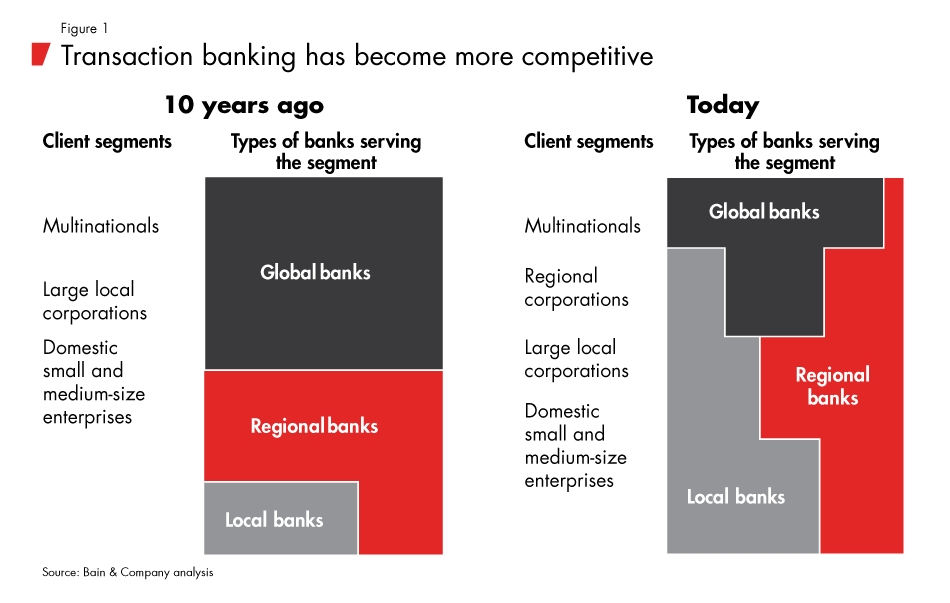
      Many banks increasingly see their futures bound up with a greater presence in transaction banking—the business of managing cash for companies, and financing trade and supply chains. Global banks such as Citigroup, HSBC and JPMorgan have focused on this business for years, and now others are trying to add more sources of recurring fee income as they struggle to increase their return on capital. Local and regional banks in emerging markets also are pursuing growth in transaction banking, as they face compressing profit margins and higher capital requirements in traditional corporate lending (see Figure 1).

      Transaction banking revenues tend to be less volatile than other types of banking revenues, and bankers can cross-sell products, which is critical for client loyalty. The business also can serve as a source of more stable, lower-cost deposits that help banks maintain liquidity ratios and cost of funds. Not surprisingly, some investment bankers want to move next door to transaction banking, the Financial Times recently reported. Transaction banking has become a significant factor in bank forecasts to improve the return on equity of their wholesale divisions. HSBC has said publicly that it expects transaction banking to generate a 20% return on tangible equity, significantly higher than that of overall wholesale banking. Société Générale plans on growing revenues in this business by €700 million, to €2.6 billion in 2022.

      Competitors pour in …


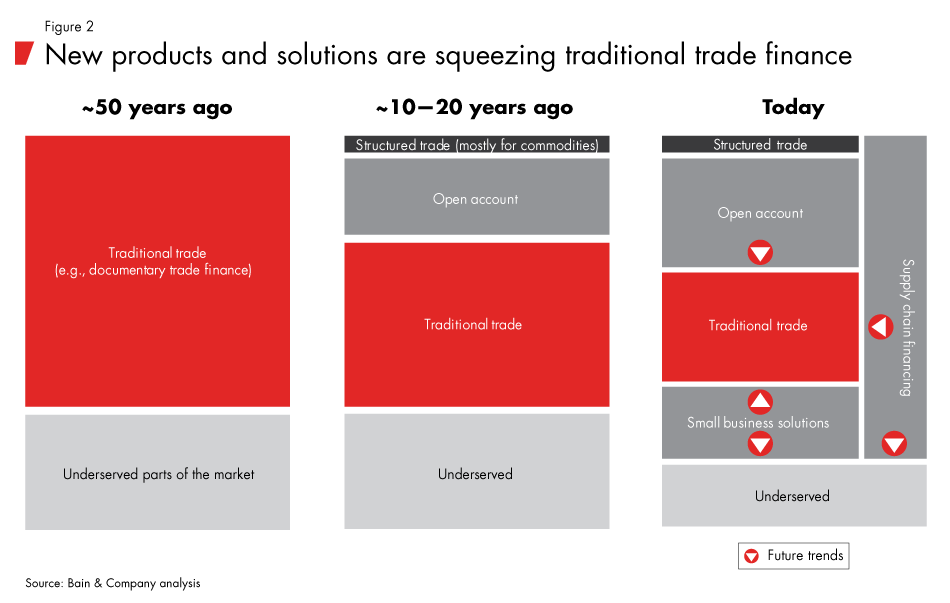
      The widespread optimism may not be warranted, however. For one thing, banks are chasing the same, albeit growing, market. Even small local and regional banks find it easy to expand into this business, because they can buy off-the-shelf solutions from third-party vendors, some of which have started to offer solutions as a service, as Finastra does in payments. Competition is growing from other quarters as well, including technology companies that operate platforms addressing specific client needs, such as the supply chain platforms of Tradeshift and PrimeRevenue, which accommodate financial transactions.

      In supply chain finance, Alibaba, Amazon and other major technology firms already lend to small merchants behind their e-commerce marketplaces, using unparalleled customer data and analytical capabilities. They are financing billions of dollars of trade in their e-commerce ecosystems, and increasingly provide payment platforms as well. Nine banks recently launched the we.trade system using IBM’s distributed ledger technology to track goods and automatically release payments as they move around the world. IBM formed a joint venture with Maersk, the shipping company, applying blockchain across physical supply chains and logistics. And a group of banks, together with R3 and TradeIX, launched Marco Polo to develop distributed ledger-based solutions focused on open account trade finance (see Figure 2).
      transaction-banking-fig01_embed

      transaction-banking-fig02_embed

      … and prices fall


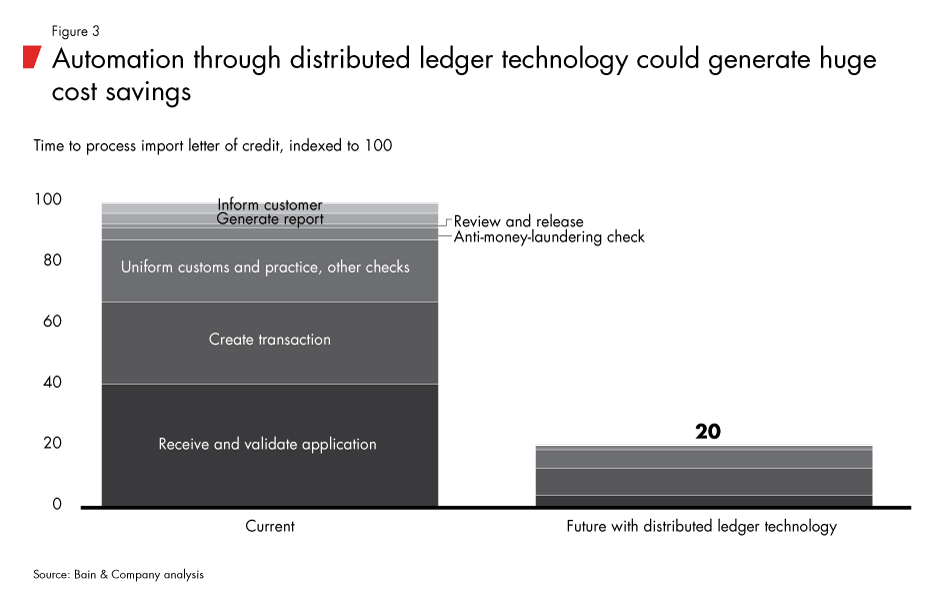
      As new digital technologies automate the manual, paper-intensive processes involved in transaction banking, costs will decline. That dynamic, combined with heightened competition, is likely to cause a structural decline in prices for cross-border payments and trade finance. Bain & Company estimates that distributed ledger technology, if adopted in the right way by participants in the trade ecosystem, has the potential to reduce trade finance operating costs by 50% to 80%, and to realize three- to fourfold improvements in turnaround times, depending on the trade finance product involved (see Figure 3). We have already seen prices decline in the SWIFT international payment network.

      These forces are washing through every region and every product in the transaction banking portfolio. In foreign exchange, fintechs have begun to challenge incumbent banks. Kantox, for instance, has expanded from foreign currency hedging to cash management and risk management, serving more than 2,000 clients worldwide. The company offers a strong digital interface for clients, transparent pricing and the ability to suggest hedging strategies proactively based on client data.

      transaction-banking-fig03_embed

      In cash, payments and collections, companies such as Ripple as well as different groups of banks are moving to distributed ledger and other new technology solutions, which should reduce costs, labor and processing time. For example, a coalition of five dozen Japanese and Korean banks is testing the transfer of real-time cross-border funds between the two countries over the Ripple network. Standard Chartered, Axis Bank and Rakbank recently started a cross-border payments platform between Singapore, India and the United Arab Emirates built on Ripple technology. The platform aims to allow corporate users to see all fees up front and prevalidate transactions, thereby settling them faster. Looking a few years out, some central banks, such as Singapore’s, are testing digital fiat currency through distributed ledger technology.

      Across jurisdictions, distributed ledger technology has the potential to transform settlement and clearing. While a securities trader can now execute a transaction at lightning speed, it can take as long as three days for that transaction to settle. Using a distributed ledger, execution, clearing and settlement could occur simultaneously, minimizing liquidity and credit risks. Custody and other post-trade security services also are under threat from new technologies.

      Time to overhaul the operating model


      With so many banks forecasting market share gains, new digital technologies reducing costs and pricing set to decline, the numbers just don’t add up for everyone. To succeed in transaction banking and stay ahead of the pack, individual banks likely will need to overhaul most aspects of their operating models. Too many banks are saddled with payments and other core functionality embedded in legacy IT systems. Some have to cope with two or three payment systems covering multiple regions, at a level of cost and complexity that hinders their long-term competitiveness. And at many banks, their operations still depend on largely paper-based processes, often because of clients or partners that use paper, and will need retooling.

      Banks also struggle to attract new types of talent—not people who know the intricacies of SWIFT protocols and paperwork management, but employees conversant with artificial intelligence so as to predict clients’ working capital requirements, or who know the ins and outs of distributed ledger technology or advanced analytics, or how to design easy, convenient user interfaces. Furthermore, given how trade and supply chain finance increasingly involve ecosystems of external partners, banks will have to step up their ability to work with companies that operate with a much faster metabolic rate. Many of these companies have grown up using Agile methods, for example, which entails cross-functional collaboration and rapid test-and-learn experimentation.

       Thomas Olsen, a partner with Bain’s Financial Services practice, discusses disruptions in the market as well as steps banks can take to stay competitive.

      Rethinking the role of the bank


      Forward-looking banks do have an opportunity to jump ahead, by rethinking their role in transaction banking—specifically, how they will add value and how to charge for it. With pricing pressure imminent, they should consider charging not per payment or other item, but rather through a fee for a solution that includes transactions, data analytics, security features, a portal connecting the client with other banks and more. A similar transition occurred in telecommunications more than a decade ago: Providers that used to bill business customers per international call now charge fees for connectivity solutions that enable free voice-over-Internet-protocol calls.

      Banks’ roles will evolve. Some will focus on using partnerships—with IT firms, other banks, e-commerce platforms and others—to provide a complete transaction banking solution to clients. Others will provide the infrastructure for local payments and collections, or become utilities for processing certain transactions in certain countries or regions. This will require banks to experiment with new economic models, from simple revenue sharing to sharing of the customer relationship. The latter would necessitate new governance structures and risk management, especially when partnering with young fintechs, and would entail sharing client data so that partners can develop tailored propositions.

      Especially in a low-interest-rate environment, making money in cash and liquidity management means that banks will want to stay upstream as the preferred institution to centralize cash (a consolidation role to keep liquidity overnight). They also will want to develop valuable services such as advising in treasury management, as Citi Treasury Diagnostics aims to do by offering online benchmarking analysis and advisory services to evaluate treasury practices.

      With technology disrupting most areas of transaction banking, it’s critical for banks to develop a more seamless experience for clients. Most large corporations, for example, will be prone to use host-to-host connections or their in-house treasury management systems for initiation and reconciliation of transactions. Banks should look to integrate into those systems in order to foster greater efficiencies in such areas as straight-through processing. Some clients might use a bank’s web portal as a dashboard or for reports, so those portals should be easy and efficient to navigate—with a single sign-on, reporting flexibility and multibank access.

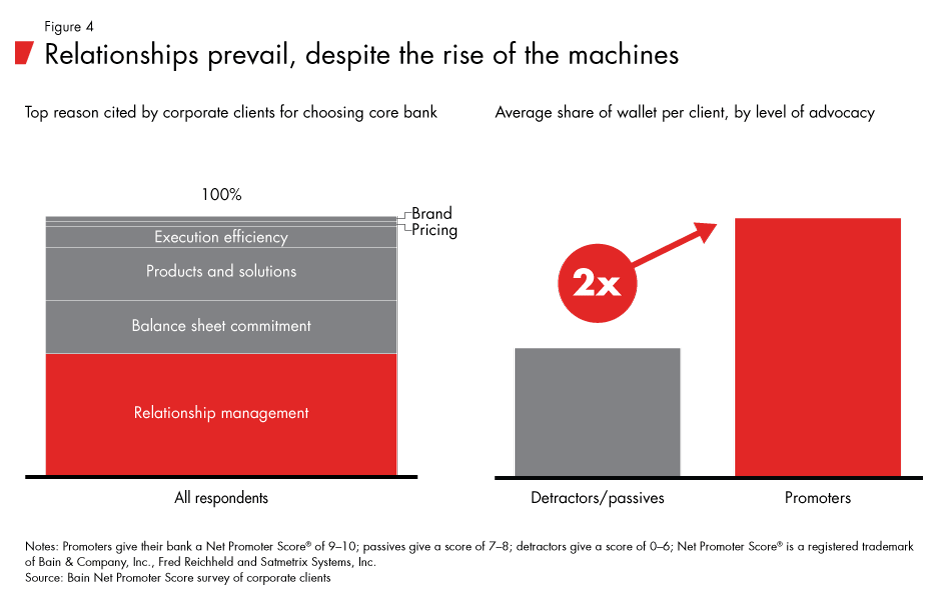
      But great technology is not sufficient to attract and keep clients. Relationships and expertise still matter, and these take years to develop (see Figure 4). The quality of relationships stems directly from a bank’s ability to codevelop appropriate solutions with clients. Banks that take the lead here will often be rewarded with more business.

      transaction-banking-fig04_embed

      As transaction banking evolves, senior bank leaders should take several steps:

      • Understand the biggest sources of disruption and their effects on market structure and profit pools.
      • Define the bank’s role in the ecosystem and its sources of differentiation, rather than trying to be everything to everyone.
      • Define an effective operating model, including the most important capabilities.
      • Restructure the technology stack to deliver a simpler, less expensive customer experience.
      • Source the required talent supply to accelerate investment in technology and analytics.
      • Cultivate the right partnership models, whether with other banks or external ecosystems.

      Transaction banking is an alluring market. But as it gets more crowded and technology drives down marginal costs, prices are bound to fall, leaving many banks disappointed or vulnerable to losses. Banks that are slow to modernize will likely wind up on the wrong side of the competition. Those that move aggressively now to redesign their operating models and carve out a differentiated role will raise the odds of securing a strong position for years to come.

      Thomas Olsen, Ada Di Marzo, Sen Ganesh and Mike Baxter are partners in Bain & Company’s Financial Services practice. They are based, respectively, in Singapore, Paris, Bangkok and New York. The authors thank their colleagues Gerry Mattios, Julien Bet and Rakesh Pozhath for their contributions to this brief.

      Net Promoter Score®, Net Promoter System®, Net Promoter® and NPS® are registered trademarks of Bain & Company, Inc., Fred Reichheld and Satmetrix Systems, Inc.


      transaction-banking-fig01_full

      transaction-banking-fig02_full

      transaction-banking-fig03_full

      transaction-banking-fig04_full
      Related Video

      Mike Baxter: Disruption in Transaction Banking

      Smaller banks may have the opportunity to gain market share by using digital tools to provide consumers with a better experience.

      Authors
      • Headshot of Thomas Olsen
        Thomas Olsen
        Partner, New York
      • Headshot of Ada Di Marzo
        Ada Di Marzo
        Managing Partner of our Paris office, Paris
      • Headshot of Sen Ganesh
        Sen Ganesh
        Partner, Bangkok
      • Headshot of Mike Baxter
        Mike Baxter
        Advisory Partner, New York
      Contact us
      Related Industries
      • Banking
      • Financial Services
      Financial Services
      New Bank Strategies Require New Operating Models

      It’s high time to shake up creaky structures and ways of working.

      Read More
      Financial Services
      Corporate and Investment Banks Search for Light at the End of the Cycle

      Structural shifts raise existential questions for banks.

      Read More
      Financial Services
      Sen Ganesh: Disruption Ahead in Transaction Banking

      Bain Partner Sen Ganesh discusses four key steps banks can take to win as new competitors emerge.

      Read More
      Financial Services
      Banking M&A

      As conditions shift, leading banks are fusing scale with scope to create future-ready organizations.

      Read More
      Financial Services
      Stablecoins Could Make Cross-Border Payments Faster, Cheaper, and More Transparent

      Most CFOs are not using stablecoins today, but evolving regulations could reduce risk and create competitive advantage.

      Read More
      Published in May 2018
      Tags
      • Banking
      • Financial Services

      How We've Helped Clients

      Digital A European Banking Giant Rises to the Fintech Challenge

      Read case study

      Further℠ Redesigning a Bank’s Climate Strategy for Growth

      Read case study

      Change Management The change process unlocks potential and profits

      Read case study

      Ready to talk?

      We work with ambitious leaders who want to define the future, not hide from it. Together, we achieve extraordinary outcomes.

      Stay ahead in a rapidly changing world. Subscribe to Bain Insights, our monthly look at the critical issues facing global businesses.

      *I have read and understand Bain’s Privacy Notice.

      Please read and agree to the Privacy Policy.
      Bain & Company
      Contact us Sustainability Accessibility Terms of use Privacy Modern Slavery Act Statement Cookie Policy Sitemap Log In

      © 1996-2026 Bain & Company, Inc.

      Contact Bain

      How can we help you?

      • Business inquiry
      • Career information
      • Press relations
      • Partnership request
      • Speaker request
      See all offices