

Brief

At a Glance
- Following a decade of deteriorating financial positions, US colleges and universities unexpectedly rebounded during the pandemic.
- But this uptick is a temporary anomaly buoyed by federal relief funding, endowment growth, and short-term cutbacks.
- Institutions won’t be as fortunate as they approach the next set of challenges, so they must make changes now to strengthen student demand and their financial foundations.
- Our interactive tool allows higher ed leaders to model the impact of macroeconomic, enrollment, and cost scenarios on an institution’s financial position and explore actions they can take to boost resilience.
In our 2012 brief “The Financially Sustainable University,” we raised an alarm about the higher education bubble that was putting many colleges and universities on an unsustainable financial path as spending continued to outpace revenue. Although an extended period of strong macroeconomic growth followed, too many colleges and universities missed the opportunity to strengthen their strategic and financial positions, and nearly 100 institutions were forced to close or merge. In fact, during a time when these institutions should have been getting costs in line, we saw them escalating expenses as they raced to build and renovate facilities and expand student services and administrative functions. Tuitions increased significantly during this period, but expenses grew faster. The number of institutions in precarious financial positions rose by 70%.
Then, in 2020, the Covid-19 pandemic hit, shuttering campuses nationwide. Industry observers saw disaster looming for higher education, but the sector proved more resilient than expected. Many colleges and universities took aggressive short-term actions to mitigate the shock, such as freezing hiring, salaries, and benefits and slashing discretionary budgets. Administrators at Ohio State University, for example, reined in costs by $195 million during its 2021 fiscal year by pausing hiring and merit increases and reducing discretionary spending to offset lost revenue from tuition, housing and dining, and athletics.
At the same time, the sector was buoyed by $76 billion of infusions through the CARES Act Higher Education Emergency Relief Fund and a historic growth of endowments fueled by up to 35% investment returns.
To measure the impact of these factors on financial resilience, we calculated a composite score for each institution, using three equally weighted metrics:
- primary reserve ratio (net assets divided by expenses), which indicates how long an institution could function without relying on additional net revenue;
- net margin, a gauge of ongoing financial performance and stability; and
- three-year enrollment growth, which indicates the strength of student demand and the institution’s value proposition.
Remarkably, the financial positions of most colleges and universities on paper actually improved during the 2020–2021 academic year, and many built up substantial cash reserves during this period (see Figure 1).
Figure 1
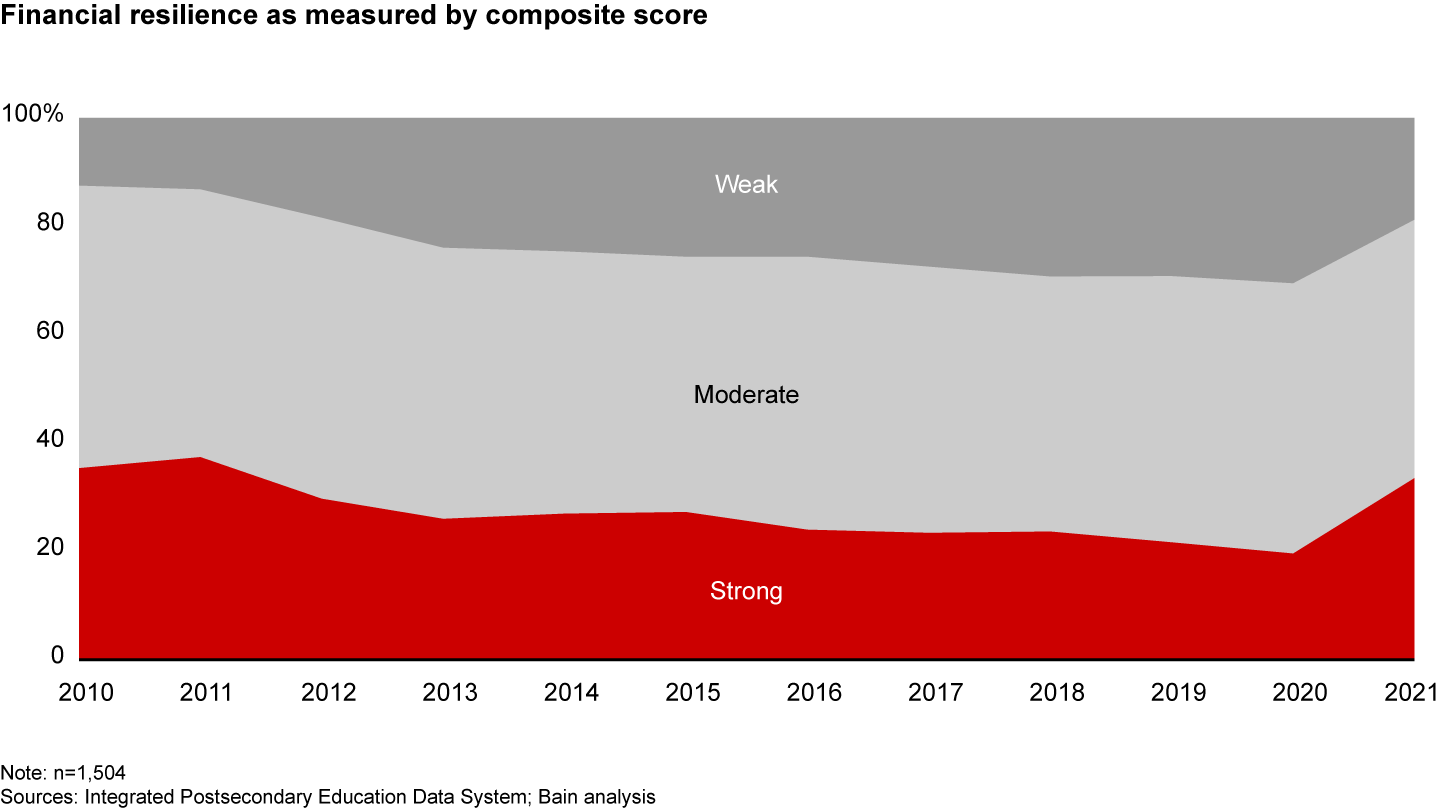

This uptick may seem like a cause for optimism, but our analyses show that it is more of an anomaly within an otherwise downward trend and does not signal an across-the-board improvement in institutions’ fundamental financial health. In fact, we expect their financial stability to fall below pre-pandemic levels over the next three years.
Looking ahead, we see a concerning macroeconomic environment for higher education. Inflation and interest rate growth is already driving up operating and capital investment costs, while a recessionary environment will force many colleges and universities to curtail tuition increases and will raise institutional financial aid costs, depress private giving, and cut into endowments.
We also see challenges specific to the higher education market, with domestic enrollments declining, federal relief funds drying up, new and sustained costs associated with the new normal (such as supporting hybrid in-person/virtual classes), and a potential crackdown on the online program management firms and other companies that institutions hire to run their online offerings and recruit domestic students into them. Further, we see operating costs surging back after they were curtailed in 2020. These near-term stressors must be managed alongside broader trends in the sector, including shifting demographics, the growing impact of social and political issues on academic institutions, a weakening of traditional practices around standardized test scores and rankings, evolving employer needs, and students’ increasing expectations about the services and value higher education should deliver.
In this perilous environment, colleges and universities will not be propped up by the confluence of factors that enabled them to pull through the pandemic years. To prosper through future shocks or, for some, to merely survive, institutions must take action now to strengthen student demand and shore up their financial foundations.
See how your school stacks up in our interactive database

Who’s at risk?
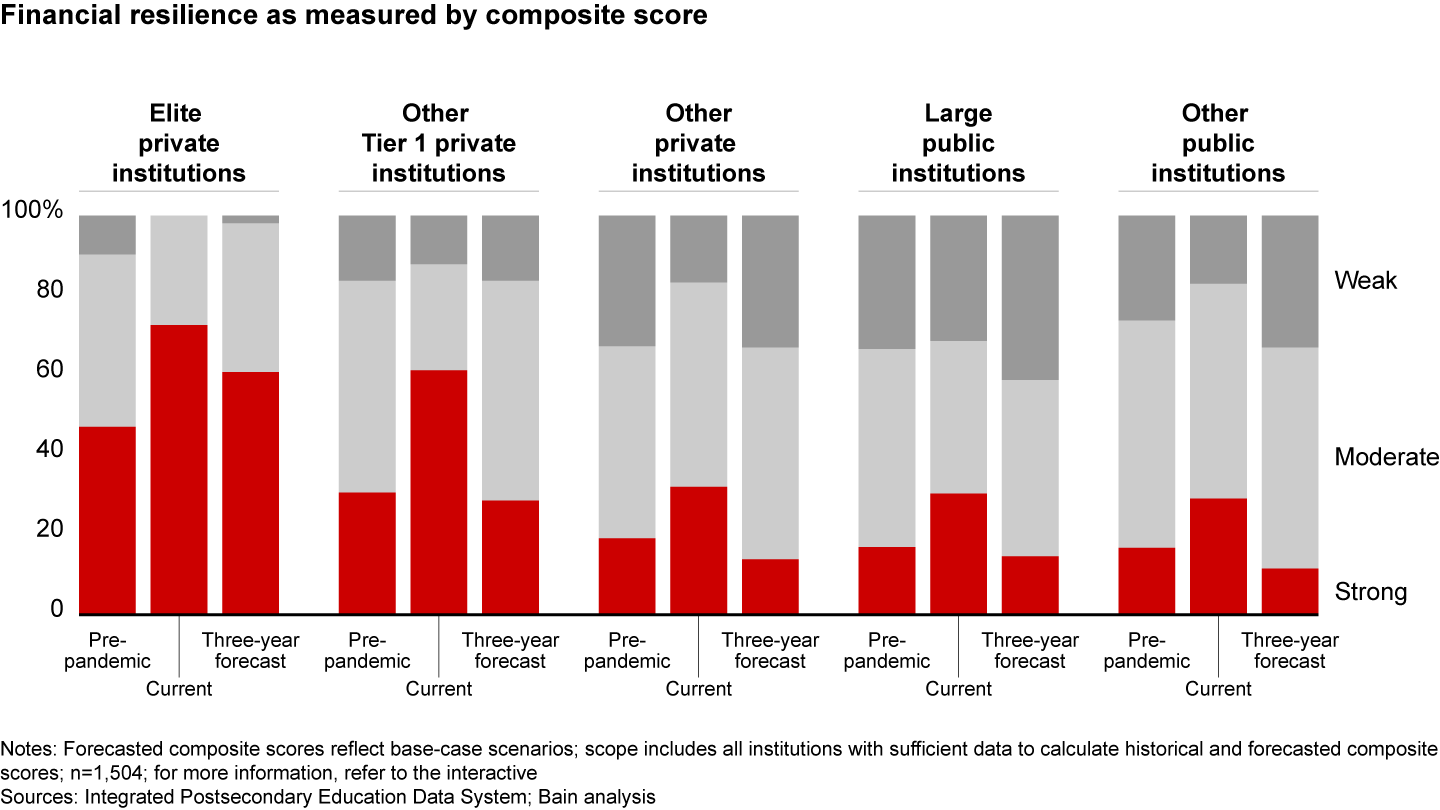
While every institution should evaluate its financial position and take action to strengthen it, there is wide variation in colleges’ and universities’ resilience across the sector (see Figure 2). Despite some deep, temporary cost cuts, most colleges and universities did not fundamentally change their financial foundations during the pandemic. So as these institutions approach the next set of challenges, they will not be in a stronger position than they were at the start of the pandemic. Of course, some institutions will fare better than others:
- Elite private and other Tier 1 private institutions are in a substantially more resilient financial position than others, with strong reputations and enrollment growth, healthier primary reserve ratios and net margins, and larger endowments.
- Large public universities have greater challenges as they have lower relative reserves and weaker margins. While we do not expect them to fail given their scale, public support, and options for cutting costs and generating new revenue, we do expect many will need to make foundational changes to offset potential deficits.
- Other private and public institutions have fewer backstops to mitigate financial shocks, and many will, likewise, need to take drastic cost-cutting and other actions to address upcoming challenges.
Figure 2

Less selective colleges and universities, as well as those that have experienced a deterioration in student interest or financial indicators such as declining tuition revenue, are at greater risk. The chart below shows the impact of various risk indicators that correlate with weaker financial positions. Institutions with none of the indicators are at low risk of having a poor composite score and, therefore, are better able to absorb shocks. Those with four or more are three times as likely to have low resilience as those with just one (see Figure 3).
Figure 3
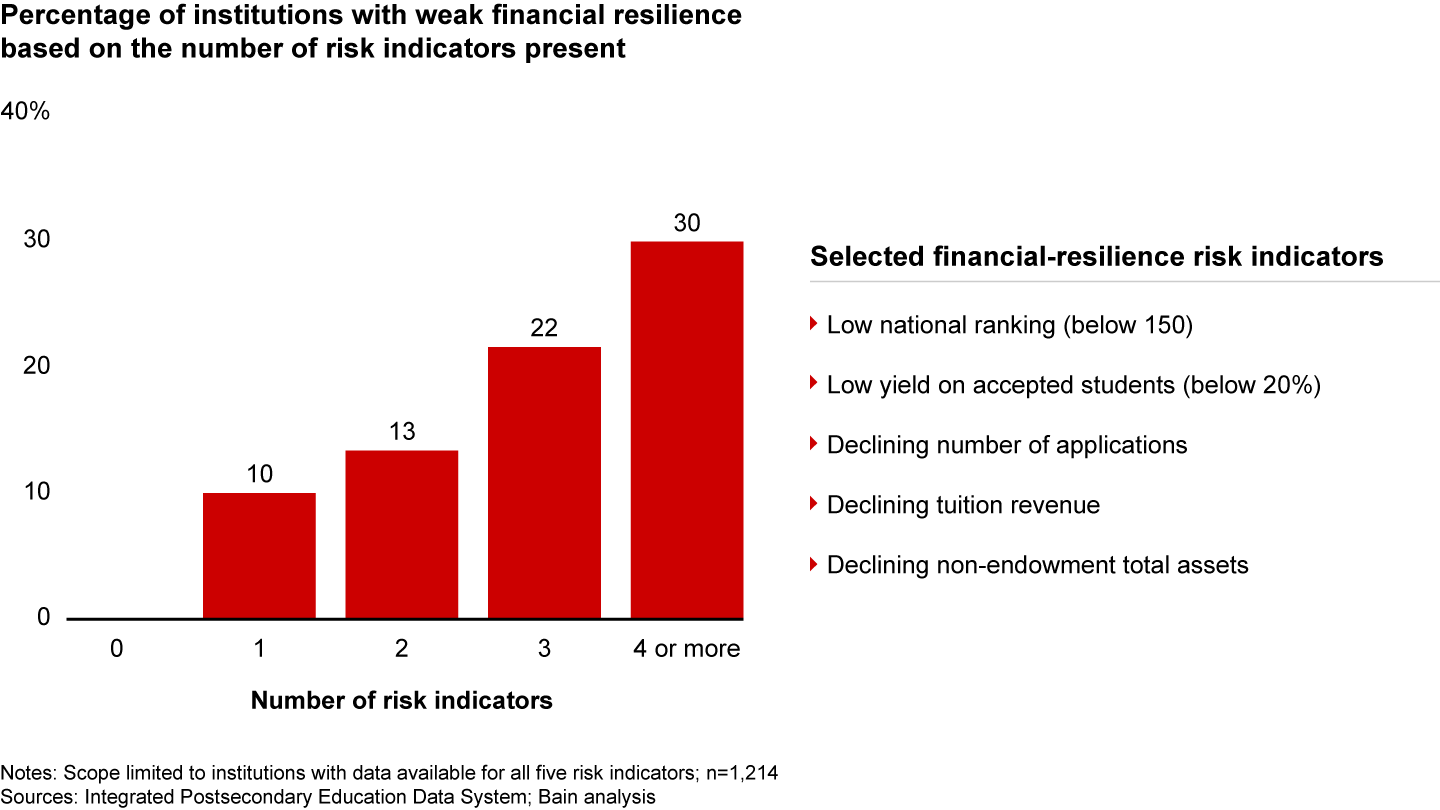

These underperforming institutions typically have very low or negative operating margins, fewer assets relative to expenses, and declining enrollment. They also commonly have greater volatility in revenue and enrollment than stronger institutions, making it harder for them to maintain efficient operations and deliver high-quality programs. These factors make colleges and universities with weak financial positions inherently less resilient than other institutions and more likely to need to take extreme action in the future to survive.
Creating a resilient university
In the coming years, we expect to see further turbulence in higher education, with revenue and enrollment volatility creating an even more challenging financial environment. While no one can precisely forecast the outlook for the sector, modeling at the level of individual colleges and universities can paint a clear picture of institutions’ resilience under different macroeconomic scenarios.
Whatever their current profile, institutions can improve resilience over the long term by taking a series of steps to improve their student demand and financial foundations.
In order to grow student demand by delivering an attractive value proposition that leverages the institution’s unique position and assets, you’ll need to:
- Understand the raw student need. Take a critical look at your target student population and that group’s unique needs in the near term and recognize how those needs might evolve among both traditional and lifelong learners.
- Simplify your mission. Develop a focused, long-term strategy that removes complexity from the institution’s degree and program offerings, structures, processes, and services to concentrate exclusively on those that matter most to your target students.
- Innovate your academic offering. Rethink your academic and innovation model—for example, by creating capabilities to rapidly launch new programs, proactively manage the academic portfolio, and develop new approaches such as integrated multidisciplinary curricula and faculty structures.
Establish a strong financial foundation by reducing costs and growing revenue streams. To do this, you’ll need to:
- Optimize your operations. Establish an operating model that generates efficient business processes and a more flexible cost structure; embeds technology and automation across the enterprise; supports faculty in ways that leverage and extend their value; and clarifies the roles between the central administration and each college, school, or department.
- Transform your institution’s economics. Diversify your revenue streams, monetize your full set of assets, and reduce fixed costs—for example, through business partnerships and administrative consortia.
Consider how Johns Hopkins University has pursued a focused strategy to grow demand, leveraging its scale in health research and developing a more compelling undergraduate proposition. The university expanded its health-research faculty, created interdisciplinary research programs, and invested in research infrastructure. These investments enabled 71% growth in sponsored research across the university’s medical, public health, and nursing schools between 2015 and 2020. Johns Hopkins also increased affordability and has reduced the student-to-faculty ratio by nearly 50% since 2014. Applications have increased 60% since 2010, enrollment grew at 7% annually from 2018 to 2021, and the university’s US News & World Report ranking has climbed steadily since 2009, placing it in the top 10 for each of the past five years.
At Southern Methodist University, where strengthening the financial foundation has been a priority, leadership has focused in on administrative and operational transformation programs over the past decade; these initiatives have increased SMU’s net margin to 19%, freeing up financial resources to invest in student recruitment, enhanced support for teaching and research, and other strategic priorities.
And at Bates, an elite liberal arts college in Maine, administrators recently announced a 5% reduction in departments’ 2023 program budgets while at the same time protecting faculty and staff positions—efforts that will strengthen its financial position.
Final thoughts—and a word of caution
Any transformation effort requires a careful focus on pragmatic changes linked to strategy and value proposition. New Jersey City University (NJCU) missed this consideration when, beginning in 2014, it made a series of strategic gambles that strayed from the university’s core focus. NJCU saw declining enrollment, increased competition, and a challenged funding model, prompting it to pursue a bold real estate strategy to expand and extend campuses. But these moves failed to spur hoped-for student demand. And when the pandemic hit, the overextended university saw further enrollment declines as well as penalties from real estate partners. NJCU’s board recently approved eliminating 98 programs, including undergraduate programs in teacher certification, economics, and physics. These efforts may address near-term shortfalls, but their impact on longer-term student demand and the university’s value proposition remains to be seen.
As college and university leaders look ahead, actions to enhance the value proposition for students and shore up financials are critical to creating the resilience they will need to survive—and thrive—going forward. Administrators should take heed, though; the traditional approach of setting up broad committees and subcommittees of legacy administrators and faculty to develop a course of action are unlikely to generate the breakthrough ideas and necessary disruption that is required over the long term. Rather, many institutions will need to look beyond their core ranks for the insights, best practices, and change agents to take stock of their resilience and reset their course into an uncertain future.
Published in May 2023