
Skip to Content
  • Offices

    Offices

    North & Latin America
    • Atlanta
    • Austin
    • Bogota
    • Boston
    • Buenos Aires
    • Chicago
    • Dallas
    • Denver
    • Houston
    • Los Angeles
    • Mexico City
    • Minneapolis
    • Monterrey
    • Montreal
    • New York
    • Rio de Janeiro
    • San Francisco
    • Santiago
    • São Paulo
    • Seattle
    • Silicon Valley
    • Toronto
    • Washington, DC
    Europe & Africa
    • Amsterdam
    • Athens
    • Berlin
    • Brussels
    • Copenhagen
    • Dusseldorf
    • Frankfurt
    • Helsinki
    • Istanbul
    • Johannesburg
    • Kyiv
    • Lisbon
    • London
    • Madrid
    • Milan
    • Munich
    • Oslo
    • Paris
    • Rome
    • Stockholm
    • Vienna
    • Warsaw
    • Zurich
    Middle East
    • Doha
    • Dubai
    • Riyadh
    Asia & Australia
    • Bangkok
    • Beijing
    • Bengaluru
    • Brisbane
    • Ho Chi Minh City
    • Hong Kong
    • Jakarta
    • Kuala Lumpur
    • Manila
    • Melbourne
    • Mumbai
    • New Delhi
    • Perth
    • Seoul
    • Shanghai
    • Singapore
    • Sydney
    • Tokyo
    See all offices
  • Alumni
  • Media Center
  • Subscribe
  • Contact
  • Global | English

    Select your region and language

    Global
    • Global (English)
    North & Latin America
    • Brazil (Português)
    • Argentina (Español)
    • Canada (Français)
    • Chile (Español)
    • Colombia (Español)
    Europe, Middle East, & Africa
    • France (Français)
    • DACH Region (Deutsch)
    • Italy (Italiano)
    • Spain (Español)
    • Greece (Elliniká)
    Asia & Australia
    • China (中文版)
    • Korea (한국어)
    • Japan (日本語)
  • Saved items (0)
    Saved items (0)

    You have no saved items.

    Bookmark content that interests you and it will be saved here for you to read or share later.

    Explore Bain Insights
  • Industries
    Main menu

    Industries

    • Aerospace & Defense
    • Agribusiness
    • Chemicals
    • Construction & Infrastructure
    • Consumer Products
    • Financial Services
    • Healthcare & Life Sciences
    • Industrial Machinery & Equipment
    • Media & Entertainment
      Industries
      Media & Entertainment
      • Media Lab
    • Metals
    • Mining
    • Oil & Gas
    • Paper & Packaging
    • Private Equity
      Industries
      Private Equity
      • Due Diligence
      • Exit Planning
      • Firm Strategy & Operations
      • Portfolio Value Creation
    • Social Impact
    • Retail
    • Technology
    • Telecommunications
      Industries
      Telecommunications
      • Capital Expenditure
      • Telco Digital Transformation
    • Transportation
    • Travel & Leisure
    • Utilities & Renewables
  • Consulting Services
    Main menu

    Consulting Services

    • Customer Experience
    • Sustainability
    • Innovation
    • M&A
    • Operations
    • People & Organization
    • Private Equity
    • Sales & Marketing
    • Strategy
    • AI, Insights, and Solutions
    • Technology
    • Transformation
  • Digital
  • Insights
    Main menu

    Insights

    • Industry Insights
    • Services Insights
    • Bain Books
    • Webinars
    • Bain Futures
    View all Insights
    Featured topics
    • Tariff Response
    • Artificial Intelligence
    • Thriving in Uncertainty
    • Executive Conversations
    • Macro Trends
    • M&A Report
    • Healthcare Private Equity Report
    • Paper & Packaging Report
    • Technology Report
    • CEO's Guide to Sustainability
    • CEO Insights
    • CFO Insights
    • COO Insights
    • CIO Insights
    • CMO Insights
    View all featured topics
  • About
    Main menu

    About

    • What We Do
    • What We Believe
    • Our People & Leadership
    • Client Results
    • Awards & Recognition
    • Global Affiliations
    Further: Our global responsibility
    • Sustainability
    • Social Impact
    • World Economic Forum
    Learn more about Further
  • Careers
    Main menu

    Careers

    • Work with Us
      Careers
      Work with Us
      • Find Your Place
      • Our Work Areas
      • Integrated Teams
      • Students
      • Internships & Programs
      • Recruiting Events
    • Life at Bain
      Careers
      Life at Bain
      • Blog: Inside Bain
      • Career Stories
      • Our People
      • Where We Work
      • Supporting Your Growth
      • Affinity Groups
      • Benefits
    • Impact Stories
    • Hiring Process
      Careers
      Hiring Process
      • What to Expect
      • Interviewing
    FIND JOBS
  • Offices
    Main menu

    Offices

    • North & Latin America
      Offices
      North & Latin America
      • Atlanta
      • Austin
      • Bogota
      • Boston
      • Buenos Aires
      • Chicago
      • Dallas
      • Denver
      • Houston
      • Los Angeles
      • Mexico City
      • Minneapolis
      • Monterrey
      • Montreal
      • New York
      • Rio de Janeiro
      • San Francisco
      • Santiago
      • São Paulo
      • Seattle
      • Silicon Valley
      • Toronto
      • Washington, DC
    • Europe & Africa
      Offices
      Europe & Africa
      • Amsterdam
      • Athens
      • Berlin
      • Brussels
      • Copenhagen
      • Dusseldorf
      • Frankfurt
      • Helsinki
      • Istanbul
      • Johannesburg
      • Kyiv
      • Lisbon
      • London
      • Madrid
      • Milan
      • Munich
      • Oslo
      • Paris
      • Rome
      • Stockholm
      • Vienna
      • Warsaw
      • Zurich
    • Middle East
      Offices
      Middle East
      • Doha
      • Dubai
      • Riyadh
    • Asia & Australia
      Offices
      Asia & Australia
      • Bangkok
      • Beijing
      • Bengaluru
      • Brisbane
      • Ho Chi Minh City
      • Hong Kong
      • Jakarta
      • Kuala Lumpur
      • Manila
      • Melbourne
      • Mumbai
      • New Delhi
      • Perth
      • Seoul
      • Shanghai
      • Singapore
      • Sydney
      • Tokyo
    See all offices
  • Alumni
  • Media Center
  • Subscribe
  • Contact
  • Global | English
    Main menu

    Select your region and language

    • Global
      Select your region and language
      Global
      • Global (English)
    • North & Latin America
      Select your region and language
      North & Latin America
      • Brazil (Português)
      • Argentina (Español)
      • Canada (Français)
      • Chile (Español)
      • Colombia (Español)
    • Europe, Middle East, & Africa
      Select your region and language
      Europe, Middle East, & Africa
      • France (Français)
      • DACH Region (Deutsch)
      • Italy (Italiano)
      • Spain (Español)
      • Greece (Elliniká)
    • Asia & Australia
      Select your region and language
      Asia & Australia
      • China (中文版)
      • Korea (한국어)
      • Japan (日本語)
  • Saved items  (0)
    Main menu
    Saved items (0)

    You have no saved items.

    Bookmark content that interests you and it will be saved here for you to read or share later.

    Explore Bain Insights
  • Industries
    • Industries

      • Aerospace & Defense
      • Agribusiness
      • Chemicals
      • Construction & Infrastructure
      • Consumer Products
      • Financial Services
      • Healthcare & Life Sciences
      • Industrial Machinery & Equipment
      • Media & Entertainment
      • Metals
      • Mining
      • Oil & Gas
      • Paper & Packaging
      • Private Equity
      • Social Impact
      • Retail
      • Technology
      • Telecommunications
      • Transportation
      • Travel & Leisure
      • Utilities & Renewables
  • Consulting Services
    • Consulting Services

      • Customer Experience
      • Sustainability
      • Innovation
      • M&A
      • Operations
      • People & Organization
      • Private Equity
      • Sales & Marketing
      • Strategy
      • AI, Insights, and Solutions
      • Technology
      • Transformation
  • Digital
  • Insights
    • Insights

      • Industry Insights
      • Services Insights
      • Bain Books
      • Webinars
      • Bain Futures
      View all Insights
      Featured topics
      • Tariff Response
      • Artificial Intelligence
      • Thriving in Uncertainty
      • Executive Conversations
      • Macro Trends
      • M&A Report
      • Healthcare Private Equity Report
      • Paper & Packaging Report
      • Technology Report
      • CEO's Guide to Sustainability
      • CEO Insights
      • CFO Insights
      • COO Insights
      • CIO Insights
      • CMO Insights
      View all featured topics
  • About
    • About

      • What We Do
      • What We Believe
      • Our People & Leadership
      • Client Results
      • Awards & Recognition
      • Global Affiliations
      Further: Our global responsibility
      • Sustainability
      • Social Impact
      • World Economic Forum
      Learn more about Further
  • Careers
    Popular Searches
    • Agile
    • Digital
    • Strategy
    Your Previous Searches
      Recently Visited Pages

      Content added to saved items

      Saved items (0)

      Removed from saved items

      Saved items (0)

      Article

      Getting More Value from Objectives and Key Results

      Getting More Value from Objectives and Key Results

      More and more companies use Objectives and Key Results (OKRs) to set goals, but few are getting the benefits they should.

      By Darren Johnson and Joost Spits

      • min read
      }

      Article

      Getting More Value from Objectives and Key Results
      en
      At a Glance
      • Google, Intuit and many successful start-ups have popularized OKRs, and adoption is rising rapidly across industries.
      • Too often, however, the usefulness of OKRs proves limited and they’re difficult to act on.
      • Companies can better use OKRs by making sure they’re linked to business value and by investing in data and analytics to better understand what’s working and what isn’t.

      The Objectives and Key Results (OKRs) framework is an increasingly popular tool for setting goals. It combines aspirational, qualitative descriptions of what companies should achieve—the objectives—with a quantifiable determination of whether they achieved them—the key results. And, unlike other goal-setting frameworks, OKRs can be used to link the goals of the entire organization to each business unit, team, and even individual (see Figure 1).

      Figure 1
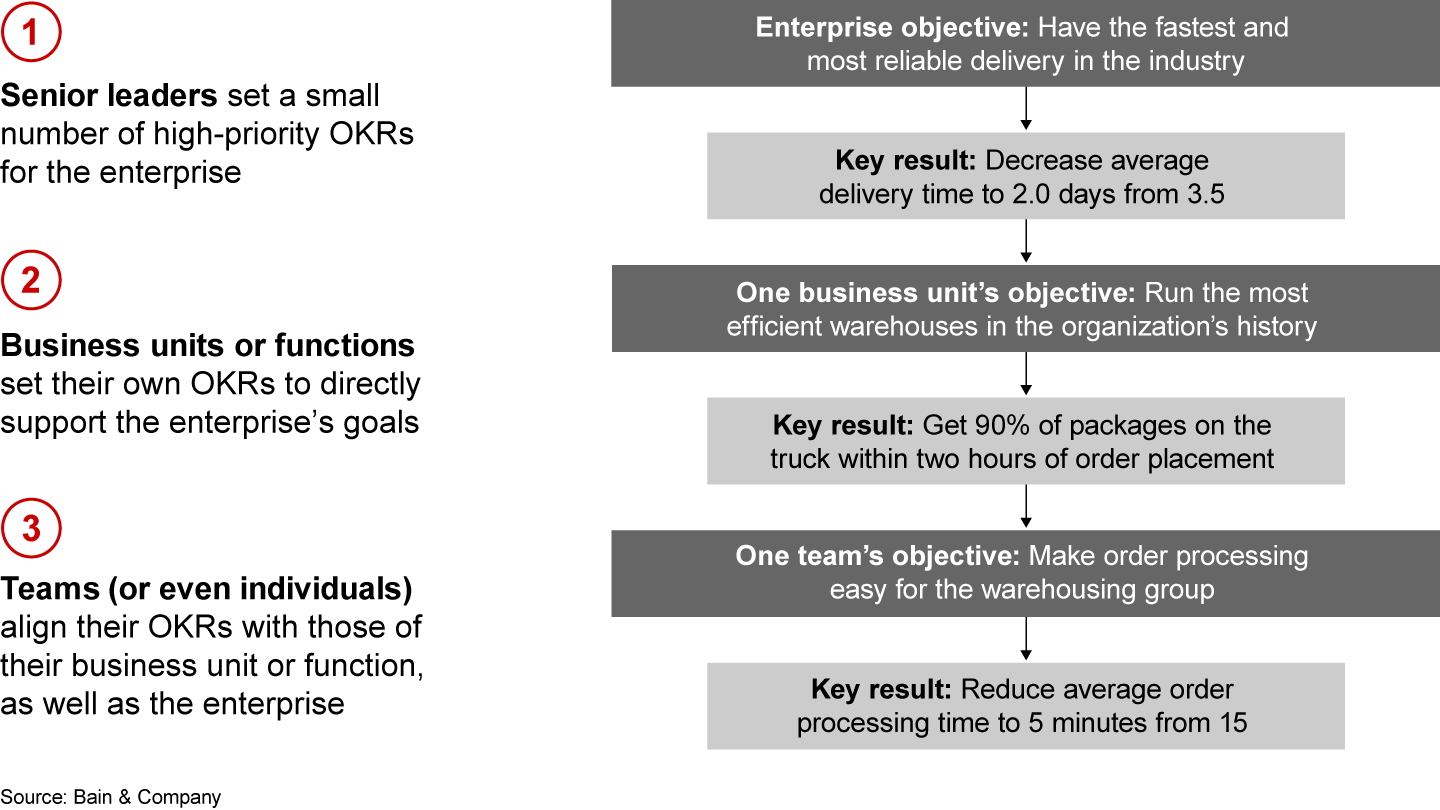
      Using the OKR framework, organizations set and link synchronized goals

      Google, Intuit and many other companies have made OKRs famous. They use them to ensure employees are focused on the right outcomes, aligned in pursuit of the company’s overall goals, committed to and accountable for delivering those goals, and able to make decisions more confidently.

      The OKR framework is especially powerful for organizations looking to become more Agile. OKRs reinforce such Agile principles as transparency. They help companies focus on real business outcomes rather than just features or output, and empower teams to determine “how” to deliver the “what” that senior leaders define. Each Agile team has its own set of OKRs and designs its backlog to deliver them. It’s no coincidence that many of the most Agile enterprises in the world, Netflix and Google among them, use OKRs.

      “I’ve seen mature companies do turnarounds and change people and processes. No company is too young to adopt OKRs, and for no company is it too late.”
      Susan Wojcicki, CEO of YouTube

      Connect key results to business value

      Most companies get three important things right in their OKRs:

      • Their objectives are bold and aspirational
      • Their key results are measurable
      • They have the right number of each

      Where things often go wrong is the selection of key results. Without the right “KR,” the entire OKR exercise loses value.

      Here’s a hypothetical example. The executives at a ride-hailing company are excited for their first quarterly review of objectives and key results. They recently implemented OKRs in parts of the company, believing they’d help accelerate growth. However, when they review the OKRs for the teams responsible for expanding in a new market, something’s wrong. The OKRs themselves seem sufficiently aggressive, and every team hit its individual goals, but overall revenue for the new market lags expectations. What went wrong?

      The ride-hailing company’s driver-acquisition team may have had a good objective—“have the largest driver base in the city.” But the key result tied to that—“increase the number of new driver sign-ups by (X number)”—led to signing up thousands of drivers using tools like social media ads, only to find that few ever completed their first ride. If the team changed the key result to “increase number of new drivers that complete their first ride by (X number),” it might quickly realize that encouraging driver-to-driver referrals works better. Progress on that new key result could advance the team toward the broader goal of higher revenue.

      “It took courage to write an OKR that might well fail, but there was no other way if we wanted to be great… Our stretch OKR gave the team direction and a barometer to measure our progress.”
      Sundar Pichai, CEO of Google

      Importantly, the teams closest to the business or customer often are best positioned to identify an OKR issue and fix it. Some management oversight is required to ensure that OKRs create real business value for the enterprise. But teams generally are best suited to choose the specific OKRs, especially for companies with numerous empowered Agile teams. All levels of these organizations see the benefits of integrating OKRs and Agile (see Figure 2).

      Figure 2
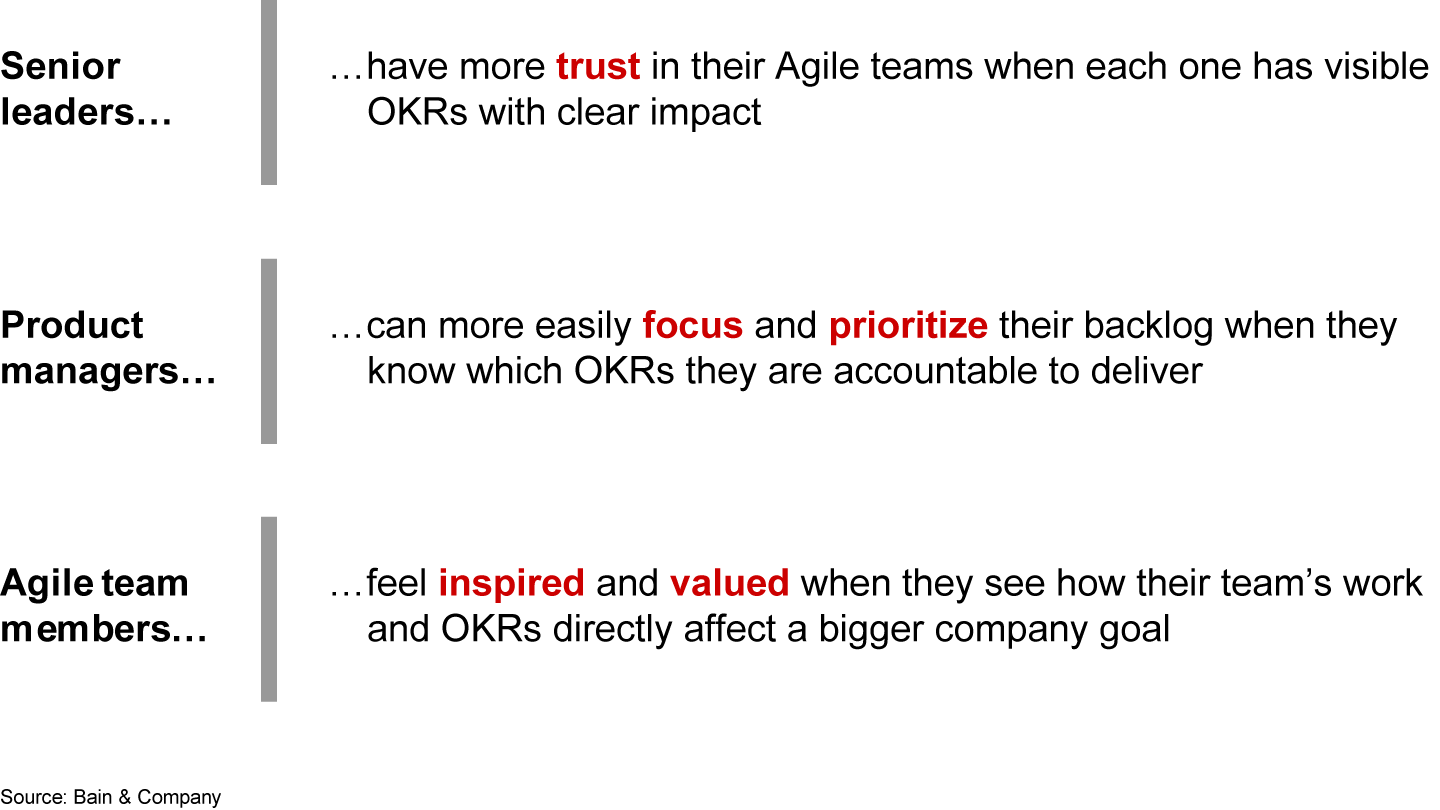
      The benefits of adopting OKRs vary for different levels of an Agile organization
      The benefits of adopting OKRs vary for different levels of an Agile organization
      The benefits of adopting OKRs vary for different levels of an Agile organization

      Understand what moves your OKRs

      The specificity of OKRs enables leaders to feel confident holding their teams accountable for them and using them to make important decisions (for more on this topic, see “How to Plan and Budget for Agile at Scale”). The level of detail also helps team members feel ownership of those OKRs and empowered to influence them.

      OKRs can run into trouble when their connection to an end result isn’t clear. Thrilled with a climb in their Net Promoter ScoreSM—an important key result for the enterprise—an online retailer would want to invest more in whatever led to that improvement and maintain the upward trajectory. But if it isn’t sure which team or initiative was responsible for the change, or whether an exogenous factor played a role, how can they capitalize on its momentum?

      To clearly understand what moves their OKRs, companies should keep three principles in mind:

      • Smaller is better. Where possible, break down OKRs into things that can be truly “owned” by one team or a few teams. For example, overall customer NPS® is influenced by “episode NPS,” which is based on a customer’s experience with a particular part of his or her journey. For an online retailer, each episode—browsing for a product, checking out, or tracking a shipment—has a much clearer owner than the overall customer experience does. In our example, understanding that the higher NPS resulted from an improved “checkout NPS” would help the online retailer make smarter decisions.
      • You need to test. Sometimes, it’s not possible to assign an OKR to a single clear owner. For example, how much a customer buys at any given time can be influenced by a number of factors. Did the customer respond to increased marketing? Or did the new product offerings have a bigger impact? A controlled test (either A/B or more advanced) can help get to the answer. Such tests aren’t difficult, provided you have the support of the right analytics experts. But teams must be trained to know when conducting such a test is valuable and when it isn’t, and then get the resources to execute the test when necessary.
      • Automate as much of the process as you can. Clear OKRs focused on business value are tremendously helpful, but collecting and presenting that information can be cumbersome, especially for companies that, unlike Google or Netflix, don’t sell software-based products. Collecting and reporting the data could become more trouble than it’s worth. Companies can avoid that by investing in their IT, data, and analytics capabilities to increase the automation of each step of the OKR process. This includes not only the generation and distribution of reports, which is relatively easy once the right data is available, but also the measurement of impact and attribution of that impact to specific teams or initiatives. Because a company’s OKRs likely reside in several different systems, it may be helpful to have a single system scrape the others, and then serve as a source of truth for team members and executives alike to access themselves.
      “When a new project comes up for discussion, [teams will] ask one another how it fits into our OKR template. If it doesn’t, they’ll rightly raise a red flag: ‘Why are we doing this?’”
      Atticus Tysen, SVP of Intuit

      Invest in the big stuff

      When implementing these best practices, companies must prioritize. Not all OKRs are created equal. Some are significantly easier to measure, attribute and report than others. Some are significantly more valuable to measure, attribute and report than others.

      Here are some key results for a hypothetical restaurant chain that illustrate these differences:

      1. “Increase average transaction size by X%” is both easy and valuable to track and report.
      2. “Decrease downtime of wait staff by X%” would be valuable to track and report on, but difficult to do; it would require closely watching all wait staff members and timing their activities.
      3. “Increase number of customers using the coat check by X%” would be relatively easy to track and report on, but wouldn’t be especially valuable for a restaurant, compared with other key results.

      Key results that are neither valuable nor easy to report on shouldn’t be used in the first place. Initially, companies would be smart to focus their leadership’s attention, investment in automation, and testing on category 1. Whether to invest next in categories 2 or 3 depends on just how difficult it is to track specific key results in category 2.

      “Everyone [at the company] knows their OKRs. And that is a good, simple organizing principle that keeps people focused on the three things that matter — not the ten.”
      Mark Pincus, Chairman of Zynga

      While prioritizing OKRs may seem obvious, many companies have hundreds of OKRs and invest in them equitably. This wastes significant time and money, and reduces the insight drawn from the OKRs that are really worth investing in.

      When done right, the benefits of OKRs include increased focus, alignment, commitment, accountability and agility. But simply adopting OKRs isn’t enough. By thoughtfully implementing these best practices, companies can be sure to get the most out of this useful tool.

      Darren Johnson is a principal with Bain & Company and is based in the firm’s Washington, DC, office. Joost Spits is a Bain partner with the firm’s Consumer Products practice and is based in Boston.


      Net Promoter®, NPS®, NPS Prism®, and the NPS-related emoticons are registered trademarks, and Net Promoter Score℠, NPSx℠, and Net Promoter System℠ are service marks of Bain & Company, Inc., NICE Systems, Inc., and Fred Reichheld.

      Authors
      • Headshot of Darren Johnson
        Darren Johnson
        Partner, New York
      • Headshot of Joost Spits
        Joost Spits
        Partner, Boston
      Contact us
      Related Consulting Services
      • Agile Enterprise
      • Operating Model & Org Design
      • People and Organization
      How We Can Help
      • Dynamic Management System
      • HR Function Advantage
      Dynamic Management System
      Answering Five Critical Questions Executives Ask about OKRs

      Far from a mere management fad, objectives and key results help companies focus on their most important goals and quickly adapt when circumstances change.

      Read More
      HR Function Advantage
      Finding the Right Remedy for Poor Organizational Performance

      Diagnose the root causes of dysfunction so that you don’t solve for the wrong problem.

      Read More
      Agile Enterprise
      How Agile Helps You Plan and Budget in Uncertain Times

      The specter of recession is making the annual process even more challenging. But a more Agile approach can help.

      Read More
      HR Function Advantage
      The Great Talent Recalibration: How Macroeconomic Shifts Are Reshaping the CHRO Agenda

      Insights from Bain’s Chief People Officer Forum with economist Karen Harris, covering geopolitics, automation, demographic decline, and the future of global talent.

      Read More
      HR Function Advantage
      HR: The Hidden Accelerator of AI Adoption

      Scaling AI starts with people. Yet only half of companies involve HR in their strategy.

      Read More
      Published in February 2020
      Tags
      • Agile Enterprise
      • Dynamic Management System
      • HR Function Advantage
      • Operating Model & Org Design
      • People and Organization

      How We've Helped Clients

      People and Organization Moving Beyond an Operating Model Redesign to Live the Model

      Read case study

      Full Potential Transformation An Airline’s Journey from Insolvency to Profitability

      Read case study

      People and Organization Building a winning media salesforce

      Read case study

      Ready to talk?

      We work with ambitious leaders who want to define the future, not hide from it. Together, we achieve extraordinary outcomes.

      Stay ahead in a rapidly changing world. Subscribe to Bain Insights, our monthly look at the critical issues facing global businesses.

      *I have read and understand Bain’s Privacy Notice.

      Please read and agree to the Privacy Policy.
      Bain & Company
      Contact us Sustainability Accessibility Terms of use Privacy Modern Slavery Act Statement Cookie Policy Sitemap Log In

      © 1996-2026 Bain & Company, Inc.

      Contact Bain

      How can we help you?

      • Business inquiry
      • Career information
      • Press relations
      • Partnership request
      • Speaker request
      See all offices