

Brief

At a Glance
- As commodity producers awaken to the opportunities in trading, oil and gas companies are well positioned to benefit, given their knowledge of trade patterns, market dynamics and global relationships.
- To compete as commodity traders, oil and gas companies need to invest in world-class trading capabilities, including top talent and access to the highest-quality data.
- Trader compensation is a particularly challenging aspect. Incentives should motivate traders to take appropriate risks, while ensuring that goals are aligned and trades occur within prescribed guidelines.
The rise and fall of global economic growth drives cyclical trends in commodity industries such as oil and gas, chemicals, metals and agriculture. However, this cyclicality is not the only trend influencing commodity profit pools. New developments in marketing and trading will also reshape these industries in coming years.
Historically, miners, refiners, farmers and producers of oil, gas, LNG and chemicals focused their efforts on the rapid, low-cost extraction of raw materials. Few devoted resources to optimizing their distribution and trading activity, preferring instead to secure term-based contracts that deliver more predictable profits despite short- and medium-term market fluctuations.
However, the rise of swashbuckling commodity trading giants such as Trafigura, Gunvor, Glencore, Vitol and Louis Dreyfus over the past decade has shown that the global distribution and trading of commodities can deliver significant treasure. Rather than merely exploiting market fluctuations, these firms play a vital role in matching supply to demand, deepening market liquidity and taking on counterparty risk from buyers that less-capable sellers may shun—including many in emerging markets. They don’t just sell; they trade, and their knowledge of trade patterns, supply and demand drivers, risk management, hedging and deep market relationships gives them access to deep profit pools.
Some commodity producers, having seen these trading houses wrest profits from global investment banks, are following suit. They are discovering that access to their supply chains and expertise, coupled with skilled marketing and trading teams, gives them a competitive edge. Some commodity producers have been trading for decades, but now the trend is accelerating and competition for top trading talent is increasing. ExxonMobil’s recent announcement of its foray into trading is a sign that even the most prudent of commodity producers are upgrading their marketing and trading capabilities to avoid being left behind.
Align trading with strategic objectives
Leading commodity companies approach the challenge of building up their trading capabilities with a clear understanding of their strategic goals and ambitions. An international oil company may want to support its value chain by balancing product flows more efficiently, while capturing additional profit. A national oil company may want to develop customer intimacy and increase its market presence. The strategic benefits from trading include selling greater volumes (with improved trade routes, product bundling, deeper relationships, volume flexibility and bilateral trades) and improving margins through better market intelligence.
The spectrum of trading models ranges from simple trading, in which a company markets its own products, to pure speculative paper trading, where specialized desks bet on market movements and construct a portfolio to exploit arbitrage opportunities (see Figure 1). Clarifying strategy determines not only the type of trading, but also the type of specific trades to conduct. Back-to-back deals and hedged sales typically carry less risk than offtake agreements with open exposure, which require traders to buy volumes before their buyers are lined up. The underlying risks and strategic benefits of each are fundamentally different.
Figure 1
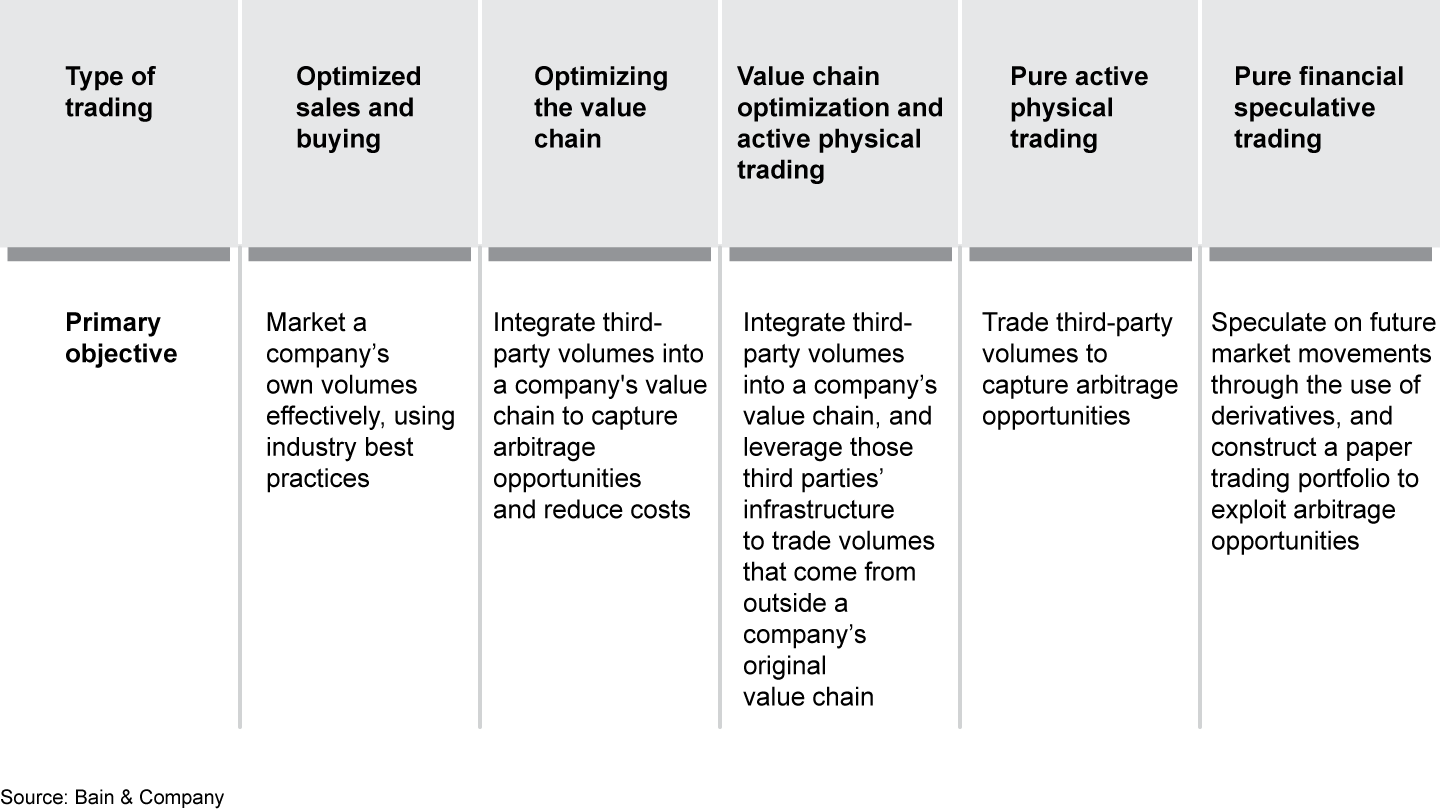

Trading desks often start with a few select products, typically where traders see the most potential for arbitrage, or where they have a competitive advantage. Over time, most expand into as many profitable products as they can—oil and gas companies, for example, might trade “across the barrel” in multiple petroleum-based products. In addition to increased returns from trading products, trading can provide such benefits as better market intelligence, increased flexibility, and the potential for product bundling and bilateral trades.
Trading can be profitable, but failures are common and often result from improperly hedged risks. Sometimes traders with investments in fixed assets believe they can rely on those to hedge high-risk, open positions, but they frequently overestimate those assets’ hedging abilities. Over the past several years, traders across the spectrum have increased their investments in fixed assets such as storage and transport facilities to support their trading of physical commodities. As trading becomes more competitive, these fixed assets become important tools for hedging open positions and facilitating trades, even if they do increase exposure to some loss of profitability during downturns. Even the Swiss trading houses that were traditionally asset-light are now investing in assets, such as storage facilities, to support their physical commodities-trading efforts.
To avoid these risks, trading desks continuously reassess their opportunities and processes. Trading houses must choose which products to trade, while producer traders must also decide whether to optimize their own value chain over those of third parties whose volumes they also trade. A framework can help make these decisions.
- Is the market liquid enough to trade the product?
- Can we find arbitrage opportunities for that product?
- Can we manage the associated risks?
- Can we access the assets required to trade that product?
Build trading house capabilities
Most commodity producers lack in-house capabilities to launch trading activity at scale. To build world-class trading capabilities that can compete effectively with the commodity trading giants, producers should address seven critical factors (see Figure 2).
Figure 2
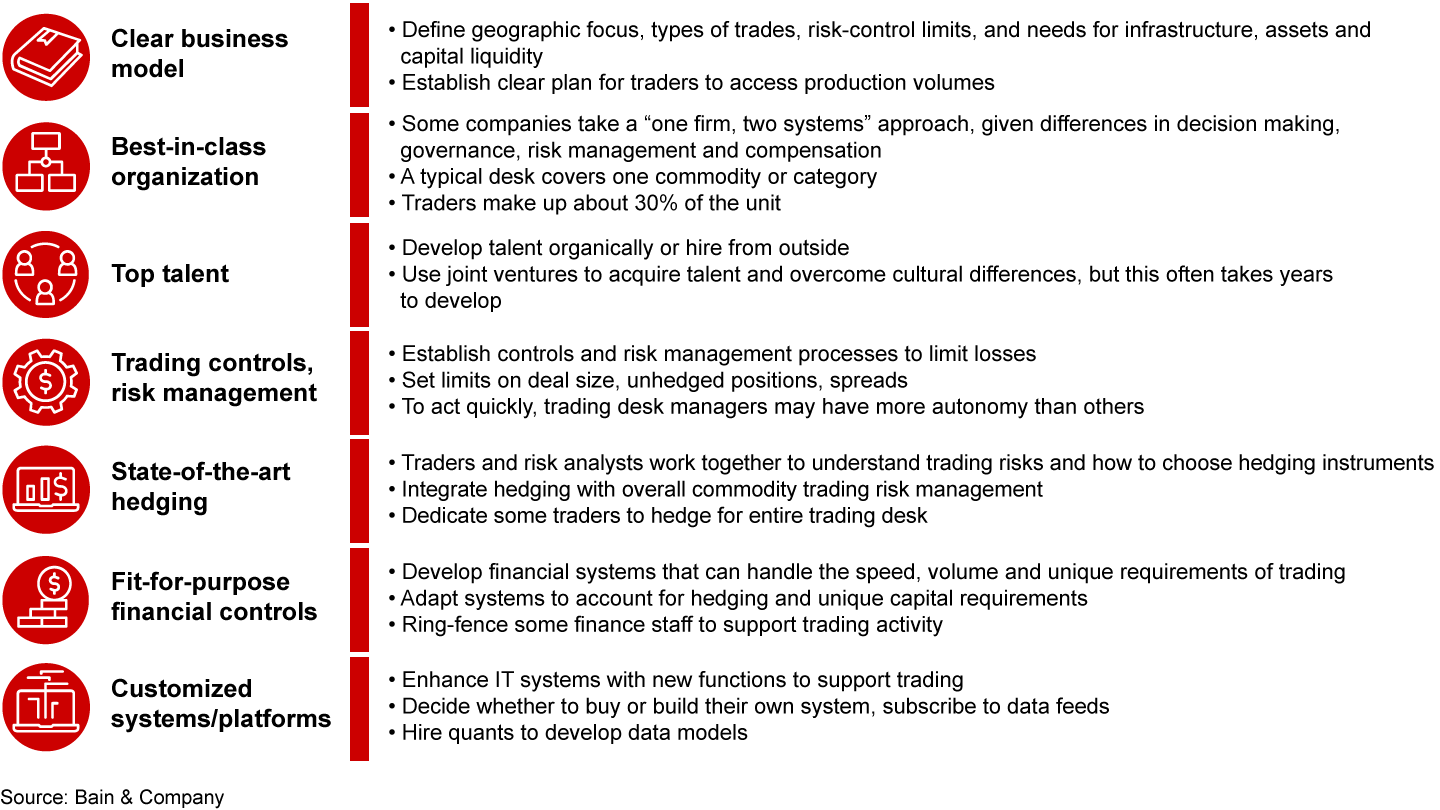

Define a clear business model. To compete globally,commodity producers need to clearly define their geographic focus, types of trades that they are willing to execute, infrastructure and asset requirements, capital liquidity requirements and risk- control limits. They also must establish clear rules on how their traders can get access to produced volumes. If the traders have open access to production volumes, existing customer relationships could be tested as they find themselves in competition for supply with these traders. In practice, commodity producers venturing into trading combine their marketing and trading activity to different degrees. The exact business model and how this is accomplished is core to the success of the trading desk.
Set up a best-in-class organization. The cultural gap between a trading unit and a commodity producer’s marketing and selling teams is so vast that some companies take a “one firm, two systems” approach. Trading units may take a different approach to organization, decision making, governance, risk management, KPIs and compensation. A typical commodity-trading desk consists of a desk manager, who ultimately owns the P&L, along with three or four dedicated product traders. A desk typically covers one commodity or a category. Traders’ performance is closely tracked, and more than half their compensation may be variable—even higher for more senior traders. This rewards system ensures that traders’ goals are aligned with the firm’s, and generous compensation reduces attrition to competing firms.
Traders make up only about one-third of a trading unit. A best-in-class organization also includes experts in operations, shipping, risk, finance and back-office functions. As trading operations expand, more locations are needed to stay close to buyers and recruit local talent with regional expertise, often with five or more locations globally.
Attract and train top trading talent. Just as in software development and other knowledge disciplines, people are the most valuable assets of a trading organization. Performance-based compensation is key to attracting top trading talent. But fine-tuning compensation to motivate traders, achieve strategic goals, and ensure compliance with standards and within limits can be challenging. Frequently, a trader’s appetite for risk can exceed the organization’s; smart compensation plans find ways to channel enthusiasm into profitable actions. Trading talent can be developed organically over time, hired away from competitors or acquired through joint ventures, which can bring in trading expertise quickly, but only after legal preparation that sometimes takes years.
Set up stringent trading controls and risk management. Most trading losses result from a lack of properly defined strategies and risk management controls and oversight. Putting controls in place is critical to the long-term viability of a trading operation since a single bad trade can compel leadership to unwind all trading activity to stem any future losses. A separate risk management department is also essential to ensure oversight of day-to-day trading operations.
Risk managers typically assess trading risk by using limits for market exposure (flat price and spread risk), P&L exposure (value-at-risk and mark-to-market loss), and size exposure (trade size and term deal size). Best-practice trading desks would use a large set of limits—determined though a detailed quantitative methodology and specified for each type of product at both trader and desk levels.
The methodology behind these indicators are detailed and are linked with profit targets, trader experience and seniority, and other factors. Limits are set for each trading desk, with desk managers and risk managers actively reviewing and assessing them daily. Best-practice trading desks use a large set of limits covering not only the value at risk, but also deal size (spot and term), unhedged positions, various spreads and mark-to-market losses.
Because trading success still depends on quick decisions and personal relationships with buyers, trading desk managers may need more autonomy than other managers within a commodity producer’s organization. Leading firms will carefully strike a balance between efficiency and the effectiveness of risk controls.
Develop state-of-the-art hedging capabilities. A core capability is the ability to hedge exposures generated through taking underlying physical positions, which can include commodity hedges, foreign-exchange hedges and derivative hedges. Hedging is necessary to varying degrees based on each type of trade, as trades generate specific types of exposure risks, and require the use of futures, swaps, or other derivative instruments in order to partially or fully remove those exposures.
Traders, working with risk analysts, need to understand which risks are generated from their trades, and determine the most effective hedging instrument at a reasonable hedging cost to the trader. On top of that, they also need to understand the regulatory requirements and repercussions, and how they will integrate hedging execution into the overall commodity trading risk management (CTRM) system.
Best-practice trading desks dedicate a specific number of their traders to conduct hedging on behalf of the entire desk—allowing them to net out positions before buying or selling various hedging instruments in the market.
Establish fit-for-purpose financial controls. Existing financial systems probably cannot handle the unique requirements of trading transactions, not to mention their speed and sheer volume. Counterparty exposure limits, working capital requirements, and maintaining sufficient capital on hand for margin calls are essential to meet legal requirements and keep trading operations running smoothly. Hedge accounting and its unique capital requirements will affect balance sheets.
In addition, some finance employees will be dedicated solely to support trading activity, ring-fenced from the rest of the organization. This requires specialized knowledge and higher service levels than are typically found in the finance departments of commodity producers. In particular, firms should be prepared to develop new policies and procedures for modeling in a trading environment and in areas such as audit, treasury and insurance.
Customize systems and platforms. Trading desks require IT systems that differ substantially from a commodity producer’s marketing system. Trading systems need a few key functionalities, including order inputs, ship tracking, risk reports, and communication with financial and reconciliation systems. Many firms procure their software from providers like OpenLink and Allegro, and use them off-the-shelf while slowly customizing and building in their own functionalities. Others such as Shell, which are already known for spending enormous amounts on their own in-house systems, are collaborating with other companies to implement blockchain technology. Annual IT costs vary, but $2 million to $5 million in software fees alone is typical for a small trading unit.
Traders also require access to more sophisticated data feeds than classic marketers require.
These subscription feeds inform the models prepared by the trading team. Traders often keep their own analyses and models for their individual trades. Commercial or market analysts typically support traders by providing additional horsepower to analyze past and future market price data, and transportation and storage costs; and preparing forward curves for each traded product in order to identify arbitrage opportunities and maximize portfolio returns. Some organizations can dedicate a team of quants that prepare algorithmic Big Data models for an additional boost.
Finally, as with any strategic initiative, building world-class trading capabilities requires clear sponsorship and a sustained focus from the top. The investment is significant, but the opportunities far greater. Senior executives and the leaders of their trading organizations who move assertively into this space, acquiring and motivating the right talent along the way, can expect to see the benefits in the value of their own traded commodities and beyond.
Christophe de Mahieu, Wael Hatoum, and Julien Jaulin are partners with Bain & Company’s Global Energy & Natural Resources practice, working with oil and gas companies. All three are based in Bain’s Middle East office. Anas Kaakeh is a manager, also in the Middle East office.
The authors would like to acknowledge Kyle Strong, a case team leader in the Middle East, for his contribution to the work.
Published in March 2019