
Skip to Content
  • Offices

    Offices

    North & Latin America
    • Atlanta
    • Austin
    • Bogota
    • Boston
    • Buenos Aires
    • Chicago
    • Dallas
    • Denver
    • Houston
    • Los Angeles
    • Mexico City
    • Minneapolis
    • Monterrey
    • Montreal
    • New York
    • Rio de Janeiro
    • San Francisco
    • Santiago
    • São Paulo
    • Seattle
    • Silicon Valley
    • Toronto
    • Washington, DC
    Europe & Africa
    • Amsterdam
    • Athens
    • Berlin
    • Brussels
    • Copenhagen
    • Dusseldorf
    • Frankfurt
    • Helsinki
    • Istanbul
    • Johannesburg
    • Kyiv
    • Lisbon
    • London
    • Madrid
    • Milan
    • Munich
    • Oslo
    • Paris
    • Rome
    • Stockholm
    • Vienna
    • Warsaw
    • Zurich
    Middle East
    • Doha
    • Dubai
    • Riyadh
    Asia & Australia
    • Bangkok
    • Beijing
    • Bengaluru
    • Brisbane
    • Ho Chi Minh City
    • Hong Kong
    • Jakarta
    • Kuala Lumpur
    • Manila
    • Melbourne
    • Mumbai
    • New Delhi
    • Perth
    • Seoul
    • Shanghai
    • Singapore
    • Sydney
    • Tokyo
    See all offices
  • Alumni
  • Media Center
  • Subscribe
  • Contact
  • Global | English

    Select your region and language

    Global
    • Global (English)
    North & Latin America
    • Brazil (Português)
    • Argentina (Español)
    • Canada (Français)
    • Chile (Español)
    • Colombia (Español)
    Europe, Middle East, & Africa
    • France (Français)
    • DACH Region (Deutsch)
    • Italy (Italiano)
    • Spain (Español)
    • Greece (Elliniká)
    Asia & Australia
    • China (中文版)
    • Korea (한국어)
    • Japan (日本語)
  • Saved items (0)
    Saved items (0)

    You have no saved items.

    Bookmark content that interests you and it will be saved here for you to read or share later.

    Explore Bain Insights
  • Industries
    Main menu

    Industries

    • Aerospace & Defense
    • Agribusiness
    • Chemicals
    • Construction & Infrastructure
    • Consumer Products
    • Financial Services
    • Healthcare & Life Sciences
    • Industrial Machinery & Equipment
    • Media & Entertainment
      Industries
      Media & Entertainment
      • Media Lab
    • Metals
    • Mining
    • Oil & Gas
    • Paper & Packaging
    • Private Equity
      Industries
      Private Equity
      • Due Diligence
      • Exit Planning
      • Firm Strategy & Operations
      • Portfolio Value Creation
    • Social Impact
    • Retail
    • Technology
    • Telecommunications
      Industries
      Telecommunications
      • Capital Expenditure
      • Telco Digital Transformation
    • Transportation
    • Travel & Leisure
    • Utilities & Renewables
  • Consulting Services
    Main menu

    Consulting Services

    • Customer Experience
    • Sustainability
    • Innovation
    • M&A
    • Operations
    • People & Organization
    • Private Equity
    • Sales & Marketing
    • Strategy
    • AI, Insights, and Solutions
    • Technology
    • Transformation
  • Digital
  • Insights
    Main menu

    Insights

    • Industry Insights
    • Services Insights
    • Bain Books
    • Webinars
    • Bain Futures
    View all Insights
    Featured topics
    • Tariff Response
    • Artificial Intelligence
    • Thriving in Uncertainty
    • Executive Conversations
    • Macro Trends
    • M&A Report
    • Healthcare Private Equity Report
    • Paper & Packaging Report
    • Technology Report
    • CEO's Guide to Sustainability
    • CEO Insights
    • CFO Insights
    • COO Insights
    • CIO Insights
    • CMO Insights
    View all featured topics
  • About
    Main menu

    About

    • What We Do
    • What We Believe
    • Our People & Leadership
    • Client Results
    • Awards & Recognition
    • Global Affiliations
    Further: Our global responsibility
    • Sustainability
    • Social Impact
    • World Economic Forum
    Learn more about Further
  • Careers
    Main menu

    Careers

    • Work with Us
      Careers
      Work with Us
      • Find Your Place
      • Our Work Areas
      • Integrated Teams
      • Students
      • Internships & Programs
      • Recruiting Events
    • Life at Bain
      Careers
      Life at Bain
      • Blog: Inside Bain
      • Career Stories
      • Our People
      • Where We Work
      • Supporting Your Growth
      • Affinity Groups
      • Benefits
    • Impact Stories
    • Hiring Process
      Careers
      Hiring Process
      • What to Expect
      • Interviewing
    FIND JOBS
  • Offices
    Main menu

    Offices

    • North & Latin America
      Offices
      North & Latin America
      • Atlanta
      • Austin
      • Bogota
      • Boston
      • Buenos Aires
      • Chicago
      • Dallas
      • Denver
      • Houston
      • Los Angeles
      • Mexico City
      • Minneapolis
      • Monterrey
      • Montreal
      • New York
      • Rio de Janeiro
      • San Francisco
      • Santiago
      • São Paulo
      • Seattle
      • Silicon Valley
      • Toronto
      • Washington, DC
    • Europe & Africa
      Offices
      Europe & Africa
      • Amsterdam
      • Athens
      • Berlin
      • Brussels
      • Copenhagen
      • Dusseldorf
      • Frankfurt
      • Helsinki
      • Istanbul
      • Johannesburg
      • Kyiv
      • Lisbon
      • London
      • Madrid
      • Milan
      • Munich
      • Oslo
      • Paris
      • Rome
      • Stockholm
      • Vienna
      • Warsaw
      • Zurich
    • Middle East
      Offices
      Middle East
      • Doha
      • Dubai
      • Riyadh
    • Asia & Australia
      Offices
      Asia & Australia
      • Bangkok
      • Beijing
      • Bengaluru
      • Brisbane
      • Ho Chi Minh City
      • Hong Kong
      • Jakarta
      • Kuala Lumpur
      • Manila
      • Melbourne
      • Mumbai
      • New Delhi
      • Perth
      • Seoul
      • Shanghai
      • Singapore
      • Sydney
      • Tokyo
    See all offices
  • Alumni
  • Media Center
  • Subscribe
  • Contact
  • Global | English
    Main menu

    Select your region and language

    • Global
      Select your region and language
      Global
      • Global (English)
    • North & Latin America
      Select your region and language
      North & Latin America
      • Brazil (Português)
      • Argentina (Español)
      • Canada (Français)
      • Chile (Español)
      • Colombia (Español)
    • Europe, Middle East, & Africa
      Select your region and language
      Europe, Middle East, & Africa
      • France (Français)
      • DACH Region (Deutsch)
      • Italy (Italiano)
      • Spain (Español)
      • Greece (Elliniká)
    • Asia & Australia
      Select your region and language
      Asia & Australia
      • China (中文版)
      • Korea (한국어)
      • Japan (日本語)
  • Saved items  (0)
    Main menu
    Saved items (0)

    You have no saved items.

    Bookmark content that interests you and it will be saved here for you to read or share later.

    Explore Bain Insights
  • Industries
    • Industries

      • Aerospace & Defense
      • Agribusiness
      • Chemicals
      • Construction & Infrastructure
      • Consumer Products
      • Financial Services
      • Healthcare & Life Sciences
      • Industrial Machinery & Equipment
      • Media & Entertainment
      • Metals
      • Mining
      • Oil & Gas
      • Paper & Packaging
      • Private Equity
      • Social Impact
      • Retail
      • Technology
      • Telecommunications
      • Transportation
      • Travel & Leisure
      • Utilities & Renewables
  • Consulting Services
    • Consulting Services

      • Customer Experience
      • Sustainability
      • Innovation
      • M&A
      • Operations
      • People & Organization
      • Private Equity
      • Sales & Marketing
      • Strategy
      • AI, Insights, and Solutions
      • Technology
      • Transformation
  • Digital
  • Insights
    • Insights

      • Industry Insights
      • Services Insights
      • Bain Books
      • Webinars
      • Bain Futures
      View all Insights
      Featured topics
      • Tariff Response
      • Artificial Intelligence
      • Thriving in Uncertainty
      • Executive Conversations
      • Macro Trends
      • M&A Report
      • Healthcare Private Equity Report
      • Paper & Packaging Report
      • Technology Report
      • CEO's Guide to Sustainability
      • CEO Insights
      • CFO Insights
      • COO Insights
      • CIO Insights
      • CMO Insights
      View all featured topics
  • About
    • About

      • What We Do
      • What We Believe
      • Our People & Leadership
      • Client Results
      • Awards & Recognition
      • Global Affiliations
      Further: Our global responsibility
      • Sustainability
      • Social Impact
      • World Economic Forum
      Learn more about Further
  • Careers
    Popular Searches
    • Agile
    • Digital
    • Strategy
    Your Previous Searches
      Recently Visited Pages

      Content added to saved items

      Saved items (0)

      Removed from saved items

      Saved items (0)

      M&A Report

      Looking Back at M&A in 2022

      Looking Back at M&A in 2022

      Even as macroeconomic uncertainty reset the M&A market, dealmakers persisted.

      By David Harding, Kai Grass, Andrew Grosshans, Suzanne Kumar, and Madhurima Bhattacharya

      • min read
      }

      Report

      Looking Back at M&A in 2022
      en
      At a Glance
      • After a strong first half of 2022, the market slowed in the second half, although fundamental deal activity persisted.
      • Declines in multiples and a midyear pause in megadeals were the key contributors to a 36% decline in deal value in 2022 from a record high in 2021.
      • Geopolitics, regulation, and other external factors also continued to impact deal activity patterns.

      This article is part of Bain's 2023 M&A Report.

      Explore the report

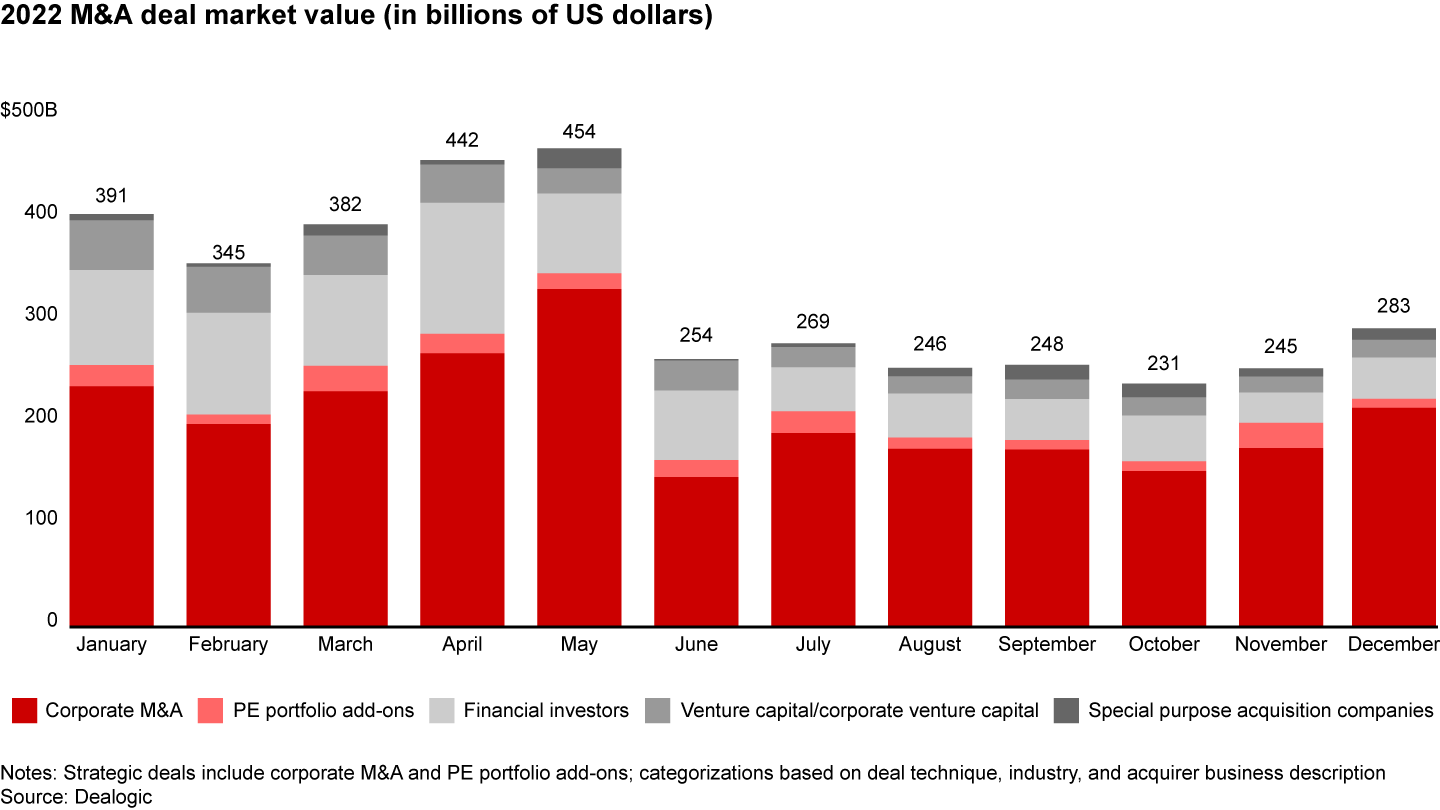
      The year 2022 was a tale of two halves. After a blockbuster year for M&A in 2021, the first five months of 2022 reflected continued strong dealmaking activity. The big turning point occurred on June 16, 2022, when an interest rate hike by the US Federal Reserve Bank, combined with heightened macroeconomic uncertainty, put a chill on the deal market. Megadeals greater than $10 billion went on pause while smaller deals slowed. Deal multiples tempered. The midyear correction resulted in a 36% decline in annual M&A deal value, to $3.8 trillion (see Figures 1 and 2). Yet volumes dropped by only 12%, suggesting resilience and commitment among dealmakers.

      Figure 1
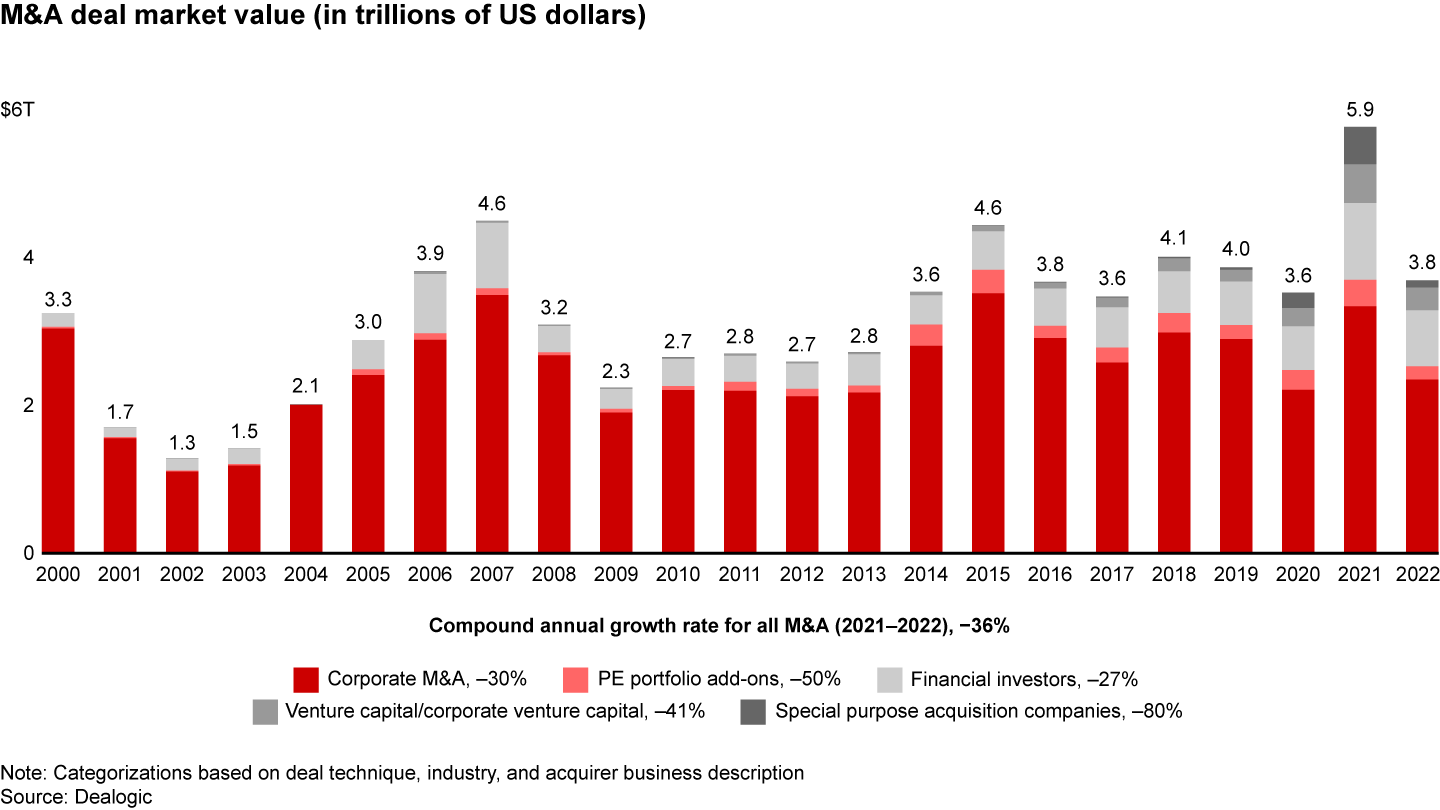
      Global M&A deal value fell by 36% in 2022
      Global M&A deal value fell by 36% in 2022
      Global M&A deal value fell by 36% in 2022
      Figure 2
      The year 2022 was a tale of two halves
      The year 2022 was a tale of two halves
      The year 2022 was a tale of two halves

      As the market reset, we observed some unanticipated shifts in dealmaking and, at the same time, a persistence of longer-term trends. On the one hand, the sudden drop in megadeals and deal multiples reflected the impact of structural uncertainty on M&A. Yet M&A remained central to corporate strategies for growth and profitability as evidenced by the relatively consistent levels of deal volume and balanced mix of scale and scope deals.

      Structural uncertainty

      Inflation, interest rates, capital availability, industrial policy, national security, geopolitical tension, supply chain uncertainty—in 2022, dealmakers faced new levels of volatility everywhere they looked as well as risks from variables that previously weren’t a focus in many deal models.

      June’s interest rate hike marked a new phase in the era of capital superabundance. In the face of rising inflation, the Fed’s move to raise rates happened more quickly than many expected. The implications were felt internationally as other central banks followed suit. The role of the US dollar in global trade amplified the impact. Dealmakers across the globe suddenly confronted an unfamiliar unknown—namely, the cost and availability of capital—amid a weakening economic environment. After decades of low and predictable interest rates, however, acquirers told us they were shaken less by the rising cost of capital and more by the uncertainty they now faced.

      In the US, the Fed’s move to raise rates happened more quickly than many expected.

      The interest rate warning shot impacted financial investors and strategic buyers differently. Private equity investors, reliant on debt for financing deals, were more immediately exposed to capital constraints and costs, which particularly impacted large deals. Lenders increased scrutiny on new offers as banks absorbed loan commitments that they could no longer syndicate. By comparison, corporates tend to be shielded from the near-term effects of interbank interest rate changes. Moreover, as we explored in our Global M&A Report Midyear 2022, corporates have more options to finance M&A than leverage alone—namely, stock and cash. Regardless, the new level of uncertainty about the economic outlook revealed by the interest rate hike led to a secular reset in M&A value and volume for all players in the second half of 2022.

      Acquirers faced a variety of other external factors besides interest rate ambiguity. Inflation and the emerging recessionary environment challenged assumptions about base business trajectories for strategic acquirers and targets alike. Supply chain disruptions continued to impact the accuracy of projections, and industrial policy reemerged as a swing factor for sector economics. Western government responses to climate and geopolitical crises presaged shifts in corporate profit pools. In Europe, amid growing concern about the Russia-Ukraine war, the likely need to subsidize winter energy costs for consumers forced a pullback on funding for other social needs such as healthcare. In the US, the Inflation Reduction Act placed bets on renewables at the cost of fossil fuels, and national security concerns prompted a decoupling of the semiconductor industry from China.

      Strategic dealmaking during an uncertain year

      Despite a healthy start to 2022, the strategic deal market closed at $2.6 trillion, a 32% decline from the all-time high in 2021. Strategic deal volumes dropped 9% and continued to hold steady during the last few months of 2022, particularly in smaller to midsize deals (see Figure 3). Divestments held steady at 33% of deals.

      Figure 3
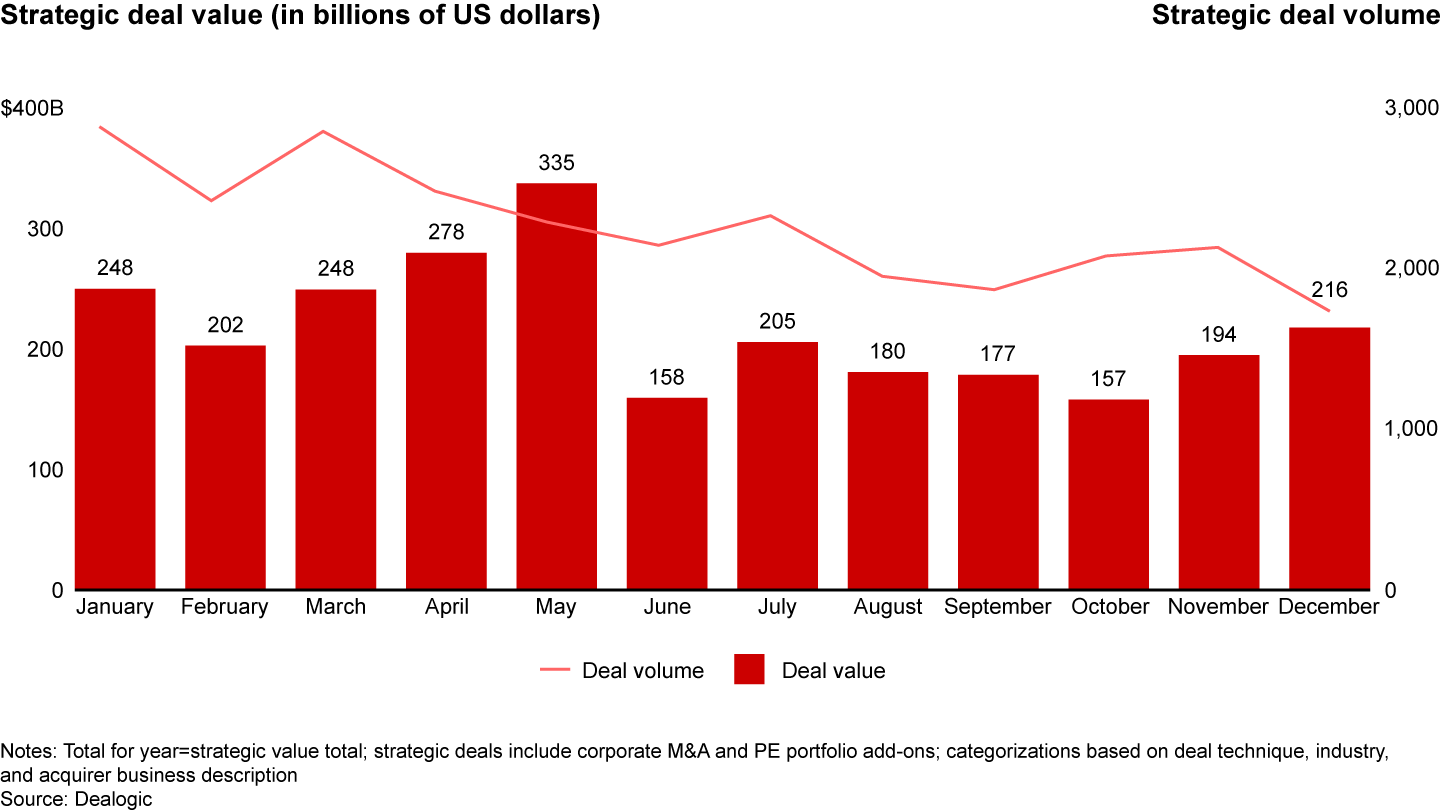
      2022 overall strategic deal value and volume by month
      2022 overall strategic deal value and volume by month
      2022 overall strategic deal value and volume by month

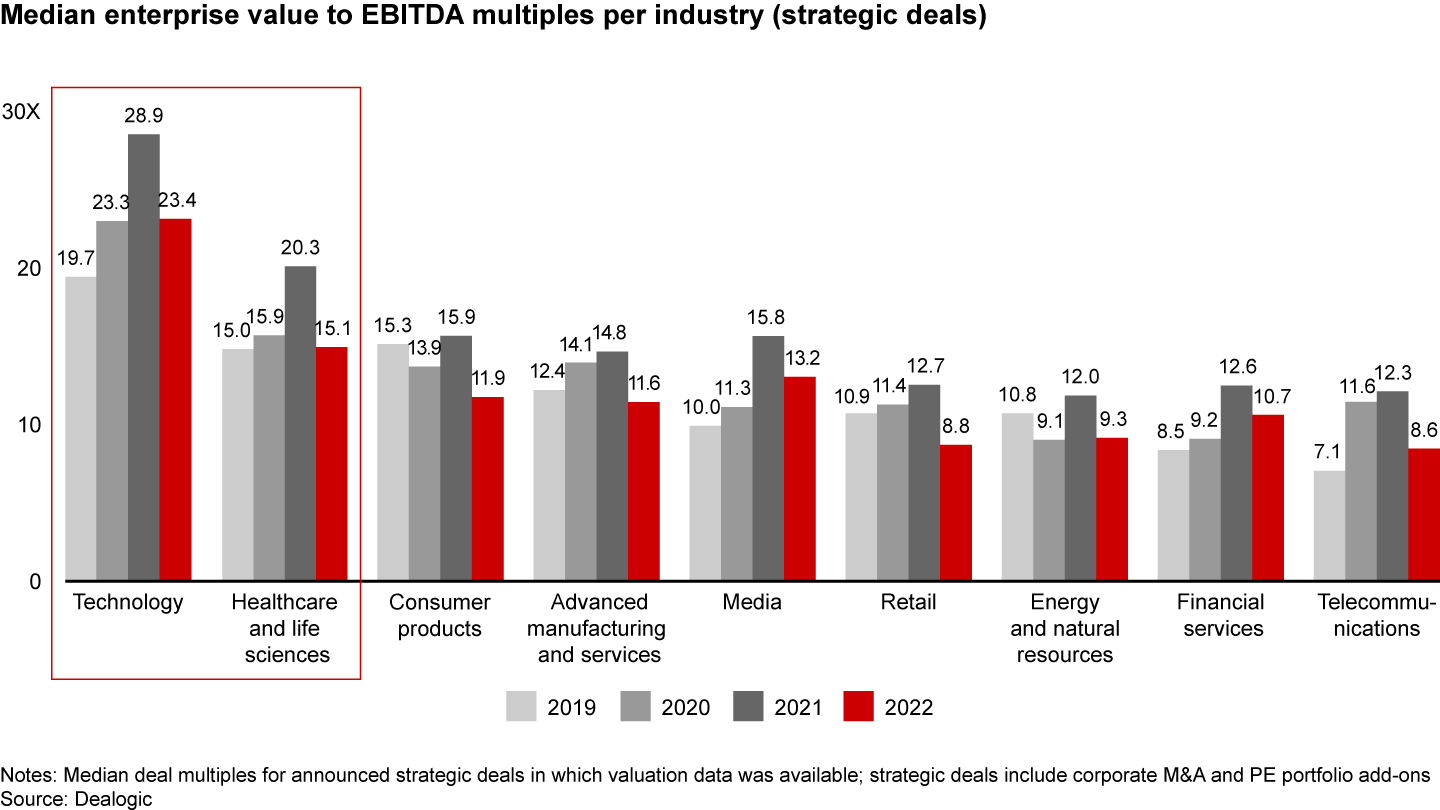
      Deal multiples declined as higher discount rates caused companies to put a premium on near-term cash flows over long-term growth. Multiples fell from record highs in 2021 to a 10-year low median multiple of 11.9 times enterprise value to EBITDA (see Figure 4). The drop-off was most notable in the high-growth industries of tech and healthcare and life sciences—each fell by more than five turns (see Figure 5). It’s worth noting that this decline mirrored changes in public market valuations. For example, the S&P 500 was off by 20% during the same time period. M&A practitioners tell us that they respond to deal multiple volatility with lower valuations and changes to deal structure, but few are waiting on the sidelines for multiples to stabilize—as evidenced by sustained deal volume.

      Figure 4
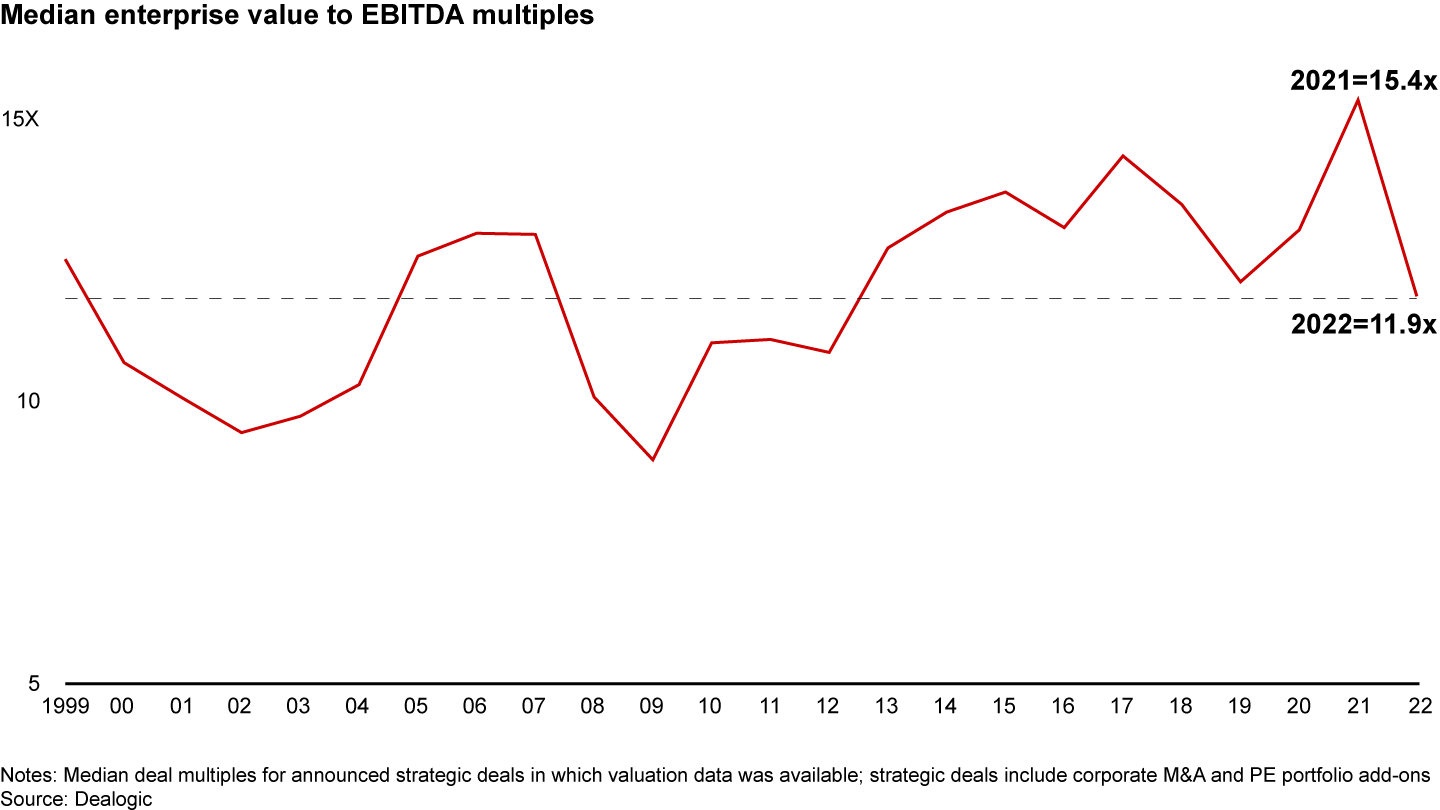
      Strategic M&A multiples fell to nearly 12 times from 2021’s historic high of 15.4 times
      Strategic M&A multiples fell to nearly 12 times from 2021’s historic high of 15.4 times
      Strategic M&A multiples fell to nearly 12 times from 2021’s historic high of 15.4 times
      Figure 5
      Technology and healthcare and life sciences multiples fell by more than five turns
      Technology and healthcare and life sciences multiples fell by more than five turns
      Technology and healthcare and life sciences multiples fell by more than five turns

      A midyear pause in megadeals (valued at more than $10 billion) also had a significant impact on total deal value for the year. The year began with more than a few headline deals such as Microsoft’s $69 billion bid for the gaming company Activision Blizzard, Broadcom’s $61 billion offer for VMware, and the Prologis-Duke Realty logistics real estate deal for $23 billion. After a blockbuster May, the strategic megadeal market dried up temporarily in June. The rest of the year saw a steady (if more moderated) pace of megadeals. The healthcare and life sciences sector led the way for large deals, with Johnson & Johnson’s nearly $17 billion offer for Abiomed, a medtech company; the $27.8 billion Amgen-Horizon Therapeutics biotech deal; and, most recently, the Novozymes-Chr. Hansen merger for around $12 billion (see the chapter “M&A in Healthcare and Life Sciences: Why the Industry’s Wait-and-See Days Will End”).

      Few are waiting on the sidelines for multiples to stabilize.

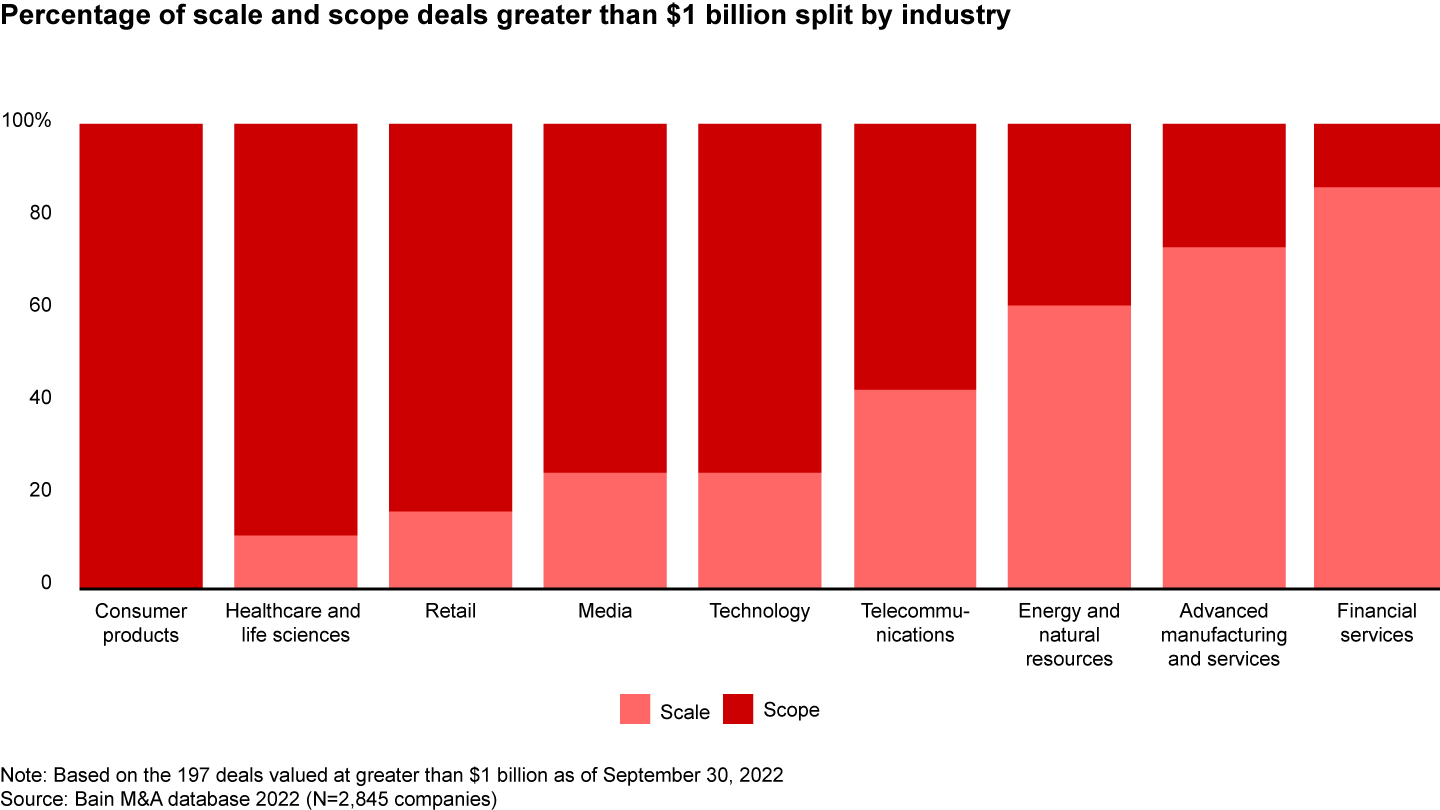
      Overall, large strategic M&A deals were nearly evenly split between scale and scope theses (see Figure 6). We believe, over the long run, the relative balance of scale and scope observed during the first three quarters of 2022 is consistent with the winning strategies of corporate outperformers—namely, a balancing of growth in revenue and profits. An examination of the largest deals reveals diverging sector dynamics and strategies. In 2022, advanced manufacturing and services, energy and natural resources, and financial services companies were most likely to strengthen their core business via scale deals (see Figure 7). For advanced manufacturing and services and financial services, this continues a focus on efficiency and operations via scale deals. Energy and natural resources companies, however, showed a new shift toward scope M&A as energy transitions prompted large renewables deals (see the chapter “M&A in Energy and Natural Resources: Beating the Odds in Energy Transition Deals”). Technology and healthcare and life sciences’ appetite for scope and capability deals remained constant as companies in both industries pursued top-line growth.

      Figure 6
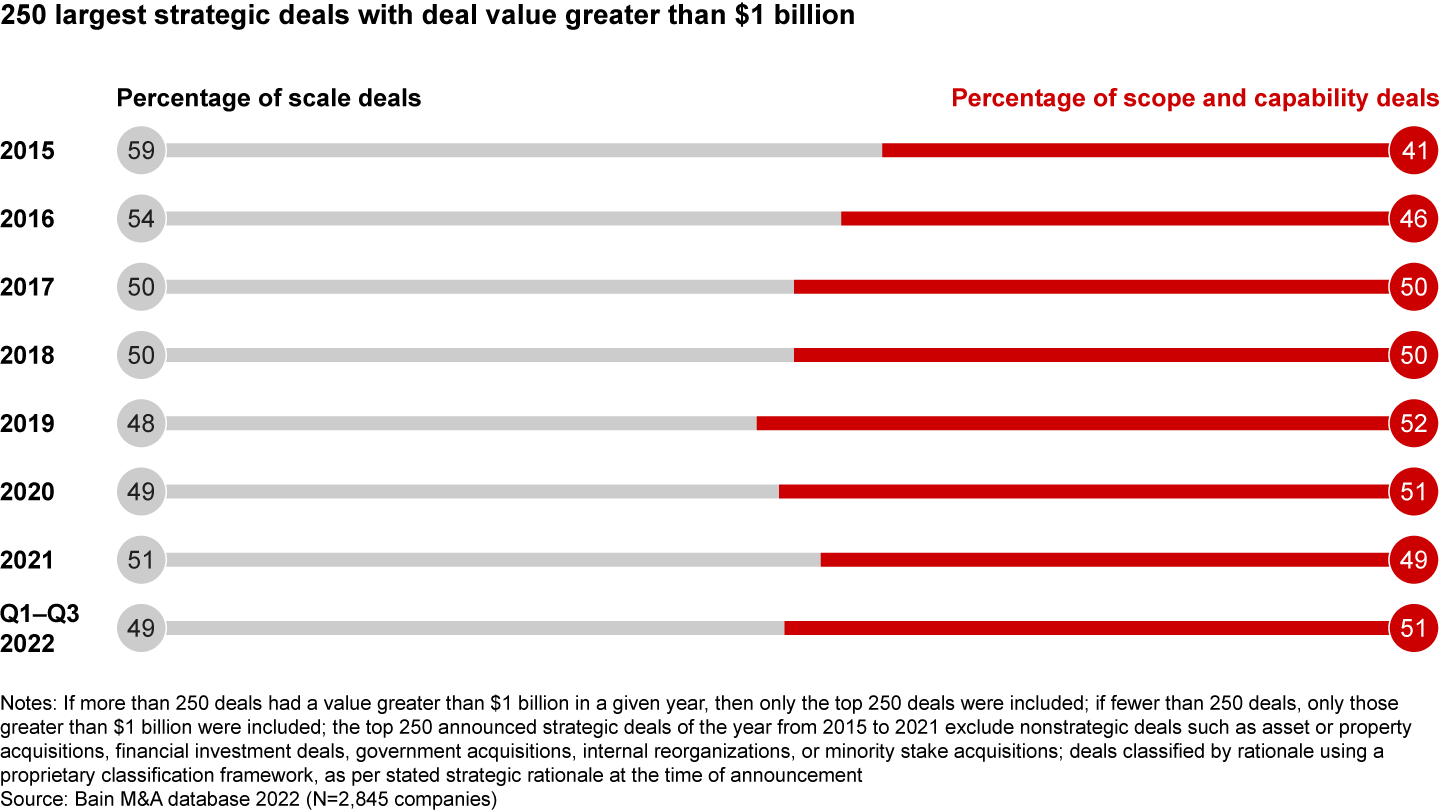
      Deals continue to be split evenly between scope and scale
      Deals continue to be split evenly between scope and scale
      Deals continue to be split evenly between scope and scale
      Figure 7
      Consumer products and healthcare and life sciences primarily saw scope deals, while financial services and advanced manufacturing were driven by scale deals
      Consumer products and healthcare and life sciences primarily saw scope deals, while financial services and advanced manufacturing were driven by scale deals
      Consumer products and healthcare and life sciences primarily saw scope deals, while financial services and advanced manufacturing were driven by scale deals

      Taking a geographic lens, we continued to see a preference for in-region targets as supply chain shocks, China-US decoupling, and geopolitical risks focused acquirer attention on targets closer to home. Europe shifted to intraregional deals, representing more than three-quarters of deal value in 2022 compared with about two-thirds in recent years. Meanwhile, China and India remained largely domestic markets (more than 90% of value). In India, the most notable takeaway for the year was not flow directionality but rather the overall explosive growth in M&A. By the end of October, total deal value was nearly 140% higher than in all of 2021. The rest of Asia and the Americas held steady in their balance of target by geography.

      The healthcare and life sciences sector led the way for large deals.

      In 2022, the regulatory environment reflected the longer-term trend of increased scrutiny on antitrust and national security grounds. For example, regulators in the UK, Europe, and the US raised both antitrust and national security concerns about Nvidia’s scrapped purchase of UK semiconductor maker Arm. And in the US, the Biden administration has adopted a more expansive definition of “anticompetitive” and has been more likely to challenge large consolidation deals in court. Consider the successful case against Bertelsmann-owned Penguin Random House’s proposed acquisition of Simon & Schuster on the grounds that authors, not just consumers, would be harmed. While many scrutinized deals are ultimately approved, a longer pre-close period introduces the risk of deterioration in the base business and employee morale. On the margin, this risk may have tempered boardroom appetite for large transformative deals over the past year.

      In the following chapter, “Looking Ahead to M&A in 2023,” we explain why savvy executives will keep their feet on the M&A accelerator even as competitors slam on the brakes.

      • Acknowledgments (click to expand)

        This report was prepared by the leadership team of Bain & Company’s Global M&A and Divestitures practice, with special direction from Les Baird, partner; David Harding, advisory partner; Andrew Grosshans, partner; Kai Grass, partner; Suzanne Kumar, practice vice president; Madhurima Bhattacharya, associate partner; Joerg Ohmstedt, practice director; and an editorial team led by David Diamond.

        The authors wish to thank the many members of the Bain leadership team who contributed articles to this year’s report. Additionally, we wish to thank the following colleagues for their help with this report: Bain Partners Peter Horsley, Harshveer Singh, Colleen von Eckartsberg, Sam Rovit, Dale Stafford, Adam Haller, Jeff Haxer, and Joost Spits; Practice Directors Dahlnae Yu and Scott Nancarrow; Practice Senior Managers Amy Wall and Dustin Rohrer; Senior Knowledge Specialist Dominika Adamaszek; Practice Senior Analyst Amol Mathur; Consultants Connie Cai, Michelle Tucker, and Arsalan Bukhari; and Associate Consultants Eliza Wright, Ben Thomas, and Virginia Miller. This work additionally benefited from the support of Bain Capability Network’s Abhishek Jain, Siddharth Sharma, Ekaparna Ghosh, Divyam Dewan, Mohit Gupta, and Jayant Singh; as well as Bain Research and Data Services’ Emily Lane, John Peverley, Laura Caringella, Brandon Riney, Piotr Szostakowski, and Olgierd Kotylo.

      • Methodology (click to expand)

        State of the market, industry, and regional M&A data

        Deal details and aggregate statistics (such as value, volume, multiples) were sourced primarily from Dealogic’s M&A database for this annual report. Full-year 2022 data was updated as of January 2023.

        This report’s focus is on strategic M&A, which includes deals inked by corporate buyers (including via sponsor exits) or private equity add-on acquisitions, because both M&A types have fundamentally strategic objectives. All other types, including financial sponsors, special purpose acquisition companies, and venture capital, are classified as nonstrategic. Together, these two categories equal Dealogic’s total M&A market.

        Scope vs. scale

        To understand the nature of M&A activity, we first identified the top 250 strategic deals for each year (top 197 strategic deals for 2022 year-to-date through September, since the analysis was concluded in October). From the initial list of deals with values greater than $1 billion, as reported by Dealogic, we excluded nonstrategic deals. These include asset or property acquisitions, financial investments, internal reorganizations, and minority stake acquisitions.

        We then classified the strategic deals into scale or scope deals based on our proprietary framework applied consistently across the years. The proprietary framework uses the stated strategic rationale by the acquirer at the time of announcement to identify the key elements of the deal thesis. Based on these elements, the deals were categorized as scale or scope deals.

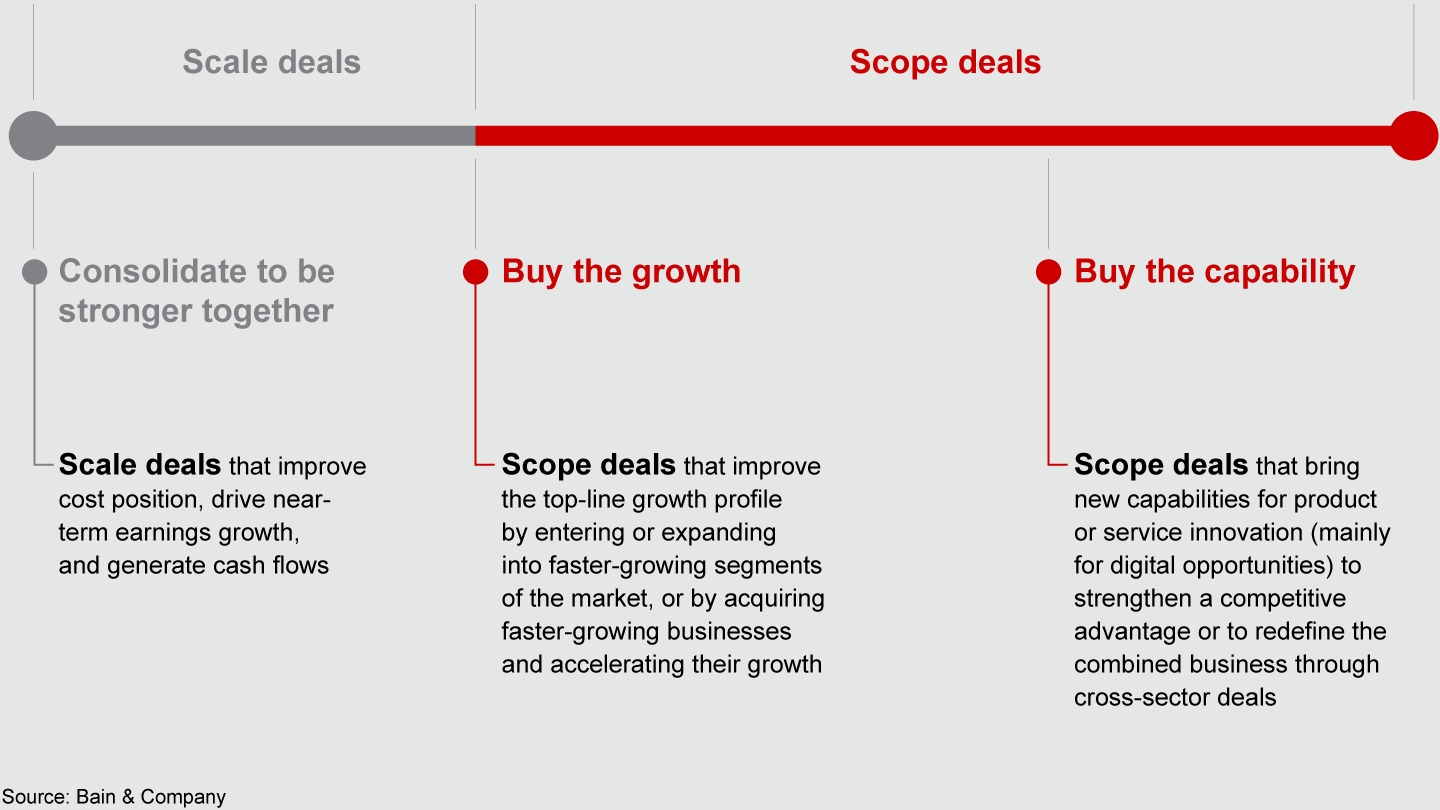
        Scale deals are intended to strengthen market leadership and lower cost position through benefits of scale, such as cost synergies. Scope deals are intended to accelerate top-line growth by entering or expanding into faster-growing market segments, or by bringing in new capabilities. In reality, some deals are a blend of both scale and scope; the vast majority, though, lean toward one or the other (see Exhibit A).

        Exhibit A
        About the methodology
        About the methodology
        About the methodology

        The M&A Practitioners’ 2023 Outlook Survey

        In partnership with the Gerson Lehrman Group, AlphaSights, Dynata, and IncQuery, we conducted a survey of 294 M&A practitioners. The survey ran in October 2022 in the US, Canada, Brazil, UK, Germany, France, Greece, Italy, Switzerland, Japan, India, and Australia. Survey participants held senior executive roles with the title of vice president, senior vice president/executive vice president, director, C-suite, or owner at companies with greater than $100 million in annual revenue, and they were responsible for M&A decision-making processes at their company.

        About Bain & Company’s M&A value creation study and M&A in times of turbulence

        Bain has been studying corporate M&A activity for two decades. We conducted our first quantitative study of company performance as it relates to acquisition activity in 2011 and 2012 and have updated the study multiple times over the years. The findings were confirmed across both studies spanning two decades.

        For this year’s analysis, the quantitative research reviewed the financial performance and M&A activity of 2,845 publicly listed companies. The initial sample included all publicly listed companies from 15 developed markets for which full financial data was available. We then excluded companies with revenue lower than $500 million in 2007 and those with major swings in their earnings before interest and taxes margin at the beginning or the end of the panel.

        To compare company performance, we used total shareholder return (TSR), defined as stock price changes assuming reinvestment of cash dividends. We calculated average annual TSR using data reported by S&P Capital IQ. We analyzed M&A activity by including all deals announced by the companies in the sample between the beginning of 2007 and the end of 2017. The data was based on information provided by Dealogic and included all deals in which a company had made an outright purchase, an acquisition of assets or of a majority interest, or in which multistep deals have been consolidated into a single deal. Deal size for deals with undisclosed value is estimated using median deal value benchmark, calculated for each sector from disclosed deal values as a percentage of acquirer market capitalization.

        We then analyzed the acquisition activity for each company by calculating the acquisition frequency and cumulative relative deal value. Acquisition frequency was calculated as the average number of acquisitions per year over the period from the beginning of 2007 to the end of 2017. Cumulative relative deal value was calculated as the sum of deal value divided by market capitalization three months prior to announcement for all deals from the beginning of 2007 to the end of 2017. These metrics characterizing deal activity were then related to the TSR performance of various acquirer cohorts.

      Read the Next Chapter

      Looking Ahead to M&A in 2023

      Read our 2023 M&A Report

      Download the PDF Explore the report
      Authors
      • Headshot of David Harding
        David Harding
        Advisory Partner, Boston
      • Headshot of Kai Grass
        Kai Grass
        Partner, Dusseldorf
      • Headshot of Andrew Grosshans
        Andrew Grosshans
        Alumni, Los Angeles
      • Headshot of Suzanne Kumar
        Suzanne Kumar
        Practice Executive Vice President, New York
      • Headshot of Madhurima Bhattacharya
        Madhurima Bhattacharya
        Associate Partner, Seattle
      Contact us
      Related Consulting Services
      • Mergers and Acquisitions
      M&A Report
      Media M&A

      AI and other tech tools can boost bidding confidence in this highly competitive environment.

      Read More
      M&A Report
      Consumer Products M&A

      In their quest for profitable growth, more companies are divesting brands or buying insurgents.

      Read More
      M&A Report
      Banking M&A

      As conditions shift, leading banks are fusing scale with scope to create future-ready organizations.

      Read More
      M&A Report
      Defense M&A

      Bold moves will determine the winners as a continent rearms.

      Read More
      M&A Report
      Building Products M&A

      Why more companies are acquiring for scope.

      Read More

      Overview

      • Looking Back at M&A in 2022

      • Looking Ahead to M&A in 2023

      Hot Topics

      • M&A in Times of Turbulence: Lessons from the Last Recession

      • When Buying (vs. Building) Is the Right Move for Engine 2

      • Tougher Times: Putting the Diligence Back in Due Diligence

      • How to Avoid the Fault Lines Sending Tremors through Cultural Integration in M&A

      Industry Views

      • Aerospace and Defense M&A

      • Automotive and Mobility M&A

      • Banking M&A

      • Consumer Goods M&A

      • Diversified Industrials M&A

      • Energy and Natural Resources M&A

      • Healthcare and Life Sciences M&A

      • Insurance M&A

      • Media and Entertainment M&A

      • Payments M&A

      • Retail M&A

      • Technology M&A

      • Telecommunications M&A

      • Wealth and Asset Management M&A

      Regional Perspectives

      • Brazil M&A

      • India M&A

      • Japan M&A

      • Middle East M&A

      Published in January 2023
      Tags
      • M&A Report
      • Mergers and Acquisitions

      How We've Helped Clients

      Mergers and Acquisitions Post-merger cultural issues jeopardize a deal

      Read case study

      Performance Improvement Aggressively growing an IT service provider with a high-performance culture

      Read case study

      Mergers and Acquisitions Broader market plus tighter sales strategy equals big success for a portfolio company

      Read case study

      Ready to talk?

      We work with ambitious leaders who want to define the future, not hide from it. Together, we achieve extraordinary outcomes.

      Stay ahead in a rapidly changing world. Subscribe to Bain Insights, our monthly look at the critical issues facing global businesses.

      *I have read and understand Bain’s Privacy Notice.

      Please read and agree to the Privacy Policy.
      Bain & Company
      Contact us Sustainability Accessibility Terms of use Privacy Modern Slavery Act Statement Cookie Policy Sitemap Log In

      © 1996-2026 Bain & Company, Inc.

      Contact Bain

      How can we help you?

      • Business inquiry
      • Career information
      • Press relations
      • Partnership request
      • Speaker request
      See all offices