

M&A Report

At a Glance
- The three-year-long M&A headwinds continued as dealmakers waited for a turn in the market.
- Corporate deals rose by 12% in value, while financial acquisitions rose by 29%.
- Strategic valuations remained nearly flat at 10.4 times, with buyers still skeptical on price and sellers reluctant to move too soon.
- The best dealmakers changed their processes to accommodate regulatory scrutiny, high interest rates, and other new realities.
This article is part of Bain's 2025 M&A Report.
This chapter was originally published in December 2024.
The year 2024 is on track to end as it began—with much anticipation.
For most of the year, there were great expectations that interest rates would fall, that private equity would get back in the game while getting out of portfolio positions, that buyers and sellers would reach a détente on valuations, and that regulatory concerns would become merely background noise. All of this would mean a great revival in M&A activity.
Ultimately, none of the macroeconomic tailwinds that M&A practitioners had hoped for during the first 11 months of 2024 ever really happened as expected. Overall, the level of M&A activity was a middling $3.5 trillion, a number consistent with what we saw in the mid-2010s. The headwinds largely stayed in place. For example, interest rates did come down just enough to reignite interest by private equity and other financial investors as that class began to regain ground with a 29% increase in deal value year over year. Corporate M&A, which is less influenced by small movements in the cost of debt, is on track to end the year 12% above 2023, with steady growth across all regions. Deal volume will rise by 7% (see Figures 1A and 1B).
Figure 1A
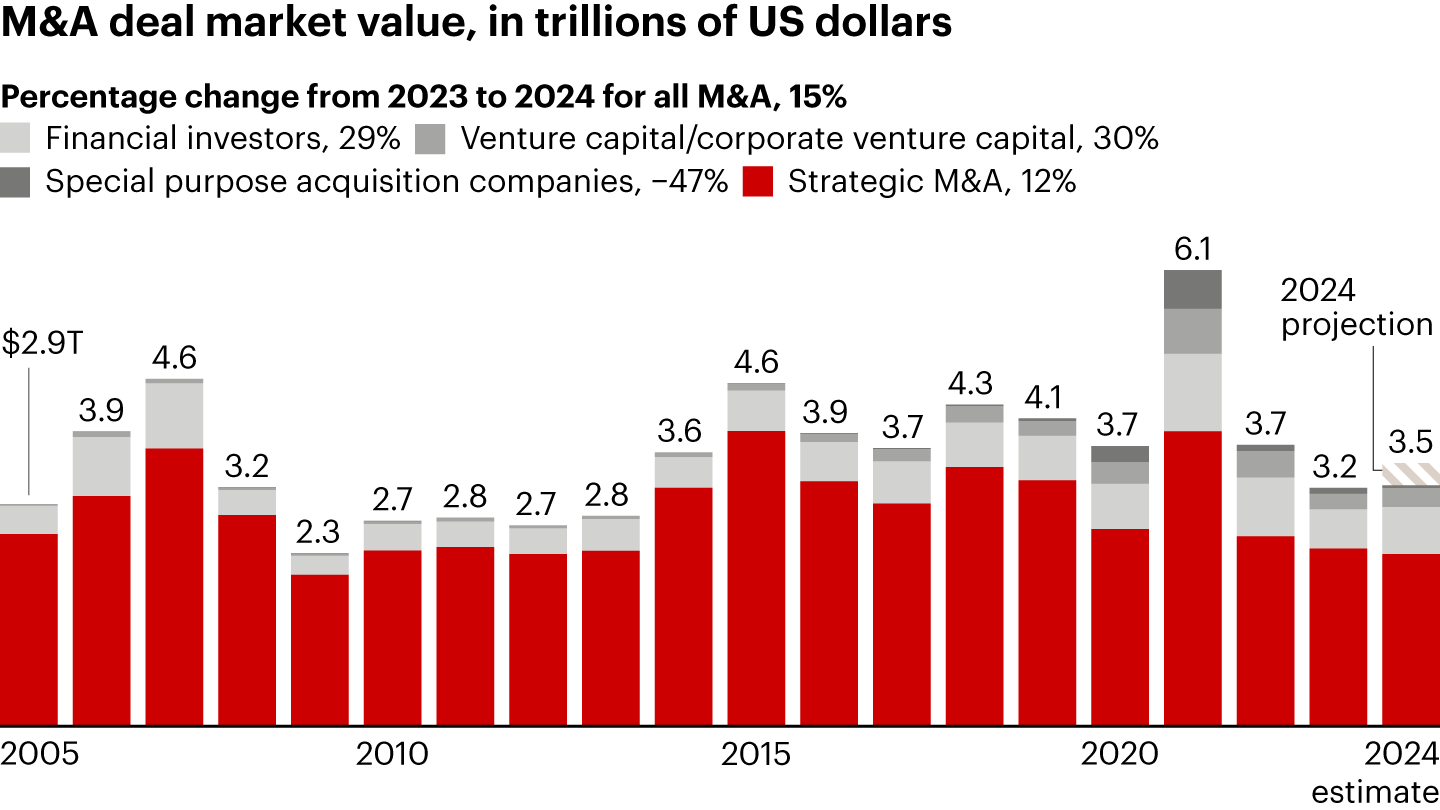

Notes: Strategic M&A includes corporate M&A deals (which includes private equity exits) and add-ons; percentage increase reflects the first 11 months of 2024 over the same period in 2023
Source: Dealogic as of December 2, 2024
Figure 1B
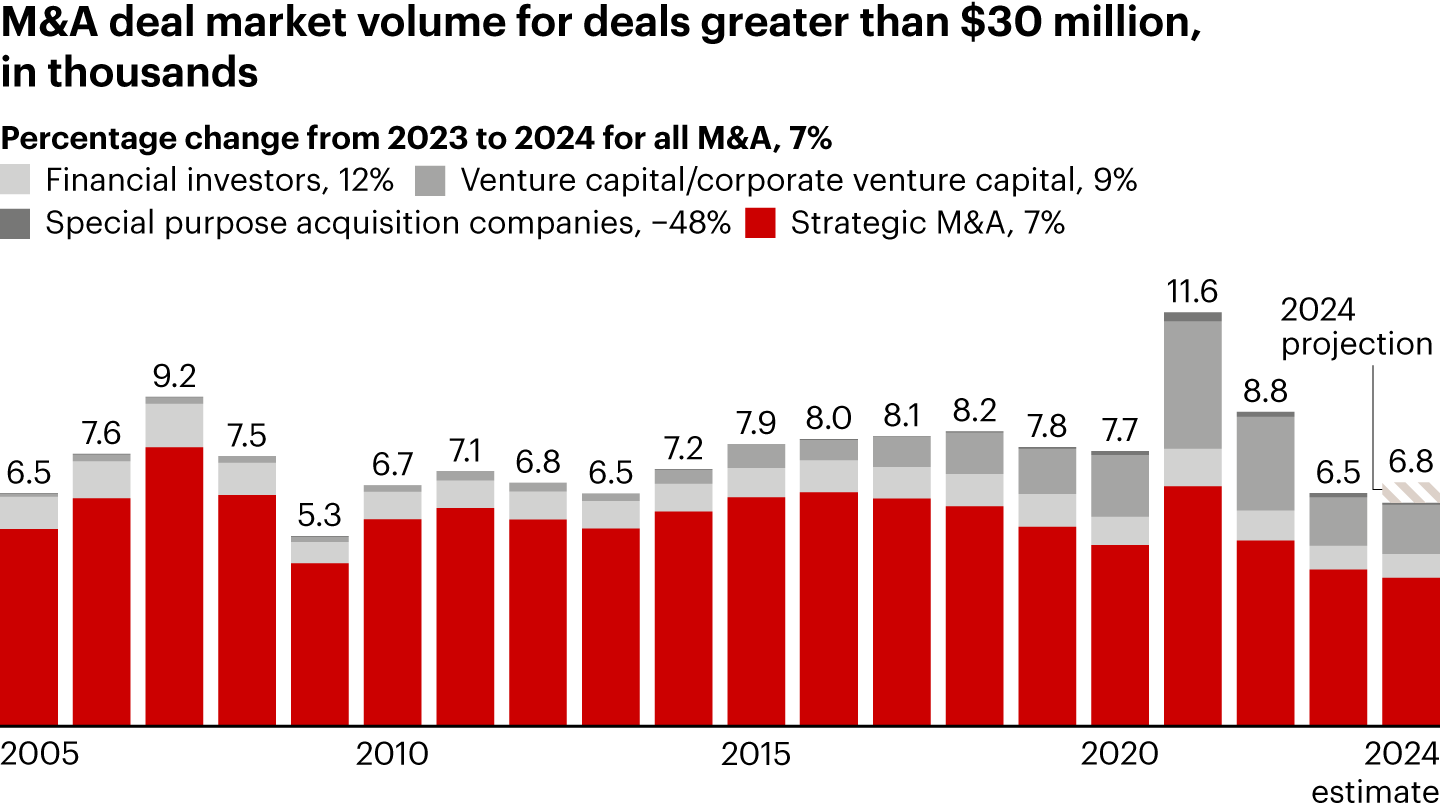

Notes: Strategic M&A includes corporate M&A deals (which includes private equity exits) and add-ons; percentage increase reflects the first 11 months of 2024 over the same period in 2023
Source: Dealogic as of December 2, 2024Strategic deal valuations remain historically low and well below public market valuations, which spiked in 2024 (see Figure 2). Rather than face substantial markdowns at exit, private equity and venture capital investors dug in with their portfolios. Private and public companies with the option to hold did, too. So, with less competition and a lack of urgency, some deals simply languished.
Figure 2
Notes: S&P 500 enterprise value-to-EBITDA valuations represent the annual average multiple; strategic M&A valuations represents median multiple for each calendar year
Sources: Dealogic as of December 2, 2024; S&P Capital IQ as of December 3, 2024Meanwhile, the shadow of regulation continued to loom over deal pipelines as the pre-close period for challenged deals stretched, adding cost and risk to contested deals. Many companies put deals on hold pending the outcome of national elections, hoping for more clarity on the future regulatory environment.
If anything, in 2024, the best companies learned to thoughtfully adapt their M&A strategies and processes to get out ahead of any potential macroeconomic or political situation. Many practitioners told us that they were surprised by the macroeconomic factors but that they ultimately continued moving ahead with their plans.
For some, that meant establishing multiple time-to-close scenarios in order to adapt to the longer close periods caused by extensive regulatory reviews. For some, it meant compensating for new deal economics by laying plans for speedier synergies capture.
On November 6, the anticipation moved in another direction as US companies awaited a shift in tone by a new federal government administration. Will regulators ease their stance, spurring companies to advance deals that have been put on hold, and thus deliver a booming M&A market in 2025? Or will an expected boost in deficit spending and increased tariffs by the incoming US administration reignite inflation, resulting in a return to higher interest rates, and thus stifle deal activity?
How acquirers adapted in 2024
In this evolving marketplace, dealmakers changed their M&A approach in three important ways, adapting their strategies to higher interest rates, revising deal strategies when facing intense regulatory scrutiny, and tweaking their capabilities to keep getting better.
Dealmakers adapted their M&A strategies to the new realities of higher interest rates. Strategic acquirers were more selective in their deals, required more concrete value creation, were less willing to pay for long-term top-line growth, and, most dramatically, adjusted to the new M&A value equation by pursuing both revenue and cost synergies in tandem. Instead of the traditional approach of primarily capturing cost synergies in scale deals and revenue synergies in scope deals, companies needed to deliver both to attract dealmakers. For example, the $35 billion Capital One–Discover merger aimed to deliver revenue synergies with a new customer segment as well as economies of scale with combined payment systems. It’s a shift that is particularly evident in the tech industry. For example, when announcing the proposed $14 billion deal for Juniper and its AI-native networking business, HPE cited attractive immediate and long-term opportunities for both top-line and bottom-line growth.
Scale deals accounted for 59% of the largest strategic deals in 2024—that’s the highest proportion since 2015 (see Figure 3). It’s also a distinct reversal from the trend toward scope M&A and more evidence that relatively high interest rates pushed acquirers to deals with rock-solid sources of value creation, favoring those with a clear line of sight to bankable synergies within the first year.
Figure 3
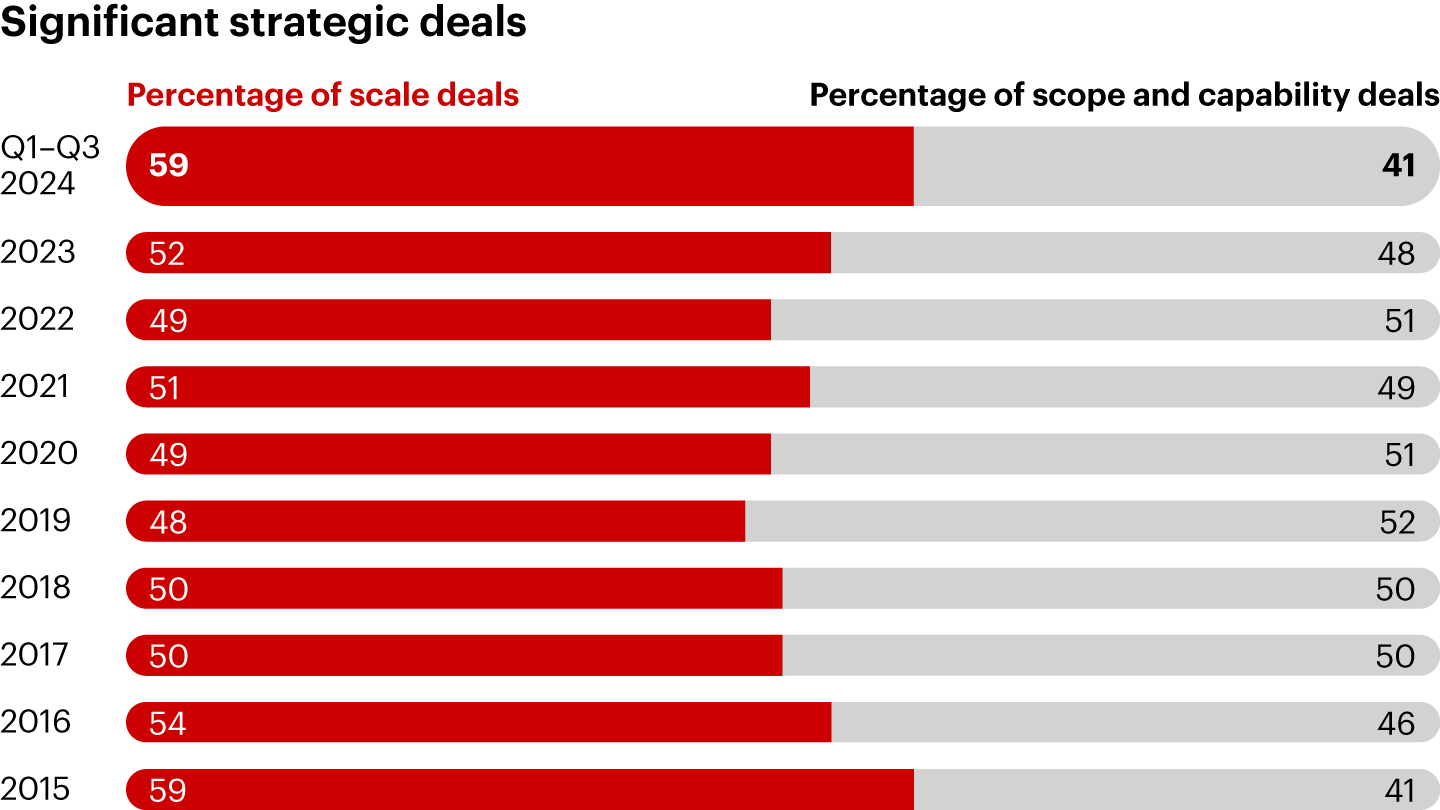

Note: Analysis includes strategic deals with value greater than $1 billion, excludes real estate and services
Source: Bain M&A Scale-Scope databaseThe popularity of scale deals was most prominent in industries with higher fixed costs—such as energy and natural resources, retail, financial services, and telecommunications—and it was not limited to the biggest players (see Figure 4). For example, consolidation in oil and gas extended down to the midstream, with moves such as ONEOK’s $2.6 billion acquisition of Medallion Midstream. In telecommunications, Vodafone and Three combined to create a viable third mobile provider in the UK.
Figure 4


Note: Analysis includes strategic deals with value greater than $1 billion during the first three quarters of 2024, excludes real estate and services
Source: Bain M&A Scale-Scope databaseDealmakers adapted to intense regulatory scrutiny. Sustained regulatory scrutiny impacted dealmaking this year in ways visible and not. In our survey of more than 300 M&A practitioners, nearly half of global executives said that regulatory concerns impacted the type of deals they considered in 2024. In response, they are revising deal strategies and spending more time screening up front, evaluating attractive deals for antitrust concerns early. These moves helped them to predict the likelihood of approval or the need for asset divestitures prior to investing time and money in the deal. Others just avoided deals. And at least a few waited to see the outcome of elections.
In the interim, this dynamic created a barbell effect—that is, companies found it easier to do either small, under-the-radar deals or large deals with huge value creation potential. In fact, some told us that the midsize deals weren’t worth the extra effort that regulators were requiring.
Smaller deals make up the heart of M&A. In 2024, deals valued at less than $1 billion accounted for 95% of all activity—and the number of those deals grew for the first time in four years. However, megadeals—namely, those valued at greater than $5 billion—propped up total deal value, including the $36 billion Mars-Kellanova deal in consumer products and the $34 billion Synopsys-Ansys combination in technology. Most megadeals receive extensive regulatory review, and as of December, it was not clear which deals will close and when.
Meanwhile, it’s important to note that government regulation regarding M&A doesn’t necessarily develop in lockstep across jurisdictions (or changes in an administration). India clarified merger guidelines and aimed to reduce approval timelines in 2024 while the Biden administration introduced more comprehensive merger filing requirements to provide US regulators more visibility into deal dynamics. Under the Trump administration, these requirements will remain in effect, but antitrust posture will likely be more lenient—at least for some sectors and deals. Newly elected EU leaders are contemplating more openness to intraregional consolidation in pursuit of economic resiliency, but they may find resistance from national authorities. In Japan, financial authorities have encouraged more M&A through corporate governance reforms.
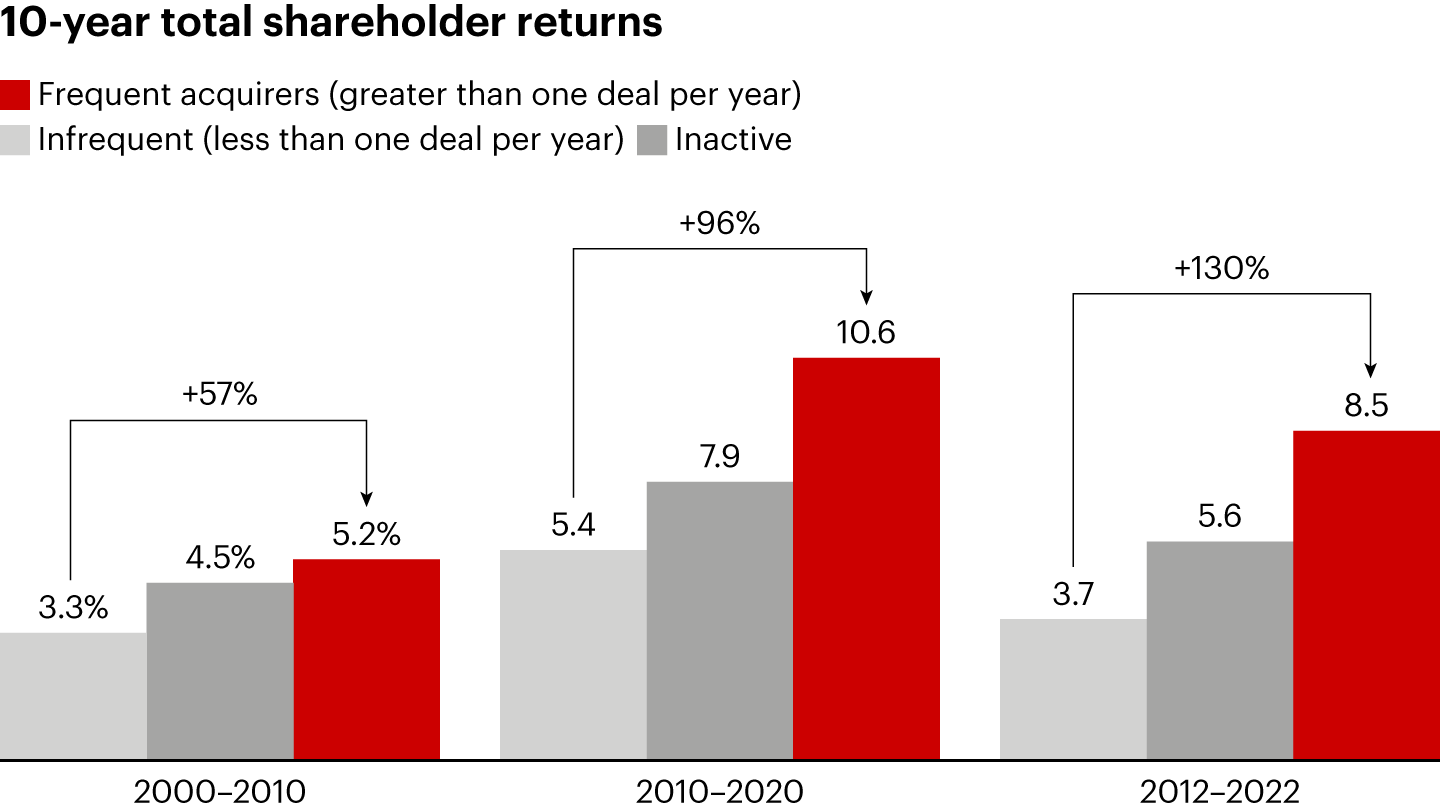
Dealmakers adapted their M&A capabilities to keep getting better at M&A. Earlier this year, we published our long-term research demonstrating how companies have gotten better at M&A over time and how the most active acquirers consistently outperform their less active counterparts by a wide margin (see the Bain Brief “How Companies Got So Good at M&A”). In fact, over the years 2012–2022, frequent acquirers achieved 8.5% growth in total shareholder return compared with 3.7% for companies that stayed out of the market (see Figure 5). In 2024, nearly two-thirds of these frequent acquirers did a deal.
Figure 5

The best dealmakers are experimenting with ways to improve their processes for today’s market. For some, that meant shifting more work from integration to how they get the deal done—for example, sharpening the pencil on revenue synergies, not just cost synergies. They’re putting more emphasis on strategic screening, wrestling with valuations, and navigating negotiations. Some practitioners tell us that as deals have gotten trickier, they’ve found it challenging to pivot their focus from integration to those upstream activities.
Another best practice: In 2024, early adopters used generative AI for sourcing, screening, and sharpening their overall diligence. According to our executive survey of more than 300 M&A executives, one in five M&A practitioners has used generative AI for M&A activities this year, and those users report achieving a reduction in the effort, time, and cost of their M&A processes as a result.
Active acquirers today are honing their M&A strategies and processes in good times and bad. Those who stay on the sidelines let those capabilities atrophy and risk falling further behind.
Different industries, different fates
The relative stasis in the overall market masks differences in fortune among industries. Most industries have recovered from a two-year downswing since 2022 and have held steady or grown in 2024. Energy and natural resources led the pack again as a wave of consolidation prompted more than 10 megadeals valued at greater than $5 billion during the first 11 months of 2024 (see Figure 6). And there were other headline deals, such as the $58 billion offer from Alimentation Couche-Tard for Seven & I in retail or the $20.3 billion Verizon-Frontier merger in telecommunications, both of which drove gains in their industries as well.
Figure 6
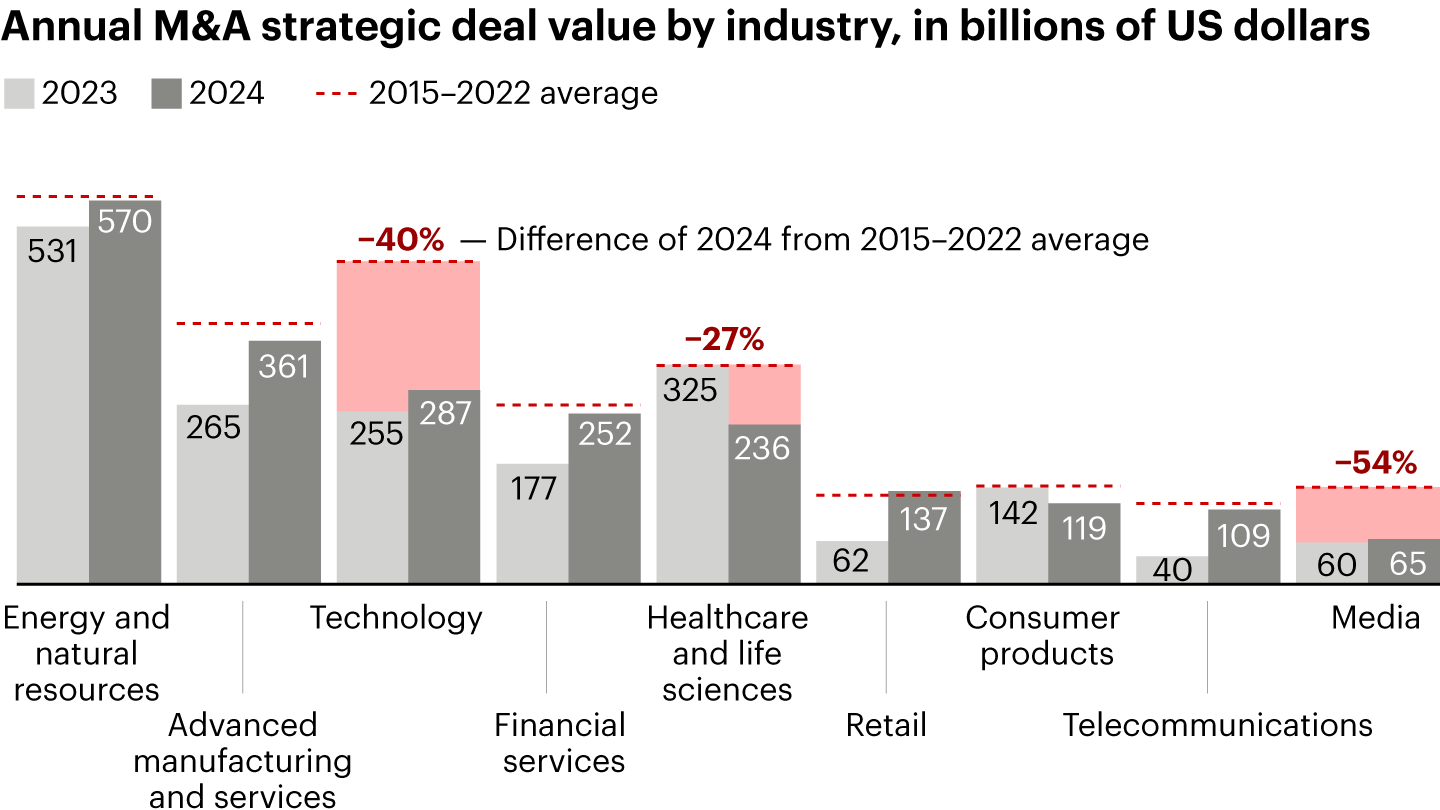

Notes: Deal values based on the first 11 months for each year; strategic M&A includes corporate M&A deals (which includes private equity exits) and add-ons; real estate deals excluded
Source: Dealogic as of December 2, 2024Longtime M&A stalwart industries, however, such as technology and healthcare and life sciences, remain well underwater compared with their vibrancy during the era of lower interest rates just a few years ago. Both of those sectors are populated by historically active acquirers focused on scope deals for growth, and they now face the twin challenges of heightened regulatory scrutiny along with the high interest rates that make paying for growth more expensive.
In addition to scale moves, companies used M&A to transform themselves or take advantage of fast growth opportunities within their industry. That’s why Disney bought 9% of Epic Games, maker of Fortnite, one of the most successful metaverse games. It’s also why LG Electronics bought an 80% stake in smart home hardware company Athom.
In 2024, companies across industries also acquired targets to build critical capabilities, especially in AI. Thomson Reuters acquired Safe Sign Technologies, a developer of legal-specific large language models, to enhance its workflow management offerings. Stryker bought care.ai to bolster its healthcare IT solutions. And in 2024, some acquired to make strides in sustainability. Holcim purchased Mark Desmedt and Cand-Landi Group to accelerate its decarbonization and circular construction.
In our full report, we take an industry-by-industry look at how companies are changing their approaches to dealmaking, and we report on the key trends that M&A practitioners are likely to experience in 2025.
-
Methodology (click to expand)
State of the market M&A data
Deal details and aggregate statistics (such as value, volume, and multiples) were sourced primarily from Dealogic’s M&A database for this annual report. Year-to-date 2024 data in most figures includes the time period from January 1 to November 30, 2024. Forecasts for the remainder of 2024 were conducted on a straight-line basis unless an exception is noted.
This report concentrates on strategic M&A, encompassing deals by corporate buyers (including sponsor exits) and private equity add-on acquisitions. Both types share fundamentally strategic objectives. Financial sponsors, special purpose acquisition companies, and venture capital fall under the nonstrategic category. Combined, these categories constitute Dealogic’s total M&A market. All deal values represent either the disclosed value at the time of announcement (including debt for deals that have not closed) or the disclosed value at close for accurate assessment and representation of deal prices. The region and industry of each deal is classified according to the target’s region and industry unless an exception is noted.
In the global interactive, deals are classified as “inbound,” “domestic,” or “outbound” based on the relationship between target and acquirer nationality. “Inbound” is defined as deals in which a company originating outside the market acquired a local company, “domestic” is defined as deals in which the target and acquirer originate within the same market, and “outbound” is defined as deals where a local company acquired a foreign company. References to a particular geography’s market (e.g., “US and Canada market”) refer to inbound and domestic activity (e.g., deals in which an American or Canadian company was acquired), but do not include outbound activity. Overall strategic M&A value and value growth figures shown for each continent refer to deals in which a company headquartered in that continent was acquired.
Scale vs. scope
The M&A report signifies scale and scope deals in our chapters’ analyses to discern trends. Assessing deals through these lenses offers crucial insights into M&A market theses and themes.
To understand the nature of M&A activity, we first identified the top strategic deals for each year. From the initial list of deals with values greater than $1 billion, as reported by Dealogic, we excluded nonstrategic deals. These include asset or property acquisitions, financial investments, internal reorganizations, and minority stake acquisitions. This resulted in a total of 2,518 deals for the period between first quarter 2015 and third quarter 2024.
We then classified the strategic deals into scale or scope deals based on our proprietary database criteria applied consistently across the years. The proprietary criteria use the stated strategic rationale by the acquirer at the time of announcement to identify the key elements of the deal thesis. Based on these elements, the deals were categorized as scale or scope deals.
Scale deals are intended to strengthen market leadership and lower cost position through benefits of scale, such as cost synergies. Scope deals are intended to accelerate top-line growth by entering or expanding into faster-growing market segments, or by bringing in new capabilities (see Exhibit A).
Exhibit AAbout the methodology 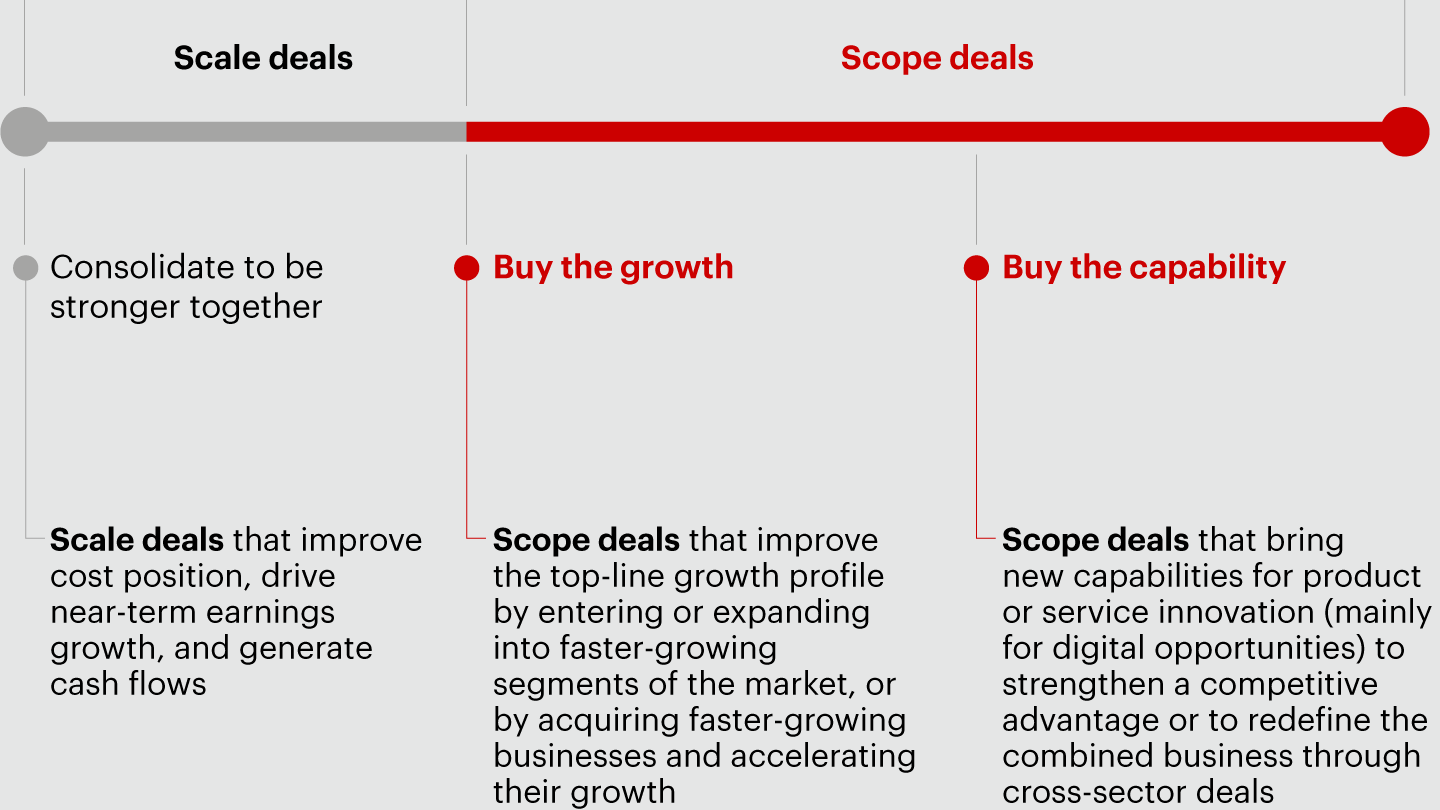

Source: Bain & Company The M&A Practitioners’ 2025 Outlook Survey
In partnership with IncQuery, we conducted a survey of 307 M&A practitioners. The survey ran in October 2024 in the US, Australia, Brazil, Canada, France, Germany, India, Italy, Japan, and the UK. Survey participants held senior executive roles with titles such as vice president, senior vice president/executive vice president, director, C-suite, or owner at companies with greater than $100 million in annual revenue that closed an M&A deal within the past three years, and they were responsible for M&A decision-making processes at their company.