
Skip to Content
  • Offices

    Offices

    North & Latin America
    • Atlanta
    • Austin
    • Bogota
    • Boston
    • Buenos Aires
    • Chicago
    • Dallas
    • Denver
    • Houston
    • Los Angeles
    • Mexico City
    • Minneapolis
    • Monterrey
    • Montreal
    • New York
    • Rio de Janeiro
    • San Francisco
    • Santiago
    • São Paulo
    • Seattle
    • Silicon Valley
    • Toronto
    • Washington, DC
    Europe & Africa
    • Amsterdam
    • Athens
    • Berlin
    • Brussels
    • Copenhagen
    • Dusseldorf
    • Frankfurt
    • Helsinki
    • Istanbul
    • Johannesburg
    • Kyiv
    • Lisbon
    • London
    • Madrid
    • Milan
    • Munich
    • Oslo
    • Paris
    • Rome
    • Stockholm
    • Vienna
    • Warsaw
    • Zurich
    Middle East
    • Doha
    • Dubai
    • Riyadh
    Asia & Australia
    • Bangkok
    • Beijing
    • Bengaluru
    • Brisbane
    • Ho Chi Minh City
    • Hong Kong
    • Jakarta
    • Kuala Lumpur
    • Manila
    • Melbourne
    • Mumbai
    • New Delhi
    • Perth
    • Seoul
    • Shanghai
    • Singapore
    • Sydney
    • Tokyo
    See all offices
  • Alumni
  • Media Center
  • Subscribe
  • Contact
  • Global | English

    Select your region and language

    Global
    • Global (English)
    North & Latin America
    • Brazil (Português)
    • Argentina (Español)
    • Canada (Français)
    • Chile (Español)
    • Colombia (Español)
    Europe, Middle East, & Africa
    • France (Français)
    • DACH Region (Deutsch)
    • Italy (Italiano)
    • Spain (Español)
    • Greece (Elliniká)
    Asia & Australia
    • China (中文版)
    • Korea (한국어)
    • Japan (日本語)
  • Saved items (0)
    Saved items (0)

    You have no saved items.

    Bookmark content that interests you and it will be saved here for you to read or share later.

    Explore Bain Insights
  • Industries
    Main menu

    Industries

    • Aerospace & Defense
    • Agribusiness
    • Chemicals
    • Construction & Infrastructure
    • Consumer Products
    • Financial Services
    • Healthcare & Life Sciences
    • Industrial Machinery & Equipment
    • Media & Entertainment
      Industries
      Media & Entertainment
      • Media Lab
    • Metals
    • Mining
    • Oil & Gas
    • Paper & Packaging
    • Private Equity
      Industries
      Private Equity
      • Due Diligence
      • Exit Planning
      • Firm Strategy & Operations
      • Portfolio Value Creation
    • Social Impact
    • Retail
    • Technology
    • Telecommunications
      Industries
      Telecommunications
      • Capital Expenditure
      • Telco Digital Transformation
    • Transportation
    • Travel & Leisure
    • Utilities & Renewables
  • Consulting Services
    Main menu

    Consulting Services

    • Customer Experience
    • Sustainability
    • Innovation
    • M&A
    • Operations
    • People & Organization
    • Private Equity
    • Sales & Marketing
    • Strategy
    • AI, Insights, and Solutions
    • Technology
    • Transformation
  • Digital
  • Insights
    Main menu

    Insights

    • Industry Insights
    • Services Insights
    • Bain Books
    • Webinars
    • Bain Futures
    View all Insights
    Featured topics
    • Tariff Response
    • Artificial Intelligence
    • Thriving in Uncertainty
    • Executive Conversations
    • Macro Trends
    • M&A Report
    • Healthcare Private Equity Report
    • Paper & Packaging Report
    • Technology Report
    • CEO's Guide to Sustainability
    • CEO Insights
    • CFO Insights
    • COO Insights
    • CIO Insights
    • CMO Insights
    View all featured topics
  • About
    Main menu

    About

    • What We Do
    • What We Believe
    • Our People & Leadership
    • Client Results
    • Awards & Recognition
    • Global Affiliations
    Further: Our global responsibility
    • Sustainability
    • Social Impact
    • World Economic Forum
    Learn more about Further
  • Careers
    Main menu

    Careers

    • Work with Us
      Careers
      Work with Us
      • Find Your Place
      • Our Work Areas
      • Integrated Teams
      • Students
      • Internships & Programs
      • Recruiting Events
    • Life at Bain
      Careers
      Life at Bain
      • Blog: Inside Bain
      • Career Stories
      • Our People
      • Where We Work
      • Supporting Your Growth
      • Affinity Groups
      • Benefits
    • Impact Stories
    • Hiring Process
      Careers
      Hiring Process
      • What to Expect
      • Interviewing
    FIND JOBS
  • Offices
    Main menu

    Offices

    • North & Latin America
      Offices
      North & Latin America
      • Atlanta
      • Austin
      • Bogota
      • Boston
      • Buenos Aires
      • Chicago
      • Dallas
      • Denver
      • Houston
      • Los Angeles
      • Mexico City
      • Minneapolis
      • Monterrey
      • Montreal
      • New York
      • Rio de Janeiro
      • San Francisco
      • Santiago
      • São Paulo
      • Seattle
      • Silicon Valley
      • Toronto
      • Washington, DC
    • Europe & Africa
      Offices
      Europe & Africa
      • Amsterdam
      • Athens
      • Berlin
      • Brussels
      • Copenhagen
      • Dusseldorf
      • Frankfurt
      • Helsinki
      • Istanbul
      • Johannesburg
      • Kyiv
      • Lisbon
      • London
      • Madrid
      • Milan
      • Munich
      • Oslo
      • Paris
      • Rome
      • Stockholm
      • Vienna
      • Warsaw
      • Zurich
    • Middle East
      Offices
      Middle East
      • Doha
      • Dubai
      • Riyadh
    • Asia & Australia
      Offices
      Asia & Australia
      • Bangkok
      • Beijing
      • Bengaluru
      • Brisbane
      • Ho Chi Minh City
      • Hong Kong
      • Jakarta
      • Kuala Lumpur
      • Manila
      • Melbourne
      • Mumbai
      • New Delhi
      • Perth
      • Seoul
      • Shanghai
      • Singapore
      • Sydney
      • Tokyo
    See all offices
  • Alumni
  • Media Center
  • Subscribe
  • Contact
  • Global | English
    Main menu

    Select your region and language

    • Global
      Select your region and language
      Global
      • Global (English)
    • North & Latin America
      Select your region and language
      North & Latin America
      • Brazil (Português)
      • Argentina (Español)
      • Canada (Français)
      • Chile (Español)
      • Colombia (Español)
    • Europe, Middle East, & Africa
      Select your region and language
      Europe, Middle East, & Africa
      • France (Français)
      • DACH Region (Deutsch)
      • Italy (Italiano)
      • Spain (Español)
      • Greece (Elliniká)
    • Asia & Australia
      Select your region and language
      Asia & Australia
      • China (中文版)
      • Korea (한국어)
      • Japan (日本語)
  • Saved items  (0)
    Main menu
    Saved items (0)

    You have no saved items.

    Bookmark content that interests you and it will be saved here for you to read or share later.

    Explore Bain Insights
  • Industries
    • Industries

      • Aerospace & Defense
      • Agribusiness
      • Chemicals
      • Construction & Infrastructure
      • Consumer Products
      • Financial Services
      • Healthcare & Life Sciences
      • Industrial Machinery & Equipment
      • Media & Entertainment
      • Metals
      • Mining
      • Oil & Gas
      • Paper & Packaging
      • Private Equity
      • Social Impact
      • Retail
      • Technology
      • Telecommunications
      • Transportation
      • Travel & Leisure
      • Utilities & Renewables
  • Consulting Services
    • Consulting Services

      • Customer Experience
      • Sustainability
      • Innovation
      • M&A
      • Operations
      • People & Organization
      • Private Equity
      • Sales & Marketing
      • Strategy
      • AI, Insights, and Solutions
      • Technology
      • Transformation
  • Digital
  • Insights
    • Insights

      • Industry Insights
      • Services Insights
      • Bain Books
      • Webinars
      • Bain Futures
      View all Insights
      Featured topics
      • Tariff Response
      • Artificial Intelligence
      • Thriving in Uncertainty
      • Executive Conversations
      • Macro Trends
      • M&A Report
      • Healthcare Private Equity Report
      • Paper & Packaging Report
      • Technology Report
      • CEO's Guide to Sustainability
      • CEO Insights
      • CFO Insights
      • COO Insights
      • CIO Insights
      • CMO Insights
      View all featured topics
  • About
    • About

      • What We Do
      • What We Believe
      • Our People & Leadership
      • Client Results
      • Awards & Recognition
      • Global Affiliations
      Further: Our global responsibility
      • Sustainability
      • Social Impact
      • World Economic Forum
      Learn more about Further
  • Careers
    Popular Searches
    • Agile
    • Digital
    • Strategy
    Your Previous Searches
      Recently Visited Pages

      Content added to saved items

      Saved items (0)

      Removed from saved items

      Saved items (0)

      Brief

      Making the Hidden Visible: Preparing for the Satellites in Your Sustainable Future

      Making the Hidden Visible: Preparing for the Satellites in Your Sustainable Future

      New technology makes a company’s environmental activity visible to everyone—and that’s good news.

      By Dale Hardcastle and Raphaël Felenbok

      • min read
      }

      Brief

      Making the Hidden Visible: Preparing for the Satellites in Your Sustainable Future
      en
      At a Glance
      • Companies that have been grappling with an inability to measure and manage their emissions commitments will soon have unprecedented visibility into all areas of their operations around the globe, thanks to converging technologies.
      • While some executives are concerned that this new visibility will show the world how far behind they are in sustainability goals, forward-thinking leaders see it as a chance to align sustainability goals with what they can realistically achieve—and to track supply chain partners.
      • Companies will also use this new transparency to improve reporting of frontline incidents, ensure CEOs are better prepared for the unforeseen and improve collaboration with suppliers, customers, regulators and NGOs.

      A fundamental challenge for companies responding to climate change has been their inability to “view” many of the emissions responsible for the crisis. While some forms of pollution are readily visible, many other contaminants, such as carbon and methane, are much harder to closely track. Yet companies in agriculture, mining, energy and a host of other industries are about to experience a major and unanticipated change. They will soon be armed with a whole new set of tools that enable them to measure and manage progress on their increasingly bold commitments to address the climate crisis.

      Thanks to a convergence of satellites, machine learning and big data, virtually any company will soon have the means to monitor in real time how well they are meeting sustainability commitments (see Figure 1). They will be able to accurately gauge everything from mine water emissions to how much CO2 or methane is produced throughout their operations in all corners of the globe—whether on land or at sea. The data will be widely available beyond companies to competitors, regulators, NGOs and consumers.

      Figure 1
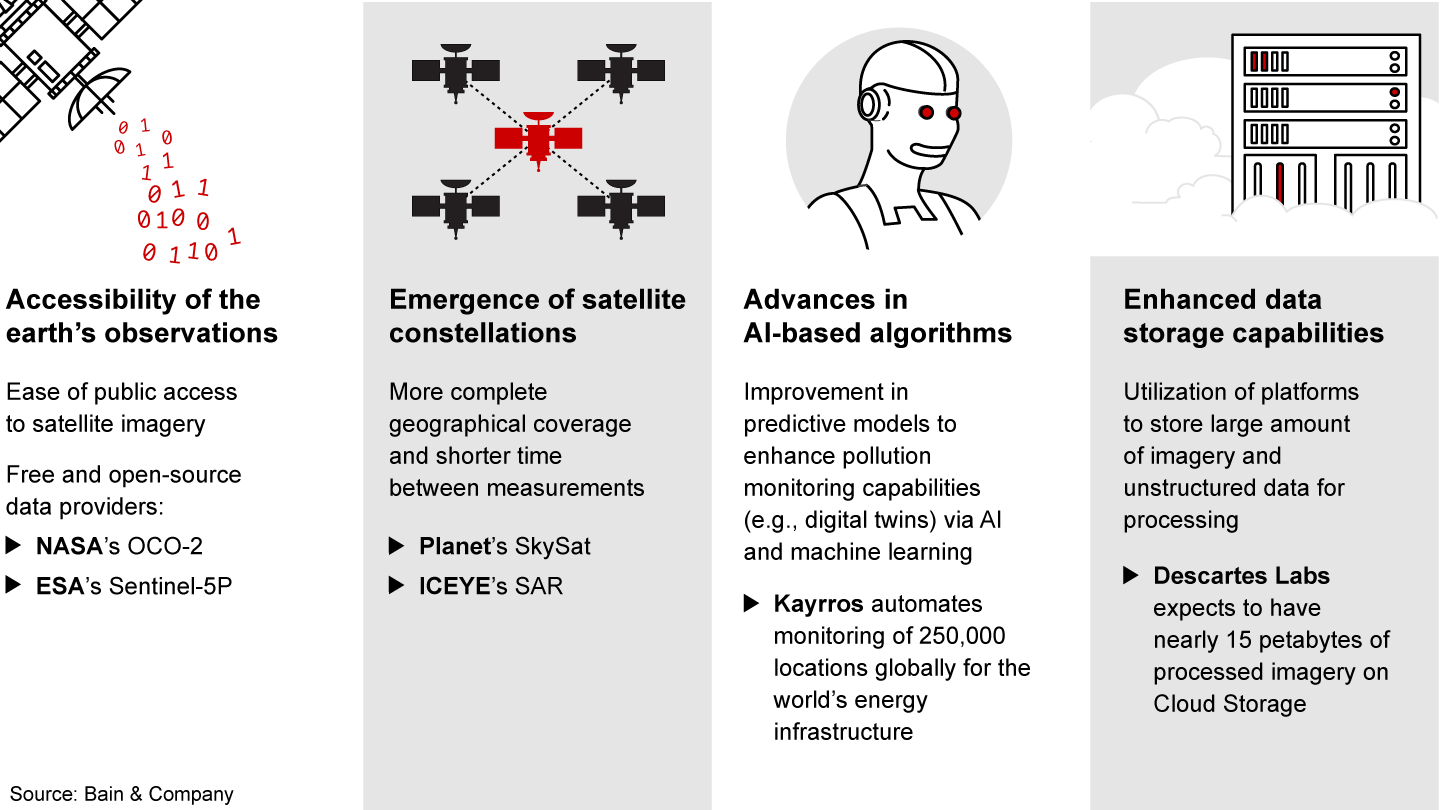
      How converging technology is democratizing the world’s data
      How converging technology is democratizing the world’s data
      How converging technology is democratizing the world’s data

      Some executives view this coming expansion of corporate exposure as a looming threat. They fear that it will expose how far behind they—or their supply chain partners—are in meeting ever more ambitious public targets for responsible sourcing, carbon emissions, deforestation and a wide range of sustainability measures. Yet, forward-thinking companies will embrace this new transparency as an opportunity to rethink their approach to sustainability. They see it as a chance to balance and focus ambitious sustainability goals with what they can realistically achieve—and to check their own in-house data and carbon footprint estimates as well as those of supply chain partners. Armed with better data, they will lay more effective plans to change how they can work collaboratively with suppliers, customers, regulators and NGOs.

      How it works

      The satellite ecosystem is quickly evolving. Advances in satellite design, deployment of microsatellites in low-earth orbit and the creation of private networks make it possible to reliably and cheaply monitor all points on the planet, whether it is a farm in Oklahoma, a brewery in Germany or an LNG plant in Papua New Guinea.

      Private satellite operators such as Planet and Airbus have joined the ranks of NASA, ESA and other public operators. Meanwhile, private ventures are emerging with solutions for analyzing satellite images. Specialized analytics companies like Kayrros, Descartes Labs and Spottitt are growing alongside academic ventures such as NASA Harvest, a consortium commissioned by NASA and led by the University of Maryland in the US to enhance the use of satellite data, and SarVision, a private company founded and supported by researchers at Wageningen University in the Netherlands.

      In emissions monitoring, organizations can already access free and open source data from specialist sensors onboard Sentinel-5P and OCO-2 satellites and commercial high-resolution data from companies such as GHGSat. And the range of data available will only increase with companies like NorthStar and Satellite Vu, both of which are preparing to launch satellites with cutting-edge thermal imaging capabilities.

      With the arrival of these and other new capabilities, the expanding ecosystem is democratizing the view from above, providing ready access to images that were once available only to the likes of government intelligence agencies and a handful of research institutes and commercial organizations.

      Advanced analytics and machine learning will in time enable continuous monitoring. For example, photographic and infrared imagery allows one to see whether an industrial plant is operating or not, if a ship is full or half empty as it leaves port, if oil inventory tanks are 25% or 50% full, or whether the promised closures of CO2-emitting wells have in fact taken place as publicly promised. All of this monitoring will be automated in real time by machines without the need for direct human interpretation.

      Satellite and analytics companies are rapidly offering new services for accessing and interpreting information. Much of the information analyzed now focuses on consumption or the supply of resources coming to market—but it is poised to expand quickly into emissions, natural capital and other sustainability-related elements. The view can then be further integrated with drone, air and other data, putting everything under a real-time magnifying glass (see Figure 2). As a final link, social media will make the images and analysis widely available. It is a level of transparency that most companies are ill prepared for today.

      Figure 2
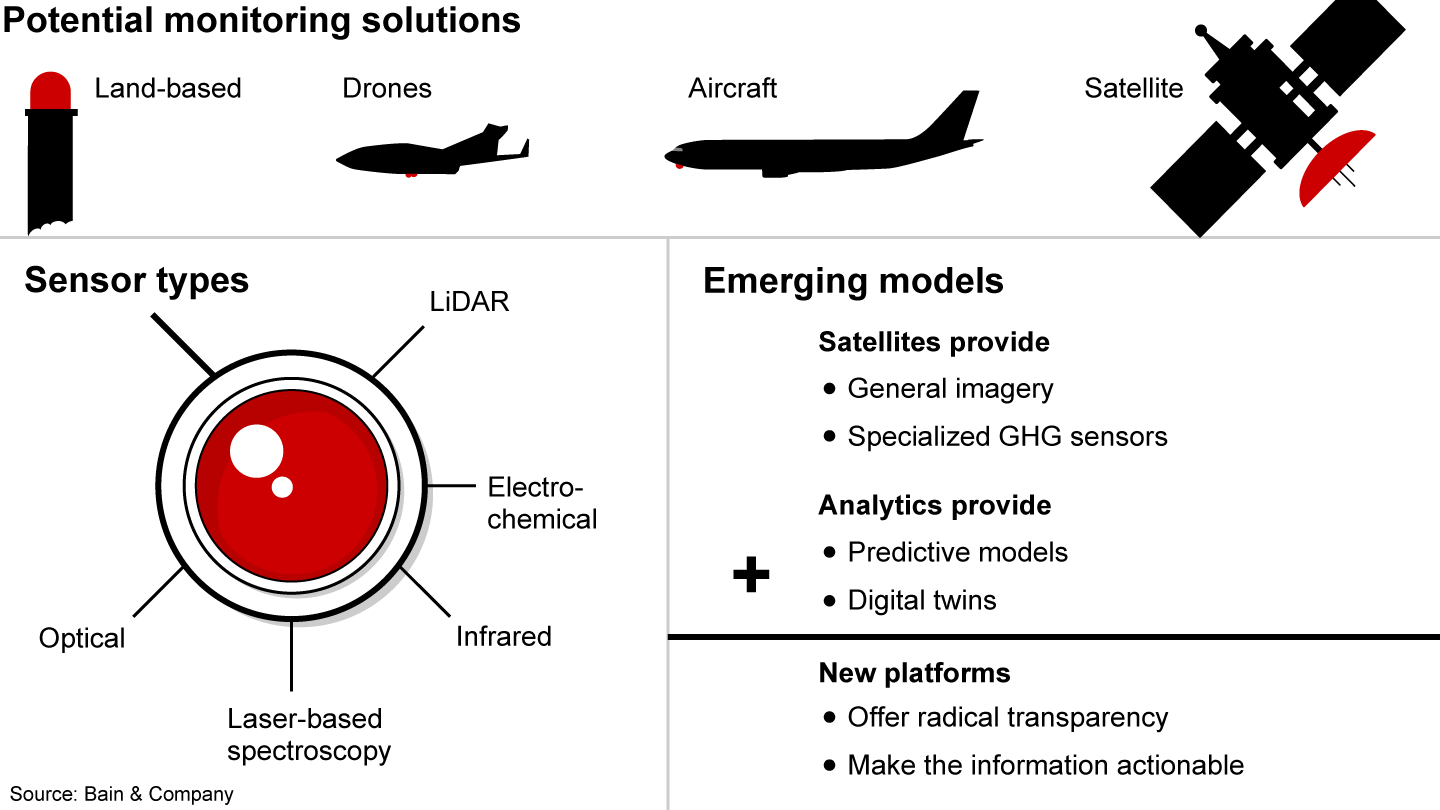
      The evolving transparency ecosystem
      The evolving transparency ecosystem
      The evolving transparency ecosystem

      And it is swiftly arriving. The World Wildlife Fund now works with aviation and aerospace agencies, universities and research institutes in the field of remote sensing to support good practices in forestry, fishing and agriculture as well as emissions production. By the summer of 2021, Climate TRACE (Tracking Real-time Atmospheric Carbon Emissions) is expected to have the first iteration of a sophisticated platform that will use AI, satellite image processing, machine learning and land- and sea-based sensors to monitor greenhouse gas emissions throughout the world—with the ability to zero in on specific plants, ships and factories.

      How to use it

      As larger sections of the earth become more visible daily, and as data granularity continuously improves, companies using the new transparency to advance sustainability will focus on five areas.

      Benchmarking portfolios and specific assets. Companies in agriculture, mining, energy and a host of other industries will benchmark emissions across their portfolio of businesses and specific assets—and those of competitors. Investors and governments will be doing the same and comparing performance among companies on a continuing basis.

      Linking sustainability targets to the front line. Many companies set sustainability targets that are broad top-down estimates and often do not necessarily focus on what’s really happening (e.g., the biggest emitting or problem assets). The fundamental challenge: It has been hard to get accurate data across global businesses. Now companies will rely on more precise visibility to make achievable site- or customer-level commitments and to address the largest emitters.

      Improving reporting of frontline incidents. Many companies lack an effective procedure for reporting frontline incidents to the CEO and for publicly reporting and responding to incidents. With real-time access to incident information, the best companies will create a communications chain for rapid reporting and an operating model for responding.

      Ensuring CEOs are prepared when the unforeseen happens. CEOs can be surprised when accidents or other issues occur in operations. With widespread visibility, companies will establish procedures so that CEOs know what others know and can quickly respond.

      Foreseeing where this is heading next. As the technology matures, companies will be able to generate realistic predictions of methane or CO2 emissions and other critical elements of their environmental footprint. Such information will help companies work with regulators on ESG reporting as well as measures to respond to climate change and other sustainability objectives.

      A CEO checklist

      The transparency revolution will bring with it a new set of rules. Here is what CEOs can do to prepare:

      • Ensure that you accurately understand your company’s footprint across Scope 1/2/3 emissions and other issues and where blind spots in line of sight now exist. Even amid Covid-19, sustainability efforts are accelerating. Companies are increasingly competing to see who can set the pace in their industry.
      • Improve measurement and reporting internally to allow better visibility.  Recognize that third parties soon will have equal or better measurement tools than you do. Seize this moment to enhance emissions reporting and management.
      • Align sustainability strategies and commitments with reality. Alternative data sources offer a means to pressure-test internal data and emissions levels. Fine-tune strategies to target hot spots with the greatest benefit-cost ratio.
      • Consider how new data sources can be used to track Scope 3 emissions. Estimating how customers and users emit carbon and other gases is challenging. It is critical to understand how new data sources will offer a better way to quantify and measure what others generate.
      • Develop plans to manage challenges by collaborating with third parties. Common access to real-time information opens the door for collaboration with suppliers, partners, regulators and NGOs. The best companies will focus on developing effective ways to work with all of those third parties.

      Preparing for the new transparency will take rigorous planning and thoughtful execution. But it comes with the biggest payoff imaginable: fighting to ensure the planet’s future.

      Authors
      • Headshot of Dale Hardcastle
        Dale Hardcastle
        Partner, Singapore
      • Raphaël Felenbok
        Advisor, Zurich
      Contact us
      Related Industries
      • Energy & Natural Resources
      Related Consulting Services
      • Sustainability
      Energy & Natural Resources
      Fueling the Future: How Business, Finance, and Policy Can Accelerate the Clean Fuels Market

      Why global clean fuel ambitions are outpacing investment, and what leaders must do to unlock capital and scale viable projects.

      Read More
      Energy & Natural Resources
      Mining M&A

      The next frontier isn’t about avoiding failure; it’s about mastering repeatable success.

      Read More
      Sustainability
      How AI Is Starting to Transform Circular Packaging

      There are 15 AI use cases companies across the value chain can use today to accelerate circularity.

      Read More
      Energy & Natural Resources
      Oil & Gas M&A

      Why some companies are winning by a wider margin.

      Read More
      Sustainability
      Exploring AI for Packaging Circularity

      AI is already creating value across the packaging lifecycle, from optimising design and reducing material use to improving sorting and traceability.

      Read More
      Published in August 2020
      Tags
      • Energy & Natural Resources
      • Sustainability

      How We've Helped Clients

      Strategy New products propel profitability for metals manufacturer

      Read case study

      Mergers and Acquisitions An OFS captures post-merger growth synergies

      Read case study

      Mergers and Acquisitions Broader market plus tighter sales strategy equals big success for a portfolio company

      Read case study

      Ready to talk?

      We work with ambitious leaders who want to define the future, not hide from it. Together, we achieve extraordinary outcomes.

      Stay ahead in a rapidly changing world. Subscribe to Bain Insights, our monthly look at the critical issues facing global businesses.

      *I have read and understand Bain’s Privacy Notice.

      Please read and agree to the Privacy Policy.
      Bain & Company
      Contact us Sustainability Accessibility Terms of use Privacy Modern Slavery Act Statement Cookie Policy Sitemap Log In

      © 1996-2026 Bain & Company, Inc.

      Contact Bain

      How can we help you?

      • Business inquiry
      • Career information
      • Press relations
      • Partnership request
      • Speaker request
      See all offices