
Skip to Content
  • Offices

    Offices

    North & Latin America
    • Atlanta
    • Austin
    • Bogota
    • Boston
    • Buenos Aires
    • Chicago
    • Dallas
    • Denver
    • Houston
    • Los Angeles
    • Mexico City
    • Minneapolis
    • Monterrey
    • Montreal
    • New York
    • Rio de Janeiro
    • San Francisco
    • Santiago
    • São Paulo
    • Seattle
    • Silicon Valley
    • Toronto
    • Washington, DC
    Europe & Africa
    • Amsterdam
    • Athens
    • Berlin
    • Brussels
    • Copenhagen
    • Dusseldorf
    • Frankfurt
    • Helsinki
    • Istanbul
    • Johannesburg
    • Kyiv
    • Lisbon
    • London
    • Madrid
    • Milan
    • Munich
    • Oslo
    • Paris
    • Rome
    • Stockholm
    • Vienna
    • Warsaw
    • Zurich
    Middle East
    • Doha
    • Dubai
    • Riyadh
    Asia & Australia
    • Bangkok
    • Beijing
    • Bengaluru
    • Brisbane
    • Ho Chi Minh City
    • Hong Kong
    • Jakarta
    • Kuala Lumpur
    • Manila
    • Melbourne
    • Mumbai
    • New Delhi
    • Perth
    • Seoul
    • Shanghai
    • Singapore
    • Sydney
    • Tokyo
    See all offices
  • Alumni
  • Media Center
  • Subscribe
  • Contact
  • Global | English

    Select your region and language

    Global
    • Global (English)
    North & Latin America
    • Brazil (Português)
    • Argentina (Español)
    • Canada (Français)
    • Chile (Español)
    • Colombia (Español)
    Europe, Middle East, & Africa
    • France (Français)
    • DACH Region (Deutsch)
    • Italy (Italiano)
    • Spain (Español)
    • Greece (Elliniká)
    Asia & Australia
    • China (中文版)
    • Korea (한국어)
    • Japan (日本語)
  • Saved items (0)
    Saved items (0)

    You have no saved items.

    Bookmark content that interests you and it will be saved here for you to read or share later.

    Explore Bain Insights
  • Industries
    Main menu

    Industries

    • Aerospace & Defense
    • Agribusiness
    • Chemicals
    • Construction & Infrastructure
    • Consumer Products
    • Financial Services
    • Healthcare & Life Sciences
    • Industrial Machinery & Equipment
    • Media & Entertainment
      Industries
      Media & Entertainment
      • Media Lab
    • Metals
    • Mining
    • Oil & Gas
    • Paper & Packaging
    • Private Equity
      Industries
      Private Equity
      • Due Diligence
      • Exit Planning
      • Firm Strategy & Operations
      • Portfolio Value Creation
    • Social Impact
    • Retail
    • Technology
    • Telecommunications
      Industries
      Telecommunications
      • Capital Expenditure
      • Telco Digital Transformation
    • Transportation
    • Travel & Leisure
    • Utilities & Renewables
  • Consulting Services
    Main menu

    Consulting Services

    • Customer Experience
    • Sustainability
    • Innovation
    • M&A
    • Operations
    • People & Organization
    • Private Equity
    • Sales & Marketing
    • Strategy
    • AI, Insights, and Solutions
    • Technology
    • Transformation
  • Digital
  • Insights
    Main menu

    Insights

    • Industry Insights
    • Services Insights
    • Bain Books
    • Webinars
    • Bain Futures
    View all Insights
    Featured topics
    • Tariff Response
    • Artificial Intelligence
    • Thriving in Uncertainty
    • Executive Conversations
    • Macro Trends
    • M&A Report
    • Healthcare Private Equity Report
    • Paper & Packaging Report
    • Technology Report
    • CEO's Guide to Sustainability
    • CEO Insights
    • CFO Insights
    • COO Insights
    • CIO Insights
    • CMO Insights
    View all featured topics
  • About
    Main menu

    About

    • What We Do
    • What We Believe
    • Our People & Leadership
    • Client Results
    • Awards & Recognition
    • Global Affiliations
    Further: Our global responsibility
    • Sustainability
    • Social Impact
    • World Economic Forum
    Learn more about Further
  • Careers
    Main menu

    Careers

    • Work with Us
      Careers
      Work with Us
      • Find Your Place
      • Our Work Areas
      • Integrated Teams
      • Students
      • Internships & Programs
      • Recruiting Events
    • Life at Bain
      Careers
      Life at Bain
      • Blog: Inside Bain
      • Career Stories
      • Our People
      • Where We Work
      • Supporting Your Growth
      • Affinity Groups
      • Benefits
    • Impact Stories
    • Hiring Process
      Careers
      Hiring Process
      • What to Expect
      • Interviewing
    FIND JOBS
  • Offices
    Main menu

    Offices

    • North & Latin America
      Offices
      North & Latin America
      • Atlanta
      • Austin
      • Bogota
      • Boston
      • Buenos Aires
      • Chicago
      • Dallas
      • Denver
      • Houston
      • Los Angeles
      • Mexico City
      • Minneapolis
      • Monterrey
      • Montreal
      • New York
      • Rio de Janeiro
      • San Francisco
      • Santiago
      • São Paulo
      • Seattle
      • Silicon Valley
      • Toronto
      • Washington, DC
    • Europe & Africa
      Offices
      Europe & Africa
      • Amsterdam
      • Athens
      • Berlin
      • Brussels
      • Copenhagen
      • Dusseldorf
      • Frankfurt
      • Helsinki
      • Istanbul
      • Johannesburg
      • Kyiv
      • Lisbon
      • London
      • Madrid
      • Milan
      • Munich
      • Oslo
      • Paris
      • Rome
      • Stockholm
      • Vienna
      • Warsaw
      • Zurich
    • Middle East
      Offices
      Middle East
      • Doha
      • Dubai
      • Riyadh
    • Asia & Australia
      Offices
      Asia & Australia
      • Bangkok
      • Beijing
      • Bengaluru
      • Brisbane
      • Ho Chi Minh City
      • Hong Kong
      • Jakarta
      • Kuala Lumpur
      • Manila
      • Melbourne
      • Mumbai
      • New Delhi
      • Perth
      • Seoul
      • Shanghai
      • Singapore
      • Sydney
      • Tokyo
    See all offices
  • Alumni
  • Media Center
  • Subscribe
  • Contact
  • Global | English
    Main menu

    Select your region and language

    • Global
      Select your region and language
      Global
      • Global (English)
    • North & Latin America
      Select your region and language
      North & Latin America
      • Brazil (Português)
      • Argentina (Español)
      • Canada (Français)
      • Chile (Español)
      • Colombia (Español)
    • Europe, Middle East, & Africa
      Select your region and language
      Europe, Middle East, & Africa
      • France (Français)
      • DACH Region (Deutsch)
      • Italy (Italiano)
      • Spain (Español)
      • Greece (Elliniká)
    • Asia & Australia
      Select your region and language
      Asia & Australia
      • China (中文版)
      • Korea (한국어)
      • Japan (日本語)
  • Saved items  (0)
    Main menu
    Saved items (0)

    You have no saved items.

    Bookmark content that interests you and it will be saved here for you to read or share later.

    Explore Bain Insights
  • Industries
    • Industries

      • Aerospace & Defense
      • Agribusiness
      • Chemicals
      • Construction & Infrastructure
      • Consumer Products
      • Financial Services
      • Healthcare & Life Sciences
      • Industrial Machinery & Equipment
      • Media & Entertainment
      • Metals
      • Mining
      • Oil & Gas
      • Paper & Packaging
      • Private Equity
      • Social Impact
      • Retail
      • Technology
      • Telecommunications
      • Transportation
      • Travel & Leisure
      • Utilities & Renewables
  • Consulting Services
    • Consulting Services

      • Customer Experience
      • Sustainability
      • Innovation
      • M&A
      • Operations
      • People & Organization
      • Private Equity
      • Sales & Marketing
      • Strategy
      • AI, Insights, and Solutions
      • Technology
      • Transformation
  • Digital
  • Insights
    • Insights

      • Industry Insights
      • Services Insights
      • Bain Books
      • Webinars
      • Bain Futures
      View all Insights
      Featured topics
      • Tariff Response
      • Artificial Intelligence
      • Thriving in Uncertainty
      • Executive Conversations
      • Macro Trends
      • M&A Report
      • Healthcare Private Equity Report
      • Paper & Packaging Report
      • Technology Report
      • CEO's Guide to Sustainability
      • CEO Insights
      • CFO Insights
      • COO Insights
      • CIO Insights
      • CMO Insights
      View all featured topics
  • About
    • About

      • What We Do
      • What We Believe
      • Our People & Leadership
      • Client Results
      • Awards & Recognition
      • Global Affiliations
      Further: Our global responsibility
      • Sustainability
      • Social Impact
      • World Economic Forum
      Learn more about Further
  • Careers
    Popular Searches
    • Agile
    • Digital
    • Strategy
    Your Previous Searches
      Recently Visited Pages

      Content added to saved items

      Saved items (0)

      Removed from saved items

      Saved items (0)

      Brief

      Operational Excellence: Managing Performance in the Oil and Gas Industry

      Operational Excellence: Managing Performance in the Oil and Gas Industry

      Go beyond benchmarks to decisions and action.

      By John McCreery

      • min read
      }

      Brief

      Operational Excellence: Managing Performance in the Oil and Gas Industry
      en

      As part of Bain’s ongoing series on operational excellence in the oil and gas industry, this brief highlights our current thinking on performance management. Other briefs in this series have examined integrated planning, operational excellence management systems and the imperative for operational excellence.

      In the world of elite sports, playing for a high-performing team can be an uncomfortable experience at times. With expectations set high, each missed basket, each missed open goal or every dropped pass brings groans from other players and spectators alike. Even when you are ahead of the pack, missed opportunities are disappointing.

      Leading oil and gas companies are not FC Barcelona or the New York Yankees, but our experience working with many of them suggests they view their own performance in much the same way. We see well-respected, world-class organizations where the sharp edge of performance is occasionally lacking. This typically means the organization is not meeting its own performance goals—which often results from inadequately managing performance. Sometimes this occurs because senior executives have not defined success clearly, or they have focused excessively on identifying benchmarks while avoiding more critical discussions on how they should use metrics to make better decisions about how they run the business.

      To raise their game, oil and gas executives may need to revisit the way they manage performance. Leading players take an approach that goes well beyond benchmarks to develop the right forums and decision-making processes that will turn metrics and insights into the right discussions, decisions and actions. They set up their reporting systems to inform strategic and operational decisions. They integrate performance management with other cross-functional processes that guide the business, such as risk management and capability development. Connecting performance to incentives ensures accountability. Finally, they find ways to make their programs stick, including linking performance management with their annual planning cycles and developing dashboards that allow managers to keep an eye on metrics—which, while not the whole solution, continue to inform their daily and longer-term decisions.

      John McCreery, a partner in Bain's Oil and Gas practice, explains how companies can adapt to industry shifts.

      Measure to improve decisions

      Better performance management begins with a more focused approach to measurement and reporting systems. Oil and gas companies are flooded with data, and the flow increases daily as more sensors come online and teams devise more ways to collect and analyze data. This rising tide of data brings the risk of measuring for the sake of measurement. Executives need to focus their analytic resources and reporting systems on the information that matters most. They can start with three straightforward and interconnected questions:

      • How do we measure our performance?
      • What decisions do we need to get right to succeed?
      • How can metrics help improve our decisions?

      Answering the first question helps clarify the strategic goals of the business: What do we do, and how do we know when we are winning? Discussions about measuring performance lead to discussions about improving performance, and so this discussion is as much about understanding the requirements of success as it is about measuring success.

      Second, assessing the decision-making process is the start of understanding how an organization evaluates what it knows and how it acts on that information to achieve its goals and create value. This process should explore the fact base underlying decisions as well as the accountability of those making them. Leading organizations assign clear decision rights, partly to ensure accountability but also to streamline the decision-making process. At Bain & Company, we believe good decisions stem from four variables: an organization’s ability to make the right decision, to make it quickly, to follow up and execute, and to make the required effort to run the process.

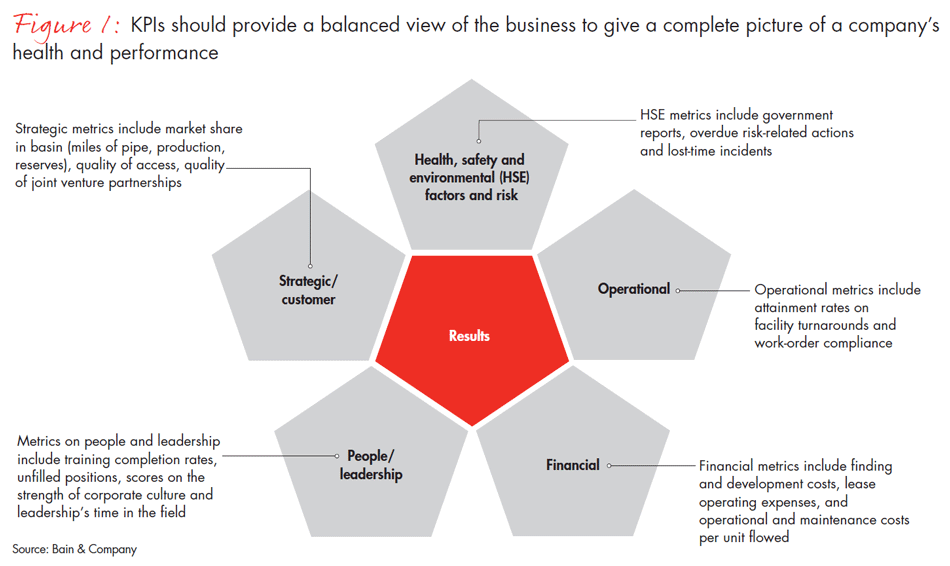
      The third question asks companies to decide which metrics are the most important to track and monitor. Good decisions require accurate and pertinent data that ties closely to the organization’s strategic priorities. Key performance indicators (KPIs) should give a balanced view of the business, covering the most important categories that indicate the health and performance of the business (see Figure 1). In the oil and gas industry, many standard metrics for exploration, development and production already exist, so companies do not need to reinvent the wheel.

      oe-managing-performance-in-oil-and-gas-fig-01_embed

      Metrics are a means to an end: While they provide input for making well-informed decisions, they are not the determinants of policy. They are like gauges on the dashboard of a car—vital to help guide the journey, but incapable of telling the vehicle where it should go.

      The trouble with benchmarks

      Benchmarks are essential for making decisions about resource allocation, but they can be misused or misleading. Too many organizations base their performance management programs on a somewhat blind application of benchmarking, often as part of their aspiration to reach the top quartile among their industry peers. Benchmarks can add tremendous value where they measure quality or conformance to a standard that does not vary across basins. However, oil and gas is a diverse global industry, where vast differences in geology, operating conditions and organizational structures can make apples-to-apples comparisons difficult. Head counts, for example, can differ widely between companies that rely more on outsourced contractors and those that keep those capabilities in-house.

      Because of differences like these, the real value of benchmarks in this industry lies in enabling organizations to identify the areas where they should invest to improve their operations and differentiate themselves, rather than as indicators of performance compared with competitors. The key to improving performance is not just about comparisons with other companies, but developing an action-oriented approach that links the insights gained from metrics to good decision making and accountability.

      High-level cost benchmarks on corporate support services, such as finance and human resources, can help companies keep costs down, primarily by regarding them as indicators of best practice across the industry rather than as absolute numbers. In safety, where there is no room for variance, benchmarks can help organizations recognize gaps in their own performance vs. world-class standards.

      Some oil and gas executives have told us that benchmarking at a high level across a diverse range of assets is somewhat useless and, in some cases, dangerously misleading. Companies can try to correct for differences but will have to spend much effort understanding the unique factors associated with individual assets. Worse still, some companies place excessive confidence on benchmarks as a “magic bullet” to solve performance gaps. The farther away from the front line one gets, the more distant these expectations seem to be from reality. An obsessive focus on benchmarks can have negative consequences: Some executives now look back at the benchmarking and cost-reduction efforts in the UK’s North Sea in the late 1990s as programs that led to reductions in maintenance and other corner-cutting measures. The North Sea is still living with this legacy as operators struggle to achieve targeted reliability and uptimes.

      Partly in reaction to this overreliance on benchmarks, some international oil companies and independents are beginning to show a broad lack of enthusiasm for operational benchmarks and a tendency to dismiss them as not at all helpful. Instead, they might look at benchmarks as flawed but providing still useful data points, which can inform dialogue and target setting. As one North American executive told us, “They are simply one lens on the discussion.”

      Link performance to behavior

      Even with the best metrics, companies can improve their performance only with the right systems and tools that link performance to the desired behaviors through incentives and the correct alignment with the operating model.

      Most important, performance management and incentives need to be aligned to the operating model. For example, many upstream and midstream organizations have recently moved from an asset-based model to a functional matrix. Unfortunately, few have recognized the need to realign performance indicators and incentives to the new set of accountabilities. Functions now play a key role in driving day-to-day operations, with asset leaders still accountable and measured on bottom-line performance.

      That is only one example of how the misalignment between performance management and accountabilities can generate the wrong behaviors. Tying compensation to performance is one of the most effective ways to ensure alignment. As performance management systems are put in place, managers can redefine or reaffirm roles, deciding who is accountable for performance across functions and regions. Performance metrics should be one source of information for periodic reviews and planning discussions, and they are the key to designing well-aligned incentive systems.

      Decision making is a key driver of performance, and executives can assess their skills with a few questions:

      • How quickly can we make decisions?
      • How often do we make wrong decisions?
      • How well do we implement the outcome of a decision?
      • How painful is the decision-making process?

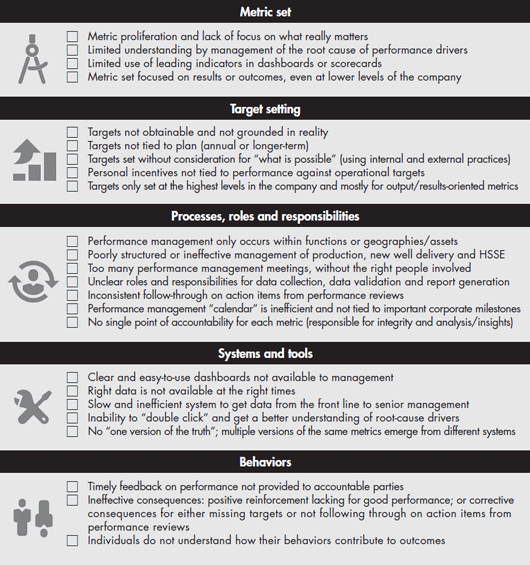
      A performance management system must do more than provide the right information in the right decision-making forums. It must also have an incentive scheme that fosters the correct behaviors and enables effective decision making (see the diagnostic checklist below). (For more about this, see the Bain Brief “What ‘good’ looks like: Creating an operational excellence management system.”)

      Performance management is not easy to get right. Organizations have perfected the art of overengineering and overcomplicating the metrics in use. Some blindly follow benchmarks and lose sight of what good performance looks like. Others let their organizational structure create silos and excuses, frustrating CEOs and executive leaders who soon see routine decisions being escalated to their level.

      In many ways, oil and gas is a simple business. Bain’s experience designing and implementing performance management systems for oil and gas companies suggests that much of the gain can come from focusing on a few vital metrics. These metrics can help produce consistent, high-quality forums for strategic discussions and decision making, which in turn lead to decisive action. Accountabilities for these actions must also be clear. Agreeing on the required behaviors—and the consequences of failing to follow them—is the glue that holds together successful performance management.


      A diagnostic checklist can help executives assess the need for a performance management tune-up
      oe-managing-performance-in-oil-and-gas-fig-02_embed


      For more on Bain’s Operational Excellence program, see these related Bain Briefs:

      • “Operational excellence: The imperative for oil and gas companies”
      • “Integrated planning: The key to upstream operational excellence”
      • “What ‘good’ looks like: Creating an operational excellence management system”

      John McCreery is a Bain partner in Singapore. He leads the firm's Oil & Gas practice in the Asia-Pacific region.


      oe-managing-performance-in-oil-and-gas-fig-01_full
      Authors
      • John McCreery
        Alumni, Houston
      Contact us
      Related Industries
      • Energy & Natural Resources
      • Oil & Gas
      Oil & Gas
      Big Data Analytics in Oil and Gas

      Converting the promise into value.

      Read More
      Oil & Gas
      Operational excellence: The imperative for oil and gas companies

      Rising complexity, costs and risks combine to make efficiency more important than ever. Change is challenging, but complacency isn’t an option.

      Read More
      Oil & Gas
      Operational Excellence: What Separates the Best From the Rest

      In a world with low oil prices, operational excellence becomes even more important.

      Read More
      Oil & Gas
      Oil & Gas M&A

      Why some companies are winning by a wider margin.

      Read More
      Oil & Gas
      Fueling the Future: How Business, Finance, and Policy Can Accelerate the Clean Fuels Market

      Why global clean fuel ambitions are outpacing investment, and what leaders must do to unlock capital and scale viable projects.

      Read More
      Published in May 2014
      Tags
      • Energy & Natural Resources
      • Oil & Gas

      How We've Helped Clients

      People and Organization Moving Beyond an Operating Model Redesign to Live the Model

      Read case study

      Sustainability An Oil and Gas Leader Creates a New Clean Energy Business

      Read case study

      Mergers and Acquisitions An OFS captures post-merger growth synergies

      Read case study

      Ready to talk?

      We work with ambitious leaders who want to define the future, not hide from it. Together, we achieve extraordinary outcomes.

      Stay ahead in a rapidly changing world. Subscribe to Bain Insights, our monthly look at the critical issues facing global businesses.

      *I have read and understand Bain’s Privacy Notice.

      Please read and agree to the Privacy Policy.
      Bain & Company
      Contact us Sustainability Accessibility Terms of use Privacy Modern Slavery Act Statement Cookie Policy Sitemap Log In

      © 1996-2026 Bain & Company, Inc.

      Contact Bain

      How can we help you?

      • Business inquiry
      • Career information
      • Press relations
      • Partnership request
      • Speaker request
      See all offices