

Brief

At a Glance
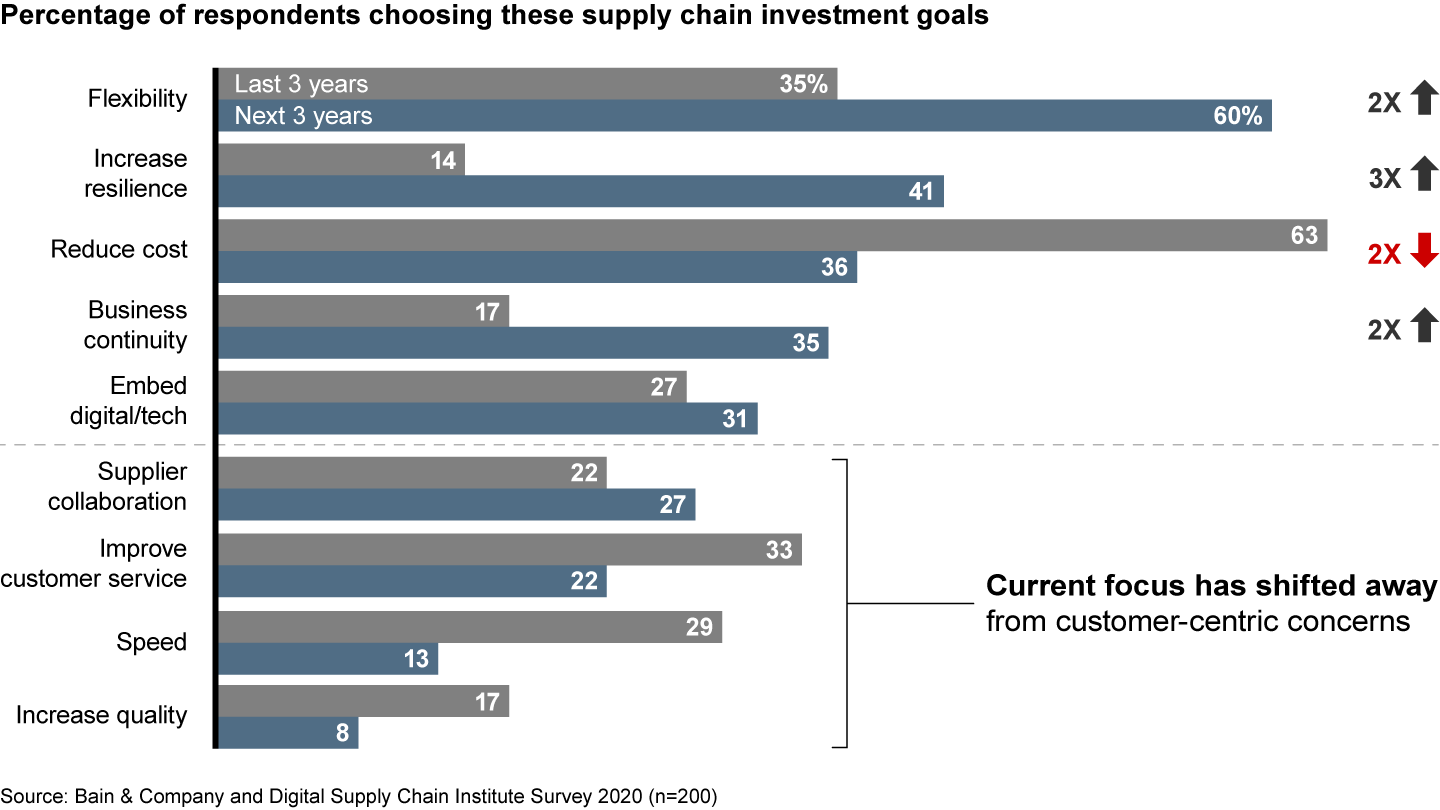
- Only 36% of senior executives rank cost reduction as a top three supply chain goal, down from 63% over the past three years.
- US industries depend on China and East Asia for $680 billion of imports annually.
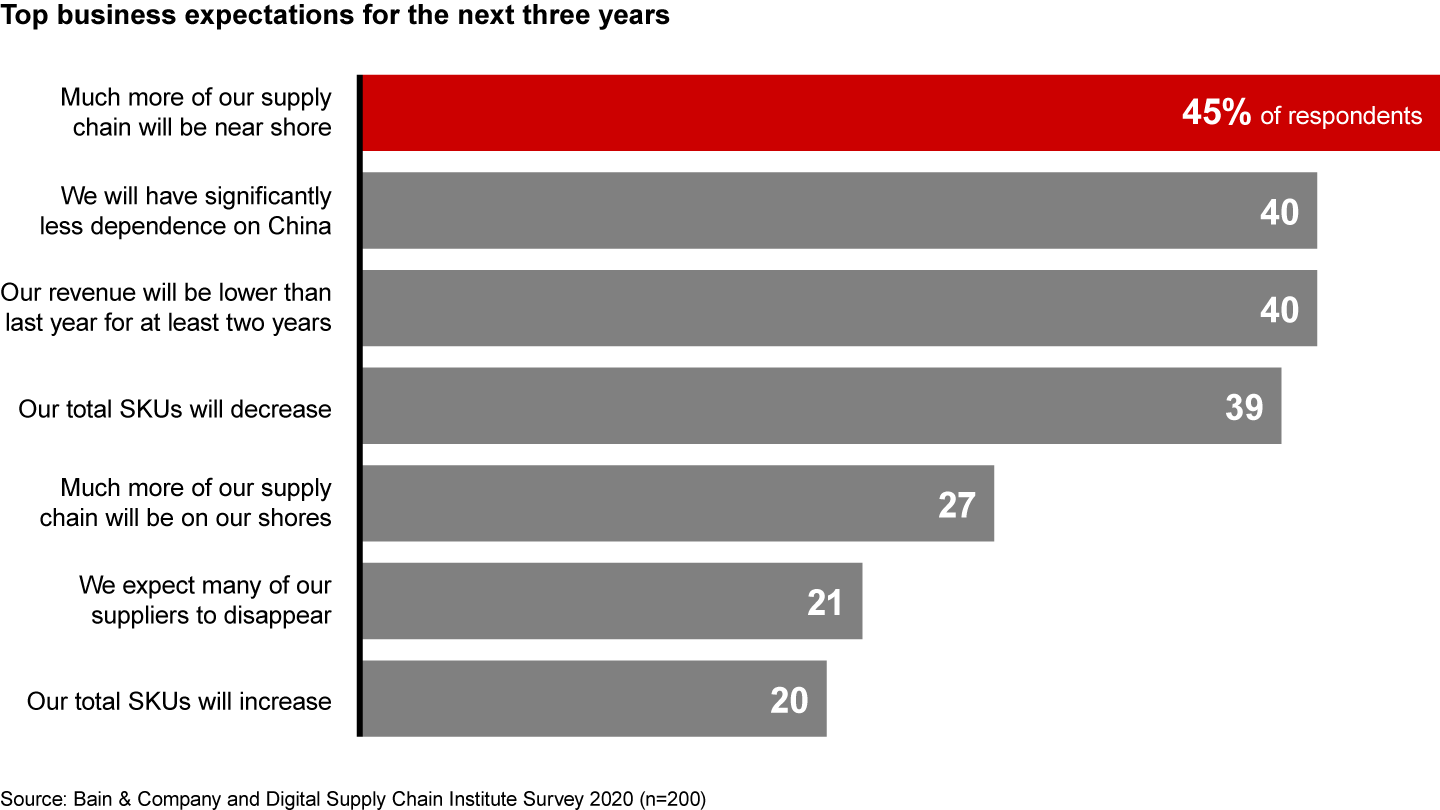
- To improve supply chain resilience, 45% of respondents plan to shift production closer to home markets in the coming three years.
As Covid-19 threw fragile global supply chains into disarray, many companies were stunned by their own vulnerability. The risk of depending on a supply base that is concentrated in one geographic region has been increasing over the past 30 years, but the pandemic quickly demonstrated how much chaos and pain one unexpected event could inflict.
It was a powerful wake-up call. The disruption triggered by Covid-19 has prompted leadership teams to confront a new era of supply chain volatility. Ongoing trade tensions between the US and China could unleash the next supply shock: the decoupling of US and China trade. While a sudden or a complete decoupling is not inevitable, the most likely long-term scenario in technology-related industries is two walled gardens in global trade: A China-allied tech trading bloc with its own supply chain and a US-allied bloc.

Macro Surveillance Platform
For more detail on the business implications of coronavirus from Bain’s Macro Trends Group, log on to the Macro Surveillance Platform. Learn more about the platform >
Bracing for an era of increased turbulence, leading multinationals are rethinking their supply chain strategies to lower the risk of disruption. In a recent survey of 200 global manufacturers by Bain & Company and the Digital Supply Chain Institute, executives ranked flexibility and resilience as their top supply chain goals. Only 36% of senior executives ranked cost reduction as a top three goal, down from 63% who saw it as a priority over the past three years (see Figure 1).
Figure 1

To improve supply chain resilience, 45% of respondents plan to shift production closer to home markets in the coming three years (see Figure 2). The good news is that automation has reduced the cost of manufacturing, eroding the labor arbitrage advantage that fueled decades of investment in offshore production. Humanoid robots now cost between $12,000 and $25,000, down about 95% from $500,000 in 2015. That means companies with processes capable of being automated such as consumer electronics can opt to move supply chains closer to home without raising costs significantly. A first wave of relocation already is underway, led by automotive and aircraft companies, as well as manufacturers facing rapid localization of their value chains through technologies such as 3-D printing.
Figure 2

In total, US sectors depend on China and East Asia for $680 billion of imports annually. Rough estimates suggest US production capacity of around $350 billion to $400 billion of goods per year might need to be repatriated if the US effectively severs trade relations with China, according to Bain’s Macro Trends Group. Of those leadership teams planning to relocate their supply base, most are looking to increase proximity to their customers.
First movers
In a fast-evolving geopolitical landscape, technology companies face the greatest and most imminent trade risk. The US and China already have started to create barriers to doing business across the two ecosystems. And the US government is increasing pressure on essential businesses, such as those involving data control and storage, to return critical manufacturing onshore. At the same time, tech customers in Europe and the US are asking manufacturers to provide a local source of supply to lower their own risks of disruption.
Trade tensions and other factors are also forcing Chinese tech manufacturers to relocate some of their production out of China or find alternative sources of equipment and materials for those imported from the US. Taiwan Semiconductor Manufacturing Company (TSMC), which designs and manufactures chips for Apple, for example, recently announced plans to invest $12 billion in a semiconductor factory in Arizona—its most advanced US chip plant.
It’s easier, of course, to move finished assembly out of China than a subtier technology supplier base. Shifting the production of commodities that require large, fixed-cost plants such as semiconductors, chemicals or heavy machinery can be particularly challenging. Technology companies that produce in China often rely on local supplier R&D hubs. Those that move both assembly and supply risk losing access to local research and development capacity and also may need to establish a new R&D base. In some cases, companies that relocate manufacturing may also risk losing access to the Chinese market.
Building resilient supply chains
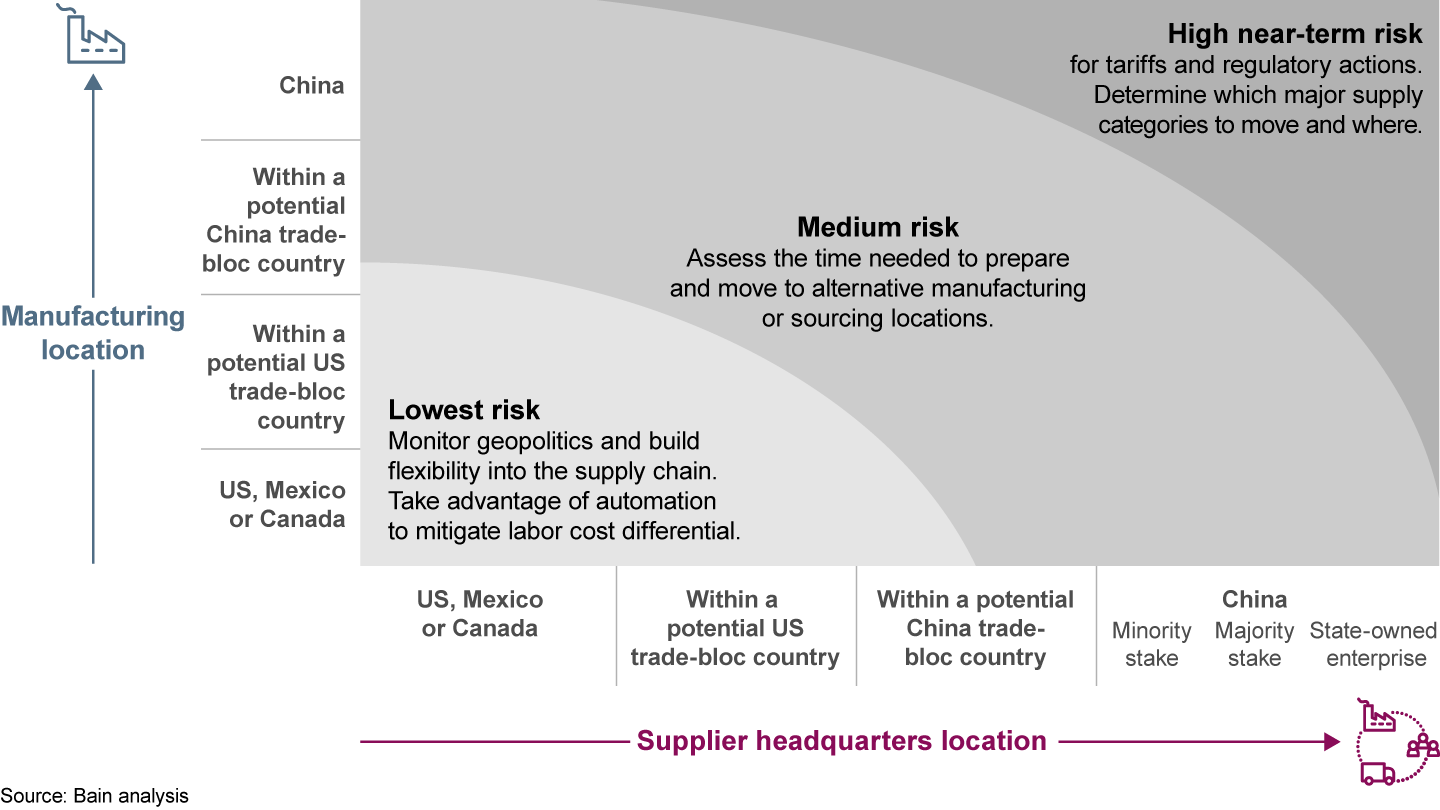
For the last 30 years, manufacturing companies have wrung out supply chain costs by disaggregating the various steps of the value chain, concentrating each step with a limited number of companies and geographies to improve economies of scale. As a result, most leadership teams lack sufficient supply chain visibility to assess their geopolitical and geographical risks. Before investing in a new supply chain strategy, successful leadership teams evaluate their supplier and contract manufacturer risk according to two factors: the country where goods are produced and the supplier’s headquarters location (see Figure 3).
Figure 3

Once leaders understand their risk exposure, they start building resilience into their value chains in a two-step process. First, they quickly add flexibility to the supply of finished goods and high-risk subcomponents where possible, to limit immediate risks and satisfy customers. Second, they take a strategic approach to rethinking the value chain from end to end. That includes deciding the pace of change and periodically reviewing decisions based on external conditions and internal capabilities. We look at these steps in more detail below, along with examples of companies pioneering the shift to supply chain resilience.
Boost flexibility
The first priority in making supply chains shock-proof is increasing flexibility for supplying finished goods and high-risk subcomponents. For many companies, aligning a new production location with demand can deliver significant benefits, particularly in industries where demand is rising even through the downturn, including medtech and certain consumer products. Leading consumer goods companies are adding manufacturing capacity in North America to take advantage of this recent spike in demand.
Technology companies have begun responding to national mandates or government incentives to move manufacturing out of China. One leading global tech firm with a heavy concentration of manufacturing in China, including Tier 2 and Tier 3 suppliers, recently decided to move production capacity for its primary product lines aimed at filling US demand out of China in the next two years. To prepare for the move, which includes final assembly and some subassembly, the company is building greater flexibility into its supply chain. Some products will be made in Mexico and others in Southeast Asia. The company was already hit hard last year by rising tariffs. Now the potential decoupling of US and China trade exposes it to significant ongoing geopolitical risk.
Covid-19 prompted the leadership team to increase visibility and traceability across the entire supply chain, including risks to subcomponents and individual parts. In some cases, it discovered that there was no easy way to boost flexibility. For example, developing a supply base outside China for printed circuit boards would require suppliers to build a multibillion-dollar fabrication plant. However, depending on Chinese supply for some components would leave companies vulnerable to a possible US ban on imports. To encourage suppliers to invest in facilities outside China, the company partnered with them to help develop capable workforces in Mexico and East Asia, near the new final assembly plants. It also pledged to help them achieve cost parity in the new locations.
For any company, shifting a large volume of production out of China is a complex undertaking. Executives have to persuade not only original equipment manufacturers to move, but large parts of the supply base, some of whom have had little incentive to shift production to another part of the world. And many countries don’t have the capacity and infrastructure to handle all the volume, so manufacturers often have to piece together a solution across multiple neighboring countries.
Chinese and other Asian tech companies have a parallel set of challenges. Many have started hedging against possible restrictions on US exports and imports by setting up manufacturing sites outside China. Foxconn, a key supplier of Apple’s iPhone, is gradually shifting some of its mainland China production to new hubs in India, Southeast Asia and the Americas in response to customer demand. In August, the company said its total manufacturing capacity outside of China had risen to 30%, up from 25% a year ago.
Rethink end-to-end network strategy
For each value chain, leadership teams need to properly balance risk and resilience at the lowest total landed cost. This includes decisions on single vs. multiple sourcing, where to manufacture at each stage of assembly, and proximity to customers. They also need to determine whether to produce in-house or outsource, taking into account variables such as national incentives and declining manufacturing costs. Successful companies revisit their value chain choices regularly, especially in turbulent times.
Take the case of a global technology company, which was serving multiple sectors, including Western governments, and was sourcing many key components from China. Trade tensions and the Covid-19 pandemic led to acute supply chain disruptions and prompted some customers to insist that all future inputs to equipment were non-Chinese. Following a risk-assessment exercise, the leadership team decided to move all of its China- and Hong Kong-based suppliers for a premium product line with a largely North American market to Vietnam or Malaysia. It’s also seeking dual sourcing for all high-risk categories of components and equipment with embedded data.
The executive team’s plan to build resilience into its supply chain will take up to two years. Moving critical component manufacturing was an important first step. However, much of that production still has only one source, leaving it vulnerable to natural disasters, strikes or political unrest. To increase resilience, the leadership team is also considering expanding its North American manufacturing base and is seeking suppliers that have two or three plants, with some outside China.
Leading Chinese companies are also moving fast to adapt their value chain strategies to a more volatile era. A large Chinese medtech company dependent on Western suppliers for components, software and chips has decided to invest in a global manufacturing footprint. The company sells 50% of its output overseas and risks a possible ban on exports to some countries. Customers already have begun asking the company to move final production outside China. To ensure access to global markets, the company is also likely to invest in an R&D center outside of China.
Western companies that produce in China for a largely Chinese customer base also risk getting caught in the US–China crossfire. One global manufacturer has moved final assembly for equipment parts out of China at US customers’ demand. It’s also reconsidering plans to invest in a multibillion-dollar component plant in China, even though Chinese customers will buy most of its output. The challenge is, if the company cannot export the remaining 25% of its production, the economics of the plant don’t work. As a result, the leadership team is considering alternative locations in Asia, even though China still has the best manufacturing ecosystem in terms of labor and talent.
Balancing cost and risk
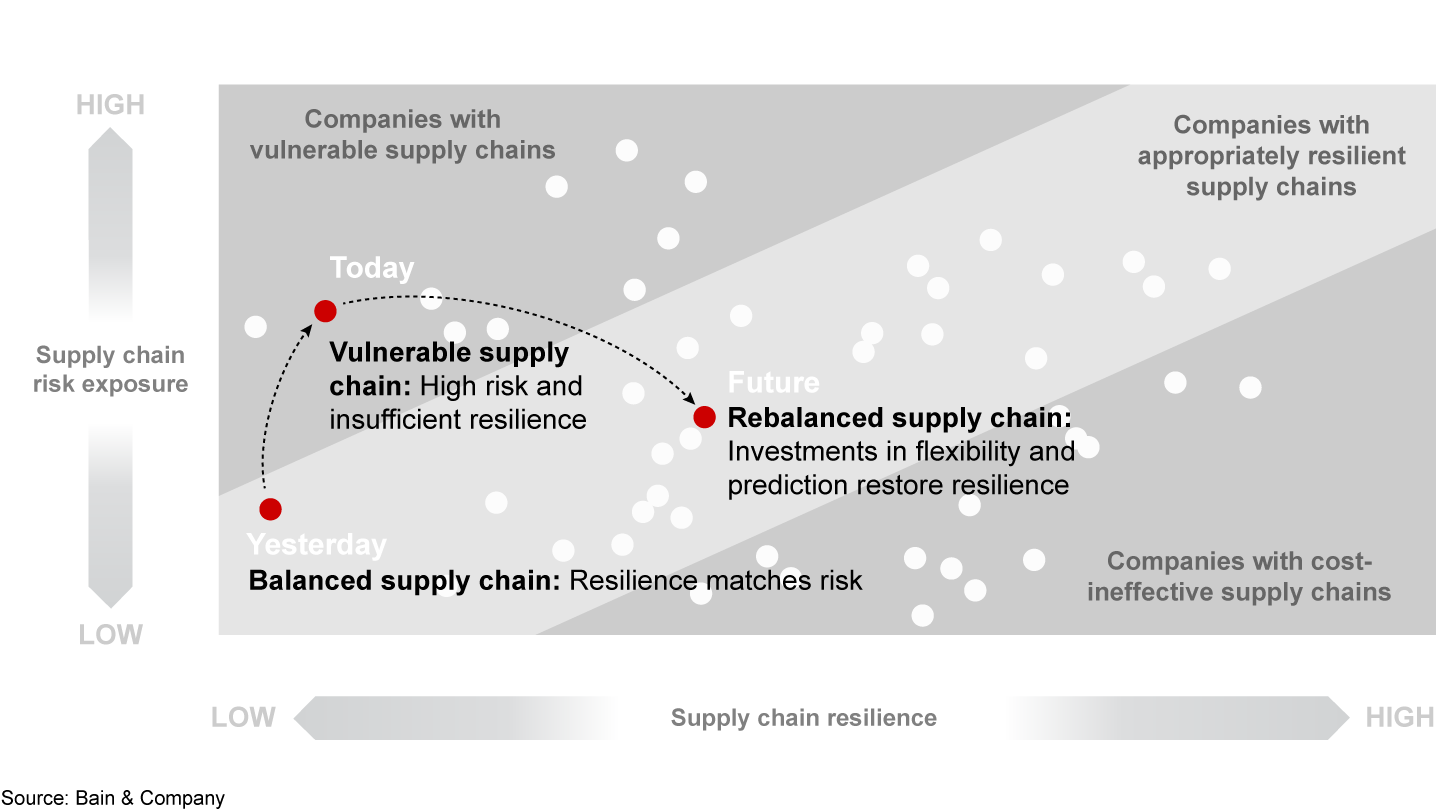
Of course, resilience doesn’t eclipse every consideration. As leadership teams start to understand where they need flexibility, they face important trade-offs on cost. Investing in too much flexibility can render a company uncompetitive. As they look to reshape supply chains for the future, successful companies determine how much resilience they need, where it matters most, and what they can afford (see Figure 4).
Figure 4

Resilient and flexible supply chains can be a powerful defensive hedge, but also a source of competitive advantage. Leaders make the most of options such as capacity buffers, digital infrastructure and nimble teams to react faster and more efficiently than their peers.
The investment to build and maintain these capabilities varies, depending on a company’s need for responsiveness and efficiency, as well as the level of industry competition. That’s the reason the roadmap for resilient supply chains must be linked to a company’s long-term business strategy. For example, a high-growth business that has high margins and short product life cycles, and is dependent on components coming from widely distributed sources such as high-end cell phones, will require a different type of supply chain resilience than a hypercompetitive low-margin business, such as clothing or toys, that relies on imported finished goods.
Executives grappling with high supply risk can ask a few questions to determine the pace and urgency of their efforts. What is the cost of moving too early vs. too late? If I invest in adding resilience now, are there first-mover advantages? Can we secure prime locations, access to logistics, ports, talent and suppliers?
Geopolitical volatility and market turbulence will transform supply chain management in the coming decade. Leadership teams that invest in strategies to increase supply resilience will simultaneously create a new source of competitive advantage.

Coronavirus
The global Covid-19 pandemic has extracted a terrible human toll and spurred sweeping changes in the world economy. Across industries, executives have begun reassessing their strategies and repositioning their companies to thrive now and in the world beyond coronavirus.
Published in November 2020