

Brief

At a Glance
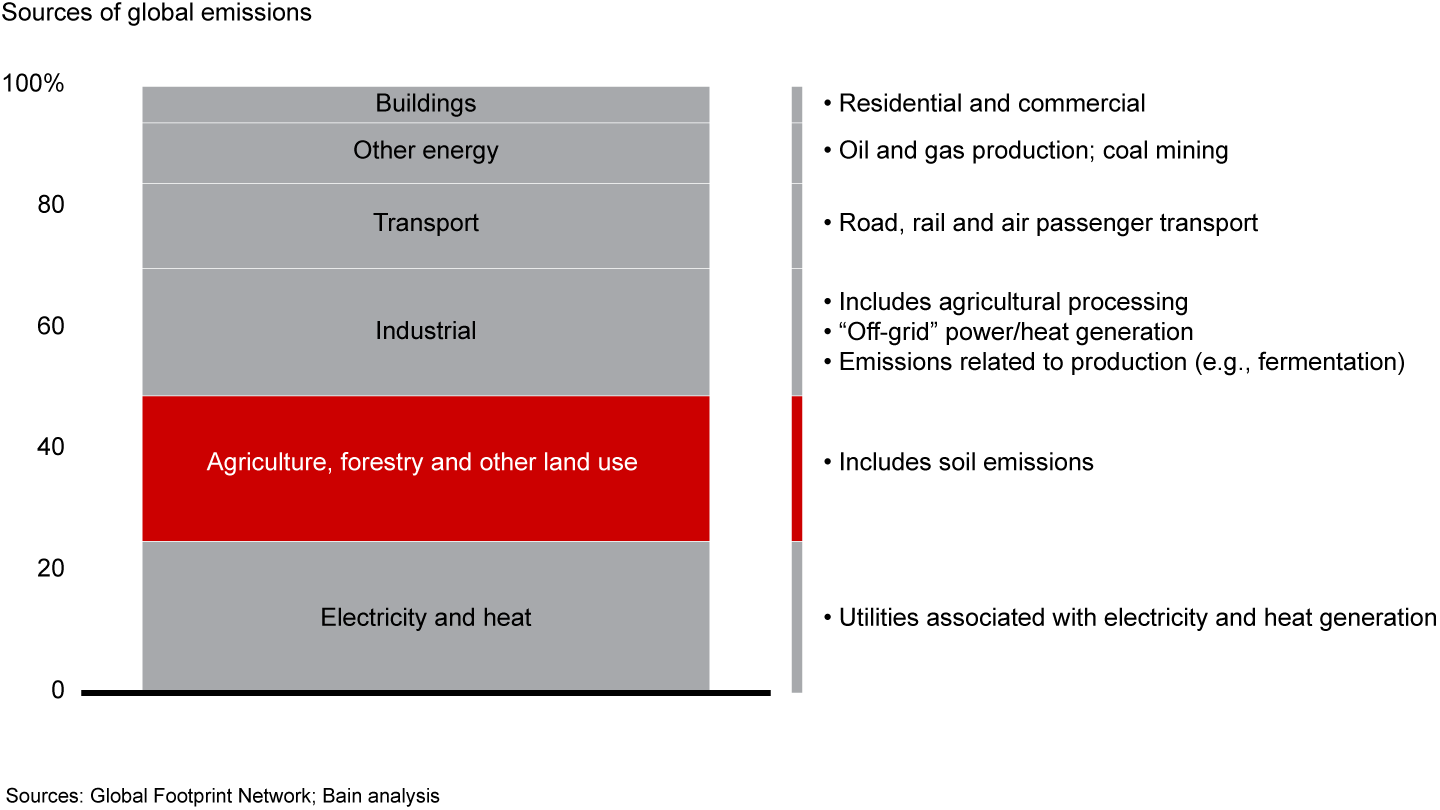
- Agriculture and other land uses account for nearly 25% of global carbon emissions.
- Leading agricultural processors are taking steps to mitigate climate change, with more companies adopting science-based targets.
- Achieving both positive financial returns and climate improvement often requires new ways of evaluating the costs and benefits of energy-saving investments, such as combined heat and power projects.
- To support these investments, companies need to overcome ingrained processes and cultures that can keep innovative ideas from becoming a reality.
Agribusiness has a critical role to play in efforts to mitigate the potentially devastating effects of climate change. Agriculture, along with forestry and other land uses, accounts for nearly 25% of global carbon emissions (see Figure 1). Agricultural processing and packaged food production—which includes operations such as milling, crushing and refining, as well as raising herds and preparing animal protein for consumption—is part of the broader set of industrial activities that account for another 21% of global emissions. Processors further contribute to greenhouse gas emissions through their intense dependence on transportation and their consumption of electricity and heat derived from hydrocarbons.
Figure 1

Leading agricultural processors understand the importance of mitigating climate change. They depend on ready access to reliable sources of crops and livestock. Rising air and water temperatures can significantly reduce the amount of land suitable for planting and can markedly decrease crop yields. Events such as floods, droughts, heat waves, wildfires and hurricanes can have disastrous effects on growers and ranchers. From the perspective of agricultural processors, climate change isn’t just bad for the planet; it’s bad for business.
Processors have the most influence over Scope 1 emissions, which stem from a company’s own activities, including the generation of heat, electricity and steam from the combustion of fuel; the physical and chemical processing of commodities, such as fermentation; and the operation of company-owned vehicles. Companies can mitigate Scope 1 emissions by investing in processes that produce the same or greater output while consuming less energy, or by switching to energy sources that have a lower carbon impact.
Beyond their own carbon footprint, processors can have an indirect impact on emissions generated by Scope 2 activities, which involve electricity and other types of energy purchased from third parties such as utilities, and on Scope 3 emissions, which stem from activities all along the agribusiness supply chain but outside companies’ own four walls—from crop cultivation and livestock production on one end to the distribution, sale and consumption of food on the other. (For a detailed discussion of how companies can collaborate to reduce carbon emissions along the food value chain, see the Bain Brief “Working with Suppliers for Sustainable Food Supply Chains.”)
Overcoming internal barriers
When it comes to reducing Scope 1 emissions, our experience shows that companies often confront a common set of internal barriers:
- They tend to view carbon reduction solely through the lens of energy efficiency and take an incremental, rather than a step-change, approach to mitigation.
- They are stymied by investment hurdle rates and other internal mechanisms designed to promote “fairness” in capital allocations.
- They find it challenging to make the behavioral changes necessary to ensure that the identification of carbon-reduction opportunities becomes an integral part of the corporate culture.
Leading agricultural processors have been investing in energy efficiency for years, and they sometimes assume there are no additional major projects that will generate the kinds of environmental results that make them worth pursuing. As a result, they opt for smaller efforts, the kind likely to produce only incremental improvements in both energy efficiency and carbon emissions.
Companies have longstanding formulas in place for evaluating the projected financial returns on a capital investment, but they don’t always incorporate carbon emissions into their calculations. For example, when one major North American agricultural processor looked into the possibility of replacing a coal-burning boiler with a new natural-gas-burning boiler, it viewed the investment solely in the context of project economics, including how the new boiler would affect the cost and amount of energy consumed.
The company separately assessed the impact the new boiler would have on emissions, as part of its standard carbon measurement and reporting process. The lack of an integrated evaluation meant there was no easy way for the company to analyze the overall benefit of installing a new boiler—a project that might be slightly less attractive financially than a number of other capital investment opportunities available at that point in time, even if it would be substantially more attractive than any of those from an emissions perspective.
Companies can be daunted by the sheer size of the financial commitment required for meaningful energy-efficiency and carbon-reduction projects. Upgrading or replacing a plant’s heating system with a combined heat and power (CHP) system, for instance, could consume a business unit’s capital allotment for an entire year. Business unit managers oftentimes don’t even bring up energy-saving investment ideas, because they are skeptical that the investment will be approved by top management or that it will meet companywide hurdles for internal rate of return (IRR).
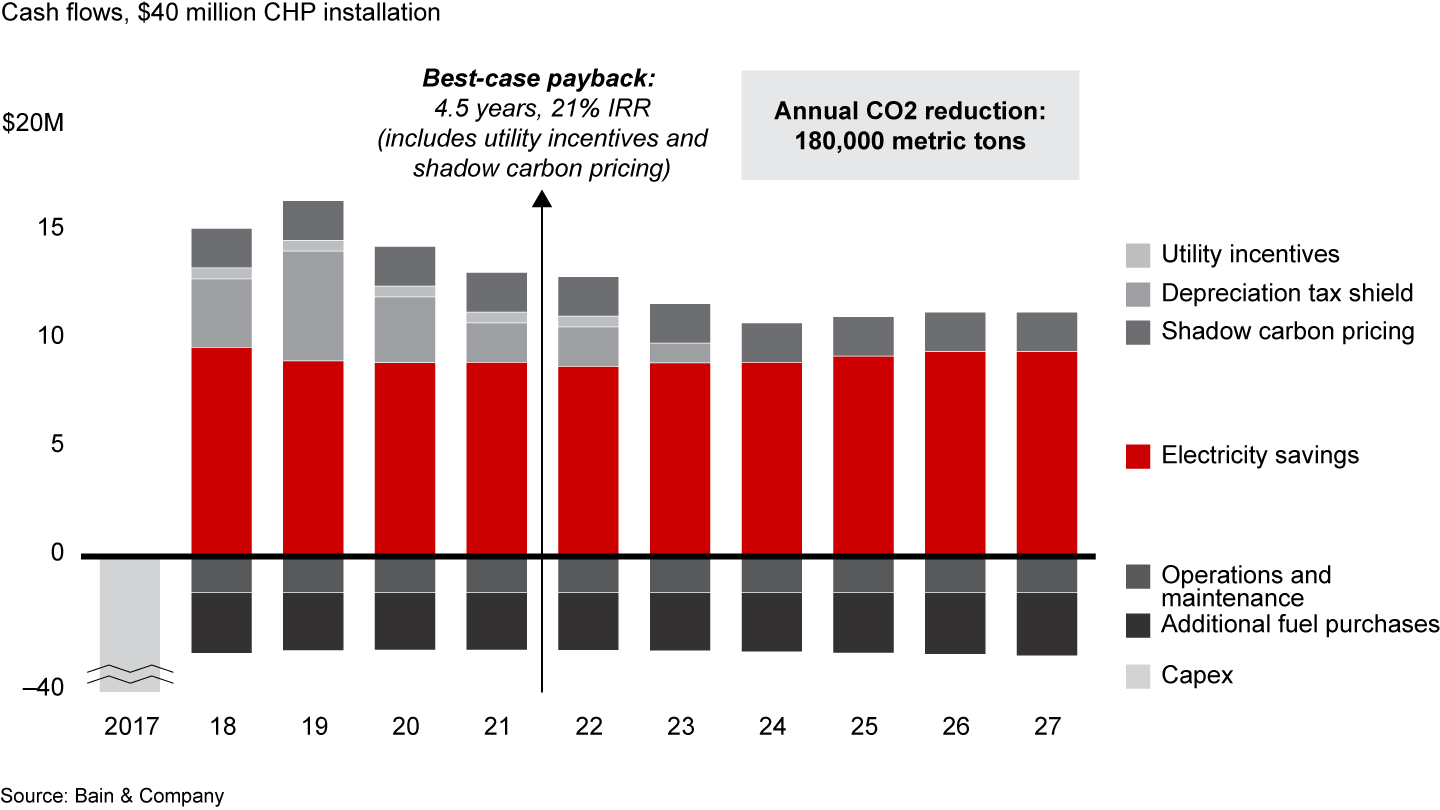
One large-scale agricultural processor that operates plants requiring significant amounts of heat had a cost of capital of 10% per year and hurdle rates of about 15% per year, which it applied to both cost-focused and growth-focused projects. One of the company’s business units determined it could install a CHP system, at a cost of $40 million, which would result in a step-change reduction in the unit’s carbon footprint, decreasing the emission of carbon dioxide and other gases by 180,000 metric tons per year. The project would generate an IRR of 14% (one point below the hurdle rate) and use approximately 55% of the $75 million in capital allocation the unit expected to receive for the two years it would take to implement the project.
The company was faced with a choice: Would it proceed with the CHP project and achieve a significant carbon emissions victory, even though that would mean accepting a lower rate of return and would require the allocation of more capital to the business unit for that year? Or would it cleave to strict IRR and allocation guidelines and reject the project?
After careful analysis, the company embraced the CHP project. As part of its far-reaching review, the company also discovered that the growth-oriented capital investments in this business unit, and in the company more broadly, which had projected IRRs of 16% per year or higher, were actually delivering returns of 12% or lower. That meant the CHP plan wasn’t out of line with other investments. In addition, when the company factored in fuel-switching incentives available from the local utility (but previously unknown to management), the projected IRR for the CHP project rose to 16%. When the company assigned a monetary value to avoided carbon emissions—using a method known as shadow carbon pricing—the projected IRR rose even higher, to 21% (see Figure 2).
Figure 2

However, at many companies, this sort of action would be so against the grain of established processes that it would be nearly impossible to execute. Some potential carbon-mitigation projects never reach the proposal stage. In our experience, operations and engineering heads at the business unit level often have good ideas for energy-saving and carbon-reduction improvements, but they can be reluctant to suggest them to top management.
Working toward science-based targets
Companies can overcome such internal barriers by making carbon reduction a clear priority; by publicly celebrating emissions-reduction projects, both for their financial performance and for their carbon mitigation; and by establishing processes to ensure that the best energy-saving ideas get proposed, analyzed, reviewed and, where appropriate, approved.
One way agricultural and food processors can affirm their commitment to greenhouse gas reduction is by joining more than 500 companies across industries and around the world in the Science Based Targets initiative (SBTi). Under SBTi guidelines, which are set by a group of international nongovernmental organizations, companies pledge to do their part to ensure that global temperatures do not rise by more than 2 degrees Celsius (compared with preindustrial temperatures), in line with the goals articulated by governments in the 2015 Paris climate accord.
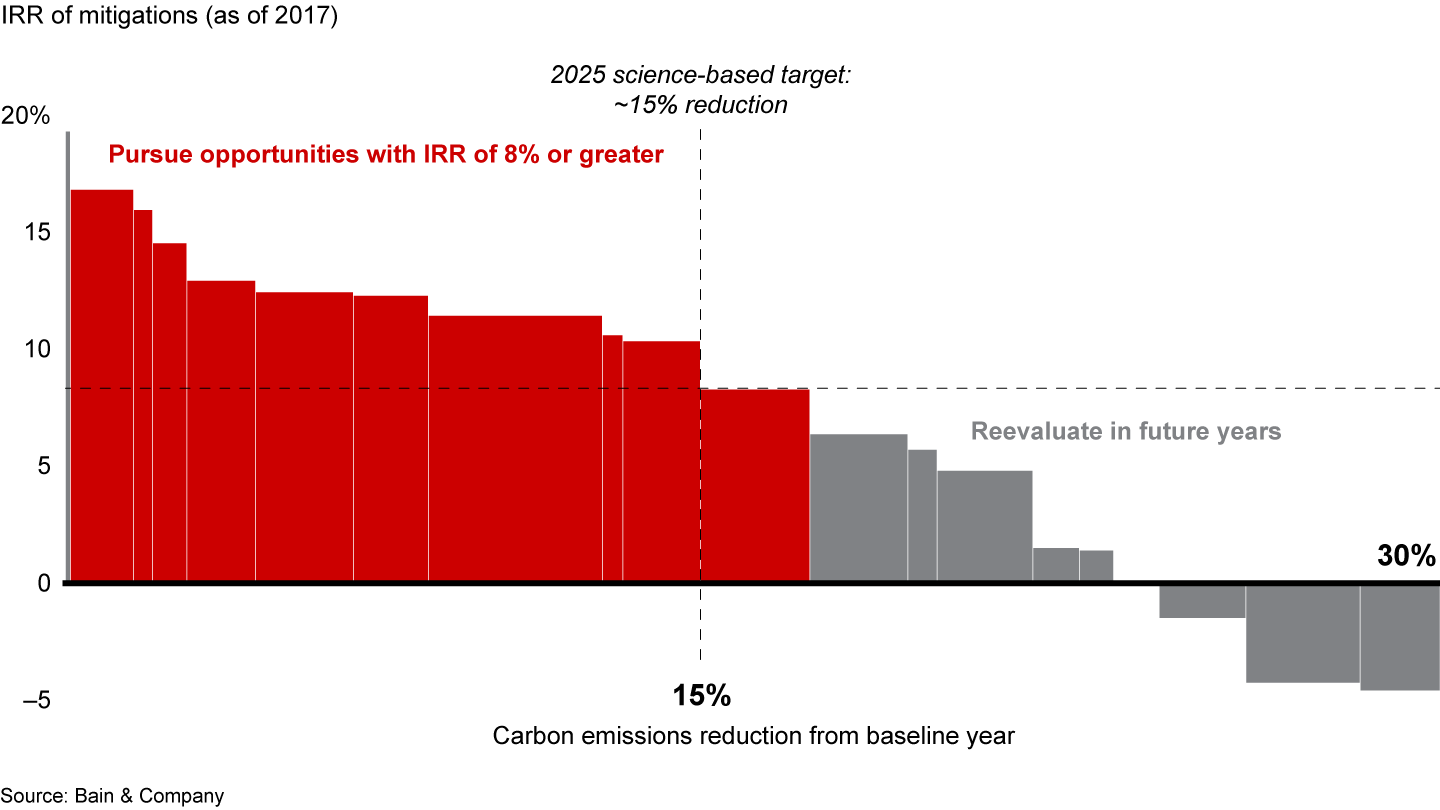
In our experience, companies that commit to science-based targets and communicate those priorities throughout the organization can find ample, value-accretive opportunities to reduce Scope 1 and Scope 2 emissions. We believe many companies can pursue initial phases of projects that have the potential to cut emissions by about 15% while producing an IRR of at least 8%. The pace of implementation depends on the financial outcomes the company is willing to accept, as well as the likelihood of changing return rates in future years as technology or other costs decline (see Figure 3).
Figure 3

Creating truly transformative emissions reductions involves rethinking deeply ingrained beliefs and practices. To tackle this challenge, leading companies are setting up high-level sustainability task forces, composed of business leaders and experts in the areas critical to deployment—including science, engineering, finance, communications and marketing, and supply chain management. These committees aim to foster frequent and in-depth dialogue among the constituencies within the company that hold the “knowledge key” to the identification and promotion of investment opportunities for greenhouse gas reduction.
Once top management sets the tone on sustainability and gets the right people talking to each other, companies can make informed decisions about investments that will increase energy efficiency, reduce emissions and provide acceptable rates of return.
In order to ensure that a sufficient pool of capital is available for attractive projects, some companies create a “green fund,” or a separate investment budget for sustainability—always remembering that these funds must generate adequate returns. Others calculate shadow carbon prices, use actual carbon prices in jurisdictions where they exist, or attempt to quantify the financial risk of future carbon regulation, and factor those variables into their capital decisions.
Major levers for curbing emissions
Broadly speaking, processors can invest in four types of operations to reduce Scope 1 and Scope 2 emissions:
- Energy-efficiency projects involve upgrading industrial processes to use less heat and electricity, via capital investments such as efficient lighting, improved insulation of buildings and of equipment, energy-efficient motors and engines, heat-recovery equipment, and heat exchangers.
- Combined heat and power, or cogeneration, typically harnesses steam left over by electricity generation to produce heat that is then used in industrial processes, enabling companies to reduce the amount of electricity they buy from the grid—or even sell electricity back to the grid. Such investments can be particularly powerful in reducing carbon emissions when companies have ready access to natural gas, biological methane or renewable biomass.
- Combustion fuel switching means investing in equipment that burns more carbon-efficient fuels—for example, natural gas instead of coal.
- On-site and off-site renewables replace electricity purchased from the grid with clean power generated from solar panels, wind turbines and other sources. Companies can also enter into virtual power purchase agreements (VPPAs).
In all four areas, many companies have already made the obvious investments in energy efficiency and emissions reduction. Processors around the world, especially outside the US, have considerable experience with CHP and cogeneration, and many have switched to natural gas to take advantage of relatively low fuel prices. In the US, some companies remain reluctant to invest in CHP, even in plants that generate a substantial amount of heat. While installing CHP systems could markedly reduce carbon emissions, companies often shy away from these projects because they consider the IRR to be insufficient. One reason for the relatively low returns from CHP is that, in many jurisdictions, even plants that generate most of their own electricity have to remain connected to the grid for the rest of their supply, meaning they must pay standby charges to the local utility.
However, the economics of energy usage are changing. In some US states, utility regulations have evolved to promote greater flexibility in self-generation, just at a time when utilities are seeking opportunities to phase out coal-fired plants. That creates coinvestment opportunities for utilities and their large customers, prompting some companies to take a fresh look at CHP.
Other changes in energy economics have made carbon-mitigation investments easier to justify financially. The cost of generating electricity from wind and solar has fallen steadily in the past decade, bolstering the case for switching to renewables. And, along with fuel-switching incentives provided by utilities, the US federal government and several states offer tax and financial incentives that can improve the economics even further.
In addition, some agricultural processors have slack capacity and no longer need to run their plants around the clock. That opens up the possibility of revisiting strict power availability requirements. These requirements, originally dictated by market needs, can only be met by public utilities, which then pass on the costs to their customers in the form of standby charges. In some cases, industrial sites have gone entirely off the grid, thus avoiding standby charges altogether. These developments mean that, when companies look across their facilities, they may find fuel-switching opportunities that rise to the surface now that carbon mitigation is a more visible priority.
Benefits of virtual power purchase agreements
Processors can also take advantage of new tools, such as VPPAs, to help with both energy efficiency and carbon mitigation. With a VPPA, a company can support the development of a renewable energy project by pledging to purchase the energy generated by the project at a specific price in the future. This enables the project to move forward with financing and construction. Its generating capacity does not have to be linked to the company’s facilities or even to the grid the company is drawing from.
With a VPPA, the facility that generates the electricity essentially collects revenue from the sponsoring company and sells the generated electricity to the grid. The sponsoring company collects or pays the difference, depending on where energy prices are vs. the original agreement, and also collects the associated renewable energy credits (tradable instruments that represent a fixed amount of electricity generated from renewable sources such as wind or solar).
Companies sometimes prefer VPPAs to simply buying renewable energy credits outright, because with VPPAs they can achieve “additionally”—meaning there is more renewable energy capacity online than there was previously, thanks to their decision. Moreover, VPPAs allow companies to support solar and wind installations in optimal locations; they aren’t restricted to placing those installations on their own premises.
As is the case with CHP, companies that pursue VPPAs often have to overcome internal resistance. VPPAs can increase a company’s long-term exposure to energy prices, which may pose a conflict with its risk management guidelines. As with other emissions strategies, companies that have the most success with VPPAs build carbon-mitigation goals into their decision-making process.
Agricultural processors recognize the impact that climate change can have on their business—and also the role they can play in slowing its progression and tempering its effects. For years, they have invested in energy-efficiency projects, which can have the added benefit of reducing carbon emissions. But their work is far from done.
Reaching the next level of mitigation often involves challenging long-held assumptions and conventions about investment priorities and capital allocation. Our experience shows that it’s worth the effort: Opportunities abound for companies to use energy more efficiently and emit less carbon, all while producing positive financial returns. When companies take these steps, their shareholders will thank them—and so will the planet.
Fernando Martins is an expert vice president with Bain & Company’s Sustainability & Corporate Responsibility practice and is based in Chicago. Sasha Duchnowski is a partner with the Sustainability & Corporate Responsibility practice and is also based in Chicago.
Published in March 2019