

Brief

At a Glance
- India’s manufacturing exports have traditionally grown between 5% and 10% pre–Covid-19 years, but exports have seen tremendous growth over the last two years, with a compound annual growth rate (CAGR) of 15%. India has reached $418 billion of manufacturing exports in fiscal year 2022 (FY22).
- India’s export growth has been propelled by six megatrends that got fast-tracked during the last two years, driving overall export attractiveness for multiple sectors in India. The six megatrends are supply chain diversification, advantages for India in certain manufacturing sectors, government initiatives to bolster manufacturing in the country, capital expenditure infusion into manufacturing sectors, heightened merger and acquisition (M&A) activity, and private equity/venture capital (PE/VC)-led investment in manufacturing.
- Chemicals, pharmaceuticals, electronics, automotive, industrial machinery, and textiles (among others) are expected to propel manufacturing exports to reach $1 trillion by FY28.
- To capitalise on this opportunity, Indian companies should focus on having a clear export strategy, the right execution chops, the right partnerships for enabling exports, and an optimal capital expenditure (capex) efficiency focus to build manufacturing capacity.
India is on the cusp of structural shifts in the manufacturing sector. Despite having the sixth-largest economy in the world, contributing to 3.1% of the GDP (see Figure 1), India’s export contribution to global trade is only 1.6%. That is going to change, buoyed by the government’s robust policy thrust, initiatives like production-linked incentives (PLIs) to encourage local manufacturing, and fresh investments that are pouring into the country’s core industrial sectors. As India emerges as a hub for manufacturing exports, cutting-edge technology and best-in-class workforce are being deployed in the country’s manufacturing domain, giving further impetus to India’s strengths on cost efficiency. Manufacturing is emerging as an integral pillar in the country’s economic growth, thanks to the performance of key sectors like automotive, engineering, chemicals, pharmaceuticals, and consumer durables.
Figure 1
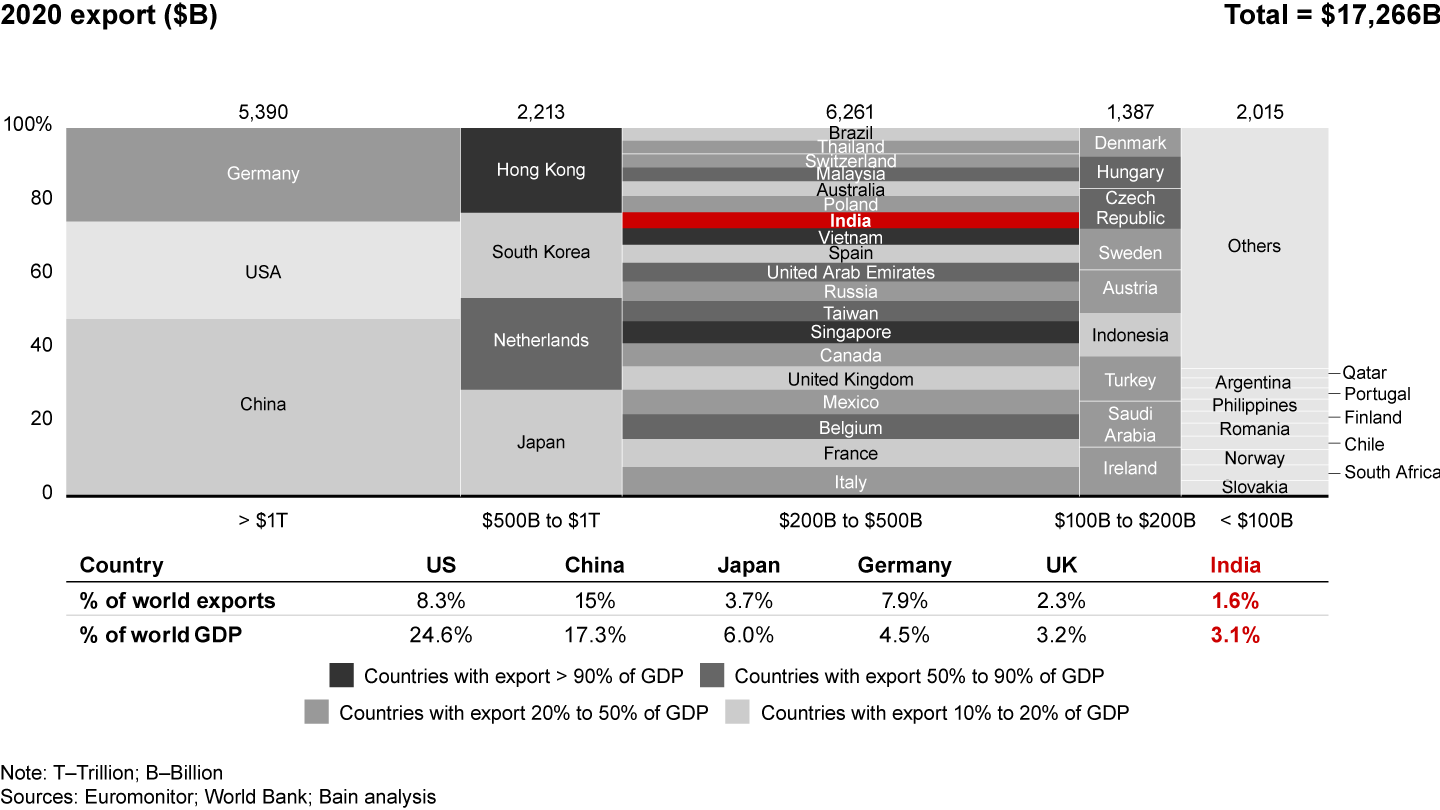

The positive developments in the manufacturing sector, driven by production capacity expansion, government policy support, heightened M&A activity, and PE/VC-led investment, are creating a robust pipeline for the country’s sustained economic growth in the years to come. India is now the sixth-largest manufacturing economy in the world, and with a high impetus on supply chain diversification, leading global players are setting up their manufacturing bases in the country. Despite possible recessionary and inflationary pressure, fundamentals for India’s manufacturing sector remain strong. The mega-trends will continue to play out during the course of this decade which will accelerate India’s manufacturing-led exports.
Can India sustain the recent exports surge over the next decade?
India’s manufacturing exports for FY21–22 reached an unprecedented $418 billion, an overall growth of more than 40% compared to the $290 billion from the previous year. Last year’s exports reflect a surge not just in comparison to the pandemic-hit FY20–21, but also the pre-pandemic peak of $328 billion in FY18–19. While manufacturing exports have traditionally grown between 5% and 10% pre-pandemic, the sharp rise in exports last year—particularly the past few months—is attributable to the significant increase in share of manufacturing in the country’s exports. For instance, the manufacturing-led exports in January, February, and March of last financial year were $34.5 billion, $34.5 billion, and $40.4 billion, respectively, a rise of more than 20% compared to FY20–21’s first quarter. Significantly, the recent growth in Indian exports is driven by sector-specific gains (top 15 export categories accounted for over 72% of total export) that have been enabled by a global focus on supply chain resilience as well as specific policy initiatives to promote exports.
Building on the competitive advantage of a skilled workforce and lower cost of labour, the manufacturing sector is also witnessing an increased inflow of capex and heightened M&A activity, leading to a surge in manufacturing output and resultant increased contribution to exports. Notably, the current rise in exports is consistent with India’s potential for growth and economic vision. Driven by growth in priority sectors and propelled by favourable megatrends in manufacturing, India is expected to scale up its manufacturing exports to $1 trillion by FY28. To capitalise on this opportunity, Indian companies should focus on having a clear export strategy, the right execution chops, optimal capital efficiency, and the right partnerships.
Six megatrends that are shaping India’s manufacturing sector
India’s growth in manufacturing exports has been propelled by six transformative megatrends that have been fast-tracked during the past two years (see Figure 2):
Figure 2
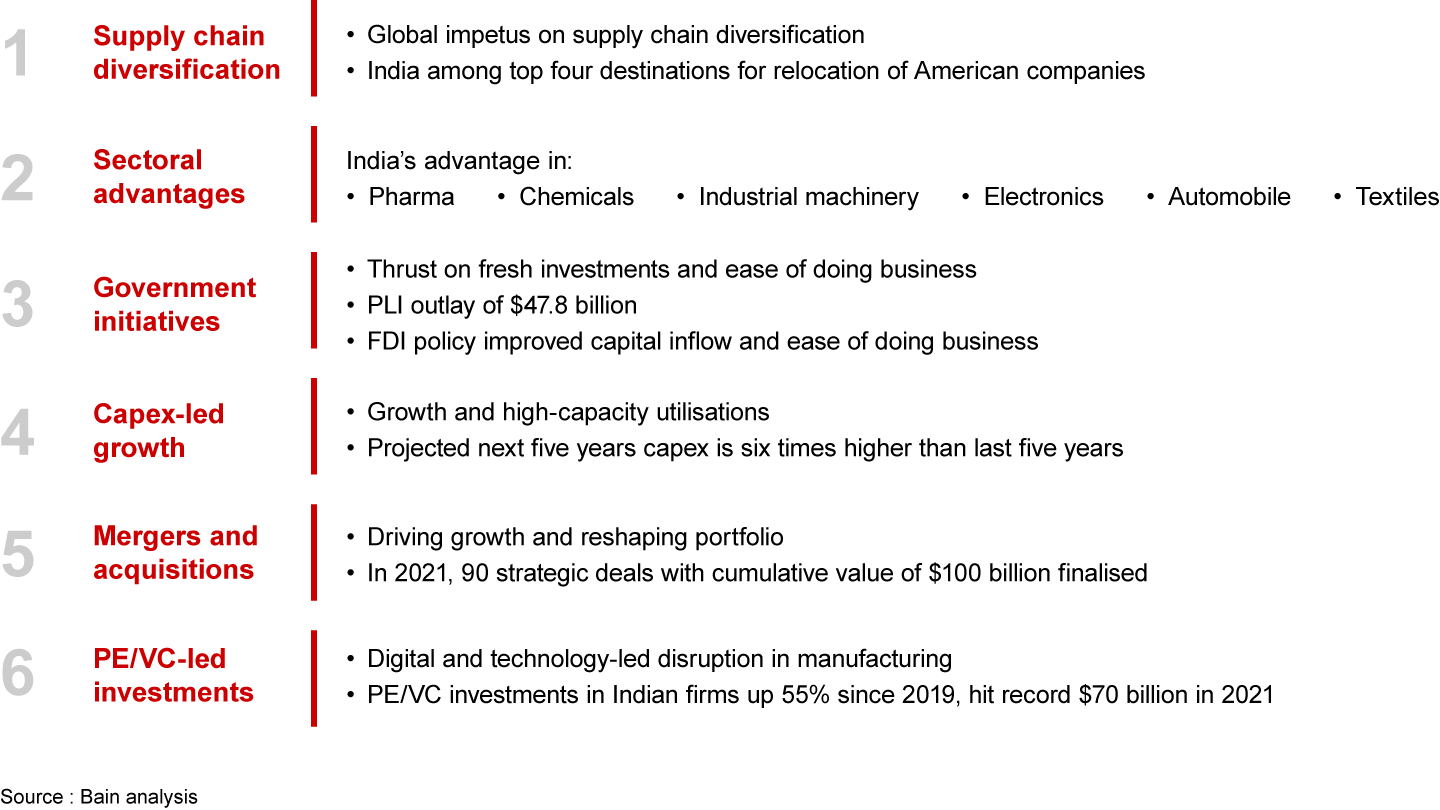

1. Supply chain diversification: The post-pandemic diversification of the global supply chain had a positive impact on the growth of India’s exports. While big Asian economies like Japan began looking towards India as an alternative to China for sourcing their requirements, American companies considered India among the top four destinations for relocation of operations. Moreover, in 2021, CO2 emissions in China were 6% (almost 500 metric tons) above 2019 levels—while India’s emissions were 1.4% (30 metric tons) above 2019 levels, helping companies shift to India to comply with their environmental, safety, and health standards.
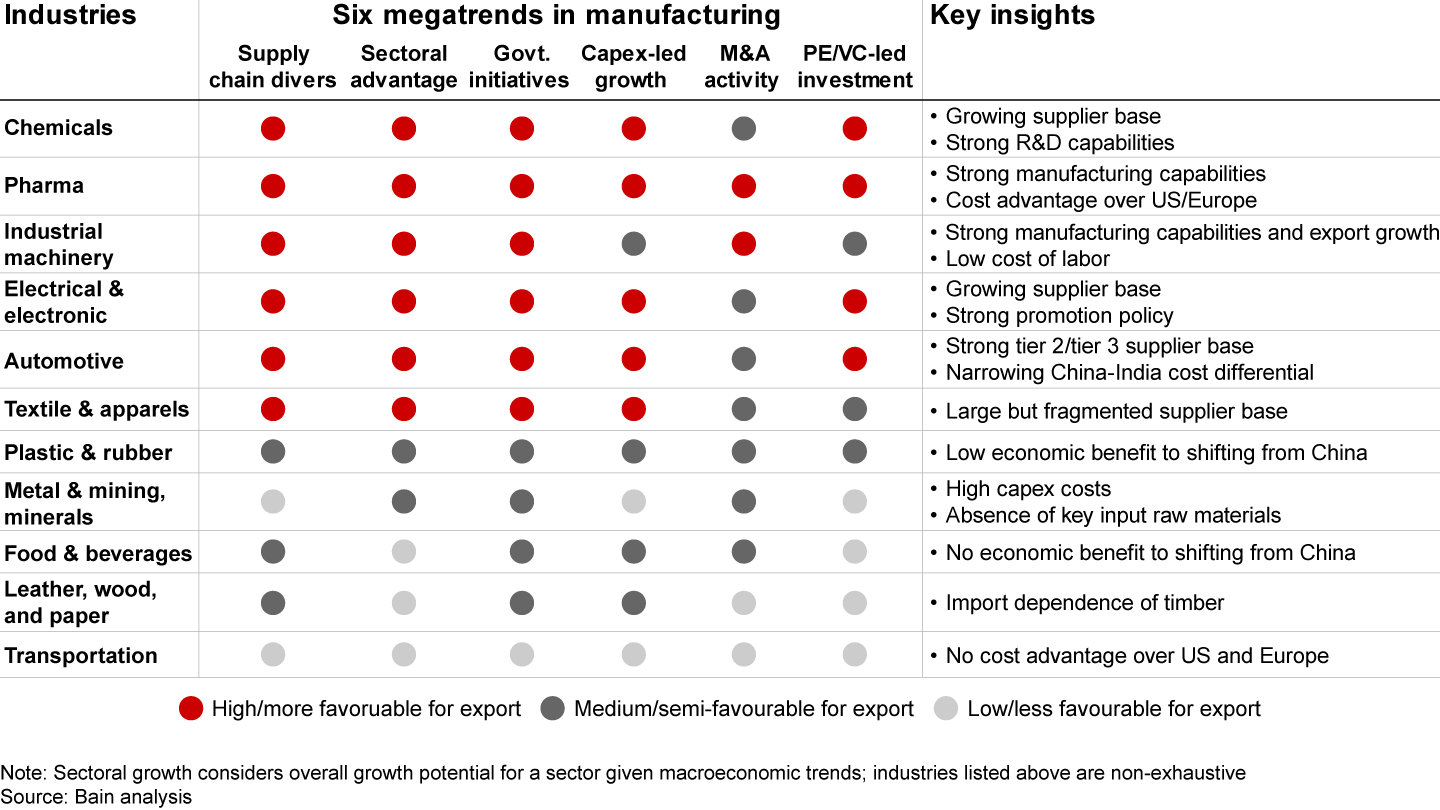
2. Sectoral advantages: Key manufacturing sectors (see Figure 3)—like chemicals, pharmaceuticals, automotive, electronics, industrial machinery, and textiles—have shown tremendous growth over the past few years. In these sectors, India possesses inherent strengths that have come to the fore. In chemicals, Indian manufacturers are consistently building on India’s cost advantage and strong supplier base, as compared to other manufacturing hubs, as well as strengths in research and development (R&D) capabilities. In pharmaceuticals, India’s manufacturing cost is about 30%–35% lower than that of the US and Europe. In the automotive sector, several global companies are looking at export-oriented production in India because of the cost advantage over the US and Europe and strong manufacturing capabilities. Between April and June FY22, Indian car makers exported 1,27,115 vehicles, more than double the 43,619 units exported in the same quarter in FY21. In electronics, manufacturers like Samsung, Wistron, and Foxconn are shifting production to India because of strong manufacturing and R&D capabilities, a growing supplier base, and strong policy support. In industrial machinery, India is becoming a destination for exports thanks to low manufacturing costs and strong capabilities in technology. In textiles, India has the cost advantage because of the availability of cheap raw materials and lower wages.
Figure 3

3. Government-led initiatives: The Indian government’s continual efforts provided the thrust on capex, fresh investments, and ease of doing business. While the PLI outlay of $47.8 billion planned over five years, starting in 2021 (see Figure 4), has increased in-country production and helped manufacturing-led exports, the foreign direct investment (FDI) policy initiatives aimed at decreasing the FDI restrictive index have augmented the capital inflow; this is visible from the fact that FDI investments increased by about 65% between 2015 and 2020. Key free-trade agreements (FTAs), including India-UAE Comprehensive Partnership Agreement (CEPA) and India-Australia Economic Cooperation and Trade Agreement (IndAus ECTA), have been signed with a vision to boost bilateral trade, creating an environment for export growth.
Figure 4
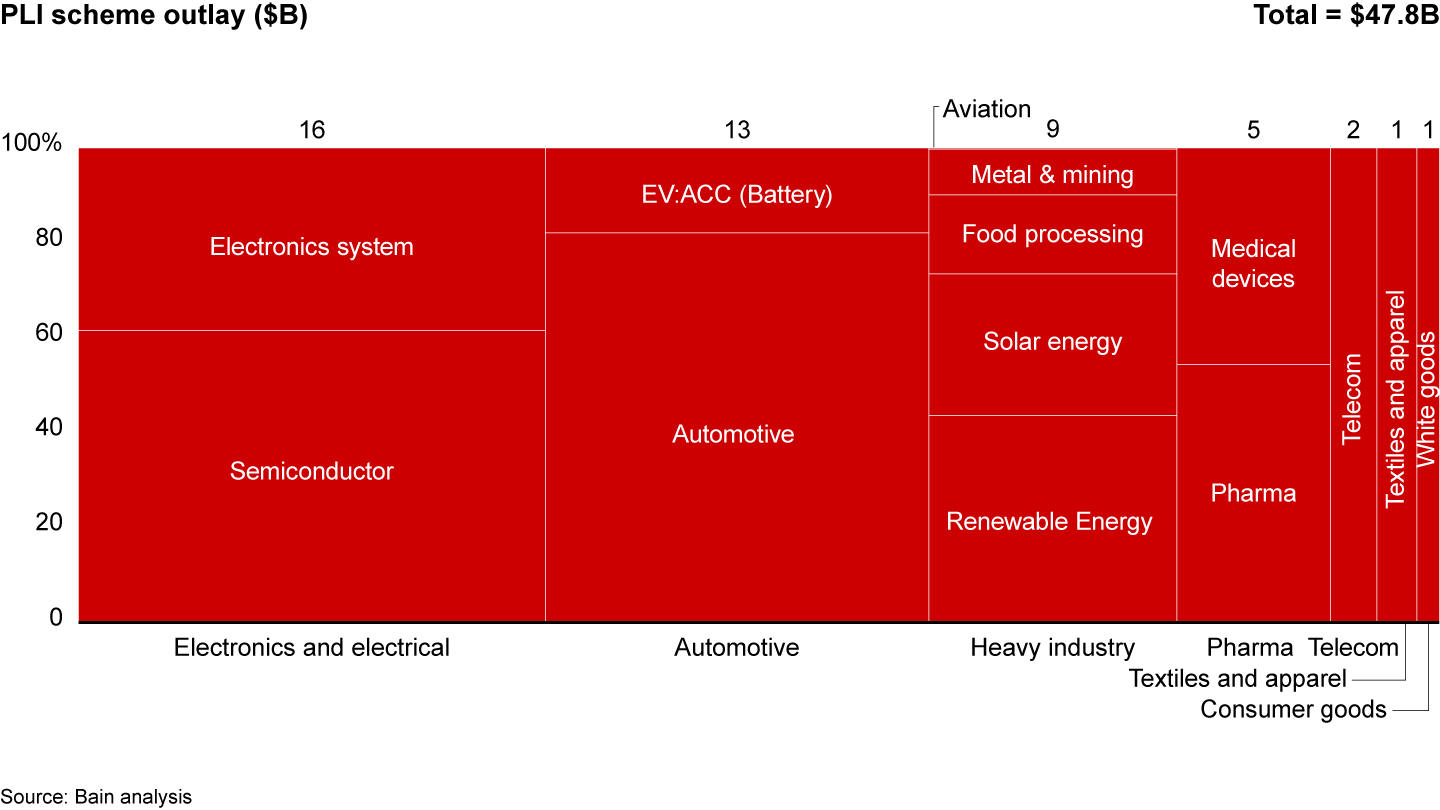

While the PLI schemes are aimed at attracting large investments across manufacturing sectors, they will also improve capacity utilisation, increase manufacturing gross value added, and boost sales across 13 key sectors, resulting in an overall increase in exports. The schemes are expected to lead to a fresh infusion of investment of nearly $50 billion, with a production increase of about $500 billion in the next five years. Growth led by the PLI schemes will show up most in the electronics, pharmaceutical, automotive, advanced chemistry cell (ACC) battery, solar, and white goods (home appliance) sectors, with a cascading multiplier effect on other sectors over the next five years. The PLI schemes, coupled with FDI policies and new FTAs, will further incentivise companies to increase export-led manufacturing.
4. Capex-led growth: India’s capex cycle is expected to fast-track in the wake of post-pandemic economic growth and high-capacity utilisations, which will help cater to the increased demand. The Indian government has budgeted a 35% year-over-year (YOY) increase in capex for FY23 to ~ $100 billion. With multiple companies reaching high levels of capacity utilisation, there is a strong need for capex addition, and a rise in planned capex of more than six times the planned capex from five years ago is a strong indicator of increased manufacturing activity across sectors.
5. M&As: Manufacturing companies are using the M&A route to drive growth and reshape their portfolios to acquire new capabilities and enter new markets and segments. While scope acquisitions outside companies’ core operations account for 4 out of 10 transactions, first-time buyers represent about 80% of the $108 billion in M&A deals in India in 2021, 15.7% of which were in the manufacturing sector. Cross-border M&A is also growing steadily, with a cross-border transaction value increase from about $0.4 billion in 2017 to $1.2 billion in 2021.
PE/VC-led investments have particularly been witnessed in the chemical, pharmaceutical, automotive, and electronics sectors, resulting in an increase in manufacturing-led exports.
6. PE/VC-led investments: The last few years have seen significant PE/VC funds flowing into India across major sectors, leading to digital and technology-led disruption in manufacturing, and the trend has further accelerated in the post-pandemic era. PE/VC investments in Indian firms were up by 55% since 2019, hitting a record of nearly $70 billion in 2021. These investments have given a major thrust to the start-up ecosystem, along with integrated manufacturing platform development. PE/VC-led investments have particularly been witnessed in the chemical, pharmaceutical, automotive, and electronics sectors, resulting in an increase in manufacturing-led exports. Meanwhile, multiple subsectors in manufacturing are witnessing an increase in valuations (Enterprise value/EBITDA multiples) because of buoyancy in the manufacturing sector, which is further attracting investments. As much as 18% of the total PE/VC investments in 2021 were in the manufacturing sector, with the majority of them in the pharmaceuticals and chemicals subsectors.
India’s trillion-dollar manufacturing export opportunity: select sectors leading first wave of growth
Propelled by favourable megatrends in manufacturing, India is expected to scale up its manufacturing exports to $1 trillion by FY28, and much of this growth will come from select sectors (see Figure 5). Bain analysis shows that the positive impact of the megatrends is already being witnessed in six key sectors (see Figure 6) and will accelerate further in the years ahead.
Figure 5
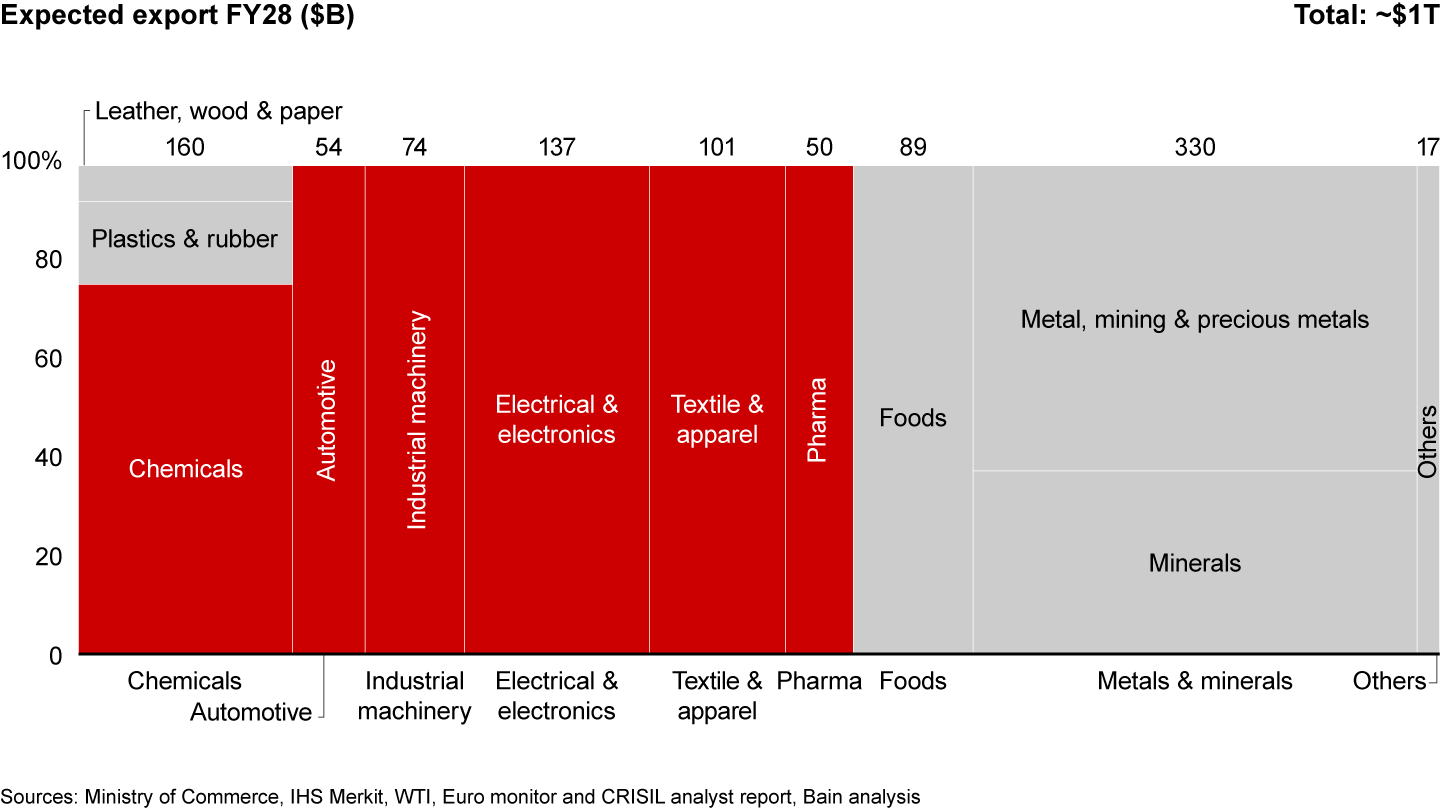

Figure 6
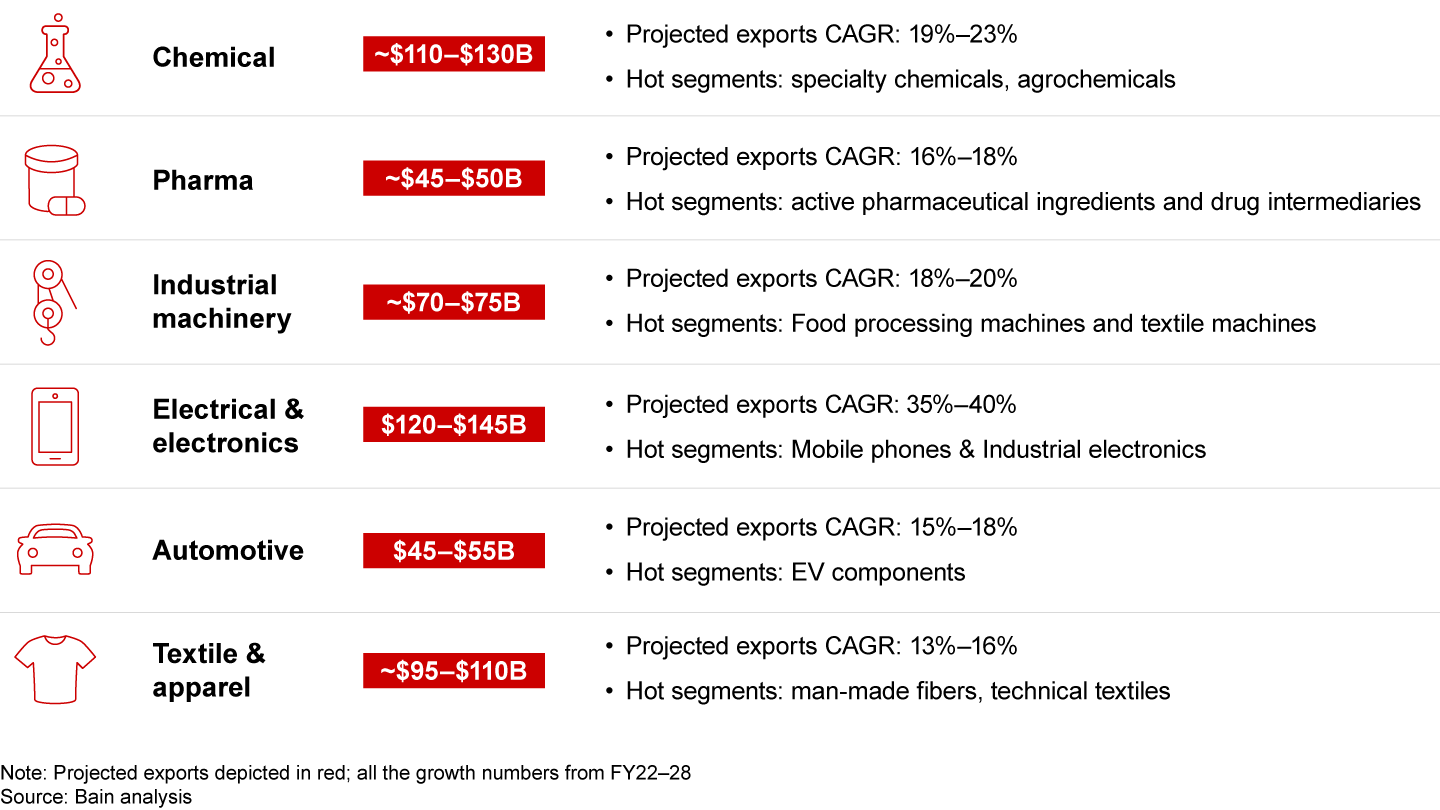

Leading the charge in manufacturing-led exports, India’s chemicals industry is poised for exponential growth in the years to come. Exports of chemicals are estimated to grow at CAGR 19%–23% ($110–$130 billion by FY28), mainly because of the low cost of manufacturing and rising investments. Key causes of growth in chemical sectors are Petroleum, Chemicals, and Petrochemicals Investment Region (PCPIR) and PLI schemes in India that are leading to a surge in investments; the emerging popularity of the Contract Research and Manufacturing Services (CRAMS)/Contract Development & Manufacturing Organisations (CDMO) model of operations globally; and the rising cost competitiveness of India.
Within chemicals, specialty chemical and agrochemical exports are expected to be the key growth segments. This includes agrochemicals, dyes and pigments, flavours and fragrances, and construction chemicals. Specifically, in specialty chemicals, India’s high-quality product output by virtue of its strong R&D capability is further enhancing its reputation in the international market. Key molecules coming off patent in the next five years are going to spur exports further, with India being a favourable destination for CRAMS and CDMO players.
Indian steel is becoming globally competitive, with availability of cheap raw material (iron ore), new and innovative techniques, and a low cost of manufacturing, with strong capabilities in technology for high-end machinery.
The pharmaceutical industry is another sector with outstanding export prospects. India’s drugs and pharmaceutical exports are expected to grow at a CAGR of 16%–18% ($45 billion–$50 billion) by FY28. India has traditionally been very strong in the pharma sector, with a low cost of manufacturing (30%–35% lower than in the US and Europe), cost-efficient R&D (about 87% less than in developed markets), and cheap skilled labour.
India’s strength in pharma—coupled with recent factors like incentivisation under PLI schemes, strong capex and PE/VC investments with 100% FDI, and rising labour costs in competing countries like China—is going to propel growth in exports. Within the pharma industry, biologicals and bulk drugs in the active pharmaceutical ingredient and drug intermediary subsegment are expected to be key growing segments over the next few years.
Industrial machinery exports are expected to grow at a CAGR of 18%–20% ($70 billion–$75 billion) by FY28 because of the rising demand from developing markets, strong capabilities of the Indian industrial sector, the low cost of manufacturing government-led PLIs, 100% FDI, and higher M&A activities.
Industrial machinery production in India is also getting a significant cost advantage globally because of the low cost of major raw material, such as steel. Indian steel is becoming globally competitive, with availability of cheap raw material (iron ore), new and innovative techniques, and a low cost of manufacturing, with strong capabilities in technology for high-end machinery.
The electronics sector, estimated to grow at a CAGR of 35%–40% to $120 billion–$145 billion by FY28, is one of most attractive sectors for manufacturing-led exports. India offers an advantage of strong manufacturing technology and R&D capabilities in the semiconductor industry focused on chip design and end-to-end supply chain improvement.
The sharp growth will be driven by a strong push from government schemes like PLIs, the Merchandise Exports India Scheme, and the Scheme for Promotion of Manufacturing of Electronic Components and Semiconductors, which are likely to increase export growth by 35%–40% YOY. Increasing the focus on supply chain diversification is also going to make India an export hub for mobile phones. Large global mobile phone manufacturers like Samsung, Wistron, and Foxconn are planning for mobile phone manufacturing and exports from India.
Within electronics, India’s mobile phone exports are going to be the fastest-growing segment. Mobile phone production has increased fivefold in the past five years, and India is on track to emerge as a global exporting hub of mobile phones, which creates robust demand for integrated circuits and semiconductors. This will get a boost with the focus moving from assembly to developing expertise in end-to-end hardware component manufacturing. There’s a great opportunity to capture share from other strong export players like China in this subsegment.
Because of rising environmental concerns and fuel prices, EV adoption is expected to increase about 24% globally by FY28, and the Indian automotive sector has an opportunity to drive export growth up to $5 billion through EV and EV components alone at a phenomenal CAGR of 37%.
A traditional powerhouse, automotive exports are expected to grow at a CAGR of 15%–18% ($45 billion–$55 billion) by FY28, including electric vehicles (EVs), primarily because of low-cost manufacturing and a large Tier 2 and Tier 3 supplier base ensuring the availability of automotive components. Recent factors like government-led support through incentive schemes like the PLI and sharp uptick in FDI will increase capital inflow. The narrowing China-India cost differential and increasing penetration of India original equipment manufacturers in key markets like Latin America and Africa will make India an export hub of automotive components.
The government’s concerted efforts to create a conducive environment for adoption of EVs and the initiative to provide incentives, such as a $3.5 billion outlay to encourage production and export of clean technology vehicles and their components, will further drive expansion of the EV market, not only domestically, but also for exports. Because of rising environmental concerns and fuel prices, EV adoption is expected to increase about 24% globally by FY28, and the Indian automotive sector has an opportunity to drive export growth up to $5 billion through EV and EV components alone at a phenomenal CAGR of 37%.
India’s textile and apparel exports are also expected to grow at a CAGR of 13%–16% to $95 billion–$110 billion by FY28. This growth will be powered by the presence of the complete value chain, from raw materials to finished goods; the competitive cost of manufacturing; preferential market access; supportive government policies like the PLI scheme outlay of $1.42 billion; and export incentivisation from 2% to 4% for the two subsectors of ready-made garments and made-ups.
In the textile sector, man-made fibre and technical textiles are likely to offer immense growth opportunities in global trade. India currently enjoys preferential market access to 43 countries under 15 trade agreements. While the US ban on textiles from Xinjiang, which produces more than 85% of China’s textile output, is an opportunity for India, the EU has also granted India with generalised system-of-preference status, under which garment exports to the EU attract 20% less duty than the most-favoured-nation rate.
Imperatives for export acceleration for companies
As much as the growth in exports presents a tremendous opportunity for the existing manufacturing companies, new entrants, and the investor community, it also poses some questions to Indian manufacturing companies, which are in the middle of making strategic choices:
- What are the right ambitions and priorities for exports business?
Define a bold ambition and growth roadmap with clearly identified focus areas—winning products, geographies, and customers. - What is the right business and operating model for exports business?
Define clearly how the exports business will be structured and operated, e.g., direct international presence vs. operating through intermediaries, organic subsidiary vs. acquisition/partnership, and owned team vs. outsourced resources. These choices have long-term implications on the sustainability and scalability of exports businesses. - How to establish a robust supply chain in sync with exports strategy?
Revisit the supply chain footprint and strategy in the context of expected growth in exports. New choices are to be made for capacity expansion, footprint diversification and raw materials sourcing to support the fast growth in exports. - What is the economic and business plan for exports business?
Define the addressable market clearly and create an exhaustive business plan with product/geography/customer-wise profit and loss estimates, cash flow estimates, and return on capital employed projections. - What organisational resources and capabilities would be required to support exports business?
Acquire the right talent with the right skills; develop key account management/foreign distributor management capabilities for export business; and acquire the right assets, technology, and patents to create a point of differentiation in the market.
Published in July 2022