Skip to Content
  • Offices

    Offices

    North & Latin America
    • Atlanta
    • Austin
    • Bogota
    • Boston
    • Buenos Aires
    • Chicago
    • Dallas
    • Denver
    • Houston
    • Los Angeles
    • Mexico City
    • Minneapolis
    • Monterrey
    • Montreal
    • New York
    • Rio de Janeiro
    • San Francisco
    • Santiago
    • São Paulo
    • Seattle
    • Silicon Valley
    • Toronto
    • Washington, DC
    Europe & Africa
    • Amsterdam
    • Athens
    • Berlin
    • Brussels
    • Copenhagen
    • Dusseldorf
    • Frankfurt
    • Helsinki
    • Istanbul
    • Johannesburg
    • Kyiv
    • Lisbon
    • London
    • Madrid
    • Milan
    • Munich
    • Oslo
    • Paris
    • Rome
    • Stockholm
    • Vienna
    • Warsaw
    • Zurich
    Middle East
    • Doha
    • Dubai
    • Riyadh
    Asia & Australia
    • Bangkok
    • Beijing
    • Bengaluru
    • Brisbane
    • Ho Chi Minh City
    • Hong Kong
    • Jakarta
    • Kuala Lumpur
    • Manila
    • Melbourne
    • Mumbai
    • New Delhi
    • Perth
    • Seoul
    • Shanghai
    • Singapore
    • Sydney
    • Tokyo
    See all offices
  • Alumni
  • Media Center
  • Subscribe
  • Contact
  • Global | English

    Select your region and language

    Global
    • Global (English)
    North & Latin America
    • Brazil (Português)
    • Argentina (Español)
    • Canada (Français)
    • Chile (Español)
    • Colombia (Español)
    Europe, Middle East, & Africa
    • France (Français)
    • DACH Region (Deutsch)
    • Italy (Italiano)
    • Spain (Español)
    • Greece (Elliniká)
    Asia & Australia
    • China (中文版)
    • Korea (한국어)
    • Japan (日本語)
  • Saved items (0)
    Saved items (0)

    You have no saved items.

    Bookmark content that interests you and it will be saved here for you to read or share later.

    Explore Bain Insights
  • Industries
    Main menu

    Industries

    • Aerospace & Defense
    • Agribusiness
    • Chemicals
    • Construction & Infrastructure
    • Consumer Products
    • Financial Services
    • Healthcare & Life Sciences
    • Industrial Machinery & Equipment
    • Media & Entertainment
      Industries
      Media & Entertainment
      • Media Lab
    • Metals
    • Mining
    • Oil & Gas
    • Paper & Packaging
    • Private Equity
      Industries
      Private Equity
      • Due Diligence
      • Exit Planning
      • Firm Strategy & Operations
      • Portfolio Value Creation
    • Social Impact
    • Retail
    • Technology
    • Telecommunications
      Industries
      Telecommunications
      • Capital Expenditure
      • Telco Digital Transformation
    • Transportation
    • Travel & Leisure
    • Utilities & Renewables
  • Consulting Services
    Main menu

    Consulting Services

    • Customer Experience
    • Sustainability
    • Innovation
    • M&A
    • Operations
    • People & Organization
    • Private Equity
    • Sales & Marketing
    • Strategy
    • AI, Insights, and Solutions
    • Technology
    • Transformation
  • Digital
  • Insights
    Main menu

    Insights

    • Industry Insights
    • Services Insights
    • Bain Books
    • Webinars
    • Bain Futures
    View all Insights
    Featured topics
    • Tariff Response
    • Artificial Intelligence
    • Thriving in Uncertainty
    • Executive Conversations
    • Macro Trends
    • M&A Report
    • Healthcare Private Equity Report
    • Paper & Packaging Report
    • Technology Report
    • CEO's Guide to Sustainability
    • CEO Insights
    • CFO Insights
    • COO Insights
    • CIO Insights
    • CMO Insights
    View all featured topics
  • About
    Main menu

    About

    • What We Do
    • What We Believe
    • Our People & Leadership
    • Client Results
    • Awards & Recognition
    • Global Affiliations
    Further: Our global responsibility
    • Sustainability
    • Social Impact
    • World Economic Forum
    Learn more about Further
  • Careers
    Main menu

    Careers

    • Work with Us
      Careers
      Work with Us
      • Find Your Place
      • Our Work Areas
      • Integrated Teams
      • Students
      • Internships & Programs
      • Recruiting Events
    • Life at Bain
      Careers
      Life at Bain
      • Blog: Inside Bain
      • Career Stories
      • Our People
      • Where We Work
      • Supporting Your Growth
      • Affinity Groups
      • Benefits
    • Impact Stories
    • Hiring Process
      Careers
      Hiring Process
      • What to Expect
      • Interviewing
    FIND JOBS
  • Offices
    Main menu

    Offices

    • North & Latin America
      Offices
      North & Latin America
      • Atlanta
      • Austin
      • Bogota
      • Boston
      • Buenos Aires
      • Chicago
      • Dallas
      • Denver
      • Houston
      • Los Angeles
      • Mexico City
      • Minneapolis
      • Monterrey
      • Montreal
      • New York
      • Rio de Janeiro
      • San Francisco
      • Santiago
      • São Paulo
      • Seattle
      • Silicon Valley
      • Toronto
      • Washington, DC
    • Europe & Africa
      Offices
      Europe & Africa
      • Amsterdam
      • Athens
      • Berlin
      • Brussels
      • Copenhagen
      • Dusseldorf
      • Frankfurt
      • Helsinki
      • Istanbul
      • Johannesburg
      • Kyiv
      • Lisbon
      • London
      • Madrid
      • Milan
      • Munich
      • Oslo
      • Paris
      • Rome
      • Stockholm
      • Vienna
      • Warsaw
      • Zurich
    • Middle East
      Offices
      Middle East
      • Doha
      • Dubai
      • Riyadh
    • Asia & Australia
      Offices
      Asia & Australia
      • Bangkok
      • Beijing
      • Bengaluru
      • Brisbane
      • Ho Chi Minh City
      • Hong Kong
      • Jakarta
      • Kuala Lumpur
      • Manila
      • Melbourne
      • Mumbai
      • New Delhi
      • Perth
      • Seoul
      • Shanghai
      • Singapore
      • Sydney
      • Tokyo
    See all offices
  • Alumni
  • Media Center
  • Subscribe
  • Contact
  • Global | English
    Main menu

    Select your region and language

    • Global
      Select your region and language
      Global
      • Global (English)
    • North & Latin America
      Select your region and language
      North & Latin America
      • Brazil (Português)
      • Argentina (Español)
      • Canada (Français)
      • Chile (Español)
      • Colombia (Español)
    • Europe, Middle East, & Africa
      Select your region and language
      Europe, Middle East, & Africa
      • France (Français)
      • DACH Region (Deutsch)
      • Italy (Italiano)
      • Spain (Español)
      • Greece (Elliniká)
    • Asia & Australia
      Select your region and language
      Asia & Australia
      • China (中文版)
      • Korea (한국어)
      • Japan (日本語)
  • Saved items  (0)
    Main menu
    Saved items (0)

    You have no saved items.

    Bookmark content that interests you and it will be saved here for you to read or share later.

    Explore Bain Insights
  • Industries
    • Industries

      • Aerospace & Defense
      • Agribusiness
      • Chemicals
      • Construction & Infrastructure
      • Consumer Products
      • Financial Services
      • Healthcare & Life Sciences
      • Industrial Machinery & Equipment
      • Media & Entertainment
      • Metals
      • Mining
      • Oil & Gas
      • Paper & Packaging
      • Private Equity
      • Social Impact
      • Retail
      • Technology
      • Telecommunications
      • Transportation
      • Travel & Leisure
      • Utilities & Renewables
  • Consulting Services
    • Consulting Services

      • Customer Experience
      • Sustainability
      • Innovation
      • M&A
      • Operations
      • People & Organization
      • Private Equity
      • Sales & Marketing
      • Strategy
      • AI, Insights, and Solutions
      • Technology
      • Transformation
  • Digital
  • Insights
    • Insights

      • Industry Insights
      • Services Insights
      • Bain Books
      • Webinars
      • Bain Futures
      View all Insights
      Featured topics
      • Tariff Response
      • Artificial Intelligence
      • Thriving in Uncertainty
      • Executive Conversations
      • Macro Trends
      • M&A Report
      • Healthcare Private Equity Report
      • Paper & Packaging Report
      • Technology Report
      • CEO's Guide to Sustainability
      • CEO Insights
      • CFO Insights
      • COO Insights
      • CIO Insights
      • CMO Insights
      View all featured topics
  • About
    • About

      • What We Do
      • What We Believe
      • Our People & Leadership
      • Client Results
      • Awards & Recognition
      • Global Affiliations
      Further: Our global responsibility
      • Sustainability
      • Social Impact
      • World Economic Forum
      Learn more about Further
  • Careers
    Popular Searches
    • Agile
    • Digital
    • Strategy
    Your Previous Searches
      Recently Visited Pages

      Content added to saved items

      Saved items (0)

      Removed from saved items

      Saved items (0)

      Brief

      Time for Sustainable Investing to Move from Marketing Sizzle to Reliable Results

      Time for Sustainable Investing to Move from Marketing Sizzle to Reliable Results

      Investors want asset and wealth managers to quantify and report the impact of the ESG factors they care most about.

      By Stefan Wörner and Matthias Memminger

      • min read
      }

      Brief

      Time for Sustainable Investing to Move from Marketing Sizzle to Reliable Results
      en
      At a Glance
      • As investors get more sophisticated about environmental, social, and governance (ESG) matters, they’ve also grown more skeptical about asset managers’ claims on sustainable products.
      • Defining the measurable impact of a particular investment on ESG factors has become critical to the business, yet there’s a dearth of standard ESG metrics or clear methods to quantify impact.
      • Therefore, asset and wealth managers should develop capabilities to quantify and report the impact of a given asset on a select set of ESG factors that matter most to their high-value customers.

      Asset and wealth managers find it increasingly difficult to carve out an ESG strategy that will appeal to investors. As investors and the broader public get more sophisticated about ESG matters, they are questioning the claims of commitment to sustainably invested assets and ostensibly sustainable products.

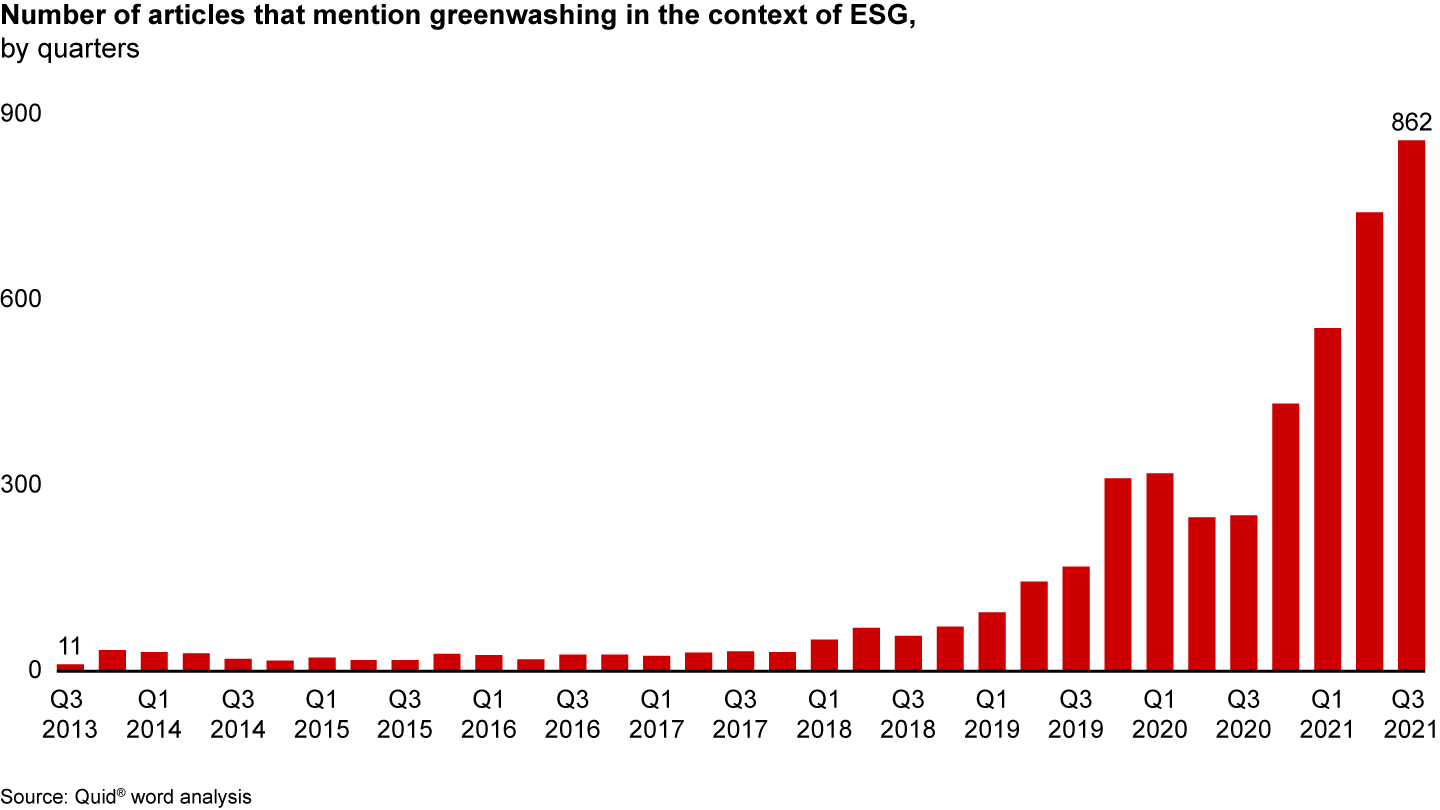
      With the growing demand for ESG-compliant assets, more investors are concerned that their fund and wealth managers are only paying lip service to these themes. The ambition to stake out ESG-friendly territory may have even led some well-intentioned companies to overstate their actual commitments, Bain analysis shows, or at least push the boundaries of what investments could be considered sustainable (see Figure 1). At the same time, the number of business press articles on greenwashing—conveying a misleading impression about how an asset is environmentally sound—has soared at a 147% compound annual growth rate over the past three years (see Figure 2).

      Figure 1
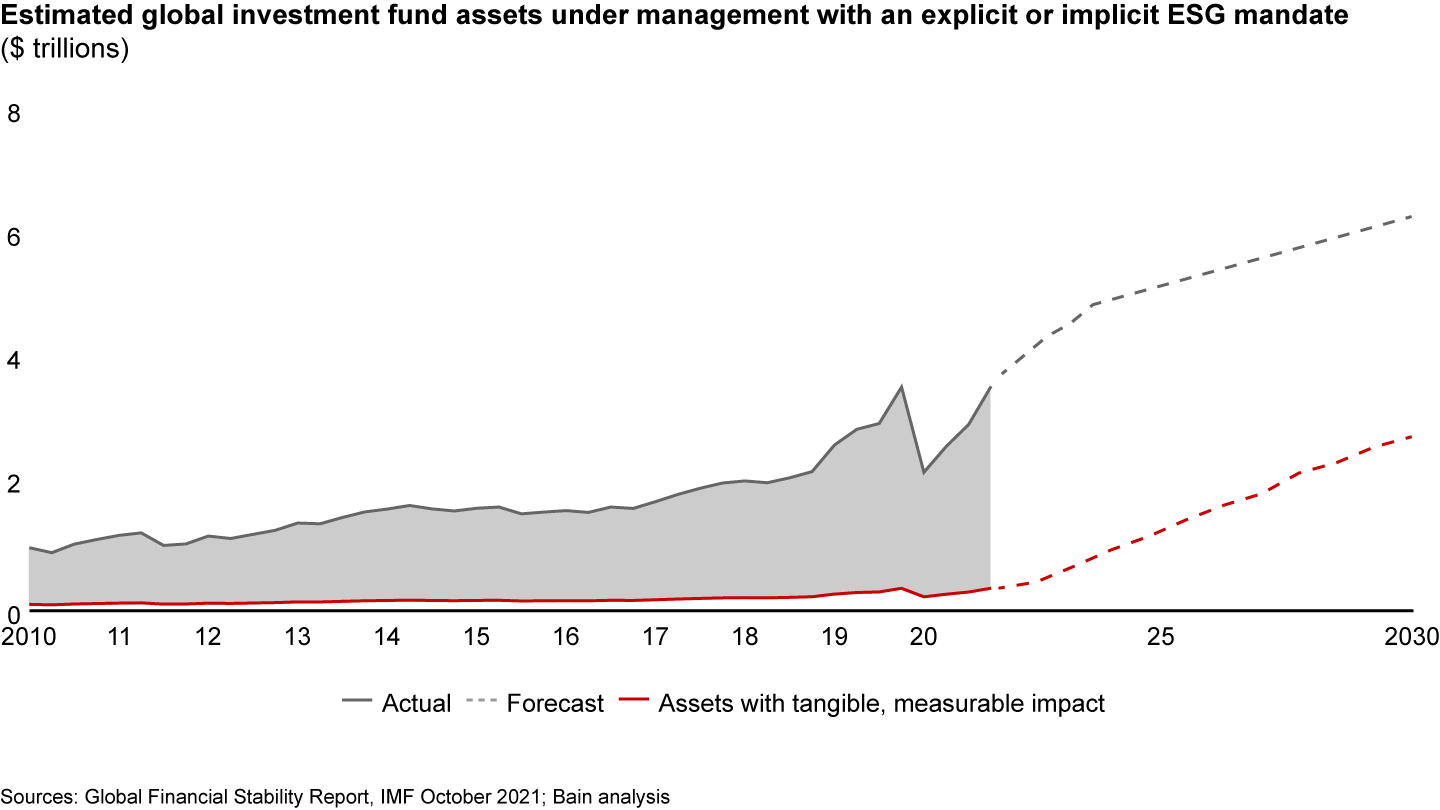
      ESG-linked commitments tend to be overstated
      ESG-linked commitments tend to be overstated
      ESG-linked commitments tend to be overstated
      Figure 2
      A backlash against greenwashing has begun
      A backlash against greenwashing has begun
      A backlash against greenwashing has begun

      Marketing efforts may miss the essence of sustainable finance, which boils down to acting with intention and measuring the effect of those actions. This situation stems in part from the lack of common reporting and audit standards—there is simply too much room for interpretation of “sustainable” investments. Elusive regulations and standards don’t help either. A portfolio manager could do every possible thing to focus on ESG and still be told that not enough has been done—or that what has been done doesn’t satisfy important stakeholders.

      It’s a pressing problem for asset management firms. By 2030, we would argue, the measurable impact of investment on ESG factors will hold a similar level of importance to financial return and risk level, thereby complementing the traditional risk-return approach. Clients deserve solid information on progress in the ESG component in question, such as reduction of carbon emissions or water usage, enhancement of employee diversity, or transparency of governance.

      Fund managers can’t ignore this push for information because the demand for ESG-related assets will only continue to expand as evidence accumulates of superior financial performance. Public companies with top ESG ratings, for example, tend to show higher than average multiples, suggesting the imbalanced demand/supply for ESG assets.

      However, the growth of ESG-linked investments is running into limitations because of a dearth of standard metrics and the opaque methods used to derive ratings. There are no global standards in ESG reporting, so ratings remain inconsistent, with the number of ESG factors used to derive them ranging from about 40 to 280, depending on the sponsor of the data set. Moreover, established ESG ratings hardly allow for customizable evaluations at scale and rarely support thematic strategies. Many companies have thus developed their own methodologies, given these shortcomings.

      Asset owners and investors also assign different relevance to specific ESG factors, with the greatest attention paid to environmental factors and governance; social factors tend to be less relevant (see Figure 3). While governance in general is highly relevant, it’s difficult to pin down at the specific factor level. In practice, ESG factor measurability also varies widely, with some factors more easily measured—a key consideration for asset and wealth managers when prioritizing which factors to emphasize.

      Figure 3
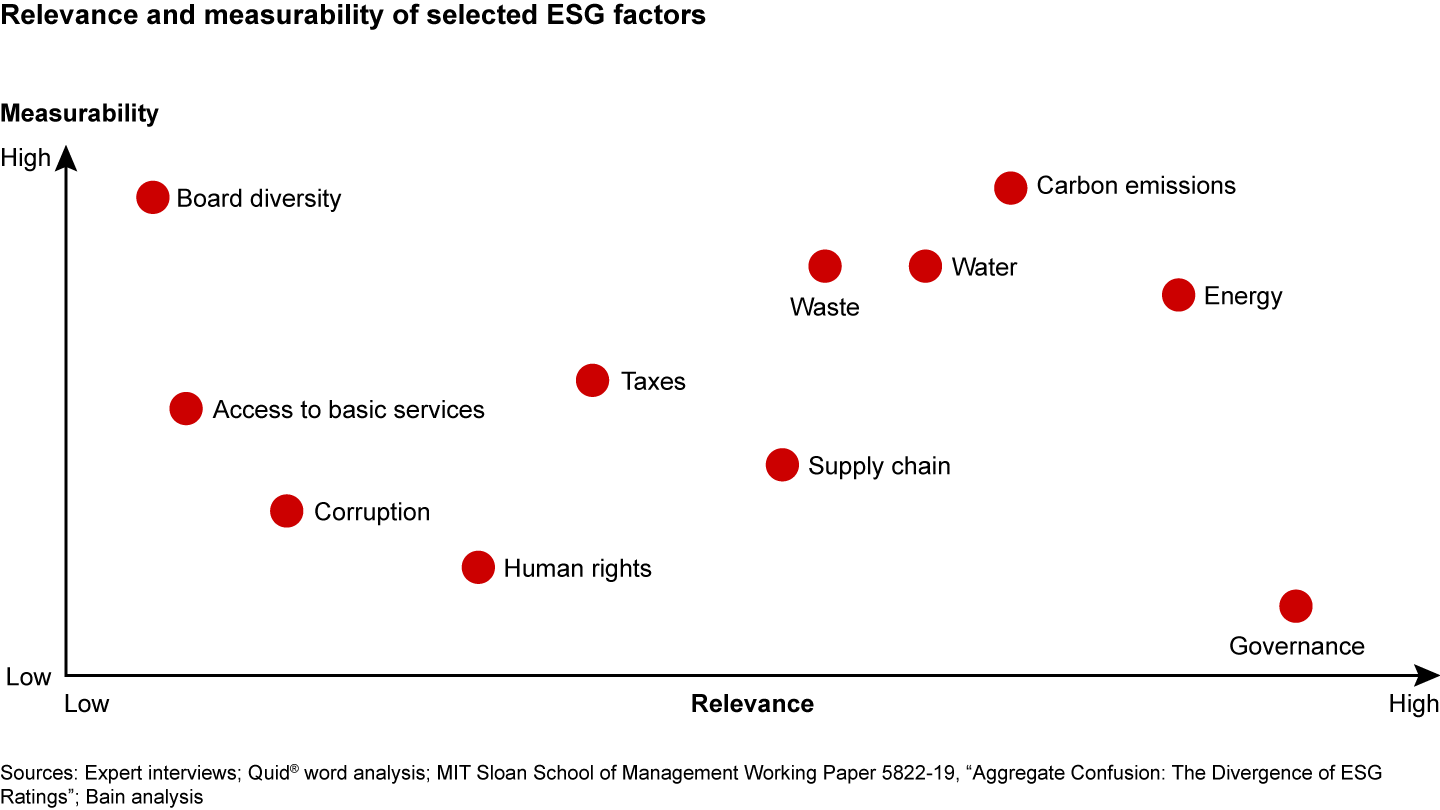
      The relevance of each ESG factor to clients, combined with ease of measurement, should be considered when selecting which factors to focus on
      The relevance of each ESG factor to clients, combined with ease of measurement, should be considered when selecting which factors to focus on
      The relevance of each ESG factor to clients, combined with ease of measurement, should be considered when selecting which factors to focus on

      New capabilities, new models

      Given the state of ESG definition and tracking, asset and wealth managers should start developing capabilities to quantify and report the impact of a given asset on a selected set of ESG factors. It’s prudent for firms to prioritize a handful of such factors, perhaps five or so, where they can focus and offer impact reporting for investors. Other selected factors may matter to a small number of high-value clients, so additional capabilities could be developed in house or by partnering with specialized firms to develop reliable indices.

      Most investors, for instance, rank carbon dioxide emissions as an important issue, a factor that is also relatively easy to measure. One way to quantify its impact comes from Persefoni, which uses its Carbon Management and Accounting Platform to measure and report emission reductions on both a portfolio and individual company level. The platform ingests data from thousands of potential sources and completes the required carbon calculations for different disclosure and reporting purposes.

      Incorporating a robust ESG perspective will require predicting causality on an ESG factor at scale, and the most effective way to do this combines an artificial intelligence-infused model, which sifts through massive amounts of data, with a review by human experts to tease out causation vs. correlation. This person and machine combination could enhance the reliability of results and allow firms to tailor client-specific investments at scale.

      No single model will work best for every firm, though—rather, each firm should define its offerings according to client preferences. Because it’s not practical to specialize in dozens of ESG factors, asset and wealth managers should focus on those factors that the majority of their clients feel strongest about. For the other factors, fund managers could consider outsourcing to specialist firms that assemble a respective basket of assets (related to, for example, anti-corruption measures, human rights, or biodiversity) and can reliably report the impact on that factor.

      Greenwashing might sound benign, but it can confuse investors and prevent them from supporting truly meaningful ESG initiatives. With more ESG marketing claims questioned by clients, asset and wealth management firms can no longer tout ESG without convincing evidence. The solution to this strategic challenge lies in prioritizing ESG factors for specific target clients and building an operating model that reliably quantifies the impact on those factors. Only then will fund managers be able to differentiate themselves and carve out a stronger, enduring position in the market—and move from marketing to real results.

      Authors
      • Headshot of Stefan Wörner
        Stefan Wörner
        Alumni, Zurich
      • Matthias Memminger
        Former Partner, Frankfurt
      Contact us
      Related Industries
      • Financial Services
      • Wealth & Asset Management
      Related Consulting Services
      • Sustainability
      Financial Services
      Managing Physical Climate Risks in Financial Services

      Experts from Bain and Jupiter Intelligence detail how banks can deal with increasing climate-related challenges.

      Read More
      Financial Services
      Six Threats Demand a New Playbook for Banks in Wealth and Asset Management

      AI, direct-to-consumer models, and the return of local priorities are redrawing industry lines.

      Read More
      Sustainability
      How AI Is Starting to Transform Circular Packaging

      There are 15 AI use cases companies across the value chain can use today to accelerate circularity.

      Read More
      Financial Services
      Wealth Management Firms Can Take Out Costs While Reducing Risk and Improving Client Loyalty

      Six tactics allow firms to reduce operating costs by 17% to 38%.

      Read More
      Sustainability
      Exploring AI for Packaging Circularity

      AI is already creating value across the packaging lifecycle, from optimising design and reducing material use to improving sorting and traceability.

      Read More
      Published in February 2022
      Tags
      • Financial Services
      • Sustainability
      • Wealth & Asset Management

      How We've Helped Clients

      Sustainability Voluntary Carbon Markets: A Bank Moves Early to Seize the Opportunity

      Read case study

      Performance Improvement Lean Six Sigma solves a commercial bank's growth problem

      Read case study

      Enterprise Technology Bridging the Gap Between Business and Technology

      Read case study

      Ready to talk?

      We work with ambitious leaders who want to define the future, not hide from it. Together, we achieve extraordinary outcomes.

      Stay ahead in a rapidly changing world. Subscribe to Bain Insights, our monthly look at the critical issues facing global businesses.

      *I have read and understand Bain’s Privacy Notice.

      Please read and agree to the Privacy Policy.
      Bain & Company
      Contact us Sustainability Accessibility Terms of use Privacy Modern Slavery Act Statement Cookie Policy Sitemap Log In

      © 1996-2026 Bain & Company, Inc.

      Contact Bain

      How can we help you?

      • Business inquiry
      • Career information
      • Press relations
      • Partnership request
      • Speaker request
      See all offices