
Skip to Content
  • 오피스

    오피스

    미주
    • Atlanta
    • Austin
    • Bogota
    • Boston
    • Buenos Aires
    • Chicago
    • Dallas
    • Denver
    • Houston
    • Los Angeles
    • Mexico City
    • Minneapolis
    • Monterrey
    • Montreal
    • New York
    • Rio de Janeiro
    • San Francisco
    • Santiago
    • São Paulo
    • Seattle
    • Silicon Valley
    • Toronto
    • Washington, DC
    유럽, 중동, 아프리카
    • Amsterdam
    • Athens
    • Berlin
    • Brussels
    • Copenhagen
    • Doha
    • Dubai
    • Dusseldorf
    • Frankfurt
    • Helsinki
    • Istanbul
    • Johannesburg
    • Kyiv
    • Lisbon
    • London
    • Madrid
    • Milan
    • Munich
    • Oslo
    • Paris
    • Riyadh
    • Rome
    • Stockholm
    • Vienna
    • Warsaw
    • Zurich
    아시아, 호주
    • Bangkok
    • Beijing
    • Bengaluru
    • Brisbane
    • Ho Chi Minh City
    • Hong Kong
    • Jakarta
    • Kuala Lumpur
    • Manila
    • Melbourne
    • Mumbai
    • New Delhi
    • Perth
    • Seoul
    • Shanghai
    • Singapore
    • Sydney
    • Tokyo
    오피스 전체보기
  • 얼럼나이
  • 미디어 센터
  • 구독
  • 연락처
  • Korea | 한국어

    지역 및 언어 선택

    글로벌
    • Global (English)
    미주
    • Brazil (Português)
    • Argentina (Español)
    • Canada (Français)
    • Chile (Español)
    • Colombia (Español)
    유럽, 중동, 아프리카
    • France (Français)
    • DACH Region (Deutsch)
    • Italy (Italiano)
    • Spain (Español)
    • Greece (Elliniká)
    아시아, 호주
    • China (中文版)
    • Korea (한국어)
    • Japan (日本語)
  • Saved items (0)
    Saved items (0)

    You have no saved items.

    관심 있는 내용을 북마크하여 Red 폴더에 저장할 수 있습니다. Red 폴더 에서 저장된 내용을 읽거나 공유해보세요.

    Explore Bain Insights
  • 산업
    메인 메뉴

    산업

    • 우주항공, 방산 및 정부 서비스
    • 농업 관련 산업
    • 화학
    • 인프라, 건설 및 건축 자재
    • 소비재
    • 금융 서비스
    • 헬스케어
    • 산업용 기계 및 장비
    • 미디어 및 엔터테인먼트
    • 금속
    • 광업
    • 석유 및 가스
    • 제지 및 패키징 산업
    • 사모펀드
    • 사회 및 공공 부문
    • 유통
    • 기술
    • 텔레콤
    • 운송
    • 여행·여가
    • 유틸리티 및 재생가능 에너지
  • 컨설팅 서비스
    메인 메뉴

    컨설팅 서비스

    • Customer Experience
    • ESG
    • Innovation
    • M&A
    • 운영
    • 조직
    • 사모펀드
    • 고객 전략 및 마케팅
    • 전략
    • AI, 인사이트 및 솔루션
    • Technology
    • 변화 혁신
  • Digital
  • 인사이트
  • 베인 소개
    메인 메뉴

    베인 소개

    • 업무 소개
    • 베인의 신념
    • 구성원 및 리더십 소개
    • 고객 성과
    • 주요 수상 경력
    • 글로벌 파트너사
    Further: Our global responsibility
    • 다양성과 포용
    • 사회 공헌 활동
    • Sustainability
    • World Economic Forum
    Learn more about Further
  • Careers
    메인 메뉴

    Careers

    • Work with Us
      Careers
      Work with Us
      • Find Your Place
      • Our Work Areas
      • Integrated Teams
      • Students
      • Internships & Programs
      • Recruiting Events
    • Life at Bain
      Careers
      Life at Bain
      • Blog: Inside Bain
      • Career Stories
      • Our People
      • Where We Work
      • Supporting Your Growth
      • Affinity Groups
      • Benefits
    • Impact Stories
    • Hiring Process
      Careers
      Hiring Process
      • What to Expect
      • Interviewing
    FIND JOBS
  • 오피스
    메인 메뉴

    오피스

    • 미주
      오피스
      미주
      • Atlanta
      • Austin
      • Bogota
      • Boston
      • Buenos Aires
      • Chicago
      • Dallas
      • Denver
      • Houston
      • Los Angeles
      • Mexico City
      • Minneapolis
      • Monterrey
      • Montreal
      • New York
      • Rio de Janeiro
      • San Francisco
      • Santiago
      • São Paulo
      • Seattle
      • Silicon Valley
      • Toronto
      • Washington, DC
    • 유럽, 중동, 아프리카
      오피스
      유럽, 중동, 아프리카
      • Amsterdam
      • Athens
      • Berlin
      • Brussels
      • Copenhagen
      • Doha
      • Dubai
      • Dusseldorf
      • Frankfurt
      • Helsinki
      • Istanbul
      • Johannesburg
      • Kyiv
      • Lisbon
      • London
      • Madrid
      • Milan
      • Munich
      • Oslo
      • Paris
      • Riyadh
      • Rome
      • Stockholm
      • Vienna
      • Warsaw
      • Zurich
    • 아시아, 호주
      오피스
      아시아, 호주
      • Bangkok
      • Beijing
      • Bengaluru
      • Brisbane
      • Ho Chi Minh City
      • Hong Kong
      • Jakarta
      • Kuala Lumpur
      • Manila
      • Melbourne
      • Mumbai
      • New Delhi
      • Perth
      • Seoul
      • Shanghai
      • Singapore
      • Sydney
      • Tokyo
    오피스 전체보기
  • 얼럼나이
  • 미디어 센터
  • 구독
  • 연락처
  • Korea | 한국어
    메인 메뉴

    지역 및 언어 선택

    • 글로벌
      지역 및 언어 선택
      글로벌
      • Global (English)
    • 미주
      지역 및 언어 선택
      미주
      • Brazil (Português)
      • Argentina (Español)
      • Canada (Français)
      • Chile (Español)
      • Colombia (Español)
    • 유럽, 중동, 아프리카
      지역 및 언어 선택
      유럽, 중동, 아프리카
      • France (Français)
      • DACH Region (Deutsch)
      • Italy (Italiano)
      • Spain (Español)
      • Greece (Elliniká)
    • 아시아, 호주
      지역 및 언어 선택
      아시아, 호주
      • China (中文版)
      • Korea (한국어)
      • Japan (日本語)
  • Saved items  (0)
    메인 메뉴
    Saved items (0)

    You have no saved items.

    관심 있는 내용을 북마크하여 Red 폴더에 저장할 수 있습니다. Red 폴더 에서 저장된 내용을 읽거나 공유해보세요.

    Explore Bain Insights
  • 산업
    • 산업

      • 우주항공, 방산 및 정부 서비스
      • 농업 관련 산업
      • 화학
      • 인프라, 건설 및 건축 자재
      • 소비재
      • 금융 서비스
      • 헬스케어
      • 산업용 기계 및 장비
      • 미디어 및 엔터테인먼트
      • 금속
      • 광업
      • 석유 및 가스
      • 제지 및 패키징 산업
      • 사모펀드
      • 사회 및 공공 부문
      • 유통
      • 기술
      • 텔레콤
      • 운송
      • 여행·여가
      • 유틸리티 및 재생가능 에너지
  • 컨설팅 서비스
    • 컨설팅 서비스

      • Customer Experience
      • ESG
      • Innovation
      • M&A
      • 운영
      • 조직
      • 사모펀드
      • 고객 전략 및 마케팅
      • 전략
      • AI, 인사이트 및 솔루션
      • Technology
      • 변화 혁신
  • Digital
  • 인사이트
  • 베인 소개
    • 베인 소개

      • 업무 소개
      • 베인의 신념
      • 구성원 및 리더십 소개
      • 고객 성과
      • 주요 수상 경력
      • 글로벌 파트너사
      Further: Our global responsibility
      • 다양성과 포용
      • 사회 공헌 활동
      • Sustainability
      • World Economic Forum
      Learn more about Further
  • Careers
    최근 검색어
      최근 방문 페이지

      Content added to saved items

      Saved items (0)

      Removed from saved items

      Saved items (0)

      Brief

      Beyond Price: Managing Service Suppliers for Value at the Front Line

      Beyond Price: Managing Service Suppliers for Value at the Front Line

      Oil and gas companies can unlock the full potential of their supplier relationship by improving five key elements.

      글 Joachim Breidenthal and Torsten Lichtenau

      • 읽기 소요시간

      Brief

      Beyond Price: Managing Service Suppliers for Value at the Front Line
      en

      Every company in the oil and gas industry is focused on reducing costs. Most start with aggressive negotiations to reduce prices, and some get reductions of up to 40%. But with oil and gas prices so low, that’s not enough. Companies must also organize to manage supplier performance, especially in categories where service suppliers make up most of the external spending. This can help them double their savings by carefully managing the scope of what is being procured, ensuring that supplier performance is in line with what has been agreed upon and working with suppliers to reduce costs together.

      Four barriers typically diminish the value a company gets from suppliers:

      • Functional silos. Engineering specifies the requirement, procurement negotiates the contract, and operations works with the supplier—but the three functions don’t collaborate closely to get the most out of the relationship and the contract.
      • Lack of clarity about what creates value. Operations doesn’t have a clear view of what creates value in the contract (for example, managing overtime or reducing work volume) or how operations itself may be creating inefficiencies and extra costs for the supplier (for example, onerous permitting processes that can significantly reduce a service suppliers’ time on site).
      • Complex contracts. The front line does not have a simple view of what the contract entails, what to ask for and how they are performing, because it only views the contract as a long legal document designed to protect the company from lawsuits rather than to manage suppliers.
      • Unproductive relationships. The relationship between the front line and suppliers can either be too cozy or too transactional, rather than a collaborative working relationship that seeks to create value for both.

      Joachim Breidenthal, a partner in Bain's Oil & Gas practice, discusses the five key elements to managing — and improving — a supplier's performance.

      Oil and gas companies can unlock the full potential of their supplier relationship by improving five key elements.

      • Clear decision roles. The bedrock of good collaboration between functions is transparency in decision making. Procurement departments manage contracts, but operations teams oversee suppliers’ performance and advise on ways to improve the value of the relationship.
      • Fit-for-purpose contracts. Contracts should spell out not only the services to be provided but also the joint expectations about improvements in key performance indicators (KPIs). One large petrochemicals plant with a variable-pay service contract discovered that costs had escalated in some categories when suppliers were allowed to increase the scope of work. They changed to fixed-resource, fixed-fee contracts, added a mechanism for distributing available capacity across the plant, and saved more than 25%.
      • Shared KPIs that are tracked and improved. Supply chain, operations and service suppliers should monitor critical indicators focused on value delivery, not just process. Some KPIs might be common across spending categories (for example, adherence to plan or level of overtime), while others will be specific to each category (such as using access methods other than scaffolding).

        To establish indicators, companies need to understand the total cost of ownership for a category, including factors that increase either the supplier’s costs (for example, late planning of work that disrupts schedules) or the buyer’s (for example, rework due to poor welding). Companies can then use these metrics to manage performance. One industrial company discovered significant costs resulting from scaffolds erected several days before maintenance work began and left standing for days after. By tracking the metric and displaying the data, the front line reduced the costs of these leftover scaffolds by more than 40%.

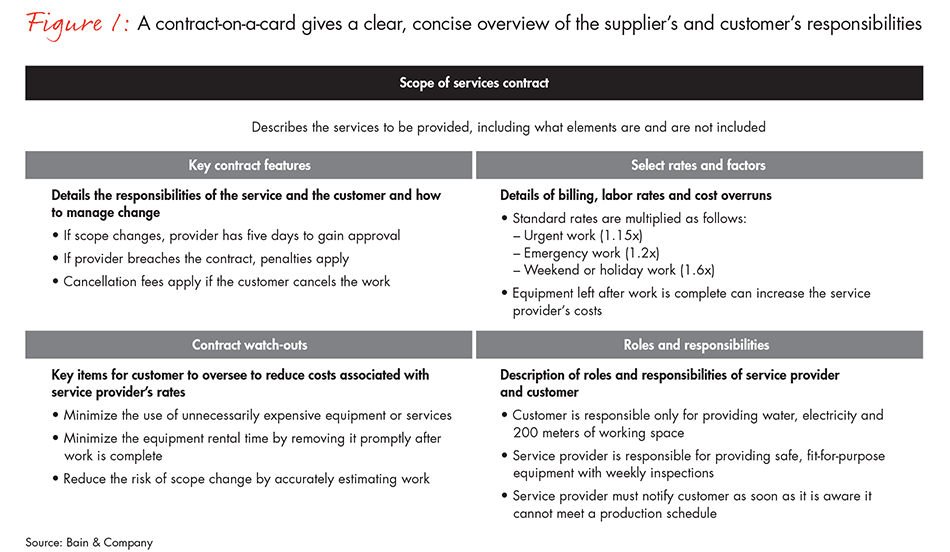
      • Tools to help the front line decide on work scope, volume and overtime. Two types of tools that work particularly well are the contract-on-a-page and scoping tools. The contract-on-a-page—sometimes reduced to its main points on a card that can hang on a lanyard—outlines the most important aspects of the contract and tells frontline staff how to reduce service cost (see Figure 1). The scoping tool helps the front line consider the most cost-effective way to do a job. For instance, one client created a simple chart that described the difference in cost and risk from using scaffolding, rope access, scissor lifts or forklift cages to access key points in the plant. The front line used this on a daily basis to make decisions on the best way to do a job and substantially reduced costs as a result.
      • Ongoing performance discussions with service suppliers on how to work together to create value, with rigorous follow-up to address any performance gaps. Monthly performance reviews are a good way to complement strong daily management, providing an opportunity to acknowledge successes and identify opportunities for improvement. It is important to plan these reviews carefully, making sure key staff from both sides are in the room and ensuring follow-up. In our experience, these sessions have an immediate effect on performance. In one recent conversation, the supplier offered multiple solutions that reduced the buyer’s costs without diluting the supplier’s profits.
      beyond-price-fig01_embed

      Companies with strong supplier performance management in place have found that not only do they yield additional near-term value, but they also create tools that empower the front line to keep costs down, improve supplier relationships and release some of the tension between procurement and operations. One client transformed its supplier relationships by piloting these measures in one category and eventually rolling them out across all categories, saving 10% to 15% in less time than contract negotiations would have taken.

      With oil priced as low as it is, every dollar counts. Aggressive price renegotiations are one important tactic, but operators and suppliers can create additional value through systematic supplier performance management at the front line. To do this, operators and suppliers will need to break down silos and identify what creates value in the contract. Doing so creates sustainable benefits that will remain even when oil prices and rates eventually recover.

      Joachim Breidenthal is a partner with Bain & Company in Johannesburg, and Torsten Lichtenau is a partner in the Bain London office. Both work with Bain’s Global Oil & Gas practice.


      beyond-price-fig01_full
      저자
      • Headshot of Joachim Breidenthal
        Joachim Breidenthal
        Alumni, Oslo
      • Headshot of Torsten Lichtenau
        Torsten Lichtenau
        파트너, London
      문의하기
      관련 산업
      • 석유 및 가스
      • 에너지와 천연자원
      관련 컨설팅 서비스
      • 고객 전략 및 마케팅
      최적의 솔루션 찾기
      • Elements of Value®
      석유 및 가스
      Beyond Cost Cutting: The Opportunity for Oilfield Services and Equipment Companies

      Oilfield services and equipment leaders are restructuring to reduce costs while optimizing their portfolios.

      자세히 보기
      석유 및 가스
      Capital Productivity for Oil and Gas in a Low-Price Environment

      Reducing capital expenditure is a natural response to low oil prices, but the industry needs to continue to explore and develop to meet long-term demand, which continues to grow.

      자세히 보기
      석유 및 가스
      Olya Linde: Managing Oil and Gas Service Suppliers for Value at the Front Line

      Oil and gas companies can carefully manage service suppliers to win greater cost savings.

      자세히 보기
      가치의 요소
      Three Elements of Value® for Consumers Take Precedence During a Pandemic

      Companies’ response to the coronavirus needs to deliver these three values.

      자세히 보기
      가치의 요소
      For B2B Companies, Six Elements of Value® Matter Most in the Coronavirus Pandemic

      Take the high road with customers.

      자세히 보기
      First published in 3월 2016
      태그
      • 가치의 요소
      • 고객 전략 및 마케팅
      • 석유 및 가스
      • 에너지와 천연자원
      • Elements of Value®

      프로젝트 사례

      조직 Moving Beyond an Operating Model Redesign to Live the Model

      See more related case studies

      지속 가능성 및 기업의 사회적 책임 An Oil and Gas Leader Creates a New Clean Energy Business

      See more related case studies

      M&A An OFS captures post-merger growth synergies

      See more related case studies

      베인에 궁금하신 점이 있으신가요?

      베인은 주저 없이 변화를 마주할 줄 아는 용감한 리더들과 함께합니다. 그리고, 이들의 담대한 용기는 고객사의 성공으로 이어집니다.

      급변하는 비즈니스 환경에서 살아남기 위한 선도자의 시각. 월간 Bain Insights에서 글로벌 비즈니스의 핵심 이슈를 확인하십시오.

      *개인정보 정책을 읽었으며 그 내용에 동의합니다.

      Privacy Policy를 읽고 동의해주십시오.
      Bain & Company
      문의하기 환경정책 Accessibility 이용약관 개인정보 보호 쿠키 사용 정책 Sitemap Log In

      © 1996-2026 Bain & Company, Inc.

      문의하기

      무엇을 도와드릴까요?

      • 프로젝트 문의
      • 채용 정보
      • 언론
      • 제휴 문의
      • 연사 초청
      오피스 전체보기