
Skip to Content
  • 오피스

    오피스

    미주
    • Atlanta
    • Austin
    • Bogota
    • Boston
    • Buenos Aires
    • Chicago
    • Dallas
    • Denver
    • Houston
    • Los Angeles
    • Mexico City
    • Minneapolis
    • Monterrey
    • Montreal
    • New York
    • Rio de Janeiro
    • San Francisco
    • Santiago
    • São Paulo
    • Seattle
    • Silicon Valley
    • Toronto
    • Washington, DC
    유럽, 중동, 아프리카
    • Amsterdam
    • Athens
    • Berlin
    • Brussels
    • Copenhagen
    • Doha
    • Dubai
    • Dusseldorf
    • Frankfurt
    • Helsinki
    • Istanbul
    • Johannesburg
    • Kyiv
    • Lisbon
    • London
    • Madrid
    • Milan
    • Munich
    • Oslo
    • Paris
    • Riyadh
    • Rome
    • Stockholm
    • Vienna
    • Warsaw
    • Zurich
    아시아, 호주
    • Bangkok
    • Beijing
    • Bengaluru
    • Brisbane
    • Ho Chi Minh City
    • Hong Kong
    • Jakarta
    • Kuala Lumpur
    • Manila
    • Melbourne
    • Mumbai
    • New Delhi
    • Perth
    • Seoul
    • Shanghai
    • Singapore
    • Sydney
    • Tokyo
    오피스 전체보기
  • 얼럼나이
  • 미디어 센터
  • 구독
  • 연락처
  • Korea | 한국어

    지역 및 언어 선택

    글로벌
    • Global (English)
    미주
    • Brazil (Português)
    • Argentina (Español)
    • Canada (Français)
    • Chile (Español)
    • Colombia (Español)
    유럽, 중동, 아프리카
    • France (Français)
    • DACH Region (Deutsch)
    • Italy (Italiano)
    • Spain (Español)
    • Greece (Elliniká)
    아시아, 호주
    • China (中文版)
    • Korea (한국어)
    • Japan (日本語)
  • Saved items (0)
    Saved items (0)

    You have no saved items.

    관심 있는 내용을 북마크하여 Red 폴더에 저장할 수 있습니다. Red 폴더 에서 저장된 내용을 읽거나 공유해보세요.

    Explore Bain Insights
  • 산업
    메인 메뉴

    산업

    • 우주항공, 방산 및 정부 서비스
    • 농업 관련 산업
    • 화학
    • 인프라, 건설 및 건축 자재
    • 소비재
    • 금융 서비스
    • 헬스케어
    • 산업용 기계 및 장비
    • 미디어 및 엔터테인먼트
    • 금속
    • 광업
    • 석유 및 가스
    • 제지 및 패키징 산업
    • 사모펀드
    • 사회 및 공공 부문
    • 유통
    • 기술
    • 텔레콤
    • 운송
    • 여행·여가
    • 유틸리티 및 재생가능 에너지
  • 컨설팅 서비스
    메인 메뉴

    컨설팅 서비스

    • Customer Experience
    • ESG
    • Innovation
    • M&A
    • 운영
    • 조직
    • 사모펀드
    • 고객 전략 및 마케팅
    • 전략
    • AI, 인사이트 및 솔루션
    • Technology
    • 변화 혁신
  • Digital
  • 인사이트
  • 베인 소개
    메인 메뉴

    베인 소개

    • 업무 소개
    • 베인의 신념
    • 구성원 및 리더십 소개
    • 고객 성과
    • 주요 수상 경력
    • 글로벌 파트너사
    Further: Our global responsibility
    • 다양성과 포용
    • 사회 공헌 활동
    • Sustainability
    • World Economic Forum
    Learn more about Further
  • Careers
    메인 메뉴

    Careers

    • Work with Us
      Careers
      Work with Us
      • Find Your Place
      • Our Work Areas
      • Integrated Teams
      • Students
      • Internships & Programs
      • Recruiting Events
    • Life at Bain
      Careers
      Life at Bain
      • Blog: Inside Bain
      • Career Stories
      • Our People
      • Where We Work
      • Supporting Your Growth
      • Affinity Groups
      • Benefits
    • Impact Stories
    • Hiring Process
      Careers
      Hiring Process
      • What to Expect
      • Interviewing
    FIND JOBS
  • 오피스
    메인 메뉴

    오피스

    • 미주
      오피스
      미주
      • Atlanta
      • Austin
      • Bogota
      • Boston
      • Buenos Aires
      • Chicago
      • Dallas
      • Denver
      • Houston
      • Los Angeles
      • Mexico City
      • Minneapolis
      • Monterrey
      • Montreal
      • New York
      • Rio de Janeiro
      • San Francisco
      • Santiago
      • São Paulo
      • Seattle
      • Silicon Valley
      • Toronto
      • Washington, DC
    • 유럽, 중동, 아프리카
      오피스
      유럽, 중동, 아프리카
      • Amsterdam
      • Athens
      • Berlin
      • Brussels
      • Copenhagen
      • Doha
      • Dubai
      • Dusseldorf
      • Frankfurt
      • Helsinki
      • Istanbul
      • Johannesburg
      • Kyiv
      • Lisbon
      • London
      • Madrid
      • Milan
      • Munich
      • Oslo
      • Paris
      • Riyadh
      • Rome
      • Stockholm
      • Vienna
      • Warsaw
      • Zurich
    • 아시아, 호주
      오피스
      아시아, 호주
      • Bangkok
      • Beijing
      • Bengaluru
      • Brisbane
      • Ho Chi Minh City
      • Hong Kong
      • Jakarta
      • Kuala Lumpur
      • Manila
      • Melbourne
      • Mumbai
      • New Delhi
      • Perth
      • Seoul
      • Shanghai
      • Singapore
      • Sydney
      • Tokyo
    오피스 전체보기
  • 얼럼나이
  • 미디어 센터
  • 구독
  • 연락처
  • Korea | 한국어
    메인 메뉴

    지역 및 언어 선택

    • 글로벌
      지역 및 언어 선택
      글로벌
      • Global (English)
    • 미주
      지역 및 언어 선택
      미주
      • Brazil (Português)
      • Argentina (Español)
      • Canada (Français)
      • Chile (Español)
      • Colombia (Español)
    • 유럽, 중동, 아프리카
      지역 및 언어 선택
      유럽, 중동, 아프리카
      • France (Français)
      • DACH Region (Deutsch)
      • Italy (Italiano)
      • Spain (Español)
      • Greece (Elliniká)
    • 아시아, 호주
      지역 및 언어 선택
      아시아, 호주
      • China (中文版)
      • Korea (한국어)
      • Japan (日本語)
  • Saved items  (0)
    메인 메뉴
    Saved items (0)

    You have no saved items.

    관심 있는 내용을 북마크하여 Red 폴더에 저장할 수 있습니다. Red 폴더 에서 저장된 내용을 읽거나 공유해보세요.

    Explore Bain Insights
  • 산업
    • 산업

      • 우주항공, 방산 및 정부 서비스
      • 농업 관련 산업
      • 화학
      • 인프라, 건설 및 건축 자재
      • 소비재
      • 금융 서비스
      • 헬스케어
      • 산업용 기계 및 장비
      • 미디어 및 엔터테인먼트
      • 금속
      • 광업
      • 석유 및 가스
      • 제지 및 패키징 산업
      • 사모펀드
      • 사회 및 공공 부문
      • 유통
      • 기술
      • 텔레콤
      • 운송
      • 여행·여가
      • 유틸리티 및 재생가능 에너지
  • 컨설팅 서비스
    • 컨설팅 서비스

      • Customer Experience
      • ESG
      • Innovation
      • M&A
      • 운영
      • 조직
      • 사모펀드
      • 고객 전략 및 마케팅
      • 전략
      • AI, 인사이트 및 솔루션
      • Technology
      • 변화 혁신
  • Digital
  • 인사이트
  • 베인 소개
    • 베인 소개

      • 업무 소개
      • 베인의 신념
      • 구성원 및 리더십 소개
      • 고객 성과
      • 주요 수상 경력
      • 글로벌 파트너사
      Further: Our global responsibility
      • 다양성과 포용
      • 사회 공헌 활동
      • Sustainability
      • World Economic Forum
      Learn more about Further
  • Careers
    최근 검색어
      최근 방문 페이지

      Content added to saved items

      Saved items (0)

      Removed from saved items

      Saved items (0)

      Brief

      Calling on Procurement to Add More Value to Insurance Claims Management

      Calling on Procurement to Add More Value to Insurance Claims Management

      Close collaboration between procurement and business units can reduce claims costs while raising customer advocacy.

      글 Klaus Neuhaus, Richard Fleming, Gerry Mattios, Thomas Lagner and Philipp Weiherl

      • 읽기 소요시간
      }

      Brief

      Calling on Procurement to Add More Value to Insurance Claims Management
      en

      Insurance companies face increased pressure from investors to demonstrate that they can grow while controlling costs. Claims handling, a historically undermanaged area, deserves a new look. Given the low priority assigned to claims handling in the past, many insurers face a capabilities gap: Category strategies do not exist, and fewer than two-thirds of claims are fully transparent to insurers’ own staff.

      A broader, more strategic approach to claims procurement allows insurers to make step-change improvements. The most advanced procurement functions add substantial value by becoming strategic partners with claims organizations. For instance, they might jointly choose the most suitable loss adjusters.

      One global property and casualty (P&C) insurer based in the Asia-Pacific region optimized its claims management substantially through this approach, reducing fees and indemnity spending by about 7% per year. Investors rewarded these improvements with a higher valuation of the business.

      The virtues of collaboration

      Procurement has long been viewed as a back-office function that mostly pushes purchase orders. Yet nearly all of benefits come from embedding procurement in claims management at the beginning of the process, especially for large categories such as medical providers, loss adjusters and repairers.

      Because the procurement and claims functions bring different expertise to the table, insurers realize major benefits from close collaboration:

      • reduced fees, with rates at competitive levels relative to other insurers;
      • optimized payouts that are appropriate for the claim amount; and
      • higher customer satisfaction and advocacy.

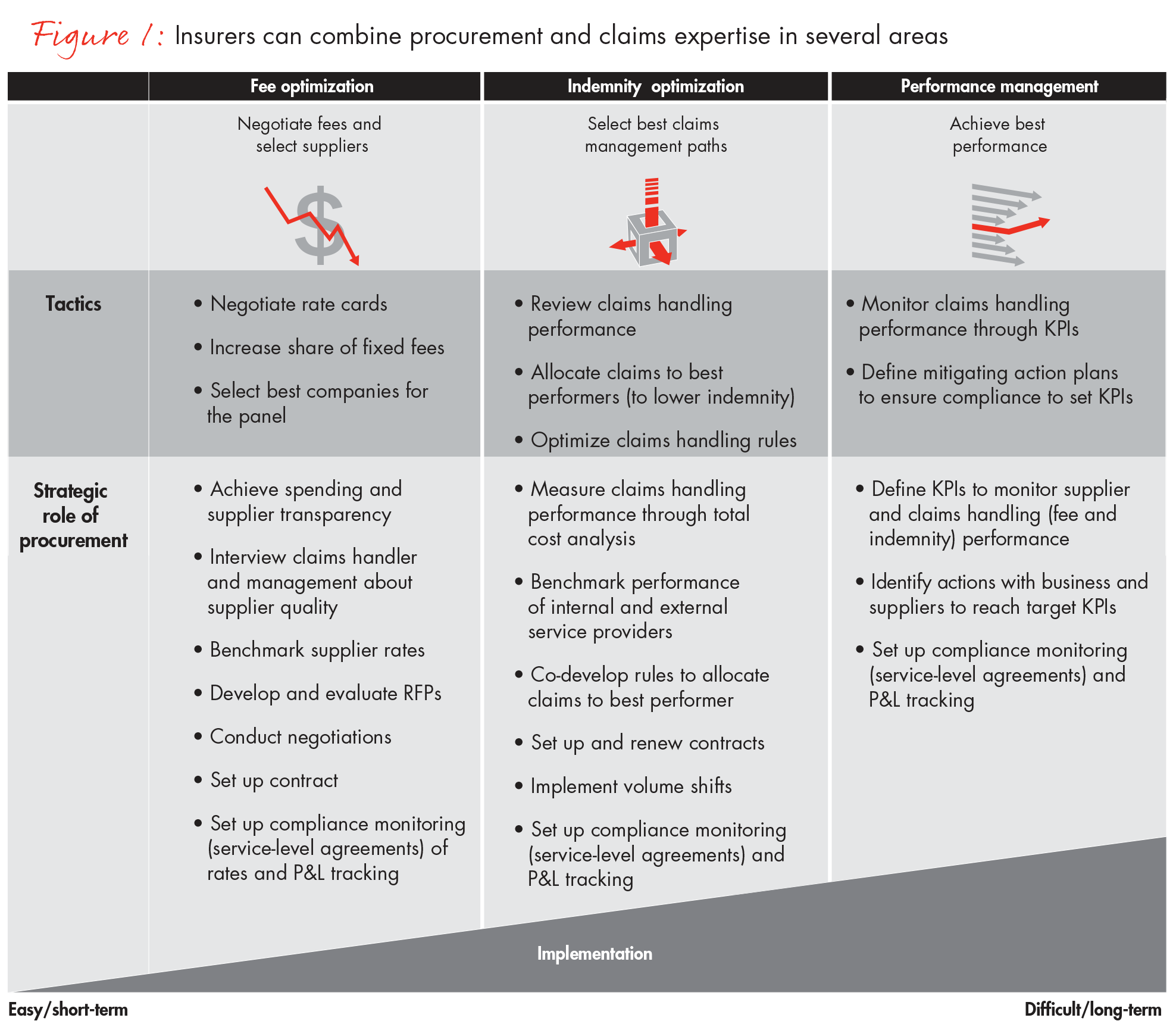
      Combining procurement and claims expertise in several areas and throughout the claims episode gives insurers an advantage (see Figure 1). For example, the two functions can work together to be more systematic and rigorous about selecting vendors and negotiating fees. In demand control, compliance and allocating claims volumes to different vendors, they can identify the best-performing firms and define rules to assign cases. Finally, they can rigorously track vendors’ performance to ensure consistent results over the contract period.

      insurance-claims-procurement-fig01_embed

      Optimizing claims legal services

      Claims legal services presents one of the most attractive categories for cost optimization. The spending level is high, including not only law firm fees and expenses (15% of spending), but also the related indemnity payments influenced by law firms (85% of spending). In our experience, insurers can achieve a 10% to 20% savings.

      Best-in-class insurers set up a joint claims and procurement approach as basis for success. They then conduct a detailed supplier due diligence, which includes deriving a supplier score and conducting a total cost analysis (TCA). The supplier score integrates several streams of information, such as claims handler interviews and supplier presentations. Incumbent and potential new law firms are rated on a numeric scale and on different dimensions, such as expertise, customer satisfaction, innovation, strategic partnership and financial stability.

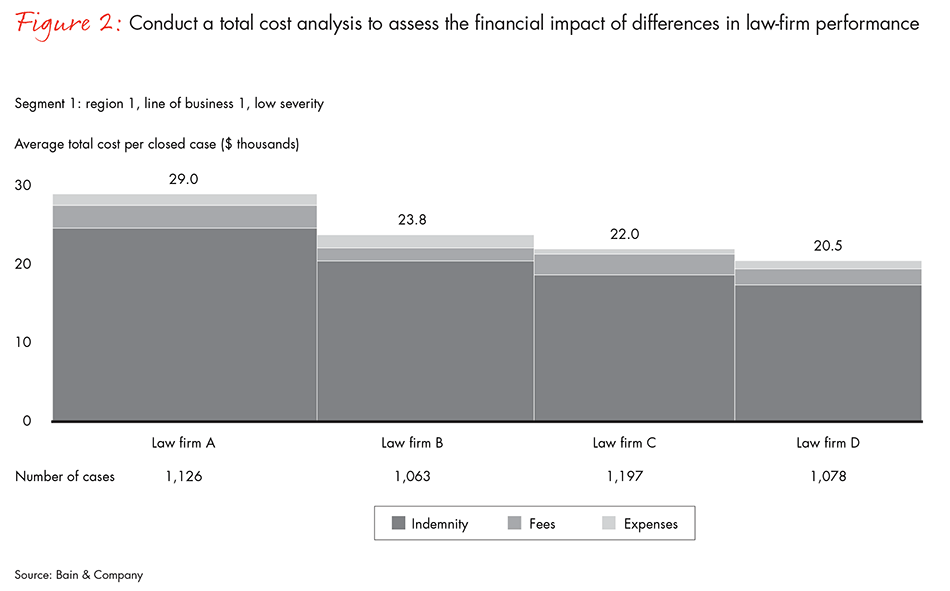
      The TCA assesses financial performance of law firms in like-for-like segments, such as auto liability claims with low severity in rural Texas. Typical criteria include location, case type and severity. Insurers derive the average total cost per claim, including fees, expenses and indemnity payments per law firm in those comparable segments (see Figure 2).

      insurance-claims-procurement-fig02_embed

      In the next phase, the procurement and claims groups work together to conduct a well-orchestrated negotiation process and agree on a selection of suppliers. These negotiations aim not only to improve pricing levels and schemes, such as moving to fixed prices for certain segments or introducing new incentives, but also to build strategic partnerships. Procurement, together with the business stakeholders, should develop a detailed plan covering negotiation strategy, risk assessment, communications and negotiation meeting agendas.

      The combined rigor of the TCA, supplier scores and negotiations equips insurers to make an objective decision on a final panel setup that will deliver significant financial benefits and high-quality services. The final panel will comprise law firms that have proven that they offer the best value, and each will be used for different segments.

      An Australian insurer’s review of a panel for one of its businesses enabled the company to reduce the number of law firms from 15 to 10, from which subpanels were formed for each line of business. The insurer reduced spending by 20%, even as it increased the supplier score by selecting the best performers.

      Finally, best in-class insurers continually manage the selected law firms. This includes data-driven performance monitoring, as well as experience sharing between law firms and claims handlers, in order to improve claims handling and reduce the total cost per claim.

      Making deft use of third-party administrators in auto insurance

      Auto claims management can yield up to 20% savings when the business and procurement group undertake a joint approach to optimize fees and indemnity for the many cases that can be standardized.

      Sourced services range from outsourcing the full claims handling process with third-party administrators (TPAs) to negotiating contracts with providers along each step in the value chain, from assessors to body shop networks, parts providers and rental car agencies.

      TPAs handle motor claims from end to end and have a major effect on the cost of repair and on customer experience. In the case of an accident, they are the main contact for policyholders and thus have a big influence on customers’ perceptions of the insurer.

      At the same time, the insurer may face above-average repair costs if the TPA relies on an expensive repair network that takes a day or two longer than the industry average, leading to higher spending on rental cars. In the worst case, this not only raises indemnity cost, but also degrades the customer experience, as the higher price does not guarantee better service.

      Despite these challenges, outsourcing auto claims handling can be highly effective. TPAs are better placed than insurers to keep up with process and technological advances, because they handle claims for numerous insurers. They can respond more flexibly to fluctuations in demand for notice of losses. They have greater access to repair networks and staff.

      We have seen insurers initially save up to 15% to 20% on fee and indemnity with a TPA, as well as enhance customer experience by choosing a strong performer. Further savings accrue from taking on other steps in the value chain, such as setting up framework agreements with parts and paint distributors and putting in place global contracts for windshields.

      Organizing for collaboration

      Unlocking value through procurement requires procurement and claims management teams to commit to a close collaboration. Making the procurement function a truly strategic partner with the business removes a burden from the claims team, allowing it to focus on what it does best. It pays for procurement and business teams to get to know the other’s priorities before engaging in a cost-reduction program that may have major business implications. For example, during budgeting and annual business planning, the teams benefit by synchronizing their objectives and delivery timelines.

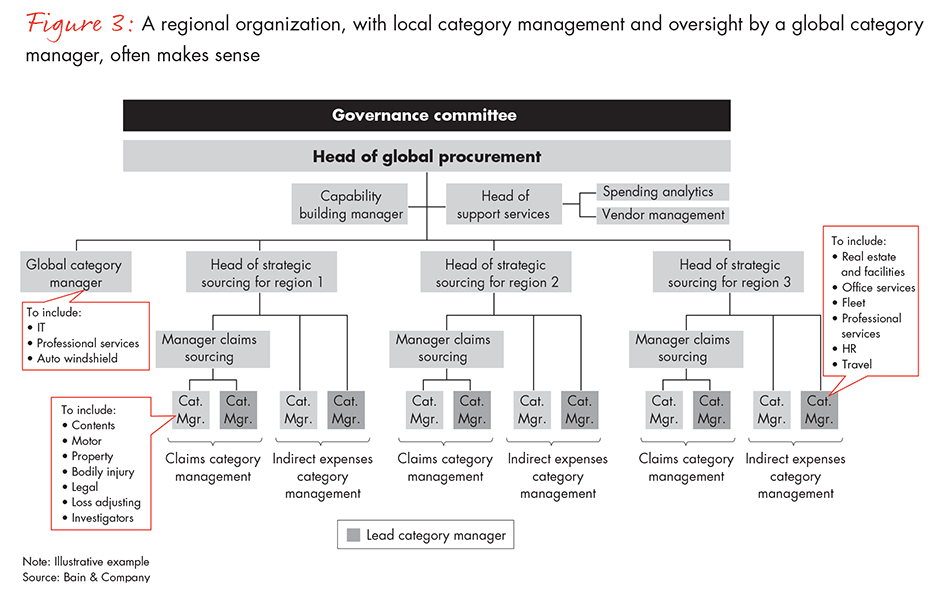
      Leading insurers give organizational clarity to procurement by assigning a chief procurement officer, who reports to the chief financial officer or chief operating officer and builds a strong rapport with the head of claims. Generally, it makes sense to organize procurement by regions (see Figure 3) but have category management take place at a local level, with oversight by a global category manager.

      Many insurance firms have overlooked the huge potential to unlock value through a rigorous, collaborative approach. Companies willing to take this approach can realize substantial cost savings, a faster and more streamlined claims management process and more satisfied customers.

      insurance-claims-procurement-fig03_embed

      Klaus Neuhaus is a partner with Bain & Company based in Düsseldorf. Richard Fleming is a partner based in New York. Gerry Mattios is a principal based in Beijing. Thomas Lagner and Philipp Weiherl are managers based in Munich. They are affiliated with Bain’s Financial Services practice.


      insurance-claims-procurement-fig01_full

      insurance-claims-procurement-fig02_full

      insurance-claims-procurement-fig03_full
      저자
      • Headshot of Klaus Neuhaus
        Klaus Neuhaus
        파트너, Dusseldorf
      • Headshot of Richard Fleming
        Richard Fleming
        파트너, Sydney
      • Headshot of Gerry Mattios
        Gerry Mattios
        파트너, Singapore
      • Philipp Weiherl
        Alumni, Munich
      문의하기
      관련 산업
      • 금융 서비스
      관련 컨설팅 서비스
      • Procurement
      금융 서비스
      Divide and Conquer: A Guide to Winning SME Banking Strategies

      Small and midsize businesses can offer attractive returns if banks carefully choose their segments and take a more tailored approach.

      자세히 보기
      뱅킹
      Retail Banks Wake Up to Digital Lending

      Our benchmark survey highlights the capability gaps and the potential for banks to defend their profit pools.

      자세히 보기
      금융 서비스
      Five Imperatives for Navigating Turbulence in the Payments Ecosystem

      How merchant acquirers can evolve from financial utility to technology partner.

      자세히 보기
      금융 서비스
      Six Strategies to Help Your Company Weather Inflation

      Lessons from a study of 5,700 global businesses.

      자세히 보기
      금융 서비스
      Rethinking Transformation: Lawrence Lam on Leading Change at Prudential

      Frankie Leung speaks with Lawrence Lam, CEO of Prudential Hong Kong, about organizational transformation and sustaining change through a people-led approach.

      자세히 보기
      First published in 5월 2016
      태그
      • 금융 서비스
      • Procurement

      프로젝트 사례

      지속 가능성 및 기업의 사회적 책임 Voluntary Carbon Markets: A Bank Moves Early to Seize the Opportunity

      See more related case studies

      성과 개선 Lean Six Sigma solves a commercial bank's growth problem

      See more related case studies

      정보기술(IT) Bridging the Gap Between Business and Technology

      See more related case studies

      베인에 궁금하신 점이 있으신가요?

      베인은 주저 없이 변화를 마주할 줄 아는 용감한 리더들과 함께합니다. 그리고, 이들의 담대한 용기는 고객사의 성공으로 이어집니다.

      급변하는 비즈니스 환경에서 살아남기 위한 선도자의 시각. 월간 Bain Insights에서 글로벌 비즈니스의 핵심 이슈를 확인하십시오.

      *개인정보 정책을 읽었으며 그 내용에 동의합니다.

      Privacy Policy를 읽고 동의해주십시오.
      Bain & Company
      문의하기 환경정책 Accessibility 이용약관 개인정보 보호 쿠키 사용 정책 Sitemap Log In

      © 1996-2026 Bain & Company, Inc.

      문의하기

      무엇을 도와드릴까요?

      • 프로젝트 문의
      • 채용 정보
      • 언론
      • 제휴 문의
      • 연사 초청
      오피스 전체보기