Skip to Content
  • 오피스

    오피스

    미주
    • Atlanta
    • Austin
    • Bogota
    • Boston
    • Buenos Aires
    • Chicago
    • Dallas
    • Denver
    • Houston
    • Los Angeles
    • Mexico City
    • Minneapolis
    • Monterrey
    • Montreal
    • New York
    • Rio de Janeiro
    • San Francisco
    • Santiago
    • São Paulo
    • Seattle
    • Silicon Valley
    • Toronto
    • Washington, DC
    유럽, 중동, 아프리카
    • Amsterdam
    • Athens
    • Berlin
    • Brussels
    • Copenhagen
    • Doha
    • Dubai
    • Dusseldorf
    • Frankfurt
    • Helsinki
    • Istanbul
    • Johannesburg
    • Kyiv
    • Lisbon
    • London
    • Madrid
    • Milan
    • Munich
    • Oslo
    • Paris
    • Riyadh
    • Rome
    • Stockholm
    • Vienna
    • Warsaw
    • Zurich
    아시아, 호주
    • Bangkok
    • Beijing
    • Bengaluru
    • Brisbane
    • Ho Chi Minh City
    • Hong Kong
    • Jakarta
    • Kuala Lumpur
    • Manila
    • Melbourne
    • Mumbai
    • New Delhi
    • Perth
    • Seoul
    • Shanghai
    • Singapore
    • Sydney
    • Tokyo
    오피스 전체보기
  • 얼럼나이
  • 미디어 센터
  • 구독
  • 연락처
  • Korea | 한국어

    지역 및 언어 선택

    글로벌
    • Global (English)
    미주
    • Brazil (Português)
    • Argentina (Español)
    • Canada (Français)
    • Chile (Español)
    • Colombia (Español)
    유럽, 중동, 아프리카
    • France (Français)
    • DACH Region (Deutsch)
    • Italy (Italiano)
    • Spain (Español)
    • Greece (Elliniká)
    아시아, 호주
    • China (中文版)
    • Korea (한국어)
    • Japan (日本語)
  • Saved items (0)
    Saved items (0)

    You have no saved items.

    관심 있는 내용을 북마크하여 Red 폴더에 저장할 수 있습니다. Red 폴더 에서 저장된 내용을 읽거나 공유해보세요.

    Explore Bain Insights
  • 산업
    메인 메뉴

    산업

    • 우주항공, 방산 및 정부 서비스
    • 농업 관련 산업
    • 화학
    • 인프라, 건설 및 건축 자재
    • 소비재
    • 금융 서비스
    • 헬스케어
    • 산업용 기계 및 장비
    • 미디어 및 엔터테인먼트
    • 금속
    • 광업
    • 석유 및 가스
    • 제지 및 패키징 산업
    • 사모펀드
    • 사회 및 공공 부문
    • 유통
    • 기술
    • 텔레콤
    • 운송
    • 여행·여가
    • 유틸리티 및 재생가능 에너지
  • 컨설팅 서비스
    메인 메뉴

    컨설팅 서비스

    • Customer Experience
    • ESG
    • Innovation
    • M&A
    • 운영
    • 조직
    • 사모펀드
    • 고객 전략 및 마케팅
    • 전략
    • AI, 인사이트 및 솔루션
    • Technology
    • 변화 혁신
  • Digital
  • 인사이트
  • 베인 소개
    메인 메뉴

    베인 소개

    • 업무 소개
    • 베인의 신념
    • 구성원 및 리더십 소개
    • 고객 성과
    • 주요 수상 경력
    • 글로벌 파트너사
    Further: Our global responsibility
    • 다양성과 포용
    • 사회 공헌 활동
    • Sustainability
    • World Economic Forum
    Learn more about Further
  • Careers
    메인 메뉴

    Careers

    • Work with Us
      Careers
      Work with Us
      • Find Your Place
      • Our Work Areas
      • Integrated Teams
      • Students
      • Internships & Programs
      • Recruiting Events
    • Life at Bain
      Careers
      Life at Bain
      • Blog: Inside Bain
      • Career Stories
      • Our People
      • Where We Work
      • Supporting Your Growth
      • Affinity Groups
      • Benefits
    • Impact Stories
    • Hiring Process
      Careers
      Hiring Process
      • What to Expect
      • Interviewing
    FIND JOBS
  • 오피스
    메인 메뉴

    오피스

    • 미주
      오피스
      미주
      • Atlanta
      • Austin
      • Bogota
      • Boston
      • Buenos Aires
      • Chicago
      • Dallas
      • Denver
      • Houston
      • Los Angeles
      • Mexico City
      • Minneapolis
      • Monterrey
      • Montreal
      • New York
      • Rio de Janeiro
      • San Francisco
      • Santiago
      • São Paulo
      • Seattle
      • Silicon Valley
      • Toronto
      • Washington, DC
    • 유럽, 중동, 아프리카
      오피스
      유럽, 중동, 아프리카
      • Amsterdam
      • Athens
      • Berlin
      • Brussels
      • Copenhagen
      • Doha
      • Dubai
      • Dusseldorf
      • Frankfurt
      • Helsinki
      • Istanbul
      • Johannesburg
      • Kyiv
      • Lisbon
      • London
      • Madrid
      • Milan
      • Munich
      • Oslo
      • Paris
      • Riyadh
      • Rome
      • Stockholm
      • Vienna
      • Warsaw
      • Zurich
    • 아시아, 호주
      오피스
      아시아, 호주
      • Bangkok
      • Beijing
      • Bengaluru
      • Brisbane
      • Ho Chi Minh City
      • Hong Kong
      • Jakarta
      • Kuala Lumpur
      • Manila
      • Melbourne
      • Mumbai
      • New Delhi
      • Perth
      • Seoul
      • Shanghai
      • Singapore
      • Sydney
      • Tokyo
    오피스 전체보기
  • 얼럼나이
  • 미디어 센터
  • 구독
  • 연락처
  • Korea | 한국어
    메인 메뉴

    지역 및 언어 선택

    • 글로벌
      지역 및 언어 선택
      글로벌
      • Global (English)
    • 미주
      지역 및 언어 선택
      미주
      • Brazil (Português)
      • Argentina (Español)
      • Canada (Français)
      • Chile (Español)
      • Colombia (Español)
    • 유럽, 중동, 아프리카
      지역 및 언어 선택
      유럽, 중동, 아프리카
      • France (Français)
      • DACH Region (Deutsch)
      • Italy (Italiano)
      • Spain (Español)
      • Greece (Elliniká)
    • 아시아, 호주
      지역 및 언어 선택
      아시아, 호주
      • China (中文版)
      • Korea (한국어)
      • Japan (日本語)
  • Saved items  (0)
    메인 메뉴
    Saved items (0)

    You have no saved items.

    관심 있는 내용을 북마크하여 Red 폴더에 저장할 수 있습니다. Red 폴더 에서 저장된 내용을 읽거나 공유해보세요.

    Explore Bain Insights
  • 산업
    • 산업

      • 우주항공, 방산 및 정부 서비스
      • 농업 관련 산업
      • 화학
      • 인프라, 건설 및 건축 자재
      • 소비재
      • 금융 서비스
      • 헬스케어
      • 산업용 기계 및 장비
      • 미디어 및 엔터테인먼트
      • 금속
      • 광업
      • 석유 및 가스
      • 제지 및 패키징 산업
      • 사모펀드
      • 사회 및 공공 부문
      • 유통
      • 기술
      • 텔레콤
      • 운송
      • 여행·여가
      • 유틸리티 및 재생가능 에너지
  • 컨설팅 서비스
    • 컨설팅 서비스

      • Customer Experience
      • ESG
      • Innovation
      • M&A
      • 운영
      • 조직
      • 사모펀드
      • 고객 전략 및 마케팅
      • 전략
      • AI, 인사이트 및 솔루션
      • Technology
      • 변화 혁신
  • Digital
  • 인사이트
  • 베인 소개
    • 베인 소개

      • 업무 소개
      • 베인의 신념
      • 구성원 및 리더십 소개
      • 고객 성과
      • 주요 수상 경력
      • 글로벌 파트너사
      Further: Our global responsibility
      • 다양성과 포용
      • 사회 공헌 활동
      • Sustainability
      • World Economic Forum
      Learn more about Further
  • Careers
    최근 검색어
      최근 방문 페이지

      Content added to saved items

      Saved items (0)

      Removed from saved items

      Saved items (0)

      Brief

      Covid-19 Hits Private Equity: The Early Data Is Not Pretty

      Covid-19 Hits Private Equity: The Early Data Is Not Pretty

      The numbers through April show that the coronavirus pandemic has put the brakes on buyouts, exits, fund-raising and returns.

      글 Hugh MacArthur, Graham Elton, and Brenda Rainey

      • 읽기 소요시간
      }

      Brief

      Covid-19 Hits Private Equity: The Early Data Is Not Pretty
      en

      A month ago, we took a hard look at what happened to the private equity industry in the wake of the 2008–2009 global financial crisis. In the absence of clear data, we knew it would shed light on what impact the Covid-19 crisis might have on investments, exits, fund-raising and returns.

      Now the data through April is in, and it’s not pretty.

      For Our Clients

      Macro Surveillance Platform

      For more detail on the business implications of coronavirus from Bain’s Macro Trends Group, log on to the Macro Surveillance Platform. Learn more about the platform >

      The industry is already experiencing a sharp drop-off in global buyout and exit transactions. Most signposts suggest we should expect the same in fund-raising and returns as the year unfolds. A record level of dry powder in the market continues to pressure funds to find and do deals. But with markets roiled by volatility and cash-strapped companies struggling just to figure out what demand is going to look like in the coming year, the mix of opportunities has shifted substantially. Here’s what’s happening in each market category.

      Investments

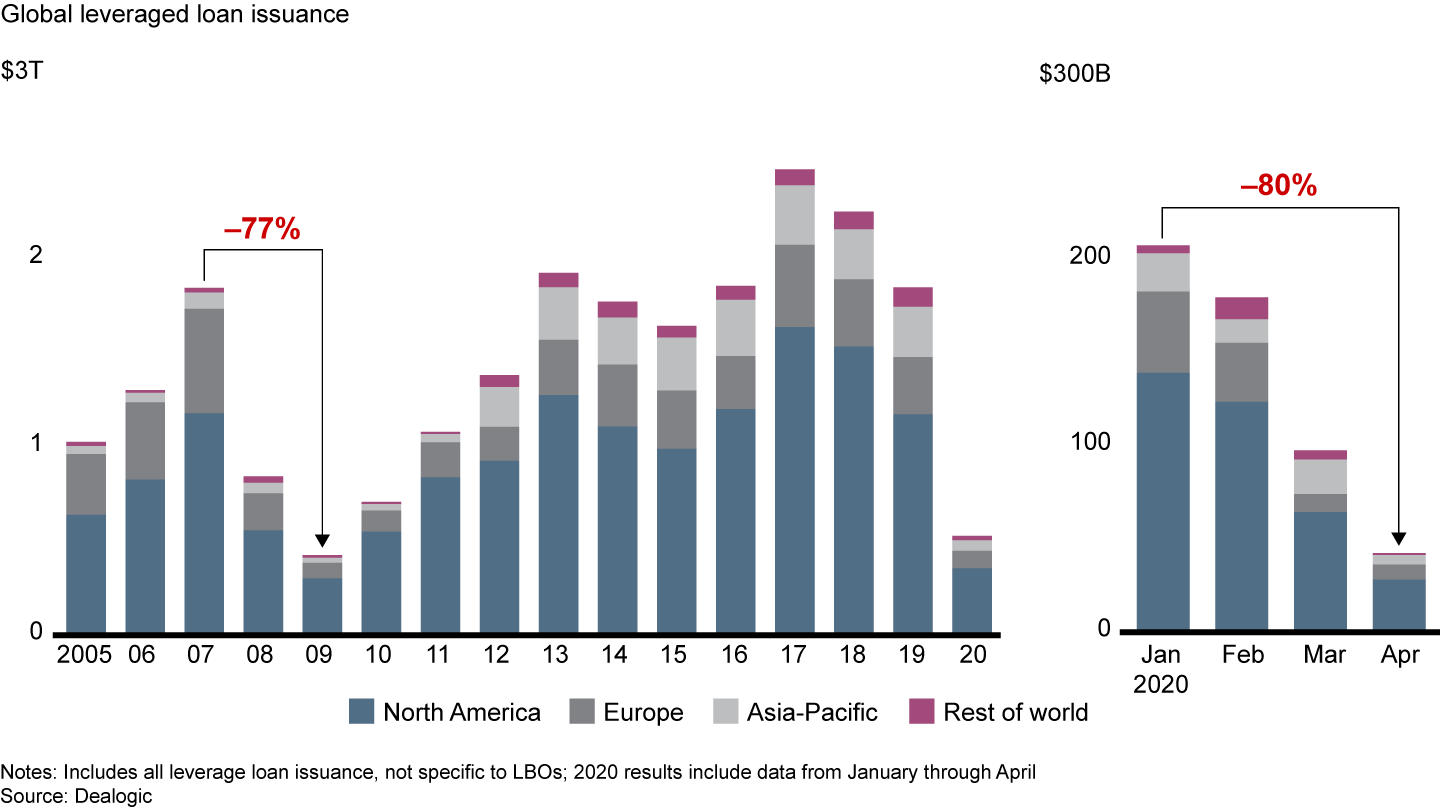
      The number of global buyout transactions fell 60% from January to April and is now trending at around a third of the five-year monthly average (see Figure 1a). The market forces remain as we described them last time: general partners (GPs) have largely been focused on stabilizing portfolios, sellers are reluctant to unload their companies amid volatility and lenders are busy tending to existing loans, while still trying to figure out how to assess risk amid deep macroeconomic uncertainty. Although banks aren’t frozen as they were during the last downturn, leveraged lending has fallen 80% this year (see Figure 1b).

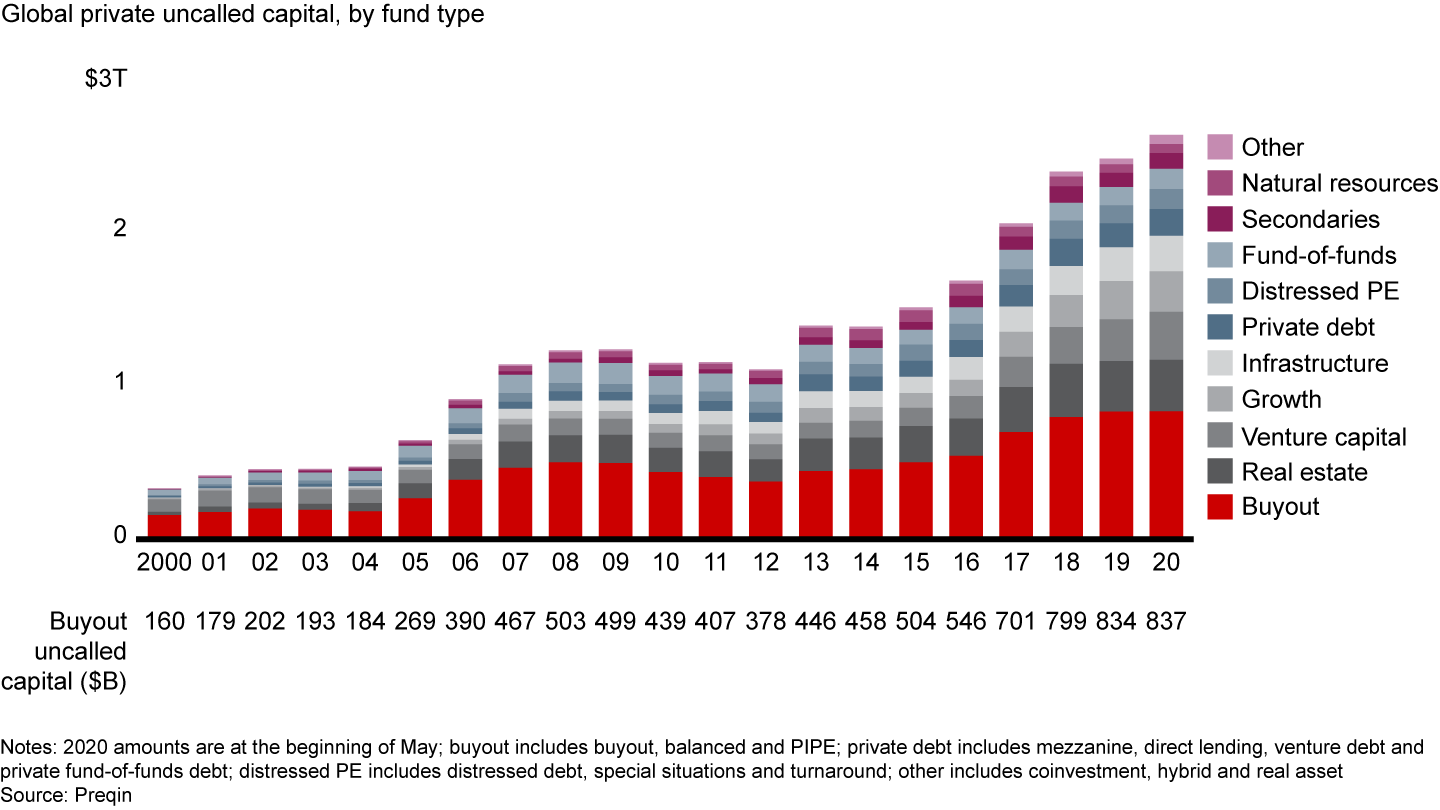
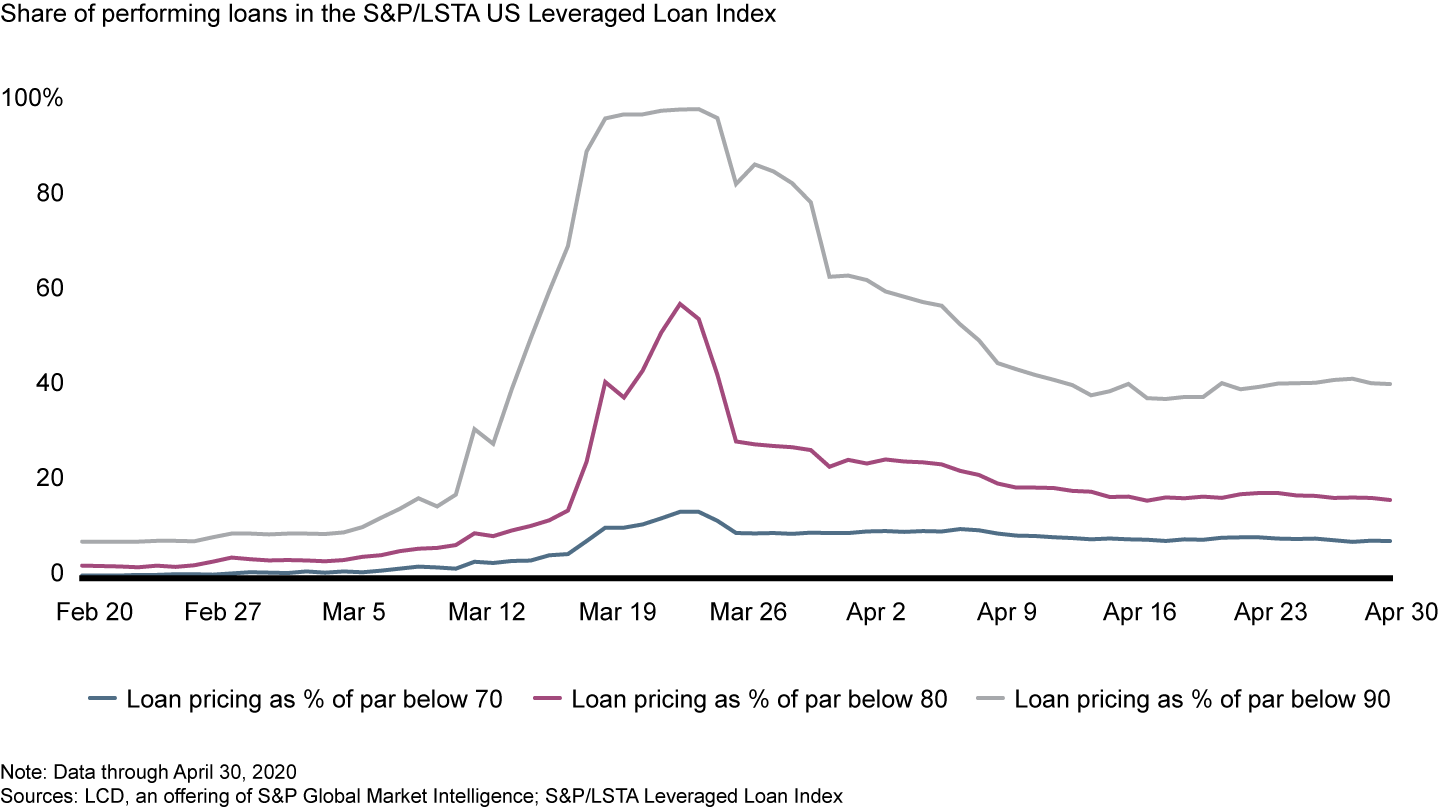
      At the same time, however, there’s never been more dry powder in the market available to do deals. In April, private equity funds were sitting on a record $2.6 trillion in unspent capital (see Figure 1c). As funds search for places to put that money to work, the most obvious place (for GPs with the mandate) has been on the debt side of the capital structure. While more than 90% of leveraged loans were trading above 90 as a percentage of par in early March, the market reversed itself as the pandemic took hold, sending more than 90% of them below 90 as a percentage of par by late March. The market has recovered somewhat, but at the end of April, around 40% of issues were still trading below 90 (see Figure 1d).

      Figure 1 (slideshow): 1a
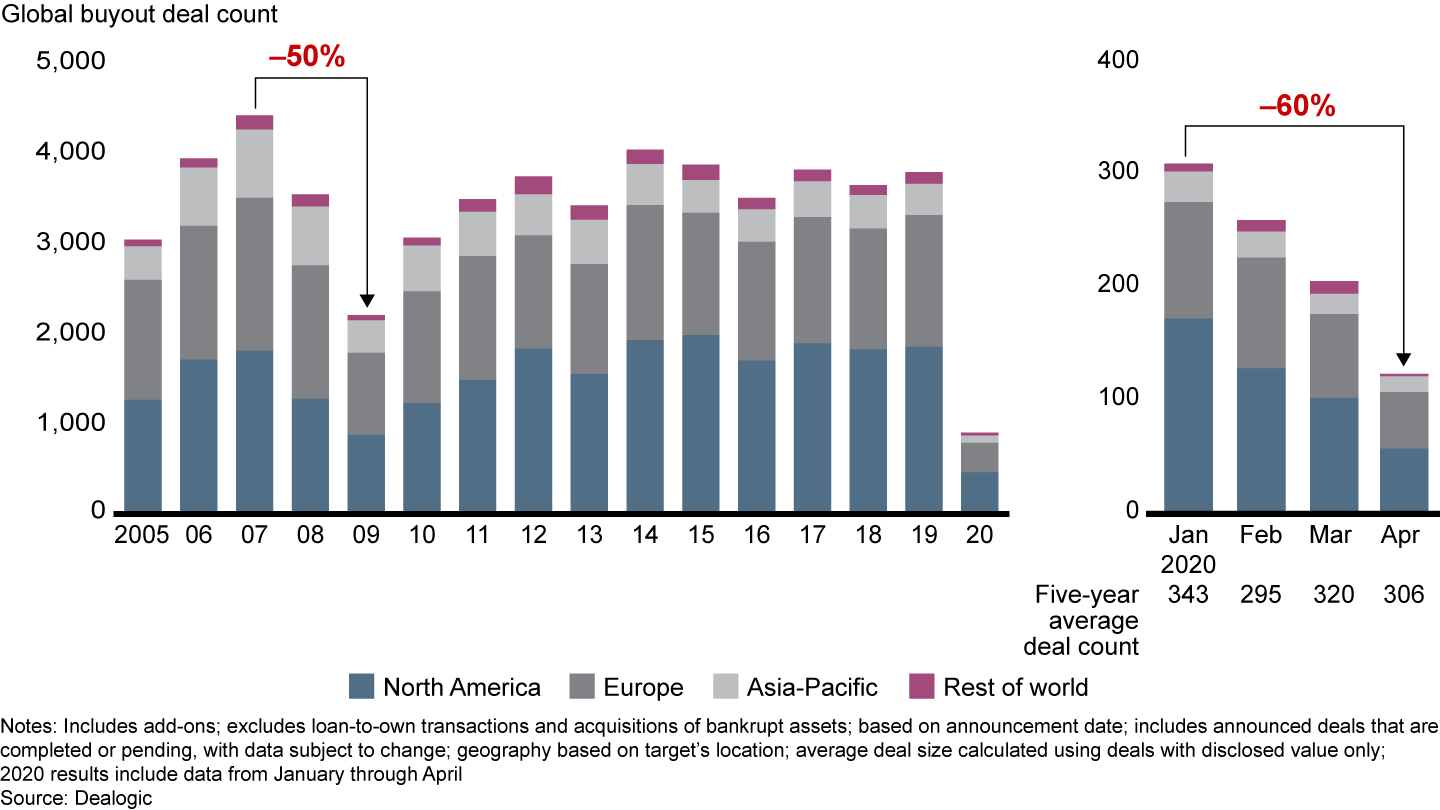
      The number of buyouts has fallen precipitously in the wake of Covid-19, mirroring the deep drop during the global financial crisis

      Figure 1 (slideshow): 1b

      High-yield lending for new deals has stalled as banks pull back amid market uncertainty

      Figure 1 (slideshow): 1c

      Funds of all types have a record amount of unspent capital waiting to be put to work

      Figure 1 (slideshow): 1d

      Subpar loans soared in late March and continue to signal opportunity for funds that can invest in debt

      Debt specialists have been pressing on various strategies—loan-to-own, distressed investments with no control (trade in/trade out), direct lending, etc.—and using analytics to get a better handle on fundamental operating strength. Equity funds, meanwhile, are also getting creative as they pursue various kinds of structured equity deals, ranging from investments in preferred stock and warrants to private-investment-in-public-equity (PIPE) transactions. PIPEs are bespoke investments in newly issued tranches of equity that can help public companies raise cash quickly when banks are reluctant to lend. PE sponsors and hedge funds, among other financial investors, have invested more than $8.6 billion in US PIPE investments this year through May 12, including the $400 million investment in publicly traded Outfront Media Inc. by Providence Equity Partners and Ares Management Corp.  

      Exits

      The number of exit transactions has fallen 72% since January (see Figure 2). At the moment, funds are waiting for smoother sailing before selling anything they don’t have to. Indeed, 83% of GPs surveyed by Investec recently said they didn’t expect to exit any of their portfolio companies over the next 12 months. That could change rapidly, however, as soon as market conditions improve. Unlike during the global financial crisis, when the majority of companies in PE portfolios had just been bought, GPs today are coming off many consecutive years of strong dealmaking and are sitting on assets that they would be expected to sell soon in a normal market. They won’t exit if the price isn’t right. But the aging pool of assets will likely accelerate activity once the rebound takes shape.

      Figure 1 (slideshow): Figure 2
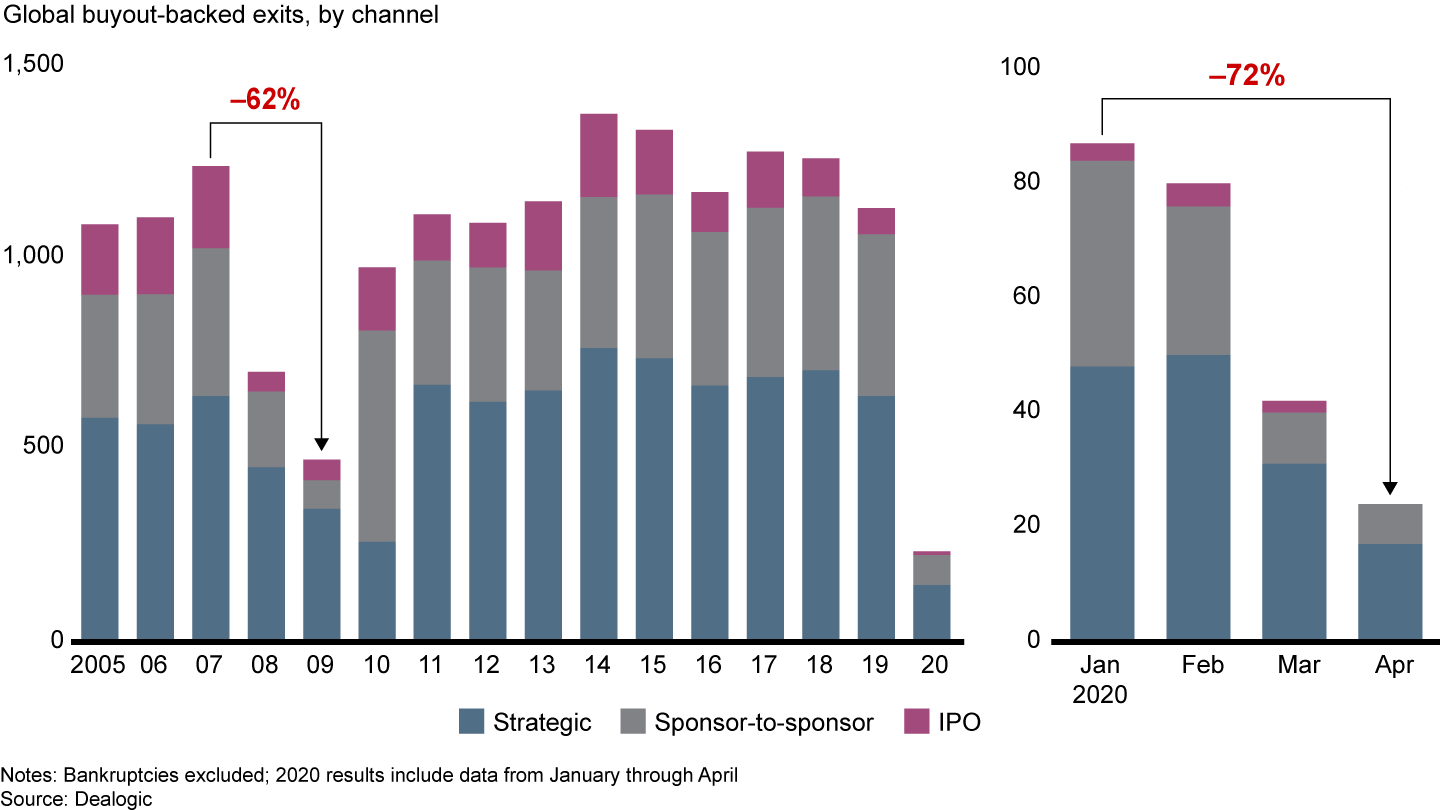
      Exit activity has also fallen off a cliff, as owners hold onto assets through the crisis

      Fund-raising

      Through April, fund-raising totals have actually been pretty good. Globally, funds of all types raised $287 billion over the year’s first four months. On an annualized basis, that would be over $860 billion by the end of 2020, right in line with recent years (see Figure 3a). But what we’re seeing is a bit of a mirage. Funds don’t hold a final close until the last dollar is in the door. That means that the bulk of the money raised this year actually reflects efforts that preceded the Covid-19 crisis. Other indications suggest that limited partners (LPs) will surely trim the amount of capital they invest with PE funds over the next eight months.

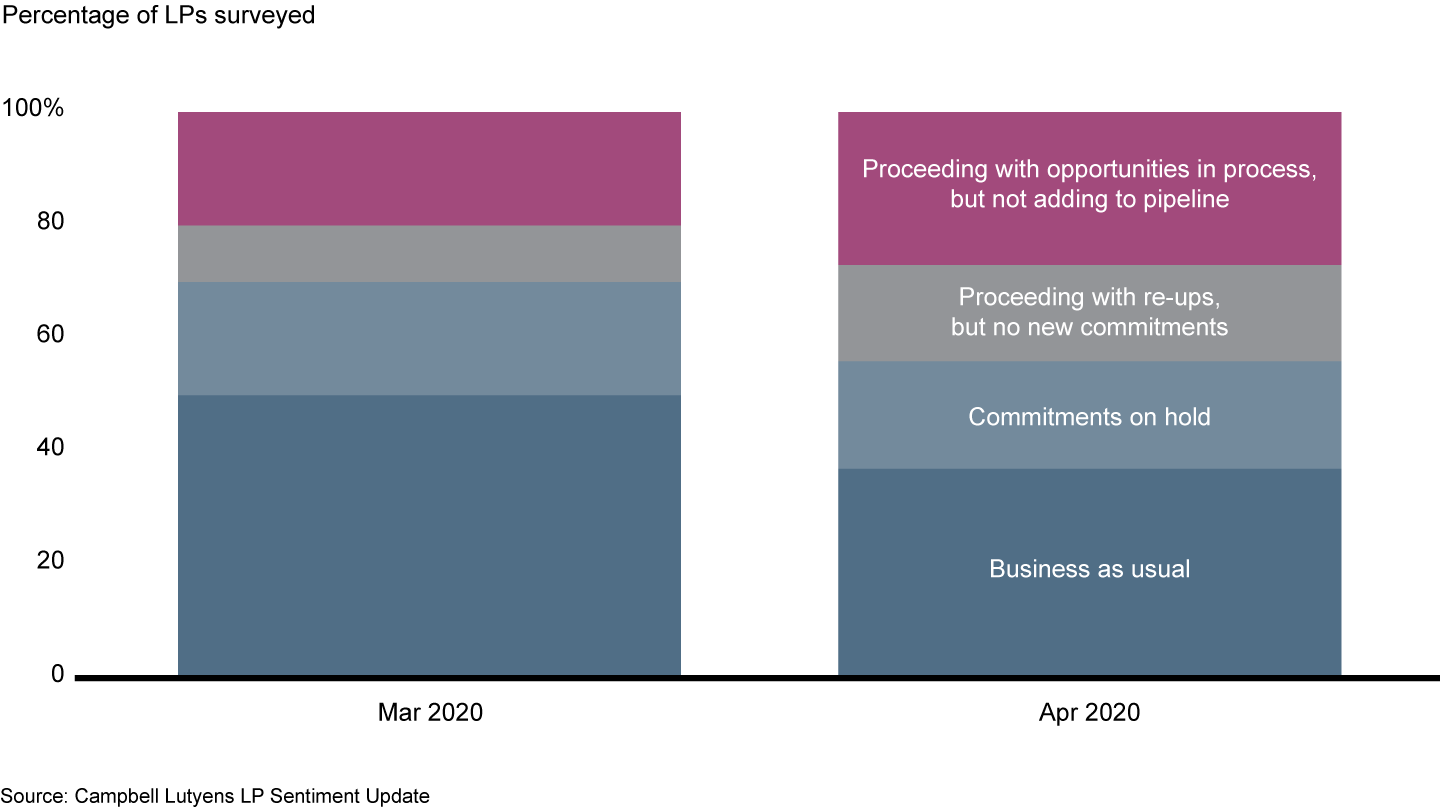
      Only around one-third of LPs surveyed by Campbell Lutyens said in April they will continue with “business as usual” when making new fund commitments (see Figure 3b). The rest are putting commitments on hold, proceeding only with “re-ups” but not adding new GP relationships, or proceeding with opportunities in process, but not adding to the pipeline. As we noted in the previous update, the reasons are mostly structural. One factor is the “denominator effect,” which skews the proportion of different asset classes in an LP’s portfolio when markets are extremely volatile. Around 11% of LPs surveyed in early April by the Institutional Limited Partners Association (ILPA) said they were extremely concerned that the denominator effect would push them over their PE targets, limiting new allocations.

      Figure 3 (slideshow): 3a
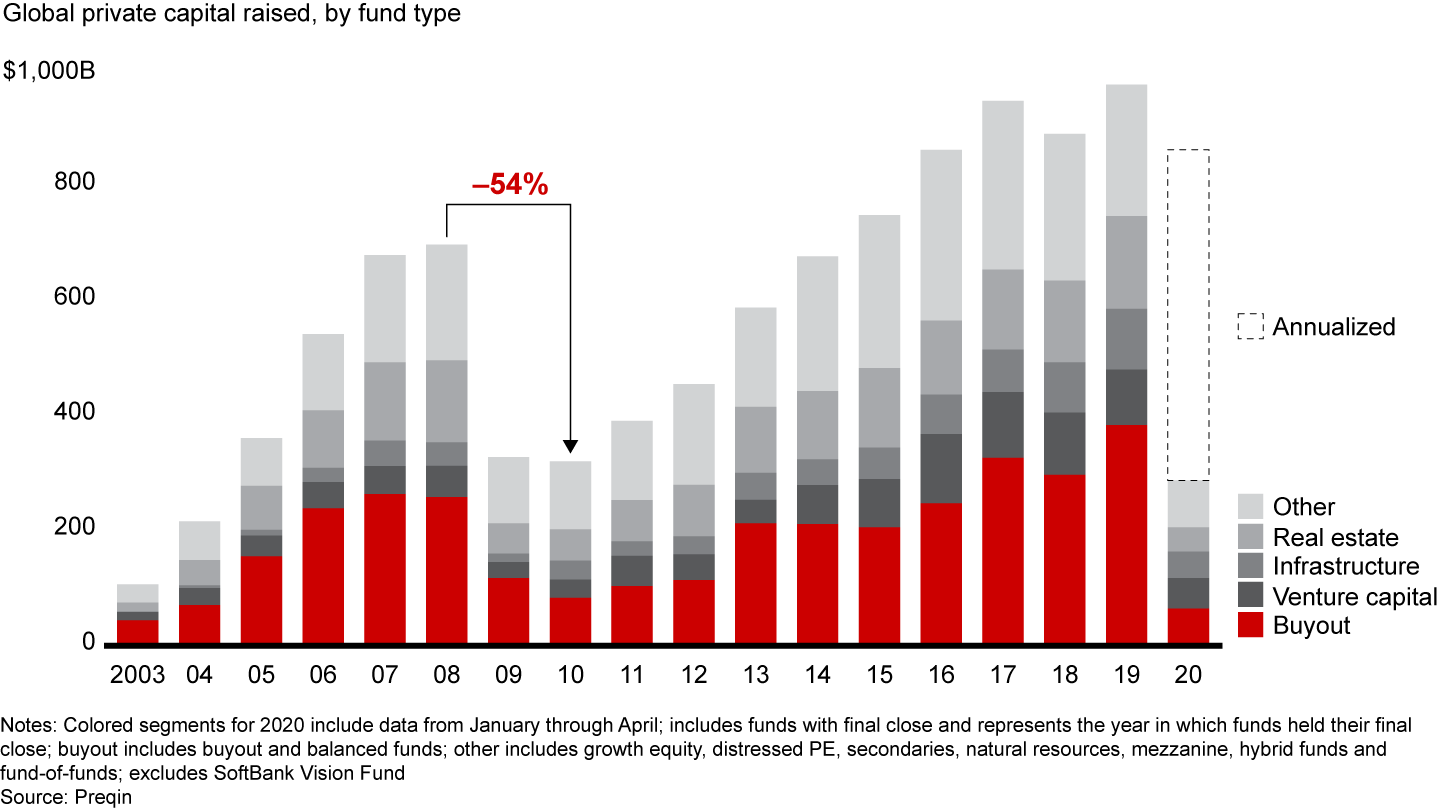
      Fund-raising looks to be doing fine on an annualized basis, but closings to date reflect pre-Covid activity and totals will likely fall as the year plays out

      Figure 3 (slideshow): 3b

      Limited partners are slowing their pace of new commitments, making for a more challenging fund-raising environment

      An even bigger factor is cash flow. Despite the drop in new deal flow, 60% of LPs in the ILPA survey indicated that capital calls had increased since the Covid-19 crisis began. GPs continue to invest in portfolio companies either to shore them up amid the crisis or to take advantage of chances to go on offense. They’re also swapping subscription lines of credit for equity and, in some cases, putting money to work in debt or distressed opportunities.

      An interesting trend worth watching is how these cash flow issues get resolved. To the extent that portfolio companies need capital and LPs are pressed to provide it amidst a downturn, other sources of capital will likely step up. These arrangements can take many forms, from asset sales to full fund recapitalizations. They could be structured debt deals—where GPs borrow at the fund level to generate new capital, secured by portfolio assets—or structured equity deals, where the GP receives capital from secondary sources to support the portfolio or accelerate distributions to LPs. The system has ample capital, and it will inevitably flow to where it’s needed. 

      Returns

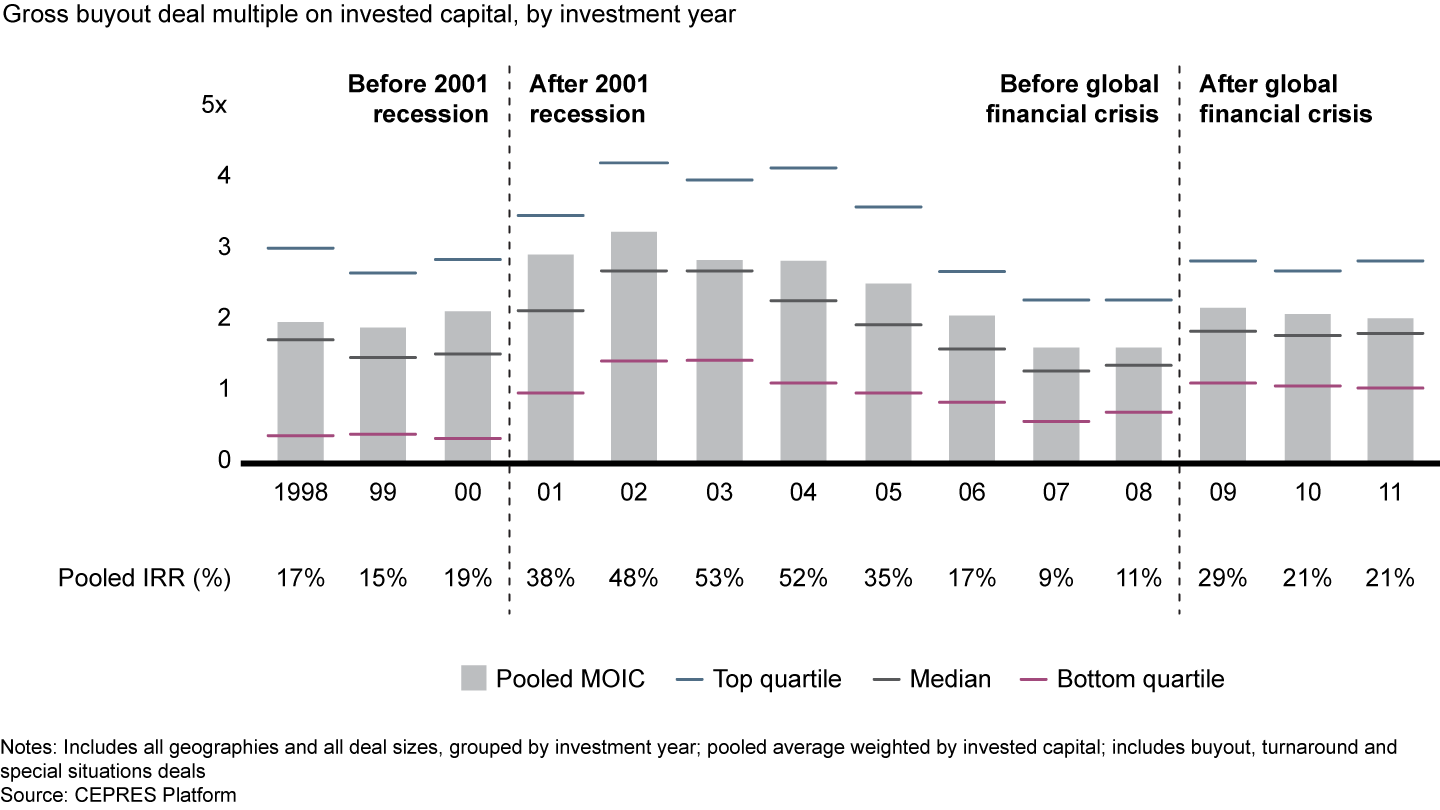
      Returns lag in a downturn because mark-to-market calculations aren’t immediate. But the majority of both LPs and GPs in the Campbell Lutyens survey said they expect to see write-downs of at least 15% in funds’ first-quarter valuations (see Figure 4a). Funds typically try to get the bad news out of the way as quickly as possible, so they take write-downs in bulk. But it’s also difficult to value companies in this environment, given the disruption to company cash flows, market volatility and the lack of comparable transactions. 

      The pattern coming out of the downturn, however, is pretty clear. Deals made shortly before the downturn tend to do less well than those made during and after the downturn (see Figure 4b). The best way to maintain strong returns long term, in other words: Stay on offense.

      Figure 4 (slideshow): 4a
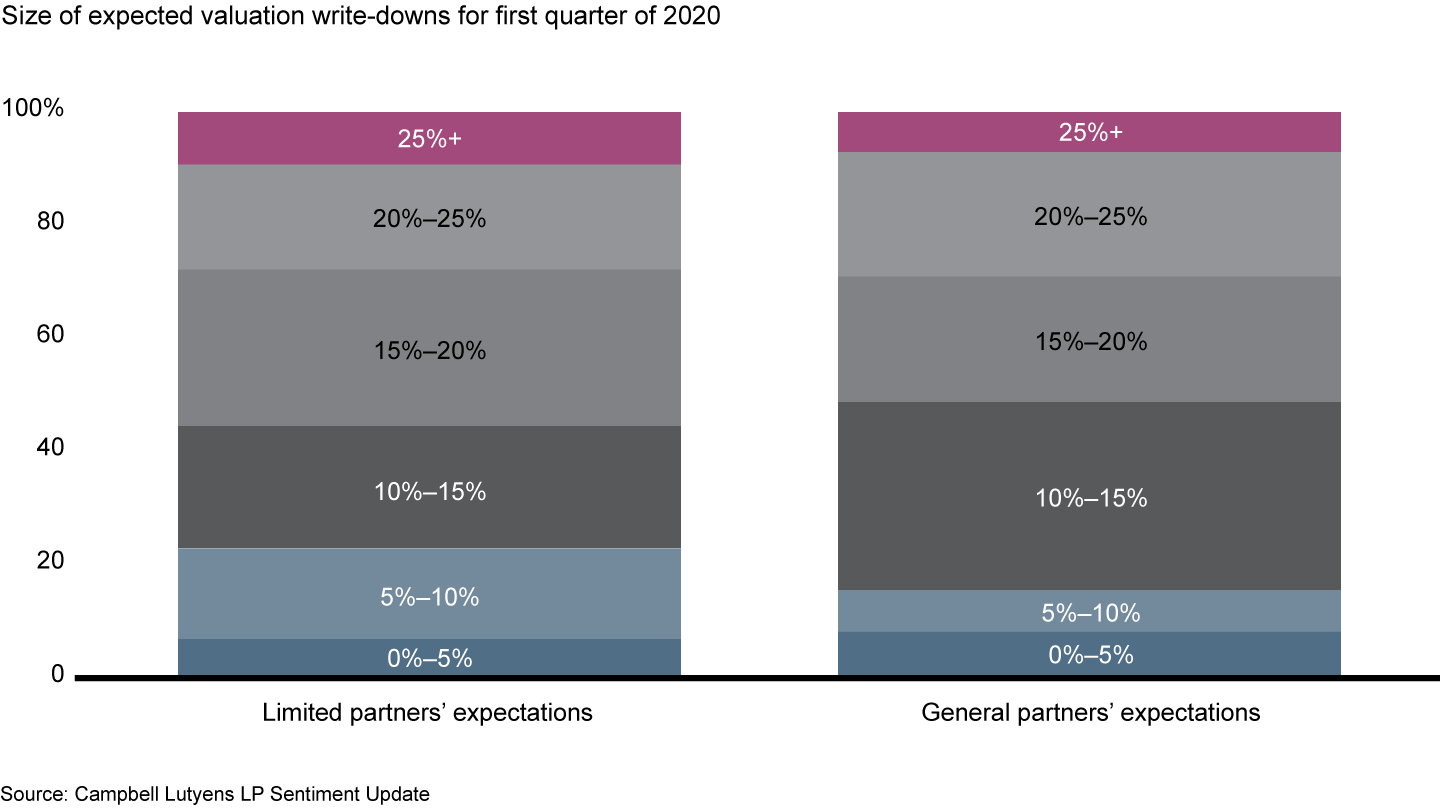
      Fund managers and their investors are both bracing for big write-downs in the first quarter

      Figure 4 (slideshow): 4b

      If history is a guide, investments made right before the Covid-19 crisis may feel pressure, but investments made near the bottom will do well
      Related Insights

      Coronavirus

      The global Covid-19 pandemic has extracted a terrible human toll and spurred sweeping changes in the world economy. Across industries, executives have begun reassessing their strategies and repositioning their companies to thrive now and in the world beyond coronavirus.


      저자
      • Headshot of Hugh MacArthur
        Hugh MacArthur
        파트너, Boston
      • Headshot of Graham Elton
        Graham Elton
        Chairman, EMEA Private Equity, London
      • Headshot of Brenda Rainey
        Brenda Rainey
        Executive Vice President, Boston
      문의하기
      관련 산업
      • 사모펀드
      Coronavirus
      Will Covid-19 Hurt or Help Healthcare Companies? It Depends

      Prospects have improved for alternative sites of care, telemedicine, modernization of clinical trials, and healthcare provider consolidation.

      자세히 보기
      Coronavirus
      Cash Management Practices to Weather a Downturn

      Take an honest look at the business, and decide where to improve.

      자세히 보기
      사모펀드
      Spotting the Downturn Early and Coming Out Ahead with Gryphon’s David Andrews

      We ask the co-CEO of Gryphon Investors how he spotted one of the harshest cycles in the industry’s history and when he thinks it may finally break.

      자세히 보기
      Coronavirus
      Ramping Up Online Grocery without Breaking the Bank

      Bain’s Marc-André Kamel discusses the challenges that online grocery presents for retailers and CPGs and how they can pair up to find a winning solution.

      자세히 보기
      사모펀드
      What Kind of AI Cycle Are We Actually In?

      The question for investors is not whether AI will boom or bust, but who may be unwittingly subsidizing the buildout.

      자세히 보기
      First published in 5월 2020
      태그
      • 사모펀드
      • Coronavirus

      프로젝트 사례

      Smart Pricing Helped a Private Equity Firm Unlock More Value

      See more related case studies

      M&A Helping a Healthcare Company Unlock Maximum Value

      See more related case studies

      지속 가능성 및 기업의 사회적 책임 A Paper Company Takes Bold Steps to Make Sustainability a Source of Profits

      See more related case studies

      베인에 궁금하신 점이 있으신가요?

      베인은 주저 없이 변화를 마주할 줄 아는 용감한 리더들과 함께합니다. 그리고, 이들의 담대한 용기는 고객사의 성공으로 이어집니다.

      급변하는 비즈니스 환경에서 살아남기 위한 선도자의 시각. 월간 Bain Insights에서 글로벌 비즈니스의 핵심 이슈를 확인하십시오.

      *개인정보 정책을 읽었으며 그 내용에 동의합니다.

      Privacy Policy를 읽고 동의해주십시오.
      Bain & Company
      문의하기 환경정책 Accessibility 이용약관 개인정보 보호 쿠키 사용 정책 Sitemap Log In

      © 1996-2026 Bain & Company, Inc.

      문의하기

      무엇을 도와드릴까요?

      • 프로젝트 문의
      • 채용 정보
      • 언론
      • 제휴 문의
      • 연사 초청
      오피스 전체보기