

Retail Holiday Newsletter

한눈에 보기
- Retailers enjoyed a record-breaking Thanksgiving weekend, as shopping traffic increased 14% year-over-year and Cyber Monday became the largest-ever US online shopping day, with $9.4 billion in sales.
- But as the shopping rush picks up, consumers are expecting retailers to deliver more items faster, for lower fees and in more channels than ever before.
- In this issue, we examine how leading retailers are turning their supply chains into competitive weapons to win during the holiday season and throughout the new year.
Holiday halftime report
We’re midway through the holiday shopping season, and many retailers are feeling jolly. Although third-quarter earnings were mixed for major retailers, standouts including Best Buy, Target and TJX saw domestic sales increase over last year and raised their guidance for the remainder of 2019. Early data shows that consumers kept filling their baskets through the Thanksgiving weekend, supporting Bain’s projection that retail sales will grow 3.8% this holiday season. While the final numbers are still taking shape, here is what we know so far:
Retailers began the season with positive momentum. Holiday sales in Bain-defined retail categories started out strong on the heels of October’s 4.4% year-over-year growth, according to advance estimates from the US Census Bureau. Nonstore sales were particularly robust, growing 14.6%, and in-store sales rose 1.7%. Despite trade war uncertainty, consumer sentiment also increased at the beginning of the season, rising for the third month in a row in early November, according to the University of Michigan Index of Consumer Sentiment.
Promotions kicked off even earlier this year. US retailers are helping customers make the most of this year’s short holiday season, encouraging them to shop earlier and more often. Walmart launched its holiday savings earlier than ever, with its Early Deals Drop going live on October 25. Target also got off to an early start with its Black Friday preview sale in the first week of November, offering four times as many deals as last year. In addition, retailers created other shopping “holidays” beyond Thanksgiving. This year, Amazon offered promotions for Alexa’s fifth birthday (November 6), while coupon site RetailMeNot introduced Cash Back Day (November 7), offering discounts at hundreds of retailers. Although the impact of these promotions varied by retailer, some—like Home Depot—enjoyed a boost. On Cash Back Day, the home improvement giant saw the number of online transactions rise 11% above the daily average for early November this year, and 22% above the same day last year, according to our research with Jumpshot.
This year, more US retailers also took advantage of Singles Day—the largest shopping holiday in the world—on November 11. For Alibaba, the 24-hour Chinese shopping festival brought in more than $38 billion in gross merchandise sales across its global network of shopping platforms, 2.3 times more than total US Black Friday and Cyber Monday online sales combined. Adobe Analytics reported that roughly a quarter of US retailers planned to run promotions for Singles Day this year, and dozens of non-Chinese brands (including Apple, Bose and Under Armour) recorded more than $100 million in sales as a result. Retailers like Uniqlo, Sephora and Ann Taylor also ran Singles Day promotions in the US to great effect. According to our research with Jumpshot, Sephora saw transaction volume more than double on its US website and conversion—that is, the percentage of unique visitors to a retailer’s website who complete a purchase—rise by 70% relative to a typical early-November day.
Traffic surged after shoppers finished their turkey dinner. Between Thanksgiving and Cyber Monday, nearly 190 million Americans went shopping—a 14% increase over last year—according to estimates from the National Retail Federation. A record 66 million shopped exclusively online, while 48 million shopped in stores only and the remaining 76 million shopped across both channels. The move online was bolstered by increased app traffic for major retailers, with 6.4% more daily active users than in 2018, according to research Bain conducted with Apptopia.
Conversion and sales were up Thanksgiving weekend. As online traffic grew, so did conversion rates. In partnership with Jumpshot, we looked at 30 major US retailers and found that conversion rates over the weekend climbed 4% over the beginning of the month and 19% over last year. With support from higher traffic and conversion, US online sales from Thanksgiving through Cyber Monday totaled $28.4 billion, up 17.4% from the same period last year, according to Adobe Analytics. E-commerce sales were highest on Cyber Monday, increasing 19.7% over last year and setting a new record for US online sales recorded in a single day at $9.4 billion. Cyber Monday was also the biggest day ever for sales via mobile, ringing up $3 billion.
Supply chains are facing a record holiday rush
With holiday shopping in full swing, retail supply chains are squarely in the hot seat. If a product isn’t on the shelves or gifts don’t arrive on time, customers are disappointed and often don’t come back. Given the reality of omnichannel shopping expectations, fewer days between Thanksgiving and Christmas, a tight labor market, and record-breaking expected returns volume, supply chain stakes are higher than ever this season.
Customers want more (and they’re getting it!)
Gone are the days when supply chain executives primarily focused on cost management and risk mitigation. Today, these factors are still critical, but retailers have turned high-performing supply chains into competitive weapons with the ability to accelerate growth and boost customer satisfaction. This holiday, retailers are delivering more items—and even services—faster, for lower fees and in more channels than ever before. Retailers are meeting ever-increasing customer expectations and delivering value to shoppers on multiple fronts:
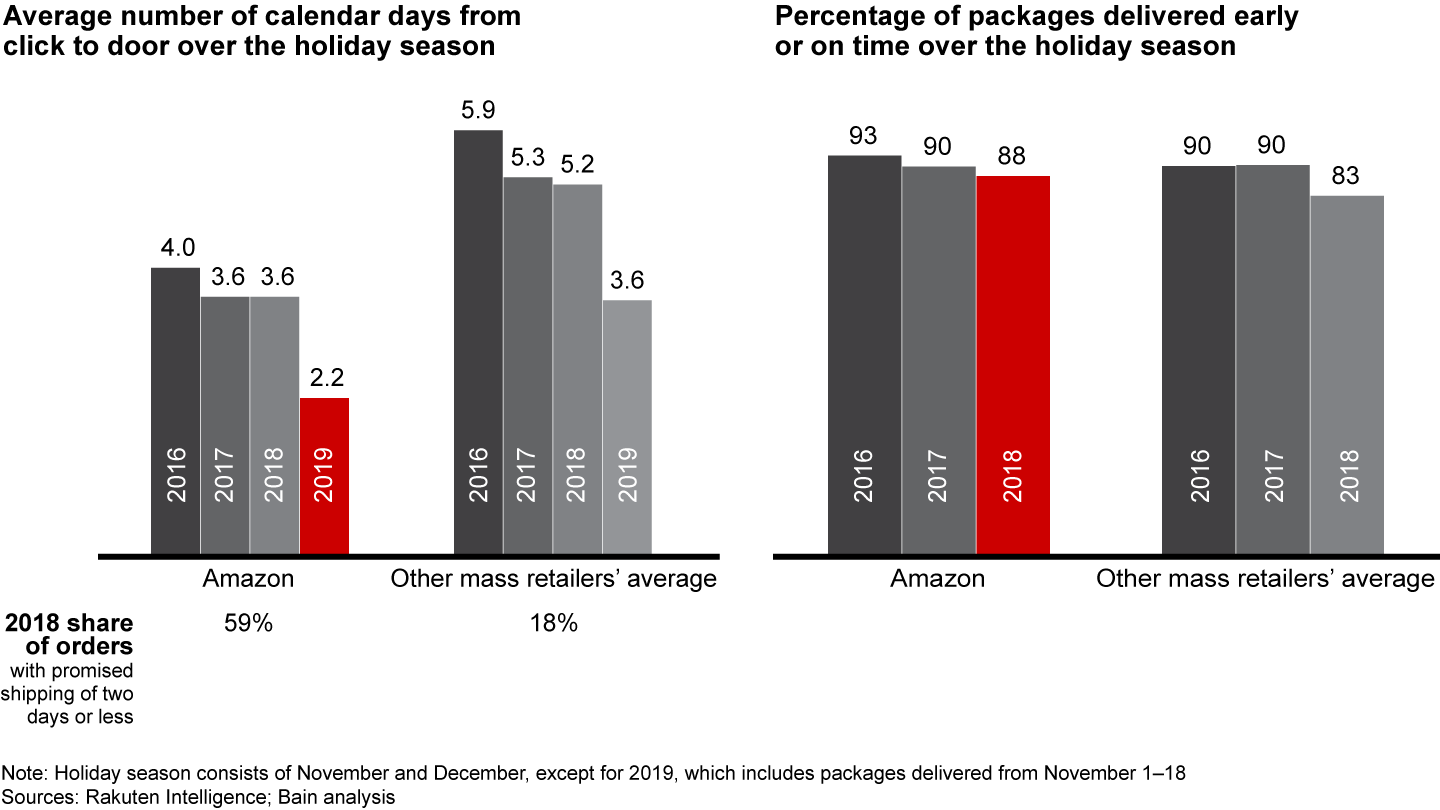
- Fast fulfillment. Shoppers’ wait times between order and delivery are dropping. According to research Bain conducted with Rakuten Intelligence, leading retailers have significantly reduced average click-to-door delivery times since 2016 (see Figure 1). Amazon, which consistently ranked as the fastest retailer, has been a driving force behind this accelerating pace. The online giant upped the ante earlier this year by announcing free one-day shipping for its US Prime users. The stakes for faster fulfillment are even higher during this short holiday season, with only 26 days between Thanksgiving and Christmas. Amazon and Nordstrom lead the pack with the longest pre-Christmas delivery window thus far, promising that all online orders placed by December 23 will be delivered by Christmas Eve.
Figure 1

- Free (or prepaid) shipping and returns. Customers have come to expect free shipping on online orders and flexible return options, and they won’t be disappointed this holiday season. Digital Commerce 360 estimates that 65% of retailers offer some form of free shipping, while 18% offer free shipping with no restrictions on all orders. Amazon and Target are setting the standard by eliminating minimums on free next-day delivery for the holidays. When it comes to returns, 81% of retailers offer or plan to offer buy online, return in-store services, according to a recent NRF-Forrester survey. Digital Commerce 360 estimates that 34% of retailers will also offer free return shipping.
- Reliability. Beyond fast and free, reliability is another key fulfillment battleground. Delayed or lost packages during the gift-giving season can turn customers from avid supporters to frustrated detractors—69% of consumers say they wouldn’t purchase from a retailer again if their delivery was late. In partnership with Rakuten Intelligence, we analyzed retailers’ reliability in meeting their holiday delivery promises. Amazon led the pack last year with 88% of packages delivered on time (Figure 1).
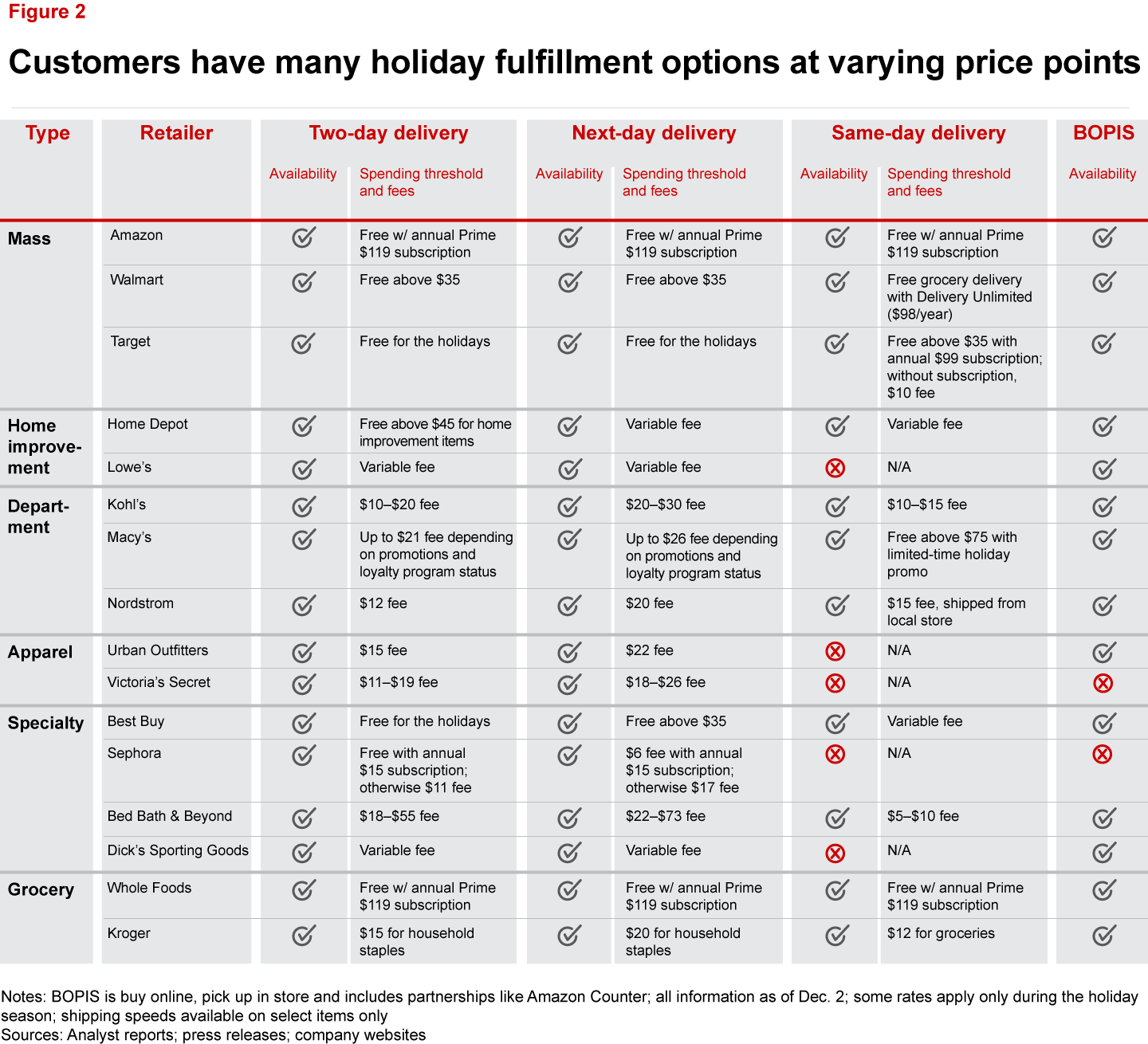
- Flexibility. Customers have more ways to shop than ever before. Today’s leading retailers supplement traditional in-store shopping experiences with a variety of convenient omnichannel fulfillment options, including in-store pickup, a range of delivery speeds and add-on services (see Figure 2). A 2019 NRF-Forrester study found that 74% of retailers offer or plan to offer buy online, pick up in store (BOPIS) options, including curbside pickup. Meanwhile, customers can increasingly select their preferred home delivery speed, ranging from longer delivery windows at reduced or no fees, to next-day shipping (offered by 55% of the top 1,000 US retailers), to same-day delivery at select retailers. Customers also have the option to buy items with services provided. For example, they can add in-home installation when purchasing a TV from Amazon.
- Sustainability. Shoppers, especially those outside the US, increasingly expect retailers to help mitigate the environmental impact of fulfillment. Nielsen reports that 68% of Americans and 81% of international respondents say it’s important for companies to help improve the environment. However, retailers face many challenges in doing so. First, accurately assessing whether fulfillment methods are sustainable can be difficult for retailers and customers alike. Many factors can play into the sustainability of a fulfillment option, such as BOPIS or home delivery, including the number of items in a transaction, the number of new trips generated (to deliver or pick up the items) and the distance traveled. Second, while customers say they want sustainability, only 13% give it significant consideration when choosing their delivery options, according to a recent study. Third, most shoppers aren’t willing to pay for it. In a recent Barclays study, 62% of consumers said they expected retailers to absorb the extra costs.

A flurry of supply chain innovations
Delivering on all of these fronts at peak holiday demand doesn’t come cheap, and retailers will feel the strain across the supply chain, from sourcing to service. Greater demand for fast last-mile shipping will put pressure on fulfillment in particular. Delivery for the final few miles to a customer’s home is significantly more expensive than the first thousand or so, especially when a transaction requires split shipments. However, this season, some retailers are finding creative, win-win ways to meet customer expectations while keeping an eye on their own economics. Supply chain leaders are:
- Shaping customer demand. Retailers are encouraging customers to select fulfillment channels or service levels that benefit shoppers, the business and even the planet, through a variety of tactics. Giving customers incentives to place orders in larger quantities or choose slower shipping speeds can help retailers limit the cost and environmental impact of split shipments. In fact, if retailers could double the average number of items customers purchase per e-commerce transaction and eliminate split shipments, they would reduce shipping costs by more than 50% and average per-item emissions by 30%, according to a Bain analysis. Take Amazon Day delivery, which allows Prime members to choose a day of the week for their orders to arrive together. This service lets Amazon ship items in fewer boxes and reduce split shipments, gives customers greater control over the delivery timeline, and aims to reduce the carbon footprint of the order.
BOPIS helps other retailers avoid costly last-mile delivery altogether, while boosting their top line. For example, Target enjoys 90% lower cost of fulfillment when customers use BOPIS instead of traditional warehouse fulfillment. Across retailers, 82% of shoppers who plan to use BOPIS this season expect to shop for additional items while picking up their online orders. And as customers shop for last-minute gifts, retailers offering BOPIS will likely see a significant payoff. According to Rakuten Intelligence’s analysis of top brick-and-mortar retailers’ holiday sales last year, BOPIS as a percentage of online sales increased by 50% in the week leading up to Christmas, compared with the week prior. - Shipping from stores. While some retailers are closing stores, others recognize proximity to customers as an asset and are saving up to 40% by fulfilling online orders in stores. Target now fulfills 80% of online orders through stores—up from 60% in 2017—and Kohl’s is fulfilling 40% of e-commerce orders from its brick-and-mortar locations. Brands like Walmart, Macy’s, Nordstrom, Best Buy, Dick’s Sporting Goods and Zara are shipping from store too, and the trend appears to be spreading: 80% of retailers currently offer or plan to offer ship-from-store options, according to an NRF-Forrester survey.
- Experimenting with new technologies for last-mile delivery. Retailers are piloting disruptive last-mile technology to deliver products faster—and, they’re hoping, more cheaply and sustainably at scale. CVS and Walgreens are both testing drone delivery to get orders to customers’ homes within minutes, partnering with UPS Flight Forward and Wing Aviation, respectively. Retailers are also tapping into the gig economy for flexible last-mile fulfillment. Walmart, for example, partnered with Bringg to launch Spark Delivery, an in-house platform for crowdsourced last-mile fulfillment, and Target acquired Shipt to enable same-day delivery to most of the US.
- Automating microfulfillment and store operations. Automation is unlocking operating savings and speeding up distribution for a growing number of retailers this season. Grocers like Albertsons and Meijer are testing automated microfulfillment centers within stores to process up to 60 orders within a few minutes and keep congested aisles clear of people picking up orders during the holiday rush. Walmart relies on self-service kiosks, which quickly retrieve customers’ online orders, to improve pickup time by 60%. The retailer plans to open 900 more pickup towers this year, bringing the total to 1,700 across its stores. And international markets are even further ahead. South Korea’s largest discount chain, E-Mart, has launched cashierless stores and an automated concierge service via robots.
- Using artificial intelligence (AI) for demand planning and inventory allocation. To reap the benefits of having fast fulfillment nodes closer to customers, retailers need the right amount of the right products in the right locations. Some are employing AI-powered demand planning and allocation to help them achieve just that. Retailers such as Amazon and Stitch Fix are using predictive demand forecasting to estimate which items customers will want and preemptively send inventory where it’s most likely to be purchased. Others, including True Value, are optimizing the placement of SKUs within the supply chain, putting higher-velocity or customer “must-have” SKUs closer to shoppers, while storing lower-velocity, higher-margin items more centrally.
The supply chain wish list
Although these approaches are helping many retailers overcome supply chain pressures, specific solutions are not one-size-fits-all. Not every company will feel the holiday crunch equally: For example, according to Jumpshot, Target’s online transaction volume last holiday season was 3.7 times the average for the rest of the year, whereas Home Depot’s holiday spike was only 1.3 times higher. Plus, retailers’ supply chain decisions must take into account their unique business strategy, category dynamics, competitive positioning and assets.
In writing their own supply chain wish lists, retailers should keep a few principles in mind:
- Understand and deliver on customers’ baseline needs. Leading retailers have a deep understanding of the speed, cost, flexibility, reliability and sustainability options that matter to shoppers in the category. They invest in the fulfillment capabilities that satisfy the needs of key customer segments for their most important purchase occasions. For example, Nespresso, recognizing its customers’ need for seamless replenishment, allows them to schedule recurring deliveries of coffee pods. A Best Buy pilot program enables New York City residents to pick up orders at 175 CVS and UPS locations as an alternative to visiting a Best Buy store or shipping expensive electronics to apartment buildings without secure package retrieval. In other cases, where shoppers can’t clearly articulate their preferences, retailers have a unique opportunity to shape—and deliver on—customers’ perceptions. Shoppers may not know which sustainable fulfillment options they want, for instance, so retailers that promote their more sustainable methods (such as BOPIS or longer delivery windows) can get credit for improving the environment.
- Make informed choices. As supply chains grow more complex, retailers need modern performance metrics. The potential trade-offs can be dizzying, especially across income statements and balance sheets, and the data and analytical tools needed to make informed choices can be hard to find. For example, in order to determine the cost of fulfillment from stores vs. distribution centers, retailers need to weigh the improved customer experience; savings from reduced last-mile costs; the possible balance-sheet implications of increased inventory; and the added costs of increased split shipments, more complex store operations and additional customer care. To help retailers with these challenges, Bain has partnered with the National Retail Federation to build reliable, modern supply chain metrics to support these decisions.
- Extend brand values. While retailers may not be able to beat Amazon on speed without wiping out profits, they can still transform their supply chains into competitive weapons. Winning retailers deliver on the basics while creating one-of-a-kind customer experiences. Consider Nordstrom, which augments a relatively boilerplate delivery promise—free shipping in three to six days on most in-stock items—with a unique BOPIS offering that includes prearranged fitting rooms and personal stylists. Lululemon’s membership program is another example. It combines free two- to three-day shipping with benefits such as early access to new products and monthly local fitness classes. World-class supply chains invest in delivering what’s distinctive to their brands and important to their most valuable customers, while providing a “good enough” experience elsewhere.

Modern Supply Chain Metrics
The National Retail Federation (NRF) and Bain are partnering to identify the most reliable, forward-looking KPIs and benchmarks.
As the unprecedented pace of change in innovation and customer expectations shows no sign of slowing, retailers will need to remain on their toes this holiday season. And they’ll find no reprieve in the new year, as more competitors adopt new technologies and form groundbreaking partnerships. No retailer can afford to stand still, even those currently at the head of the pack. Innovative supply chain solutions can create value for both companies and customers, not only during the holidays but all year long. Leading retailers will take stock of their holiday performance and reset their ambitions for 2020 by evaluating their supply chain choices end-to-end and delivering brand-appropriate innovations that don’t break the bank.
Looking forward: Future release dates and topics
Here’s a preview of our upcoming newsletters:
- Issue 4 (mid-December): Boosting holiday traffic
- Issue 5 (mid-January): Post-holiday recap and resolutions for 2020
We look forward to sharing holiday headlines with you and hearing your feedback throughout the holiday season.
About our research partners
Apptopia provides competitive intelligence for the mobile app economy. To learn more, visit apptopia.com/.
Jumpshot provides insights about online user actions that help e-commerce companies and brands gauge how and where customers are clicking and buying. The company’s real-time, anonymized global panel tracks 5 billion actions a day across 100 million devices. Jumpshot’s clients include major companies in industries such as consumer products, media, technology and healthcare. To learn more, visit www.jumpshot.com.
Rakuten Intelligence provides trusted data and insights from its large online-shopper panel, helping manufacturers, retailers, technology companies, investors and media better understand e-commerce. Based in San Mateo, California, Rakuten Intelligence is an independent, wholly-owned subsidiary of Japanese e-commerce platform Rakuten. To learn more, visit www.rakutenintelligence.com.
-
Selected references
Bain & Company has included in this document information and analyses based on the sources referenced below as well as our own research and experience. Bain has not independently verified this information and makes no representation or warranty, express or implied, that such information is accurate or complete. Projected market and financial information, analyses and conclusions contained here are based (unless sourced otherwise) on the information described above, and Bain’s judgments should not be construed as definitive forecasts or guarantees of future performance or results. Neither Bain & Company nor any of its subsidiaries or their respective officers, directors, shareholders, employees or agents accept any responsibility or liability with respect to this document.
“2019 Holiday Shopping Trends.” Adobe, website, accessed December 3, 2019.
“Adobe Forecasts $143 Billion in U.S. Online Sales This Holiday Season.” Adobe Blog, October 29, 2019.
“Algorithms Tour.” MultiThreaded, Stitch Fix, accessed November 26, 2019.
Bhattarai, Abha. “A Record 190 Million Americans Shopped Black Friday and Beyond–Most of Them Online.” The Washington Post, December 4, 2019.
Cassidy, Tabitha. “Only 17.5% of Online Retailers Offer Free Shipping.” Digital Commerce 360, August 28, 2019.
“Consumer View Winter 2019.” National Retail Federation, January 15, 2019.
Cosgrove, Elly. “Best Buy Surges after Beating Expectations and Raising Forecast Ahead of the Holidays.” CNBC, November 26, 2019.
Desjardins, Jeff. “Amazon and UPS Are Betting Big on Drone Delivery.” Business Insider, March 11, 2018.
Dobush, Grace. “‘Amazon Day’ Shipping Option Aims to Reduce Deliveries and CO2 Emissions.” Fortune, March 1, 2019.
“Easy Ordering.” Nespresso, website, accessed December 1, 2019.
Forde, Morgan. “Best Buy Launches E-commerce Pickup in 175 New York UPS, CVS Locations.” Supply Chain Dive, November 27, 2019.
Gartenberg, Chaim. “Amazon Prime’s One-Day Shipping Is Already Rolling Out.” The Verge, May 10, 2019.
“Holiday Delivery Calendar.” Amazon, website, accessed December 3, 2019.
Johnson, Karen. “Is Sustainability the New Loyalty in Retail and Wholesale?” Barclays, September 25, 2019.
Kapadia, Shefali. “UPS Seals Drone Partnership with CVS.” Retail Dive, October 23, 2019.
Kennedy, Lesley. “The Best Singles’ Day Deals from Nike, Columbia and More.” CNN, November 11, 2019.
Kilgore, Tomi. “Target’s Stock Soars toward Record High after Profit and Revenue Beats, Raised Guidance.” MarketWatch, November 20, 2019.
Kodali, Sucharita, et al. “The State of Retailing Online 2019: Omnichannel, Marketing and Personalization.” National Retail Federation, March 11, 2019.
Leonard, Matt. “Choosing the Right Fulfillment Option Is about Weighing Cost and Speed.” Supply Chain Dive, August 6, 2019.
Liptak, Andrew. “Target Is Now Offering Same-Day Delivery Directly through Its Website.” The Verge, June 13, 2019.
Liu, Evie. “Alibaba Sold a Record Amount of Stuff on Singles Day. Apple and Lots of Other Brands Scored Too.” Nasdaq, November 11, 2019.
Lunden, Ingrid. “Cyber Monday Hits $7.9B in Online Sales, $2.2B Spent Via Smartphones.” TechCrunch, November 26, 2018.
Melton, James. “2019 Click, Ship & Return Report.” Digital Commerce 360, August 2019.
“Membership Terms & Conditions.” Lululemon, website, accessed November 26, 2019.
Meyersohn, Nathaniel. “Why Supermarkets Are Building ‘Dark Stores’.” CNN Business, October 31, 2019.
Perez, Sarah. “Walmart to Expand In-Store Tech, Including Pickup Towers for Online Orders and Robots.” TechCrunch, April 9, 2019.
Perez, Sarah, and Ingrid Lunden. “Cyber Monday Totalled $9.2B in US Online Sales, Smartphones Accounted for a Record $3B.” TechCrunch, December 3, 2019.
Roggio, Armando. “Ship-from-Store Fulfillment a Must for Brick-and-Click Retailers.” Practical Ecommerce, June 5, 2017.
“S. Korean Retailers Accelerate Push for Automation.” Yonhap News Agency, August 29, 2018.
“Sensormatic Solutions Releases Black Friday Results from ShopperTrak Traffic Data Analytics.” Associated Press, press release, November 30, 2019.
“Ship from Store: Retail’s Necessity for Survival.” ProShip, August 9, 2018.
“Shipping, Pick Up in Store & More.” Nordstrom, website, accessed November 26, 2019.
“Sustainable Delivery: Luxury or Necessity in Today’s Consumer Climate?” Doddle, 2019.
“Sustainable Shoppers Buy the Change They Wish to See in the World.” Nielsen, November 16, 2018.
“Target Ushers in the Holiday Season with Enhanced Guest Service, America's Fastest-Growing Loyalty Program and Expanded Same-Day Fulfillment Options.” PR Newswire, press release, October 23, 2019.
Taylor, Glenn. “True Value Cuts Unproductive Inventory, Improves Forecasting with Demand Planning Solution.” Retail TouchPoints, December 11, 2018.
“Thanksgiving Weekend Draws Nearly 190 Million Shoppers, Spending Up 16 Percent.” National Retail Federation, press release, December 3, 2019.
“The Holidays Officially Begin at Walmart; Retailer Announces Plans to Help Customers Get an Early Start on Holiday Shopping.” Business Wire, press release, October 24, 2019.
“The TJX Companies, Inc. Reports Q3 FY20 Results Well Above Guidance with Comp Sales Growth of 4% and EPS of $.68; Raises Full-Year EPS Guidance.” Business Wire, press release, November 19, 2019.
Thomas, Lauren. “More US Retailers Set to Participate in Alibaba's Singles Day Shopping Extravaganza This Year.” CNBC, November 8, 2019.
Thomas, Lauren. “Target CEO Says Cost of Handling Online Orders Drops 90% When Shoppers Use Same-Day Options.” CNBC, November 20, 2019.
University of Michigan. “Surveys of Consumers: Final Results for November 2019.” Data release, November 22, 2019.
“UPS Forecasts Record-Breaking Holiday Returns Volume.” MarketWatch, press release, November 4, 2019.
US Census Bureau. “Advance Monthly Sales for Retail and Food Services, October 2019.” News release, November 15, 2019.
Varshney, Neer. “Alibaba, JD.com Post Record Singles Day Sales.” Benzinga, November 12, 2019.
Vembar, Kaarin, et al. “A Roundup of Retail Holiday Deals.” Retail Dive, November 18, 2019.
“Walgreens Will Be First Retailer in U.S. to Test On-Demand Drone Delivery Service with Wing.” Walgreens, press release, September 19, 2019.
Walk-Morris, Tatiana. “Walmart, Target among Most Popular Retailers to Offer BOPIS.” Retail Dive, July 8, 2019.
“Walmart Tests New Last-Mile Grocery Delivery Service.” Walmart, press release, September 5, 2018.
Wells, Jeff. “Meijer Gets into the Micro-Fulfillment Game.” Grocery Dive, October 8, 2019.
Wells, Jeff. “Micro-Fulfillment Companies Adapt to a Changing Industry.” Grocery Dive, September 16, 2019.
“Zara Now Offering Online Shipping from Stores.” Pymnts, August 1, 2018.
Suzanne Tager is a senior director with Bain & Company’s Global Retail practice and is based in the firm’s New York office. Darrell Rigby leads Bain’s Global Innovation practice and is based in the Boston office. Aaron Cheris leads the firm’s Retail practice in the Americas and is based in San Francisco. Jared Lapin is an expert principal in Bain’s Performance Improvement practice and is based in the firm’s Chicago office.
The authors would like to acknowledge the contributions of Kim Borchert, Travis Wibracht, Sara Magenheimer, Muhammad Eltahir, Ben Hartwell, Mark Heneine, Amanda Sload and Daniel Topler-Garcia.
First published in 12월 2019