


Brief

|
|
Fifty million more mobile devices will be in the hands of shoppers this holiday season, and those tablet- and smartphone-toting customers will be browsing, comparing, sharing and buying on the go in record numbers. Retailers too will take advantage of the power of mobile to attract customers and convert sales in new and innovative ways. This issue is all about mobile: how device types and sales are increasing, how mobile is transforming shopping behaviors and how retailers are innovating to capture consumers’ attention. We also recap recent sales results, which are mixed but continue to suggest growth for this holiday season. Retail indicators continue to suggest growth this holiday season The most recent sales numbers are positive heading into the holiday season. The International Council of Shopping Centers estimates that October same-store sales (excluding gasoline and sales in drug stores) were up 5.7% in October versus 3.6% in September1. Additionally, consumers’ wallets continue to get fatter.
However, retailers have mixed expectations heading into the holiday season. While Macy’s is expecting higher fourth quarter sales, Walmart forecasts flat sales and Kohl’s is expecting lower fourth quarter sales growth. Many retailers are responding by offering reasons for consumers to open their wallets earlier this year:
Mobile: At the top of consumers’ wish lists Mobile devices and all things associated with them—apps, services and accessories—will be in the spotlight this holiday season. During the first six months of 2013, tablet and smartphone sales were each up 19%. Eighty-eight million consumers now own a tablet, and 140 million now own a smartphone (Figure 1). And sales continue to be hot: T-Mobile sold more tablets on November 1, the day the iPad Air launched, than it had in the previous quarter. One sign of mobile’s incredible expansion: Apple, which now derives 75% of its revenue from mobile devices and accessories, has become the world’s most valuable company. More proof: Over 250,000 smartphone cases are listed on Amazon.com, and retailers from J.Crew to Bed Bath & Beyond are stocking mobile accessories. 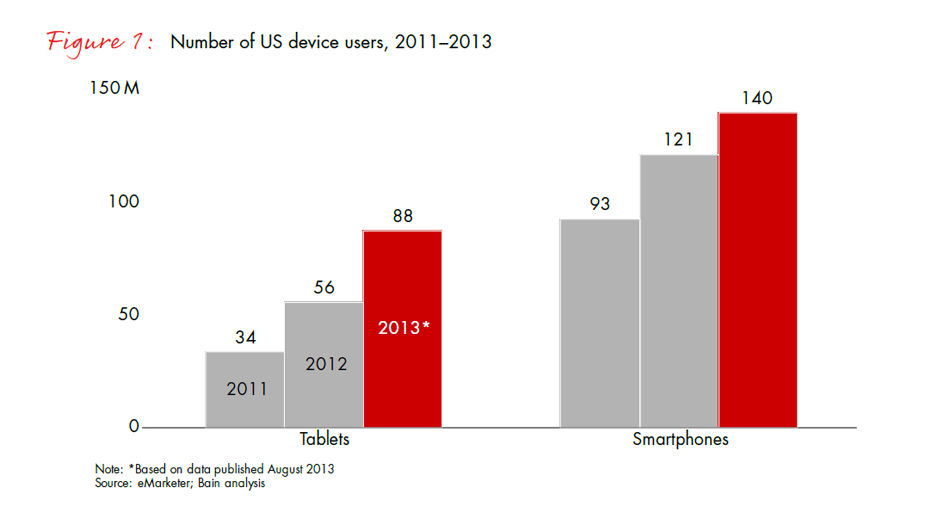
Mobile sales should be strong throughout the season. Kelton Research found that 44% of consumers have a tablet on their 2013 holiday wish list, and 34% of consumers are hoping for a smartphone this holiday. Greater sophistication and choice—along with affordable prices—are driving sales growth in mobile devices. Another driver is a whole new category of devices: wearable mobile. Sales of smartwatches, fitness tracking devices and other wearable technology account for $2.5 billion in revenues today and are forecast to reach $11 billion in 2017. Samsung released its Galaxy Gear smartwatch earlier this year, and consumers are anxiously awaiting the release of Apple’s iWatch and Google’s Glass. Mobile: The next-generation omnichannel experience Mobile is becoming the control center for everyone’s life. Consumers are using mobile devices for everything from monitoring their health to controlling the temperature and the security of their homes. It is no surprise that mobile devices are also transforming shopping behaviors by allowing consumers to transport themselves seamlessly between physical and digital worlds. A Parks Associates study found that 43% of smartphone owners have used their phone to buy something in the past month. However, consumers aren't just using their phones to make purchases— they browse virtual shelves, check prices, take photographs, confer with friends, find coupons and navigate to and within stores (Figure 2). Google estimates that 79% of smartphone owners rely on their phones in one or more of these ways while they are shopping. 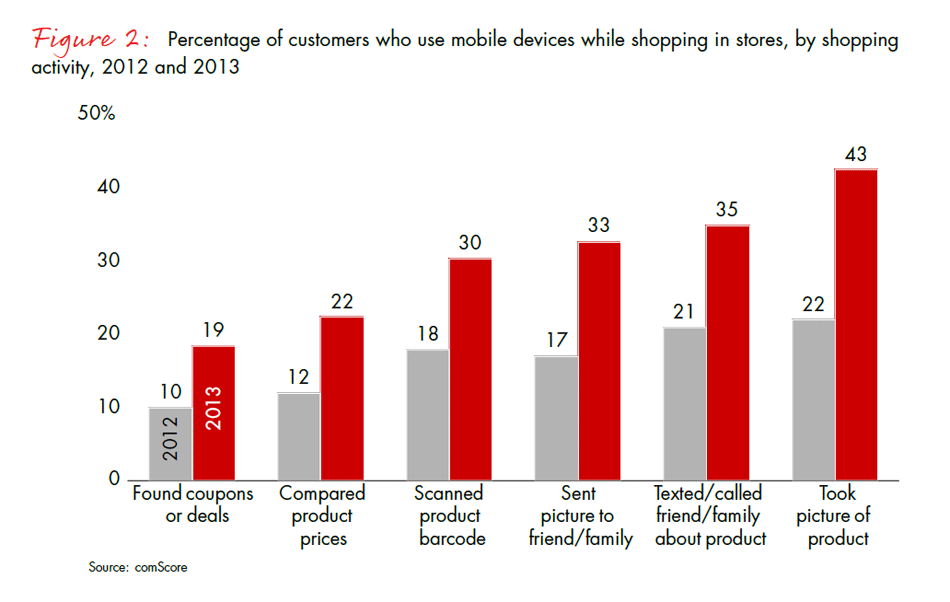
Retailers have found that omnichannel customers—customers who shop on mobile devices and personal computers, and in stores—shop more frequently and spend more money than in-store-only shoppers do. Google estimates that frequent mobile shoppers spend 25% more in stores than occasional mobile shoppers. Walmart is already starting to see the impact: Customers who use its app visit the store twice as often and spend 40% more across all channels than shoppers who don’t use the Walmart app. Mobile is impacting consumers’ shopping journey every step of the way: from awareness and inspiration to research, decision-making, and purchasing. Retailers are innovating along this shopping journey to meet and even exceed their customer’s changing expectations. Retailer awareness: Drawing you in, wherever you are Consumers are spending more of their media time on mobile devices—20% versus just 12% last year—at the expense of all other media, including television, desktop computers and print sources. Mobile devices give consumers opportunities to discover new brands, products and services while they are on the go. A consumer commuting home from work can now explore his friend’s wish list on Facebook or Pinterest, see a compelling deal and buy the item for his friend while adding it to his own wish list—all while still on the train. Mobile also gives retailers new tools to reach consumers, from ads in search results and offers embedded in applications, to location-triggered push notifications. Mobile advertising is the fastest growing advertising medium, up 106% on average every year for the past three years, and it still has plenty of room to grow. Mobile advertising makes up just 3% of all advertising spend (Figure 3) versus 20% of all consumer media time. Google and Facebook together take in more than $10 billion of mobile advertising revenue, and Facebook alone derives nearly $2 billion, or about 50%, of its advertising revenue from mobile advertising, versus nothing three years ago. Retailers are a driving force behind the growth in mobile advertising. According to the Internet Advertising Board, they place 40% of all mobile advertisements. 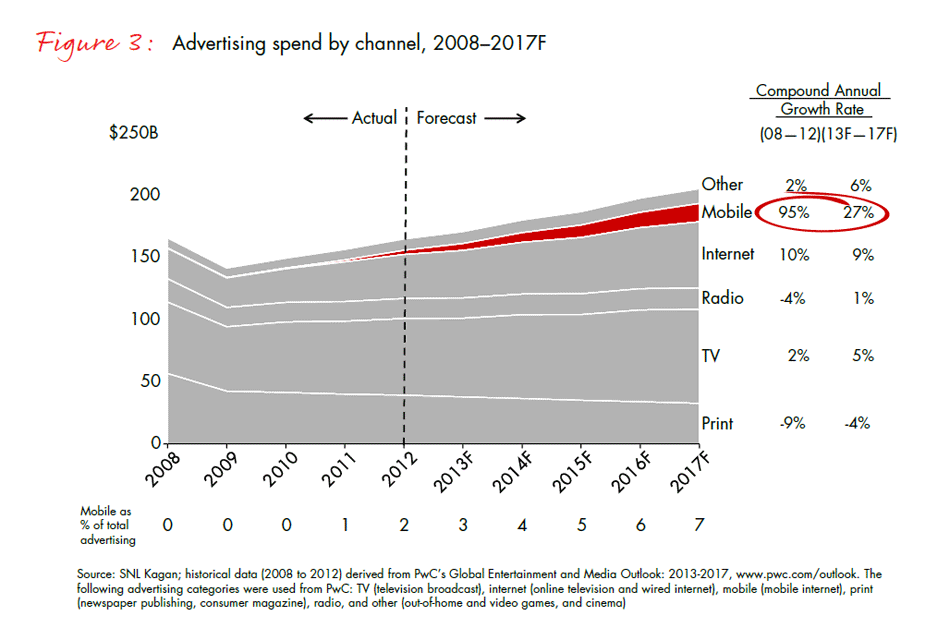
This holiday season, retailers and third-parties are rolling out new ways to reach consumers:
Product browsing: Enriching your shopping interactions Retailers are innovating in many ways to support their shoppers in discovering and locating products. For example, retailers are making it easier to find products in stores. Target and Lowe’s, among others, recently rolled out a new feature in their apps which tells shoppers the location of a product in a specific store using an interactive store map. Retailers also are arming store associates with mobile devices to enhance their interactions with customers. Customers are significantly more likely to talk to a store associate equipped with a mobile device (Figure 4). Burberry’s associates have tablets that can access a customer’s purchase history and preferences. The tablets use predictive analytics to help associates make personalized recommendations. eBay is looking to provide this type of service to its retailer partners with its new Retail Associate Platform app. Store associates will be notified of all in-store customers who have checked in using their PayPal account, and will see a profile of information about each consumer, including past purchases, abandoned shopping carts and store associate notes. The app hasn’t reached stores yet, but eBay is in talks with Macy's, Aéropostale, Urban Outfitters and Toys "R" Us, among others. 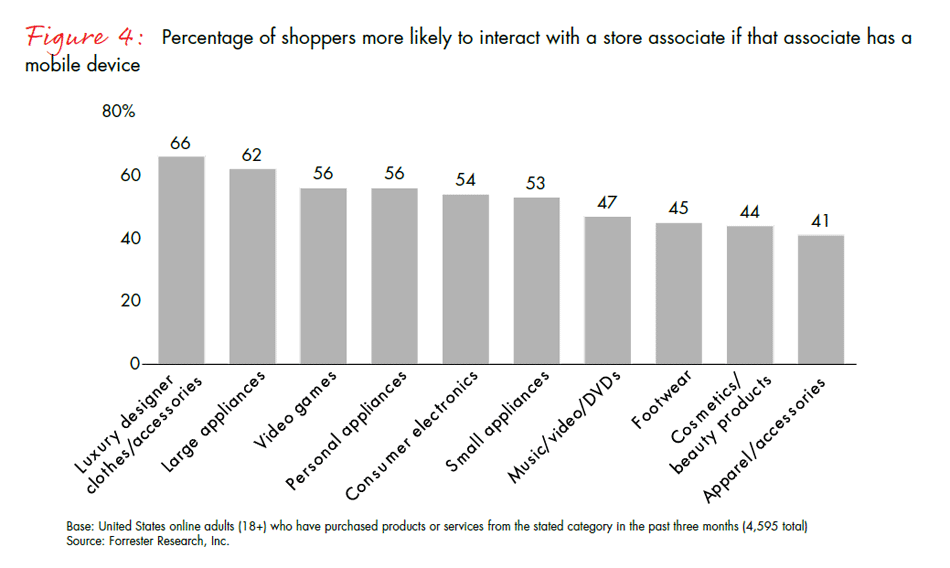
Mobile is also helping Trunk Club and other online-only retailers better meet the needs of their customers. Trunk Club uses mobile devices to connect stylists (sales associates) with customers on the go. A Trunk Club client can speak, text, or email with his stylist over the weekend and have a personalized outfit delivered in time for an important out-of-town business meeting in the coming week. Other new technologies allow consumers to interact directly with products in new ways. Customers who shop in stores equipped with Apple’s new location-tracking technology, called iBeacon, can receive in-the-moment messaging about the items nearby. The technology has generated buzz because it’s relatively inexpensive for retailers to install and because its range is relatively large compared to that of older technologies like near-field-communications. One early adopter of iBeacon is Major League Baseball, which will use the software and transmitters next season to deliver in-stadium, section-specific messaging. Saks is trying a different approach to product interaction. A new app from Stylewhile lets Saks’s customers visualize how different outfits would look on their body type— without stepping into a changing room or even visiting a store. Evaluation: Helping you make better decisions More and more, consumers are using mobile devices to help them decide what and where to buy. Shoppers are now able to ask friends for advice, read user reviews, compare product features and check prices across retailers—all without driving from store to store. A growing number of apps are allowing consumers to compare product features, read reviews, and check pricing all in one place. One example is ShopSavvy, which has seen its users grow by more than 40% this year. ShopSavvy allows customers to scan a product in a store to see reviews, product information and prices both in nearby stores (Walmart or Target, for example) and at online-only retailers. Price comparisons are particularly important to consumers. Google research tells us that price comparison is the most common in-store behavior among mobile shoppers, with varying prevalence across product categories (Figure 5). 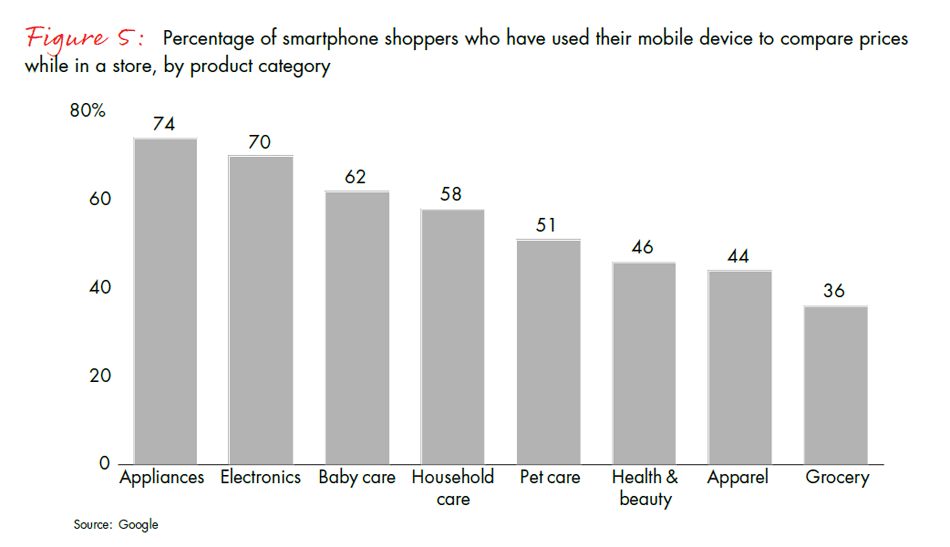
Purchase: Ringing up the sale Mobile payments and mobile wallets have been on the horizon for some time. Today, several models—including browser- and app-based payments, and mobile point-of-sale payments—are vying to become the technology. Retailers have been experimenting more and more with these technologies, and several of them will be on display this holiday season. Mobile payment technologies have the potential to expedite the purchase process at consumers’ moment of truth. Customers at Walmart can use new Scan & Go functionality to scan items into their phone as they shop, which expedites the checkout process. When they’re done shopping, they simply swipe their phone at a self-checkout machine, which reads all scanned items into the machine for payment with cash or credit. Apple Store customers who have the store’s app can pay for any floor-available products without waiting in line. They simply log in to the app using their Apple account, select the items they want to purchase and pay with their linked credit card. Perhaps even more powerful: Mobile payments let consumers seamlessly integrate loyalty programs and other deals while they’re paying. Starbucks has had significant success tying mobile payments to its loyalty program. A consumer can scan her phone at checkout, which draws from her Starbucks account balance and at the same time earns her points toward a free coffee. During the third quarter of 2013, the company’s mobile payment volume increased by 88%, and now accounts for 10% of its total business. Other technologies allow consumers to leave both their phone and wallet at home, changing the way purchases are made altogether. PayPal Express Checkout lets customers simply enter their phone number and PayPal PIN into a participating retailer’s tablet to pay for their purchases. This season more than 18,000 stores in the United States will be equipped with this technology, including The Home Depot, Toys “R” Us, Famous Footwear and Barnes & Noble. Consumers will also be experimenting with new ways to purchase gifts for others. Instead of buying traditional gift cards this holiday season, shoppers at The Home Depot, CVS, Staples and a wide variety of other retailers can use a new tablet-based solution to add personal videos, photographs and texts to their gift. This new service was developed by electronic gift card provider CashStar. Mobile: Much more than just having an app Mobile platforms are creating all kinds of opportunities for retailers. They’re also raising some complex issues for retailers to better understand:
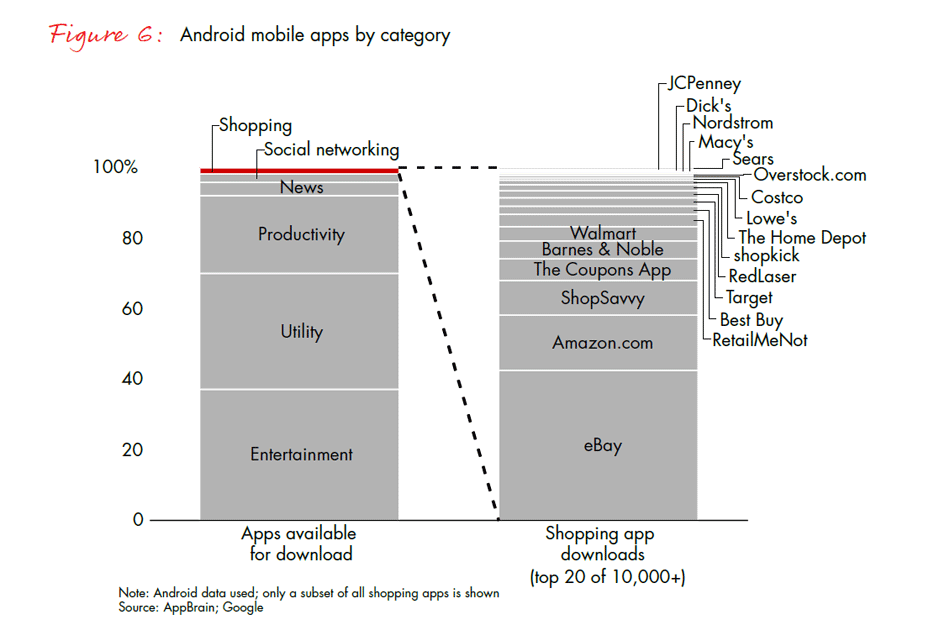
Across all of these decisions, a winning formula requires innovation and adaptation. What works for one retailer may be impractical or even off-brand for others. Retailers can start by asking these questions:
Looking forward: future release dates and topics Our next issue will recap the news from Thanksgiving weekend, and will explore recent retailer tactics in pricing.
Please let us know if you have any questions or would like to arrange a follow-up discussion on mobile. We look forward to continuing to share news of innovations and interesting strategies with you this holiday season. Download the newsletter to view the appendix and selected references 1We will keep watching same-store sales as an indicator of overall sales, but this metric may not be as relevant as it was a few years ago. The number of retailers who report same-store sales is down to 11 this year, from more than 50 in 2007. Many retailers have stopped reporting same-store sales to better focus on long-term growth and to avoid stock price fluctuations in response to monthly comparable-sales numbers. And when same-store sales are reported, in some instances they also include Web-based sales fulfilled by stores, which makes year-over-year comparisons more difficult. |