
Skip to Content
  • 오피스

    오피스

    미주
    • Atlanta
    • Austin
    • Bogota
    • Boston
    • Buenos Aires
    • Chicago
    • Dallas
    • Denver
    • Houston
    • Los Angeles
    • Mexico City
    • Minneapolis
    • Monterrey
    • Montreal
    • New York
    • Rio de Janeiro
    • San Francisco
    • Santiago
    • São Paulo
    • Seattle
    • Silicon Valley
    • Toronto
    • Washington, DC
    유럽, 중동, 아프리카
    • Amsterdam
    • Athens
    • Berlin
    • Brussels
    • Copenhagen
    • Doha
    • Dubai
    • Dusseldorf
    • Frankfurt
    • Helsinki
    • Istanbul
    • Johannesburg
    • Kyiv
    • Lisbon
    • London
    • Madrid
    • Milan
    • Munich
    • Oslo
    • Paris
    • Riyadh
    • Rome
    • Stockholm
    • Vienna
    • Warsaw
    • Zurich
    아시아, 호주
    • Bangkok
    • Beijing
    • Bengaluru
    • Brisbane
    • Ho Chi Minh City
    • Hong Kong
    • Jakarta
    • Kuala Lumpur
    • Manila
    • Melbourne
    • Mumbai
    • New Delhi
    • Perth
    • Seoul
    • Shanghai
    • Singapore
    • Sydney
    • Tokyo
    오피스 전체보기
  • 얼럼나이
  • 미디어 센터
  • 구독
  • 연락처
  • Korea | 한국어

    지역 및 언어 선택

    글로벌
    • Global (English)
    미주
    • Brazil (Português)
    • Argentina (Español)
    • Canada (Français)
    • Chile (Español)
    • Colombia (Español)
    유럽, 중동, 아프리카
    • France (Français)
    • DACH Region (Deutsch)
    • Italy (Italiano)
    • Spain (Español)
    • Greece (Elliniká)
    아시아, 호주
    • China (中文版)
    • Korea (한국어)
    • Japan (日本語)
  • Saved items (0)
    Saved items (0)

    You have no saved items.

    관심 있는 내용을 북마크하여 Red 폴더에 저장할 수 있습니다. Red 폴더 에서 저장된 내용을 읽거나 공유해보세요.

    Explore Bain Insights
  • 산업
    메인 메뉴

    산업

    • 우주항공, 방산 및 정부 서비스
    • 농업 관련 산업
    • 화학
    • 인프라, 건설 및 건축 자재
    • 소비재
    • 금융 서비스
    • 헬스케어
    • 산업용 기계 및 장비
    • 미디어 및 엔터테인먼트
    • 금속
    • 광업
    • 석유 및 가스
    • 제지 및 패키징 산업
    • 사모펀드
    • 사회 및 공공 부문
    • 유통
    • 기술
    • 텔레콤
    • 운송
    • 여행·여가
    • 유틸리티 및 재생가능 에너지
  • 컨설팅 서비스
    메인 메뉴

    컨설팅 서비스

    • Customer Experience
    • ESG
    • Innovation
    • M&A
    • 운영
    • 조직
    • 사모펀드
    • 고객 전략 및 마케팅
    • 전략
    • AI, 인사이트 및 솔루션
    • Technology
    • 변화 혁신
  • Digital
  • 인사이트
  • 베인 소개
    메인 메뉴

    베인 소개

    • 업무 소개
    • 베인의 신념
    • 구성원 및 리더십 소개
    • 고객 성과
    • 주요 수상 경력
    • 글로벌 파트너사
    Further: Our global responsibility
    • 다양성과 포용
    • 사회 공헌 활동
    • Sustainability
    • World Economic Forum
    Learn more about Further
  • Careers
    메인 메뉴

    Careers

    • Work with Us
      Careers
      Work with Us
      • Find Your Place
      • Our Work Areas
      • Integrated Teams
      • Students
      • Internships & Programs
      • Recruiting Events
    • Life at Bain
      Careers
      Life at Bain
      • Blog: Inside Bain
      • Career Stories
      • Our People
      • Where We Work
      • Supporting Your Growth
      • Affinity Groups
      • Benefits
    • Impact Stories
    • Hiring Process
      Careers
      Hiring Process
      • What to Expect
      • Interviewing
    FIND JOBS
  • 오피스
    메인 메뉴

    오피스

    • 미주
      오피스
      미주
      • Atlanta
      • Austin
      • Bogota
      • Boston
      • Buenos Aires
      • Chicago
      • Dallas
      • Denver
      • Houston
      • Los Angeles
      • Mexico City
      • Minneapolis
      • Monterrey
      • Montreal
      • New York
      • Rio de Janeiro
      • San Francisco
      • Santiago
      • São Paulo
      • Seattle
      • Silicon Valley
      • Toronto
      • Washington, DC
    • 유럽, 중동, 아프리카
      오피스
      유럽, 중동, 아프리카
      • Amsterdam
      • Athens
      • Berlin
      • Brussels
      • Copenhagen
      • Doha
      • Dubai
      • Dusseldorf
      • Frankfurt
      • Helsinki
      • Istanbul
      • Johannesburg
      • Kyiv
      • Lisbon
      • London
      • Madrid
      • Milan
      • Munich
      • Oslo
      • Paris
      • Riyadh
      • Rome
      • Stockholm
      • Vienna
      • Warsaw
      • Zurich
    • 아시아, 호주
      오피스
      아시아, 호주
      • Bangkok
      • Beijing
      • Bengaluru
      • Brisbane
      • Ho Chi Minh City
      • Hong Kong
      • Jakarta
      • Kuala Lumpur
      • Manila
      • Melbourne
      • Mumbai
      • New Delhi
      • Perth
      • Seoul
      • Shanghai
      • Singapore
      • Sydney
      • Tokyo
    오피스 전체보기
  • 얼럼나이
  • 미디어 센터
  • 구독
  • 연락처
  • Korea | 한국어
    메인 메뉴

    지역 및 언어 선택

    • 글로벌
      지역 및 언어 선택
      글로벌
      • Global (English)
    • 미주
      지역 및 언어 선택
      미주
      • Brazil (Português)
      • Argentina (Español)
      • Canada (Français)
      • Chile (Español)
      • Colombia (Español)
    • 유럽, 중동, 아프리카
      지역 및 언어 선택
      유럽, 중동, 아프리카
      • France (Français)
      • DACH Region (Deutsch)
      • Italy (Italiano)
      • Spain (Español)
      • Greece (Elliniká)
    • 아시아, 호주
      지역 및 언어 선택
      아시아, 호주
      • China (中文版)
      • Korea (한국어)
      • Japan (日本語)
  • Saved items  (0)
    메인 메뉴
    Saved items (0)

    You have no saved items.

    관심 있는 내용을 북마크하여 Red 폴더에 저장할 수 있습니다. Red 폴더 에서 저장된 내용을 읽거나 공유해보세요.

    Explore Bain Insights
  • 산업
    • 산업

      • 우주항공, 방산 및 정부 서비스
      • 농업 관련 산업
      • 화학
      • 인프라, 건설 및 건축 자재
      • 소비재
      • 금융 서비스
      • 헬스케어
      • 산업용 기계 및 장비
      • 미디어 및 엔터테인먼트
      • 금속
      • 광업
      • 석유 및 가스
      • 제지 및 패키징 산업
      • 사모펀드
      • 사회 및 공공 부문
      • 유통
      • 기술
      • 텔레콤
      • 운송
      • 여행·여가
      • 유틸리티 및 재생가능 에너지
  • 컨설팅 서비스
    • 컨설팅 서비스

      • Customer Experience
      • ESG
      • Innovation
      • M&A
      • 운영
      • 조직
      • 사모펀드
      • 고객 전략 및 마케팅
      • 전략
      • AI, 인사이트 및 솔루션
      • Technology
      • 변화 혁신
  • Digital
  • 인사이트
  • 베인 소개
    • 베인 소개

      • 업무 소개
      • 베인의 신념
      • 구성원 및 리더십 소개
      • 고객 성과
      • 주요 수상 경력
      • 글로벌 파트너사
      Further: Our global responsibility
      • 다양성과 포용
      • 사회 공헌 활동
      • Sustainability
      • World Economic Forum
      Learn more about Further
  • Careers
    최근 검색어
      최근 방문 페이지

      Content added to saved items

      Saved items (0)

      Removed from saved items

      Saved items (0)

      Report

      The Business of Belonging
      en
      At a Glance
      • Investments by companies to foster inclusion and belonging are getting results, particularly for underrepresented populations, who have been the recent focus of such efforts.
      • Inclusion matters—for everyone. A sense of belonging unlocks employees’ potential, encourages challenges to the status quo, and boosts creativity, problem solving, and innovation.
      • Winning organizations promote inclusion and belonging for all employees, while implementing targeted business and enterprise talent strategies.
      • Effective inclusion strategies work to build a culture where everyone benefits; engage employees in defining and practicing inclusion; and invest specifically in leadership.

      Good news for companies seeking to foster inclusion and belonging for their employees: Intentional investments really work. In the last few years, many companies have been setting and communicating clear ambitions to create more inclusive workplaces and backing up these ambitions with specific initiatives and programs. Our latest research, in which we surveyed more than 6,000 employees across four countries, has found that employees who have seen their companies intentionally invest in inclusion since 2020 are three times more likely to feel fully included than employees who have not seen such investment from their employers.

      Among historically underrepresented groups including Black, Latino, Asian, and LGBTQ employees, inclusion scores have risen for every group, and have increased overall by an average of seven percentage points between 2021 and 2023 (see Figure 1.)
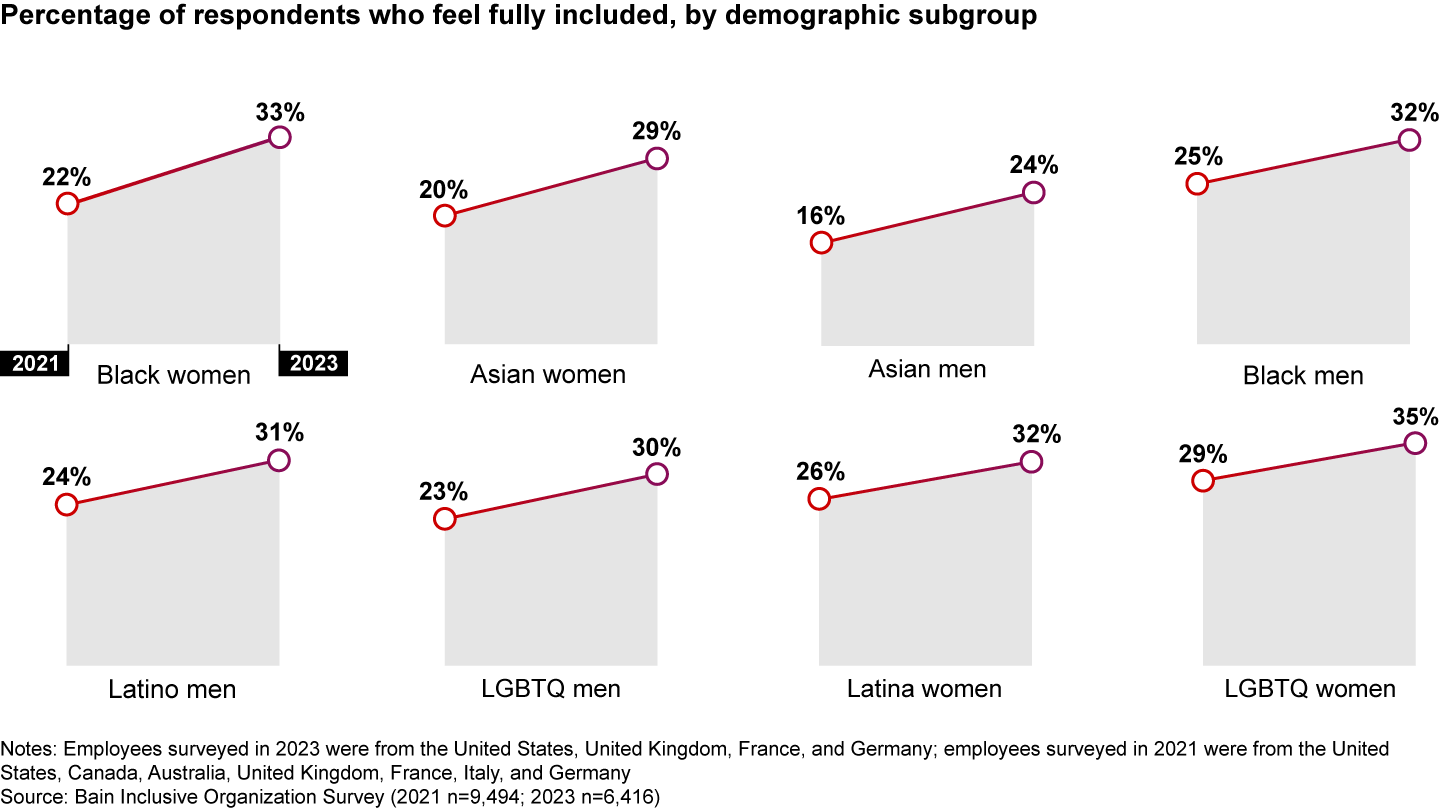
      Figure 1
      Inclusion scores among historically underrepresented groups have risen across the board in recent years, increasing by an average of seven percentage points

      The strong increases in inclusion scores among historically underrepresented populations make sense given that inclusion efforts are often driven by DEI (diversity, equity, and inclusion) teams with a mandate to focus on specific groups. Yet much of what we have learned about inclusion suggests the need to apply these strategies broadly across organizations.

      Why inclusion matters—for everyone

      Making everyone feel they belong at work is—or should be—an integral part of any organization’s talent and business strategies. Why? For one thing, employees who feel excluded are almost certain to perform at less than their full potential; neuroscience has shown that the human brain processes exclusion in ways that are similar to how it processes physical pain.

      Employees who have seen their companies intentionally invest in inclusion over the last three years are three times more likely to feel fully included.

      On the flip side, as we revealed in “The Fabric of Belonging: How to Weave an Inclusive Culture,” inclusion and belonging unlock employees’ highest potential, igniting the creativity, problem-solving capacity, and innovation needed to drive superior business results.

      It is worth noting that diversity and inclusion are separate (though interrelated) factors in boosting team performance. For example, many studies have shown that more diverse teams generate more innovative ideas, and our research corroborates this: Having teams that are highly diverse increases an organization’s capacity for innovation twofold. Teams that are highly inclusive without being diverse increase innovative capacity threefold, and the multiplier rises to four with teams that are both diverse and inclusive (see Figure 2).
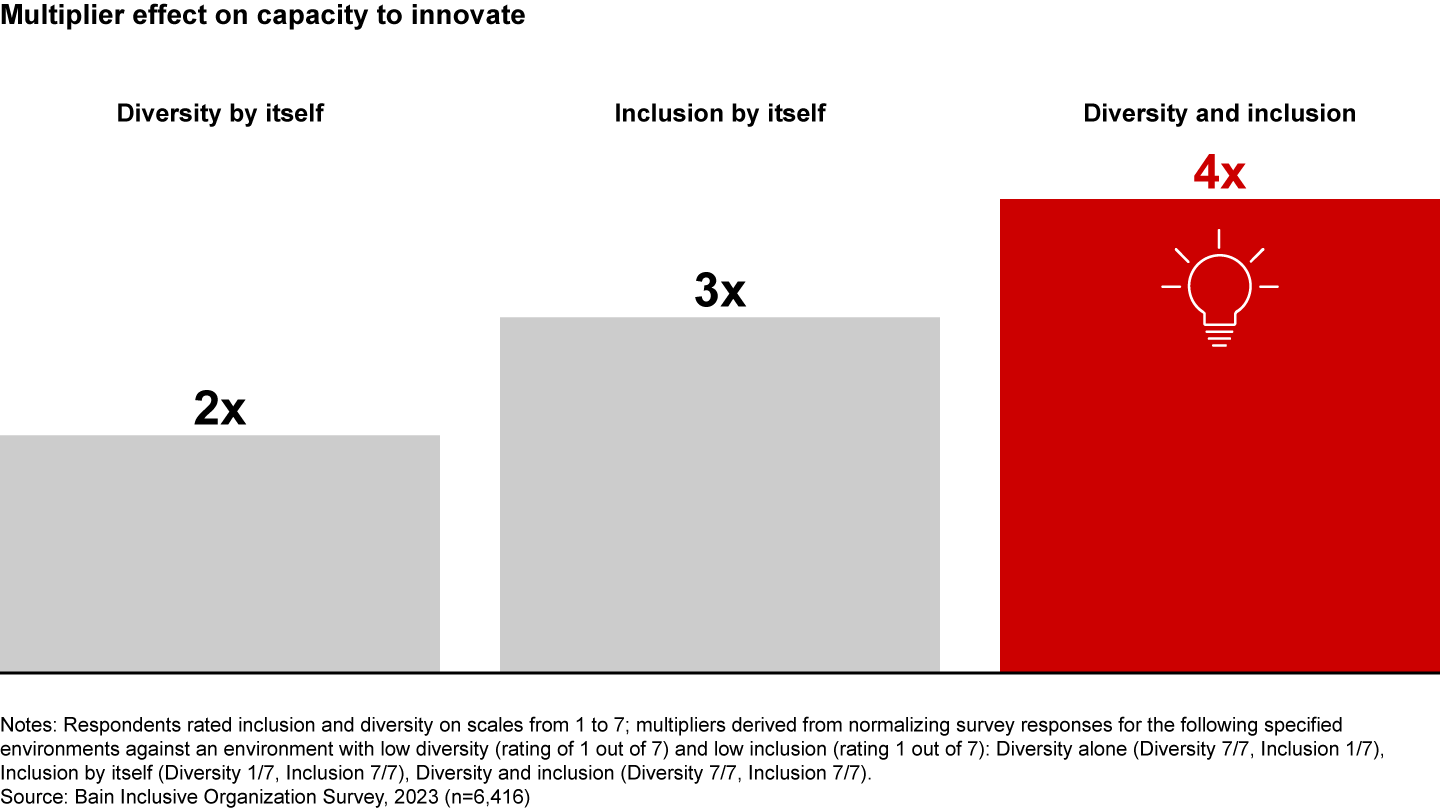
      Figure 2
      Diversity and inclusion, when combined, maximize an organization’s capacity to innovate

      Diversity without inclusion will not get you as far you want to go. While diversity may expand the variety of perspectives brought to the table, it takes inclusion—which gives people more of a voice and creates a “safe to be brave” culture where they are willing to challenge the status quo—to unlock the full potential of diversity on a team.

      Inclusion has other business benefits. Approximately 50% of all job seekers now say they view inclusion as very important in a prospective employer. Employees who report feeling fully included are 12 times more likely to promote their companies to others. Finally, inclusion has enormous benefits for retention: Employees who report feeling they truly belong at work are four to eight times more likely to remain with their organization than those in similar demographics who do not feel they belong. Making sure employees feel they belong also helps maintain and improve the levels of diversity that many companies have worked hard to achieve. Without active inclusion efforts, those same companies may risk becoming less diverse if members of underrepresented groups do not feel they belong and leave as a result.

      A strategic approach to inclusion

      It is clear that fostering inclusion and belonging has very tangible business benefits. Yet despite the success some companies have already achieved, there is still much room for improvement: In our most recent research, no more than 35% of any demographic group of employees said they feel fully included at work.

      No more than 35% of any demographic group feels fully included at work today.

      Employers clearly have a long way to go to foster inclusion for all employees, across all populations. Yet while inclusion for all is a necessity, it also makes sense to focus on specific areas where inclusion can have an especially strong business impact. The challenge is to combine breadth and precision.

      Scaling inclusion efforts effectively across an organization is complex because, as we showed in “The Fabric of Belonging,” what drives inclusion most effectively varies by population. Yet there are a few universal enablers of inclusion that have high impact for everyone, including clear career pathways and investment in professional growth through mentorship and sponsorship programs. These universal enablers belong in any organization’s inclusion efforts.

      Organizations should also selectively bolster investment where inclusion can create the most impact for the business. This means looking beyond historically underrepresented populations to consider specific teams, roles, or functions where improved innovation, creativity, problem solving, and talent outcomes will maximize business value from inclusion. For example, you might prioritize teams with unique perspectives, such as call center employees whose frontline interactions with customers may help generate new ideas for improving customer experience. You might also target company leadership and functions such as R&D or marketing to maximize innovation and problem-solving skills and create real business impact.

      Organizations should also selectively bolster investment where inclusion can create the most impact for the business.

      Mobilizing the whole organization

      The strategic approach to inclusion and belonging we have outlined here offers a way of making inclusion a central part of your whole enterprise talent strategy, in support of your larger business strategy.

      Effectively implementing such an approach requires mobilizing the whole organization by taking these steps:

      Creating an inspiring vision of how inclusion benefits the business as well as everyone in the organization

      An inspiring vision of inclusion must explain in concrete ways how inclusion benefits individuals, their teams, and the business. It enables employees to feel more comfortable and be able to do their best work; helps individuals and teams feel more willing to challenge the status quo; and makes the organization as a whole more innovative and productive. Perhaps most important, an inspiring vision makes it clear that inclusion is for everyone and benefits everyone.

      Engaging and enabling the organization to act on the vision

      Engaging and enabling the organization involves two distinct efforts. Engaging is about motivating people to take action by identifying individuals who will then champion inclusion at all levels of the organization, talking about the vision, and enlisting others in its pursuit. Enabling is about teaching people how to practice inclusion—not only through classroom training but, even more so, by creating opportunities for individuals to share experiences and practice taking authentic personal actions for fostering inclusion.

      One useful way of giving people opportunities to practice inclusion is by encouraging them to adopt “micro-missions”—a term we use to mean small actions an individual commits to practicing in their day-to-day work routines. A micro-mission could be something as small as a leader resolving, “I’m going to invite more junior people to speak before I speak.” Or it could be something bigger, such as a person saying, “I’m going to learn about unconscious bias and what I can do to mitigate it.”

      Investing differentially in leaders

      Investing differentially in leadership means identifying both the authentic actions that best promote inclusion and belonging as well as the leaders who, because they engage in these actions, can best teach by example. When it comes to inclusion, leaders have an outsized impact on the behaviors and even the sentiments of others; indeed, employees are nine times more likely to feel fully included when they perceive both their supervisors and senior management as inclusive (see Figure 3).
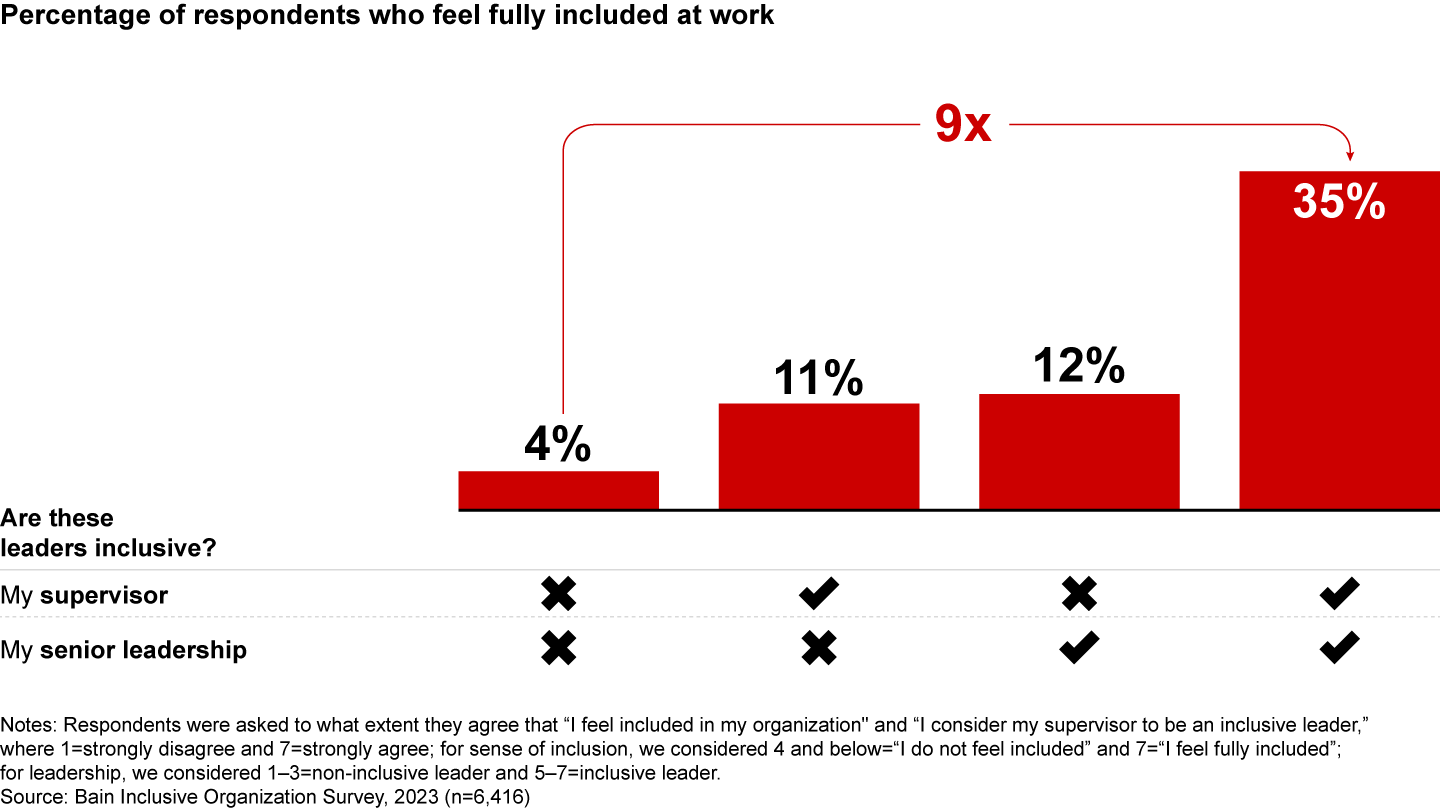
      Figure 3
      Employees with inclusive leadership are 9x more likely to feel fully included at work

      All that said, the whole idea of creating a more inclusive organization can seem daunting, even overwhelming. The topic is sensitive and personal. An organization may have many places where inclusion efforts are needed but lack a clear owner for any of the work. It can be hard to know where to start. The approach to inclusion and belonging we have described here is meant to offer guidance for the journey—but at some point you have to decide to just get started.

      As the journey unfolds, progress will be nonlinear, new challenges will crop up, and organizations will have to learn and adapt as they go. But as people in your organization begin to experience inclusion as a lived reality, you will begin to see other kinds of change: from a workforce that views its work as “just a job” to one that is deeply invested; from a company that has to sell itself to top talent to one where employees do the selling themselves; from a workplace where people play it safe to one where it feels safe to be brave and challenge the status quo.

      These are the ultimate benefits of inclusion and belonging for everyone, and they are within every company’s reach.

      This report would not have been possible without the valuable research and analysis support of Tiffany Chiang, Justin Long, Richard Pettey, and the Bain BCN team. The authors thank them for their important contributions.

      저자
      • Headshot of Julie Coffman
        Julie Coffman
        파트너, Chicago
      • Headshot of Alex Noether
        Alex Noether
        Alumni, Toronto
      • Headshot of Bianca Bax
        Bianca Bax
        파트너, Amsterdam
      • Headshot of Cassy Reichert
        Cassy Reichert
        Practice Vice President, São Paulo
      • Headshot of Krystle Jiang
        Krystle Jiang
        상무, Atlanta
      문의하기
      관련 산업
      • 기술
      • 소비재
      • 유통
      관련 컨설팅 서비스
      • Diversity, Equity & Inclusion
      • Leadership & Talent
      최적의 솔루션 찾기
      • Talent
      기술
      Embracing the “Do-Say” Gap

      Three pragmatic questions that shift sustainability from ambition to action.

      자세히 보기
      CEO Insights: The Talent Imperative
      How to Build a Winning Finance Team

      Technology and analytics provide new tools to improve performance.

      자세히 보기
      Talent
      Want More Out of Your AI Investments? Think People First

      To unlock AI’s exponential productivity potential, companies must modernize workflow and workforce in tandem.

      자세히 보기
      CEO Insights: The Talent Imperative
      Stress: It's Tough at the Top

      Executives report greater stress—but also greater satisfaction—than other workers.

      자세히 보기
      기술
      No Place to Hide: AI Demands Excellence in All Aspects of Marketing

      Top performers don’t just use generative AI, they create deep consumer insights and embrace robust data and technology to grow six times faster than peers.

      자세히 보기
      First published in 11월 2023
      태그
      • 기술
      • 소비재
      • 유통
      • CEO Insights: The Talent Imperative
      • Diversity, Equity & Inclusion
      • Leadership & Talent
      • Talent

      프로젝트 사례

      지속 가능성 및 기업의 사회적 책임 A Manufacturer Vows to “Push to Zero” Carbon Emissions

      See more related case studies

      고객 전략 및 마케팅 Inspiring retail employees to think and act like owners

      See more related case studies

      전략 Focus on core delivers growth for retailer

      See more related case studies

      베인에 궁금하신 점이 있으신가요?

      베인은 주저 없이 변화를 마주할 줄 아는 용감한 리더들과 함께합니다. 그리고, 이들의 담대한 용기는 고객사의 성공으로 이어집니다.

      급변하는 비즈니스 환경에서 살아남기 위한 선도자의 시각. 월간 Bain Insights에서 글로벌 비즈니스의 핵심 이슈를 확인하십시오.

      *개인정보 정책을 읽었으며 그 내용에 동의합니다.

      Privacy Policy를 읽고 동의해주십시오.
      Bain & Company
      문의하기 환경정책 Accessibility 이용약관 개인정보 보호 쿠키 사용 정책 Sitemap Log In

      © 1996-2026 Bain & Company, Inc.

      문의하기

      무엇을 도와드릴까요?

      • 프로젝트 문의
      • 채용 정보
      • 언론
      • 제휴 문의
      • 연사 초청
      오피스 전체보기