
Skip to Content
  • 오피스

    오피스

    미주
    • Atlanta
    • Austin
    • Bogota
    • Boston
    • Buenos Aires
    • Chicago
    • Dallas
    • Denver
    • Houston
    • Los Angeles
    • Mexico City
    • Minneapolis
    • Monterrey
    • Montreal
    • New York
    • Rio de Janeiro
    • San Francisco
    • Santiago
    • São Paulo
    • Seattle
    • Silicon Valley
    • Toronto
    • Washington, DC
    유럽, 중동, 아프리카
    • Amsterdam
    • Athens
    • Berlin
    • Brussels
    • Copenhagen
    • Doha
    • Dubai
    • Dusseldorf
    • Frankfurt
    • Helsinki
    • Istanbul
    • Johannesburg
    • Kyiv
    • Lisbon
    • London
    • Madrid
    • Milan
    • Munich
    • Oslo
    • Paris
    • Riyadh
    • Rome
    • Stockholm
    • Vienna
    • Warsaw
    • Zurich
    아시아, 호주
    • Bangkok
    • Beijing
    • Bengaluru
    • Brisbane
    • Ho Chi Minh City
    • Hong Kong
    • Jakarta
    • Kuala Lumpur
    • Manila
    • Melbourne
    • Mumbai
    • New Delhi
    • Perth
    • Seoul
    • Shanghai
    • Singapore
    • Sydney
    • Tokyo
    오피스 전체보기
  • 얼럼나이
  • 미디어 센터
  • 구독
  • 연락처
  • Korea | 한국어

    지역 및 언어 선택

    글로벌
    • Global (English)
    미주
    • Brazil (Português)
    • Argentina (Español)
    • Canada (Français)
    • Chile (Español)
    • Colombia (Español)
    유럽, 중동, 아프리카
    • France (Français)
    • DACH Region (Deutsch)
    • Italy (Italiano)
    • Spain (Español)
    • Greece (Elliniká)
    아시아, 호주
    • China (中文版)
    • Korea (한국어)
    • Japan (日本語)
  • Saved items (0)
    Saved items (0)

    You have no saved items.

    관심 있는 내용을 북마크하여 Red 폴더에 저장할 수 있습니다. Red 폴더 에서 저장된 내용을 읽거나 공유해보세요.

    Explore Bain Insights
  • 산업
    메인 메뉴

    산업

    • 우주항공, 방산 및 정부 서비스
    • 농업 관련 산업
    • 화학
    • 인프라, 건설 및 건축 자재
    • 소비재
    • 금융 서비스
    • 헬스케어
    • 산업용 기계 및 장비
    • 미디어 및 엔터테인먼트
    • 금속
    • 광업
    • 석유 및 가스
    • 제지 및 패키징 산업
    • 사모펀드
    • 사회 및 공공 부문
    • 유통
    • 기술
    • 텔레콤
    • 운송
    • 여행·여가
    • 유틸리티 및 재생가능 에너지
  • 컨설팅 서비스
    메인 메뉴

    컨설팅 서비스

    • Customer Experience
    • ESG
    • Innovation
    • M&A
    • 운영
    • 조직
    • 사모펀드
    • 고객 전략 및 마케팅
    • 전략
    • AI, 인사이트 및 솔루션
    • Technology
    • 변화 혁신
  • Digital
  • 인사이트
  • 베인 소개
    메인 메뉴

    베인 소개

    • 업무 소개
    • 베인의 신념
    • 구성원 및 리더십 소개
    • 고객 성과
    • 주요 수상 경력
    • 글로벌 파트너사
    Further: Our global responsibility
    • 다양성과 포용
    • 사회 공헌 활동
    • Sustainability
    • World Economic Forum
    Learn more about Further
  • Careers
    메인 메뉴

    Careers

    • Work with Us
      Careers
      Work with Us
      • Find Your Place
      • Our Work Areas
      • Integrated Teams
      • Students
      • Internships & Programs
      • Recruiting Events
    • Life at Bain
      Careers
      Life at Bain
      • Blog: Inside Bain
      • Career Stories
      • Our People
      • Where We Work
      • Supporting Your Growth
      • Affinity Groups
      • Benefits
    • Impact Stories
    • Hiring Process
      Careers
      Hiring Process
      • What to Expect
      • Interviewing
    FIND JOBS
  • 오피스
    메인 메뉴

    오피스

    • 미주
      오피스
      미주
      • Atlanta
      • Austin
      • Bogota
      • Boston
      • Buenos Aires
      • Chicago
      • Dallas
      • Denver
      • Houston
      • Los Angeles
      • Mexico City
      • Minneapolis
      • Monterrey
      • Montreal
      • New York
      • Rio de Janeiro
      • San Francisco
      • Santiago
      • São Paulo
      • Seattle
      • Silicon Valley
      • Toronto
      • Washington, DC
    • 유럽, 중동, 아프리카
      오피스
      유럽, 중동, 아프리카
      • Amsterdam
      • Athens
      • Berlin
      • Brussels
      • Copenhagen
      • Doha
      • Dubai
      • Dusseldorf
      • Frankfurt
      • Helsinki
      • Istanbul
      • Johannesburg
      • Kyiv
      • Lisbon
      • London
      • Madrid
      • Milan
      • Munich
      • Oslo
      • Paris
      • Riyadh
      • Rome
      • Stockholm
      • Vienna
      • Warsaw
      • Zurich
    • 아시아, 호주
      오피스
      아시아, 호주
      • Bangkok
      • Beijing
      • Bengaluru
      • Brisbane
      • Ho Chi Minh City
      • Hong Kong
      • Jakarta
      • Kuala Lumpur
      • Manila
      • Melbourne
      • Mumbai
      • New Delhi
      • Perth
      • Seoul
      • Shanghai
      • Singapore
      • Sydney
      • Tokyo
    오피스 전체보기
  • 얼럼나이
  • 미디어 센터
  • 구독
  • 연락처
  • Korea | 한국어
    메인 메뉴

    지역 및 언어 선택

    • 글로벌
      지역 및 언어 선택
      글로벌
      • Global (English)
    • 미주
      지역 및 언어 선택
      미주
      • Brazil (Português)
      • Argentina (Español)
      • Canada (Français)
      • Chile (Español)
      • Colombia (Español)
    • 유럽, 중동, 아프리카
      지역 및 언어 선택
      유럽, 중동, 아프리카
      • France (Français)
      • DACH Region (Deutsch)
      • Italy (Italiano)
      • Spain (Español)
      • Greece (Elliniká)
    • 아시아, 호주
      지역 및 언어 선택
      아시아, 호주
      • China (中文版)
      • Korea (한국어)
      • Japan (日本語)
  • Saved items  (0)
    메인 메뉴
    Saved items (0)

    You have no saved items.

    관심 있는 내용을 북마크하여 Red 폴더에 저장할 수 있습니다. Red 폴더 에서 저장된 내용을 읽거나 공유해보세요.

    Explore Bain Insights
  • 산업
    • 산업

      • 우주항공, 방산 및 정부 서비스
      • 농업 관련 산업
      • 화학
      • 인프라, 건설 및 건축 자재
      • 소비재
      • 금융 서비스
      • 헬스케어
      • 산업용 기계 및 장비
      • 미디어 및 엔터테인먼트
      • 금속
      • 광업
      • 석유 및 가스
      • 제지 및 패키징 산업
      • 사모펀드
      • 사회 및 공공 부문
      • 유통
      • 기술
      • 텔레콤
      • 운송
      • 여행·여가
      • 유틸리티 및 재생가능 에너지
  • 컨설팅 서비스
    • 컨설팅 서비스

      • Customer Experience
      • ESG
      • Innovation
      • M&A
      • 운영
      • 조직
      • 사모펀드
      • 고객 전략 및 마케팅
      • 전략
      • AI, 인사이트 및 솔루션
      • Technology
      • 변화 혁신
  • Digital
  • 인사이트
  • 베인 소개
    • 베인 소개

      • 업무 소개
      • 베인의 신념
      • 구성원 및 리더십 소개
      • 고객 성과
      • 주요 수상 경력
      • 글로벌 파트너사
      Further: Our global responsibility
      • 다양성과 포용
      • 사회 공헌 활동
      • Sustainability
      • World Economic Forum
      Learn more about Further
  • Careers
    최근 검색어
      최근 방문 페이지

      Content added to saved items

      Saved items (0)

      Removed from saved items

      Saved items (0)

      Brief

      The New Case for Zero-Based Cost Management

      The New Case for Zero-Based Cost Management

      A clean-sheet approach helps leaders produce savings that stick—even in turbulent times.

      글 Jason Heinrich and Andrew Mintz

      • 읽기 소요시간
      }

      Brief

      The New Case for Zero-Based Cost Management
      en
      한눈에 보기
      • Zero-based cost management helps companies offset rising costs and free up funds to reinvest in growth and resilience.
      • Cost leaders use zero-based cost management to lower their cost base by as much as 25%.
      • Companies that build the skills and discipline to sustain those gains deliver returns 150% higher than their peers over time.

      For executives tasked with managing costs, the pressure has been relentless. Rising inflation, trade tensions, and geopolitical shocks have eroded financial resilience. Two-thirds of global executives say new tariffs are forcing them to accelerate cost cuts and price increases, according to a recent Bain survey (see Figure 1).

      Figure 1
      Most companies plan to cut costs to offset higher tariffs
      visualization

      Notes: Respondents could select more than one option; excludes the approximately 4% of respondents that selected “I don’t know”

      Source: Bain Operations Reinvention COO Survey 2025 (n=181)

      A zero-based cost management system is a no-regrets move, especially in a volatile economy. It enables leadership teams to rapidly shrink the firm’s cost base as much as 25% and redeploy savings to spur growth and expand operating margins. Cost discipline boosts flexibility and competitiveness. That, in turn, can help companies offset the impact of new tariffs and a potential recession.

      Top-performing companies act fast when signs point to a downturn. They work feverishly to get ahead of the risks by targeting costs and productivity. Bain research on 5,000 companies globally shows that today’s sustained value creators—those that consistently delivered both real top-line growth and positive economic value added over the past decade—have significantly outperformed their peers over the long term (see Figure 2).

      Figure 2
      The share price of sustained value creators has outperformed peers by 150%
      visualization

      Notes: Sustained value creators are companies that delivered both positive economic profit (EVA) and real top-line growth (above inflation) in at least 8 of the past 10 years (2013–2023); “All-stars” are companies that met this criteria every year from 2013 to 2023; total shareholder return is indexed from 2003 to show long-term share price performance for sustained value creators and peers

      Sources: S&P Capital IQ; Bain analysis

      Just 10% of companies achieved this status over the past decade, yet they earned an average total shareholder return (TSR) of 15%—three times that of other firms. These leaders don’t rely on quick wins; they embed profitable growth capabilities that hold up throughout economic cycles, industries, and geographies. These companies excel in cost productivity—growing earnings faster than revenue—underscoring the role of discipline in long-term outperformance.

      Cost productivity is a smart downturn play—but it’s also a proven path to long-term shareholder value.

      Cost creep

      Despite major efforts to streamline and simplify their cost structures, most companies acknowledge that, over time, cost and complexities always seem to come back. A recent Bain study of 470 companies shows only 12% of transformations delivered sustainable performance improvement. Two-thirds of the executives surveyed said they had implemented three or more transformations in the past five years.

      Top-performing companies embrace a cost management methodology that allows them to allocate resources with more agility and sustain the results. That helps fuel productivity gains, even in a turbulent economy.

      Leadership teams can manage costs on three levels (see Figure 3). In our experience, the most effective cost managers operate on all three, building knowledge and insight from each effort.

      Figure 3
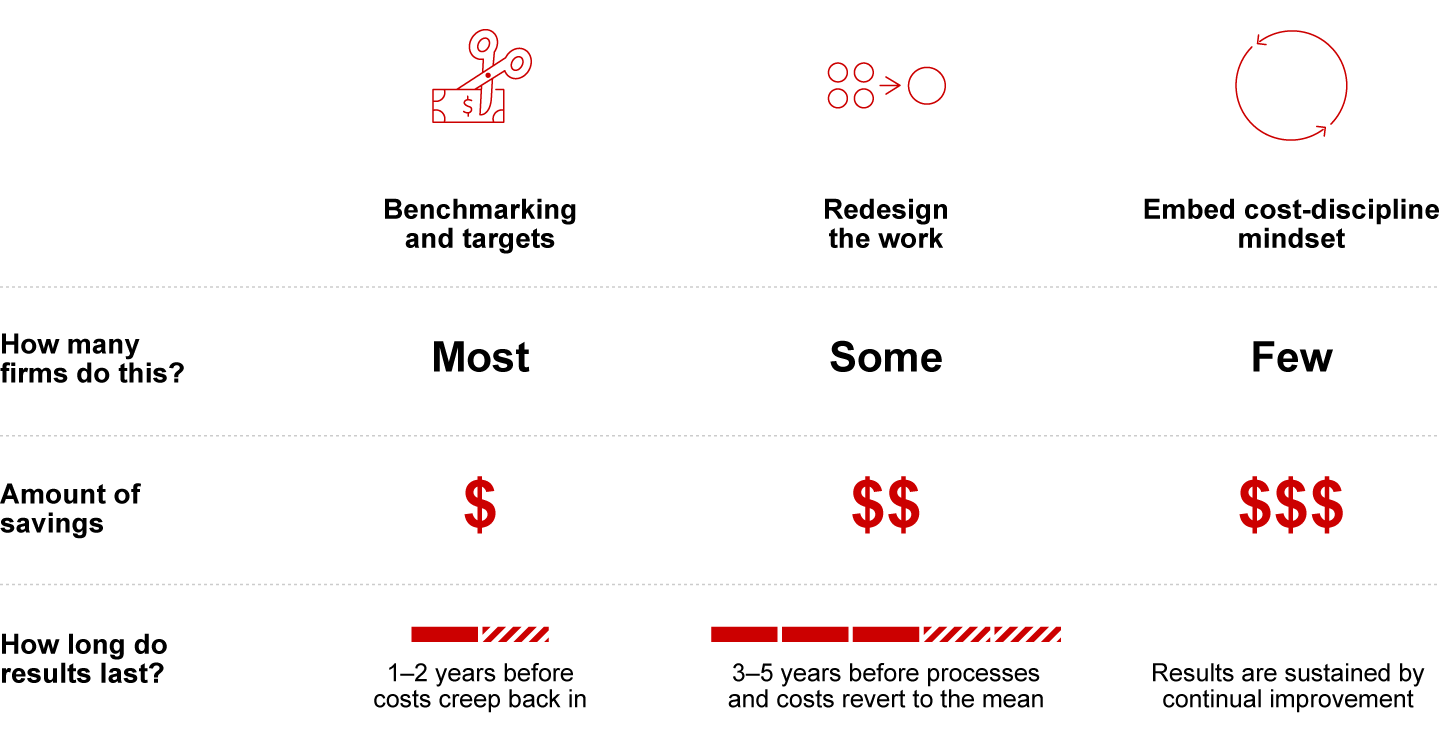
      Companies can tackle costs on three levels
      Sources: S&P Capital IQ; study of 20 companies across industries; survey of more than 100 C-level executives; Bain analysis

      Benchmarking and setting targets. This is what most companies do. They figure out where they can compress costs, set top-down targets, and require the business and functional leaders to fall in line. It’s a brute-force approach to cutting costs, but the underlying work and activities don’t go away. As a result, cost reductions typically last only one or two years before creeping back.

      Redesigning the work. This is what some firms do. They take complexity and work out of the system by redesigning their operating model and deploying automation and digital technologies. Companies that do this well use zero-based redesign (ZBR), a clean-sheet approach that resets the way work is done. They use ZBR to strengthen capabilities that provide competitive differentiation, while streamlining functions that are less critical. ZBR starts with a “today forward, future back” view. Future back means envisioning customer needs, required capabilities, and cost structure three to five years from now to define a clear point of arrival. Today forward involves defining the pathway to move from where the company is today to that future state.

      Successful companies also deploy technology solutions to improve productivity and cost leverage. They evaluate gaps in their tech stack, assess current capabilities, and determine whether new tools can enhance efficiency and effectiveness. They also tap generative AI, but many are finding that the real gains come when it’s paired with classic end-to-end process redesign. Generative AI can automate and accelerate workflows, but without a foundational rethink of how work gets done, the benefits are limited.

      Even with new technology and redesigned processes, companies need the structure and accountability to realize savings and sustain them over time. However, most organizations fail to adopt new ways of working to change workforce behavior. As a result, the improvement in performance typically lasts three to five years before the costs return.

      Embedding a cost management mindset. Leaders ensure long-term savings and flexibility by building a cost-discipline mindset. It’s rooted in company strategy, developed as a capability, and engrained in the company culture. This is what few firms do—and it’s what separates the winners who sustain value over time from the losers.

      They treat cost discipline as a strategic priority, investing in systems that align with enterprise goals. They build capabilities in people, processes, and technology to create and sustain impact. And they foster a culture of ownership and continuous improvement.

      Zero-based budgeting (ZBB) plays a critical role in this mix. It creates both the skills and the ownership mindset to take costs out for good and reallocate scarce resources to their most productive use. ZBB is more than just a budgeting process; it’s a set of tools that enables a fundamental shift in a company’s overall approach to cost management, grounded in transparency, accountability, and value-focused decision making.

      Companies in this group set top-down targets and redesign the work. But what separates them from the pack is rigorous performance management. They establish routines to identify new productivity initiatives, track the progress of those initiatives, and ensure that gains flow through to the P&L. When savings hit the bottom line, the managers in charge are rewarded. When they don’t, these managers are held accountable. The results stick because cost savings can be identified, tracked, and continually improved. Even companies that don’t deploy a full ZBB program can build cost discipline by increasing spending visibility, understanding what kinds of demand fuel spending, and embedding behavioral change into the organization.

      ZBB provides a foundation for transparency and control. It allows leadership teams to understand how much of the company’s cost base is fixed vs. variable. It provides visibility into who’s spending and what they’re purchasing. This enables companies to tie savings delivered and budgets met to incentives and establish accountability across the leadership team. It is not a matter of using one approach for analyzing efficiency opportunities and another approach for designing processes to sustain those efficiencies; it integrates the two. Spending visibility also helps companies create flexible cost structures that they can adapt to changing market conditions. That makes firms nimbler and more competitive, especially amid today’s market uncertainty.

      The most effective companies share a distinguishing feature when retooling costs: CEO and CFO engagement in a full change management effort. These leaders acknowledge at the outset that cost management requires new skills and a new mindset. They play a major role in shaping the goal and ambition, and design programs that address the potential barriers to change. Finally, they build the strategic case for change, instead of just implementing it. In doing so, they bring the organization with them.

      Businesses face an increasingly unpredictable future as costs mount and risks multiply. Those that embrace all three levels of cost management will be able to navigate near-term market shifts, even as they gain a competitive edge for the long term.

      저자
      • Headshot of Jason Heinrich
        Jason Heinrich
        파트너, Chicago
      • Headshot of Andrew Mintz
        Andrew Mintz
        파트너, New York
      문의하기
      관련 컨설팅 서비스
      • 성과 개선
      • Accelerated Performance Transformation
      • Macro Strategy
      • Support Functions
      최적의 솔루션 찾기
      • Finance Function Advantage
      • Net Working Capital
      • Zero-based Budgeting
      • Zero-based Redesign
      CFO Insights
      What CFOs Need to Know About Inflation, Tariffs, and Capital Markets

      Goldman Sachs’ Tim Ingrassia joins Bain's Karen Harris and Pam Yee to unpack the macro forces shaping the CFO agenda.

      자세히 보기
      CFO Insights
      Tariffs Are Shaking Up Investment Priorities

      As input costs rise, companies are revising forecasts and shifting capital to supply chains and tech.

      자세히 보기
      CFO Insights
      Retooling for the New Cost Imperative

      To accelerate growth in the crisis, companies need to act on five big themes.

      자세히 보기
      CFO Insights
      Cash Is King

      Want to improve total shareholder return (TSR)? Don’t overlook cash efficiency.

      자세히 보기
      CFO Insights
      In an Era of Tariffs and Turbulence, Four Moves That Matter

      Understand your exposure. Understand your competitors’ exposure. Adjust your pricing and supply chains accordingly. Repeat as necessary.

      자세히 보기
      First published in 5월 2025
      태그
      • 매크로 트렌드
      • 비용
      • 성과 개선
      • Accelerated Performance Transformation
      • CFO Insights
      • Finance Function Advantage
      • Macro Strategy
      • Managing Inflation
      • Net Working Capital
      • Support Functions
      • Tariff Response
      • Zero-based Budgeting
      • Zero-based Redesign

      프로젝트 사례

      운영 A Mining Company Optimizes Capex with a Different Way of Working

      See more related case studies

      An EPC Leader Transforms Itself Amid Intense Volatility

      See more related case studies

      성과 개선 A Global Media Company Unlocks Hundreds of Millions in Working Capital

      See more related case studies

      베인에 궁금하신 점이 있으신가요?

      베인은 주저 없이 변화를 마주할 줄 아는 용감한 리더들과 함께합니다. 그리고, 이들의 담대한 용기는 고객사의 성공으로 이어집니다.

      급변하는 비즈니스 환경에서 살아남기 위한 선도자의 시각. 월간 Bain Insights에서 글로벌 비즈니스의 핵심 이슈를 확인하십시오.

      *개인정보 정책을 읽었으며 그 내용에 동의합니다.

      Privacy Policy를 읽고 동의해주십시오.
      Bain & Company
      문의하기 환경정책 Accessibility 이용약관 개인정보 보호 쿠키 사용 정책 Sitemap Log In

      © 1996-2026 Bain & Company, Inc.

      문의하기

      무엇을 도와드릴까요?

      • 프로젝트 문의
      • 채용 정보
      • 언론
      • 제휴 문의
      • 연사 초청
      오피스 전체보기