

Brief

한눈에 보기
- As they try to rejuvenate growth, consumer goods companies face the challenge of addressing changing definitions of consumer value, as more consumers seek purpose-led brands.
- The Elements of Value provides a data-driven way for companies to understand the types and amount of value that consumers experience in their brands, and how that compares with other brands.
- Companies can use this deeper understanding of value and consumer needs as the basis for defining their innovation agenda.
More than 65% of consumers globally are willing to pay more for sustainable products, and 90% would switch to sustainable brands if price and quality were equal. The message is clear: Consumers want companies to take sustainability and greater purpose as seriously as they do. Not surprisingly, employees do, too. More than 70% of millennials are more likely to choose to work at a company with a strong environmental agenda.
Consumer products companies that are actively defining their sustainability agenda and getting ahead of consumer sentiment are reaping the rewards. Danone has made a concerted effort to ensure its brands uphold the “One Planet. One Health” corporate-level manifesto. Its purpose-led brands are growing three times faster than the rest of the company’s portfolio. Unilever’s 28 sustainable living brands are growing 69% faster than its other brands and are the engine powering 75% of the company’s growth.
Historically, purpose was at the core of many companies. William Hesketh Lever wanted Lever Brothers to eradicate disease through hygiene, for example, while Henri Nestlé wanted to reduce infant mortality through nutrition. Such missions played a big role in marketing and innovation agendas over the years.
Yet, as growth has stagnated in the last decade, established companies have focused more on cutting costs to protect margins and less on the innovations that deliver the greater purpose so many consumers now desire. Nearly three-quarters of the top consumer goods companies reduced their total innovation and R&D spending from 2006 to 2017, which now accounts for 2% of their sales, on average.
Today, as consumer products companies seek to rejuvenate growth and reconnect with consumers, success will depend on whether consumers recognize and value their products and services. The ability to define, measure—and continually improve—the value proposition will be key to ensuring innovation stays focused on the types of value that matter the most to consumers.
The Elements of Value
To understand what underpins a consumer’s perception of value, we identified 30 fundamental types of value in their most essential and discrete forms. These Elements of Value fall into four categories: functional, emotional, life changing and social impact (see the diagram below and the Harvard Business Review article “The Elements of Value”).

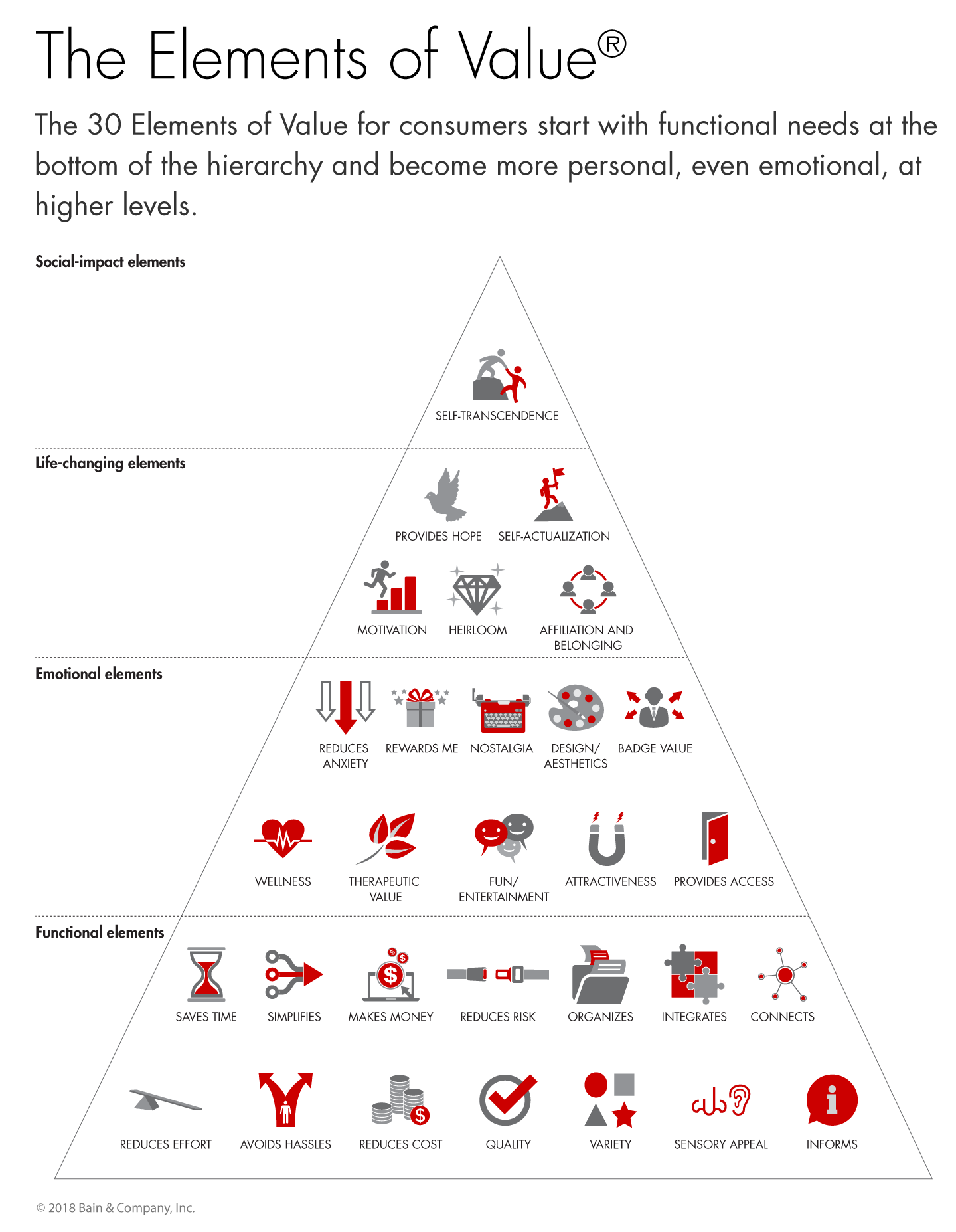
The Elements of Value provides a data-driven way for companies to understand the types and amount of value that consumers experience in their brands, and how that compares with other brands. In Bain’s analysis, a brand delivers one of those elements if at least 40% of respondents rate the brand 8 or higher (on a scale of zero to 10) for that element. In consumer products, most brands meet the threshold for such functional needs as “quality” and “sensory appeal,” attributes that are essentially table stakes.
As consumer attitudes toward products and services shift from “What does it do?” to “How does it make me feel?” “How does it change my life?” “How does it change the world?” companies will need to evolve with them. For some brands, this will require delivering on higher-order elements such as “affiliation and belonging,” ”motivation” or “provides hope.” For others, it might mean delivering on more functional elements such as “reduces cost” or “reduces risk,” if that aligns with their purpose.
For Dollar Shave Club, acquired by Unilever in 2016 for $1 billion, offering a direct-to-consumer subscription model for men’s razors was a way to simplify shopping for razors, tapping into elements such as “saves time,” “reduces effort,” “simplifies” and “avoids hassles.” Dollar Shave Club redefined consumer expectations for the category, delivering on eight Elements of Value, compared with one for Gillette. Just seven years after launching in 2011, Dollar Shave Club is now the No. 3 player in the US men’s razors and blades market, with over $230 million in annual sales.
Insurgent brands, which we define as brands that have grown 10 times faster than their category over the last five years and have minimum revenues of $25 million, are effective at delivering the value consumers are seeking. Bain’s analysis shows that these brands perform better than incumbents do at all levels of attributes, and their outperformance is even more pronounced on higher-order Elements of Value (see Figure 1). Consumers are rewarding them for the types and amount of value they deliver. In the US, despite accounting for less than 3% of the market share in their categories, insurgent brands are capturing over 30% of the growth in those categories.
Figure 1
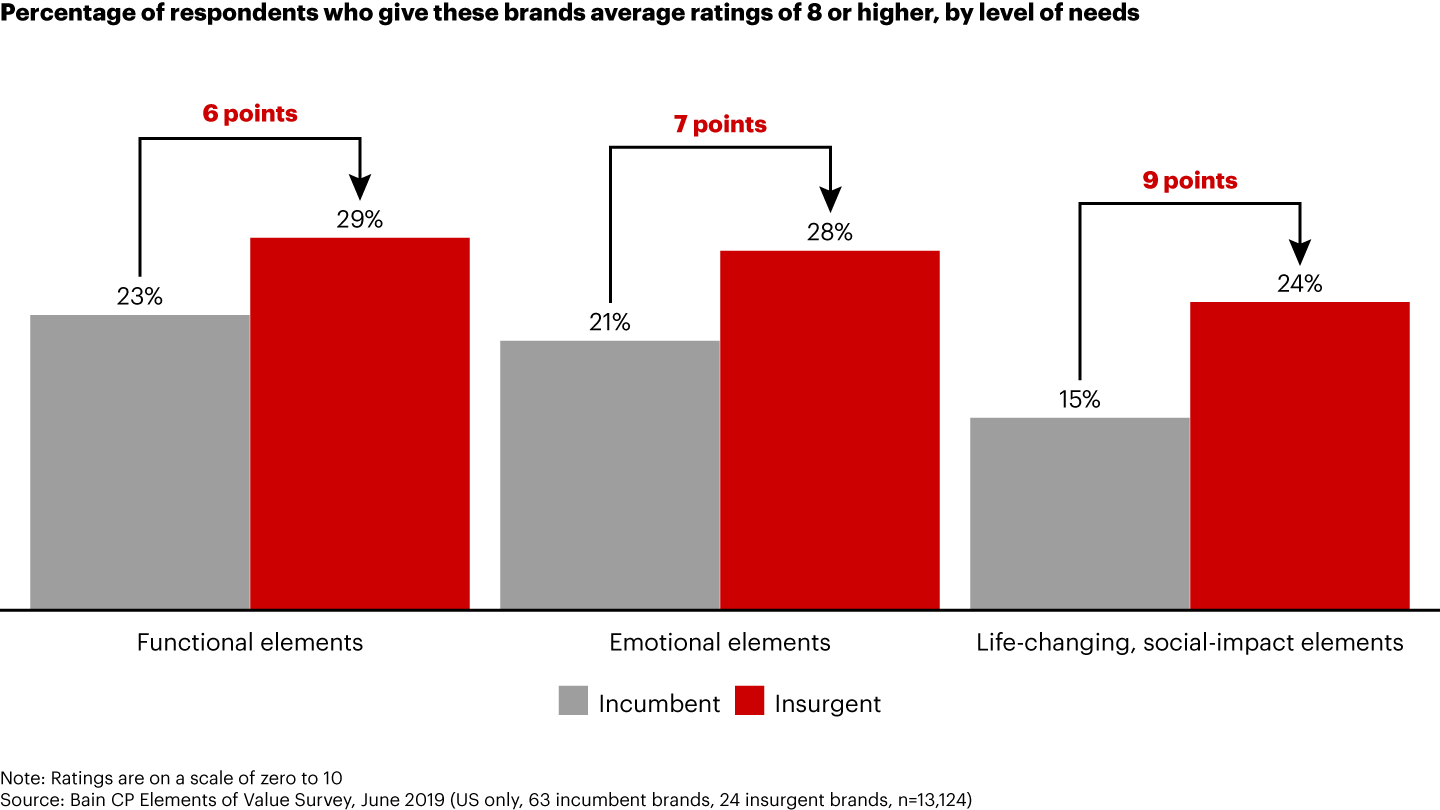

But this is not just an insurgent story. The Elements of Value also explains the recent success of many incumbents.
Link to growth
To confirm the link between Elements of Value and growth, we partnered with market-research and marketing-services firm Dynata to survey over 10,000 US consumers, analyzing seven consumer goods categories and nearly 75 brands. We found that brands that deliver more than four Elements of Value to consumers experience higher growth in three important metrics: revenue growth, household penetration and repurchase rate (see Figure 2).
Figure 2
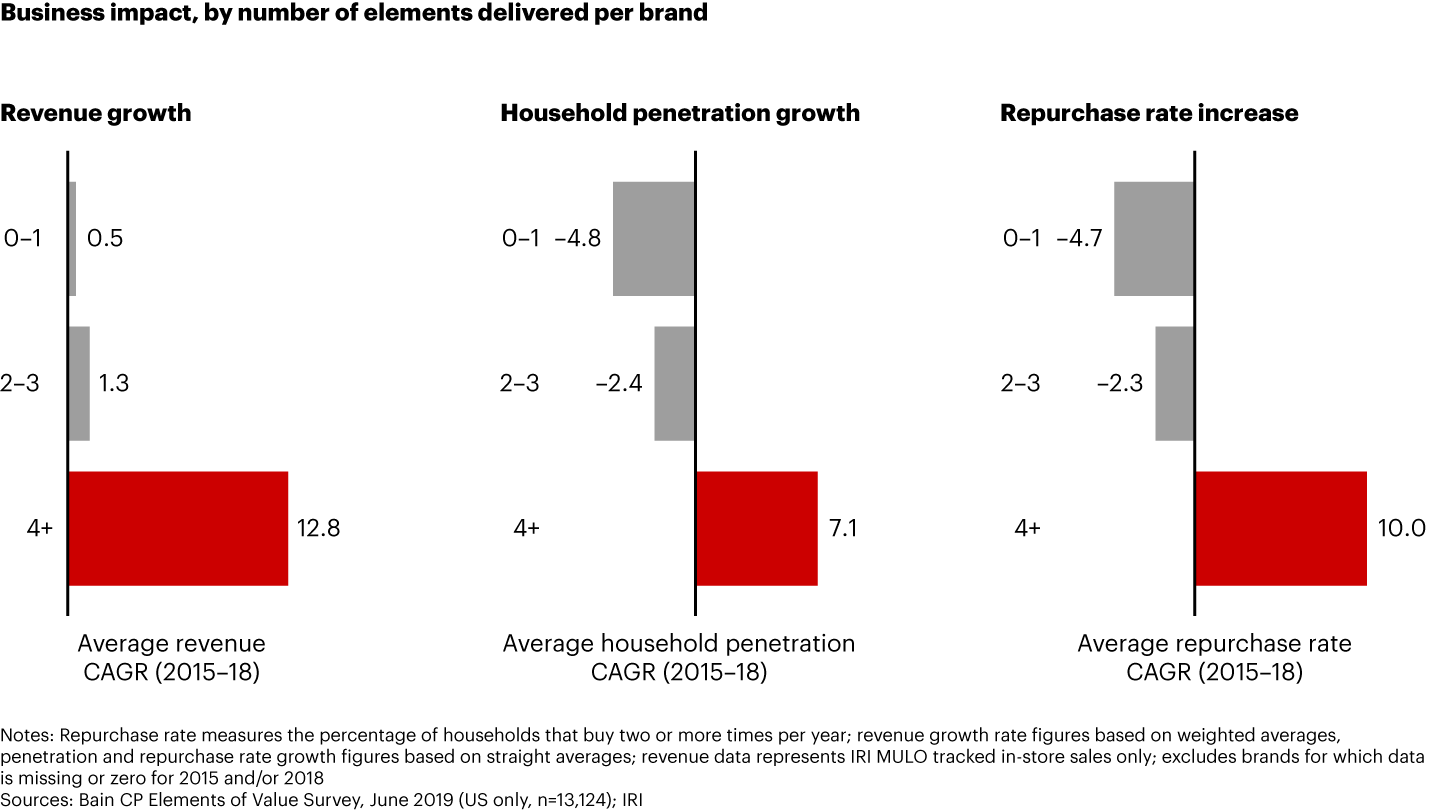

The evidence is dramatic. From 2015 to 2018, brands that delivered four or more attributes increased revenues an average of 10 times the rate of those that delivered only two or three elements. Brands that delivered one or no attributes grew even less. The pattern holds true both for insurgent brands and for older, more established incumbent brands, with those delivering one or no attributes declining, on average.
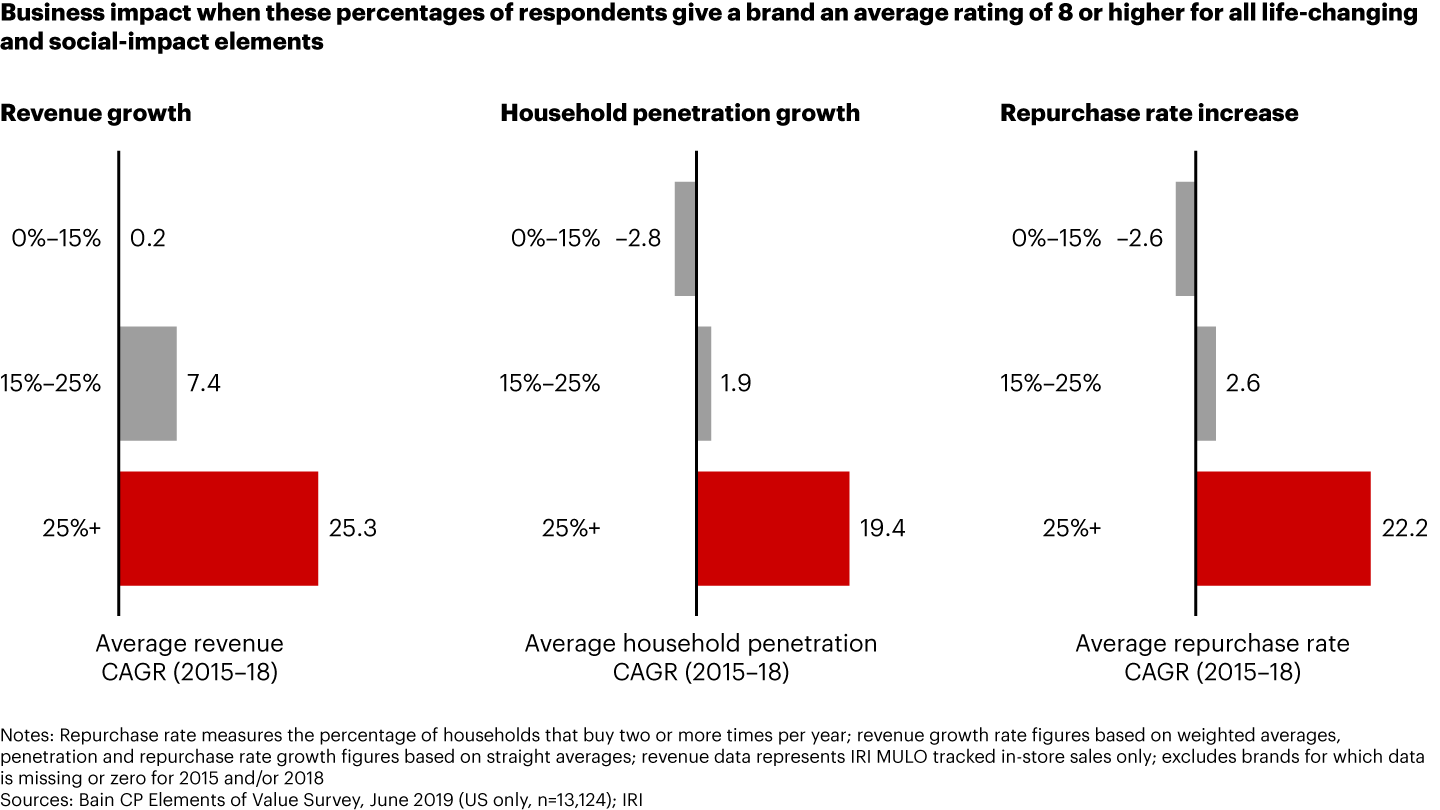
Even though large consumer goods companies do not clear the threshold on many higher-order elements, those that score higher than competitors have much higher growth rates (see Figure 3). The message for incumbents: Even incremental gains in higher-order elements will boost growth. Large brands that get this right have a lot to gain.
Figure 3

Putting the Elements of Value to work in consumer products
Companies can use this deeper understanding of value and consumer needs as the basis for defining their innovation agenda along multiple dimensions:
- Brand acceleration. Understanding how a brand performs on various Elements of Value and how well relative to its competitors can inform where and how a brand should invest to accelerate its growth.
- Category reinvention. In many categories, growth will come from identifying and delivering new sources of value for consumers. By reformulating products or introducing new business models, brands can expand their value propositions and redefine what consumers can expect from a category.
- Continuous improvement. The strongest brands are constantly looking for ways to offer better and greater value to consumers. They measure the value they deliver to consumers today and track performance to adjust their strategy accordingly.
- Portfolio choices. Consumer goods companies can arm themselves to make better-informed portfolio choices in investments, resource allocation, M&A and divestitures by clearly understanding the opportunities for new sources of value and determining if their existing portfolio can meet those needs.
- Innovation and experimentation. Clarifying the value their brands offer today—and the opportunities that exist to offer greater or different value—provides companies with useful input for new product development.
- Value chain expansion. Finally, as consumer products companies seek to deliver new and greater sources of value, their insights into consumer value can help them acquire or change their business models to enter new parts of the value chain.
Consider how Dove accelerated brand growth and continuously improved its value proposition by tapping into new, higher elements of value. The brand originated as a mild, moisturizing cleansing bar aimed at women, but in the mid-1990s, began expanding into adjacent categories such as body wash, deodorant and skin care—leveraging its strength in such functional elements as “quality” and “sensory appeal” to grow from a single product to an entire personal care brand. As competition increased in the early 2000s, Dove shifted away from communicating purely functional benefits, and toward higher-order messages of real beauty, personal empowerment and sustainability. This enabled Dove to remain distinctive and relevant as it expanded into new geographies and broader consumer segments such as male grooming and baby care. As a result, Dove has grown nearly twice as fast as the overall global beauty and personal care market over the last 10 years and has become Unilever’s top-selling global brand.
Procter & Gamble has added seemingly countless innovations to Tide since it first appeared on store shelves in 1946, each tapping into new sources of value for consumers. Tide Pods provide specific functional benefits through three-in-one laundry capsules. They reduce effort, save time and prevent inconveniences associated with washing and treating laundry. Tide Purclean, made with 75% plant-derived ingredients, taps into higher-order elements linked to social impact. The Tide Eco-Box’s ship-to-consumer packaging uses 60% less plastic and 30% less water, reducing hassles while helping the environment.
Nespresso’s relentless pursuit of experimentation and innovation has enabled it to reinvent the coffee category, continuously improve and expand into new parts of the value chain. Among coffee brands, Nespresso scores high in functional elements such as “simplifies” as well as emotional elements such as “design/aesthetics.” The brand builds on that value by introducing new delivery methods and channels. For example, in London, Nespresso opened cafes where consumers can enjoy coffee while replenishing their supply of capsules. Nespresso’s coffee capsule business grew 11% annually from 2010 to 2018, becoming one of the fastest-growing and most profitable brands in Nestlé’s portfolio.
Danone is aiming to reinvent categories, continuously improving, reshaping its portfolio and expanding its presence in the value chain as it delivers on its motto of “One Planet. One Health.” It acquired WhiteWave’s portfolio of plant-based brands and launched its venture arm Danone Manifesto Ventures, investing in brands such as Harmless Harvest that help consumers adopt healthier choices and lifestyles. At the same time, Danone is seeking to divest brands that do not fit with its corporate mission.
The challenge of offering better and greater value to consumers is a long game. Companies that outperform their competitors will be those that steadily measure the changes in what consumers value, carefully track their delivery of that value and continuously adjust their strategy. It is the best way to evolve along with—or ahead of—consumers.
Orit Gadiesh is chairman of Bain & Company and is based in London. Eric Almquist, a Bain partner in Boston, is a leader in the firm’s Advanced Analytics practice and a member of the Global Customer Strategy & Marketing practice. Matthew Meacham is a partner based in London and a member of Bain’s Consumer Products practice. Charlotte Apps is the Consumer Products practice director in Toronto.
The authors would like to thank Luke Secosky for his contribution to this work.
Elements of Value® is a registered trademark of Bain & Company, Inc.
First published in 11월 2019