

Inside Bain’s Global AI hackathon
Inside Bain’s Global AI hackathon

Five finalists share their experience building AI solutions and competing on a global stage
Bain's global hackathon is a firmwide competition where employees build AI-powered solutions to solve real problems, from streamlining case workflows to strengthening how we collaborate. This year, over 200 submissions came in from 50+ offices around the world, and nine finalist teams were selected to travel to New York and pitch their solutions live in front of senior Bain leaders and external judges.
Hear from five finalists on what they built, what the experience was really like, and what it taught them about innovation at Bain.
Going from a rough idea to a working prototype, surrounded by people pushing the boundaries of AI, made the experience exciting from start to finish.
Jessica Pei
Associate Consultant
What inspired your team’s solution, and what impact do you hope it will have?
Jessica Pei, an Associate Consultant from our New York office, built a tool to solve a frustration most consultants know well. "When people roll off a case, critical institutional knowledge leaves with them," she explained. "There's a scramble to reconstruct not just what was decided, but why." Her solution captures both structured case materials and the unstructured context that typically gets lost, then makes it instantly searchable through AI.
For Geukho Jung, an Expert Manager in Design from our Seoul office, the problem was the expert interview process; hours of prep, coordination, and synthesis, much of it friction rather than thinking. His team built a tool that handles live transcription, real-time follow-up suggestions, and fact-checking, so consultants can stay fully in the conversation instead of managing logistics around it.
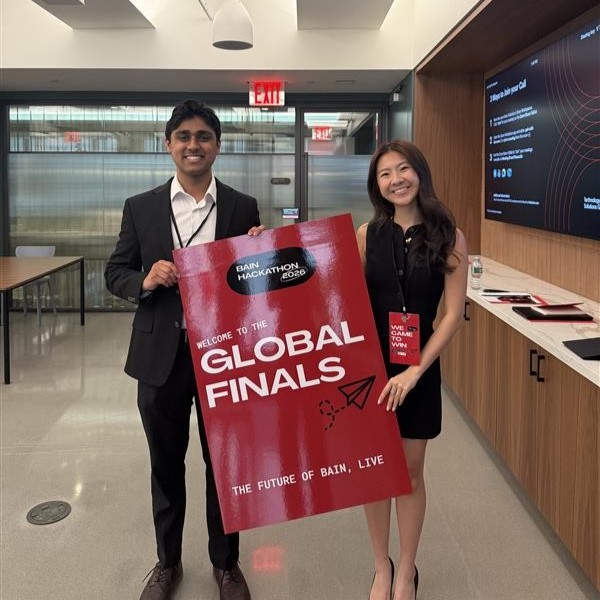
Jessica and her teammate Aayush at the global finals in New York.
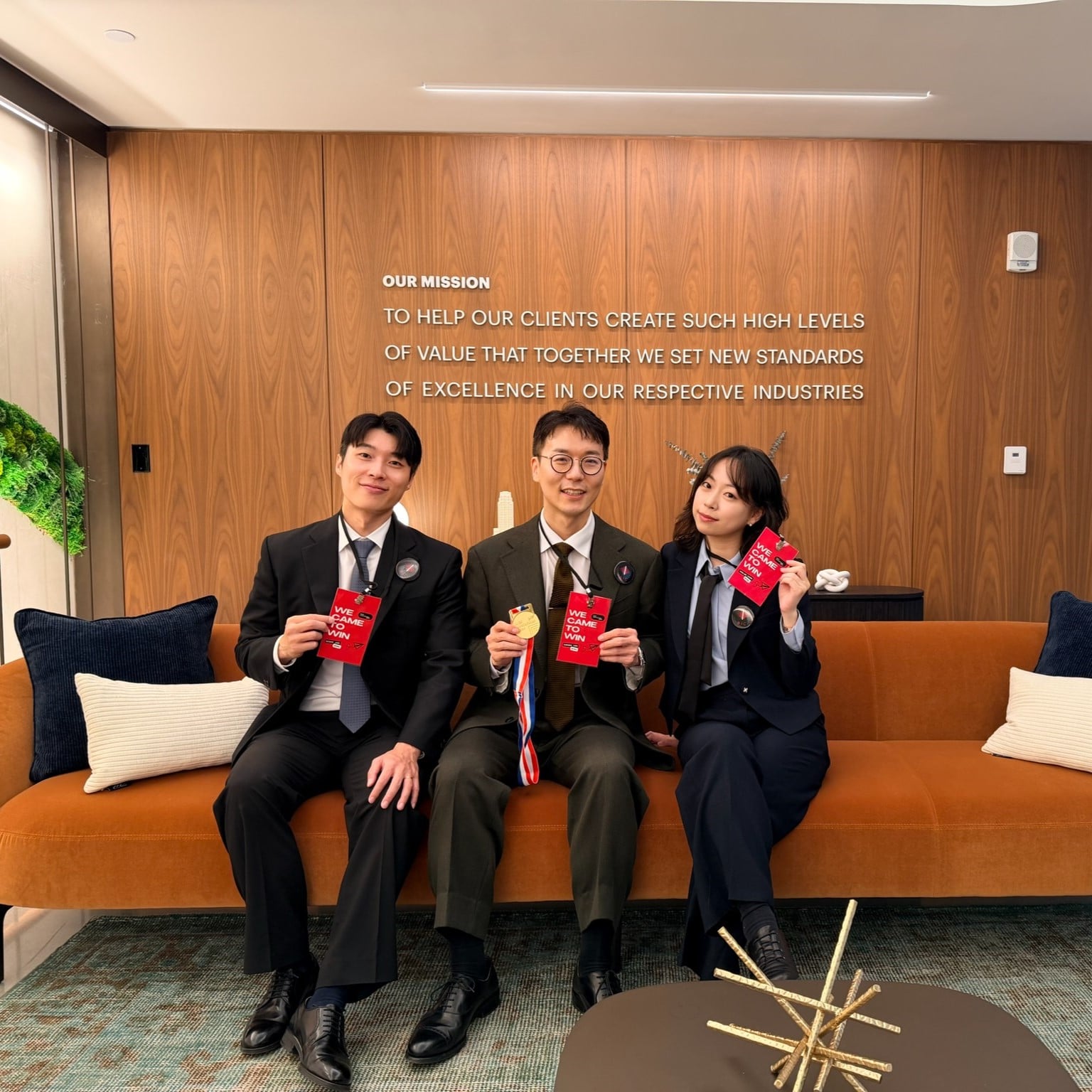
Geukho, Sungwon, and Yoonjoo at the Bain New York office after the global finals.
Eimhin O'Neill, an Expert Associate Consultant in our London office, turned his attention to professional development. "The feedback that really matters—case reviews, PD chats, the offhand comment after a tough client meeting—lives in a dozen different places," he said. His team built a lightweight tool that captures it as it happens, links it to Bain's skill framework, and uses AI to surface patterns that would otherwise get missed.
Charles Mendelson, Lead of Software Engineering in our Los Angeles office, tackled a problem familiar to anyone building with AI at Bain. "Teams often waste time figuring out what solutions already exist and what's already been built," he said. His team's solution makes it easier to surface that knowledge so teams can build on proven work instead of starting from scratch.
Not every problem the hackathon surfaced was about workflow. Coco Jing, an Associate Consultant from our Hong Kong office, noticed something different in her first months at Bain. "Colleagues who loved running, photography, or cooking had no way to find each other except by chance," she said. Her solution is a platform where Bainies can discover and build hobby-based communities, backed by AI matching, event management, and analytics that make culture measurable for the first time.
What was your experience competing in the Hackathon? Was there a standout moment?
For Geukho and his Seoul teammates, just making it to New York felt surreal. What started as an office competition became a four-stage process: local selection, screening rounds, regional finals, then the global stage. "At the beginning, we joked around saying, 'We're definitely going to New York together,'" he recalled. "None of us seriously expected it to happen." Two nights before the final, three of them practiced their pitch outdoors near Bryant Park, in the rain. "Looking back, it felt less like a competition and more like a once-in-a-lifetime team experience."
For Eimhin, the standout moment came not on stage but during user testing. After iterating in front of more than 30 consultants, the response caught him off guard. "People weren't just being polite; they actually wanted to use it to make their day-to-day easier. They pushed us with specific suggestions for features and UI changes to make it more intuitive." Knowing your future users are already pulling for the product, he said, made the late nights feel very different.
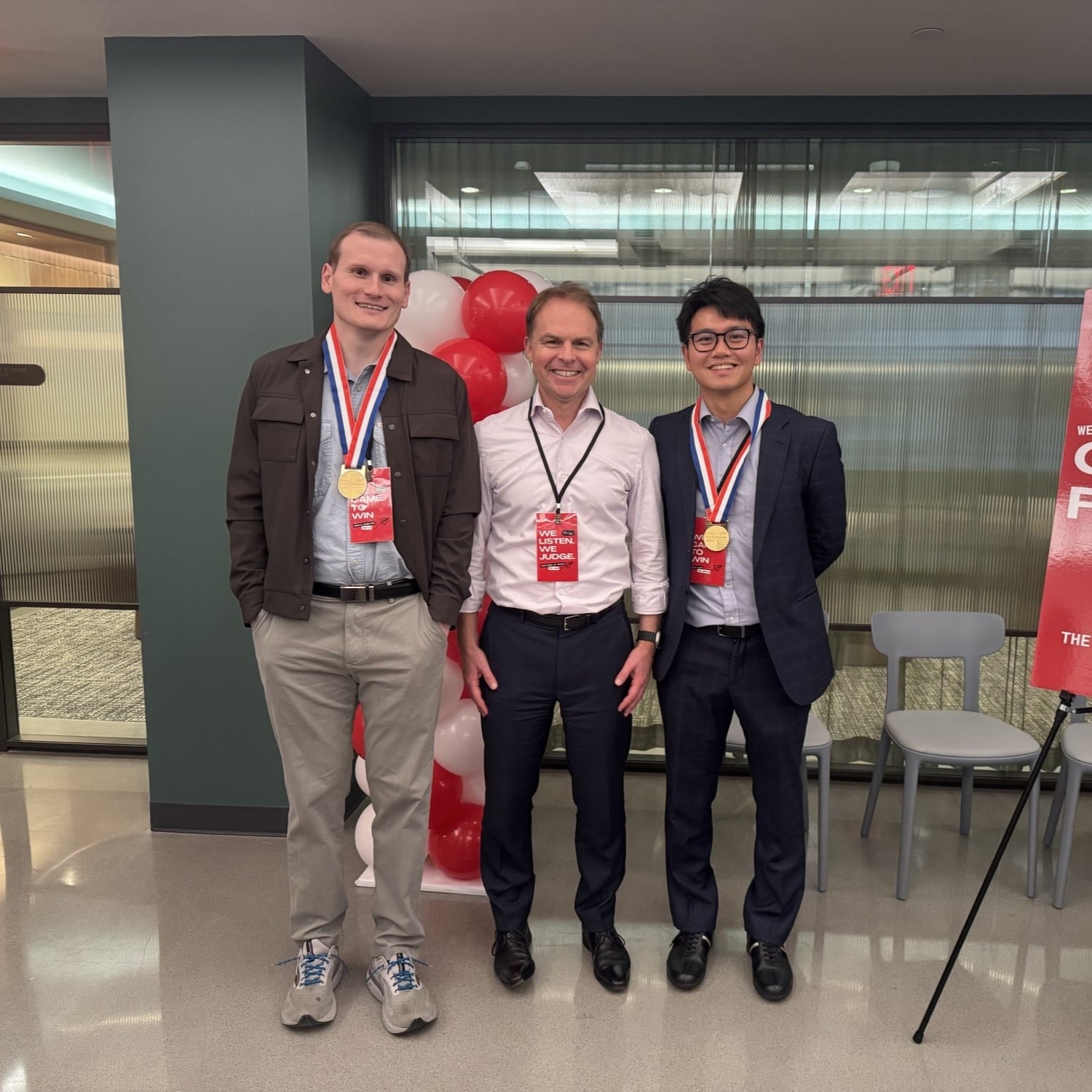
Charles Mendelson and his teammate with Bain's Worldwide Managing Partner at the global finals.
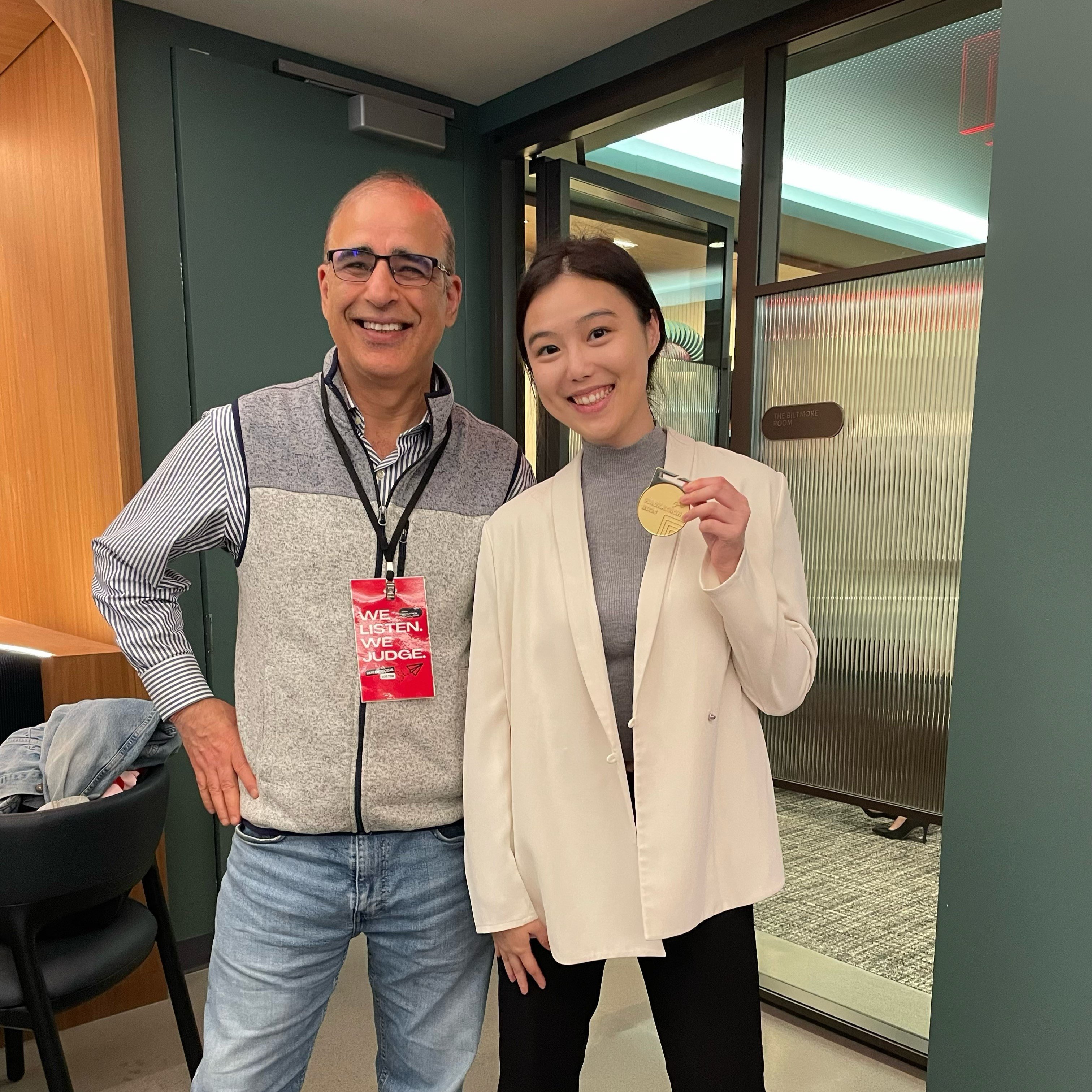
Coco with her hackathon medal, posing with a judge at the global finals.
For Coco, the finals reframed how she thinks about Bain as a whole. "The competitors beside me came from offices across Asia, Europe, and America, each having noticed very different problems worth solving, each bringing a perspective shaped by a different culture and background," she said. "I left feeling more connected to Bain as a global community."
Charles had his breakthrough at the podium. "I opened with a joke, the audience laughed, and our worldwide managing partner immediately engaged with us directly," he said. "That broke the tension and made the whole thing feel more like a real conversation than a formal pitch."
How does Bain’s culture empower you to innovate with AI?
Jessica was struck by how engaged senior leaders were throughout. "Partners and leaders were incredibly willing to give feedback, ask thoughtful questions, and brainstorm with us," she said. "There was genuine excitement around what AI could unlock which made the whole experience feel collaborative and motivating."
For Geukho, what set Bain apart was the expectation to actually build. "A lot of organizations run 'innovation' initiatives where the output is a pitch that goes into a drawer. Here, the expectation was clear: build something that runs end-to-end, test it with consultants, and come ready to defend the numbers. When the culture rewards demonstrated utility over a polished narrative, you build more and present less."
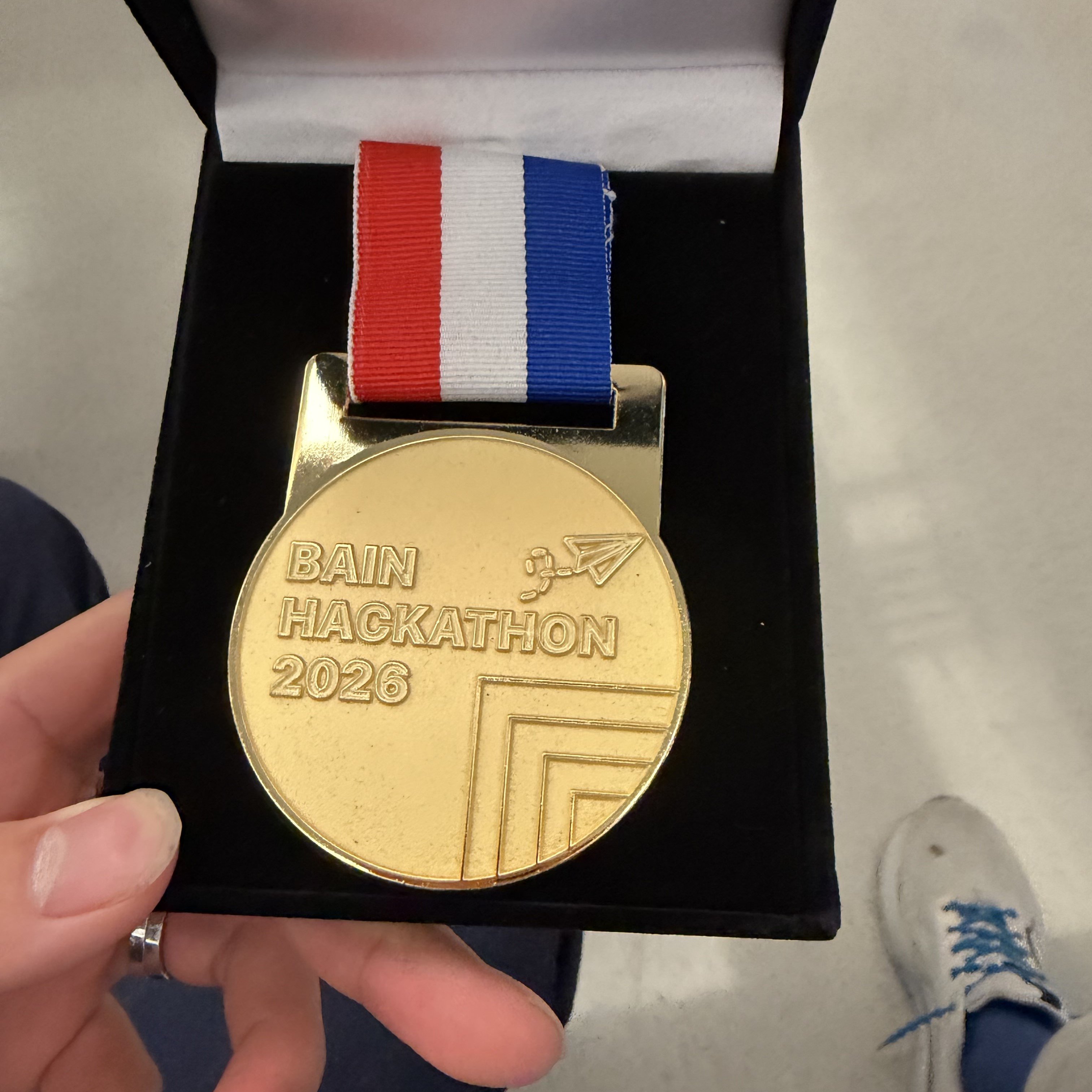
The medal awarded to finalists at Bain's 2026 global AI hackathon.
Eimhin credited three things: colleagues who gave generously of their time to test the prototype; state-of-the-art AI tools that compressed months of development into days; and case teams who made space for hackathon prep during live engagements. "None of that happens by accident," he said. "It reflects a culture that takes both client work and individual development seriously, and trusts you to do both well."
For Charles, continuous experimentation is simply part of the job. "I've completely changed the way I develop at least four times in the past year because I'm not locked into outdated tooling or rigid processes. Being surrounded by colleagues who push the boundaries of what's possible creates a lot of moments where we exchange ideas and learn from each other in real time."


