

Etude

En Bref
- As Covid-19 response measures go into place around the world, the immediate concerns of oil and gas industry executives are to ensure the health of their employees and the safety of their operations, amid the most dramatic declines in demand and prices in decades.
- For most, freeing up cash, cutting costs significantly and curtailing capital expenditures will be critical to survival. Most will also need to change shift patterns at facilities, pull back on maintenance and turnarounds, implement new and virtual ways of working, and find ways to protect supply chains.
- Some companies will also have to consider more dramatic actions, including operational capacity shutdowns, contract force majeure, shedding assets and other decisions that may reshape their portfolios and long-term strategies.
- When things return to normal, it’s likely to be a new normal with leaner, more agile and lower carbon oil and gas operations. Getting through this crisis won’t be easy, but the best attributes of the industry—resourcefulness, innovation, expertise—can see us through and propel the industry to the future it wants and customers need.
When a dramatic storm hits, resilient people and companies can usually prepare and recover without too much disruption. But when a second equal or stronger storm hits at almost the same moment, their abilities to ride out, rebound and thrive can be stretched to the limit.
For executives in the oil and gas sector, the events of recent months look increasingly like a set of devastating storms. By late 2019, the oil and gas industry was already seeing warning signs of supply abundance against the backdrop of the long-term energy transition. In early 2020, the demand shock inflicted by the novel coronavirus, brought on by rapid declines in supply chain activity, industrial operations, air travel, commuting and other energy-intensive activity, pushed soft commodity prices lower. Subsequently, the decisions by Russia and Saudi Arabia to forgo production cuts, combined with greater demand declines worldwide, pushed prices to levels not seen in decades. By late April, futures contracts for West Texas Intermediate (WTI) were in negative territory for the first time in history, highlighting the enormous pressure on oil prices, storage and supply sources (see Figure 1).
Figure 1
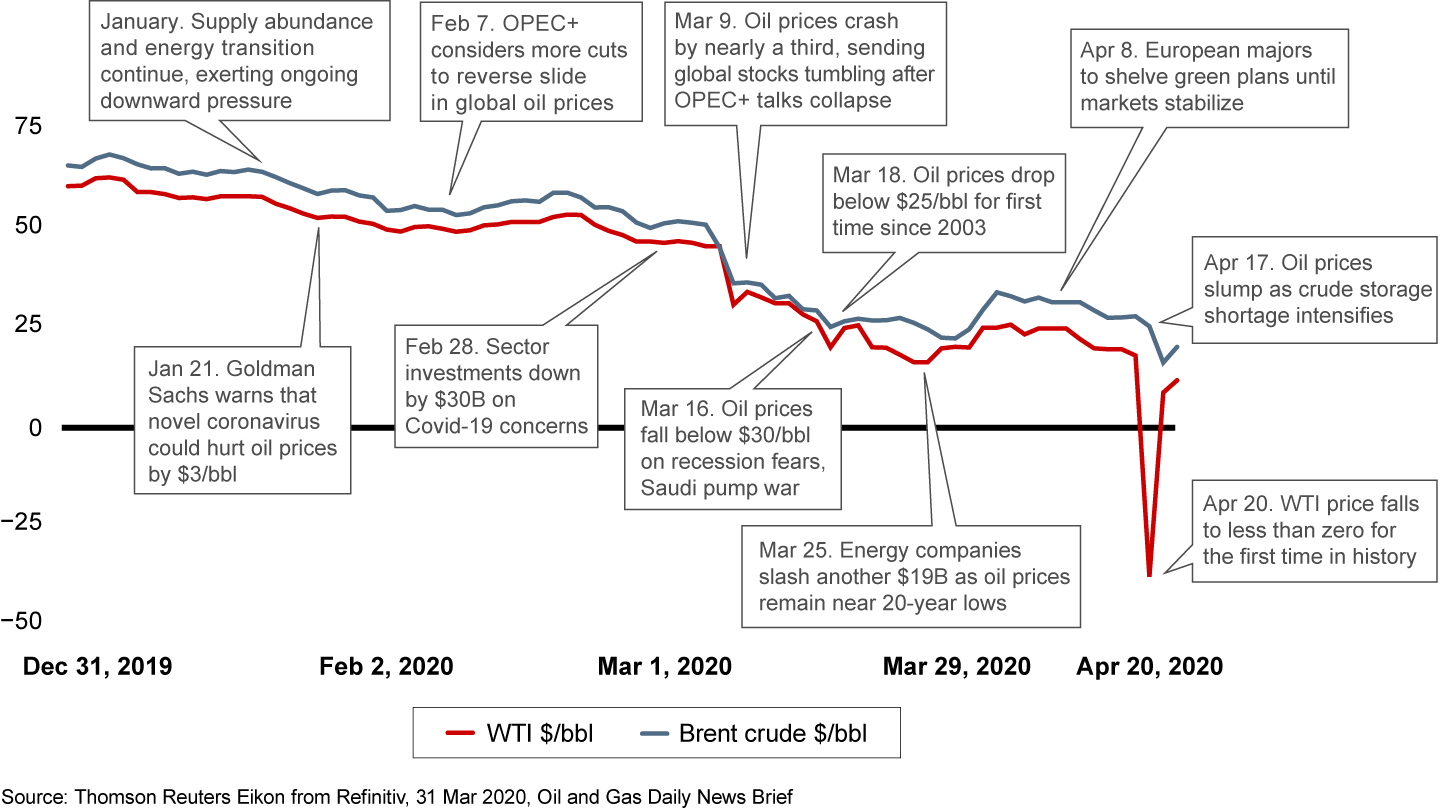

Combined, the depth and range of the 2020 crisis is likely to have an unprecedented effect on prices, markets, volumes, balance sheets, capital programs and the vulnerability of high production assets. Predictions about the coronavirus running its course by summer compete with others warning about the possibility of resurgence in the autumn months and beyond. The effects of the OPEC+ supply moves and insufficient storage capabilities worldwide may take several quarters to shake out, as the industry adjusts to lower levels of capital investment and a new price environment. Given all this, executives should be planning for scenarios that may include a short-term, severe but disciplined correction; a deeper and longer shock hitting storage constraints; or protracted demand loss, exacerbated by insufficient and unmanaged supply constraints.

Oil Demand Falls in a Pandemic. Here are Three Scenarios for How Bad it Could Get
Uncertainty reigns, but companies can plan effectively by considering a wide range of possibilities
The lessons from the 2014 price decline are still fresh in the minds of industry leaders, and many executives are dusting off their playbooks from that period (see Figure 2). In our 2015 brief “Steering Through the Oil Storm” and elsewhere, we laid out some of the most critical steps necessary to reduce costs and reset the industry for the “lower for longer” prices that we anticipated, including:
- reduce discretionary expenditures (exploration, R&D) to conserve cash;
- defer capital expenditures;
- renegotiate supply chain and infrastructure costs;
- accelerate digitalization and continue to introduce more efficient ways of working; and
- reset longer-term portfolio priorities around sustainable, advantaged assets.
Figure 2
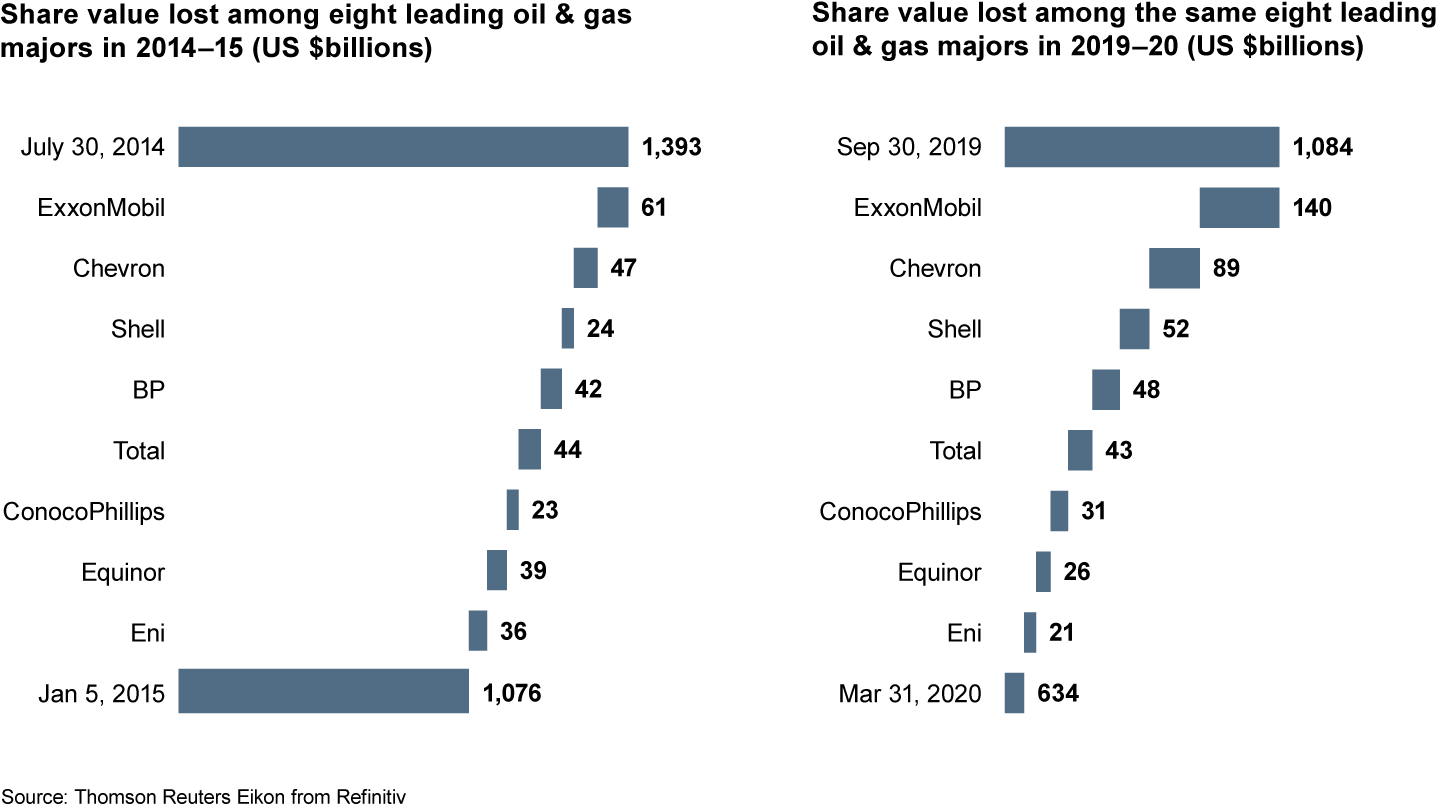

This set of activities may feel less radical today than it did five years ago. In the current environment, many companies will need to deploy sharper levers to maintain liquidity and continue operations. Some things will be even more difficult this time around.
First, the health risks of coronavirus require executives to take urgent action to protect the health and safety of their people and customers. Managers of onshore and offshore facilities will need to restructure shift patterns, adjust staffing levels and be particularly vigilant and ensure the testing of people who may be moving on, off or between facilities. These health risks may also contribute to the difficulty of keeping assets running, and will pose long-term challenges in maintaining core capabilities.

Macro Surveillance Platform
For more detail on the business implications of coronavirus from Bain’s Macro Trends Group, log on to the Macro Surveillance Platform. Learn more about the platform >
Second, supply was already at overcapacity before demand slackened. Some production and processing assets will need to be run at reduced levels or taken offline.
Finally, obtaining price relief from the supply chain is not practical this time around, given the reductions that vendors have had to make in the past. Some suppliers may face bankruptcy, so their customers will need to consider how they will sustain supply chains and critical capabilities in the future. Some producers will need to quickly consider models that maintain minimum levels of activity, share risk and create some incentive structure with their suppliers.
Depending on how long this downturn lasts—and it will vary by geography and industry segment—some companies will need to consider more draconian measures, including divesting noncore assets, shutting in marginal operations, restructuring the business, reaching out to key stakeholders for support, triggering force majeure in some contracts, or even seeking bankruptcy protection.
In the months ahead, oil and gas executives can seek to regain a new equilibrium by taking short-term measures that preserve liquidity and focus resources where they can have the best effect, while putting in place longer-term plans that will help them navigate through an extended period of turbulence. Given current scenarios, doing too much is a lesser sin than doing too little.
A playbook to build resilience
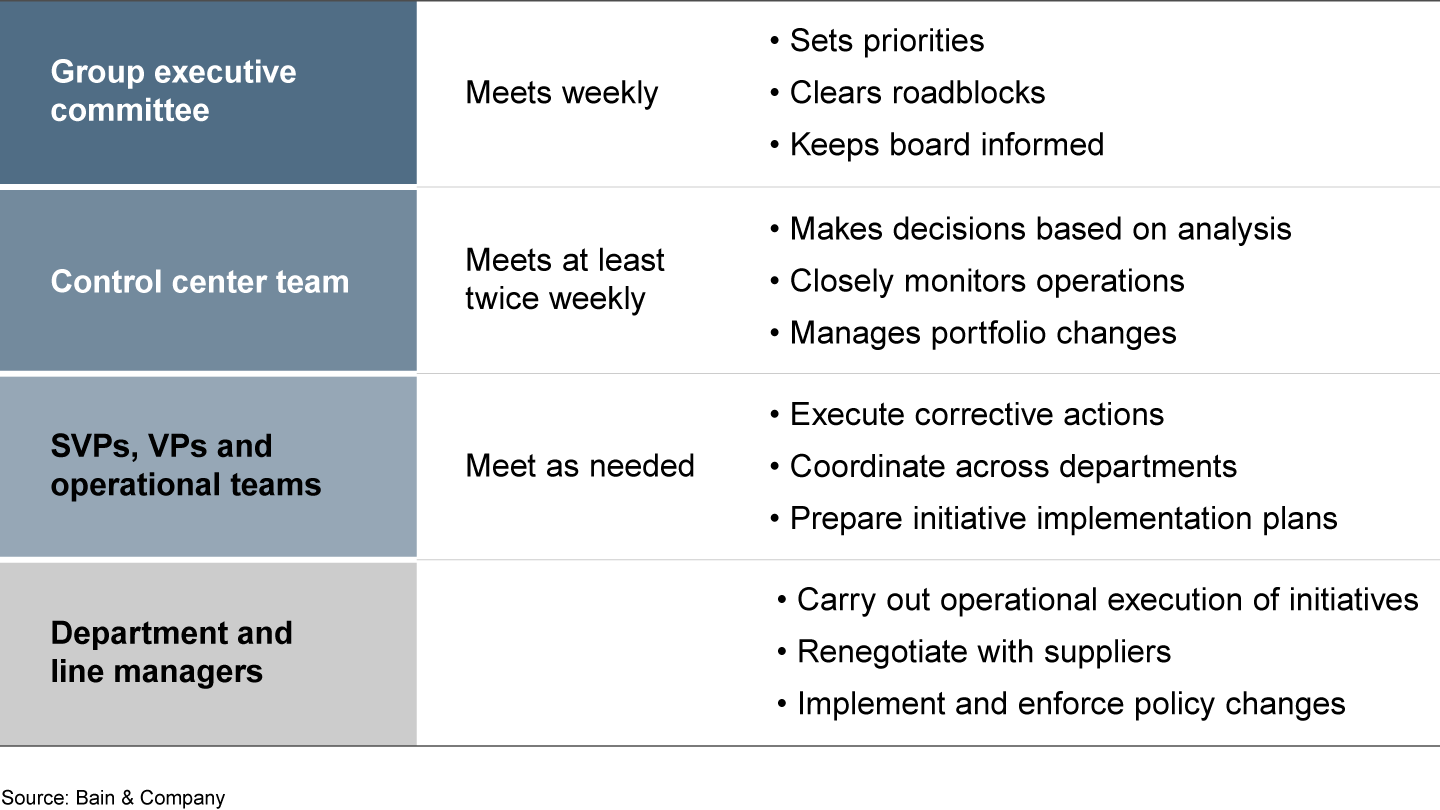
In a time of crisis, one of the most important actions that executives can take is to approach decisions in a calm and fact-based manner, acting now where they can, and planning now for actions they can take later. Senior executives have to step up to make more decisions—and more quickly—than in normal conditions. The center is the only place where the most difficult trade-offs can be made. Establishing a control center with the authority to make recommendations, monitor key performance indicators and communicate consistently with all stakeholders is a critical priority (see Figure 3).
Figure 3

In addition, executives should consider a range of no-regrets moves to strengthen their position, in the following areas.
Protect your employees and customers. Implementing the most effective safety and protection guidelines is the top priority of the moment. As noted above, remote facilities will need to be particularly vigilant in testing people who may be moving among them. Establish best practices for working at home, which will be new to many in this industry. Monitor global health guidelines, and communicate clearly to staff and other stakeholders.
Model exposure with a range of scenarios. No one can be certain how this crisis will play out. Model scenarios, and include extreme downsides, to understand potential effects on operations, revenue and the balance sheet. Identify which operations can be scaled back or halted to improve liquidity if necessary. Importantly, double down on investor relations.
Defend against revenue declines and build options. Consider how your customers view your products and services at this time. Can you build trust, loyalty and market share through and beyond this moment? Many companies are deploying infrastructure and fuel to support relief efforts. Now may be the time to redirect resources to areas of higher potential growth in the future.
Stabilize operations around a new normal. Demand promises to remain soft for many months, and in some places may never quite return to previous levels, depending on changes in business and travel behaviors. Understand where supply chains are exposed to risk, and prioritize actions that may be necessary to protect them. Develop contingency plans, asset by asset, for all aspects of the business.
Plan urgent cost reductions and preserve cash. Decisiveness is less risky than taking a “wait and see” attitude. Defer capital expenditures that are not related to safety or critical maintenance. Shutter marginal capacity. Set aggressive “break glass” actions to be triggered by more extreme scenarios. For the mid-term, develop a plan to lean out the cost structure of the organization.
For the long term, think offense as well as defense. Prepare for the bounce-back and recovery by defining ways to outperform to maintain and gain market share. Balance sheets will determine opportunities. Plan to invest in marketing and a better understanding of customers’ evolving needs. Update the M&A roadmap.
Long-term planning
While the order of the day may be immediate survival, executives can still learn from the lessons of the past and avoid common mistakes that have damaged long-term prospects at the expense of short-term necessity.
- Protect vital talent. The urgent need to free up cash in no way alleviates the struggle to find and keep the talented people who make long-term success possible. Avoid the disruptive pattern of reducing head count too urgently, only to have to begin the search-and-hire process a few quarters later. Consider innovative ways to hold on to valued talent while reducing costs—such as offering unpaid leave or subsidized MBA programs. Scan for layoffs by other firms; it may be a good time to pick up new talent.
- Accelerate digitalization. In many cases, adopting new, more digital ways of working can reduce costs and have a positive impact on cash flow almost immediately. Many companies will now be able to shift resources and rapidly rethink the way they do things, emerging as leaner and more digital competitors when normalcy resumes.
- Continue sustainability efforts. In energy and natural resources, the early gains toward sustainability are mostly about increasing efficiency and reducing waste. For most, now is the time to double down on these efforts, identifying opportunities to boost energy efficiency while reducing potential risks of failures to comply with increasingly stringent regulations. Lower interest rates may make it an ideal time to finance renewable energy projects to diversify the portfolio.
As things return to normal, it is likely to be a new normal. A sustained interruption to business will shift minds and habits, speeding up changes that had been expected to take longer. Demand growth could be permanently hampered as much of the population becomes more comfortable working remotely, meeting virtually and buying online. Lockdowns and quarantines may contribute to a general wariness about unnecessary travel. Investors may not readily return to the hydrocarbon sector if they believe oil price and market risks have reached new levels.
All of these factors may have a permanent effect on oil demand and accelerating the energy transition. When this storm season has passed, the new normal for oil and gas companies will be significantly leaner, more agile and adaptable, less exposed to oil and commodity price risk, running lower carbon operations, closer to the customer and able to offer a range of more sustainable energy products and solutions. It’s a Herculean task, but the sector’s resourcefulness and innovation, combined with battle-tested qualities of speed, transparency and a customer-first stance, can propel energy companies to the future the industry wants and customers need.

Coronavirus
The global Covid-19 pandemic has extracted a terrible human toll and spurred sweeping changes in the world economy. Across industries, executives have begun reassessing their strategies and repositioning their companies to thrive now and in the world beyond coronavirus.
Peter Parry is a partner and Dave Rennard is a principal with Bain & Company’s Global Oil & Gas practice, which Peter leads. Peter is based in Milan, and Dave in London.
First published in avril 2020