

Etude

En Bref
- Retail customers are optimistic about generative AI: Bain’s research finds that about half of those surveyed see great potential in these new tools.
- Customers value passive generative AI features such as summarizing reviews integrated into their journeys—sometimes even more than they value standalone generative AI features.
- Online shoppers understand the potential for personalization with generative AI, and they seem more willing to share personal data than they might in other contexts.
- In retail, generative AI can help deliver great customer service more efficiently, especially in parts of the journey that have proven more difficult to reach.
In retail, as in other industries, generative AI promises to change the customer experience. Retailers are deploying AI-enhanced tools such as summaries of product reviews, chatbots, and shopping assistants in an effort to facilitate purchase decisions, reduce friction, and increase conversion. While businesses are experimenting and assessing the impact of generative AI tools in the shopping journey, customers are still getting used to the new interactions and features impacting their online shopping experience—and as with everything about generative AI, we are finding their perceptions to be both the same as and different from what we’ve known in the past.
To help retailers think about deploying generative AI in a customer-centric way, Bain surveyed more than 700 online shoppers in the United States about their knowledge of and experience with generative AI. Awareness of these tools is low among customers: 71% said they were not aware of having used generative AI in their online shopping even though most had shopped recently with retailers where they were likely to have encountered them. But despite low awareness, customers are optimistic about the impact of generative AI, with roughly half seeing significant or transformative potential.
In addition to the survey, we interviewed online shoppers and compared traditional and new shopping experiences with different types of generative AI, taking into consideration customers’ expectations about personalization. We then mapped their perceptions over the entire purchasing journey—from awareness to purchase and beyond. This research has allowed us to define five design principles that cumulatively suggest that the most effective early use cases for generative AI may lie in designing experiences that enhance and expand the current retail journey rather than serving as a standalone platform for engagement.
Five design principles for deploying GenAI in the customer journey
1. Enhance shopping habits with generative AI without disrupting customer preferences
Customers said their top reasons for not using generative AI tools while shopping online are because they’re satisfied with current methods and don’t see the need for new tools, which is understandable: Online shopping has evolved its tools and experiences over decades, and solutions have been fine-tuned to customer needs (see Figure 1).
Figure 1
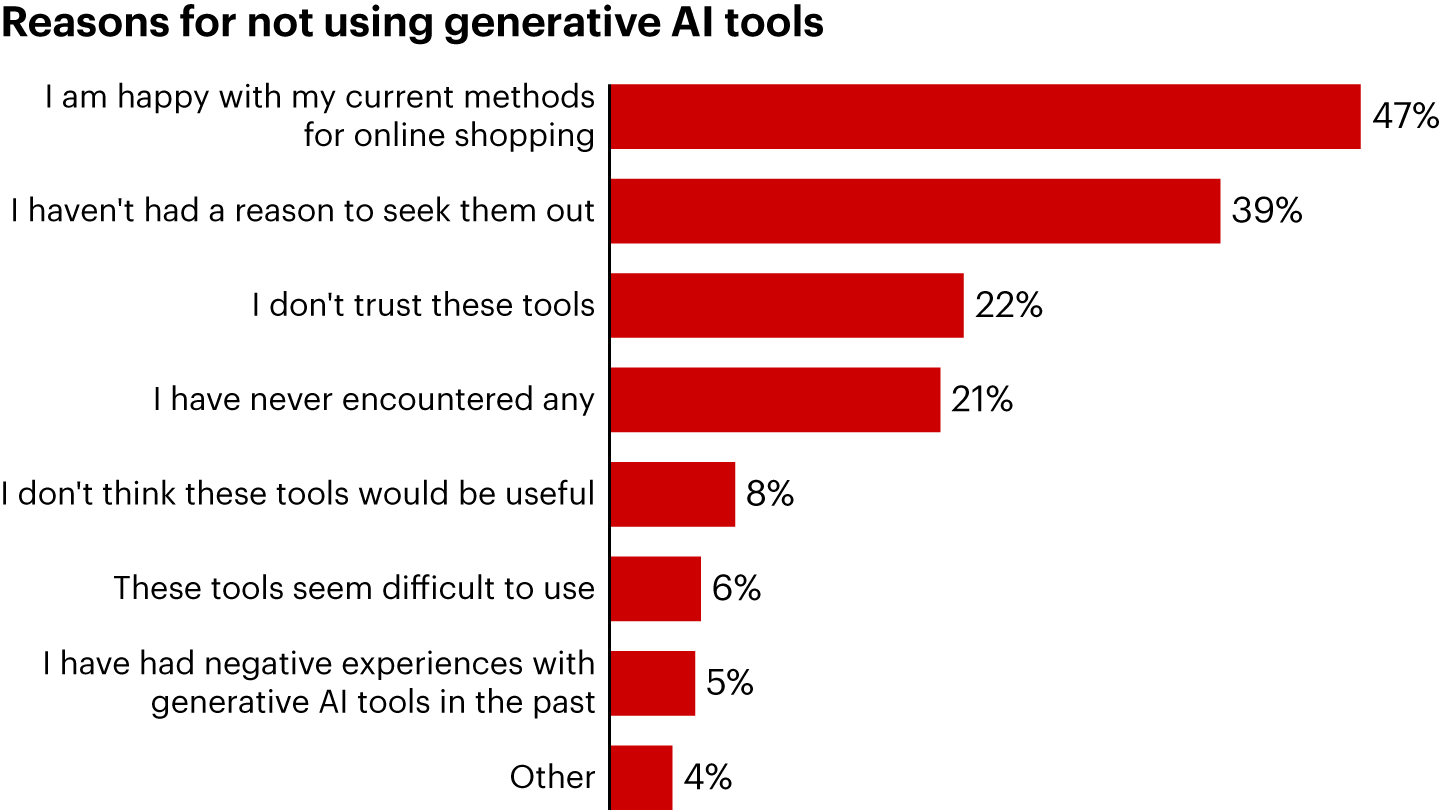

Note: Includes respondents who have heard of generative AI tools for online shopping but have not used them (n=276)
Source: Bain Generative AI Usage Survey, July 2024 (n=714)For example, in product walkthroughs of conversational shopping assistants, customers were often unclear about the difference between their current search methods and the newer generative AI tools for searching and exploring products. One customer was surprised that the conversational shopping assistant didn’t prioritize products she had bought in the past, a feature that the traditional search provided: “I might just go back up to the search bar … because I bought this product before.… And I literally just have to type it into the search bar, and it knows what I want.”
While innovating requires a test-and-learn approach, our research suggests that retailers should frame these new generative AI experiments as such and strive for a complementary value proposition. Otherwise, there’s a risk that customers could be confused by having different tools available to achieve similar goals; there’s also a risk that they will require more significant re-familiarization in the future after early experiments make generative AI seem less attractive by comparison.
Strategic implications
- Use generative AI to complement current flows. Standalone generative AI tools can serve some existing use cases, but they are more interesting to customers when they serve needs in new ways or bring something that current, well-established flows do not.
- Shoppers expect chatbots to improve. Customers are skeptical of chatbots, having had poor customer service experiences with them in the past, when they have experienced limited, inflexible conversations. As more customers experience the superior conversational abilities of generative AI interfaces, they will want retail chat experiences to match.
- Clearly identify experiments and constraints for your customers. Customers will explore and try new generative AI tools. Most say they don’t feel the need to understand generative AI to use the tools. But retailers should identify experiments clearly so that customers can know where to find their usual flows and also understand why new features are being developed.
2. Integrate generative AI in customer experience beyond chatbots
Tools such as ChatGPT, which reacts to a customer interaction, have captured the public's imagination, and they have provided an excellent interaction model for experimentation. In order to harness the full potential of generative AI, however, our research suggests that retailers can and should deploy multiple archetypes of interaction across the purchase journey, serving customer needs with not only reactive experiences but also passive and proactive ones (see Figure 2).
Figure 2
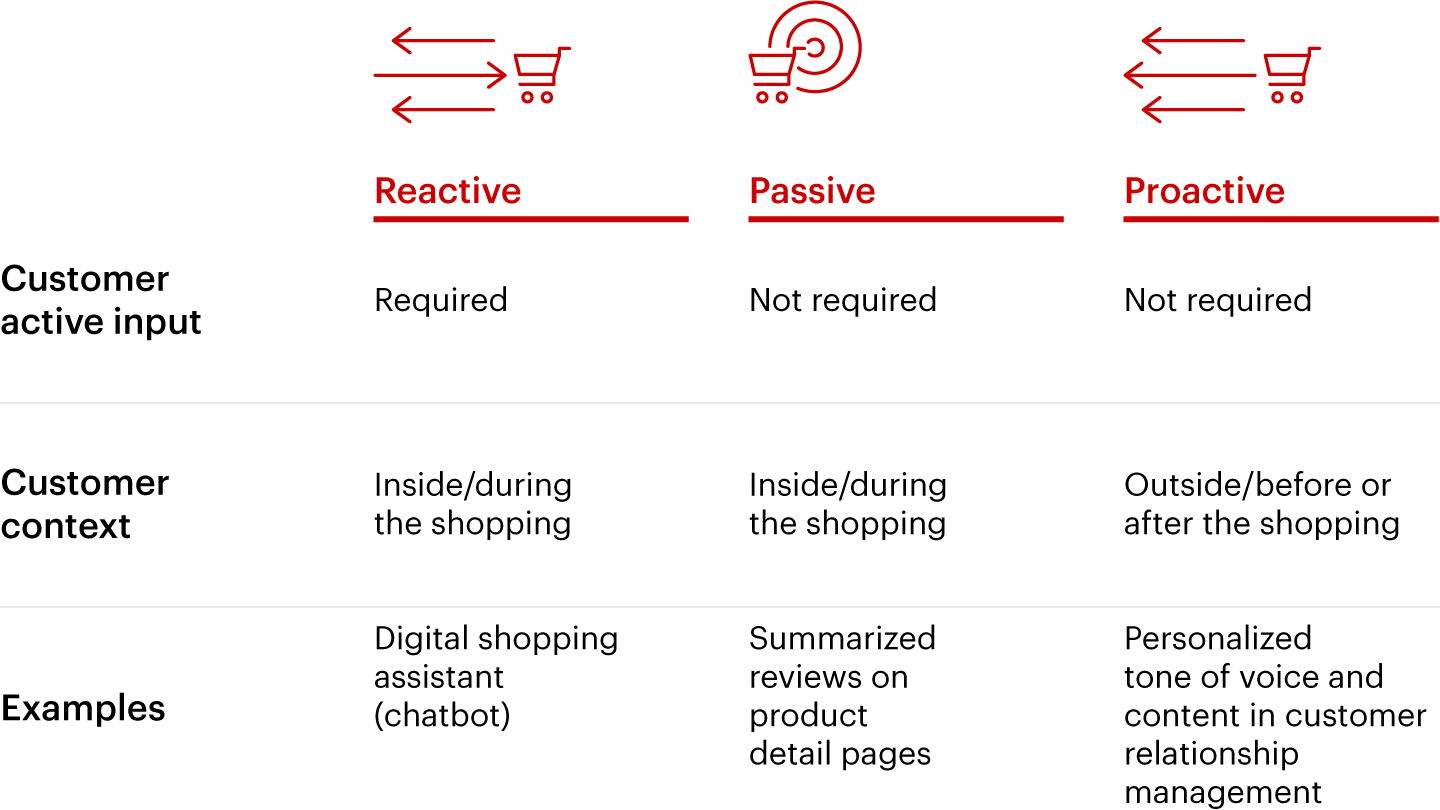

For example, customers rated AI-generated summaries of product reviews as a top feature because those summaries save customers time while also allowing them to read individual reviews. “It would save time just because I tend to get bogged down by the details ... then I can take too long to make a decision—or I don't make a decision at all because I can't decide. So, I think it could help me to not be as overwhelmed with all the choices.”
Respondents also saw value in expert answers to detailed product questions and product comparison tools, suggesting that there is quite a bit of unexplored potential that, while more subtle, may have a more significant impact on strategic goals such as increased visits, basket size, and retention.
Strategic implications
- Use a full range of interaction types. Understand which types of generative AI interactions (reactive, passive, or proactive) are most useful at which moments in the purchase process, and use all the tools in the toolbox to deliver.
- Generative AI can blend seamlessly into existing platforms and experiences. Less explicit enhancements can also be highly valuable to the customer. These should be intuitive, reducing friction in the user experience and ensuring that customers can easily see the added value without a steep learning curve.
- Efficiency can be delightful. Consider ways to embed traditional e-commerce flows with conversational generative AI abilities such as natural language search and filtering to improve metrics such as time needed to make a purchase.
3. Rethink the customer data value exchange
Generative AI is changing customer perceptions about how they should handle their personal data. Our research suggests that customers understand generative AI’s potential to personalize their experiences and that because of that, they’re more willing to exchange data for better personalized recommendations than they might have been in other contexts (see Figure 3).
Figure 3
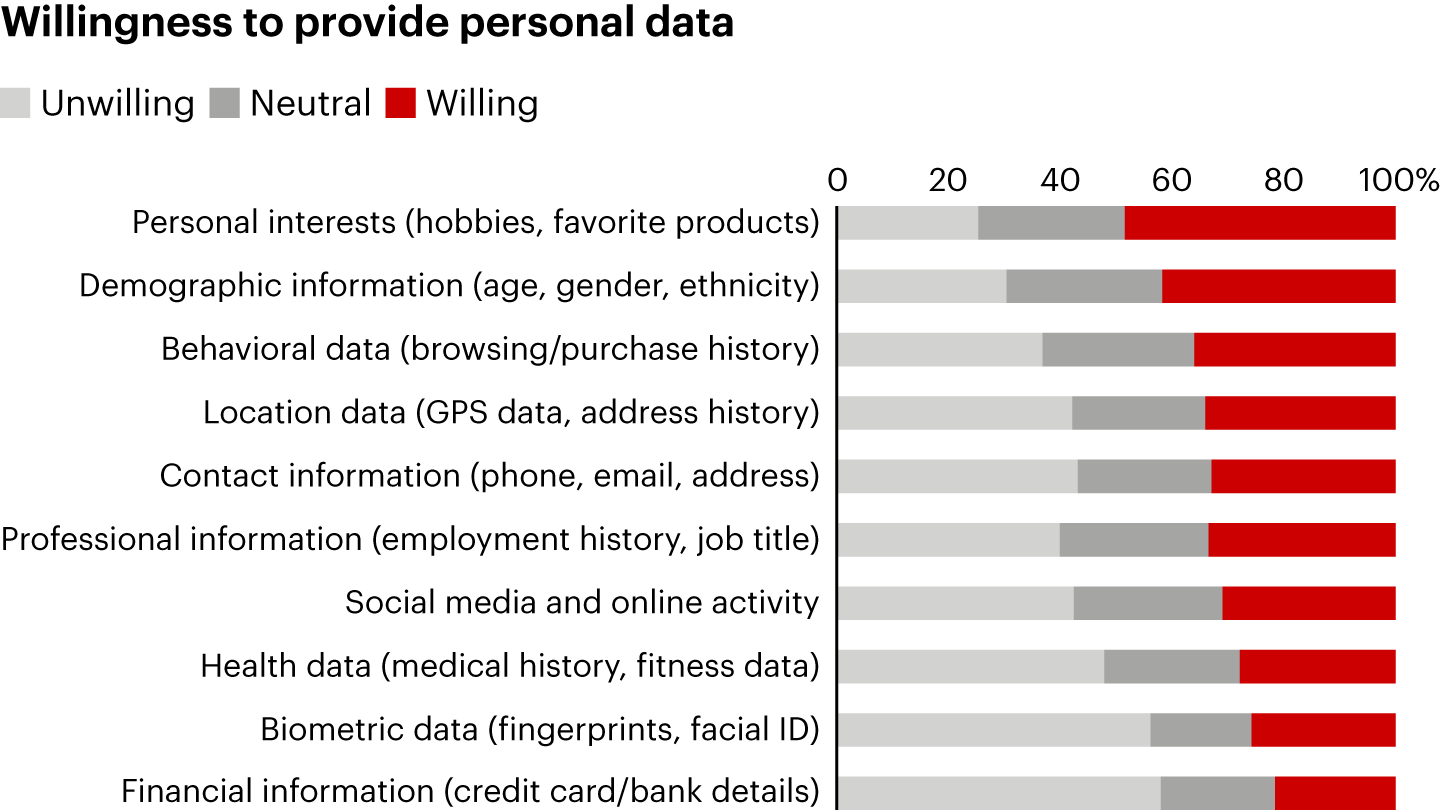

By providing this data, customers expect generative AI to help with the discovery and decision-making phases of their purchasing journey, specifically by finding products aligned with their timing, context, past purchases, and preferences. For example, if a retailer knows (from other transactions) that the shopper looking at a page of car seats is a new parent, it could highlight relevant comments from other new parents about a car seat’s quality or ease of installation.
In our survey, the most valuable use cases for generative AI all facilitated decision making. These applications could address the familiar pain point of online shoppers feeling overwhelmed by huge product assortments lacking personalized recommendations or curatorship. Traditional personalized recommendations don’t rely on generative AI, but there are ways to use generative AI capabilities to guide and inspire customers throughout their discovery process. For many customers, these recommendations are not just about getting to specific products immediately, since they may also enjoy the discovery process. Etsy Gift mode, for example, helps shoppers explore gift ideas, curating products and creating categories, which can feel fun and personalized.
Strategic implications
- Behavioral data can be leveraged beyond specific product recommendations. Because many customers appreciate the shopping experience, retailers should deploy generative AI in ways that not only suggest products but also help shoppers discover new items. For example, generative AI could help retailers create dedicated landing pages or app interfaces for individual customers or personas, reinforcing the marketing message that the retailer understands what’s important to the shopper.
- Customers want feedback loops and control. Customers see the potential for getting something valuable back in exchange for their data, and they’re getting more accustomed to having control over what data gets shared. Building feedback loops helps to gather more information about what customers do and don’t like while also providing data that helps retailers refine their recommendation algorithms.
4. Build consumer trust with strong AI data transparency practices
Generative AI is a new technology, and people have mixed feelings about new things, particularly when they are so powerful. Retailers are asking customers to join an experiment, so building and maintaining trust is essential. Brand reputation goes a long way: 41% of customers said they would feel comfortable using a generative AI tool from a brand they trust. But customers said they have real concerns about the source and purpose of data: “I would want to know where recommendations are coming from because I would expect corporations to stretch the truth.”
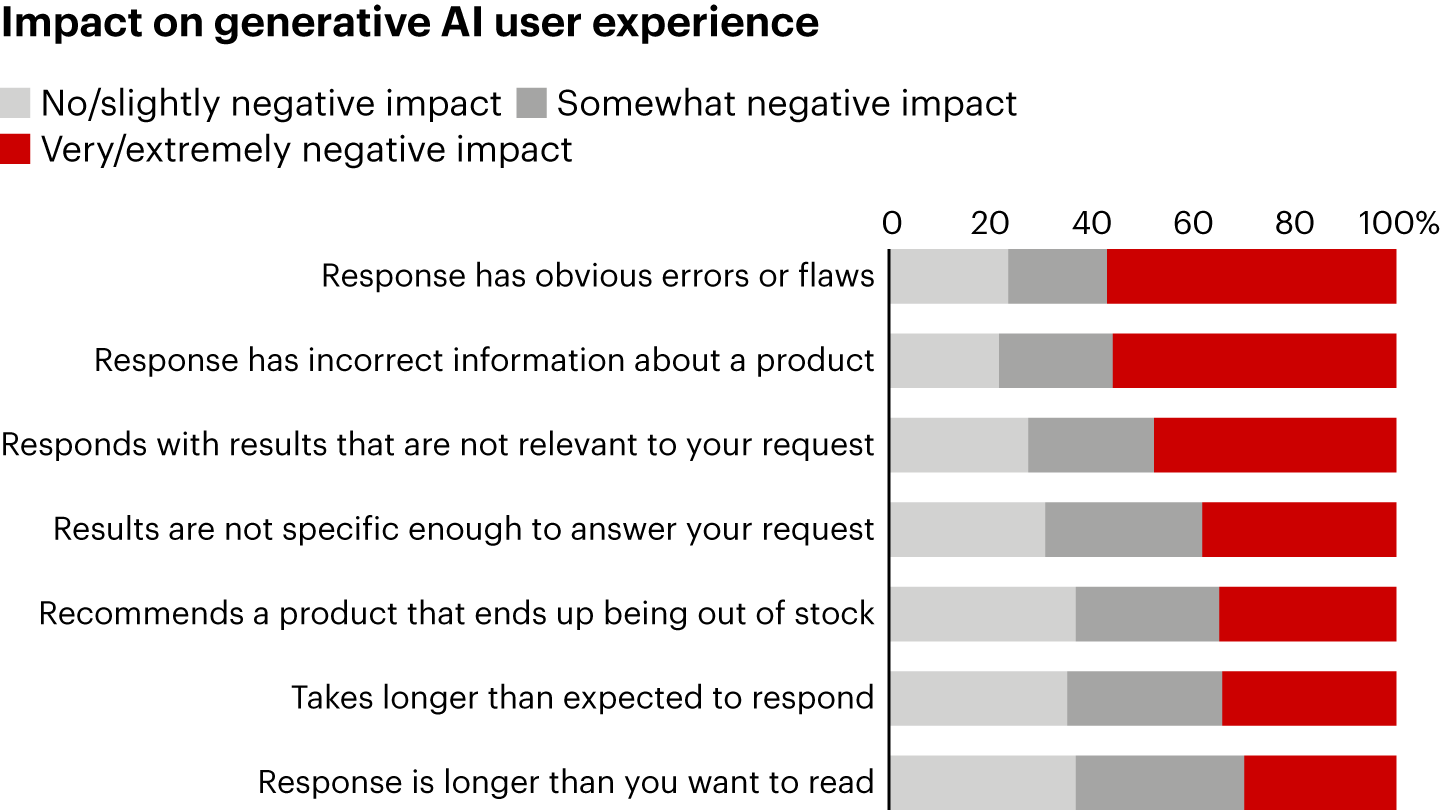
Generative AI is still subject to hallucinations, and these kinds of mistakes erode trust. More than half the customers we surveyed said the biggest negative impacts to user experience are obvious errors (57%) and inaccurate product information (56% say it’s very or extremely negative). This is yet another reason to be transparent with customers about experimental uses of generative AI and to lean into passive applications, which can be more closely controlled (see Figure 4).
Figure 4

Strategic implications
- Data handling practices should be transparent. Clear policies on data usage and protection can assuage customers’ concerns by building trust and showing them where information comes from. No need to overexplain: Customers don’t need to understand everything about the technology, but they’re likely to be more comfortable using it with some transparency.
- Quick reactions improve accuracy. As retailers scale up their generative AI pilots, they should accelerate their test-and-learn approaches to meet customer expectations of convenience and accuracy.
- Be thoughtful on feedback loops. Because generative AI output can be unpredictable, retailers should design easy ways for customers to dismiss and flag unwanted content. Customer feedback will inform short-term fixes (such as ensuring that content disappears from the customer view as soon as it’s flagged) and long-term improvements (such as retraining models and generating insights for product teams’ reactions).
5. Reimagine customer service delivery with generative AI support
Beyond reactive consumer interactions, generative AI can also solve some of the historically more difficult parts underlying the retail journey—both before and after the more discrete active shopping experience. Customer service assistance and delivery return coordination, in particular, are areas in which customers see potential for improvements.
Generative AI also creates new opportunities for more in-depth and accurate sales and support conversations with customers. Some executives are concerned that generative AI could damage their customer relationships, especially because of its tendency to deliver inaccurate information. But these fears can be mitigated through careful and thoughtful product design. What's more, in practice, we’ve seen that generative AI's customer responses can be just as accurate as those from human customer service agents (who also get it wrong from time to time).
Within the journey, generative AI shows potential to go beyond the traditional efficiency and usability goals, toward better personalizing the experience by adjusting tone and content more intuitively to the user. It can also solve more difficult service challenges: For example, advanced speech-to-text functions could improve accessibility as generative AI can parse more complex input from less articulate speakers. Overall, we see significant potential for generative AI to create more value by improving the retail customer’s journey and helping them find new ways to shop.
Strategic implications
- Proactive generative AI can build customer relationships. As generative AI continues to create more personalized and conversational experiences, it can reach the edges of the customer journey, such as early acquisition or post-purchase relationships, in ways that weren’t scalable before. Generative AI can help brands stay in touch in more natural and helpful ways.
- Generative AI can deliver the elusive advisory component. Many retailers aspire to place helpful advisers in their physical stores—for example, an irrigation expert in the sprinkler aisle at a home improvement store, or a home decor enthusiast in the homewares section of a department store. Until now, this has been difficult or impossible to replicate online. But generative AI opens the possibility of placing expert knowledge plus conversational skills within the appropriate digital channels.
Customer first
Generative AI offers exciting new tools for designing the customer experience, and customers are optimistic about the possibilities. But new tools can sometimes inspire a search for new applications that put the technology ahead of customer needs and preferences. As has always been true, retailers will be better served by starting with customer needs and using generative AI to solve for these rather than sending technology in search of a problem to solve.
First published in novembre 2024