
Skip to Content
  • Bureaux

    Bureaux

    Amérique du Nord et Amérique du Sud
    • Atlanta
    • Austin
    • Bogota
    • Boston
    • Buenos Aires
    • Chicago
    • Dallas
    • Denver
    • Houston
    • Los Angeles
    • Mexico City
    • Minneapolis
    • Monterrey
    • Montreal
    • New York
    • Rio de Janeiro
    • San Francisco
    • Santiago
    • São Paulo
    • Seattle
    • Silicon Valley
    • Toronto
    • Washington, DC
    Europe, Moyen-Orient et Afrique
    • Amsterdam
    • Athens
    • Berlin
    • Brussels
    • Copenhagen
    • Doha
    • Dubai
    • Dusseldorf
    • Frankfurt
    • Helsinki
    • Istanbul
    • Johannesburg
    • Kyiv
    • Lisbon
    • London
    • Madrid
    • Milan
    • Munich
    • Oslo
    • Paris
    • Riyadh
    • Rome
    • Stockholm
    • Vienna
    • Warsaw
    • Zurich
    Asie et Australie
    • Bangkok
    • Beijing
    • Bengaluru
    • Brisbane
    • Ho Chi Minh City
    • Hong Kong
    • Jakarta
    • Kuala Lumpur
    • Manila
    • Melbourne
    • Mumbai
    • New Delhi
    • Perth
    • Seoul
    • Shanghai
    • Singapore
    • Sydney
    • Tokyo
    Voir tous les bureaux
  • Alumni
  • Presse
  • S’abonner
  • Contacter
  • France | Français

    Sélectionnez votre région et votre langue

    Global
    • Global (English)
    Amérique du Nord et Amérique du Sud
    • Brazil (Português)
    • Argentina (Español)
    • Canada (Français)
    • Chile (Español)
    • Colombia (Español)
    Europe, Moyen-Orient et Afrique
    • France (Français)
    • DACH Region (Deutsch)
    • Italy (Italiano)
    • Spain (Español)
    • Greece (Elliniká)
    Asie et Australie
    • China (中文版)
    • Korea (한국어)
    • Japan (日本語)
  • Saved items (0)
    Saved items (0)

    You have no saved items.

    Bookmark content that interests you and it will be saved here for you to read or share later.

    Explore Bain Insights
  • Expertises Sectorielles
    Menu principal

    Expertises Sectorielles

    • Aerospace et Défense
    • Agroalimentaire
    • Chimie
    • Infrastructures, BTP et Matériaux de Construction
    • Grande Consommation
    • Services Financiers
    • Santé
    • Engins & Equipements Industriels
    • Media et Divertissement
    • Metals
    • Mining
    • Pétrole & Gaz
    • Papier et Emballage
    • Private Equity
    • Secteur Public
    • Distribution
    • Technologie
    • Télécommunications
    • Transportation
    • Travel & Leisure
    • Utilities & Energies Renouvelables
  • Expertises Fonctionnelles
    Menu principal

    Expertises Fonctionnelles

    • Expérience Client
    • ESG
    • Innovation
    • Fusions et Acquisitions
    • Opérations
    • People & Organization
    • Private Equity
    • Sales & Marketing
    • Stratégie
    • IA, Perspectives et Solutions
    • Technology
    • Transformation
  • Digital
  • Points de Vue
  • À propos
    Menu principal

    À propos

    • Notre Activité
    • Nos Valeurs
    • Nos Collaborateurs et Notre Équipe Dirigeante
    • Notre Impact
    • Prix & Récompenses
    • Partenariats Internationaux
    • Evénements
    Further: Our global responsibility
    • Diversité et Inclusion
    • Impact Social
    • Sustainability
    • World Economic Forum
    Learn more about Further
  • Carrières
    Menu principal

    Carrières

    • Rejoignez-nous
      Carrières
      Rejoignez-nous
      • Find Your Place
      • Nos domaines d’expertise
      • Equipes multidisciplinaires
      • Étudiants
      • Stages et programmes
      • Événements de recrutement
    • La vie chez Bain
      Carrières
      La vie chez Bain
      • Blog: Inside Bain
      • Récits de carrière
      • Nos collaborateurs
      • Nos bureaux
      • Soutenir votre évolution professionnelle
      • Groupes d’affinités
      • Avantages chez Bain
    • Histoires d’impact
    • Notre processus de recrutement
      Carrières
      Notre processus de recrutement
      • Ce que vous pouvez attendre
      • Entretiens
    Trouver un poste
  • Bureaux
    Menu principal

    Bureaux

    • Amérique du Nord et Amérique du Sud
      Bureaux
      Amérique du Nord et Amérique du Sud
      • Atlanta
      • Austin
      • Bogota
      • Boston
      • Buenos Aires
      • Chicago
      • Dallas
      • Denver
      • Houston
      • Los Angeles
      • Mexico City
      • Minneapolis
      • Monterrey
      • Montreal
      • New York
      • Rio de Janeiro
      • San Francisco
      • Santiago
      • São Paulo
      • Seattle
      • Silicon Valley
      • Toronto
      • Washington, DC
    • Europe, Moyen-Orient et Afrique
      Bureaux
      Europe, Moyen-Orient et Afrique
      • Amsterdam
      • Athens
      • Berlin
      • Brussels
      • Copenhagen
      • Doha
      • Dubai
      • Dusseldorf
      • Frankfurt
      • Helsinki
      • Istanbul
      • Johannesburg
      • Kyiv
      • Lisbon
      • London
      • Madrid
      • Milan
      • Munich
      • Oslo
      • Paris
      • Riyadh
      • Rome
      • Stockholm
      • Vienna
      • Warsaw
      • Zurich
    • Asie et Australie
      Bureaux
      Asie et Australie
      • Bangkok
      • Beijing
      • Bengaluru
      • Brisbane
      • Ho Chi Minh City
      • Hong Kong
      • Jakarta
      • Kuala Lumpur
      • Manila
      • Melbourne
      • Mumbai
      • New Delhi
      • Perth
      • Seoul
      • Shanghai
      • Singapore
      • Sydney
      • Tokyo
    Voir tous les bureaux
  • Alumni
  • Presse
  • S’abonner
  • Contacter
  • France | Français
    Menu principal

    Sélectionnez votre région et votre langue

    • Global
      Sélectionnez votre région et votre langue
      Global
      • Global (English)
    • Amérique du Nord et Amérique du Sud
      Sélectionnez votre région et votre langue
      Amérique du Nord et Amérique du Sud
      • Brazil (Português)
      • Argentina (Español)
      • Canada (Français)
      • Chile (Español)
      • Colombia (Español)
    • Europe, Moyen-Orient et Afrique
      Sélectionnez votre région et votre langue
      Europe, Moyen-Orient et Afrique
      • France (Français)
      • DACH Region (Deutsch)
      • Italy (Italiano)
      • Spain (Español)
      • Greece (Elliniká)
    • Asie et Australie
      Sélectionnez votre région et votre langue
      Asie et Australie
      • China (中文版)
      • Korea (한국어)
      • Japan (日本語)
  • Saved items  (0)
    Menu principal
    Saved items (0)

    You have no saved items.

    Bookmark content that interests you and it will be saved here for you to read or share later.

    Explore Bain Insights
  • Expertises Sectorielles
    • Expertises Sectorielles

      • Aerospace et Défense
      • Agroalimentaire
      • Chimie
      • Infrastructures, BTP et Matériaux de Construction
      • Grande Consommation
      • Services Financiers
      • Santé
      • Engins & Equipements Industriels
      • Media et Divertissement
      • Metals
      • Mining
      • Pétrole & Gaz
      • Papier et Emballage
      • Private Equity
      • Secteur Public
      • Distribution
      • Technologie
      • Télécommunications
      • Transportation
      • Travel & Leisure
      • Utilities & Energies Renouvelables
  • Expertises Fonctionnelles
    • Expertises Fonctionnelles

      • Expérience Client
      • ESG
      • Innovation
      • Fusions et Acquisitions
      • Opérations
      • People & Organization
      • Private Equity
      • Sales & Marketing
      • Stratégie
      • IA, Perspectives et Solutions
      • Technology
      • Transformation
  • Digital
  • Points de Vue
  • À propos
    • À propos

      • Notre Activité
      • Nos Valeurs
      • Nos Collaborateurs et Notre Équipe Dirigeante
      • Notre Impact
      • Prix & Récompenses
      • Partenariats Internationaux
      • Evénements
      Further: Our global responsibility
      • Diversité et Inclusion
      • Impact Social
      • Sustainability
      • World Economic Forum
      Learn more about Further
  • Carrières
    Recherches les plus fréquentes
    • Agile
    • Digital
    • Stratégie
    Vos recherches précédentes
      Pages récemment visitées

      Content added to saved items

      Saved items (0)

      Removed from saved items

      Saved items (0)

      Article

      How to Make the Most of Executive Team Meetings

      How to Make the Most of Executive Team Meetings

      Well-structured C-suite meetings help executives better manage day-to-day operations, and also innovate and grow.

      Par Joost Spits et Marcia Blenko

      • min
      }

      Article

      How to Make the Most of Executive Team Meetings
      en
      En Bref
      • Improving executive meetings starts with thinking through their purpose and intent.
      • Executive priorities fall into two categories—running the business (operations) and changing the business (innovation)—and each calls for a distinct type of meeting.
      • Using this framework, executives can design meetings that encourage the right conversations and support good decision making.

      The first law of thermodynamics states that energy can’t be destroyed, yet most executives can point to meetings on their calendars that would seem to refute that rule. Meetings might look and feel a bit different these days—“you’re on mute!”—but they are still the primary forum for executives, live or virtually, to share important information, collaborate, gather input, monitor results, and make decisions.

      When working well, meetings can be a highly efficient and effective forum for robust discussion and debate, an opportunity for executives to align on future action, commit to it, and hold one another accountable. Taken together they build an integrated operating rhythm that becomes the heartbeat of the organization.

      Executives spend a lot of time in meetings, and far more goes into planning and preparing for them. On average, senior executives devote more than two days every week to meetings of three or more colleagues, and 15% of an organization’s collective time is spent in meetings, Bain research has found. When our colleagues looked into the ripple effect of a single regular senior review meeting, they found that something on the order of 300,000 additional hours were put into its planning and preparation over the course of the year, the equivalent of roughly 150 full-time employees. Research has found a connection between meeting behavior and market share, and between innovation and employment stability. It has also found that workers’ feelings about meetings correlate with general job satisfaction.

      When executives talk about “fixing meetings,” they often mean meeting hygiene—things like the agenda, who participates, their roles, meeting norms, and materials. All should fit the focus and goals of the meeting, and simple changes can make a big difference. One company instituted a policy that everyone must complete the background-reading package ahead of executive meetings, and started halting meetings if the reading hadn’t been done to have the group read together. Other changes included instituting a strict “start on time, finish on time” rule, clarifying who has the final authority on specific decisions, and always leaving 15 minutes at the close of a meeting to cover any new topics. Altogether, executives reported the changes had made meetings much more productive.

      Getting the most out of executive forums goes beyond improving hygiene, however. It requires distinguishing between two critical parts of the executive portfolio: operations (or running the business) and innovation (or changing the business) (see Figure 1).

      Figure 1
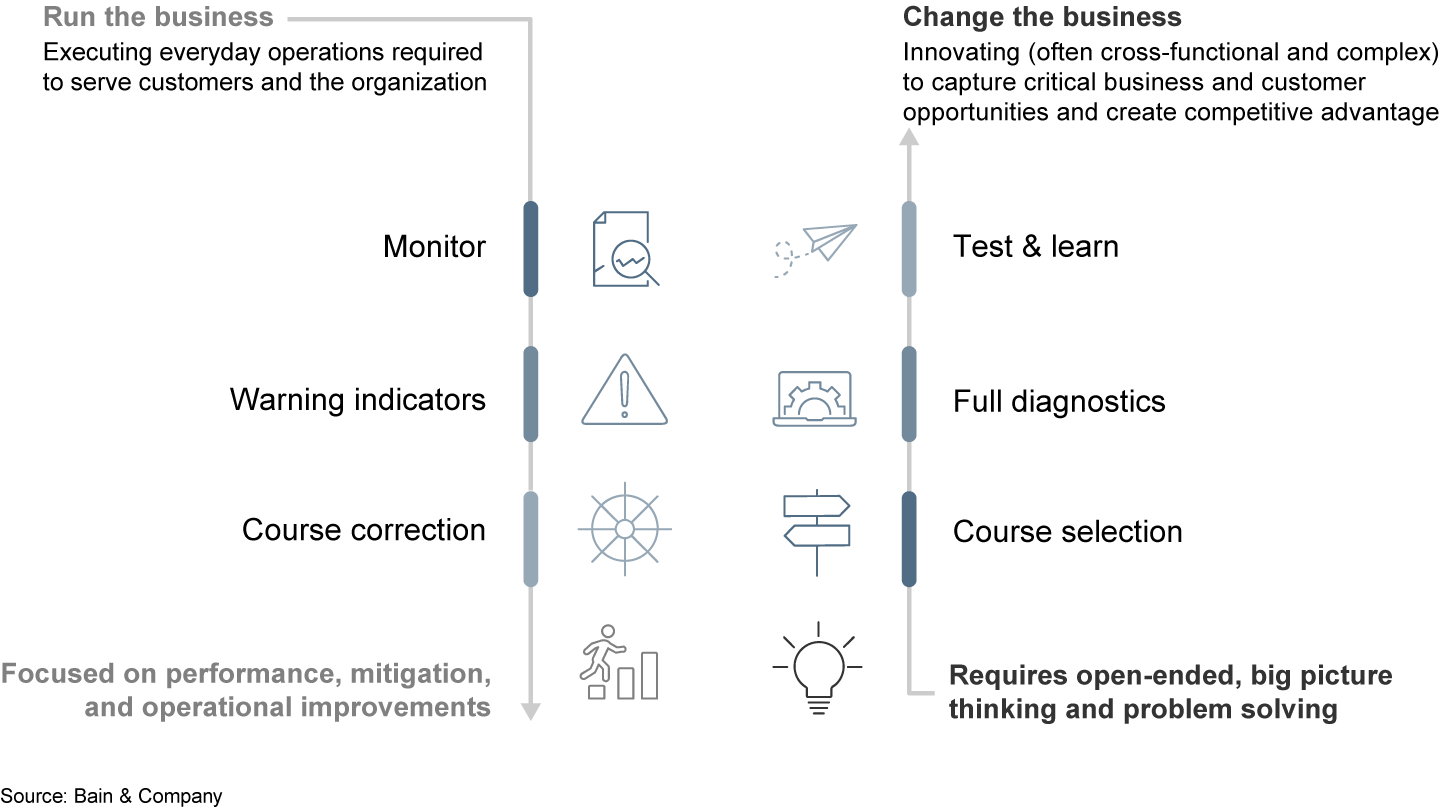
      “Run” and “change” the business efforts differ
      “Run” and “change” the business efforts differ
      “Run” and “change” the business efforts differ

      Run-the-business meetings and change-the-business meetings

      Distinguishing between run and change the business efforts helps the executive team think through and align around their purpose and intent as a group. Often this leads to a realization that they need to focus more of their team time on changing the business. Yes, they still need to monitor operations and remove roadblocks, but they also need to delegate run-the-business issues whenever possible. With this distinction in mind, executives can then begin to tailor their meetings’ structure and cadence to fit their focus, whether run the business or change the business.

      Recognizing this, one technology company has begun to differentiate between change-the-business and run-the-business discussions, in the process establishing a different operating rhythm and making its leadership team more effective. They made these changes following a period of C-suite executive turnover. Starting fresh, the team was open to change.

      They set the foundation by understanding their most critical decisions and who would be accountable for making them. There were almost 60 decisions identified as needing rigorous engagement by the executive leadership and 15 specific strategic priorities set—including diversity and succession planning, product strategy, and marketing.

      The cornerstone of the new executive calendar became a weekly meeting of the CEO and the CEO’s direct reports. A brief business pulse check offered the opportunity to surface urgent run-the-business issues followed by the meeting’s primary focus: strategic, change-the-business issues. This included everything from product launches to acquisition decisions and entering new markets. Longer quarterly business reviews offered the opportunity to delve deeper on operational performance issues and their root causes, and determine the right corrective actions.

      Executives liked the separation of run-the-business and change-the-business topics. The structure helped them spend more time on the right things and cultivate higher-quality discussions. They felt they made better decisions and made them faster.

      Clearly, run-the-business and change-the-business meetings benefit from different designs. Run-the-business meetings focus on the best ways to execute everyday operations effectively and efficiently. This is where executives monitor performance, highlight warning signs, and correct course as needed. They focus on establishing repeatable procedures that create predictable outcomes.

      A brief pulse check offered the opportunity to surface urgent run-the-business issues followed by the meeting’s primary focus: strategic, change-the-business issues.

      A business performance review of the operational running of the business:

      • Should focus on key outcomes and concentrate on those that are deviating meaningfully and materially from the original plan. (There is no greater waste of scarce leadership time than discussing things that are unfolding exactly as expected, or that have a minimal impact on the business, yet this is what many monthly and quarterly reviews are all about.)
      • Should aim to surface the root causes of the issue and then decide how to correct course. 
      • May warrant shorter, more frequent “pulse checks” rather than lengthy, holistic reviews.

      Change-the-business meetings, on the other hand, focus on innovation, capturing business opportunities, and creating competitive advantage. They concentrate on determining future direction and how to pivot as priorities shift, and they differ from operational meetings in focus and approach: 

      • They focus on sharing lessons learned and removing impediments to progress. 
      • Leaders provide input and feedback, but support innovation by empowering their teams to test and learn, embracing an Agile leadership approach. (For more on this, read “The Agile C-Suite” in Harvard Business Review.)
      • They often need to take place frequently—monthly, or even weekly—to keep pace with innovation and provide teams with timely coaching and guidance.

      Each CEO and C-suite will take their own approach. Some companies separate operating and innovation meetings entirely. Others cover both in one gathering but separate the operational discussions from those focused on strategy and innovation. Keeping them distinct helps participants adopt the mindset and behavior suited to the issue at hand. Consider the example of the executive committee at a consumer products company. The group has long met two days out of the month to cover essential topics, but recently began splitting that time. One day they focus on current “run the business” topics. The other they spend working on the future of business, thinking about new opportunities, the capabilities they need to build, and the right strategy to pursue. They regularly invite outside speakers to their growth day. When they launched a transformation program, this model ensured that executives kept abreast of the more than 15 strategic growth, cost, and culture initiatives they were tackling, but they also continued to spend at least a day a month as a team steeped in the details of how the business was performing day in, day out.

      Moving forward

      Whatever its industry, maturity, and current health, any executive team wants to ensure they are working on the right topics in the right ways. Are they spending enough of their time together on changing the business? How can they keep a finger on the pulse of operations in the most efficient manner? Do their meetings match the different needs of running and changing the business?

      A good place to start is with a periodic review of each meeting on the calendar. Do their agendas match the executive team’s proper focus? Where are run- and change-the-business topics converging, and should they be separated? Additional questions flow from that, including whether the right people are attending, and if the cadence is right. Ongoing attention to good meeting hygiene is important, too.

      It’s worth the effort. Well-designed meetings encourage the conversations and mindset that lead to better decisions. Rather than destroying energy, these meetings focus and feed it. 

      Auteurs
      • Headshot of Joost Spits
        Joost Spits
        Associé, Boston
      • Headshot of Marcia Blenko
        Marcia Blenko
        Advisory Partner, Boston
      Contactez-nous
      Expertises fonctionnelles transverses
      • Agile Enterprise
      • Leadership & Talent
      • Operating Model & Org Design
      • Organisation
      Comment pouvons-nous vous aider ?
      • Dynamic Management System
      Agile Enterprise
      The Agile C-Suite

      A new approach to leadership for the team at the top.

      Voir plus
      Dynamic Management System
      Answering Five Critical Questions Executives Ask about OKRs

      Far from a mere management fad, objectives and key results help companies focus on their most important goals and quickly adapt when circumstances change.

      Voir plus
      Blog Management du Changement
      Four Ways Leaders Can Make AI Redesigns Stick

      As companies redesign to scale AI, these four lessons help leaders ensure their organizations actually live the new operating model.

      Voir plus
      Dynamic Management System
      Scenario Analysis and Contingency Planning

      Scenario Analysis and Contingency Planning is a process that allows executives to explore and prepare for several alternative futures.

      Voir plus
      Organisation
      On Happiness and Leadership: A Discussion with Arthur C. Brooks

      A Harvard professor, social scientist, and best-selling author, Brooks shares his take on leadership and how to build a culture of workplace happiness.

      Voir plus
      First published in mars 2021
      Mots clés
      • Agile Enterprise
      • Blog Management du Changement
      • Dynamic Management System
      • Leadership & Talent
      • Operating Model & Org Design
      • Organisation

      Comment nous avons aidé nos clients

      Organisation A global manufacturer's reorganization restores high profits

      Lire l’étude de cas

      Organisation Building a winning media salesforce

      Lire l’étude de cas

      Organisation A Regional Operating Model Lifts European Sales for a Medical Device Maker

      Lire l’étude de cas

      Vous souhaitez continuer cette conversation ?

      Nous aidons des dirigeants du monde entier à matérialiser des impacts et des résultats pérennes et créateurs de valeur dans leurs organisations.

      Les points de vue de Bain : notre perspective sur des problématiques auxquelles sont confrontées les entreprises à travers le monde, envoyés chaque mois dans votre boîte de réception. 

      *J’ai lu la politique de confidentialité et j’accepte les conditions.

      Merci de lire notre politique de confidentialité.
      Bain & Company
      Contactez-nous Sustainability Accessibility Conditions d’utilisation Politique de Confidentialité Cookie Policy Mentions Légales Sitemap Log In

      © 1996-2026 Bain & Company, Inc.

      Contacter Bain

      Comment pouvons-nous vous aider ?

      • Business inquiry
      • Career information
      • Press relations
      • Partnership request
      • Speaker request
      Voir tous les bureaux