


Etude

|
|
As the era of electric vehicles dawns, utility CEOs find themselves in the spotlight answering questions on how electric vehicles will impact their businesses. Most utility companies already know that their core business—generating, trading and selling power—will hardly change, other than perhaps to shift to lower carbon emission sources of energy. However, the advent of e-mobility opens up a suite of opportunities for utility companies outside their immediate core. The question is: How to identify dependable, low-risk adjacencies to invest in? A good starting point is to consider the electric vehicle value chain, which combines links from the value chains of the automotive and utility industries. According to Bain & Company estimates, the total profit pool of each e-vehicle in Europe adds up to around €3,000 ($4,000) over its lifetime (see Figure 1). That covers a number of business opportunities from one end of the value chain to the other: starting with vehicle sales and battery provision; going on to power management and value-added services; and ultimately, the resale of the vehicle or reuse of its components. Of these, the smallest slice of the profit pool goes to a utility’s core business: electricity production. Predictions vary but most estimates agree that by 2020, as much as 50 percent of the new vehicles sold in the US and Europe could consist of some form of electric vehicles (battery electric, range extender or hybrid). Our research shows that at that level, electric vehicles have the power to shift profit pools substantially for the automobile industry—but only marginally for utilities. In a base scenario—a projected market penetration of battery electric vehicles of about 25 percent—electricity demand will increase by just 2 to 5 percent. Even if electric vehicles storm the market, with say a penetration of 50 percent, the additional increase in electricity demand would add up to just 5 to 10 percent. Most markets already have enough power capacity in reserve to meet this spike in future demand.
To profit from electric vehicles, “power providers” like utilities and oil and gas companies must, therefore, look beyond electricity sales. But that gets tricky, as each link on the electric vehicle value chain also attracts competitors from other industries: “hardware providers” like auto original equipment manufacturers (OEMs) and battery manufacturers; “infrastructure providers” like service stations and parking garages; and “service providers” like banks, leasing companies, independent resellers and even info-tech and infotainment companies. The six most promising bets Responding to market pressure, some utility companies moved fast to place bets on new business ideas centered on electric vehicles. Many announced initiatives that projected a clean, green image of the corporate brand. In Germany E.ON is partnering with Audi for a fleet trial in the Munich region. The New York Power Authority is working with Ford. In Italy, Enel and Daimler are working together, introducing electrically powered vehicles in major cities. However, now companies find they can do more: they can find a new source of revenue for the business by investing in the right adjacency. Our research shows that six key nodes on the e-vehicle value chain appear particularly promising for utilities—even though each comes bundled with start-up issues. These include:
Prioritizing e-mobility business models Utilities face a plethora of choices but most of them currently represent high-risk and untested business models. CEOs must not only pick their battles carefully, they must look beyond their own industry to gauge their ability to win. Which e-mobility activities will suit their businesses best? Do they have the right assets and capabilities to venture into new areas? What impact will the new adjacencies have on the corporate brand and reputation? Leaders can make decisions more confidently if they develop a framework to weigh options—and shortlist those that make sense. In our experience, to get the best out of the e-vehicle opportunity, a utility can prioritize potential business ideas on two dimensions (see Figure 2).
The first criterion ranks business models on their attractiveness in terms of the projected market size, the expected rate of growth and their potential profitability. The second prioritizes business models on the utility’s ability to win: the assets and capabilities that the utility can bring to the table by itself or through partnerships. The attractiveness and ability to win approach also helps companies zero in to the capabilities they lack. Then, the company can identify potential partners that can help it build successful new business models. For example, one utility company found that it lacked skills in consumer lending know-how and inexpensive refinancing. As the company identified financing as an attractive adjacent business, it began seeking a bank or leasing partner. Another utility company saw itself as an “e-mobility enabler.” It identified partners such as parking garages to install branded charging stations and began to build its own public charging station network. Such frameworks also highlight business areas where utilities can play the role of an investor. In this case, instead of new revenue streams, the utility seeks to maximize the return on investments. For example, when Delphi, a leading global supplier to the automotive industry, recognized that electric vehicles will require new components it began investing in equipment technology suppliers for components like EV inverters. Similarly, Comverge invested in developing vehicle-to-grid (V2G) technology for future applications in demand management. A critical issue in making the right decision is to consider timing. Utilities might not perceive a need for urgency if they consider only what competitors are doing within the industry. However, for most utility companies, the disruptive force will appear from other industries such as oil and gas, telecom, and component and infrastructure equipment providers: These companies will want to access a greater share of the profit pool by directly offering services to electric vehicle consumers. Utilities can preempt the threats by planning the right strategy and making the right investments early. For most utilities, electric vehicles hold plenty of promise—not just in green slogans, but also green-field ventures. 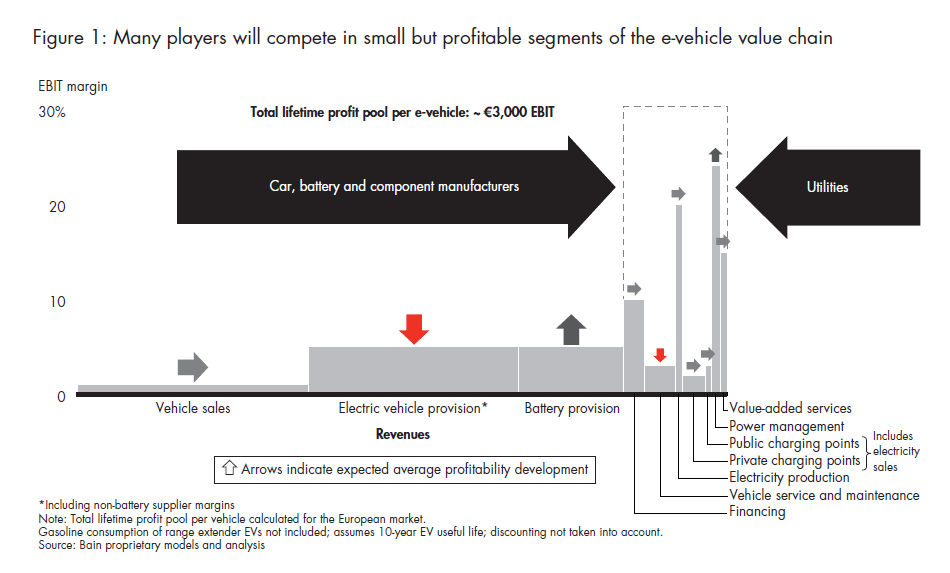 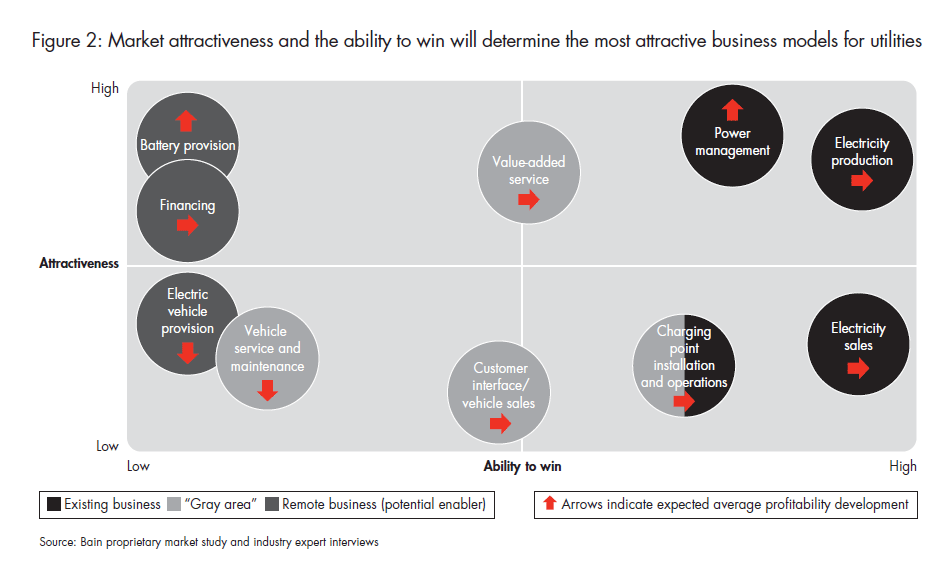 |