

Etude

En Bref
- In an accelerating trend, growth in the consumer products segment continues to shift toward emerging markets.
- Over the past decade, India has become the third-largest contributor to consumer products (CP) growth among emerging markets—and it has significant headroom for expansion.
- Evolutions in digital infrastructure, the channel landscape, and middle class expansion have removed traditional barriers, making India a friendly battleground for multinational corporations (MNCs).
- India affiliates of CP MNCs often deliver superior total shareholder returns and strategic value in terms of innovation and shared services talent.
- Tenure isn’t a requirement to win in India. Many companies have recently entered and scaled their businesses in India.
- India remains a complex market. To win in India, MNCs must LEAP: Lead in a core category; Expand their portfolios; Adapt the 4Ps; and Perform at peak levels.
Emerging markets: A critical battlefield for global consumer products companies
Emerging markets are an increasingly important driver of global consumer products market growth, and by extension, an increasingly important growth platform for CP companies (CPGs). Rising populations, increasing affluence, and rapid urbanization are creating purchasing momentum—and priming these regions for explosive growth.
As of 2024, emerging markets represent nearly half of the global CP market value. Their growth contribution will jump from about 60% in the past decade to as much as 75% (or $2 trillion) over the next four to five years, according to Bain’s Consumer Products Report 2025.
As the world shifts toward a post-global economy, many CPGs will need a new global portfolio model to seize the emerging markets opportunity. To compete, CPGs need to consider each emerging market’s unique risks, growth levers, consumer groups, channels, competitors, price realizations, and cost structures—and then build tailored strategies and business models for specific markets.
To explore this opportunity, Bain & Company analyzed growth drivers and risk factors across the top 30 emerging CP markets. This report focuses on India, which has one of the most compelling consumer stories in the world. We describe promising growth opportunities and winning strategies for India’s CP market, drawn from Bain’s extensive experience helping multinational corporations (MNCs) and local CPGs succeed in India.
India is becoming a robust growth engine for CP MNCs
India’s strong fundamentals are driving both volume and value growth for CPGs. Between 2024 and 2030, India will see the highest increase in working-age population globally, with over 100 million people expected to be added. In addition, India’s real disposable income per capita has increased at a ~6% CAGR in the past three years. In the next five years, India’s income per capita is expected to grow the fastest among the top five CP emerging markets, which also include China, Brazil, Mexico, and Russia.
India is a dynamic market, brimming with exciting opportunities. Over the past five years, India’s volume growth contribution outpaced its volume share by 2–8 times across several categories (see Figure 1). New categories are rapidly emerging, demand spaces are being created, and consumer behaviors are being shaped. For instance, Western-themed quick-service restaurants have expanded at a CAGR of 18% in the past five years, demonstrating urban consumers’ increasing adoption of Western food habits.
Figure 1
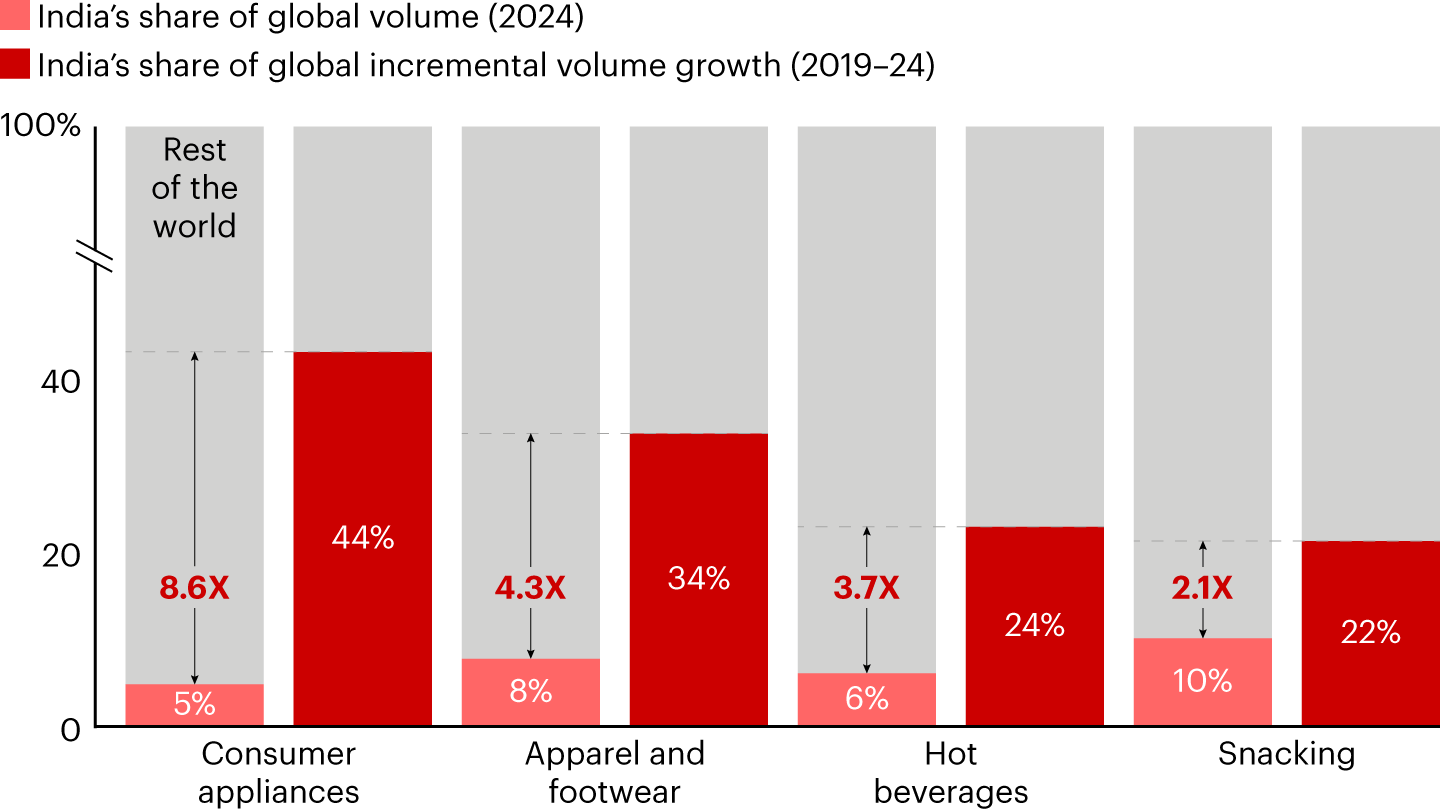

Notes: Consumer appliances include major and small appliances, exclude consumer electronics; snacking includes biscuits and savory snacks
Sources: Euromonitor; Bain analysisExisting categories offer significant growth potential, too. Carbonated soft drinks and chocolate both experienced volume growth over a 15% CAGR in the past decade, yet penetration remains below 40% as of 2024. Premium consumption and spending on services are also rising. In the last five years, premium smartphones achieved over 40% CAGR.
The truth about operating in India today
Historically, MNCs have viewed India as a difficult market to operate in. Many MNCs have been deterred by underperformance or “false starts,” in which affiliates in India delivered lower-than-expected revenue or profit growth. Others have avoided India due to perceived operational challenges, such as:
- a highly diverse and dispersed consumer base, requiring a tailored marketing playbook;
- a fragmented and complex channel landscape dominated by traditional trade; and
- a high prevalence of unorganized competitors operating at low price points and with lean cost structures.
However, many challenges associated with operating in India have dissipated or significantly improved in recent years. As incomes rise, India is transitioning from a bottom-of-the-pyramid economy to one largely driven by the middle class.
India has also leapfrogged many adoption curves, which helped it overcome historical barriers. For example, India transformed from having a few fixed Internet lines to becoming the world’s second-largest mobile subscriber base and having some of the highest mobile data consumption per capita. Rapid digital adoption and widespread smartphone and broadband penetration have enabled companies to effectively reach India’s diverse population. Digital media now accounts for 50% or more of total marketing spending in India.
E-commerce and quick commerce have grown 2–3 times faster in value than traditional and modern trade channels in India, diminishing the need for an extensive traditional trade network to enter the market. Insurgent brands increasingly use e-commerce and quick commerce to launch new products and scale rapidly. For example, Haleon introduced Centrum Women, a dietary supplement tailored for women, through quick commerce platforms and achieved $25 million in revenue in its first year. As the middle class expands, demand for quality branded products is increasing and fueling explosive brand growth. More than 180 well-funded insurgent brands have emerged in the last decade, and many are growing twice as fast as traditional brands.
Financial inclusion was another critical leapfrog for India—one that removed friction from consumption activities. Initiatives from the India Tech Stack reduced the unbanked population from 80% to 20% in just seven years—a shift that would typically take decades. Digital payments are also gaining popularity, with 45% of Internet users adopting them for transactions.
The truth is, India is an MNC-friendly battleground. As of 2024, MNCs are the number one or number two players in more than 20 CP categories in India, ranging from soft drinks and spirits to savory snacks, detergents, and diapers. This is true for MNCs with decades of tenure in the market and for companies that have recently entered India and scaled. For example, Unicharm (Japanese health and hygiene company) and Decathlon (French retail apparel) both launched their consumer businesses after 2005 and organically built close to $500 million businesses that have continued to grow at a 20%+ CAGR in the past three years.
A closer look at MNCs in India
Bain profiled around 42 global CPGs with revenues over $10 billion, 30 of which operate in India (see Figure 2). Our analyses included fast-moving consumer goods (FMCG) but excluded agriculture, food processing, and tobacco companies.
Figure 2
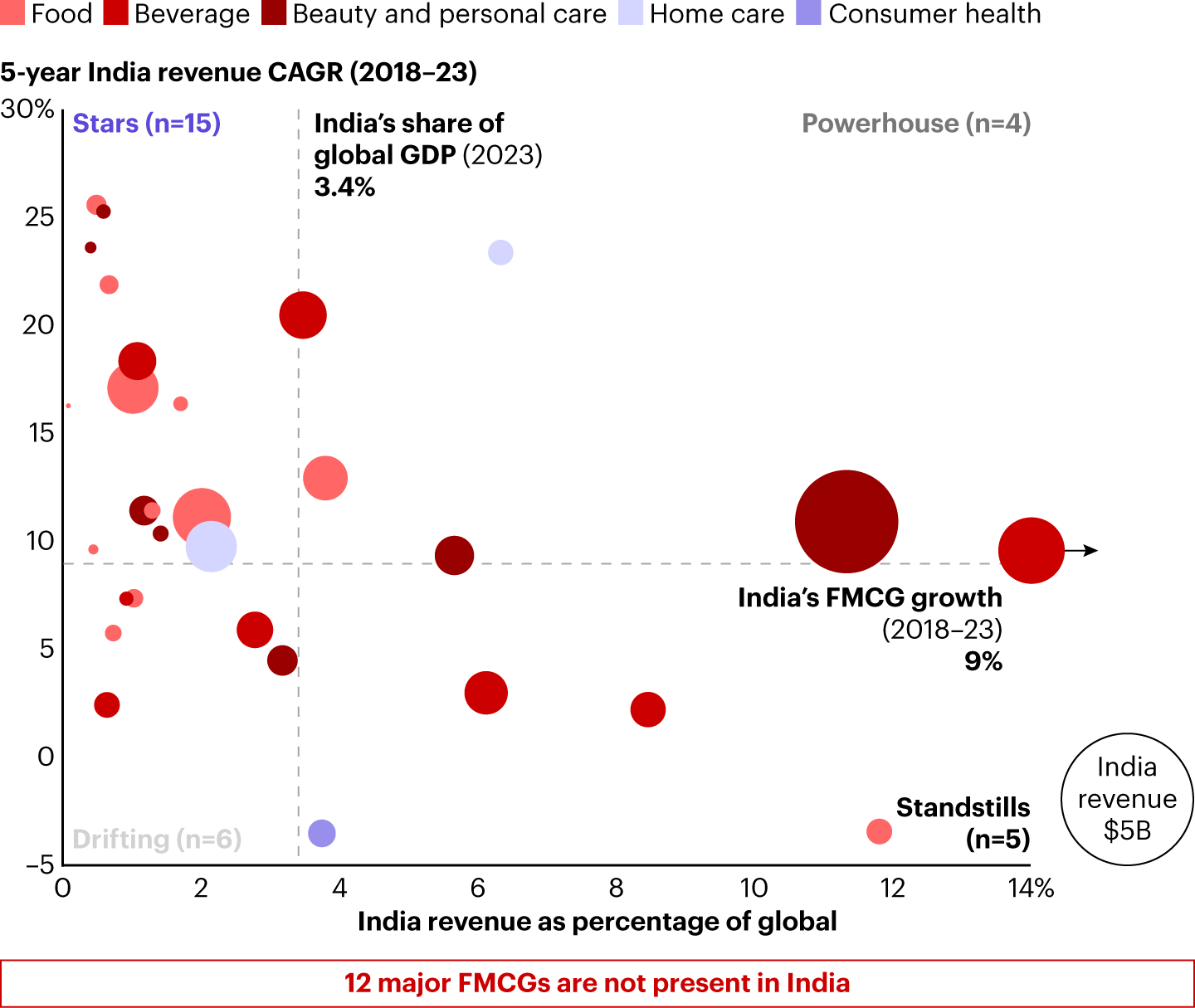

Note: Considered two- to four-year CAGR for five companies where data for five years was unavailable
Sources: MCA filings; VCC Edge; Capital IQ; Pitchbook; company reports; Bain analysisAmong the CPGs we studied:
- Two-thirds of the companies (19) experienced higher-than-industry growth between 2018 and 2023.
- About one-third of the companies (11) are still struggling to find growth in India.
- Seventy percent (21) are under-indexed in India. In those companies, India’s contribution to global revenue was lower than India’s contribution to global GDP (3.4%). If these companies grow in line with India’s GDP, their revenue contributions could exceed 5% by 2033.
Winning in India can be quite rewarding. For several CP leaders, India affiliates deliver disproportionate total shareholder returns—as much as 2–6 times that of their global parents (see Figure 3). Their success in India is driven by outsized contributions to revenue growth compared to their parent companies (see Figure 4). For those MNCs not in India, this is a missed opportunity.
Figure 3
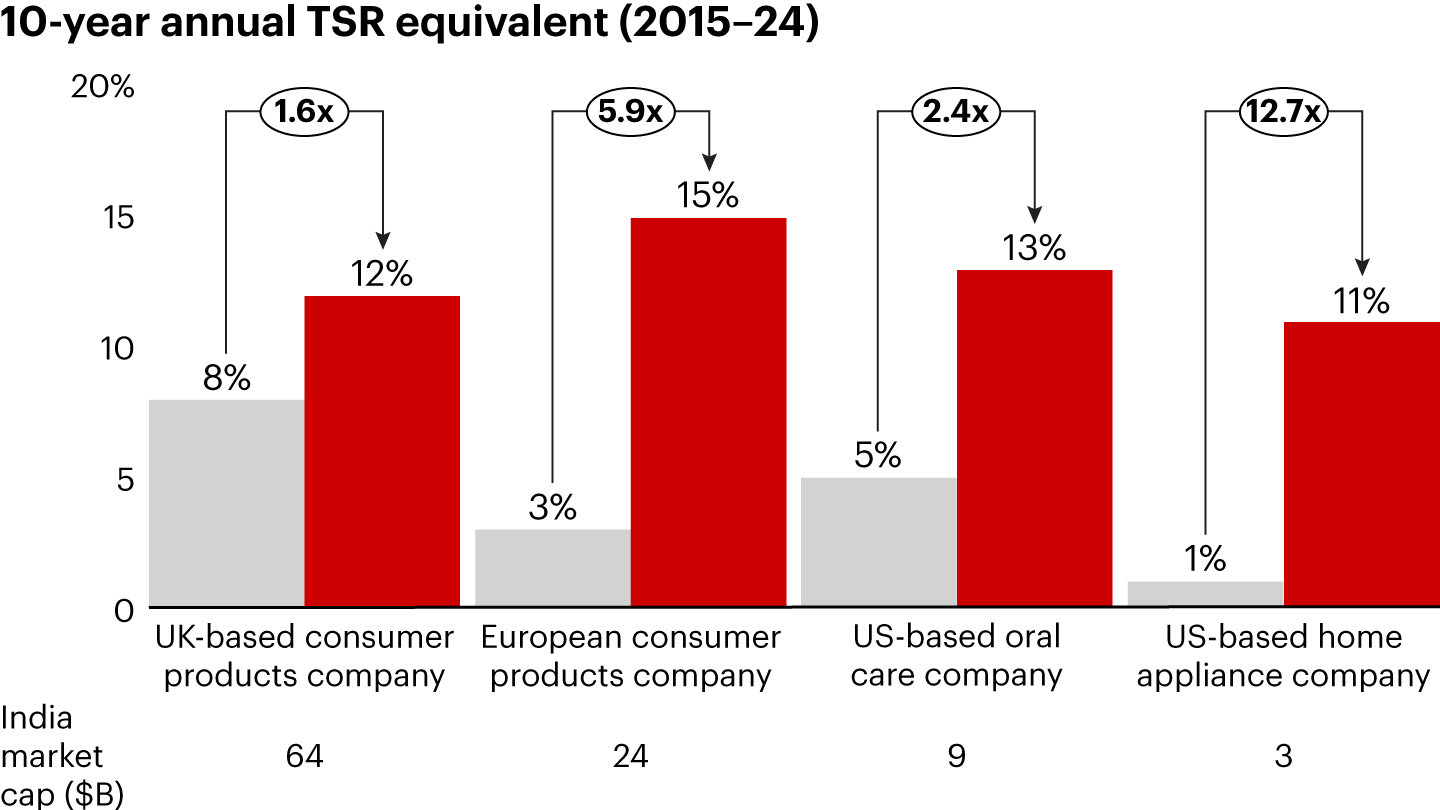

Note: Leveraged dividend adjusted closing price on the last day of start and end year
Sources: Capital IQ; Bain analysis
Figure 4
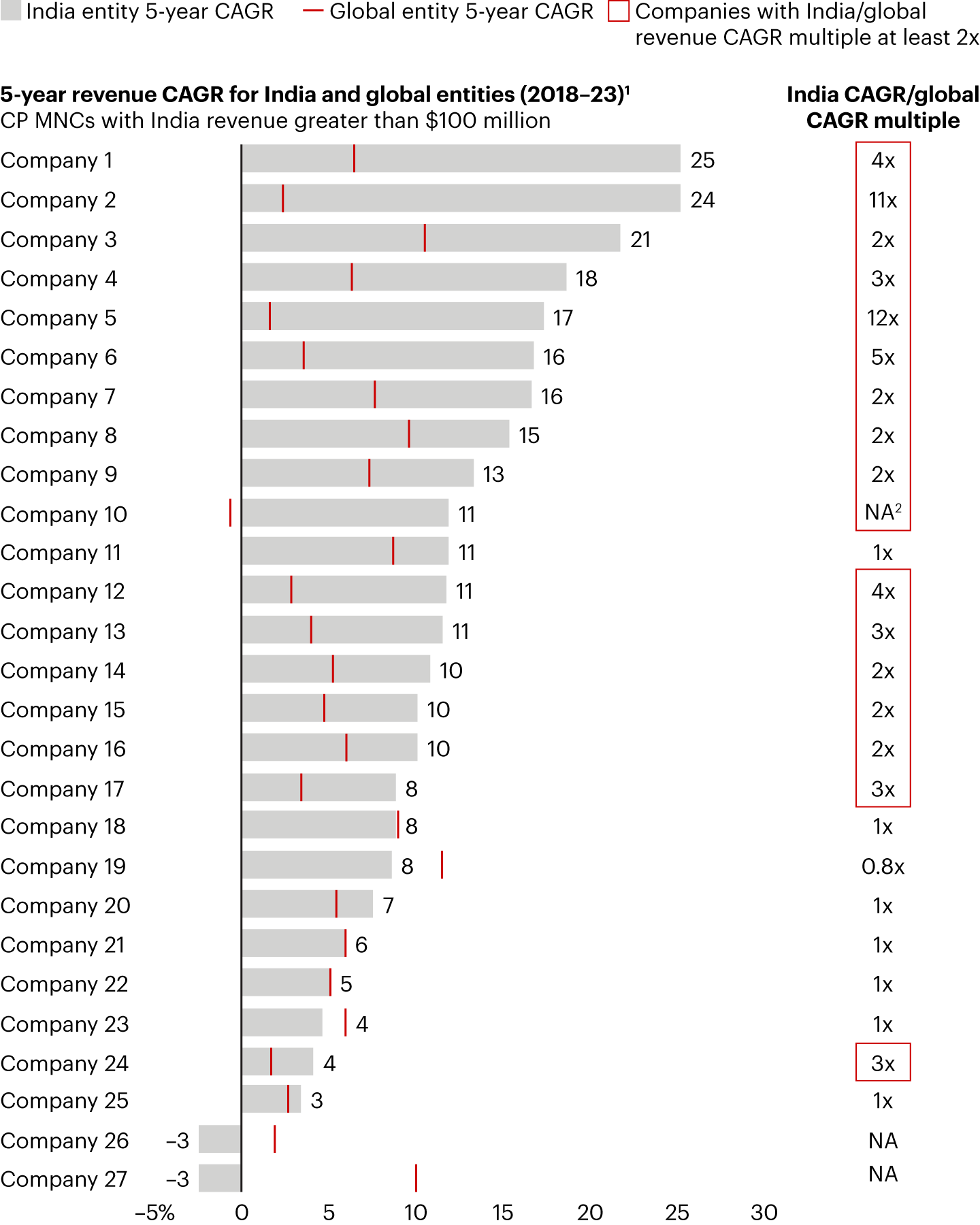

Notes: 1) Covered 27 global companies with over $100M revenue in India, considered two- to four-year CAGR for five companies where data for five years was unavailable; 2) NA refers to companies with negative CAGR for global or Indian entity
Sources: MCA filings; VCC Edge; Capital IQ; Company reports; Bain analysisMoreover, value growth isn’t a trade-off for profitability. In India, winning CPGs deliver EBITDA margins that are in line with (and occasionally higher than) their global parents’ (see Figure 5).
Figure 5
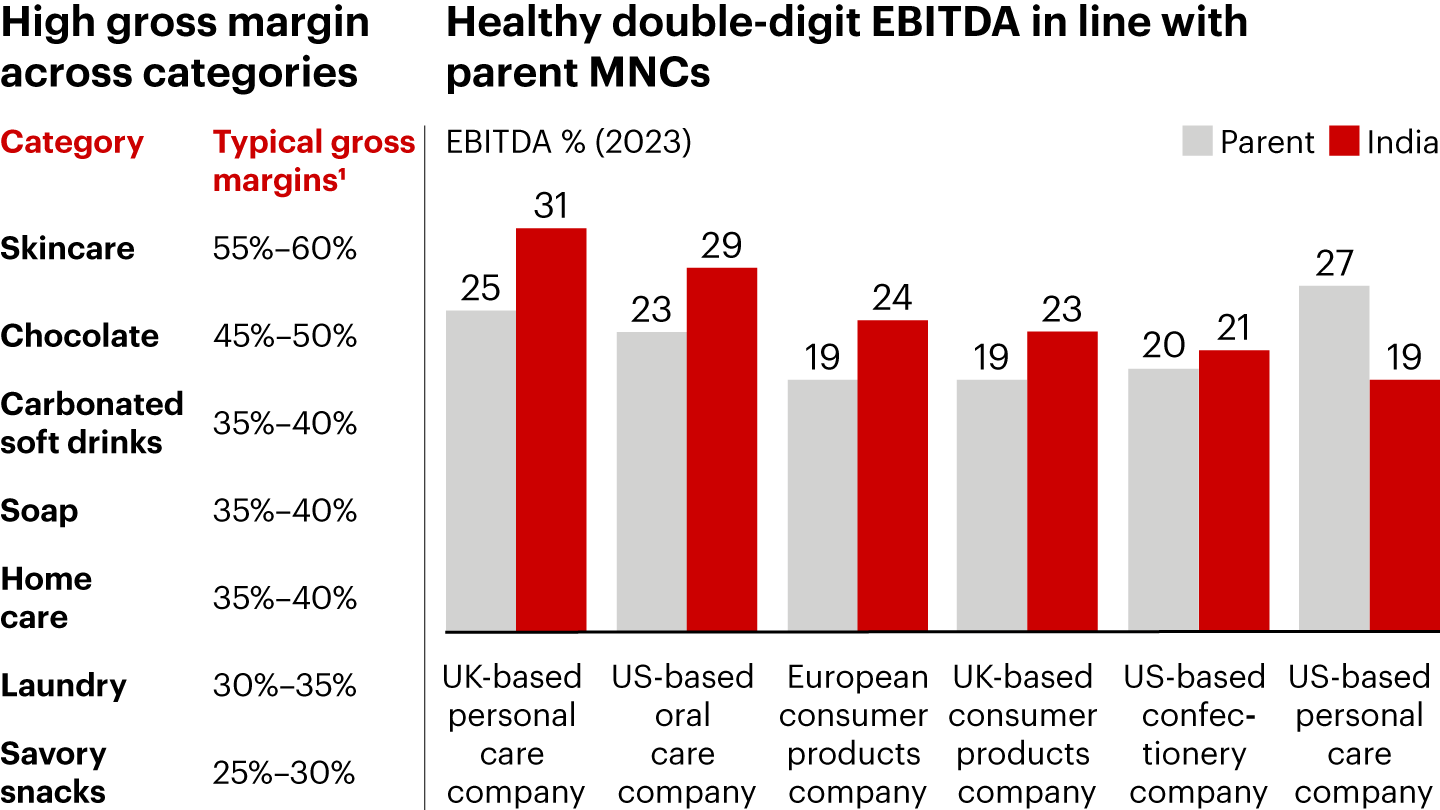

Note: Gross margins of major FMCGs operating in India
Sources: MCA Filings; company financials; secondary research; Bain analysisIndia also provides strategic benefits for MNCs by serving as a testing and innovation ground for global markets, especially those dominated by price-sensitive consumers or fragmented channel landscapes. For example, Coca-Cola developed a low-cost solar cooler for rural India, and Mondelēz International created high-temperature-resistant chocolates to reach trade outlets without using coolers. These, and many other innovations, were developed to win under India’s market conditions and later scaled to global markets.
India has also emerged as a global talent hub for R&D and shared services, attracting leading MNCs to establish R&D centers there. These centers drive innovation with remarkable cost efficiency, allowing MNCs to deliver high-impact solutions to global markets.
How to win in India: LEAP
Despite recent improvements and numerous success stories, India remains a complex market to win in, and the playbook from other emerging markets won’t necessarily apply here.
India’s consumption growth will take a different shape in the next decade. Gen Z and younger consumers will drive a higher share of consumption, and affluence will extend beyond India’s top eight metro cities. In addition, new categories and premiumization will contribute more than half of future growth.
To address the changing consumer landscape, category development needs to consider conditions that are bespoke to India. For example, India’s per capita nonalcoholic beverage consumption is half that of other countries with similar per capita income. Global consumption occasions are also less relevant in India.
India also remains highly competitive. Both insurgent and regional brands have gained significant share thanks to their deep understanding of Indian consumers. Driving profitable growth in this context is not trivial. While gross margins are high, price realization per unit is low. To win, CPGs need a low-frills model tailored to India.
Our LEAP playbook offers a structured approach to help MNCs navigate these challenges and succeed in India (see Figure 6).
To win in India, MNCs must:
- Lead in core
- Expand their portfolios
- Adapt the 4Ps for India
- Perform at peak levels
Figure 6
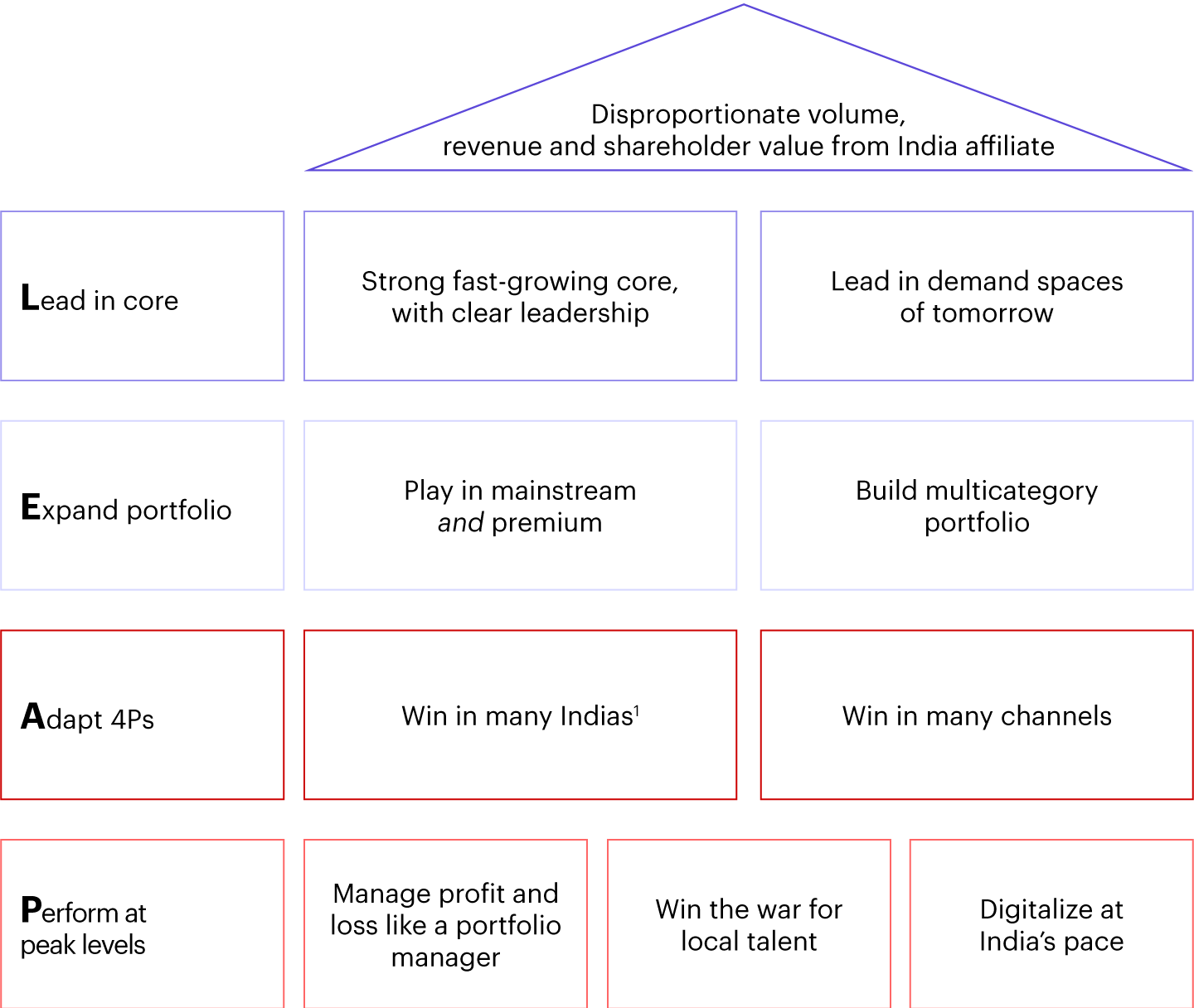

Note: 1) Win in many of India’s regional markets and consumer clusters
Source: Bain & CompanyLead in core
To succeed in India, it’s essential to build a strong, fast-growing core and earn a leadership position. For example, Hindustan Unilever Limited (HUL) holds the number one or number two position in nine out of the 12 categories it participates in in India. Likewise, Nestle holds a top spot in 6 out of 10 categories in India.
Unlike traditional trade stores in other emerging markets, such as China, stores in India stock much fewer brands, making it imperative that companies have a clear path to a leadership position.
This doesn’t mean scale is a barrier to new entrants. In the past decade, more than half of the growth in India’s skincare market has been driven by new demand spaces, many of which were created by insurgent brands. Winning disproportionately and shaping these new demand spaces is a key success factor.
Expand portfolios
To scale in India, MNCs need to capture opportunities in both the mainstream and premium segments. For example, HUL succeeded in the laundry category by straddling hero brands across price segments and scaling new formats like matics and liquid detergents. As a result, it gained over 700 basis points of share in the detergent category over seven or eight years.
MNCs have an opportunity to bring the best offerings from their global portfolios to India. Even well-established players in the market can find significant growth opportunities by building out multi-category portfolios. For many of them, the India portfolio is under-indexed on categories where they hold a more significant position globally.
Adapt the 4Ps
The ability to manage complexity—in product portfolios, the marketing mix, and go-to-market structure—is another key factor for winning in India.
India is a conglomeration of markets, not a slam-dunk segment of 1.4 billion homogeneous consumers. To win in many Indias, MNCs must tailor the 4Ps (product, price, place, and promotion) for distinct regional markets and consumer clusters. For example, HUL’s personal care brand, LUX, sells bundle packs in Gujarat but smaller single packs in Bihar to address different levels of affordability and purchase behavior.
To connect with consumers, brands often feature local celebrities or adapt their messaging to the local language. India’s digital ecosystem enables granular levels of customization related to content and spending.
MNCs must win in many channels in India, too. Winning in traditional trade with multiple categories is table stakes. India requires a tailored route-to-market structure on multiple dimensions: town prioritization, outlet selection, distribution model, sell-in and sell-out norms, operating model, and technology.
E-commerce and quick commerce are also critical battlefields for market leaders and insurgents—and the capabilities required to win in this space are rapidly evolving. Winners are using rich data shared by retailers to develop a deeper understanding of customer behavior and tailor the 4Ps.
Perform at peak levels
Here’s a familiar story in India: A global CFO invests significantly for five years, then pulls back when the investments don’t realize global thresholds on profit and loss (P&L) returns.
To succeed in India, MNCs need to adopt a longer-term view and manage P&L like a portfolio manager. Playing in India is a balance sheet game, where MNCs build assets (i.e., brands, distribution, a winning model) that lead to long-term returns. That means committing to and investing in building brands and capabilities, even if they don’t deliver immediate profits. However, it’s key to maintain a healthy gross margin for the portfolio and build the right price ladder from the start.
Unicharm offers an example. It achieved profitable growth in India within five years and kept its cumulative EBITDA losses below $30 million. It redefined the consumer value equation with a convenient pant-style diaper available in a pack size of one, adopted a selective distribution footprint, and carefully managed advertising expenditures. Once cash flow turned positive, the company reinvested its profits into new product development, advertising, promotions, and expanded distribution. Unicharm’s revenue in India grew 18-fold, reaching INR 36 billion in 2023, and the company earned a market-leading share of the diaper segment.
MNCs also need to invest in local talent and digital capabilities. In our experience, empowered local teams can adapt to nuances and scale better than other talent models. MNCs need to carefully develop and retain local talent to build their business in India, while maintaining a long-term perspective similar to that of the global parent.
Given India’s deep digital entrenchment, MNCs must digitize across their value chains. They can leverage data to cut through India’s complexity, pursue product innovations, tailor sales and marketing strategies, increase supply chain speed and reliability, and lower costs.
LEAP to win
India’s CP market presents immense growth potential, with robust fundamentals poised to fuel sustained growth in both volume and value.
MNCs that have yet to enter the market must act now—or risk missing out on a vital growth engine and long-term strategic advantages. Many challenges that once deterred MNCs have significantly improved, making market entry and growth easier than ever.
Companies already investing in India are benefiting from accelerated growth, higher shareholder returns, and opportunities to shape globally relevant products. By deploying the LEAP framework, these companies can find new avenues for growth, further optimize their operations, and maximize returns.
It’s time to LEAP to win in India.
Note
The analysis in Figures 2 and 4 is based on 2023 data due to the limited availability of 2024 data at the time of publication. Based on the 17 out of 30 companies with 2024 financial results available, the findings remain consistent—Indian entities’ revenue contribution to global revenue remained largely stable or increased, although revenue growth of Indian entities was lower in 2024.
The authors extend gratitude to all those who contributed to this report, including Charlotte Apps, Miya Wang, Yifei Gao, Sharanya Nayak, Daashrathy Srikanth, Anandh Natarajan K R, Avishi Agarwal, and the Bain Capability Network.
First published in avril 2025