
Skip to Content
  • Bureaux

    Bureaux

    Amérique du Nord et Amérique du Sud
    • Atlanta
    • Austin
    • Bogota
    • Boston
    • Buenos Aires
    • Chicago
    • Dallas
    • Denver
    • Houston
    • Los Angeles
    • Mexico City
    • Minneapolis
    • Monterrey
    • Montreal
    • New York
    • Rio de Janeiro
    • San Francisco
    • Santiago
    • São Paulo
    • Seattle
    • Silicon Valley
    • Toronto
    • Washington, DC
    Europe, Moyen-Orient et Afrique
    • Amsterdam
    • Athens
    • Berlin
    • Brussels
    • Copenhagen
    • Doha
    • Dubai
    • Dusseldorf
    • Frankfurt
    • Helsinki
    • Istanbul
    • Johannesburg
    • Kyiv
    • Lisbon
    • London
    • Madrid
    • Milan
    • Munich
    • Oslo
    • Paris
    • Riyadh
    • Rome
    • Stockholm
    • Vienna
    • Warsaw
    • Zurich
    Asie et Australie
    • Bangkok
    • Beijing
    • Bengaluru
    • Brisbane
    • Ho Chi Minh City
    • Hong Kong
    • Jakarta
    • Kuala Lumpur
    • Manila
    • Melbourne
    • Mumbai
    • New Delhi
    • Perth
    • Seoul
    • Shanghai
    • Singapore
    • Sydney
    • Tokyo
    Voir tous les bureaux
  • Alumni
  • Presse
  • S’abonner
  • Contacter
  • France | Français

    Sélectionnez votre région et votre langue

    Global
    • Global (English)
    Amérique du Nord et Amérique du Sud
    • Brazil (Português)
    • Argentina (Español)
    • Canada (Français)
    • Chile (Español)
    • Colombia (Español)
    Europe, Moyen-Orient et Afrique
    • France (Français)
    • DACH Region (Deutsch)
    • Italy (Italiano)
    • Spain (Español)
    • Greece (Elliniká)
    Asie et Australie
    • China (中文版)
    • Korea (한국어)
    • Japan (日本語)
  • Saved items (0)
    Saved items (0)

    You have no saved items.

    Bookmark content that interests you and it will be saved here for you to read or share later.

    Explore Bain Insights
  • Expertises Sectorielles
    Menu principal

    Expertises Sectorielles

    • Aerospace et Défense
    • Agroalimentaire
    • Chimie
    • Infrastructures, BTP et Matériaux de Construction
    • Grande Consommation
    • Services Financiers
    • Santé
    • Engins & Equipements Industriels
    • Media et Divertissement
    • Metals
    • Mining
    • Pétrole & Gaz
    • Papier et Emballage
    • Private Equity
    • Secteur Public
    • Distribution
    • Technologie
    • Télécommunications
    • Transportation
    • Travel & Leisure
    • Utilities & Energies Renouvelables
  • Expertises Fonctionnelles
    Menu principal

    Expertises Fonctionnelles

    • Expérience Client
    • ESG
    • Innovation
    • Fusions et Acquisitions
    • Opérations
    • People & Organization
    • Private Equity
    • Sales & Marketing
    • Stratégie
    • IA, Perspectives et Solutions
    • Technology
    • Transformation
  • Digital
  • Points de Vue
  • À propos
    Menu principal

    À propos

    • Notre Activité
    • Nos Valeurs
    • Nos Collaborateurs et Notre Équipe Dirigeante
    • Notre Impact
    • Prix & Récompenses
    • Partenariats Internationaux
    • Evénements
    Further: Our global responsibility
    • Diversité et Inclusion
    • Impact Social
    • Sustainability
    • World Economic Forum
    Learn more about Further
  • Carrières
    Menu principal

    Carrières

    • Rejoignez-nous
      Carrières
      Rejoignez-nous
      • Find Your Place
      • Nos domaines d’expertise
      • Equipes multidisciplinaires
      • Étudiants
      • Stages et programmes
      • Événements de recrutement
    • La vie chez Bain
      Carrières
      La vie chez Bain
      • Blog: Inside Bain
      • Récits de carrière
      • Nos collaborateurs
      • Nos bureaux
      • Soutenir votre évolution professionnelle
      • Groupes d’affinités
      • Avantages chez Bain
    • Histoires d’impact
    • Notre processus de recrutement
      Carrières
      Notre processus de recrutement
      • Ce que vous pouvez attendre
      • Entretiens
    Trouver un poste
  • Bureaux
    Menu principal

    Bureaux

    • Amérique du Nord et Amérique du Sud
      Bureaux
      Amérique du Nord et Amérique du Sud
      • Atlanta
      • Austin
      • Bogota
      • Boston
      • Buenos Aires
      • Chicago
      • Dallas
      • Denver
      • Houston
      • Los Angeles
      • Mexico City
      • Minneapolis
      • Monterrey
      • Montreal
      • New York
      • Rio de Janeiro
      • San Francisco
      • Santiago
      • São Paulo
      • Seattle
      • Silicon Valley
      • Toronto
      • Washington, DC
    • Europe, Moyen-Orient et Afrique
      Bureaux
      Europe, Moyen-Orient et Afrique
      • Amsterdam
      • Athens
      • Berlin
      • Brussels
      • Copenhagen
      • Doha
      • Dubai
      • Dusseldorf
      • Frankfurt
      • Helsinki
      • Istanbul
      • Johannesburg
      • Kyiv
      • Lisbon
      • London
      • Madrid
      • Milan
      • Munich
      • Oslo
      • Paris
      • Riyadh
      • Rome
      • Stockholm
      • Vienna
      • Warsaw
      • Zurich
    • Asie et Australie
      Bureaux
      Asie et Australie
      • Bangkok
      • Beijing
      • Bengaluru
      • Brisbane
      • Ho Chi Minh City
      • Hong Kong
      • Jakarta
      • Kuala Lumpur
      • Manila
      • Melbourne
      • Mumbai
      • New Delhi
      • Perth
      • Seoul
      • Shanghai
      • Singapore
      • Sydney
      • Tokyo
    Voir tous les bureaux
  • Alumni
  • Presse
  • S’abonner
  • Contacter
  • France | Français
    Menu principal

    Sélectionnez votre région et votre langue

    • Global
      Sélectionnez votre région et votre langue
      Global
      • Global (English)
    • Amérique du Nord et Amérique du Sud
      Sélectionnez votre région et votre langue
      Amérique du Nord et Amérique du Sud
      • Brazil (Português)
      • Argentina (Español)
      • Canada (Français)
      • Chile (Español)
      • Colombia (Español)
    • Europe, Moyen-Orient et Afrique
      Sélectionnez votre région et votre langue
      Europe, Moyen-Orient et Afrique
      • France (Français)
      • DACH Region (Deutsch)
      • Italy (Italiano)
      • Spain (Español)
      • Greece (Elliniká)
    • Asie et Australie
      Sélectionnez votre région et votre langue
      Asie et Australie
      • China (中文版)
      • Korea (한국어)
      • Japan (日本語)
  • Saved items  (0)
    Menu principal
    Saved items (0)

    You have no saved items.

    Bookmark content that interests you and it will be saved here for you to read or share later.

    Explore Bain Insights
  • Expertises Sectorielles
    • Expertises Sectorielles

      • Aerospace et Défense
      • Agroalimentaire
      • Chimie
      • Infrastructures, BTP et Matériaux de Construction
      • Grande Consommation
      • Services Financiers
      • Santé
      • Engins & Equipements Industriels
      • Media et Divertissement
      • Metals
      • Mining
      • Pétrole & Gaz
      • Papier et Emballage
      • Private Equity
      • Secteur Public
      • Distribution
      • Technologie
      • Télécommunications
      • Transportation
      • Travel & Leisure
      • Utilities & Energies Renouvelables
  • Expertises Fonctionnelles
    • Expertises Fonctionnelles

      • Expérience Client
      • ESG
      • Innovation
      • Fusions et Acquisitions
      • Opérations
      • People & Organization
      • Private Equity
      • Sales & Marketing
      • Stratégie
      • IA, Perspectives et Solutions
      • Technology
      • Transformation
  • Digital
  • Points de Vue
  • À propos
    • À propos

      • Notre Activité
      • Nos Valeurs
      • Nos Collaborateurs et Notre Équipe Dirigeante
      • Notre Impact
      • Prix & Récompenses
      • Partenariats Internationaux
      • Evénements
      Further: Our global responsibility
      • Diversité et Inclusion
      • Impact Social
      • Sustainability
      • World Economic Forum
      Learn more about Further
  • Carrières
    Recherches les plus fréquentes
    • Agile
    • Digital
    • Stratégie
    Vos recherches précédentes
      Pages récemment visitées

      Content added to saved items

      Saved items (0)

      Removed from saved items

      Saved items (0)

      Etude

      Perception Beats Reality in Pricing

      Perception Beats Reality in Pricing

      Get proper credit from consumers for your chosen price position.

      Par Sandeep Heda, Stephen Mewborn and Stephen Caine

      • min
      }

      Etude

      Perception Beats Reality in Pricing
      en

      Price wars have broken out in consumer industries around the world. It’s no secret that retailers such as ALDI, Amazon and Walmart have used price to position themselves against traditional competitors in their markets, pinching margins all around. Financial asset managers have been out-price-cutting one another in exchange-traded funds in a bid to gain market share. Major US telecommunications carriers now compete fiercely on price as they try to win new customers. And airlines are gearing up for a price war on trans-Atlantic routes as some low-cost carriers plan service between the US and Europe.

      These companies are reducing prices because they believe that will boost their perceived value to consumers, who implicitly weigh price against product features and benefits in their purchase decisions. As pressure intensifies to reduce prices, either by cutting the list price or offering a discount, companies may act hastily, without the same rigor they apply to investments elsewhere, such as capital deployment or product enhancements. Yet, changing prices can have an even greater effect on company financials.

      When managers make decisions on pricing, a fundamental question sometimes goes unasked: Will customers notice?

      All too often they do not, and what ultimately matters is how customers perceive the price point. Most companies—luxury purveyors aside—want to be perceived by consumers as having lower prices, relative to competitors, than actual shelf prices warrant. A retailer with average prices that are 10% higher than a key competitor’s would love to be perceived as being only 5% higher.

      If consumer perception does not align with the company’s intent, expensive investments in tactics such as coupons will be undercut. Other techniques, such as signage and clear communication, may cost less and help consumers understand a brand’s position in the price-value equation. Lower-cost alternatives often do a similar or better job of improving perception than the tactic of reducing the actual list price.

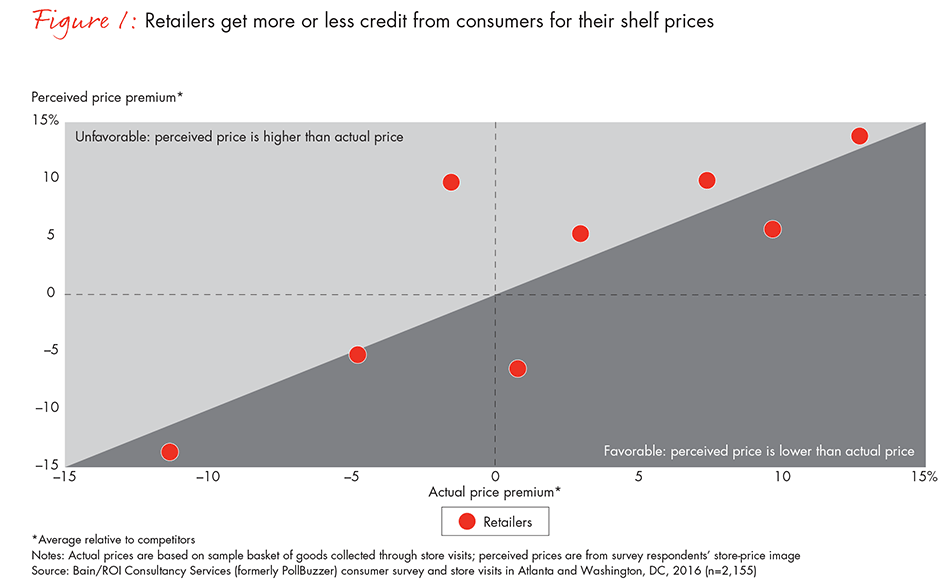
      There are clear winners and losers in the battle for pricing credit from consumers. Bain & Company and ROI Consultancy Services (formerly PollBuzzer) recently surveyed almost 2,200 consumers in Atlanta and Washington, DC, about the prices at eight retail chains carrying groceries. We found that retailers get more or less credit for their pricing than actual shelf prices would suggest (see Figure 1).

      perception-in-pricing-fig-1_embed

      For example, one retailer’s reputation as an upscale discounter, built through its store and product design, has given consumers the perception that it charges a price premium, when in fact its prices run slightly lower than the average in the two cities. Its pricing strategy does not mesh with its overall proposition to customers, with the result that the retailer does not get the pricing credit it deserves. One option for improving the situation might be for the retailer to raise its prices slightly, since customers have already baked the premium into their shopping decisions.

      In another example, many consumers believe that Amazon offers at or near the lowest prices on a broad range of goods, even when that’s not the case. In fact, Amazon strategically selects the products, such as best-selling items, on which to compete aggressively and charges relatively more on others. In one study, Jet.com was cheaper than Amazon by 27%. This dynamic plays out in other industries as well. Southwest Airlines, an early low-cost carrier, is still widely perceived as a low-price leader, yet some studies have shown that its price advantage has eroded over time. The continued perception of low-price leadership is even more remarkable considering Southwest bundles checked baggage with the price of the ticket, while other carriers have lower price points for passengers traveling with only carry-on bags.

      Intense competition on pricing pervades many industries, which makes consumer perception more important than ever. Aggregator and comparison websites have brought greater price visibility and ease of product comparison to banking, insurance, hotels and other consumer markets. It’s also easier for consumers to split their spending among different providers, depending on which firms offer the best perceived price-value equation. Bain’s grocery survey shows that half of consumers’ monthly spending goes to stores that are not the consumer’s primary store.

      Managing price perception, not just pricing structure and actual price points, thus has become a critical capability for firms in consumer markets.

      Mapping a path to improved perception


      So how can companies get more credit from consumers beyond shelf price in order to build traffic and earn loyalty with their target customers?

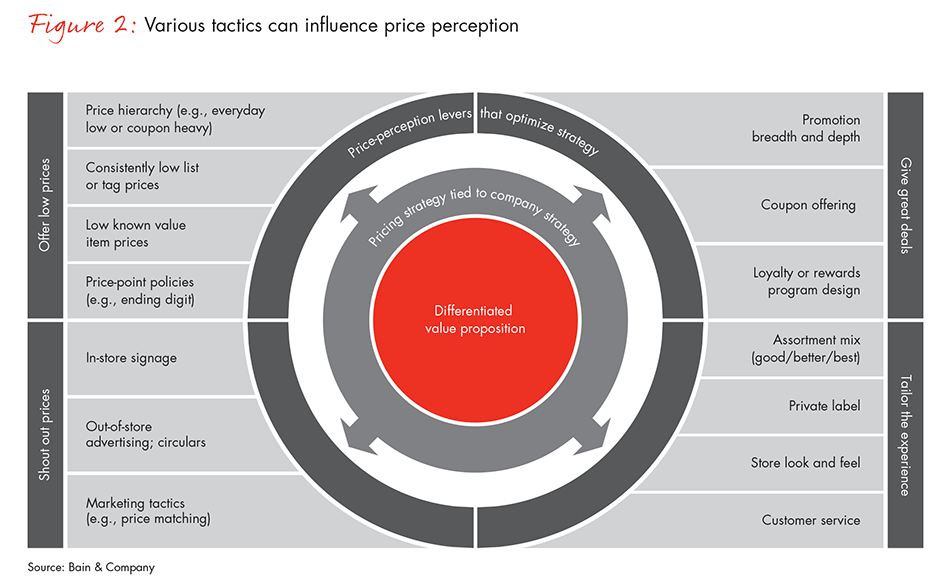
      Companies can choose among more than 15 tactics in these four categories: offering lower prices, shouting out those prices, giving great deals and tailoring the experience (see Figure 2). The right combination, of course, depends on a company’s sector, strategy and proposition to customers.

      perception-in-pricing-fig-2_embed

      A traditional grocer that caters mainly to higher-income customers, for instance, needs to have the whole assortment of grocery items and strong perceived quality. It would focus on very targeted moves, including key value items, promotions and signage, rather than on tactics that would significantly change the proposition, such as out-of-store advertising, price matching or coupons.

      A discount grocer, by contrast, typically uses private-label goods to influence price perceptions. Since its customers are less sensitive to product quality and breadth, the discounter can offer a narrower assortment, letting it present a lower-price and lower-end image in stores.

      To determine which of these tactics to deploy, a company should first gain a deeper understanding of its current price position vs. consumers’ perceptions. Checking its prices against competitors’ prices on comparable items will reveal actual price gaps. Then, determining consumers’ perceptions will show whether and how they perceive those price gaps.

      The next task is to identify the factors that have the strongest influence on perception. These can be gleaned through in-store visits and surveys asking consumers about the retailer’s signage, promotions and so on. Their answers can be compared with responses giving more or less credit than deserved on price positions. If consumers perceive that a chain’s prices are lower than they really are, the analysis can home in on the areas in which consumers think the retailer outperforms.

      Data on the factors forming perception is the foundation of a plan to build an effective price image. The plan will likely include a mix of direct price changes and indirect tactics like rewards programs. Insights from surveys and store visits should link directly to the company’s strategy so that every subsequent price move will create the greatest possible value and stay true to the brand. While pricing perception will advance the overall strategy, it’s not the whole solution; pricing perception should be combined with a solid shelf-price structure.

      Executing a pricing strategy effectively requires that all the relevant parts of the organization—merchandising, marketing, operations, suppliers and the senior executive team—agree on the pricing strategy itself and on the tactics to shape accurate perceptions. Teams responsible for pricing can then continually experiment with pricing tactics to learn what works with particular segments of customers.

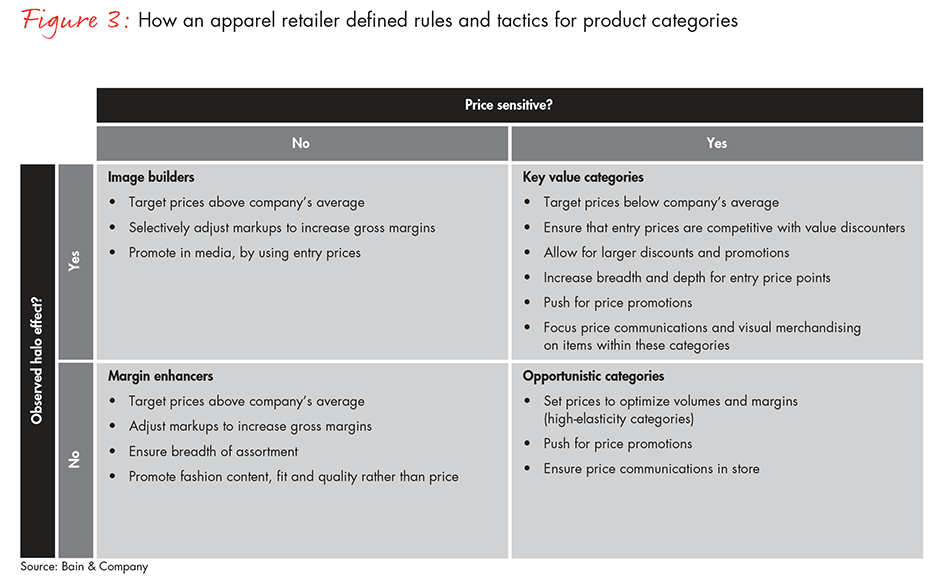
      The experience of a European discount apparel retailer illustrates the power of a disciplined price-perception program. Facing stiff competition from other fashion discounters, the retailer fought back by slashing prices across the board but did not realize the anticipated benefits in price image and sales volume. It decided to step back and take a more nuanced approach. The retailer analyzed its price positions and customer perceptions, which yielded important insights. In a nutshell, consumers incorrectly perceived that the company had higher prices than its key competitor. One reason was that the retailer offered far more price points than its competitors, which confused people. Also, the company discovered that customers were more price sensitive about certain product categories, like children’s T-shirts and adults’ sweaters.

      The retailer defined clear roles for product categories, based on customers’ perceptions of products and whether a category has a halo effect, influencing how people perceive the retailer’s value overall (see Figure 3). It refined communications about pricing so they were consistent with the price images the retailer wanted to portray, and it reduced the number of price points. As a result of the program, the company was able to achieve its target price image, develop stronger internal pricing capabilities and grow revenues by roughly 1%.

      perception-in-pricing-fig-3_embed

      As this retailer discovered, there is a lot more to pricing power than just adjusting prices. Directing investments to lower prices may not supercharge sales. Worse, it might backfire if consumers’ perceptions don’t give the company sufficient credit on its relative price position. Using and properly implementing more indirect tactics, such as signage and private label, on the other hand, may have an outsized impact on pricing perception—a proven and effective route to sustainable gains and profitable revenue growth.

      Sandeep Heda, Stephen Mewborn and Stephen Caine are partners with Bain & Company’s Customer Strategy & Marketing and Retail practices. Mewborn leads Bain’s global pricing work and is based in Chicago. Heda and Caine are based, respectively, in Atlanta and Chicago.

      ROI Consultancy Services provides full-service research, marketing and sales automation, and digital agency support to consultants, investors and corporate clients. For details, visit www.roiconsultancyservices.com or contact Noah Seton (noah.seton@roirocket.com).


      perception-in-pricing-fig-1_full

      perception-in-pricing-fig-2_full

      perception-in-pricing-fig-3_full
      Auteurs
      • Headshot of Sandeep Heda
        Sandeep Heda
        Associé, Atlanta
      • Headshot of Stephen Mewborn
        Stephen Mewborn
        Associé, Chicago
      • Headshot of Stephen Caine
        Stephen Caine
        Associé, Chicago
      Contactez-nous
      Synergies sectorielles
      • Distribution
      Expertises fonctionnelles transverses
      • Stratégie Client et Marketing
      Distribution
      Will Amazon Steal Christmas?

      We examine where and how the online juggernaut is investing this season, and what that means for the rest of the retail landscape.

      Voir plus
      Distribution
      Why Grocers Are Battling Big Over Fresh Food

      Shoppers find the availability of fresh food as important as price when selecting a supermarket. Here’s how to stay competitive.

      Voir plus
      Distribution
      Agentic AI Commerce Hinges on Consumer Trust

      Security, privacy, and institutional trust are the battlegrounds for AI-led payments.

      Voir plus
      Distribution
      Stay Relevant, Spark Energy: Pedro Arnt, CEO dLocal

      How can a hyperscaler grow at lightning speed without losing its soul? 

      Voir plus
      Stratégie Client et Marketing
      What Agency Consolidation Means for CMOs

      As agency holding companies get bigger and deeper, CMOs must rethink ownership, integration, and how to stay in control.

      Voir plus
      First published in décembre 2016
      Mots clés
      • Distribution
      • Stratégie Client et Marketing

      Comment nous avons aidé nos clients

      Stratégie Client et Marketing Inspiring retail employees to think and act like owners

      Lire l’étude de cas

      Amélioration de la Performance Retailer's performance improvement boosts shareholder value

      Lire l’étude de cas

      Digital Omnichannel strategy boosts fashion company

      Lire l’étude de cas

      Vous souhaitez continuer cette conversation ?

      Nous aidons des dirigeants du monde entier à matérialiser des impacts et des résultats pérennes et créateurs de valeur dans leurs organisations.

      Les points de vue de Bain : notre perspective sur des problématiques auxquelles sont confrontées les entreprises à travers le monde, envoyés chaque mois dans votre boîte de réception. 

      *J’ai lu la politique de confidentialité et j’accepte les conditions.

      Merci de lire notre politique de confidentialité.
      Bain & Company
      Contactez-nous Sustainability Accessibility Conditions d’utilisation Politique de Confidentialité Cookie Policy Mentions Légales Sitemap Log In

      © 1996-2026 Bain & Company, Inc.

      Contacter Bain

      Comment pouvons-nous vous aider ?

      • Business inquiry
      • Career information
      • Press relations
      • Partnership request
      • Speaker request
      Voir tous les bureaux