
Skip to Content
  • Offices

    Offices

    North & Latin America
    • Atlanta
    • Austin
    • Bogota
    • Boston
    • Buenos Aires
    • Chicago
    • Dallas
    • Denver
    • Houston
    • Los Angeles
    • Mexico City
    • Minneapolis
    • Monterrey
    • Montreal
    • New York
    • Rio de Janeiro
    • San Francisco
    • Santiago
    • São Paulo
    • Seattle
    • Silicon Valley
    • Toronto
    • Washington, DC
    Europe & Africa
    • Amsterdam
    • Athens
    • Berlin
    • Brussels
    • Copenhagen
    • Dusseldorf
    • Frankfurt
    • Helsinki
    • Istanbul
    • Johannesburg
    • Kyiv
    • Lisbon
    • London
    • Madrid
    • Milan
    • Munich
    • Oslo
    • Paris
    • Rome
    • Stockholm
    • Vienna
    • Warsaw
    • Zurich
    Middle East
    • Doha
    • Dubai
    • Riyadh
    Asia & Australia
    • Bangkok
    • Beijing
    • Bengaluru
    • Brisbane
    • Ho Chi Minh City
    • Hong Kong
    • Jakarta
    • Kuala Lumpur
    • Manila
    • Melbourne
    • Mumbai
    • New Delhi
    • Perth
    • Seoul
    • Shanghai
    • Singapore
    • Sydney
    • Tokyo
    See all offices
  • Alumni
  • Media Center
  • Subscribe
  • Contact
  • Global | English

    Select your region and language

    Global
    • Global (English)
    North & Latin America
    • Brazil (Português)
    • Argentina (Español)
    • Canada (Français)
    • Chile (Español)
    • Colombia (Español)
    Europe, Middle East, & Africa
    • France (Français)
    • DACH Region (Deutsch)
    • Italy (Italiano)
    • Spain (Español)
    • Greece (Elliniká)
    Asia & Australia
    • China (中文版)
    • Korea (한국어)
    • Japan (日本語)
  • Saved items (0)
    Saved items (0)

    You have no saved items.

    Bookmark content that interests you and it will be saved here for you to read or share later.

    Explore Bain Insights
  • Industries
    Main menu

    Industries

    • Aerospace & Defense
    • Agribusiness
    • Chemicals
    • Construction & Infrastructure
    • Consumer Products
    • Financial Services
    • Healthcare & Life Sciences
    • Industrial Machinery & Equipment
    • Media & Entertainment
      Industries
      Media & Entertainment
      • Media Lab
    • Metals
    • Mining
    • Oil & Gas
    • Paper & Packaging
    • Private Equity
      Industries
      Private Equity
      • Due Diligence
      • Exit Planning
      • Firm Strategy & Operations
      • Portfolio Value Creation
    • Social Impact
    • Retail
    • Technology
    • Telecommunications
      Industries
      Telecommunications
      • Capital Expenditure
      • Telco Digital Transformation
    • Transportation
    • Travel & Leisure
    • Utilities & Renewables
  • Consulting Services
    Main menu

    Consulting Services

    • Customer Experience
    • Sustainability
    • Innovation
    • M&A
    • Operations
    • People & Organization
    • Private Equity
    • Sales & Marketing
    • Strategy
    • AI, Insights, and Solutions
    • Technology
    • Transformation
  • Digital
  • Insights
    Main menu

    Insights

    • Industry Insights
    • Services Insights
    • Bain Books
    • Webinars
    • Bain Futures
    View all Insights
    Featured topics
    • Tariff Response
    • Artificial Intelligence
    • Thriving in Uncertainty
    • Executive Conversations
    • Macro Trends
    • M&A Report
    • Healthcare Private Equity Report
    • Paper & Packaging Report
    • Technology Report
    • CEO's Guide to Sustainability
    • CEO Insights
    • CFO Insights
    • COO Insights
    • CIO Insights
    • CMO Insights
    View all featured topics
  • About
    Main menu

    About

    • What We Do
    • What We Believe
    • Our People & Leadership
    • Client Results
    • Awards & Recognition
    • Global Affiliations
    Further: Our global responsibility
    • Sustainability
    • Social Impact
    • World Economic Forum
    Learn more about Further
  • Careers
    Main menu

    Careers

    • Work with Us
      Careers
      Work with Us
      • Find Your Place
      • Our Work Areas
      • Integrated Teams
      • Students
      • Internships & Programs
      • Recruiting Events
    • Life at Bain
      Careers
      Life at Bain
      • Blog: Inside Bain
      • Career Stories
      • Our People
      • Where We Work
      • Supporting Your Growth
      • Affinity Groups
      • Benefits
    • Impact Stories
    • Hiring Process
      Careers
      Hiring Process
      • What to Expect
      • Interviewing
    FIND JOBS
  • Offices
    Main menu

    Offices

    • North & Latin America
      Offices
      North & Latin America
      • Atlanta
      • Austin
      • Bogota
      • Boston
      • Buenos Aires
      • Chicago
      • Dallas
      • Denver
      • Houston
      • Los Angeles
      • Mexico City
      • Minneapolis
      • Monterrey
      • Montreal
      • New York
      • Rio de Janeiro
      • San Francisco
      • Santiago
      • São Paulo
      • Seattle
      • Silicon Valley
      • Toronto
      • Washington, DC
    • Europe & Africa
      Offices
      Europe & Africa
      • Amsterdam
      • Athens
      • Berlin
      • Brussels
      • Copenhagen
      • Dusseldorf
      • Frankfurt
      • Helsinki
      • Istanbul
      • Johannesburg
      • Kyiv
      • Lisbon
      • London
      • Madrid
      • Milan
      • Munich
      • Oslo
      • Paris
      • Rome
      • Stockholm
      • Vienna
      • Warsaw
      • Zurich
    • Middle East
      Offices
      Middle East
      • Doha
      • Dubai
      • Riyadh
    • Asia & Australia
      Offices
      Asia & Australia
      • Bangkok
      • Beijing
      • Bengaluru
      • Brisbane
      • Ho Chi Minh City
      • Hong Kong
      • Jakarta
      • Kuala Lumpur
      • Manila
      • Melbourne
      • Mumbai
      • New Delhi
      • Perth
      • Seoul
      • Shanghai
      • Singapore
      • Sydney
      • Tokyo
    See all offices
  • Alumni
  • Media Center
  • Subscribe
  • Contact
  • Global | English
    Main menu

    Select your region and language

    • Global
      Select your region and language
      Global
      • Global (English)
    • North & Latin America
      Select your region and language
      North & Latin America
      • Brazil (Português)
      • Argentina (Español)
      • Canada (Français)
      • Chile (Español)
      • Colombia (Español)
    • Europe, Middle East, & Africa
      Select your region and language
      Europe, Middle East, & Africa
      • France (Français)
      • DACH Region (Deutsch)
      • Italy (Italiano)
      • Spain (Español)
      • Greece (Elliniká)
    • Asia & Australia
      Select your region and language
      Asia & Australia
      • China (中文版)
      • Korea (한국어)
      • Japan (日本語)
  • Saved items  (0)
    Main menu
    Saved items (0)

    You have no saved items.

    Bookmark content that interests you and it will be saved here for you to read or share later.

    Explore Bain Insights
  • Industries
    • Industries

      • Aerospace & Defense
      • Agribusiness
      • Chemicals
      • Construction & Infrastructure
      • Consumer Products
      • Financial Services
      • Healthcare & Life Sciences
      • Industrial Machinery & Equipment
      • Media & Entertainment
      • Metals
      • Mining
      • Oil & Gas
      • Paper & Packaging
      • Private Equity
      • Social Impact
      • Retail
      • Technology
      • Telecommunications
      • Transportation
      • Travel & Leisure
      • Utilities & Renewables
  • Consulting Services
    • Consulting Services

      • Customer Experience
      • Sustainability
      • Innovation
      • M&A
      • Operations
      • People & Organization
      • Private Equity
      • Sales & Marketing
      • Strategy
      • AI, Insights, and Solutions
      • Technology
      • Transformation
  • Digital
  • Insights
    • Insights

      • Industry Insights
      • Services Insights
      • Bain Books
      • Webinars
      • Bain Futures
      View all Insights
      Featured topics
      • Tariff Response
      • Artificial Intelligence
      • Thriving in Uncertainty
      • Executive Conversations
      • Macro Trends
      • M&A Report
      • Healthcare Private Equity Report
      • Paper & Packaging Report
      • Technology Report
      • CEO's Guide to Sustainability
      • CEO Insights
      • CFO Insights
      • COO Insights
      • CIO Insights
      • CMO Insights
      View all featured topics
  • About
    • About

      • What We Do
      • What We Believe
      • Our People & Leadership
      • Client Results
      • Awards & Recognition
      • Global Affiliations
      Further: Our global responsibility
      • Sustainability
      • Social Impact
      • World Economic Forum
      Learn more about Further
  • Careers
    Popular Searches
    • Agile
    • Digital
    • Strategy
    Your Previous Searches
      Recently Visited Pages

      Content added to saved items

      Saved items (0)

      Removed from saved items

      Saved items (0)

      Brief

      Achilles’ Heel to Accelerator: How Digital Can Create Sustainability Leadership

      Achilles’ Heel to Accelerator: How Digital Can Create Sustainability Leadership

      Companies need to upgrade their technology to meet sustainability goals, but few believe that they have the capabilities to do so today.

      By Uwe Schmid, Adam Cox, and Donna Enverga

      • min read
      }

      Brief

      Achilles’ Heel to Accelerator: How Digital Can Create Sustainability Leadership
      en
      At a Glance
      • Technology and data capabilities are constraints for many companies looking to address sustainability.
      • Compliance is often the initial impetus, but many companies also invest in digital tech to meet ambitious sustainability goals and create new opportunities.
      • Some leaders are already developing platforms that allow them and their customers to improve sustainability on emissions, water use, and supply chain issues.
      • Developing these capabilities takes time, so leaders should already be well underway.

      Leaders understand that sustainability is now part of enterprise growth strategy. Sustainability isn't just about compliance; leadership generates real value through new products, customer loyalty, stakeholder buy-in, and better margins. Companies are expected to monitor and report not just carbon emissions but also other aspects of sustainability such as water use, waste management, and supply chain ethics. Meeting these obligations requires companies to invest in new technology systems, often complementing and accelerating existing initiatives to modernize IT.

      Having the right data and deploying the appropriate technology to collect, analyze, and report on it is the starting point for most sustainability efforts. More than 88% of executives surveyed by Bain agree that improvements in digital technology are critical for advancing their sustainability goals, but most say that they are not taking the actions needed to make that happen. Only 24% of companies say that they are ready for future reporting needs—a potentially worrying statistic since it can take years to build up these capabilities.

      Technology will be essential to meet the broad public commitments that some companies are making. At the company level, decisions about how to improve sustainability—for example, which vendors to work with, which technologies to invest in—will need to rely on actual data on the company’s performance.

      Beyond compliance, the potential to create new value has many companies deploying technology focused on new initiatives. They have integrated sustainability into their strategy, metrics, and operating model, and technology teams are partnering with business leaders to shape the roadmap and build new sustainability-oriented digital products and services.

      For example, a European dairy producer saw an opportunity to reduce emissions quickly and to commercialize the improvements by developing a comprehensive platform to track its Scope 3 emissions and help its farmer partners also reduce their emissions. Most emission reduction goals focus on Scope 1 (direct emissions from a company’s activity) and Scope 2 (emissions from purchased electricity, heat, and steam), which companies have more control over, but in dairy, most emissions are on-farm, Scope 3. This dairy producer leveraged existing systems combined with tailored solutions, including automated data collection via sensors and third-party partners to collect, process, and aggregate data from farmers and other providers. This platform allows the company and the farmers to identify the areas that need work and to get recommendations on the actions that would improve them.

      The reporting challenge: Beyond compliance

      The dairy producer’s opportunity sprang from its desire to become an industry leader while meeting the regulatory requirements for reporting on emissions. Since the regulatory landscape is shifting and expanding rapidly, companies need to anticipate additional reporting requirements. The EU’s Corporate Sustainability Reporting Directive mandates that EU companies start reporting on their greenhouse gas emissions and other environmental factors by 2025. In California, large companies will need to report on Scope 1 and Scope 2 emissions by 2026, and Scope 3 emissions by 2027—not far off, considering the time it takes to put these systems in place. And carbon emissions are just the beginning: Increasingly, regulations will enforce other aspects of sustainability, such as Germany’s Supply Chain Due Diligence Act (and the upcoming EU directive), which requires companies to set up risk management systems to ensure that human rights and other social standards are being met in the production of goods.

      Measuring sustainability requires a cross-functional perspective: Companies need to understand the material flows (supply chain), manufacturing footprint (operations), impacts on people (human resources), customers’ product use (sales), and the fiscal instruments that support it all (finance). In many cases, the necessary data isn’t sitting in company systems and needs to be manually gathered until a process or tool can be built or acquired to automate it. Most companies will need to invest in new technology and talent to enable auditability as they move from industry averages to actual measurements of their own company and value chain (see Figure 1).

      Figure 1
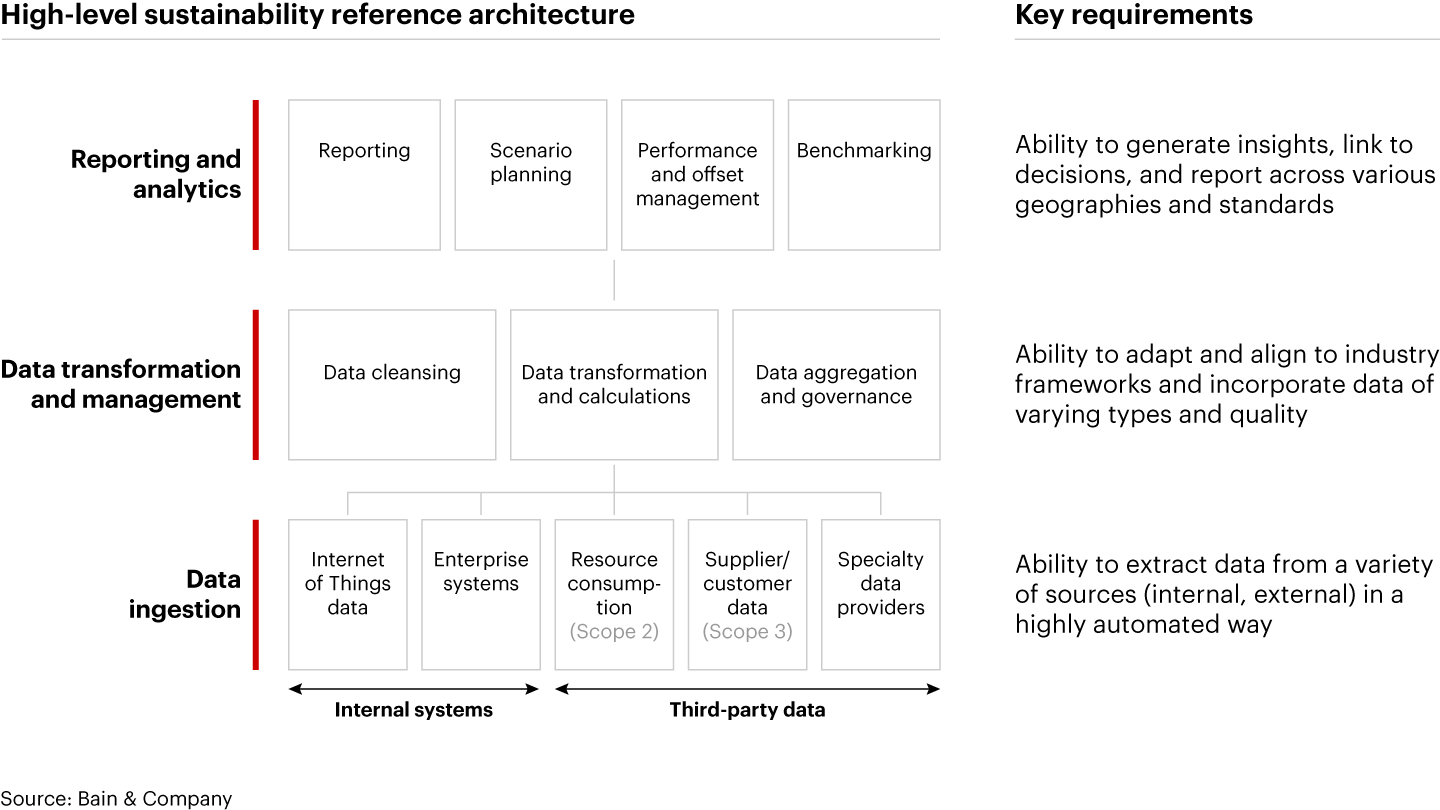
      A digital architecture for sustainability shows how data is collected, analyzed, reported, and implemented

      As companies make sustainability commitments that go beyond carbon emissions—for example, pertaining to water usage or labor practices—tech and business leaders will need to be closely aligned on priorities. Each company will have to decide which objectives are most important to their business so that they can invest in the technology tools, data capabilities, and talent necessary to fulfill those objectives.

      Deploying technology to meet sustainability objectives

      Sustainability within IT’s operations is table stakes for enterprise technology leaders. Across industries, enterprise technology typically represents, on average, about 25% of a company’s Scope 1 and Scope 2 emissions. Large data centers can consume 3 million to 5 million gallons of water daily, and end user devices (laptops, tablets, mobile phones) often consume more electricity than needed and contribute to a company’s electronic waste load. Developing systems to minimize these impacts helps to build the capabilities that will serve the entire organization.

      Beyond IT, enterprise technology is critical for monitoring and analyzing the data that executives depend on to understand baselines and set ambitions based on priorities. Companies will need to set sustainability goals that align with the existing technology roadmap. Sustainability objectives can help turbocharge the business case for modernizing legacy technology and migrating to cloud workloads, so it makes sense to align the efforts.

      Some sustainability investments deliver results fairly quickly, such as reducing data center utility costs by increasing the temperature. In other cases, companies will invest in areas with less immediate payback, such as skills-based hiring, which is a recruitment strategy that emphasizes competencies over formal education or previous job titles. One bank started by understanding its baseline for carbon emissions and then prioritized initiatives based on impact and feasibility. Since there is no universal standard on how vendors report Scope 3 emissions, the bank also defined guidelines about which information it would consider when ranking vendors by emissions. These and other measures support the bank’s goal of reducing its carbon emissions by 15% between 2022 and 2025 (see Figure 2).

      Figure 2
      As companies develop their digital capabilities to measure and manage sustainability, they build the skills necessary to meet future demands

      Reinventing to create new value

      In some cases, the focus on sustainability encourages the development of new products and services that can increase revenue and build value. And that trend appears to be growing: A recent survey found that nearly 90% of Generation X consumers say that they would spend at least 10% more for sustainable products, up from 34% in 2019. A software company that provides tools for managing construction projects tapped into this trend by making sustainability a cornerstone of is value creation plan. It started by developing a better understanding of its customers’ sustainability priorities and then quantified how its software helped customers meet their goals, such as avoiding carbon emissions during construction. Through improved marketing of its software’s contributions to sustainability, the company is experiencing an increase in revenue worth at least €5 million between 2021 and 2024.

      In another case, a large fintech company wanted to improve its sustainability ratings after its initial baseline assessment fell below expectations. The company engaged the board and top management in cocreation workshops to define new sustainability goals and initiatives to improve its ratings. It rolled out several quick-win initiatives and began to disclose sustainability metrics on its website. Through these early moves, the company outlined a high-level sustainability transformation plan that included an analytical and scalable approach to map and report successes. At a more granular level, it defined specific actions to take to improve the metrics that agencies consider in assigning their ratings.

      The path forward

      For companies that have made aggressive public commitments and aspire to make sustainability an important part of their brand, technology could become the bottleneck preventing them from delivering on those commitments. There’s no single, correct approach, and the systems necessary to monitor, analyze, and report on sustainability objectives—not to mention platforms that could deliver real value to partners and customers—take time and talent to build.

      The leaders in this space have been investing in custom solutions to support their sustinability efforts for more than a decade. While some large software vendors are beginning to include sustainability measurement in their products, the application landscape is still immature. Companies that are just getting started have some catching up to do, and most know it: Only about one-third of the executives we surveyed with high sustainability ambitions believed that they have the technology necessary to deliver on them. Leaders and disrupters alike will need to move quickly to catch up and tap sustainability as a competitive advantage.

      About the research

      Gerson Lehrman Group (GLG) facilitated this survey for Bain on its platform utilizing its Network Members, independent industry professionals, consultants and other individuals within GLG’s network. For more information about GLG’s business, go to glginsights.com. The survey and presentation of the survey results in these materials were created by Bain, and GLG shall have no liability with respect to or in connection with the results provided in these materials or the survey.

      Authors
      • Uwe Schmid
        Expert Associate Partner, Frankfurt
      • Headshot of Adam Cox
        Adam Cox
        Partner, Dallas
      • Headshot of Donna Enverga
        Donna Enverga
        Partner, Melbourne
      Contact us
      Related Consulting Services
      • Digital
      • Enterprise Technology
      • Sustainability
      How We Can Help
      • Climate Change
      Climate Change
      AI and Power: A Marriage of Necessity

      Tech and utilities are an unlikely pair, but how well they balance data center electricity demand and finite energy resources will have huge implications.

      Read More
      Climate Change
      Financing Climate Solutions in Brazil

      A study conducted by Bain, in partnership with BNDES, highlights both the challenges and the opportunities to accelerate the climate transition.

      Read More
      Enterprise Technology
      Five Themes That Will Fundamentally Change Wholesale Banking

      Slower growth raises new challenges around technology, talent, and environmental issues.

      Read More
      Climate Change
      COP30: What Businesses Need to Do Now

      At this year’s COP30 in Brazil, the message for businesses was clear: Climate strategy can’t just be commitments—it must be about execution.

      Read More
      Enterprise Technology
      Most Enterprise Technology Functions Have Set Sustainability Goals

      Nearly as many have prioritized initiatives to meet those goals, but fewer are using software to track ESG metrics.

      Read More
      Published in May 2024
      Tags
      • Climate Change
      • Digital
      • Enterprise Technology
      • Sustainability

      How We've Helped Clients

      Digital A European Banking Giant Rises to the Fintech Challenge

      Read case study

      Sustainability A Manufacturer Vows to “Push to Zero” Carbon Emissions

      Read case study

      Sustainability A Powerful Carbon Accounting Platform Helps IndustrialCo Optimize Its ESG Strategy

      Read case study

      Ready to talk?

      We work with ambitious leaders who want to define the future, not hide from it. Together, we achieve extraordinary outcomes.

      Stay ahead in a rapidly changing world. Subscribe to Bain Insights, our monthly look at the critical issues facing global businesses.

      *I have read and understand Bain’s Privacy Notice.

      Please read and agree to the Privacy Policy.
      Bain & Company
      Contact us Sustainability Accessibility Terms of use Privacy Modern Slavery Act Statement Cookie Policy Sitemap Log In

      © 1996-2026 Bain & Company, Inc.

      Contact Bain

      How can we help you?

      • Business inquiry
      • Career information
      • Press relations
      • Partnership request
      • Speaker request
      See all offices