
Skip to Content
  • Offices

    Offices

    North & Latin America
    • Atlanta
    • Austin
    • Bogota
    • Boston
    • Buenos Aires
    • Chicago
    • Dallas
    • Denver
    • Houston
    • Los Angeles
    • Mexico City
    • Minneapolis
    • Monterrey
    • Montreal
    • New York
    • Rio de Janeiro
    • San Francisco
    • Santiago
    • São Paulo
    • Seattle
    • Silicon Valley
    • Toronto
    • Washington, DC
    Europe & Africa
    • Amsterdam
    • Athens
    • Berlin
    • Brussels
    • Copenhagen
    • Dusseldorf
    • Frankfurt
    • Helsinki
    • Istanbul
    • Johannesburg
    • Kyiv
    • Lisbon
    • London
    • Madrid
    • Milan
    • Munich
    • Oslo
    • Paris
    • Rome
    • Stockholm
    • Vienna
    • Warsaw
    • Zurich
    Middle East
    • Doha
    • Dubai
    • Riyadh
    Asia & Australia
    • Bangkok
    • Beijing
    • Bengaluru
    • Brisbane
    • Ho Chi Minh City
    • Hong Kong
    • Jakarta
    • Kuala Lumpur
    • Manila
    • Melbourne
    • Mumbai
    • New Delhi
    • Perth
    • Seoul
    • Shanghai
    • Singapore
    • Sydney
    • Tokyo
    See all offices
  • Alumni
  • Media Center
  • Subscribe
  • Contact
  • Global | English

    Select your region and language

    Global
    • Global (English)
    North & Latin America
    • Brazil (Português)
    • Argentina (Español)
    • Canada (Français)
    • Chile (Español)
    • Colombia (Español)
    Europe, Middle East, & Africa
    • France (Français)
    • DACH Region (Deutsch)
    • Italy (Italiano)
    • Spain (Español)
    • Greece (Elliniká)
    Asia & Australia
    • China (中文版)
    • Korea (한국어)
    • Japan (日本語)
  • Saved items (0)
    Saved items (0)

    You have no saved items.

    Bookmark content that interests you and it will be saved here for you to read or share later.

    Explore Bain Insights
  • Industries
    Main menu

    Industries

    • Aerospace & Defense
    • Agribusiness
    • Chemicals
    • Construction & Infrastructure
    • Consumer Products
    • Financial Services
    • Healthcare & Life Sciences
    • Industrial Machinery & Equipment
    • Media & Entertainment
      Industries
      Media & Entertainment
      • Media Lab
    • Metals
    • Mining
    • Oil & Gas
    • Paper & Packaging
    • Private Equity
      Industries
      Private Equity
      • Due Diligence
      • Exit Planning
      • Firm Strategy & Operations
      • Portfolio Value Creation
    • Social Impact
    • Retail
    • Technology
    • Telecommunications
      Industries
      Telecommunications
      • Capital Expenditure
      • Telco Digital Transformation
    • Transportation
    • Travel & Leisure
    • Utilities & Renewables
  • Consulting Services
    Main menu

    Consulting Services

    • Customer Experience
    • Sustainability
    • Innovation
    • M&A
    • Operations
    • People & Organization
    • Private Equity
    • Sales & Marketing
    • Strategy
    • AI, Insights, and Solutions
    • Technology
    • Transformation
  • Digital
  • Insights
    Main menu

    Insights

    • Industry Insights
    • Services Insights
    • Bain Books
    • Webinars
    • Bain Futures
    View all Insights
    Featured topics
    • Tariff Response
    • Artificial Intelligence
    • Thriving in Uncertainty
    • Executive Conversations
    • Macro Trends
    • M&A Report
    • Healthcare Private Equity Report
    • Paper & Packaging Report
    • Technology Report
    • CEO's Guide to Sustainability
    • CEO Insights
    • CFO Insights
    • COO Insights
    • CIO Insights
    • CMO Insights
    View all featured topics
  • About
    Main menu

    About

    • What We Do
    • What We Believe
    • Our People & Leadership
    • Client Results
    • Awards & Recognition
    • Global Affiliations
    Further: Our global responsibility
    • Sustainability
    • Social Impact
    • World Economic Forum
    Learn more about Further
  • Careers
    Main menu

    Careers

    • Work with Us
      Careers
      Work with Us
      • Find Your Place
      • Our Work Areas
      • Integrated Teams
      • Students
      • Internships & Programs
      • Recruiting Events
    • Life at Bain
      Careers
      Life at Bain
      • Blog: Inside Bain
      • Career Stories
      • Our People
      • Where We Work
      • Supporting Your Growth
      • Affinity Groups
      • Benefits
    • Impact Stories
    • Hiring Process
      Careers
      Hiring Process
      • What to Expect
      • Interviewing
    FIND JOBS
  • Offices
    Main menu

    Offices

    • North & Latin America
      Offices
      North & Latin America
      • Atlanta
      • Austin
      • Bogota
      • Boston
      • Buenos Aires
      • Chicago
      • Dallas
      • Denver
      • Houston
      • Los Angeles
      • Mexico City
      • Minneapolis
      • Monterrey
      • Montreal
      • New York
      • Rio de Janeiro
      • San Francisco
      • Santiago
      • São Paulo
      • Seattle
      • Silicon Valley
      • Toronto
      • Washington, DC
    • Europe & Africa
      Offices
      Europe & Africa
      • Amsterdam
      • Athens
      • Berlin
      • Brussels
      • Copenhagen
      • Dusseldorf
      • Frankfurt
      • Helsinki
      • Istanbul
      • Johannesburg
      • Kyiv
      • Lisbon
      • London
      • Madrid
      • Milan
      • Munich
      • Oslo
      • Paris
      • Rome
      • Stockholm
      • Vienna
      • Warsaw
      • Zurich
    • Middle East
      Offices
      Middle East
      • Doha
      • Dubai
      • Riyadh
    • Asia & Australia
      Offices
      Asia & Australia
      • Bangkok
      • Beijing
      • Bengaluru
      • Brisbane
      • Ho Chi Minh City
      • Hong Kong
      • Jakarta
      • Kuala Lumpur
      • Manila
      • Melbourne
      • Mumbai
      • New Delhi
      • Perth
      • Seoul
      • Shanghai
      • Singapore
      • Sydney
      • Tokyo
    See all offices
  • Alumni
  • Media Center
  • Subscribe
  • Contact
  • Global | English
    Main menu

    Select your region and language

    • Global
      Select your region and language
      Global
      • Global (English)
    • North & Latin America
      Select your region and language
      North & Latin America
      • Brazil (Português)
      • Argentina (Español)
      • Canada (Français)
      • Chile (Español)
      • Colombia (Español)
    • Europe, Middle East, & Africa
      Select your region and language
      Europe, Middle East, & Africa
      • France (Français)
      • DACH Region (Deutsch)
      • Italy (Italiano)
      • Spain (Español)
      • Greece (Elliniká)
    • Asia & Australia
      Select your region and language
      Asia & Australia
      • China (中文版)
      • Korea (한국어)
      • Japan (日本語)
  • Saved items  (0)
    Main menu
    Saved items (0)

    You have no saved items.

    Bookmark content that interests you and it will be saved here for you to read or share later.

    Explore Bain Insights
  • Industries
    • Industries

      • Aerospace & Defense
      • Agribusiness
      • Chemicals
      • Construction & Infrastructure
      • Consumer Products
      • Financial Services
      • Healthcare & Life Sciences
      • Industrial Machinery & Equipment
      • Media & Entertainment
      • Metals
      • Mining
      • Oil & Gas
      • Paper & Packaging
      • Private Equity
      • Social Impact
      • Retail
      • Technology
      • Telecommunications
      • Transportation
      • Travel & Leisure
      • Utilities & Renewables
  • Consulting Services
    • Consulting Services

      • Customer Experience
      • Sustainability
      • Innovation
      • M&A
      • Operations
      • People & Organization
      • Private Equity
      • Sales & Marketing
      • Strategy
      • AI, Insights, and Solutions
      • Technology
      • Transformation
  • Digital
  • Insights
    • Insights

      • Industry Insights
      • Services Insights
      • Bain Books
      • Webinars
      • Bain Futures
      View all Insights
      Featured topics
      • Tariff Response
      • Artificial Intelligence
      • Thriving in Uncertainty
      • Executive Conversations
      • Macro Trends
      • M&A Report
      • Healthcare Private Equity Report
      • Paper & Packaging Report
      • Technology Report
      • CEO's Guide to Sustainability
      • CEO Insights
      • CFO Insights
      • COO Insights
      • CIO Insights
      • CMO Insights
      View all featured topics
  • About
    • About

      • What We Do
      • What We Believe
      • Our People & Leadership
      • Client Results
      • Awards & Recognition
      • Global Affiliations
      Further: Our global responsibility
      • Sustainability
      • Social Impact
      • World Economic Forum
      Learn more about Further
  • Careers
    Popular Searches
    • Agile
    • Digital
    • Strategy
    Your Previous Searches
      Recently Visited Pages

      Content added to saved items

      Saved items (0)

      Removed from saved items

      Saved items (0)

      Report

      Divestitures: Greater Preparation Equals Greater Value

      Divestitures: Greater Preparation Equals Greater Value

      Companies tend to undervalue the asset they’re divesting.

      By Les Baird, David Harding, Andrei Vorobyov, Jim Wininger, Jorge Rujana and Shikha Dhar

      • min read
      }

      Report

      Divestitures: Greater Preparation Equals Greater Value
      en
      At a Glance
      • An active and ongoing portfolio management strategy involving regular acquisitions and divestitures always beats ambitious portfolio transformations.
      • In today’s disruptive environment, divestitures are instrumental to accelerate the transition to a future portfolio; they release the time, talent, energy and capital tied up in nonstrategic businesses.
      • In practice, many companies delay and underprepare for divestitures, resulting in value leakage.
      • Systematic preparation helps divesting companies get ahead of common divesting pitfalls—for both proactive divestitures and regulator-mandated ones.

      This article is Section 4.4 of Bain's 2020 Global Corporate M&A Report. Explore our latest annual M&A report here.

      Divestitures can create value when done proactively

      Divestitures are quite common. On average, almost two-thirds of strategic deals, by value, involved divestitures over the past decade. Timely divestments can accelerate the transition to a future portfolio by releasing the time, talent and energy tied up in nonstrategic businesses. Divestments are also a source of capital to fuel growth. Some companies use this lever more frequently and to greater effect than others do.

      Our extensive research on M&A value creation over the past two decades shows that frequent acquirers outperform other companies (see Figure 4.7, left panel). We define frequent acquirers as companies that make at least 10 acquisitions within a decade. What also stands out is that these companies are active portfolio managers that both acquire and divest proactively. We found almost 91% of frequent acquirers divest and that they divest around 2.5 times more than others (see Figure 4.7, middle and right panels).

      Figure 4.7
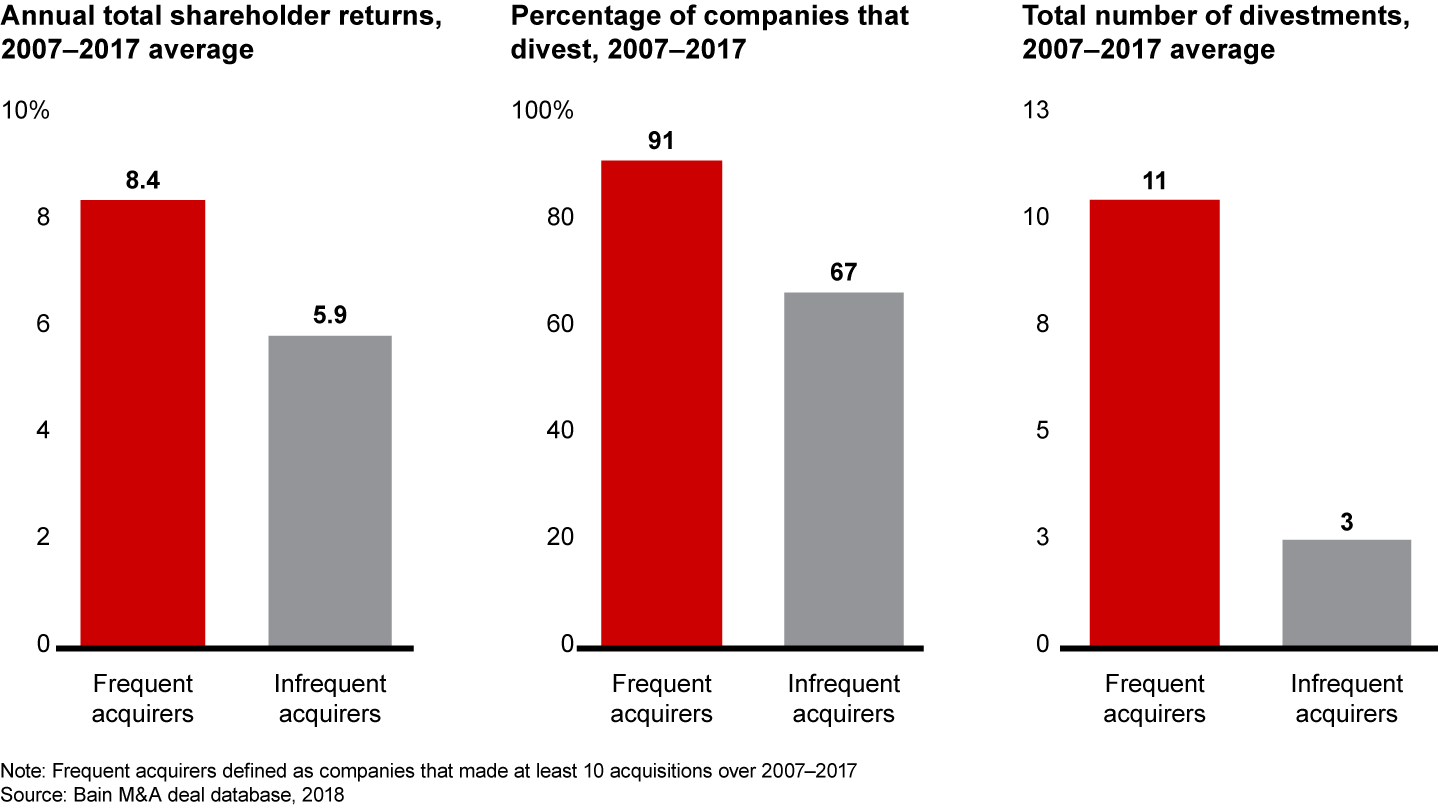
      Frequent acquirers outperform—91% of them actively divest and do so significantly more than others
      Frequent acquirers outperform—91% of them actively divest and do so significantly more than others
      Frequent acquirers outperform—91% of them actively divest and do so significantly more than others

      M&A practitioners also agree that divestitures can be value-creating transactions. In a recent senior executive survey on M&A and divestitures, about 200 respondents who had experience with divestitures reported that about two-thirds of their divestitures met or exceeded expectations and created value for the company.

      Holding on to assets past their due date destroys value

      Despite the value in making timely divestitures, roughly 60% of our survey respondents reported that divestment decisions take longer than other strategic decisions. They say action often is delayed by months, if not years. The biggest cause of delay is waiting for better market conditions—that is, hoping for a better sale price (see Figure 4.8). Among the other reasons for delay were difficulty in separating operations, legacy/cultural resistance, deprioritizing divestitures, and concerns about stranded costs and dis-synergies.

      Figure 4.8
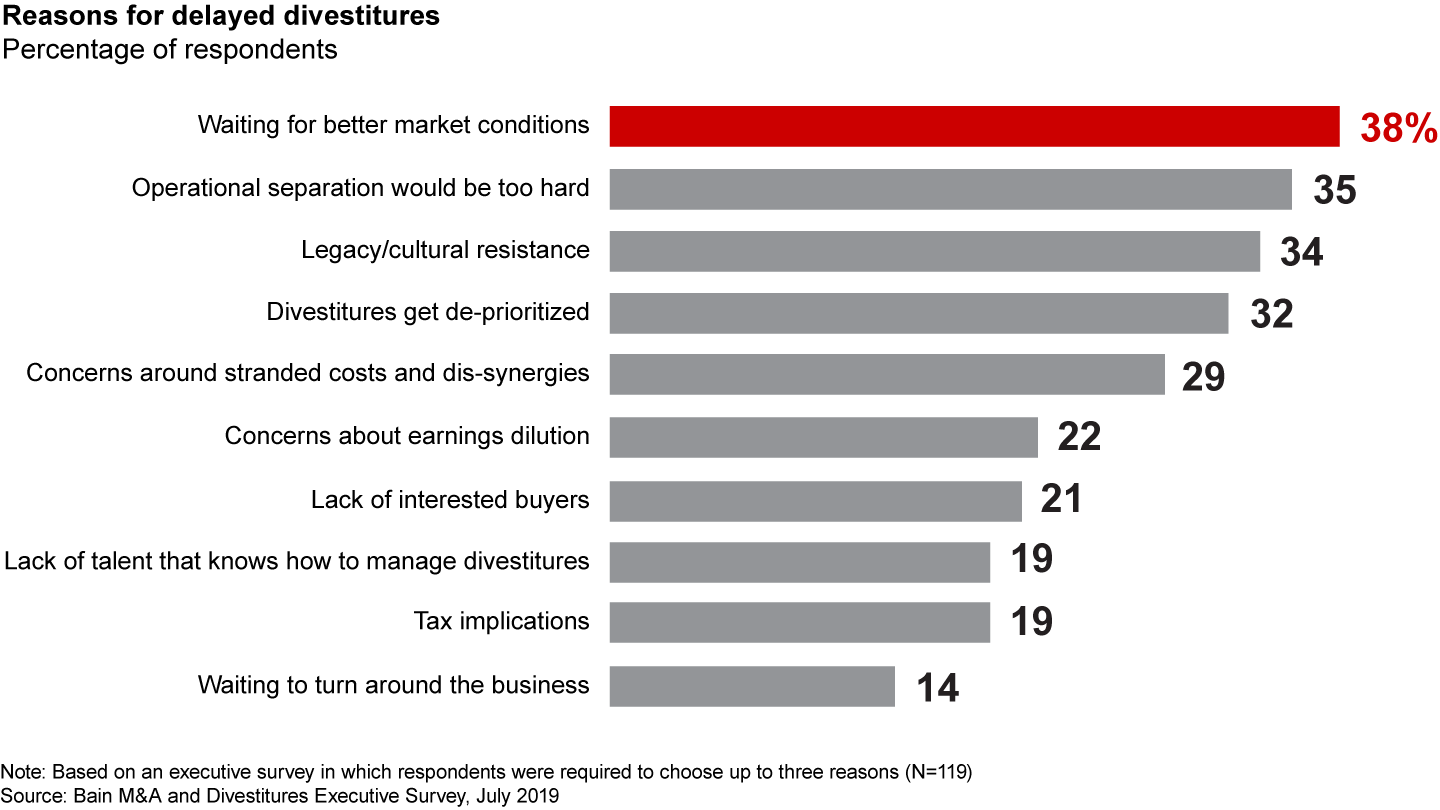
      Main reasons for delayed divestitures include timing the market as well as cultural and operational issues
      Main reasons for delayed divestitures include timing the market as well as cultural and operational issues
      Main reasons for delayed divestitures include timing the market as well as cultural and operational issues

      We believe that operational concerns, such as the complexity of functional separation or the challenge of assessing and mitigating stranded costs and dis-synergies, are all addressable with better preparation.

      Cultural reasons for delaying divestitures are harder to navigate and lead to tremendous value leakage. They come in various forms. There is the hold-and-hope mentality in which a company expects the business to turn around. There are concerns about shrinking the size of the business, or companies simply deprioritize divestitures on the belief that the business impact is minimal. There may also be a fear of exposing a bad business to the market. Overall performance and investor reaction to divestitures shows that these are generally unfounded concerns.

      Companies should instead change the narrative to one in which they honestly ask who the right parent is and then find that parent for their nonstrategic businesses. Delays in divestitures not only stop a company from fully focusing on its strategic growth businesses but also weaken the nonstrategic businesses in the process. For the majority of corporates, capital is limited, and assets tagged nonstrategic are the first to see funding cuts. This perpetuates a cycle of value erosion over time (see Figure 4.9). If getting good value for the business was a concern at the starting point, it’s certainly a bigger concern after a period of value erosion. The bottom line: Companies need to act faster when it comes to divestitures.

      Figure 4.9
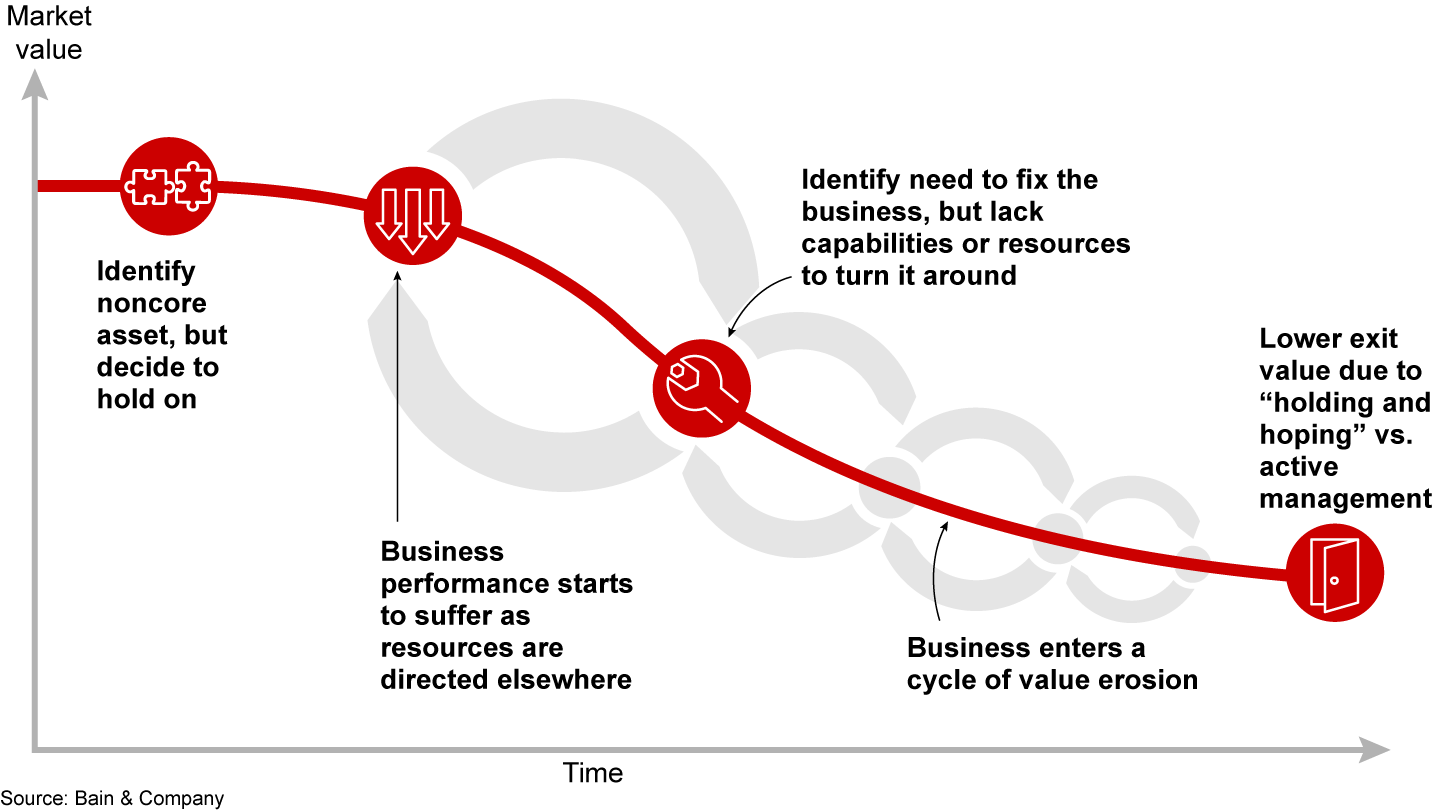
      The delayed divestiture doom loop
      The delayed divestiture doom loop
      The delayed divestiture doom loop

      A little preparation goes a long way in getting your fair share

      Once a company decides to divest, the question is whether that company is getting its fair share of value. Our experience shows corporates tend to underestimate the value of the assets they are divesting.

      Private equity firms are eager to buy corporate carve-out assets. Yet while companies may hold off on divestitures, awaiting a better sale price, the bigger issue is that they don’t capture their fair share of value from carve-outs when they do sell because they are underprepared. It is a particularly important issue when corporates go up against sophisticated PE buyers.

      Several PE transactions involving corporate carve-outs illustrate this situation. For example, in October 2018, a Blackstone-led consortium acquired 55% of Thomson Reuters’ financial and risk unit, valuing the business at $20 billion. This asset was proposed to be sold within a year to the London Stock Exchange at a valuation about 35% higher, at $26.7 billion.

      Our senior executive survey shows that a clear strategic rationale and adequate preparation lead to success in divestitures (see Figure 4.10). Applying the PE playbook to maximizing exit value is the best way to prepare.

      Figure 4.10
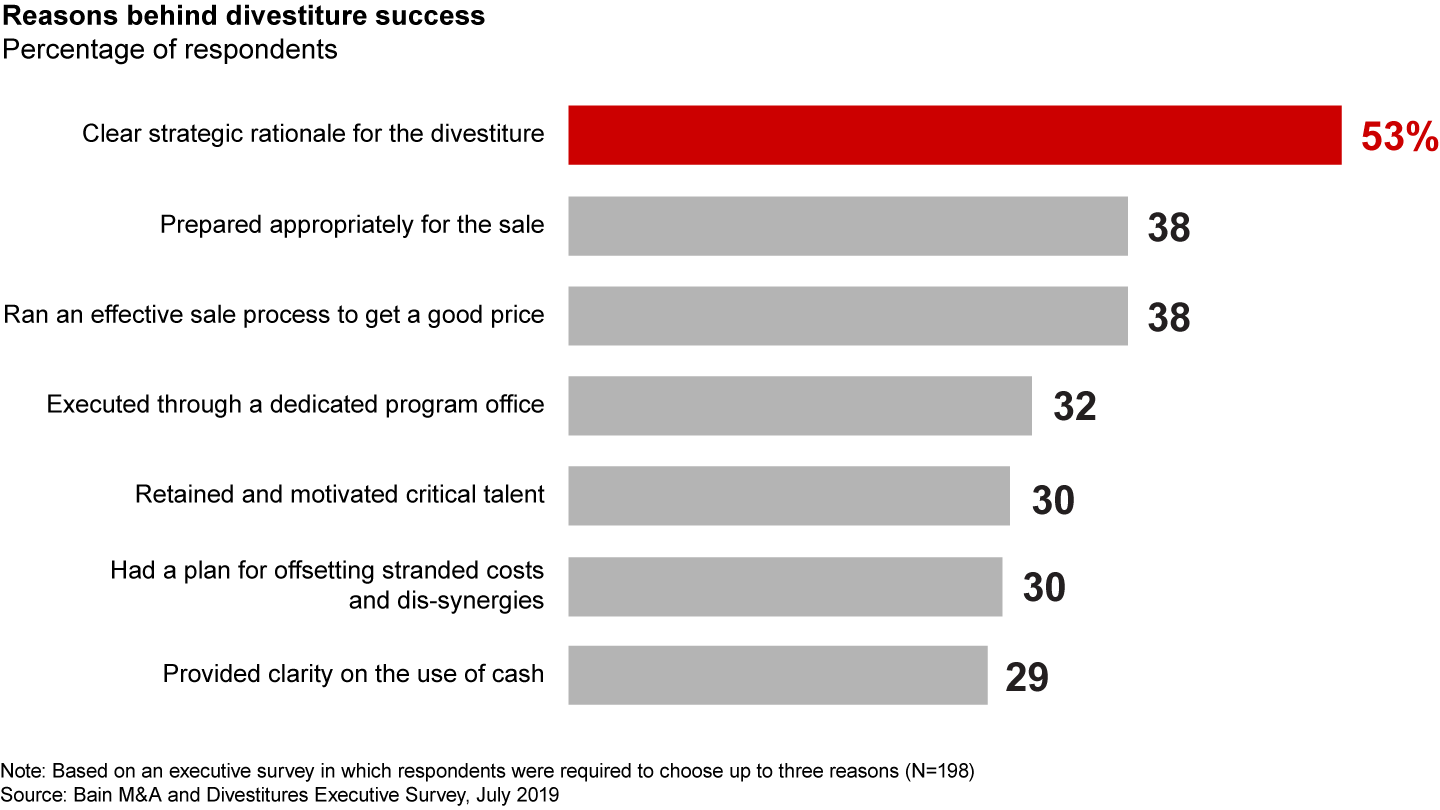
      Strategic rationale, effective preparation and sale process are the reasons behind divestiture success
      Strategic rationale, effective preparation and sale process are the reasons behind divestiture success
      Strategic rationale, effective preparation and sale process are the reasons behind divestiture success

      A PE exit playbook applied toward preparing for divestitures incorporates the following:

      • Capture quick-win improvements. Implement and realize sustainable in-year profit improvements from high-impact opportunities.
      • Build an exit story. Create a strategic action plan to realize the full potential of the business, and back it with a robust fact base and proven traction on specific initiatives to show early signs of success.
      • Embed the future buyer perspective. Outline a value-creation plan for the next owner (tailored for a corporate vs. financial buyer).
      • Prepare for sale well ahead of time. Ensure early preparation of selling documents, typically a year before the actual sale, and create a short list of buyers 6 to 12 months before the sale.

      The following two examples show how proactive preparation helped the divesting companies find buyers and realize a better-than-expected sale price.

      A US-based global aerospace and defense company wanted to divest its services business due to underperformance and limited future growth prospects. The company had not taken steps to adapt the business to current and expected top-line declines. To prepare the asset, the company pressure tested its business plan against market projections and peer forecasts, identified a requisite set of growth and cost initiatives to close the gap to new performance targets, and began implementing a subset of no-regrets cost initiatives. These actions increased in-year operating profit by roughly 50% and improved the likelihood of finding a buyer. In fact, the growth and cost initiatives identified during preparation reflected about 70% of the synergies ultimately identified by the strategic buyer.

      A major European telecom company had a small innovative business unit that established a new product in partnership with business-to-business (B2B) clients. That new product had few synergies and little integration with the core business—not to mention low growth prospects. The company initially planned to sell the business to its B2B partner at a loss of several million dollars. After a few months of systematic preparation, however, including a strategic opportunities assessment and buyer screening, the divesting company was able to realize a profit from the sale instead of incurring the loss that it had expected. It also found a buyer other than its B2B partner.

      With adequate preparation, regulator-mandated divestitures don’t have to be painful

      With many industries hitting the limits of consolidation, the likelihood that a scale deal will require regulator-mandated divestitures is high and poses a risk to both the timeline and synergies.

      Regulator-mandated divestitures add tremendous complexity to the divestiture process. They can feel more unnatural than planned divestitures and must be completed within a short time frame (see Figure 4.11). Often, the remedies require selling a part of the target’s business, something you don’t know very well. It puts you in a compromised negotiating position with the buyer, and you may find yourself surrounded by advisers with conflicting objectives. Moreover, you may be running the sale process alongside regulator negotiations—all while dealing with ongoing integration planning. It is certainly not for the faint hearted.

      Figure 4.11
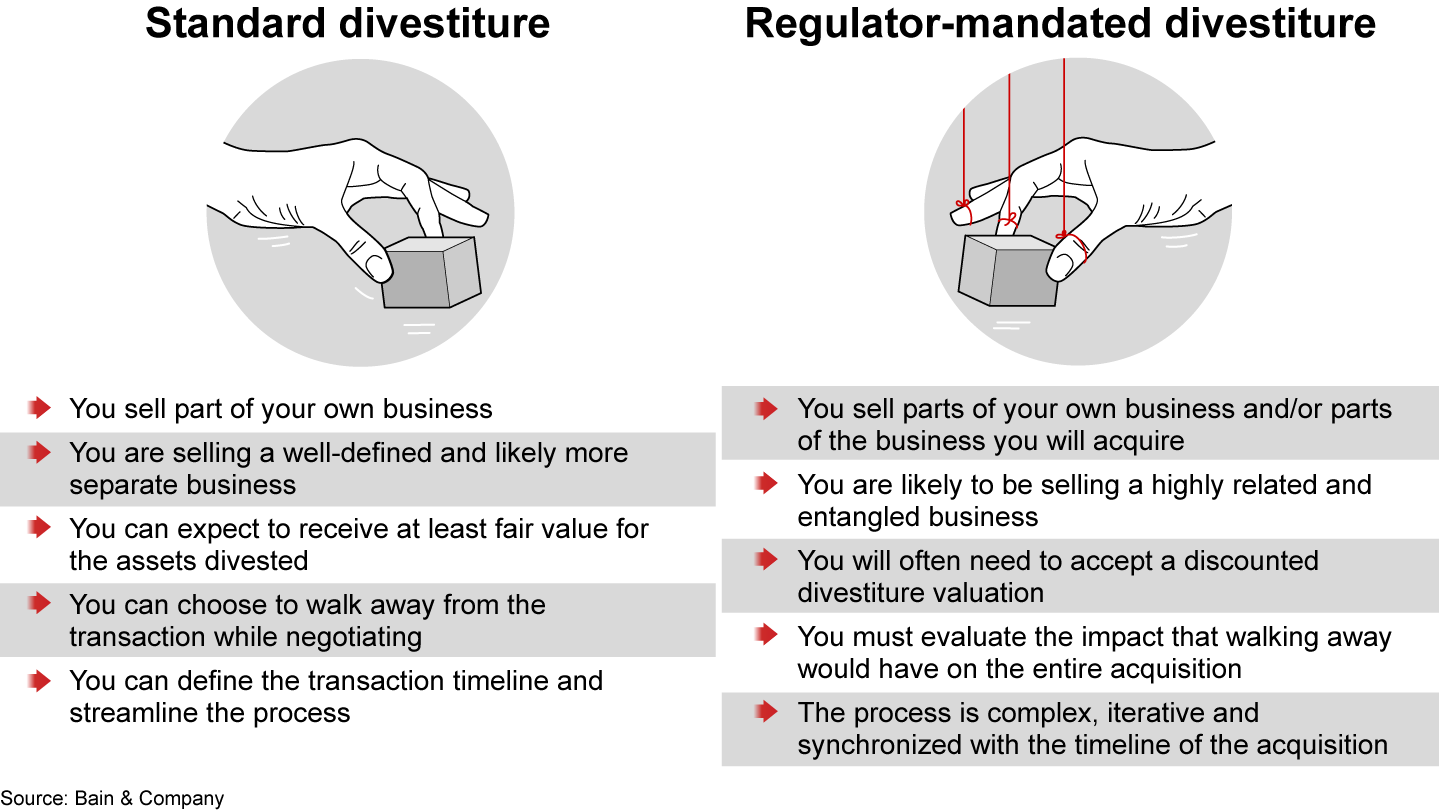
      Regulator-mandated divestitures add multiple layers of complexity
      Regulator-mandated divestitures add multiple layers of complexity
      Regulator-mandated divestitures add multiple layers of complexity

      Getting ahead of this complexity requires preparing for regulator consultations and monitoring the interdependencies between the integration and separation efforts. The best acquirers take the time to study the regulator’s approach and develop their own war-gaming scenarios to prepare for consultations.

      A systematic approach to preparing for regulator-mandated divestitures involves five steps:

      • Identify potential categories at risk. Understand how the regulator views the market to identify overlapping business areas that would come under scrutiny.
      • Define the business perimeter of remedy options. For each overlapping business, define the potential remedy options (products, geographies) and whether they belong to the acquirer or target’s business.
      • Identify the value at risk. Assess the revenue and margin impact of each remedy option.
      • Define discrete divestiture packages. For each remedy option, assess feasibility—supporting infrastructure, probability of finding buyers, impact on closing timeline and so forth.
      • War-game potential scenarios. Rank order your potential remedy options, and run a scenario analysis to prepare your response to various regulator reactions.

      This is usually a complex exercise involving trade-offs among minimizing the impact on deal value, satisfying regulatory concerns, attracting interested bidders and limiting separation complexity. A key aspect is also identifying walkaway conditions—namely, those in which the original deal would no longer make economic sense.

      As all deal types face increasing scrutiny, there is great value in preparing in advance for remedy negotiations. Such preparation delivers a huge pay-off by minimizing the drain on leadership, resources and the costs of getting into protracted regulatory issues. The most successful companies are proactive. They start to assess and plan for regulatory risk at the deal diligence and negotiation phase.

      This article is part of Bain’s 2020 Global Corporate M&A Report. Explore the contents of the report here or download the PDF to read the full report.

      Authors
      • Headshot of Les Baird
        Les Baird
        Partner, Boston
      • Headshot of David Harding
        David Harding
        Advisory Partner, Boston
      • Andrei Vorobyov
        Alumni, Copenhagen
      • Headshot of Jim Wininger
        Jim Wininger
        Partner, Atlanta
      • Headshot of Jorge Rujana
        Jorge Rujana
        Partner, Dallas
      Contact us
      Related Consulting Services
      • Divestitures and Spin-offs
      • Mergers and Acquisitions
      • Post-Merger Integration
      How We Can Help
      • M&A Capability
      Strategy
      Asia’s Conglomerates: End of the Road?

      As they lose their advantage, can conglomerates in India and Southeast Asia reinvent themselves?

      Read More
      M&A Capability
      Consumer Products M&A

      In their quest for profitable growth, more companies are divesting brands or buying insurgents.

      Read More
      Mergers and Acquisitions
      Building Products M&A

      Why more companies are acquiring for scope.

      Read More
      M&A Capability
      Banking M&A

      As conditions shift, leading banks are fusing scale with scope to create future-ready organizations.

      Read More
      M&A Capability
      10 Takeaways from Our M&A Executive Survey

      We asked more than 300 practitioners across the globe about their deal-making efforts in today’s market. Here’s what they said.

      Read More
      Published in January 2020
      Tags
      • Divestitures and Spin-offs
      • M&A Capability
      • Mergers and Acquisitions
      • Post-Merger Integration

      How We've Helped Clients

      Accelerated Performance Transformation An EPC Leader Transforms Itself Amid Intense Volatility

      Read case study

      Performance Improvement Aggressively growing an IT service provider with a high-performance culture

      Read case study

      Mergers and Acquisitions An OFS captures post-merger growth synergies

      Read case study

      Ready to talk?

      We work with ambitious leaders who want to define the future, not hide from it. Together, we achieve extraordinary outcomes.

      Stay ahead in a rapidly changing world. Subscribe to Bain Insights, our monthly look at the critical issues facing global businesses.

      *I have read and understand Bain’s Privacy Notice.

      Please read and agree to the Privacy Policy.
      Bain & Company
      Contact us Sustainability Accessibility Terms of use Privacy Modern Slavery Act Statement Cookie Policy Sitemap Log In

      © 1996-2026 Bain & Company, Inc.

      Contact Bain

      How can we help you?

      • Business inquiry
      • Career information
      • Press relations
      • Partnership request
      • Speaker request
      See all offices