Skip to Content
  • Offices

    Offices

    North & Latin America
    • Atlanta
    • Austin
    • Bogota
    • Boston
    • Buenos Aires
    • Chicago
    • Dallas
    • Denver
    • Houston
    • Los Angeles
    • Mexico City
    • Minneapolis
    • Monterrey
    • Montreal
    • New York
    • Rio de Janeiro
    • San Francisco
    • Santiago
    • São Paulo
    • Seattle
    • Silicon Valley
    • Toronto
    • Washington, DC
    Europe & Africa
    • Amsterdam
    • Athens
    • Berlin
    • Brussels
    • Copenhagen
    • Dusseldorf
    • Frankfurt
    • Helsinki
    • Istanbul
    • Johannesburg
    • Kyiv
    • Lisbon
    • London
    • Madrid
    • Milan
    • Munich
    • Oslo
    • Paris
    • Rome
    • Stockholm
    • Vienna
    • Warsaw
    • Zurich
    Middle East
    • Doha
    • Dubai
    • Riyadh
    Asia & Australia
    • Bangkok
    • Beijing
    • Bengaluru
    • Brisbane
    • Ho Chi Minh City
    • Hong Kong
    • Jakarta
    • Kuala Lumpur
    • Manila
    • Melbourne
    • Mumbai
    • New Delhi
    • Perth
    • Seoul
    • Shanghai
    • Singapore
    • Sydney
    • Tokyo
    See all offices
  • Alumni
  • Media Center
  • Subscribe
  • Contact
  • Global | English

    Select your region and language

    Global
    • Global (English)
    North & Latin America
    • Brazil (Português)
    • Argentina (Español)
    • Canada (Français)
    • Chile (Español)
    • Colombia (Español)
    Europe, Middle East, & Africa
    • France (Français)
    • DACH Region (Deutsch)
    • Italy (Italiano)
    • Spain (Español)
    • Greece (Elliniká)
    Asia & Australia
    • China (中文版)
    • Korea (한국어)
    • Japan (日本語)
  • Saved items (0)
    Saved items (0)

    You have no saved items.

    Bookmark content that interests you and it will be saved here for you to read or share later.

    Explore Bain Insights
  • Industries
    Main menu

    Industries

    • Aerospace & Defense
    • Agribusiness
    • Chemicals
    • Construction & Infrastructure
    • Consumer Products
    • Financial Services
    • Healthcare & Life Sciences
    • Industrial Machinery & Equipment
    • Media & Entertainment
      Industries
      Media & Entertainment
      • Media Lab
    • Metals
    • Mining
    • Oil & Gas
    • Paper & Packaging
    • Private Equity
      Industries
      Private Equity
      • Due Diligence
      • Exit Planning
      • Firm Strategy & Operations
      • Portfolio Value Creation
    • Social Impact
    • Retail
    • Technology
    • Telecommunications
      Industries
      Telecommunications
      • Capital Expenditure
      • Telco Digital Transformation
    • Transportation
    • Travel & Leisure
    • Utilities & Renewables
  • Consulting Services
    Main menu

    Consulting Services

    • Customer Experience
    • Sustainability
    • Innovation
    • M&A
    • Operations
    • People & Organization
    • Private Equity
    • Sales & Marketing
    • Strategy
    • AI, Insights, and Solutions
    • Technology
    • Transformation
  • Digital
  • Insights
    Main menu

    Insights

    • Industry Insights
    • Services Insights
    • Bain Books
    • Webinars
    • Bain Futures
    View all Insights
    Featured topics
    • Tariff Response
    • Artificial Intelligence
    • Thriving in Uncertainty
    • Executive Conversations
    • Macro Trends
    • M&A Report
    • Healthcare Private Equity Report
    • Paper & Packaging Report
    • Technology Report
    • CEO's Guide to Sustainability
    • CEO Insights
    • CFO Insights
    • COO Insights
    • CIO Insights
    • CMO Insights
    View all featured topics
  • About
    Main menu

    About

    • What We Do
    • What We Believe
    • Our People & Leadership
    • Client Results
    • Awards & Recognition
    • Global Affiliations
    Further: Our global responsibility
    • Sustainability
    • Social Impact
    • World Economic Forum
    Learn more about Further
  • Careers
    Main menu

    Careers

    • Work with Us
      Careers
      Work with Us
      • Find Your Place
      • Our Work Areas
      • Integrated Teams
      • Students
      • Internships & Programs
      • Recruiting Events
    • Life at Bain
      Careers
      Life at Bain
      • Blog: Inside Bain
      • Career Stories
      • Our People
      • Where We Work
      • Supporting Your Growth
      • Affinity Groups
      • Benefits
    • Impact Stories
    • Hiring Process
      Careers
      Hiring Process
      • What to Expect
      • Interviewing
    FIND JOBS
  • Offices
    Main menu

    Offices

    • North & Latin America
      Offices
      North & Latin America
      • Atlanta
      • Austin
      • Bogota
      • Boston
      • Buenos Aires
      • Chicago
      • Dallas
      • Denver
      • Houston
      • Los Angeles
      • Mexico City
      • Minneapolis
      • Monterrey
      • Montreal
      • New York
      • Rio de Janeiro
      • San Francisco
      • Santiago
      • São Paulo
      • Seattle
      • Silicon Valley
      • Toronto
      • Washington, DC
    • Europe & Africa
      Offices
      Europe & Africa
      • Amsterdam
      • Athens
      • Berlin
      • Brussels
      • Copenhagen
      • Dusseldorf
      • Frankfurt
      • Helsinki
      • Istanbul
      • Johannesburg
      • Kyiv
      • Lisbon
      • London
      • Madrid
      • Milan
      • Munich
      • Oslo
      • Paris
      • Rome
      • Stockholm
      • Vienna
      • Warsaw
      • Zurich
    • Middle East
      Offices
      Middle East
      • Doha
      • Dubai
      • Riyadh
    • Asia & Australia
      Offices
      Asia & Australia
      • Bangkok
      • Beijing
      • Bengaluru
      • Brisbane
      • Ho Chi Minh City
      • Hong Kong
      • Jakarta
      • Kuala Lumpur
      • Manila
      • Melbourne
      • Mumbai
      • New Delhi
      • Perth
      • Seoul
      • Shanghai
      • Singapore
      • Sydney
      • Tokyo
    See all offices
  • Alumni
  • Media Center
  • Subscribe
  • Contact
  • Global | English
    Main menu

    Select your region and language

    • Global
      Select your region and language
      Global
      • Global (English)
    • North & Latin America
      Select your region and language
      North & Latin America
      • Brazil (Português)
      • Argentina (Español)
      • Canada (Français)
      • Chile (Español)
      • Colombia (Español)
    • Europe, Middle East, & Africa
      Select your region and language
      Europe, Middle East, & Africa
      • France (Français)
      • DACH Region (Deutsch)
      • Italy (Italiano)
      • Spain (Español)
      • Greece (Elliniká)
    • Asia & Australia
      Select your region and language
      Asia & Australia
      • China (中文版)
      • Korea (한국어)
      • Japan (日本語)
  • Saved items  (0)
    Main menu
    Saved items (0)

    You have no saved items.

    Bookmark content that interests you and it will be saved here for you to read or share later.

    Explore Bain Insights
  • Industries
    • Industries

      • Aerospace & Defense
      • Agribusiness
      • Chemicals
      • Construction & Infrastructure
      • Consumer Products
      • Financial Services
      • Healthcare & Life Sciences
      • Industrial Machinery & Equipment
      • Media & Entertainment
      • Metals
      • Mining
      • Oil & Gas
      • Paper & Packaging
      • Private Equity
      • Social Impact
      • Retail
      • Technology
      • Telecommunications
      • Transportation
      • Travel & Leisure
      • Utilities & Renewables
  • Consulting Services
    • Consulting Services

      • Customer Experience
      • Sustainability
      • Innovation
      • M&A
      • Operations
      • People & Organization
      • Private Equity
      • Sales & Marketing
      • Strategy
      • AI, Insights, and Solutions
      • Technology
      • Transformation
  • Digital
  • Insights
    • Insights

      • Industry Insights
      • Services Insights
      • Bain Books
      • Webinars
      • Bain Futures
      View all Insights
      Featured topics
      • Tariff Response
      • Artificial Intelligence
      • Thriving in Uncertainty
      • Executive Conversations
      • Macro Trends
      • M&A Report
      • Healthcare Private Equity Report
      • Paper & Packaging Report
      • Technology Report
      • CEO's Guide to Sustainability
      • CEO Insights
      • CFO Insights
      • COO Insights
      • CIO Insights
      • CMO Insights
      View all featured topics
  • About
    • About

      • What We Do
      • What We Believe
      • Our People & Leadership
      • Client Results
      • Awards & Recognition
      • Global Affiliations
      Further: Our global responsibility
      • Sustainability
      • Social Impact
      • World Economic Forum
      Learn more about Further
  • Careers
    Popular Searches
    • Agile
    • Digital
    • Strategy
    Your Previous Searches
      Recently Visited Pages

      Content added to saved items

      Saved items (0)

      Removed from saved items

      Saved items (0)

      Report

      How India Shops Online 2022

      How India Shops Online 2022

      An insight into the e-retail landscape and the emerging trends shaping the market

      By Arpan Sheth, Shyam Unnikrishnan, Manan Bhasin, and Abhishek Raj

      • min read
      }

      Report

      How India Shops Online 2022
      en

      E-retail market and shopper dynamics

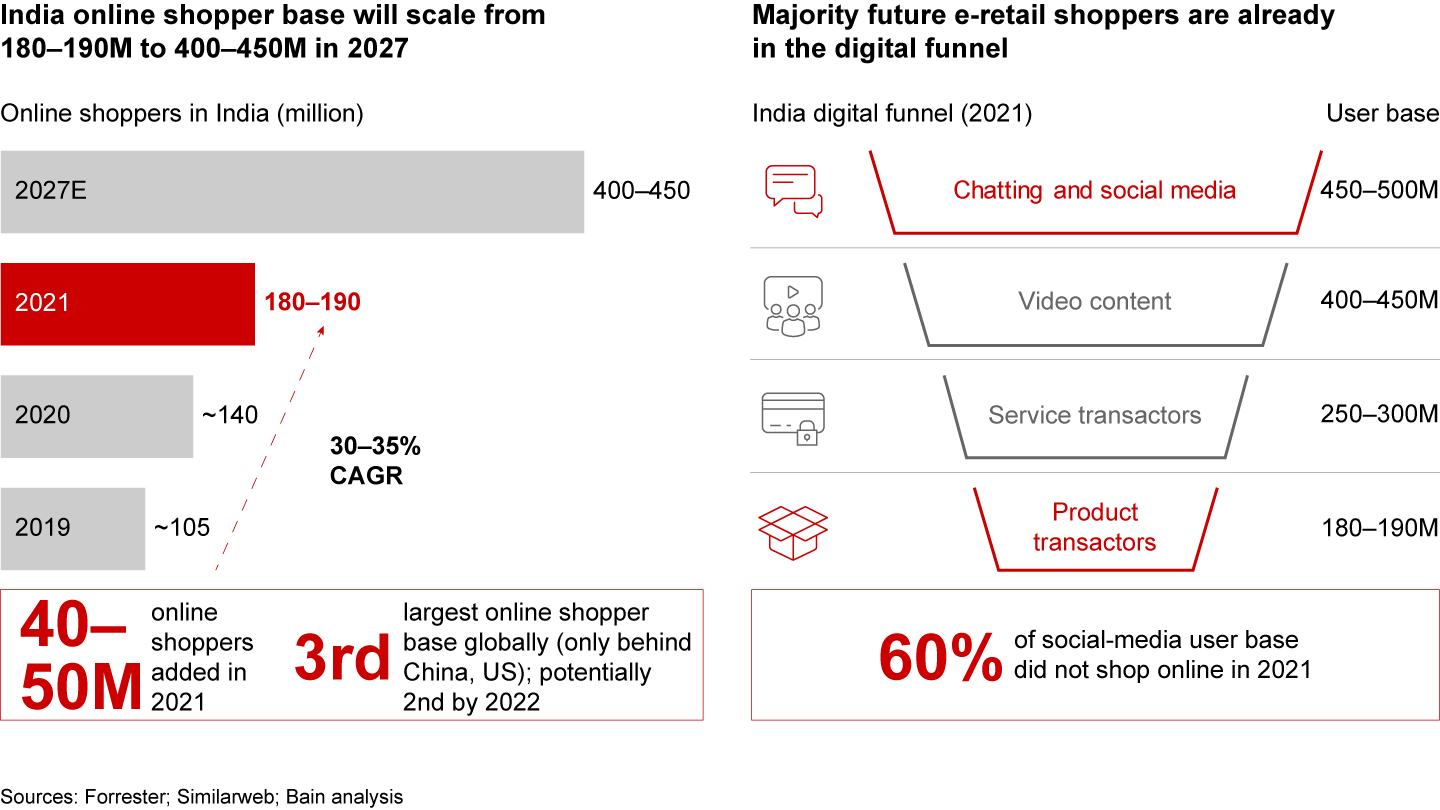
      The Covid-19 pandemic has been a crucible moment for online retail in India. The pandemic has induced hypergrowth and a 12-month acceleration in market penetration. India currently has the third-largest shopper base globally, with 180–190 million online shoppers in 2021. In addition, India is well poised to surpass the US to have the second-largest shopper base in the next one to two years.

      Written in collaboration with

      Written in collaboration with

      flipkart-new-55.png


      India’s e-retail market rose to approximately $40 billion in 2021 and is slated to reach $50 billion in 2022. India has robust fundamentals supporting a continued boom in e-retail. India’s substantial online consumer base and retail market (third largest globally) already make it an incredibly attractive e-retail market. Massive headroom in terms of smartphone penetration (36% in India vs. 63% in China and 76% in the US) and affluence (~$2K per capita in India vs. ~$12K in China and ~$69K in the US), in addition to already low data prices, provide the perfect ingredients for sustained growth.

      Rising affluence will fuel consumption and increase spending per shopper. Although the current inflationary environment might prove to be a short-term headwind for the market, these structural drivers will ensure healthy growth in the medium to long term.

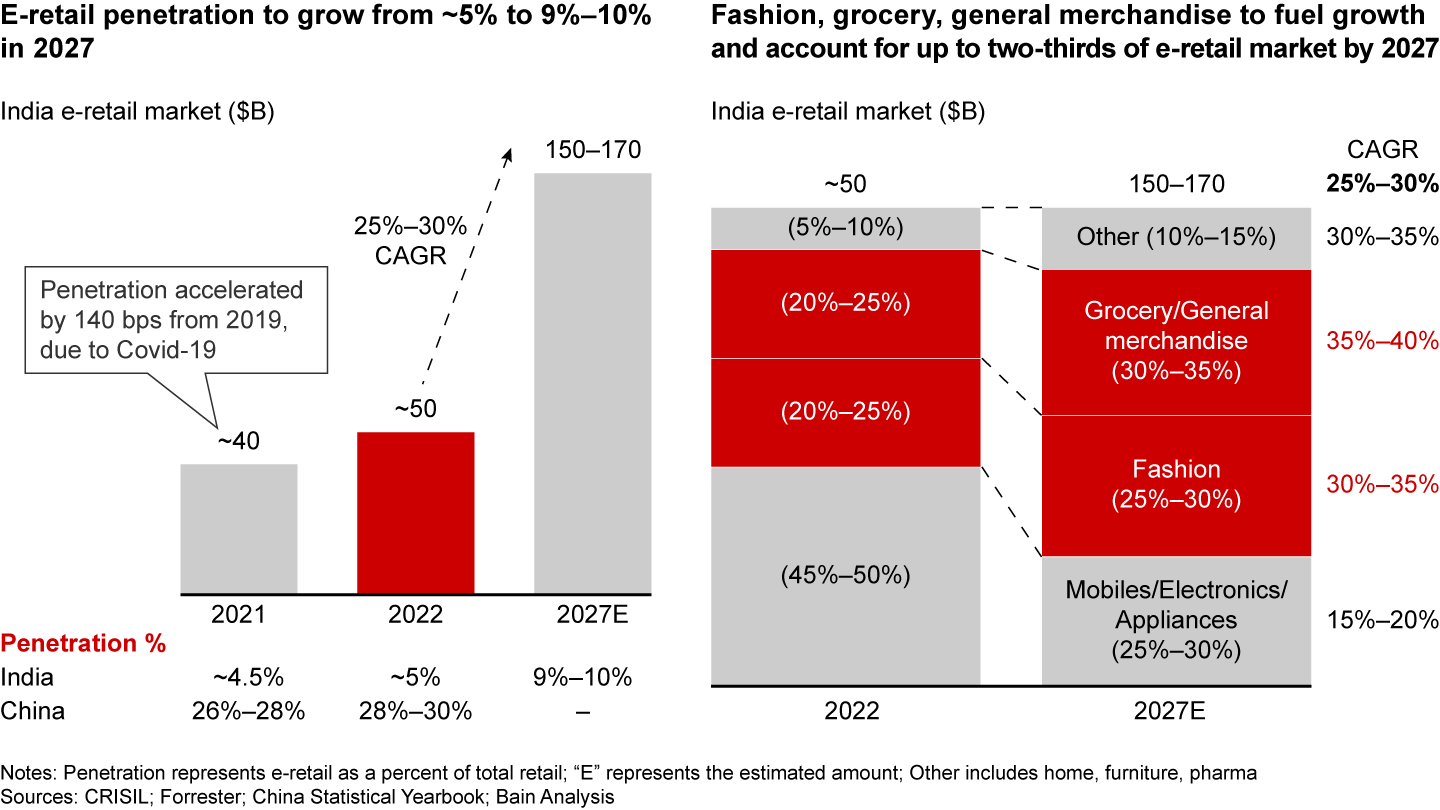
      India’s e-retail market is estimated to increase to $150–$170 billion by 2027. This implies 25%–30% annual growth and doubling of market penetration to 9%–10% over the next five years.

      View the infographic

      Inside India's Online Shopping Boom

      Expanding buyer and seller bases are poised to fulfill e-retail’s growth potential.

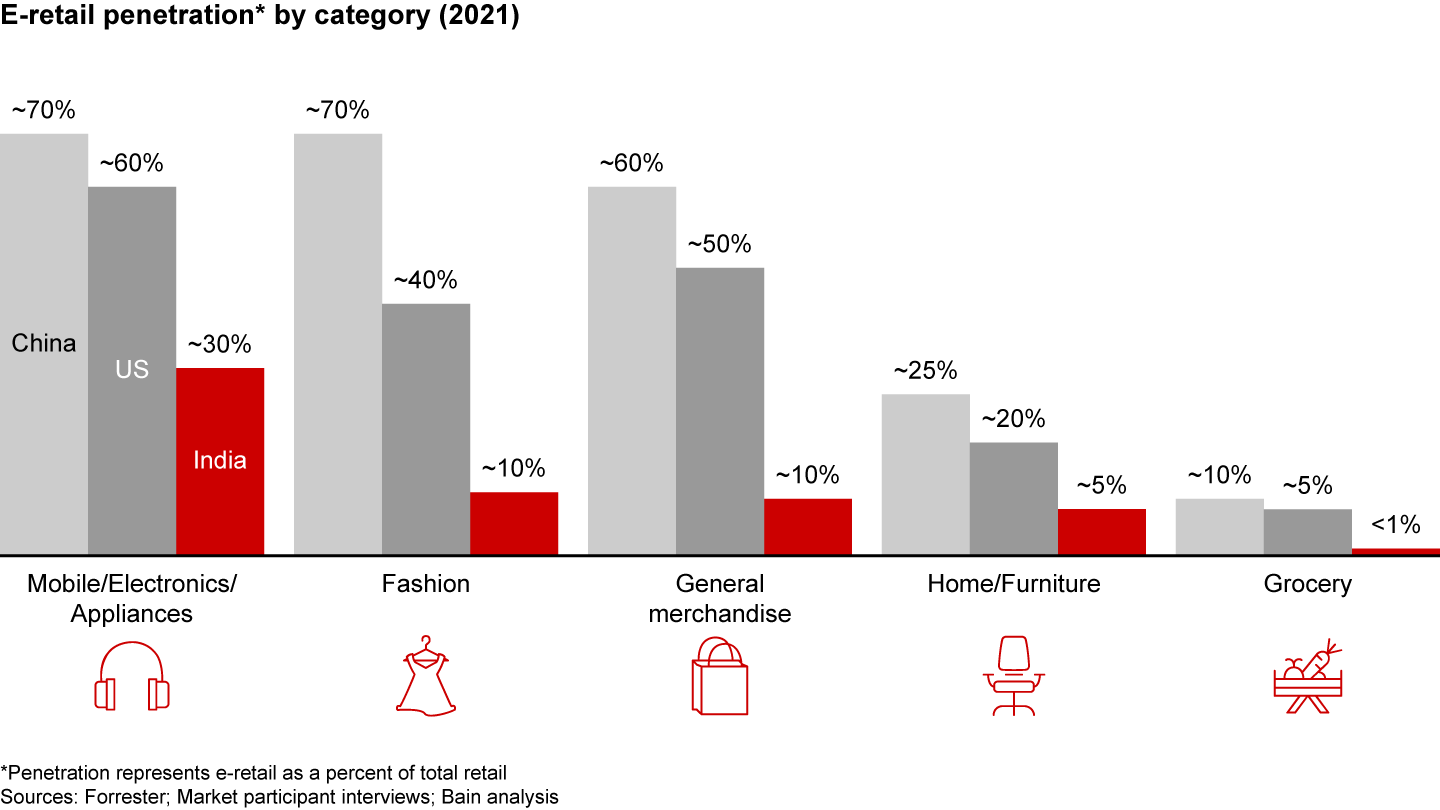
      The category mix of online purchases will also evolve. Historically, categories such as mobile phones, electronics, and appliances have accounted for the lion’s share of the e-retail market. This will change over the next five years. Fashion, general merchandise categories (including personal care), and grocery have the highest penetration headroom (vs. mature markets) and will therefore fuel growth. These categories will cumulatively account for as much as two-thirds of the e-retail market by 2027.

      Shopper addition will continue to be at the heart of future e-retail growth. India’s online shopper base is estimated to increase to 400–450 million by 2027. Most of these shoppers are already in the digital funnel—450–500 million used social media while only 180–190 million shopped online in 2021.

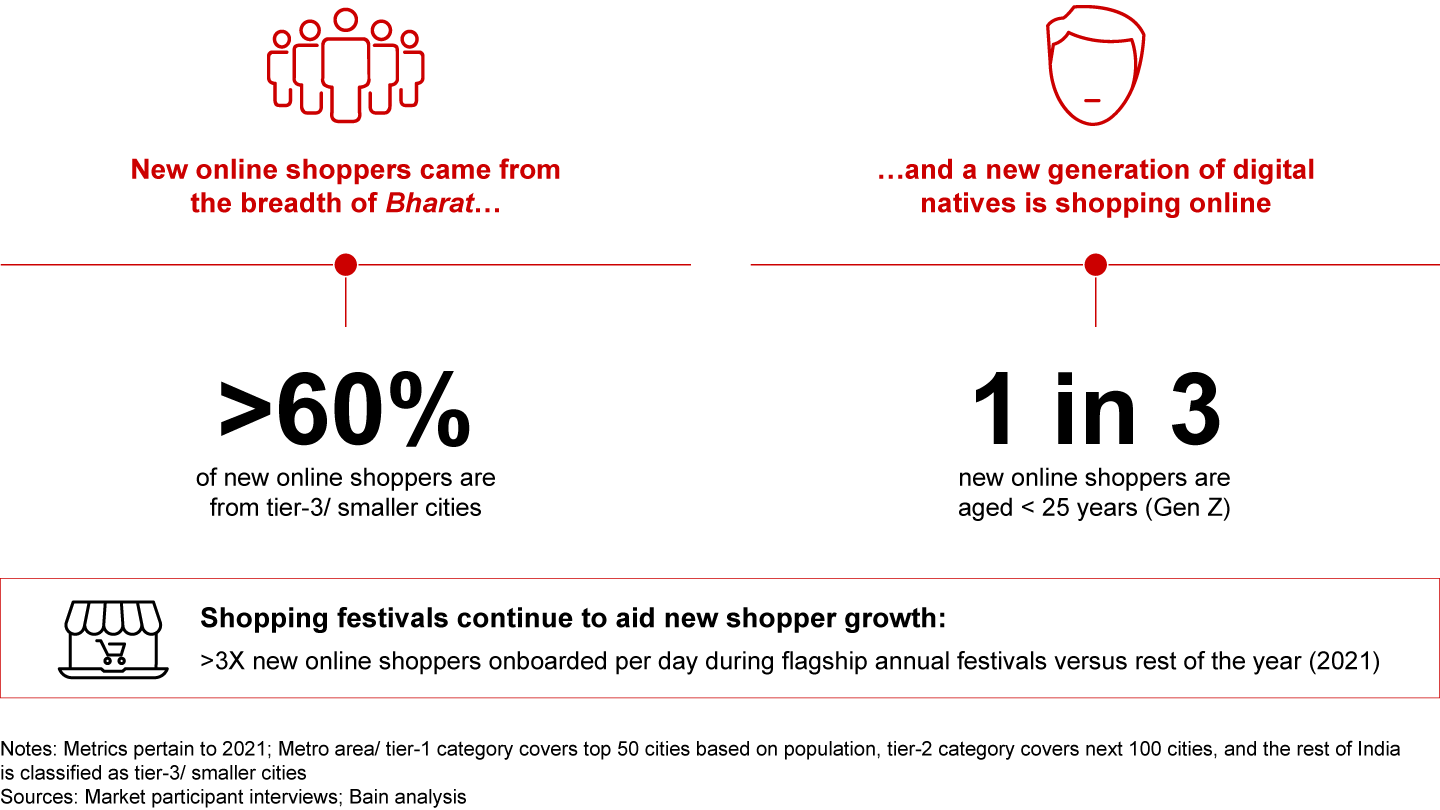
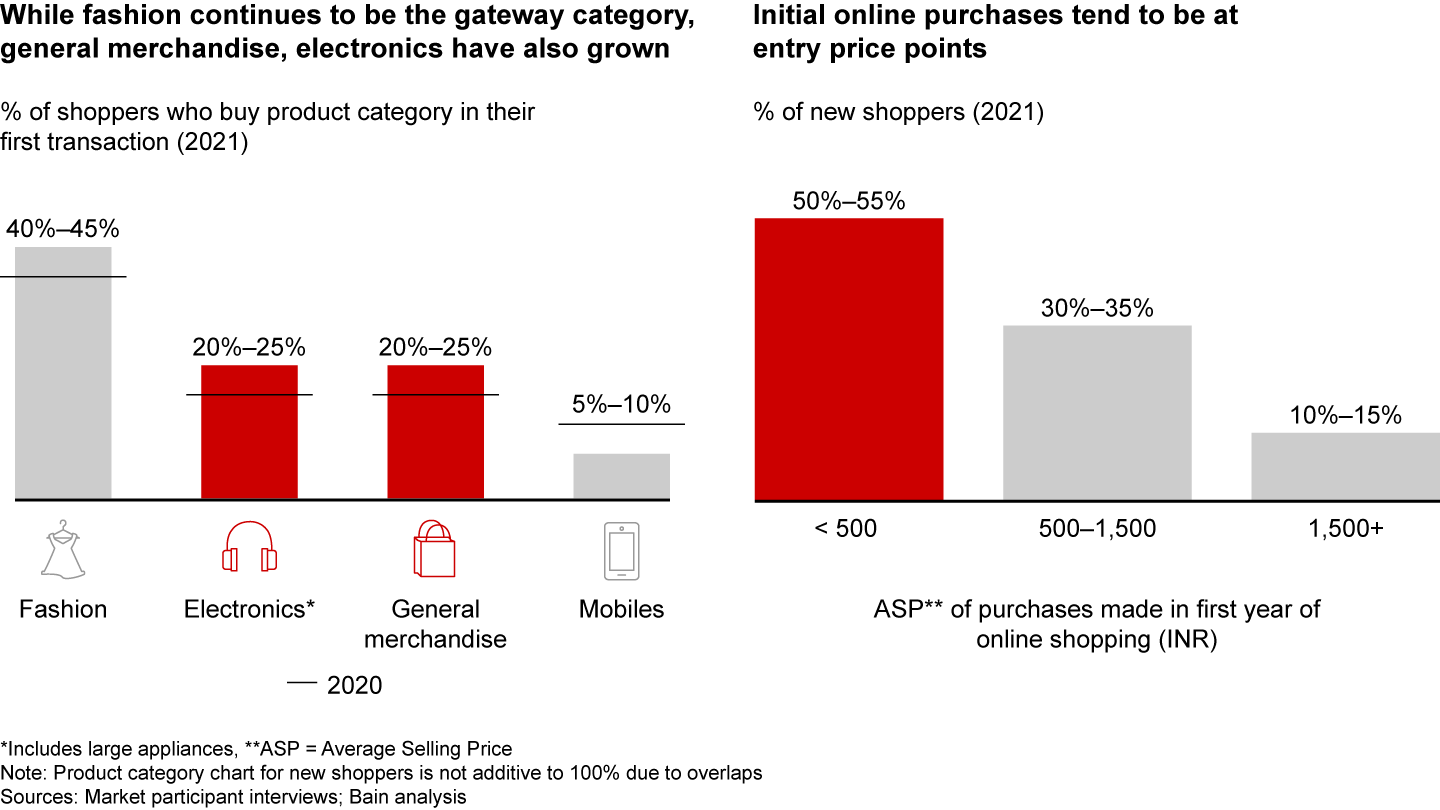
      In 2021 alone, between 40 and 50 million new shoppers were added to the India e-retail market, which is approximately 30%–35% growth over the online shopper base in 2020. These new shoppers largely belong to tier-3 or smaller cities and include Gen Z—which will become a critical cohort in the future. They primarily purchase fashion as the first category online, and they typically start buying at entry price points.

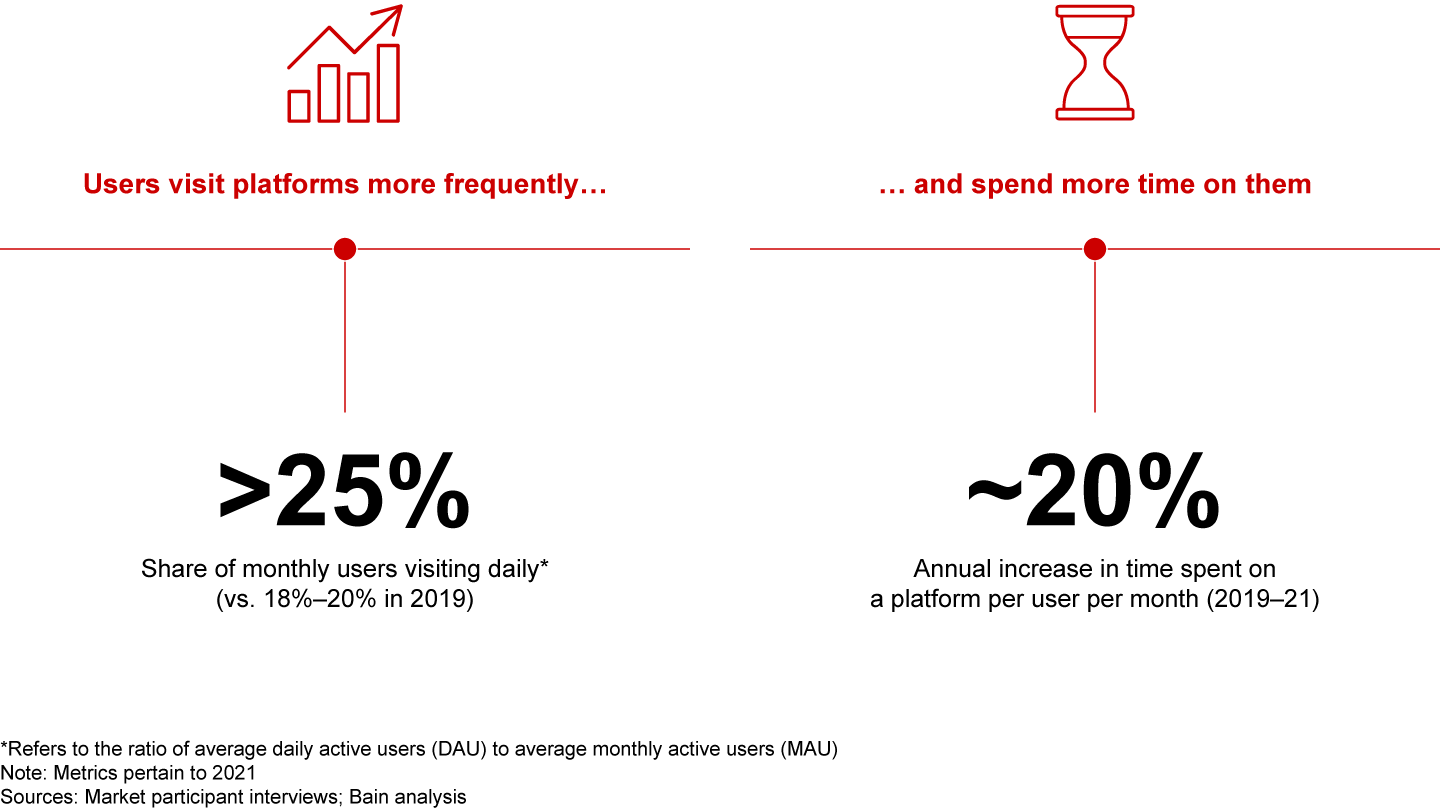
      The existing shopper base is simultaneously maturing. Overall engagement on retail platforms is increasing. The percentage of daily active users to monthly active users has risen to more than 25% in 2021, from 18% to 20% in 2019. Consumers now spend 20% more time per month on a retail platform, vs. last year.

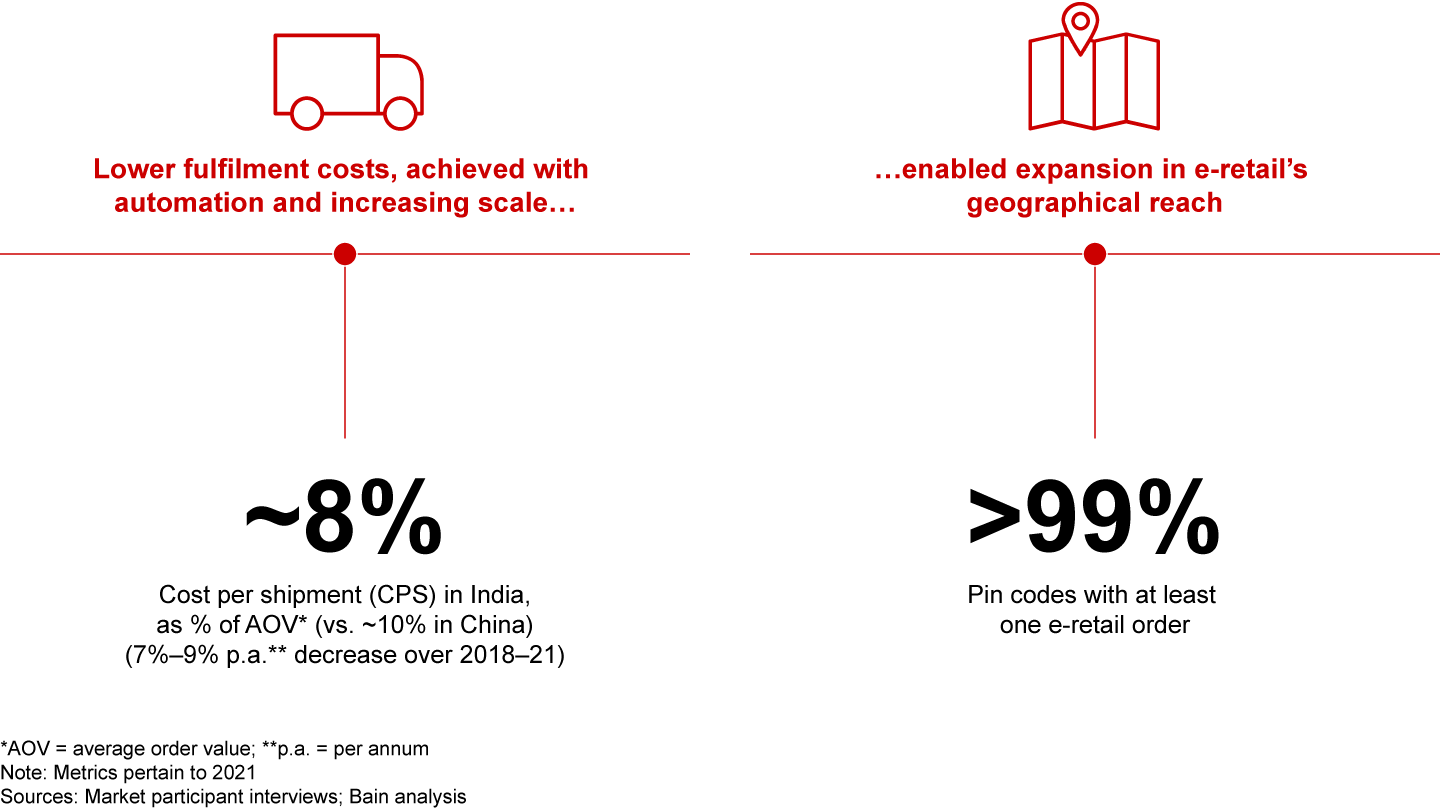
      Sustained e-retail growth has been accompanied by tremendous growth in the supplier and logistics ecosystem. India’s online seller base has grown 35% annually over the past year, with approximately 40% of new sellers coming from tier-2 or smaller cities. In addition, growth in e-retail shipments has enabled the development of a deep and efficient logistics network. Accompanied by technological advances, e-retail has seen a steady year-over-year decline in cost per shipment by 7%–9% per annum from 2018 to 2021. Reach has widened significantly—e-retail is accessible in 99% of India’s pin codes.

      The government is also playing a critical role in democratising e-retail for India through the creation of the Open Network for Digital Commerce (ONDC). ONDC aims to create an interoperable network for digital commerce akin to Unified Payment Interface (UPI) network for payments. Although a nascent initiative, its successful and full-scale execution could provide a fillip to the Indian e-retail ecosystem.

      Future of e-retail in India

      India’s e-retail has evolved and matured materially over the past decade.

      Before 2015 (Phase 1.0 – Cautious early adoption), e-retail was restricted to upper-income households from metro and tier-1 cities. Categories such as mobile phones and fashion accounted for more than 75% of gross merchandise value (GMV), led by horizontal platforms. Made-for-Bharat innovations such as cash on delivery helped build customer trust and drove e-retail adoption.

      From 2015 to 2020 (Phase 2.0 – Massification), the e-retail market expanded and evolved immensely. Rapid growth in the number of Internet-enabled smartphone users, fueled by low-cost devices and cheaper data, was key to bringing India online. Platforms democratised e-retail. Shoppers in tier-2 or smaller cities and in middle-income households came online, and new sellers from the breadth of Bharat were onboarded. Phase 2.0 saw the emergence and scale-up of vertical players across categories such as fashion, grocery, pharma, beauty, etc. This period was also characterised by improvements in customer experience via faster delivery (2–4 days), loyalty programs, and the rise of digital payments.

      The Covid-19 pandemic marked an inflection point in e-commerce in India, ushering in a new era of growth. This post-2020 phase (Phase 3.0 – Massification and increasing stickiness) will involve rapid growth in both user penetration and user spend. The shopper base will mature and transact more frequently, spending more time on platforms. Phase 3.0 introduces an era of innovation and disruption to address the needs of distinct micro-segments emerging, to innovate with new business models, and to differentiate on customer experience. We discuss each of these in more detail below.

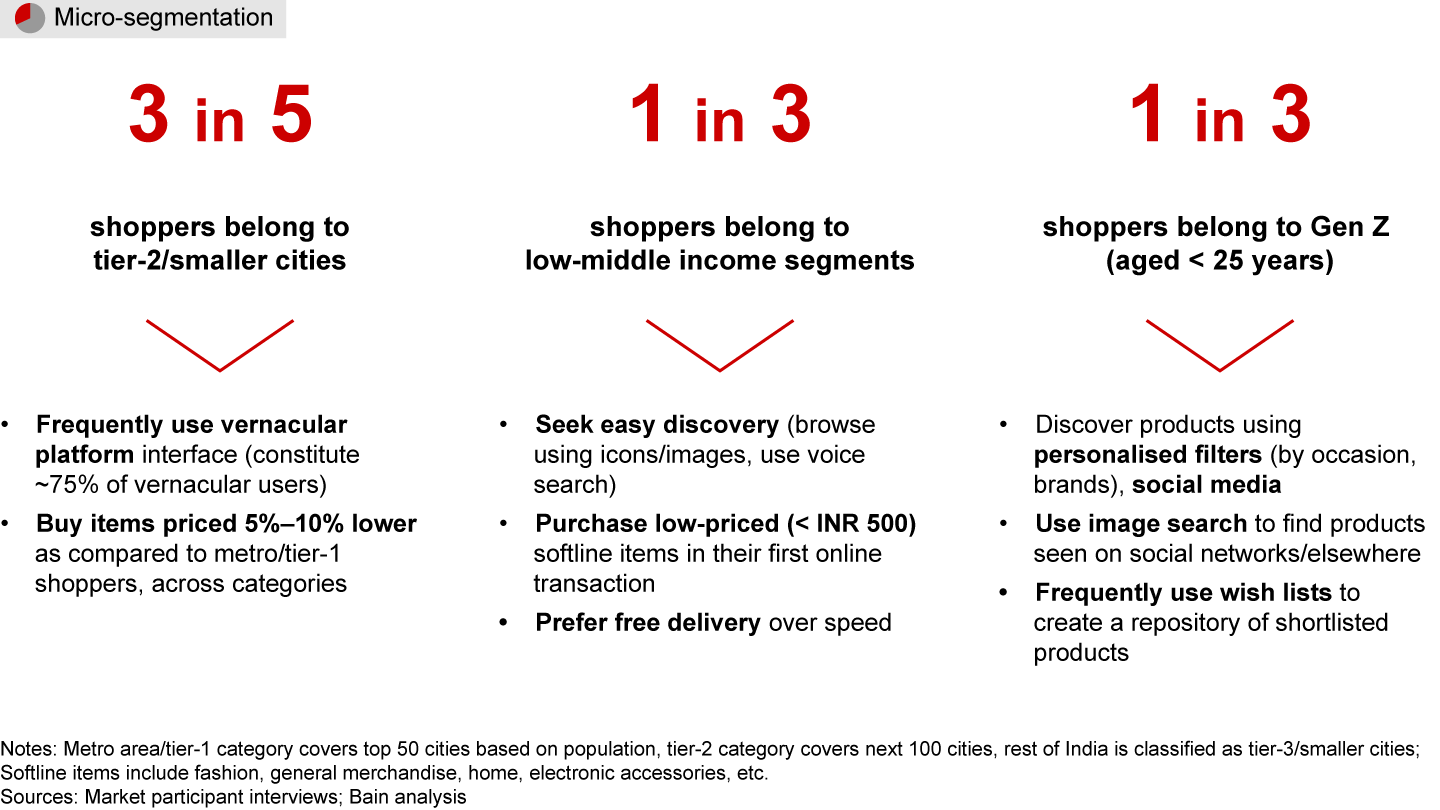
      Shopper micro-segments: Multiple disparate shopper cohorts—based on geography, income, and age—are coming online. Three out of five shoppers belong to tier-2 or smaller cities, one in three shoppers belong to low-to-middle income segments, and one in three shoppers is Gen Z (younger than age 25). Each of these micro-segments exhibits distinct shopping behavior. For instance, shoppers in tier-2 or smaller cities have higher salience of voice and vernacular search, whereas low-to-middle income households rely more on image-based search.

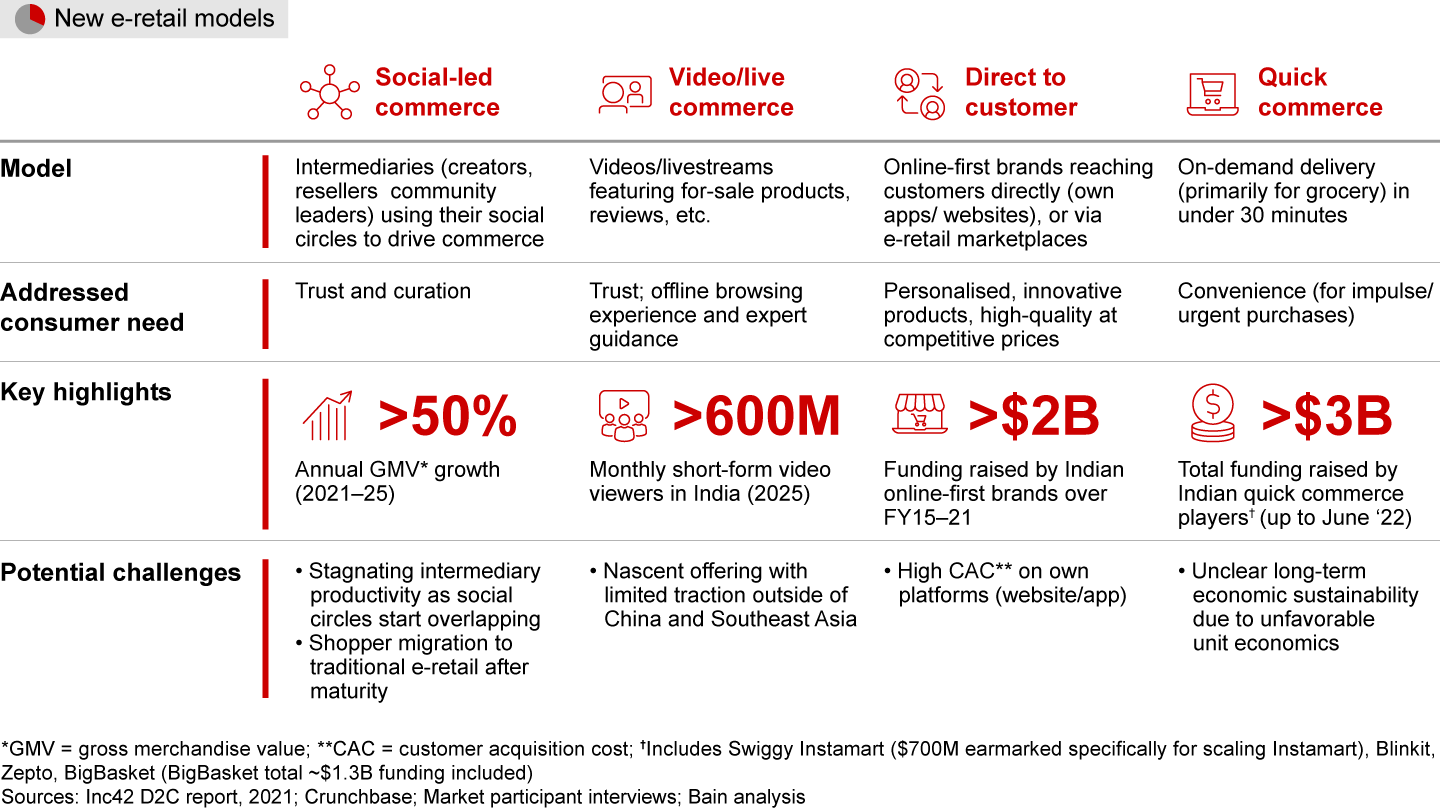
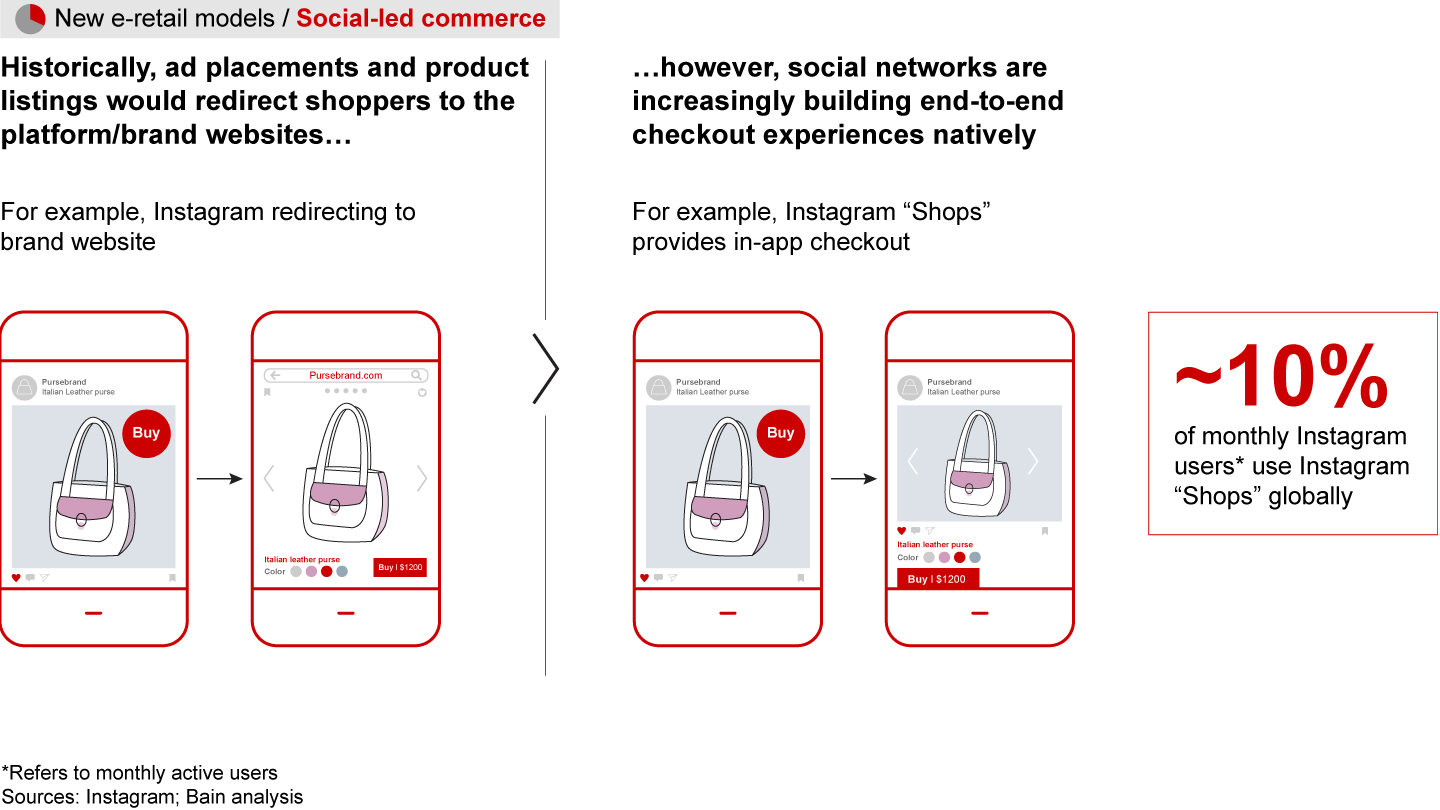
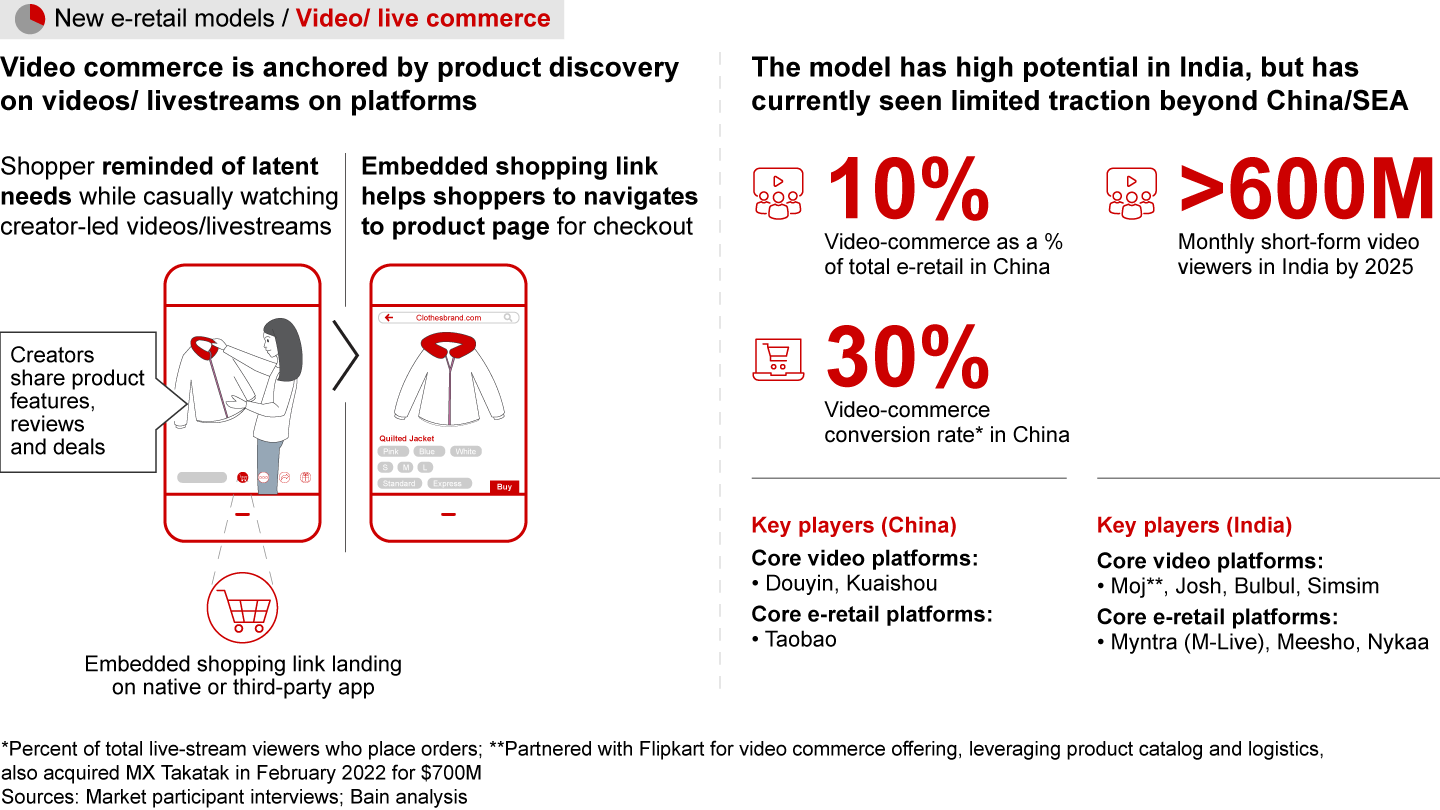
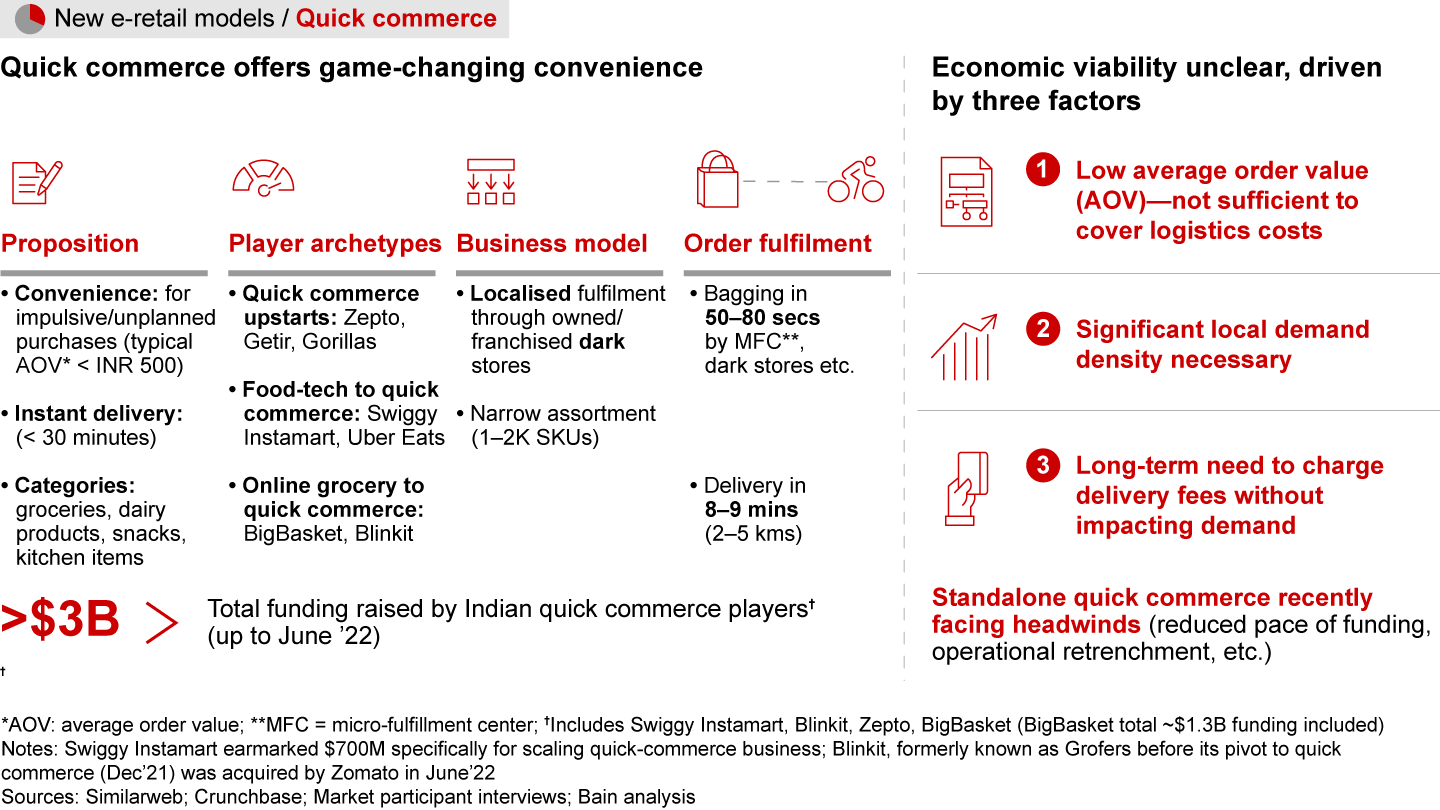
      New e-retail business models: E-retailers are experimenting with a host of alternative business models as they pursue a wider audience and address gaps in traditional commerce. These models—social-led commerce, video/live commerce, direct-to-consumer commerce, and quick commerce—are at varying levels of maturity and demonstrate tremendous potential. For example, social-led commerce is expected to grow approximately 50% annually from 2021 to 2025. Social media players are increasingly looking to leverage platform traffic to drive online sales—about 10% of Instagram users globally use “Shops” on Instagram. Video/live commerce also offers substantial potential, with more than 600 million users of short-form video platforms expected in India by 2025. However, the model is yet to gain meaningful traction beyond China and Southeast Asia (video/live commerce drives 10% of China’s e-retail revenue). Quick commerce, a recent disruption globally, has also gained interest in India, with players having raised more than $3 billion in funding up to June 2022

      However, players need to navigate challenges around scaling sustainably. For instance, quick commerce has gained significant traction, but low average order values, lack of demand density, and low or no delivery fees; in addition to thin underlying margins, impact unit economics.

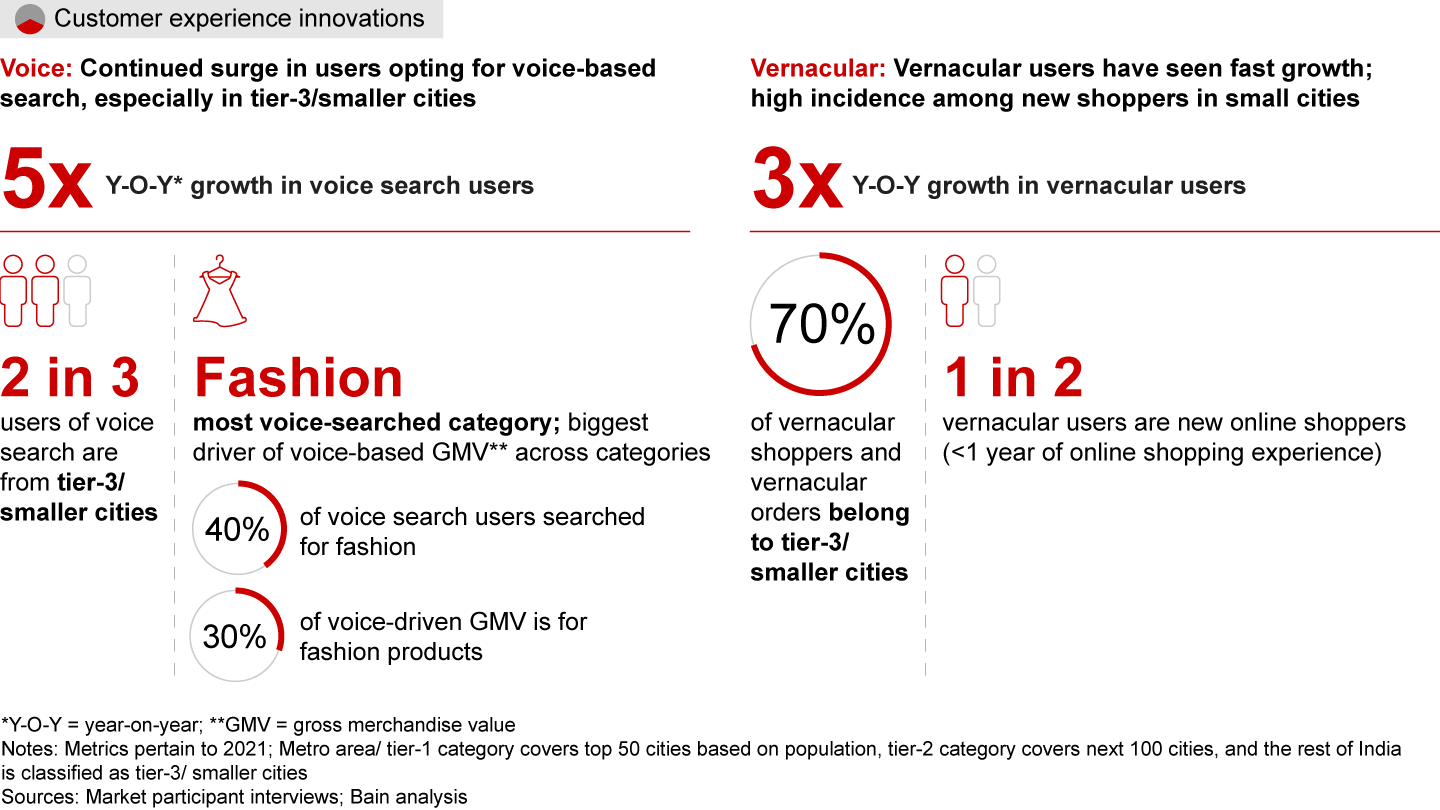
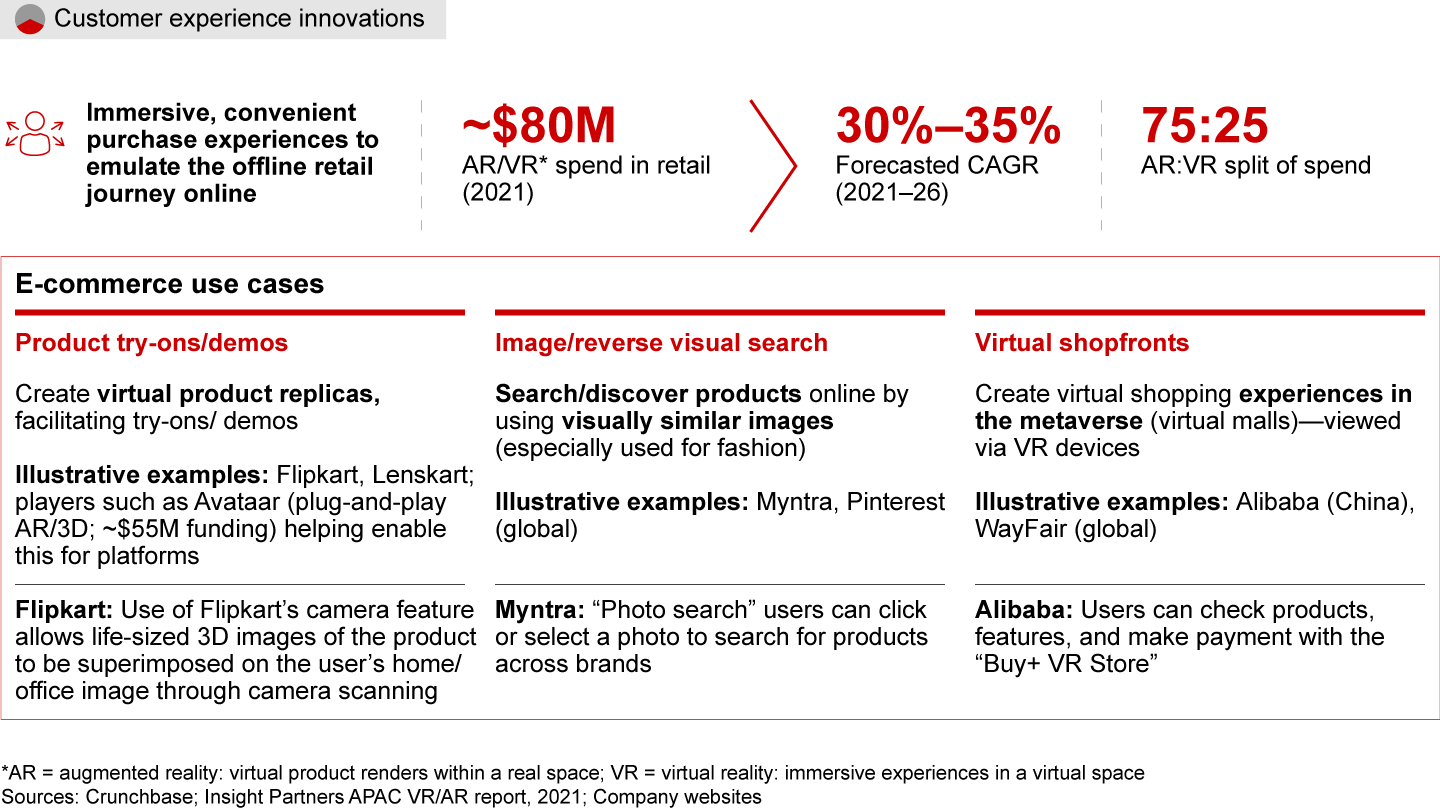
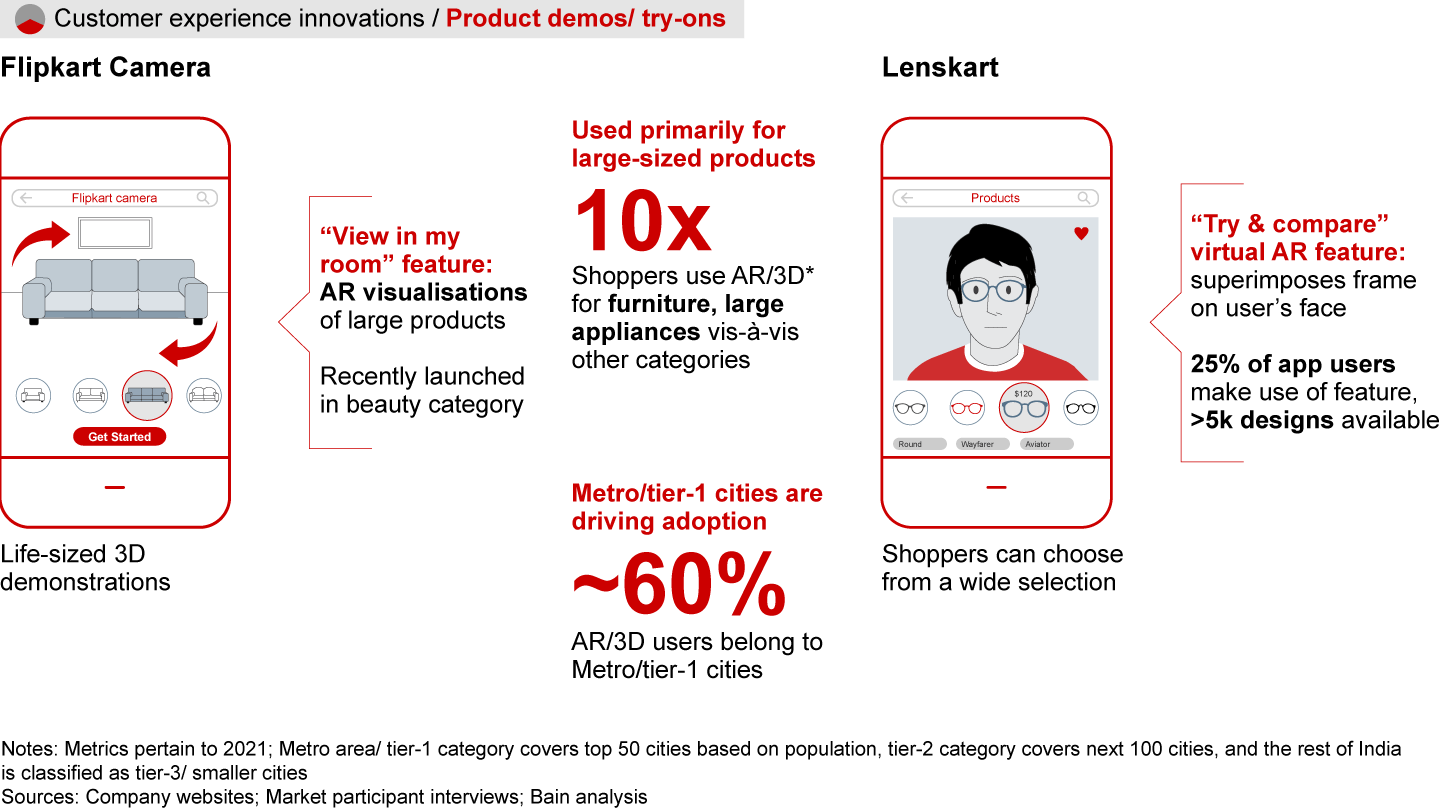
      Customer experience innovations: Technology-led disruptions have tremendously enhanced the online shopper experience from discovery to purchase. These improvements range from innovative search mechanisms—voice, vernacular, and image-based search—to applications utilising augmented reality (AR), virtual reality (VR), and artificial intelligence (AI). Made-for-Bharat innovations such as voice- and vernacular-based search have continued to gain traction, with 5x growth in voice-search users and 3x growth in vernacular-search users over the past year. These innovations are helping make shopping easier for a new wave of users: Half of all vernacular-search shoppers are new online shoppers. Most of these vernacular shoppers (70%) belong to tier-3 or smaller cities. Simultaneously, AR/VR applications such as product try-ons and demos are gaining popularity. For instance, Flipkart’s camera feature allows users to superimpose images of furniture and large appliances on live videos of their rooms through camera scanning.

      These disruptions will pave the way for the next wave of e-retail growth in India.

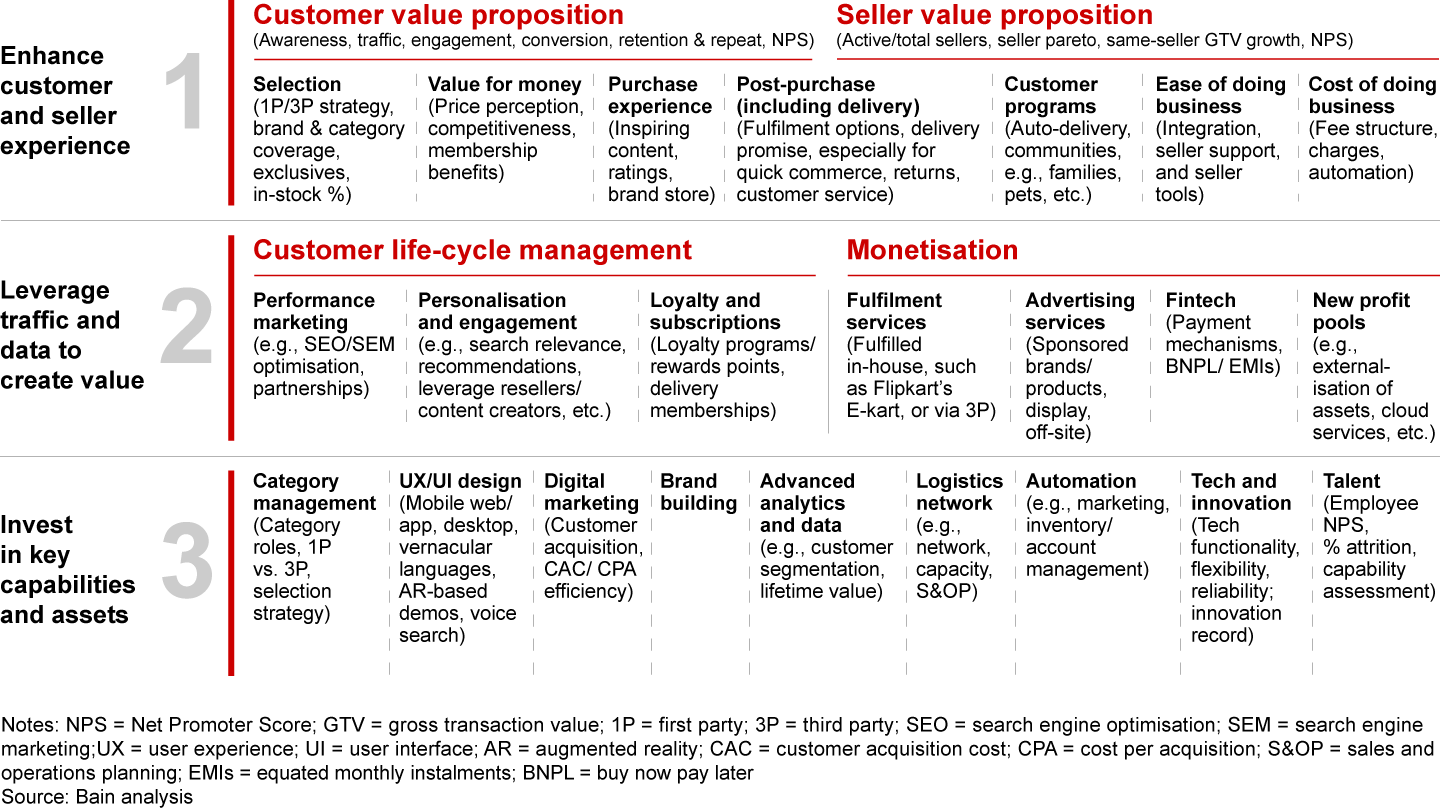
      Accelerated scale-up of e-retail has implications for both platforms shaping e-retail in the country and for brands looking to tap this crucial channel. Platforms—both horizontal and vertical—need to focus on delivering superior customer and seller experience, leveraging traffic and data to create value and building relevant capabilities and moats. In parallel, brands will need to optimise channel mix, design a tailored assortment, drive high visibility, and build differentiated capabilities around supply chain and data.

      E-retail market and shopping dynamics

      • India’s e-retail market is estimated to be $50 billion in 2022, growing at 25% over 2021. The market is expected to scale to $150–$170 billion in 2027, with up to 1 in 10 retail dollars spent online.
      • This secular growth is supported by strong underlying fundamentals: a large consumer base with growing affluence, albeit from low levels currently; growing Internet and smartphone penetration (enabled by low data prices); and low shipment costs.
      • The mix of categories purchased online will change. Fashion, general merchandise, and grocery, which have the highest penetration headroom vs. mature e-retail markets, will grow disproportionately and account for two-thirds of the e-retail market.
      • India’s e-retail shopper base scaled to 180–190 million in 2021, with 40–50 million shoppers added in 2021 alone. The majority of these shoppers (about 60%) come from tier-3 or smaller cities. A new generation of digital natives—Gen Z (18–25 years of age)—has started transacting online and will become a critical cohort in the future.
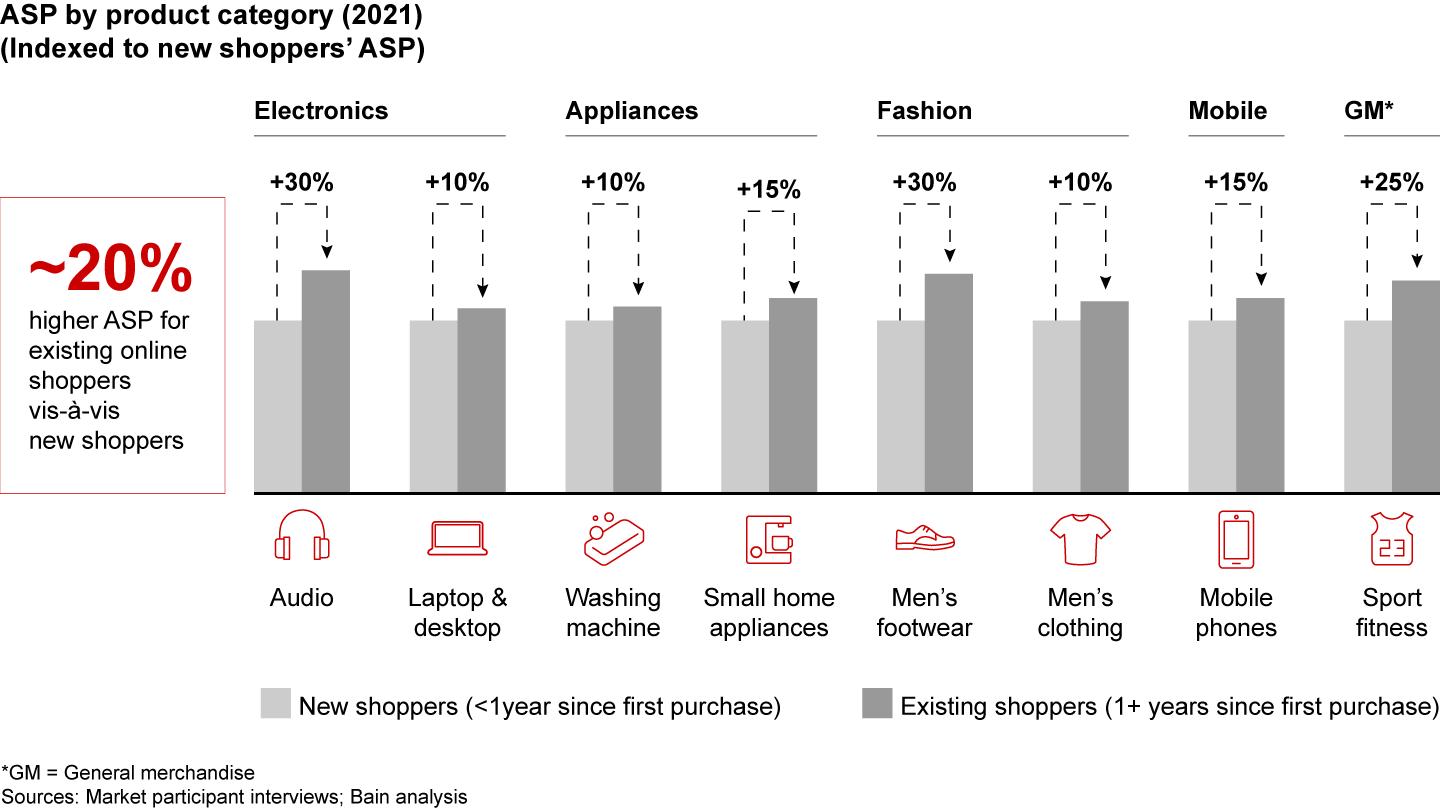
      • Fashion and low-price items have been pivotal to onboard new shoppers. More than 40% of new shoppers bought fashion in their first online purchase, and the average selling price (ASP) for items bought by new shoppers was 20% lower than for existing shoppers.
      • Growth in the e-retail market has been accompanied by rapid expansion in the seller base and efficient development in the logistics infrastructure. Seller growth has outpaced e-retail growth, with the number of sellers increasing at 35% annually. E-retail scale has enabled a consistent reduction in cost per shipment, which has fallen to 8% of average order value (vs. 10% in China).
      Figure 1
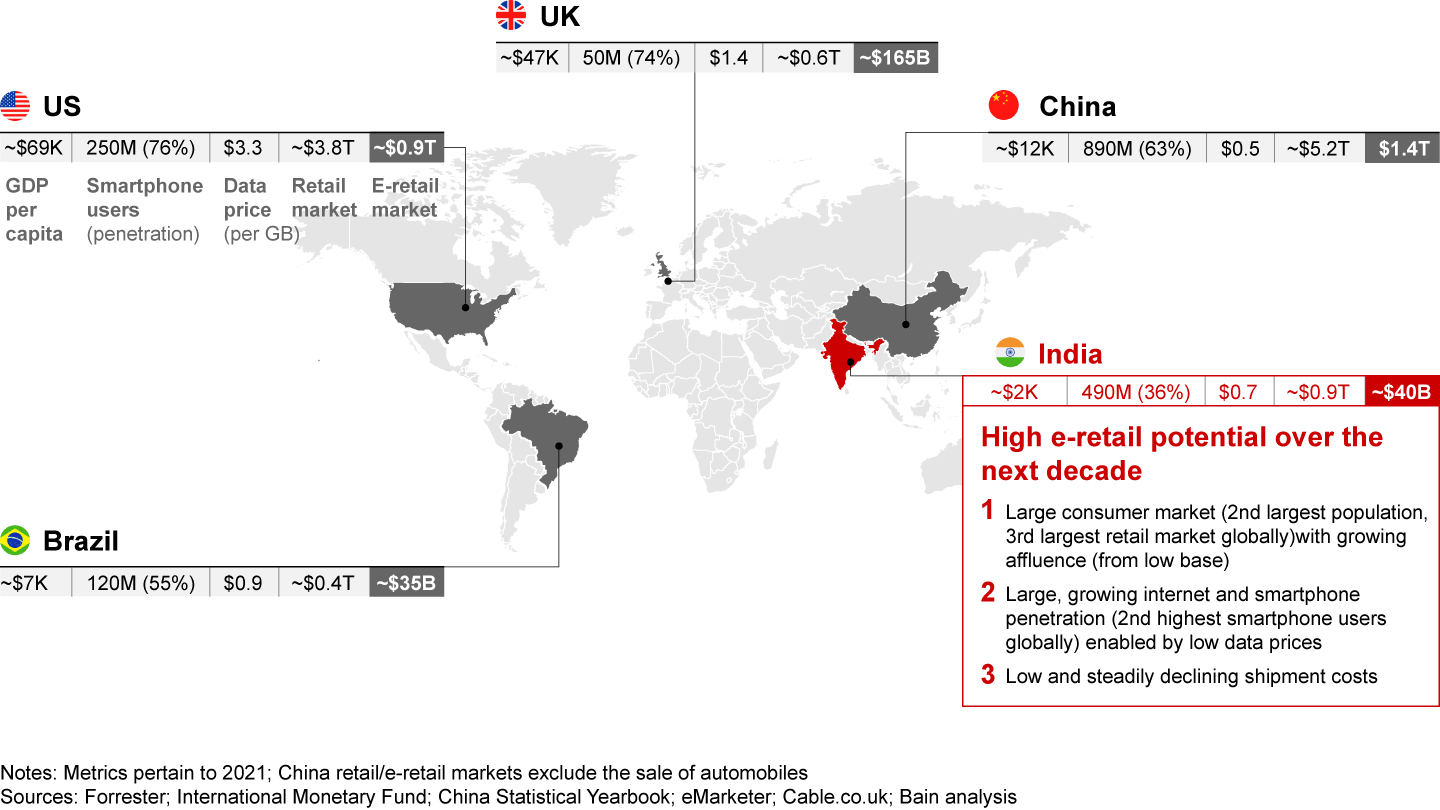
      India has robust fundamentals to support a large and growing e-retail market
      Figure 2
      Indian e-retail market is estimated to reach about $50B in 2022 and grow at more than 25% per annum to scale to $150–$170B by 2027
      Figure 3
      E-retail penetration headroom exists across categories
      Figure 4
      Shopper addition is key for growth, with 40–50M shoppers added in 2021 alone
      Figure 5
      New e-retail shoppers are a diverse group
      Figure 6
      Fashion is a crucial category to onboard shoppers; majority initial online purchases are at entry price points
      Figure 7
      Mature shoppers buy at higher price points across categories
      Figure 8
      This growing shopper base is also much more engaged
      Figure 9
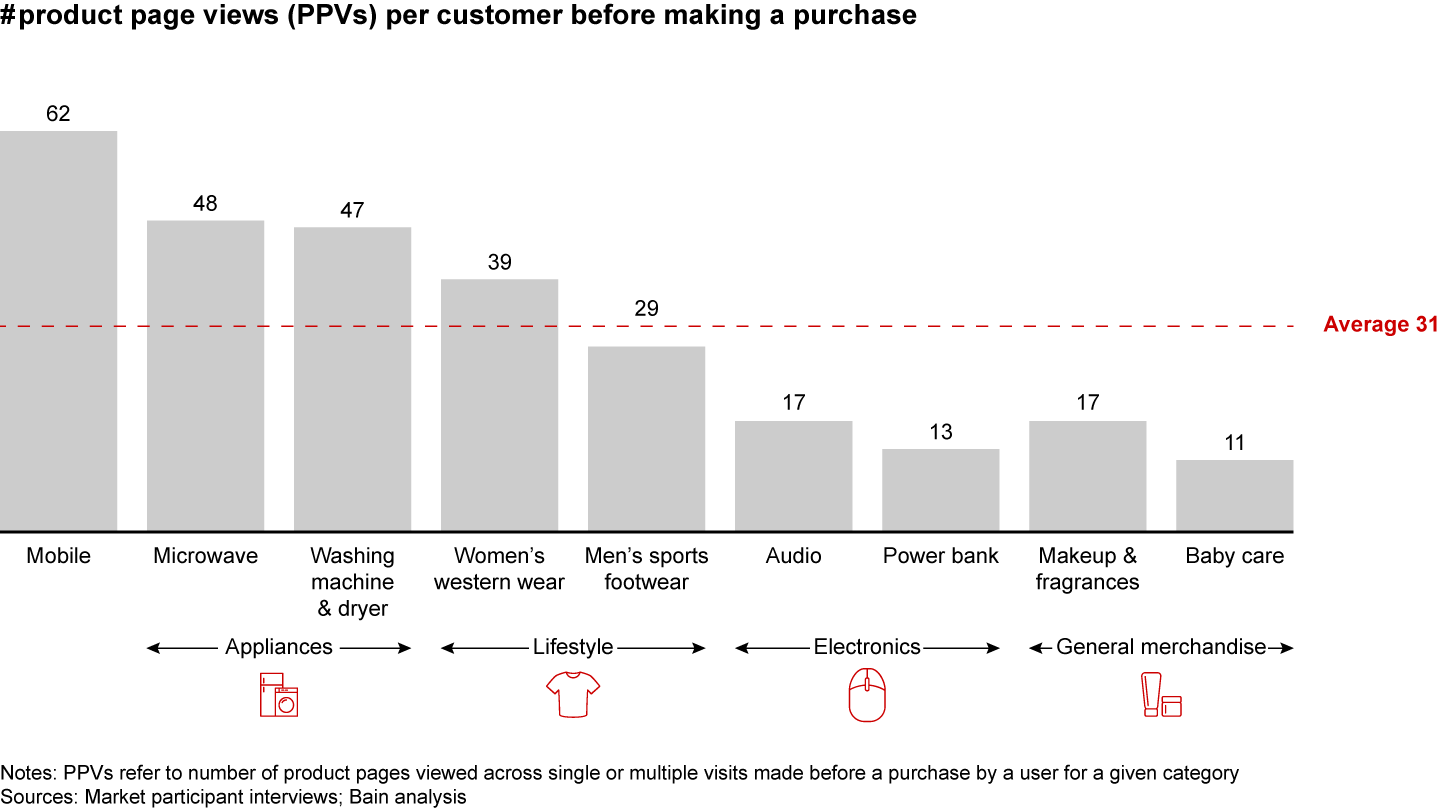
      Shoppers browse more than 15 product pages for most categories
      Figure 10
      E-retail growth has provided sellers, especially those in small cities, access to a wider shopper base
      Figure 11
      Deep logistics development has democratized access to e-retail for Bharat

      The future of e-retail—new customers, new e-retail models, CX innovations

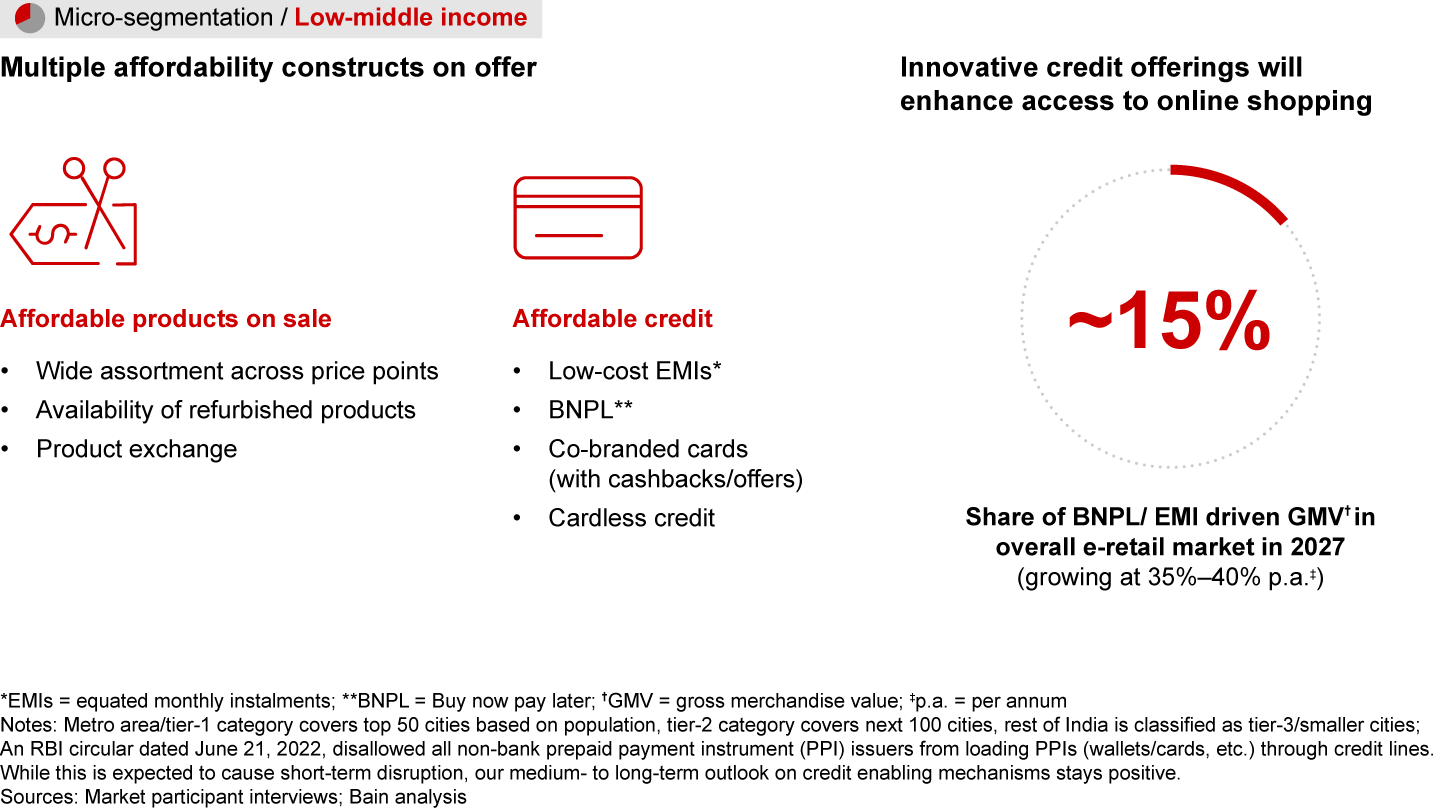
      • E-retail in India has evolved materially over the last decade. Phase 1.0 (pre 2015) can be characterized as a phase of “cautious early adoption.” The medium was restricted to select households (typically affluent, metro/tier-1) and categories (typically mobiles, fashion). Phase 2.0 (2015–20) heralded an era of growth and massification. E-retail expanded to new shoppers across tier-2 cities (enabled by a crash in data prices) and new categories (such as grocery, beauty, etc.). This was juxtaposed by a dramatic increase in ecosystem maturity with the scale-up of third-party logistics, innovative affordability constructs like buy now pay later (BNPL), low-cost equated monthly installments (EMIs) and co-branded cards, etc.
      • The Covid-19 pandemic steered India’s e-retail market into Phase 3.0 of its evolution—an era of innovation. Over the last 12–18 months, three distinct hallmarks of Phase 3.0 have emerged. These include the emergence of shopper micro-segments; the introduction of novel business models; and the use of technology to deliver a bespoke, life-like customer experience to shoppers.
      • In this phase of growth (Phase 3.0), platforms will need to solve for distinct shopper micro-segments across geographies, incomes, and age groups. Three out of five shoppers belong to tier-2 or smaller cities, one in three shoppers belong to low-to-middle income segments, and one in three shoppers is Gen Z (<25 years). Each of these micro-segments exhibits distinct shopping behaviors. For instance, Gen Z shoppers frequently use wish lists to shortlist products before adding items to the cart.
      • India’s e-retail market is witnessing the emergence of novel business models in Phase 3.0 of growth. These models, currently at different stages of maturity, include:
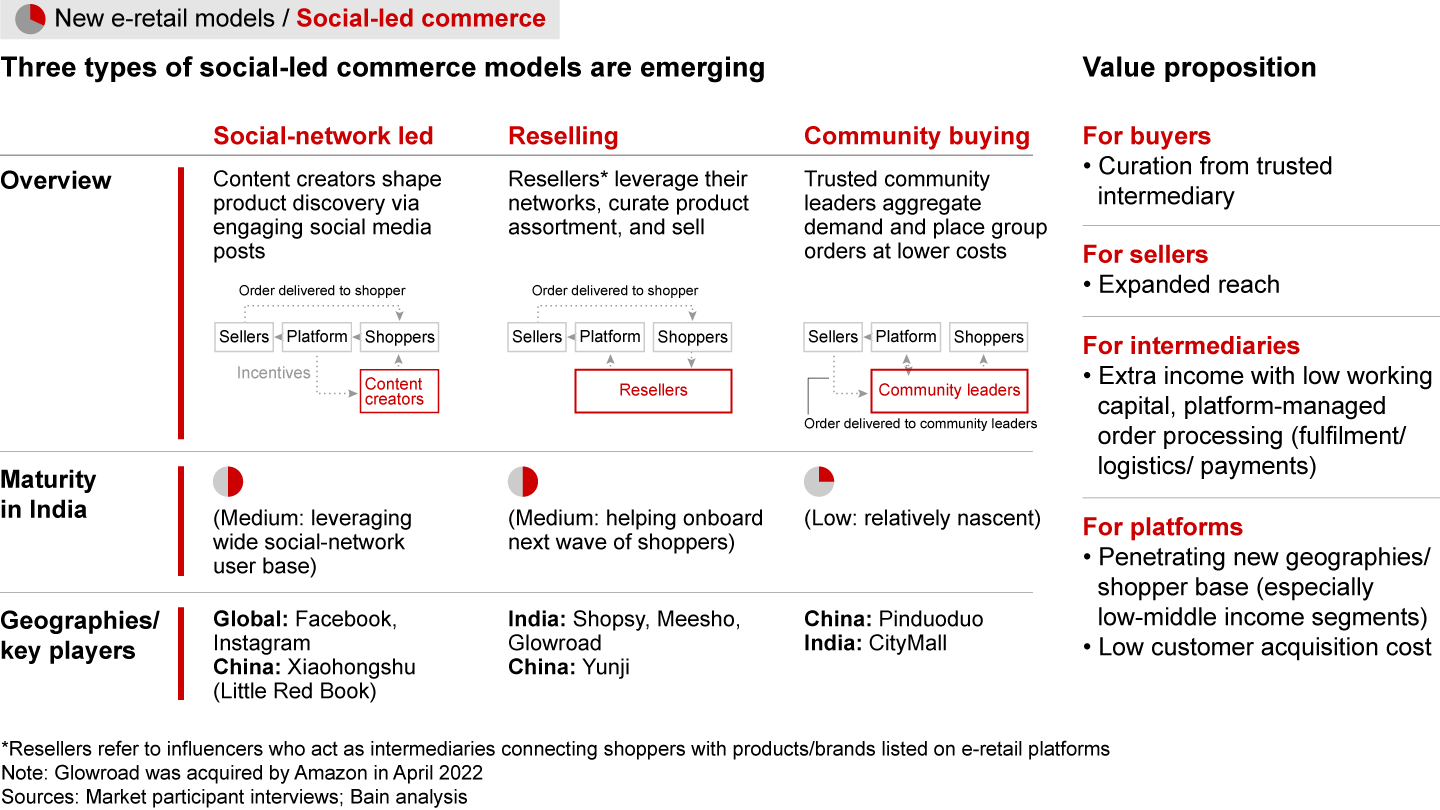
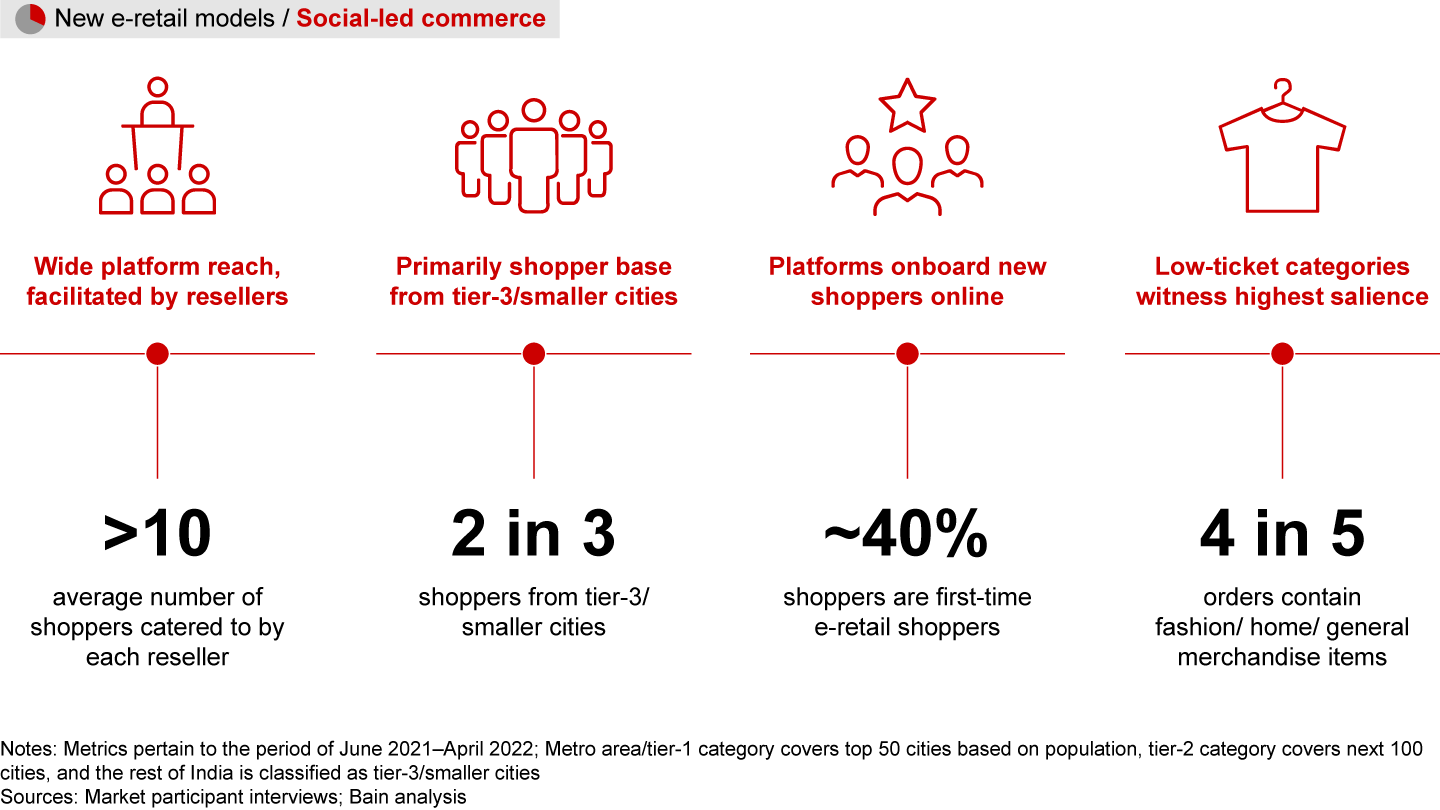
        • Social-led commerce: Includes three models—social-network led, reseller-led, and community buying. About 40% of shoppers using the reseller model are first-time e-retail shoppers, and two-thirds of shoppers belong to tier-3 or smaller cities.
        • Video/live commerce: The model is nascent and has seen limited traction beyond China and Southeast Asia. However, there is enormous potential with over 600 million users of short-video platforms expected in India by 2025.
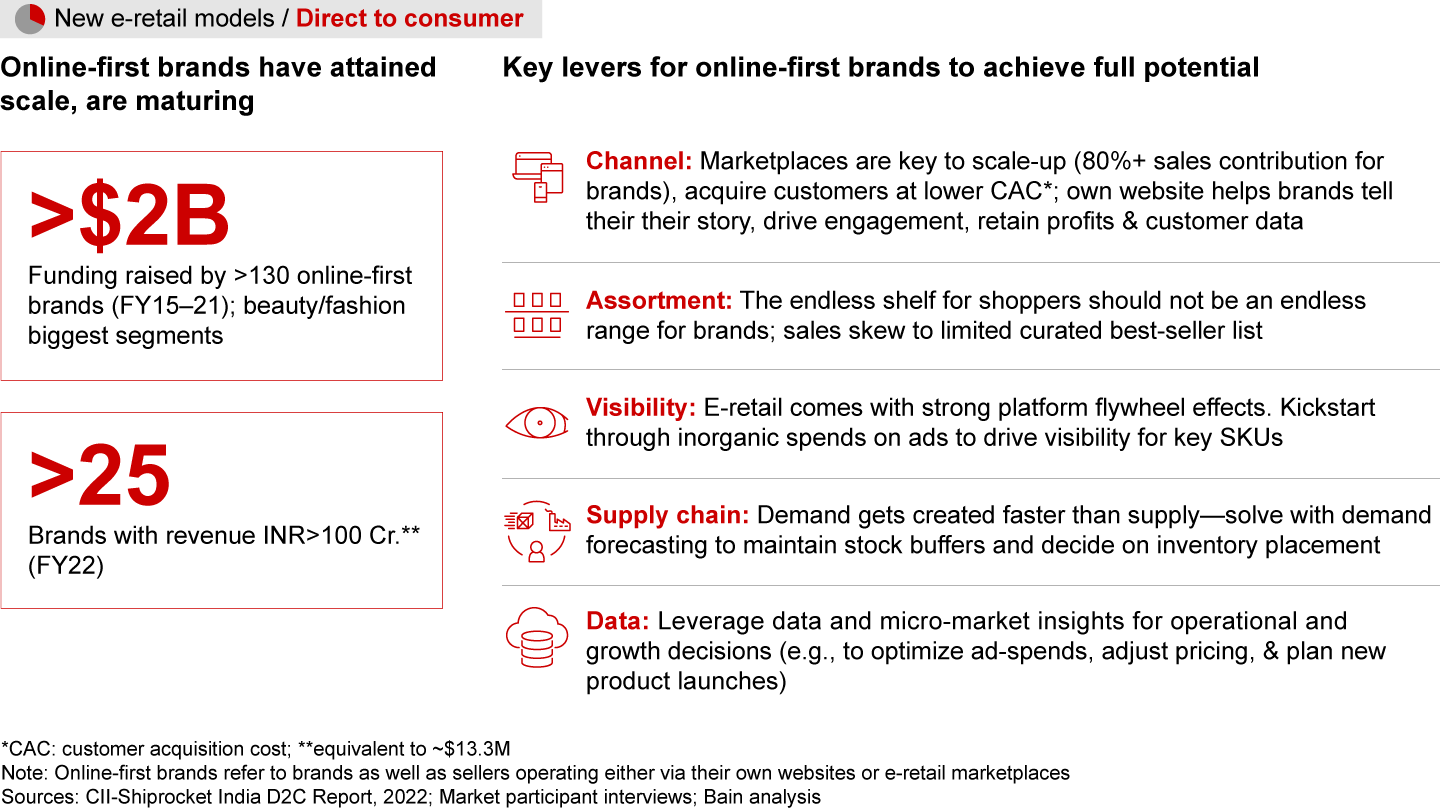
        • Direct to consumer (D2C) commerce: India has witnessed a massive scale-up of online-first brands across categories. These brands have garnered more than $2 billion in funding between fiscal years 2015 and 2021.
        • Quick commerce: Q-commerce, a recent disruption globally, has gained interest in India. Indian Q-commerce players raised more than $3 billion in funding up to June 2022. However, long-term sustainability of the model (especially <15-minute model) is unproven, especially in the absence of delivery and/or convenience fees.
      • Tech-led innovation will take centre stage in Phase 3.0 of e-retail growth. Players are already utilising technology to deliver an upgraded customer experience to shoppers. Notable examples include voice, vernacular, and image-based search; augmented/virtual reality (AR/VR) and AI-based product demos; and virtual shop fronts. Each innovation caters to distinct customer micro- segments. For example, vernacular search is key for shoppers from smaller cities (70% of vernacular shoppers are from tier-3 or smaller cities), whereas AR-based visualisation is key for shoppers in metro areas (60% of users of Flipkart’s camera feature are from metro or tier-1 cities).
      • Phase 3.0 of India’s e-retail evolution will have profound implications for platforms and brands alike.
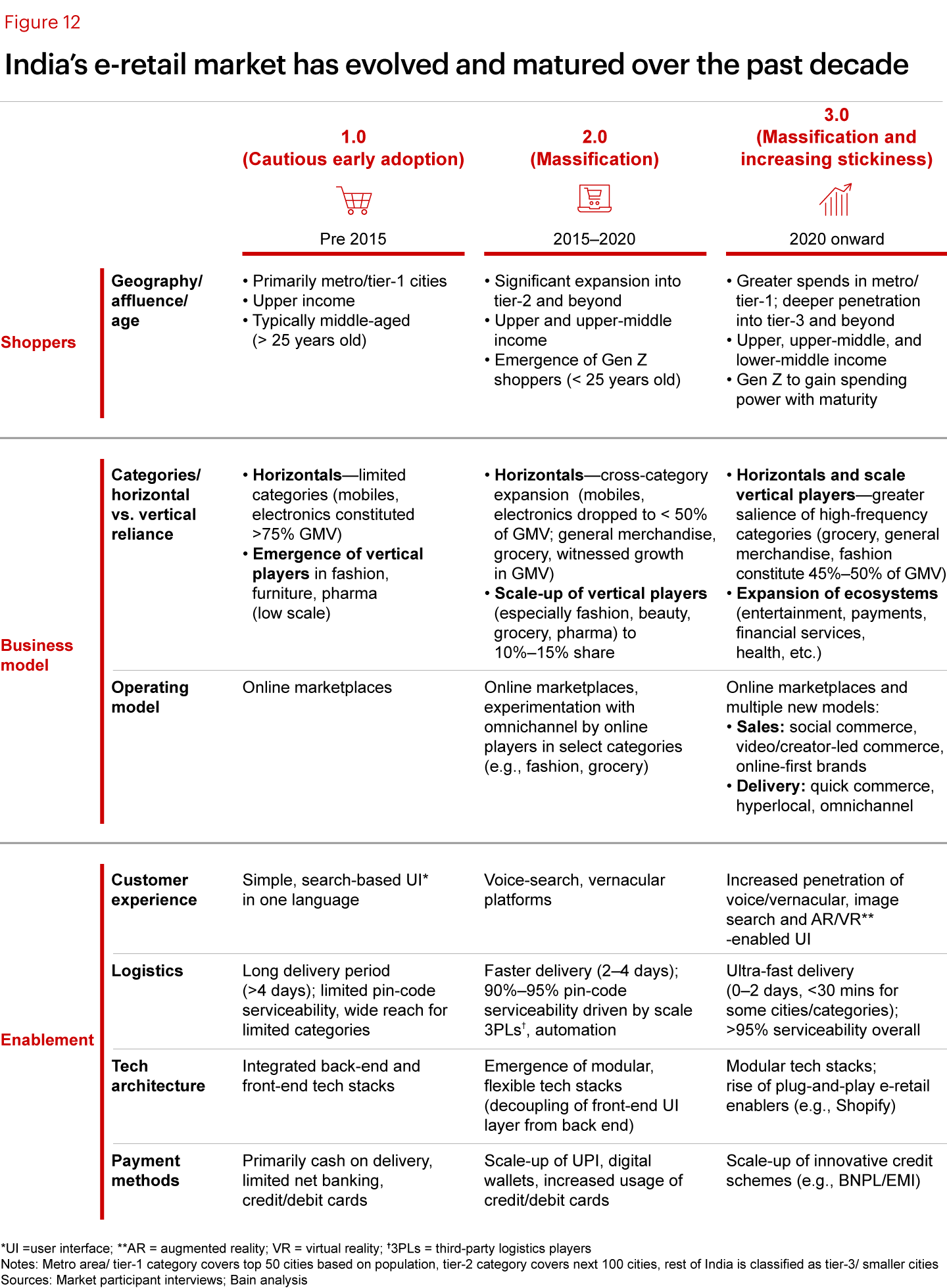
      Figure 13
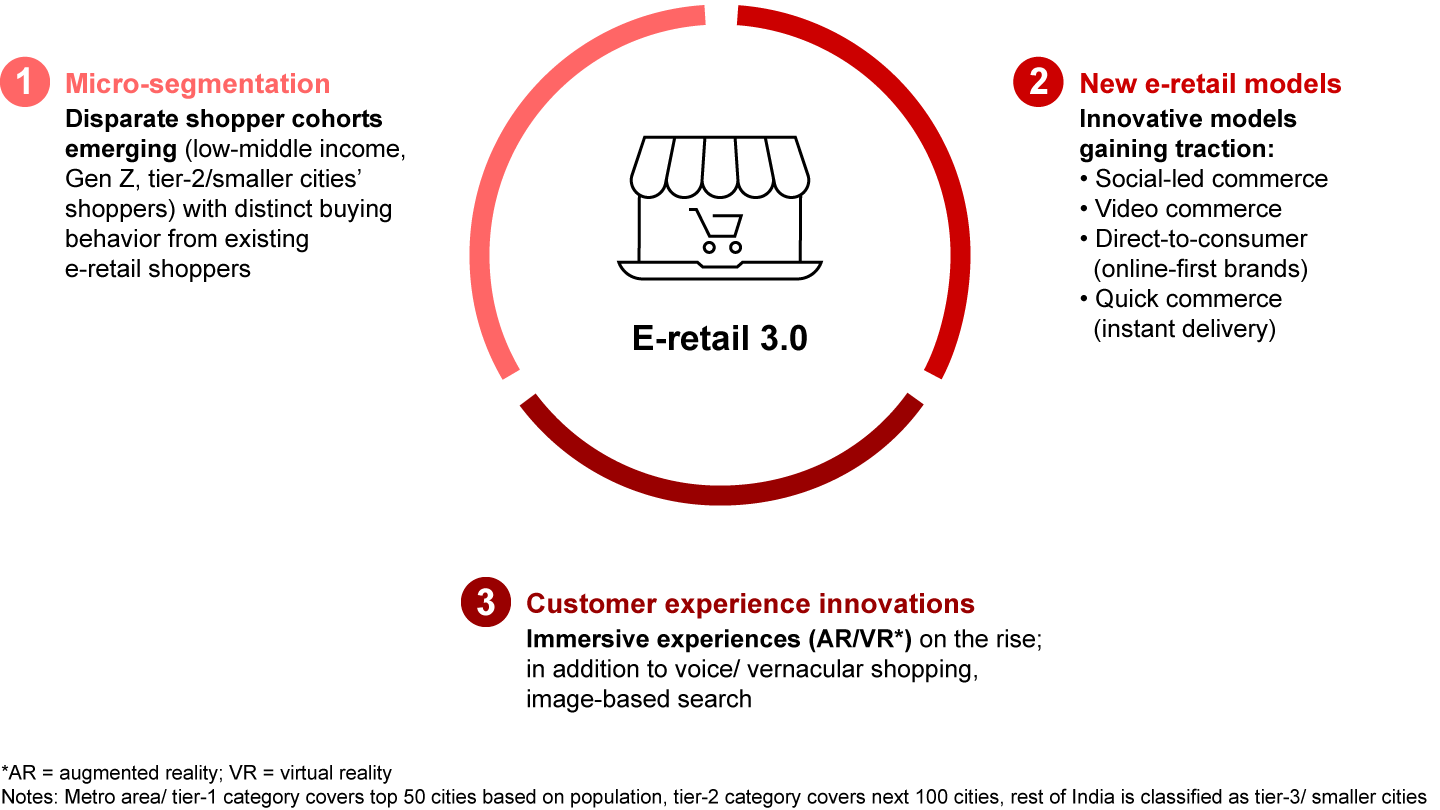
      India’s evolving e-retail market has been marked by multiple disruptions over the past 12 to 18 months
      Figure 14
      Disparate shopper cohorts have emerged with different shopping behavior
      Figure 15
      Innovative affordability constructs have facilitated online shopping
      Figure 16
      A slew of alternate business models at varying levels of maturity are redefining online shopping, with long-term sustainability yet to be proven
      Figure 17
      Social-led commerce is expanding the reach of e-retail
      Figure 18
      Social networks globally are becoming new points of discovery and enabling seamless transition to online purchases
      Figure 19
      The reseller model has facilitated wider e-retail reach and onboarded new shopper cohorts
      Figure 20
      Video/live commerce models aim to manifest latent needs and recreate the offline shopping experience virtually
      Figure 21
      Video/live commerce involves a three-sided marketplace enabled by a robust tech platform
      Figure 22
      Online-first brands have gone from strength to strength and are expanding their D2C business
      Figure 23
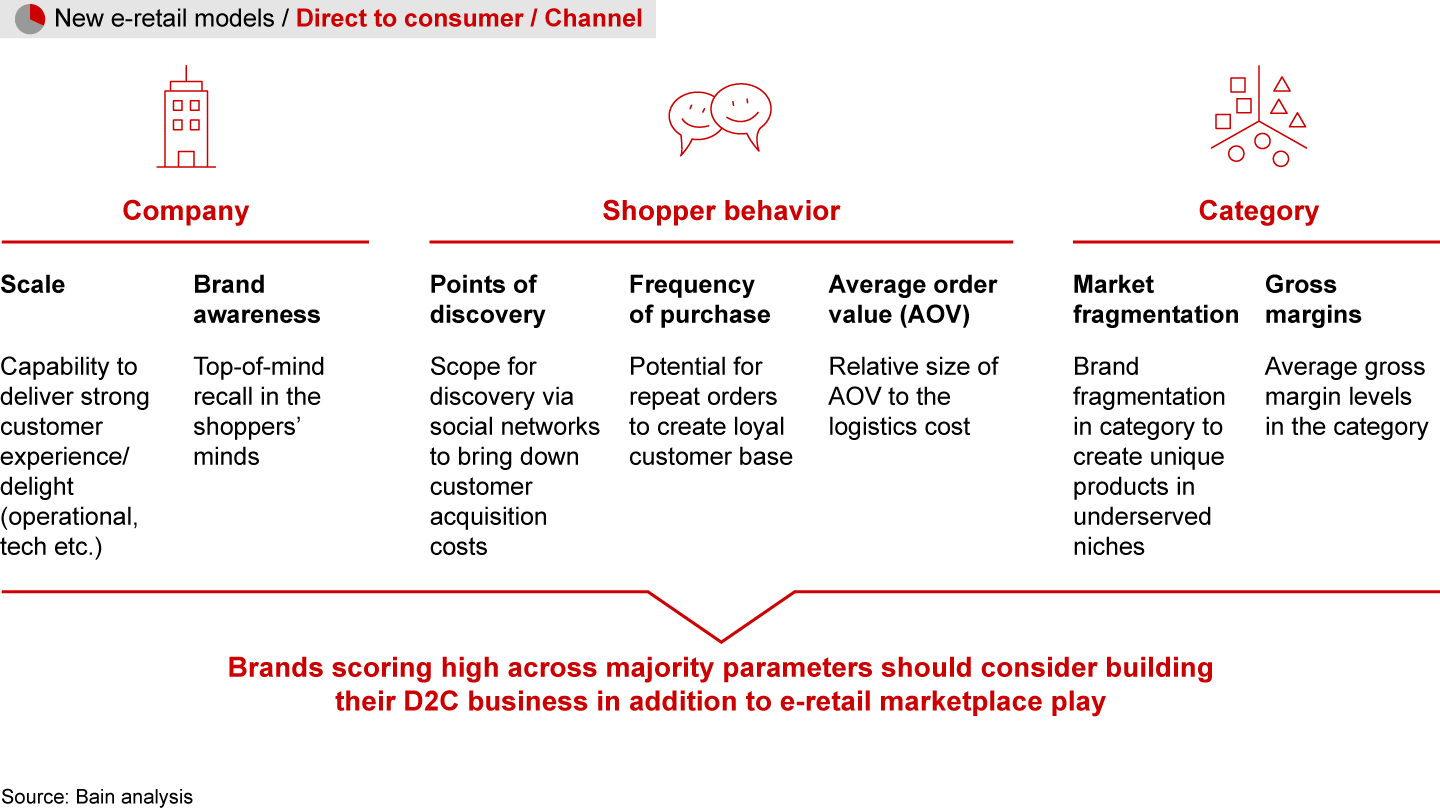
      The channel of focus (marketplace vs. Brand.com) for online-first brands and the timing of the shift is influenced by several factors
      Figure 24
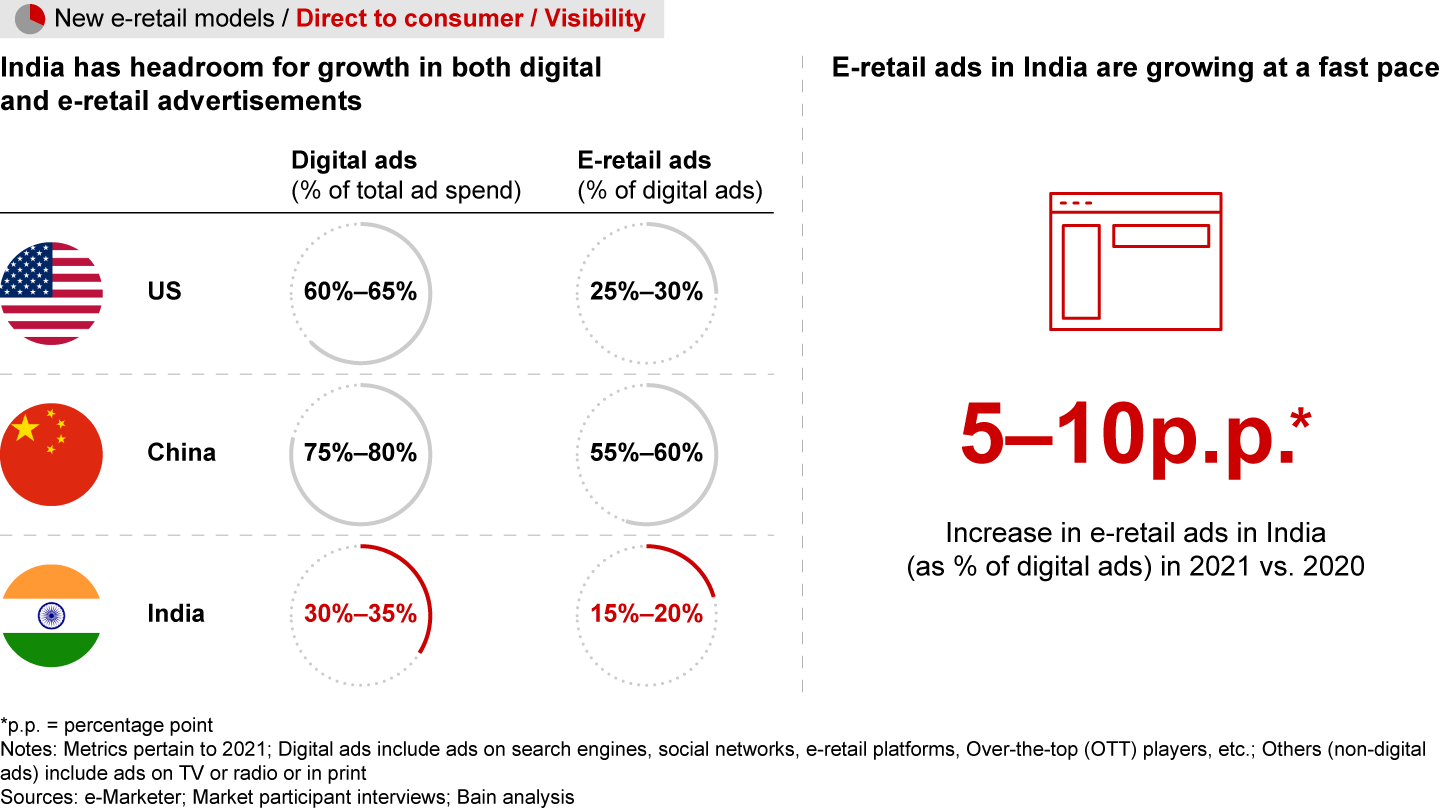
      Digital advertising, especially on e-retail platforms is key for online-first brands to drive growth
      Figure 25
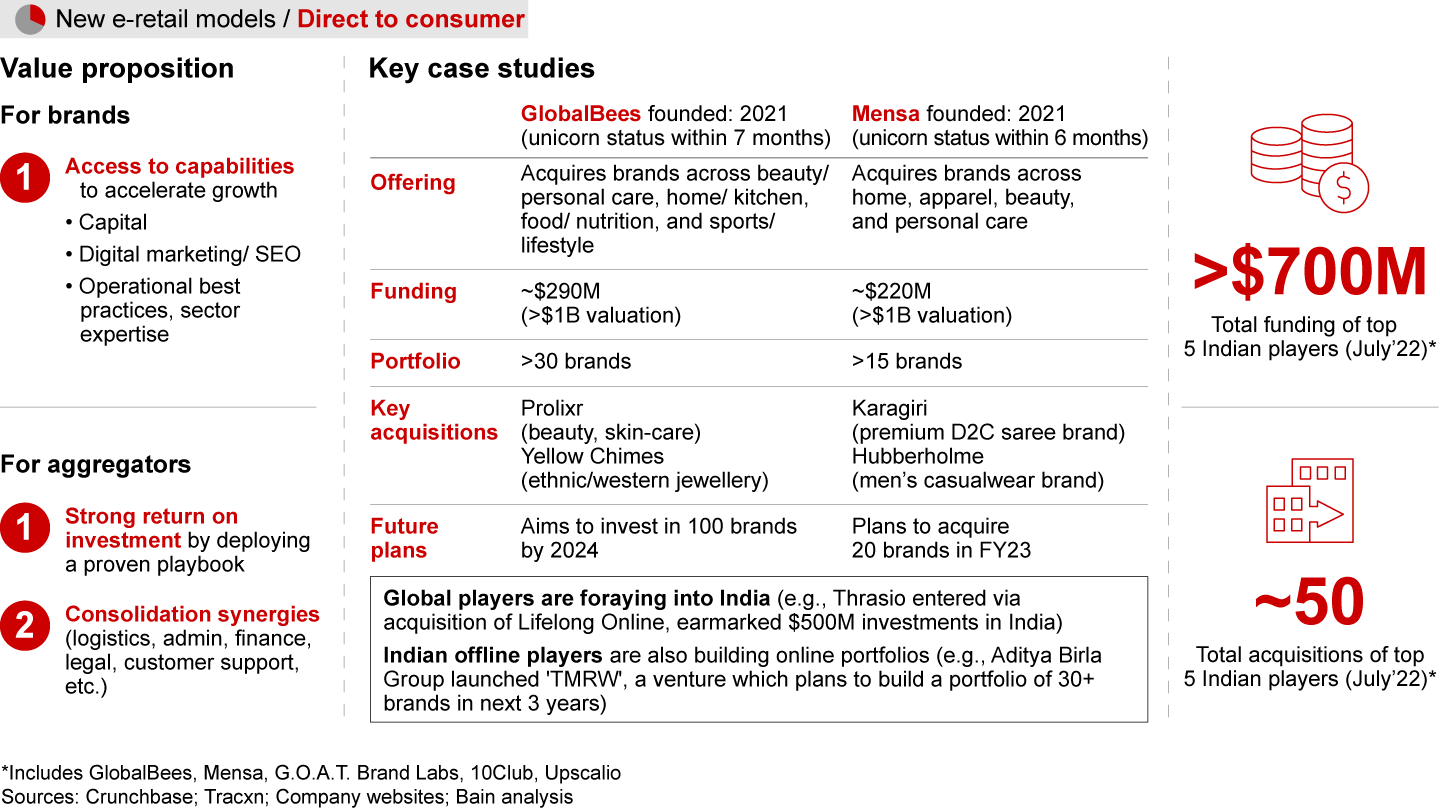
      Brand aggregators are helping turbocharge these brands
      Figure 26
      Quick commerce has seen massive growth and investor interest, but sustainability of the standalone model remains unproven
      Figure 27
      Made-for-Bharat e-commerce innovations, such as search via voice and in vernacular languages, are continuing to gain traction
      Figure 28
      AR/VR and AI are bringing the offline store experience to the comfort of customers’ homes
      Figure 29
      Platforms are utilizing AR to create virtual replicas of products and make shopping easier for customers
      Figure 30
      E-retail platforms need to focus on 3 key themes to achieve full potential
      • About Flipkart

        The Flipkart Group is one of India’s leading digital commerce entities and includes group companies Flipkart, Myntra, Flipkart Health+, Flipkart Wholesale, and Cleartrip. Started in 2007, Flipkart has enabled millions of consumers, sellers, merchants, and small businesses to be a part of India’s digital commerce revolution, with a registered customer base of more than 400 million, offering over 150 million products across 80+ categories. Our efforts to democratize commerce in India, drive access and affordability, delight customers, create lakhs of jobs in the ecosystem, and empower generations of entrepreneurs and MSMEs have inspired us to innovate on many industry firsts. Flipkart is known for pioneering services such as Cash on Delivery, No Cost EMI and easy returns—customer-centric innovations have made online shopping more accessible and affordable for millions of Indians. Together with its group companies, Flipkart is committed to transforming commerce in India through technology.

      Authors
      • Headshot of Arpan Sheth
        Arpan Sheth
        Partner, Washington, DC
      • Headshot of Shyam Unnikrishnan
        Shyam Unnikrishnan
        Partner, Bengaluru
      • Headshot of Manan Bhasin
        Manan Bhasin
        Partner, Mumbai
      • Headshot of Abhishek Raj
        Abhishek Raj
        Senior Director, Strategy and Operations, Mumbai
      Contact us
      Related Industries
      • Consumer Products
      • Retail
      Retail
      US Consumer Health Update

      Upper-income earners seem to be adopting a defensive position but are not yet reporting negative spending intentions.

      Read More
      Retail
      Weight-Loss Drug Users Spend Less on Groceries, Fast Food

      GLP-1 drugs result in notable drops in food spending. By 2030, as many as one in four Americans may have tried them.

      Read More
      Retail
      Adapting to Channel Evolution: Opportunities and Challenges for FMCG

      China Shopper Report 2025, vol. 2

      Read More
      Retail
      How Tariffs Are Shaping US Consumer Behavior

      Pricing fears have eased a little, but more shoppers say they are accelerating purchases.

      Read More
      Retail
      Embracing the “Do-Say” Gap

      Three pragmatic questions that shift sustainability from ambition to action.

      Read More
      Published in October 2022
      Tags
      • Consumer Products
      • Retail

      How We've Helped Clients

      Sustainability A Manufacturer Vows to “Push to Zero” Carbon Emissions

      Read case study

      Sales and Marketing Inspiring retail employees to think and act like owners

      Read case study

      Strategy Focus on core delivers growth for retailer

      Read case study

      Ready to talk?

      We work with ambitious leaders who want to define the future, not hide from it. Together, we achieve extraordinary outcomes.

      Stay ahead in a rapidly changing world. Subscribe to Bain Insights, our monthly look at the critical issues facing global businesses.

      *I have read and understand Bain’s Privacy Notice.

      Please read and agree to the Privacy Policy.
      Bain & Company
      Contact us Sustainability Accessibility Terms of use Privacy Modern Slavery Act Statement Cookie Policy Sitemap Log In

      © 1996-2026 Bain & Company, Inc.

      Contact Bain

      How can we help you?

      • Business inquiry
      • Career information
      • Press relations
      • Partnership request
      • Speaker request
      See all offices