
Skip to Content
  • Offices

    Offices

    North & Latin America
    • Atlanta
    • Austin
    • Bogota
    • Boston
    • Buenos Aires
    • Chicago
    • Dallas
    • Denver
    • Houston
    • Los Angeles
    • Mexico City
    • Minneapolis
    • Monterrey
    • Montreal
    • New York
    • Rio de Janeiro
    • San Francisco
    • Santiago
    • São Paulo
    • Seattle
    • Silicon Valley
    • Toronto
    • Washington, DC
    Europe & Africa
    • Amsterdam
    • Athens
    • Berlin
    • Brussels
    • Copenhagen
    • Dusseldorf
    • Frankfurt
    • Helsinki
    • Istanbul
    • Johannesburg
    • Kyiv
    • Lisbon
    • London
    • Madrid
    • Milan
    • Munich
    • Oslo
    • Paris
    • Rome
    • Stockholm
    • Vienna
    • Warsaw
    • Zurich
    Middle East
    • Doha
    • Dubai
    • Riyadh
    Asia & Australia
    • Bangkok
    • Beijing
    • Bengaluru
    • Brisbane
    • Ho Chi Minh City
    • Hong Kong
    • Jakarta
    • Kuala Lumpur
    • Manila
    • Melbourne
    • Mumbai
    • New Delhi
    • Perth
    • Seoul
    • Shanghai
    • Singapore
    • Sydney
    • Tokyo
    See all offices
  • Alumni
  • Media Center
  • Subscribe
  • Contact
  • Global | English

    Select your region and language

    Global
    • Global (English)
    North & Latin America
    • Brazil (Português)
    • Argentina (Español)
    • Canada (Français)
    • Chile (Español)
    • Colombia (Español)
    Europe, Middle East, & Africa
    • France (Français)
    • DACH Region (Deutsch)
    • Italy (Italiano)
    • Spain (Español)
    • Greece (Elliniká)
    Asia & Australia
    • China (中文版)
    • Korea (한국어)
    • Japan (日本語)
  • Saved items (0)
    Saved items (0)

    You have no saved items.

    Bookmark content that interests you and it will be saved here for you to read or share later.

    Explore Bain Insights
  • Industries
    Main menu

    Industries

    • Aerospace & Defense
    • Agribusiness
    • Chemicals
    • Construction & Infrastructure
    • Consumer Products
    • Financial Services
    • Healthcare & Life Sciences
    • Industrial Machinery & Equipment
    • Media & Entertainment
      Industries
      Media & Entertainment
      • Media Lab
    • Metals
    • Mining
    • Oil & Gas
    • Paper & Packaging
    • Private Equity
      Industries
      Private Equity
      • Due Diligence
      • Exit Planning
      • Firm Strategy & Operations
      • Portfolio Value Creation
    • Social Impact
    • Retail
    • Technology
    • Telecommunications
      Industries
      Telecommunications
      • Capital Expenditure
      • Telco Digital Transformation
    • Transportation
    • Travel & Leisure
    • Utilities & Renewables
  • Consulting Services
    Main menu

    Consulting Services

    • Customer Experience
    • Sustainability
    • Innovation
    • M&A
    • Operations
    • People & Organization
    • Private Equity
    • Sales & Marketing
    • Strategy
    • AI, Insights, and Solutions
    • Technology
    • Transformation
  • Digital
  • Insights
    Main menu

    Insights

    • Industry Insights
    • Services Insights
    • Bain Books
    • Webinars
    • Bain Futures
    View all Insights
    Featured topics
    • Tariff Response
    • Artificial Intelligence
    • Thriving in Uncertainty
    • Executive Conversations
    • Macro Trends
    • M&A Report
    • Healthcare Private Equity Report
    • Paper & Packaging Report
    • Technology Report
    • CEO's Guide to Sustainability
    • CEO Insights
    • CFO Insights
    • COO Insights
    • CIO Insights
    • CMO Insights
    View all featured topics
  • About
    Main menu

    About

    • What We Do
    • What We Believe
    • Our People & Leadership
    • Client Results
    • Awards & Recognition
    • Global Affiliations
    Further: Our global responsibility
    • Sustainability
    • Social Impact
    • World Economic Forum
    Learn more about Further
  • Careers
    Main menu

    Careers

    • Work with Us
      Careers
      Work with Us
      • Find Your Place
      • Our Work Areas
      • Integrated Teams
      • Students
      • Internships & Programs
      • Recruiting Events
    • Life at Bain
      Careers
      Life at Bain
      • Blog: Inside Bain
      • Career Stories
      • Our People
      • Where We Work
      • Supporting Your Growth
      • Affinity Groups
      • Benefits
    • Impact Stories
    • Hiring Process
      Careers
      Hiring Process
      • What to Expect
      • Interviewing
    FIND JOBS
  • Offices
    Main menu

    Offices

    • North & Latin America
      Offices
      North & Latin America
      • Atlanta
      • Austin
      • Bogota
      • Boston
      • Buenos Aires
      • Chicago
      • Dallas
      • Denver
      • Houston
      • Los Angeles
      • Mexico City
      • Minneapolis
      • Monterrey
      • Montreal
      • New York
      • Rio de Janeiro
      • San Francisco
      • Santiago
      • São Paulo
      • Seattle
      • Silicon Valley
      • Toronto
      • Washington, DC
    • Europe & Africa
      Offices
      Europe & Africa
      • Amsterdam
      • Athens
      • Berlin
      • Brussels
      • Copenhagen
      • Dusseldorf
      • Frankfurt
      • Helsinki
      • Istanbul
      • Johannesburg
      • Kyiv
      • Lisbon
      • London
      • Madrid
      • Milan
      • Munich
      • Oslo
      • Paris
      • Rome
      • Stockholm
      • Vienna
      • Warsaw
      • Zurich
    • Middle East
      Offices
      Middle East
      • Doha
      • Dubai
      • Riyadh
    • Asia & Australia
      Offices
      Asia & Australia
      • Bangkok
      • Beijing
      • Bengaluru
      • Brisbane
      • Ho Chi Minh City
      • Hong Kong
      • Jakarta
      • Kuala Lumpur
      • Manila
      • Melbourne
      • Mumbai
      • New Delhi
      • Perth
      • Seoul
      • Shanghai
      • Singapore
      • Sydney
      • Tokyo
    See all offices
  • Alumni
  • Media Center
  • Subscribe
  • Contact
  • Global | English
    Main menu

    Select your region and language

    • Global
      Select your region and language
      Global
      • Global (English)
    • North & Latin America
      Select your region and language
      North & Latin America
      • Brazil (Português)
      • Argentina (Español)
      • Canada (Français)
      • Chile (Español)
      • Colombia (Español)
    • Europe, Middle East, & Africa
      Select your region and language
      Europe, Middle East, & Africa
      • France (Français)
      • DACH Region (Deutsch)
      • Italy (Italiano)
      • Spain (Español)
      • Greece (Elliniká)
    • Asia & Australia
      Select your region and language
      Asia & Australia
      • China (中文版)
      • Korea (한국어)
      • Japan (日本語)
  • Saved items  (0)
    Main menu
    Saved items (0)

    You have no saved items.

    Bookmark content that interests you and it will be saved here for you to read or share later.

    Explore Bain Insights
  • Industries
    • Industries

      • Aerospace & Defense
      • Agribusiness
      • Chemicals
      • Construction & Infrastructure
      • Consumer Products
      • Financial Services
      • Healthcare & Life Sciences
      • Industrial Machinery & Equipment
      • Media & Entertainment
      • Metals
      • Mining
      • Oil & Gas
      • Paper & Packaging
      • Private Equity
      • Social Impact
      • Retail
      • Technology
      • Telecommunications
      • Transportation
      • Travel & Leisure
      • Utilities & Renewables
  • Consulting Services
    • Consulting Services

      • Customer Experience
      • Sustainability
      • Innovation
      • M&A
      • Operations
      • People & Organization
      • Private Equity
      • Sales & Marketing
      • Strategy
      • AI, Insights, and Solutions
      • Technology
      • Transformation
  • Digital
  • Insights
    • Insights

      • Industry Insights
      • Services Insights
      • Bain Books
      • Webinars
      • Bain Futures
      View all Insights
      Featured topics
      • Tariff Response
      • Artificial Intelligence
      • Thriving in Uncertainty
      • Executive Conversations
      • Macro Trends
      • M&A Report
      • Healthcare Private Equity Report
      • Paper & Packaging Report
      • Technology Report
      • CEO's Guide to Sustainability
      • CEO Insights
      • CFO Insights
      • COO Insights
      • CIO Insights
      • CMO Insights
      View all featured topics
  • About
    • About

      • What We Do
      • What We Believe
      • Our People & Leadership
      • Client Results
      • Awards & Recognition
      • Global Affiliations
      Further: Our global responsibility
      • Sustainability
      • Social Impact
      • World Economic Forum
      Learn more about Further
  • Careers
    Popular Searches
    • Agile
    • Digital
    • Strategy
    Your Previous Searches
      Recently Visited Pages

      Content added to saved items

      Saved items (0)

      Removed from saved items

      Saved items (0)

      Technology Report

      How Tech Leaders Commercialize Innovation

      How Tech Leaders Commercialize Innovation

      Today’s incumbents know how to nurture new businesses even when it means disrupting existing ones.

      By Matthew Crupi, Chris Johnson, and David Crawford

      • min read
      }

      Report

      How Tech Leaders Commercialize Innovation
      en
      At a Glance
      • Disruption rates are higher in technology than in other sectors. Typically, half of the 25 most valuable tech companies fall out of the top ranks every 10 years.
      • Recently, the most valuable tech companies have shown remarkable resilience, holding spots at the top for many years and expanding their share of market value. 
      • Their success relies on their ability to identify disruptive trends and successfully scale and commercialize them, creating “winner takes most” dynamics. 
      • These companies may be seen as having a competitive advantage at a time when significant innovations require enormous resources in computational power, connectivity, and data.

      This article is part of Bain's 2024 Technology Report.

      Explore the report

      Disruption in the technology sector hasn’t slowed down, but turnover among the top companies has: Four of the top five most valuable technology companies in 2024 were among the top tech companies in 2019, and three of the five were on the list in 2009—Microsoft, Apple, and Alphabet, which was then Google (see Figure 1).

      Figure 1
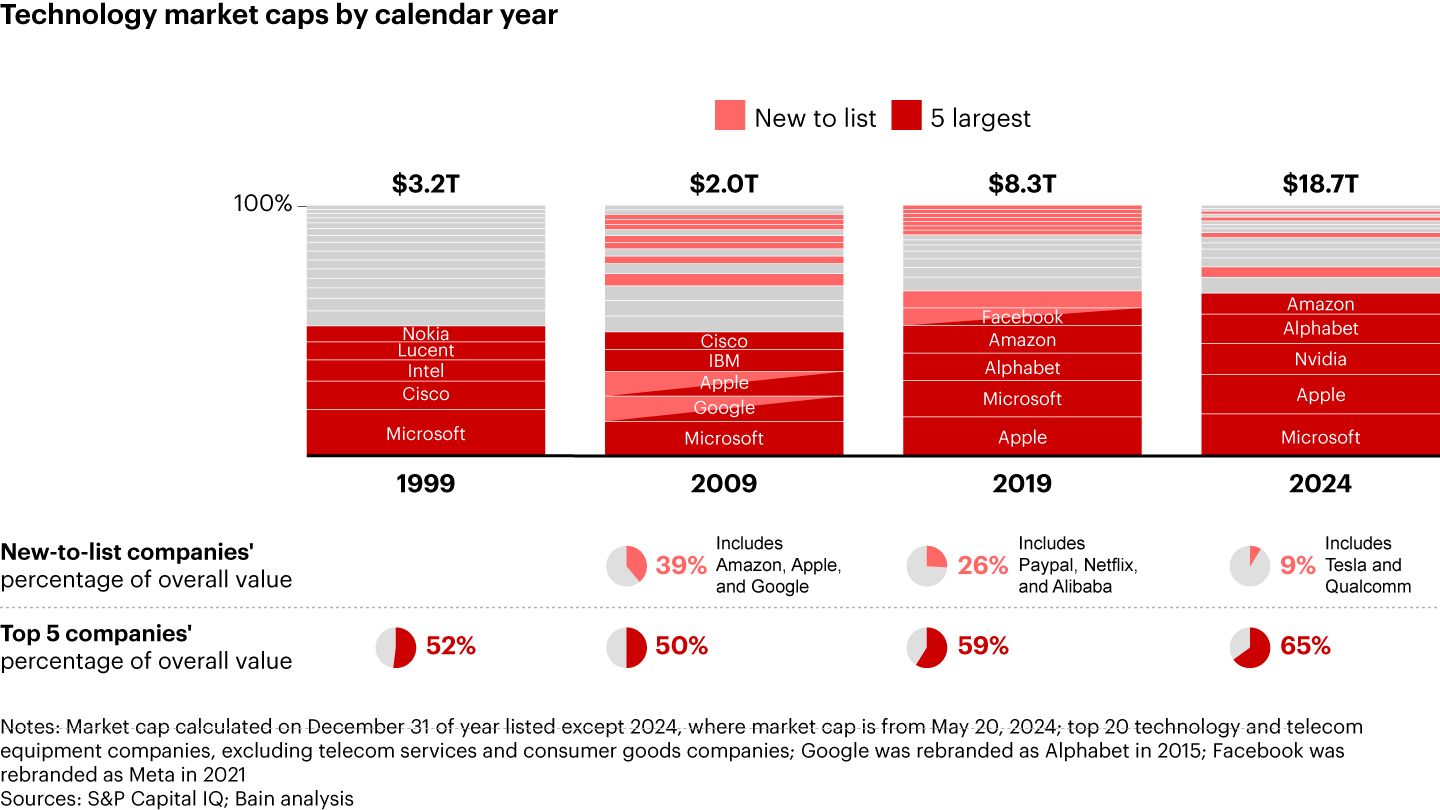
      The top five companies in the tech sector have increased their market shares over the past 15 years

      What’s more, value is increasingly concentrated in these sector leaders. Together, the top five tech companies account for 63% of the market capitalization of the top 20 companies in the sector, up from only 53% a decade ago (see Figure 2). The top five also represent 64% of the profit pool, nearly twice the amount it was 10 years ago (34%).

      Figure 2
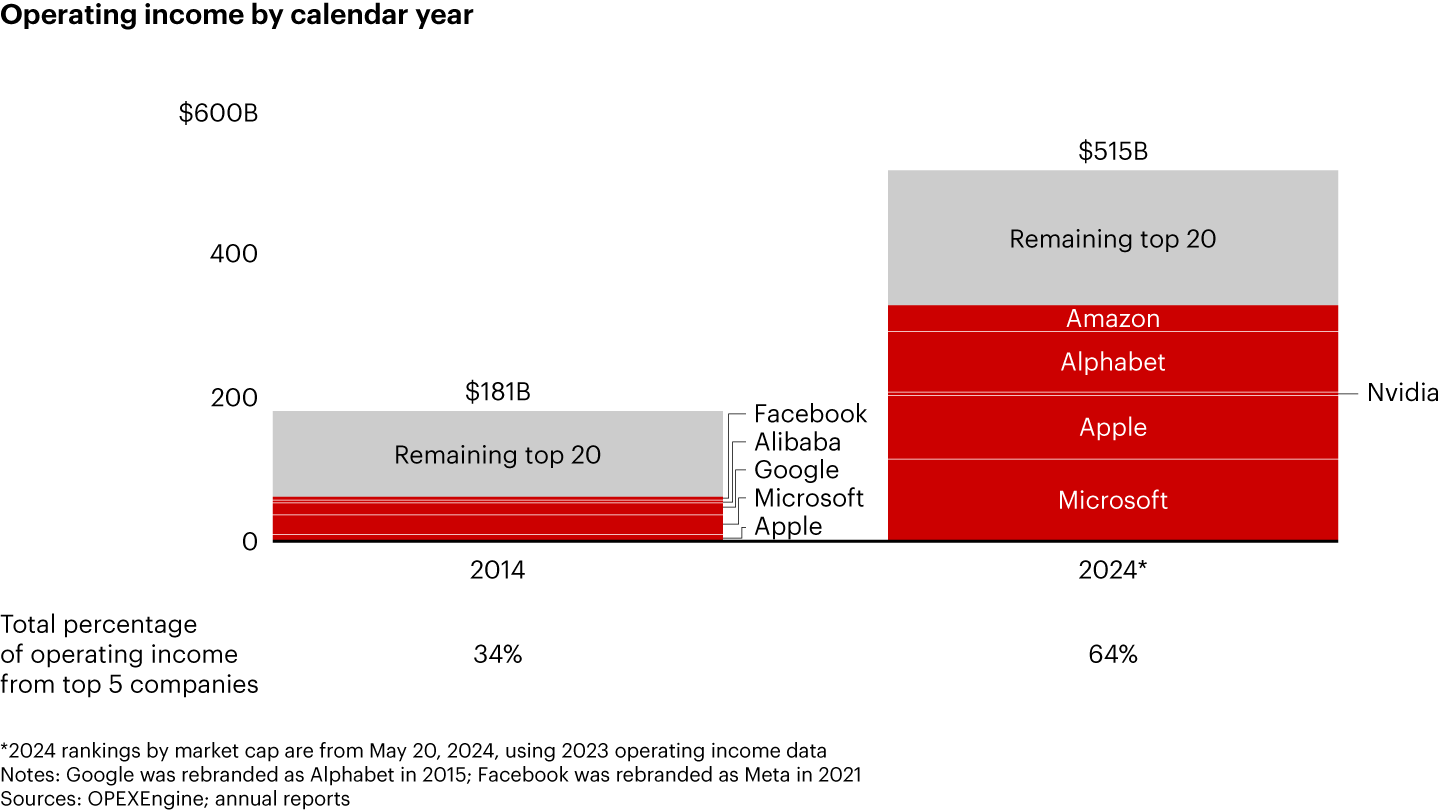
      Operating income for the top companies has grown disproportionately

      This durability among tech leadership is atypical because disruption often shifts the leaderboard as new entrants rise at the expense of incumbents that traditionally have been more invested in existing technology and less able or willing to pivot and embrace disruptive technology.

      What changed? One reason these leaders have thrived through disruption is they have built businesses with scale effects—on both the supply and demand side. On the supply side, commercializing technology innovations requires large volumes of computational power. This plays to the strengths of companies that have large computing assets and relevant competence. On the demand side, these businesses exhibit network effects that arise from mining huge data sets. The combination can create a “winner takes most” market dynamic and raise barriers to entry. These leaders also benefited from a period of intense globalization, which allowed them to enter new markets, increase their customer base, and accumulate scale. Additionally, in post-pandemic capital markets, investors have favored earnings and safety over rapid growth.

      Ripe for disruption?

      What can executives anticipate next? The waves of disruption roiling the tech industry today are so significant that they will test the durability of the incumbents and are likely to shift value in the sector.

      • AI. The rapid and massive adoption of AI by companies across sectors will force change in the tech sector and beyond. Incumbent leaders including Alphabet and Microsoft are disrupting their own core businesses to focus on the AI opportunity. GPU leader Nvidia has burst into a top-tier position, achieving market cap values of more than $3 trillion in the second quarter of 2024.
      • Geopolitics and national security. National and regional technology ecosystems are developing as countries look to reward allies and guard against competitive threats. Many national governments are subsidizing or otherwise incentivizing investment in local and national tech endeavors. A major security or geopolitical event could accelerate the pace of this disruption.
      • Backlash against tech. The sector is under scrutiny by lawmakers and regulators in several regions who want to check the power of the largest tech companies. Acquisitions are under heavy scrutiny. Attempts to break apart large companies could generate new sources of disruption.

      The combination of these and other pressures has the potential to shift the leaderboard, as shown by Nvidia’s rise to the top ranks over the past two years.

      Takeaways for executives

      The resilience of today’s leaderboard may be partly due to the benefits of scale. However, today’s technology leaders may also be skillful at identifying disruption and reinventing their businesses in ways that allow them to move from one strength to another. Running the core at full potential—ensuring that strategic, operational, financial, and organizational goals are met—is an essential foundation for achieving any growth ambitions. Sector leaders also demonstrate five important traits that have helped them stay at or rise to the top.

      Be willing to self-disrupt. Incumbents must wrestle with the risk of cannibalizing existing businesses as they stand up new, competitive ones. Leaders find ways to fund new businesses, leveraging the momentum of existing ones. Today’s incumbents are better at self-disruption, finding ways to challenge their core business and keep their insurgent mission alive.

      Ten years ago, Microsoft was struggling to maintain morale in the face of dire predictions about the fate of PCs and middling results of its big push into mobile phones. New CEO Satya Nadella helped reposition Microsoft as a leader in a cloud-first world, relaunching its Azure platform and recommitting to selling Office 365 as a service, even though cloud competed with its traditional server business. More recently, by partnering with OpenAI and integrating advanced AI into products like Azure and Office, Microsoft continues to champion innovation and challenge its core business.

      More recently, Nvidia saw the opportunity to leverage technology used in its gaming GPUs to support parallel processing, essential for AI workloads and mining crypto currency. This forward thinking allowed it to embrace new trends, funding its new ventures with the profits from its gaming GPU business. The move diversified Nvidia’s revenue streams, solidified its role as a critical player in the future of technology, and in June 2024 made it the most valuable company in the world.

      Identify new trends before they’re mainstream. These leaders develop sophisticated future-sensing capabilities. They develop alternate scenarios of possible futures and monitor market signals that indicate the direction of travel.  

      For example, Netflix recognized the inevitable rise of streaming video earlier than most competitors and transitioned from a DVD rental service to a streaming platform. Its timely shift positioned it as a market leader in digital content delivery and funded its large investments in original content creation.

      Invest in innovation. Companies strengthen their long-term resilience by continually exploring and evaluating new growth engines. Tech leaders have become extremely profitable and are able to reinvest in innovation. In 2023, the big five hyperscalers (Microsoft, Apple, Alphabet, Meta, and Amazon) spent $223 billion on R&D, about 1.6 times as much as all venture capital spending in the US (see Figure 3). They have corporate venture capital capabilities and are investing in, working with, and sometimes acqui-hiring disruptive start-ups. Apple’s substantial investments in R&D have delivered significant competitive advantage over the years. One example is the Apple silicon project, which led to the development of the M1 and M2 chips that boosted performance and efficiency in its Mac line.

      Figure 3
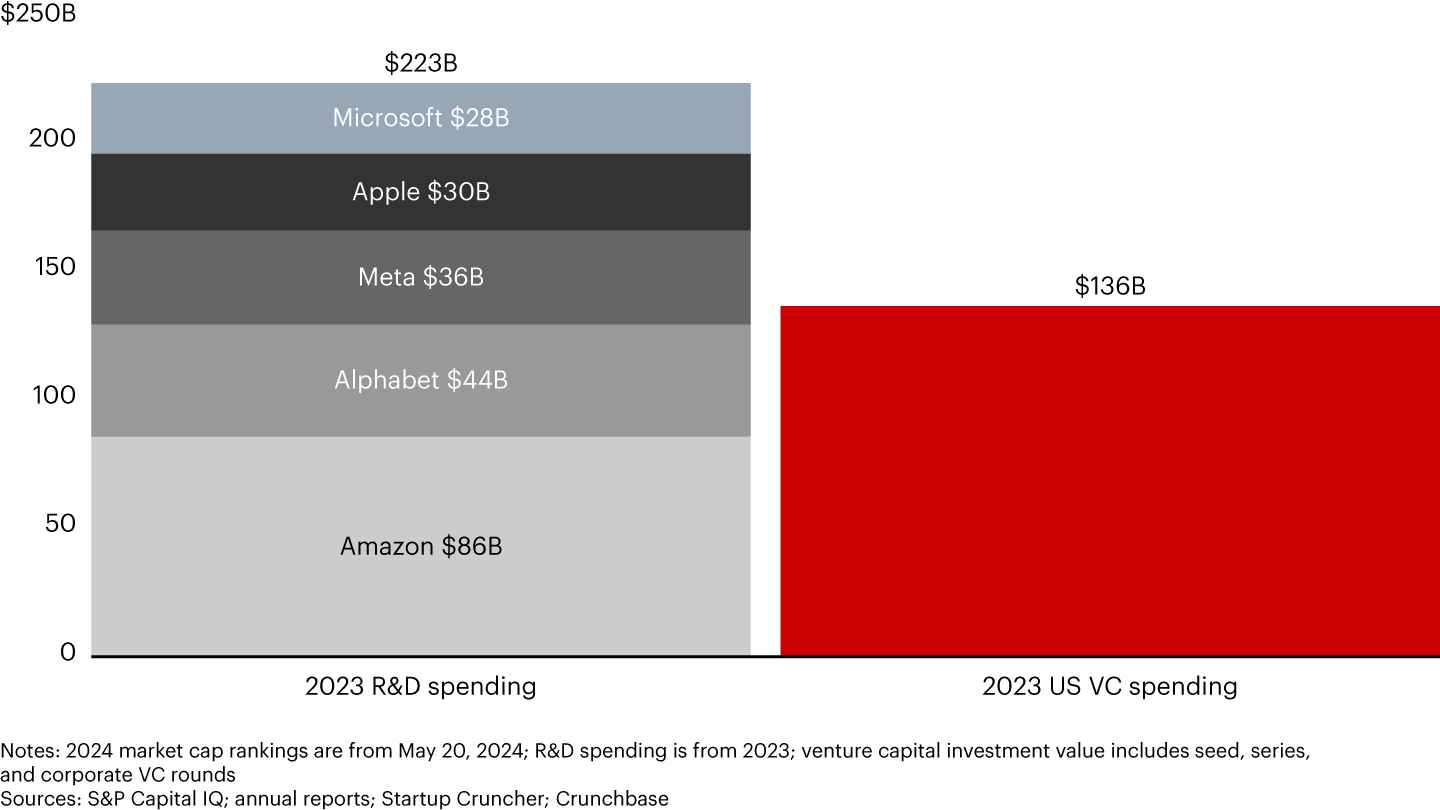
      In 2023, the top five tech companies spent $223 billion on R&D, about 1.6 times as much as all venture capital spending in the US

      Make skillful use of M&A. Large M&A deals in the technology sector can expect significant regulatory scrutiny, but most large tech deals ultimately create more competition and lower prices for customers. Bain’s longitudinal analysis of M&A activity conducted by five large tech firms between 2005 and 2020 found that 72% of the deals increased competition and reduced prices (see Figure 4).

      Figure 4
      Most M&A spending among US hyperscalers between 2005 and 2020 benefited consumers or enriched market dynamics

      Large tech companies are able to attract top talent while also funding and commercializing innovation in a way that national labs, universities, and other research institutions struggle to accomplish. The cost of training a leading-edge generative AI model is an excellent example: It requires data, computational resources, and funding on a scale that few can achieve.

      Build ecosystems and partnerships. Creating an ecosystem around disruptive innovations incentivizes other companies that can benefit financially from the incumbent’s platform. Ecosystems distribute R&D costs and increase the likelihood that partners may develop innovations that directly benefit the incumbent’s business. Amazon Web Services (AWS) has created a vast ecosystem that supports numerous start-ups and enterprises, fostering innovations that enhance its cloud services platform.

      Even as the pace of technology continues to accelerate, the most valuable companies in technology are finding ways to embrace disruption and capture market value. At incumbents and new ventures alike, management teams should be looking ahead to identify the next innovation that could disrupt their core business or launch them into the top ranks of the sector.

      Read the Next Chapter

      Investing to Win in a Shifting Technology Market

      Read our 2024 Technology Report

      Download the PDF Explore the report

      More from the report

      • Commercializing Innovation

      • Investing in a Shifting Market

      • Scope M&A

      • Sovereign AI

      • Top AI Functions

      • The AI Opportunity

      • Big and Small Computing

      • The AI Chip Shortage

      • The Software Cycle

      • AI in Tech Services

      • Deploying Generative AI

      • Software Development Efficiency

      • Customer Success

      • AI Everywhere

      Authors
      • Headshot of Matthew Crupi
        Matthew Crupi
        Partner, Dallas
      • Headshot of Chris Johnson
        Chris Johnson
        Alumni, San Francisco
      • Headshot of David Crawford
        David Crawford
        Partner, Silicon Valley
      Contact us
      Related Industries
      • Technology
      Related Consulting Services
      • Innovation & Business Building
      • Strategy
      Artificial Intelligence Insights
      AI Leaders to Watch

      One way to find out where AI is heading: follow the money. Here’s our analysis of the AI application providers attracting the most attention and funding.

      Read More
      Technology Report
      Quantum Computing Moves from Theoretical to Inevitable

      Quantum will likely become part of a mosaic, working with classical computing to solve big problems.

      Read More
      Technology
      Software M&A

      The good news: Most deal best practices still apply to AI acquisitions.

      Read More
      Strategy
      What CEOs Bring Home: A Holiday Special

      As the year winds down, Founder’s Mentality: The CEO Sessions takes a festive turn.

      Read More
      Technology Report
      How Can We Meet AI’s Insatiable Demand for Compute Power?

      Technological innovation, new revenue, and public support may be needed to fund and supply enough electricity.

      Read More
      Published in September 2024
      Tags
      • Artificial Intelligence Insights
      • Innovation & Business Building
      • Strategy
      • Technology
      • Technology Report

      How We've Helped Clients

      Helping a Midsize ERP Player Compete against the Giants

      Read case study

      Performance Improvement Aggressively growing an IT service provider with a high-performance culture

      Read case study

      Sales and Marketing When the price is right, customers respond

      Read case study

      Ready to talk?

      We work with ambitious leaders who want to define the future, not hide from it. Together, we achieve extraordinary outcomes.

      Stay ahead in a rapidly changing world. Subscribe to Bain Insights, our monthly look at the critical issues facing global businesses.

      *I have read and understand Bain’s Privacy Notice.

      Please read and agree to the Privacy Policy.
      Bain & Company
      Contact us Sustainability Accessibility Terms of use Privacy Modern Slavery Act Statement Cookie Policy Sitemap Log In

      © 1996-2026 Bain & Company, Inc.

      Contact Bain

      How can we help you?

      • Business inquiry
      • Career information
      • Press relations
      • Partnership request
      • Speaker request
      See all offices