


Brief


|
|
European banks had a mixed year in their overall health. They experienced a deterioration in capital and liquidity across the board by the end of 2018, with five large banks warranting the “highest concern” status in Bain’s latest health check, up from just two of the largest banks flashing that signal. They did, however, on average improve their profitability and asset quality (see Figure 1).
Figure 1
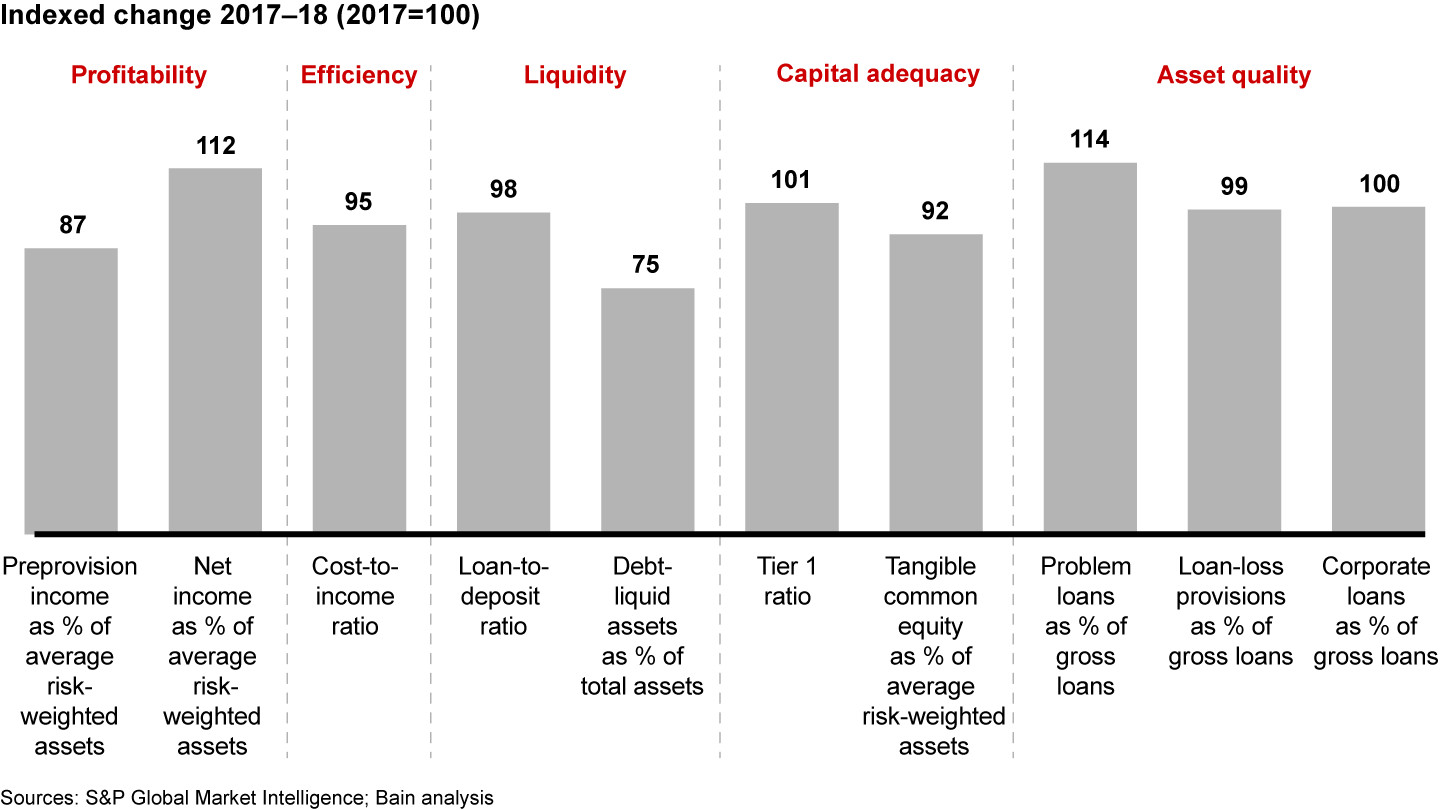

Equity investors turned more pessimistic. Bank stock prices dipped for every category of bank, correlating with the overall market retreat in late 2018. The average price-to-book ratio for all banks in the sample was 0.63, vs. 0.92 at year-end 2017. These conclusions emerge from Bain & Company’s latest health check of the banking system, the sixth annual analysis covering 101 banks in the base study. Our health check scoring model derives from three dimensions, two of which represent banks’ robustness (see “How the scoring model works,” below):
Our scoring relies on data from S&P Global Market Intelligence. The health check provides a uniquely integrated view, which stands in contrast to looking only at a balance sheet or income statement. Based on the combination of the critical financial ratios, we calculate a score for each bank and place it in one of four categories (see Figure 2).
Figure 2
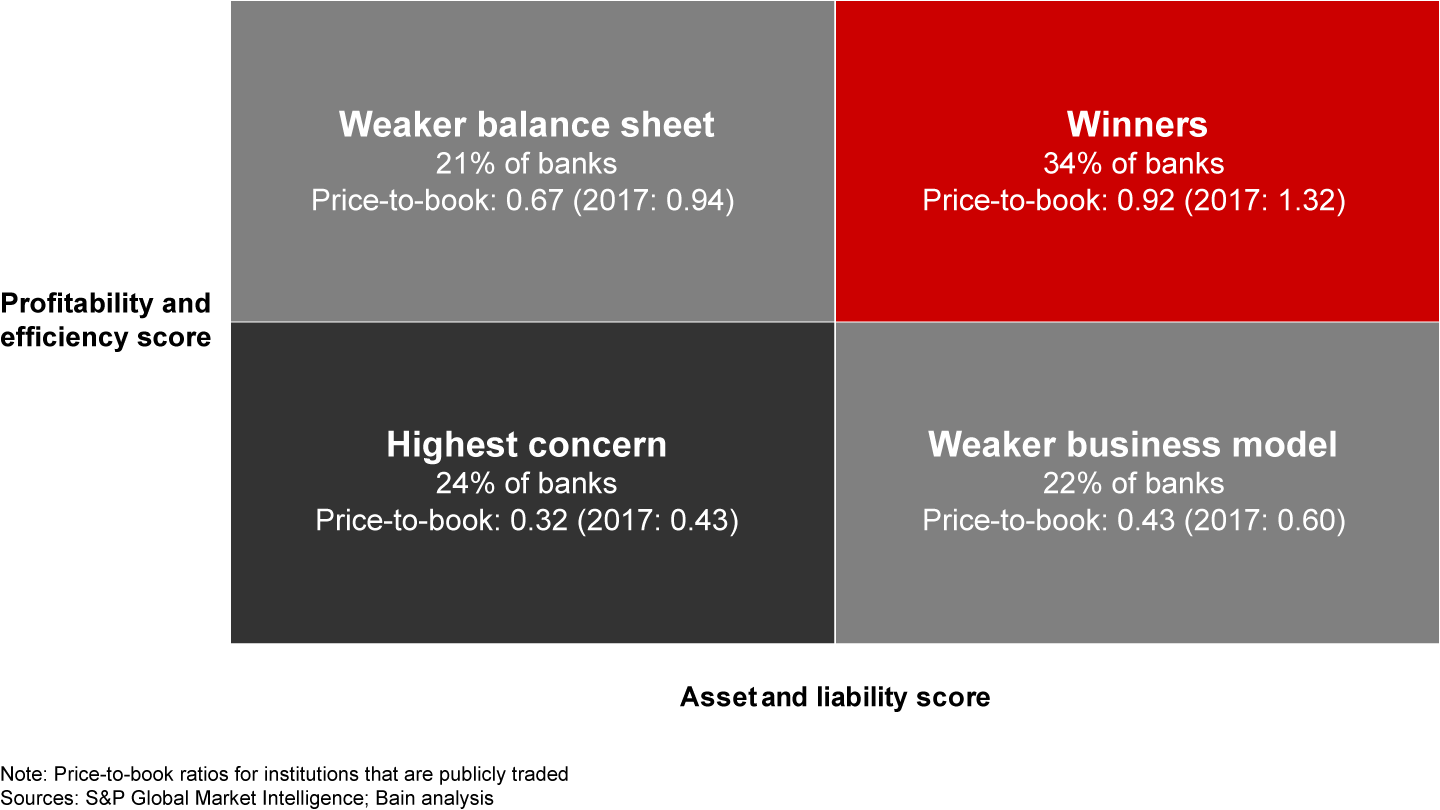

Figure 3
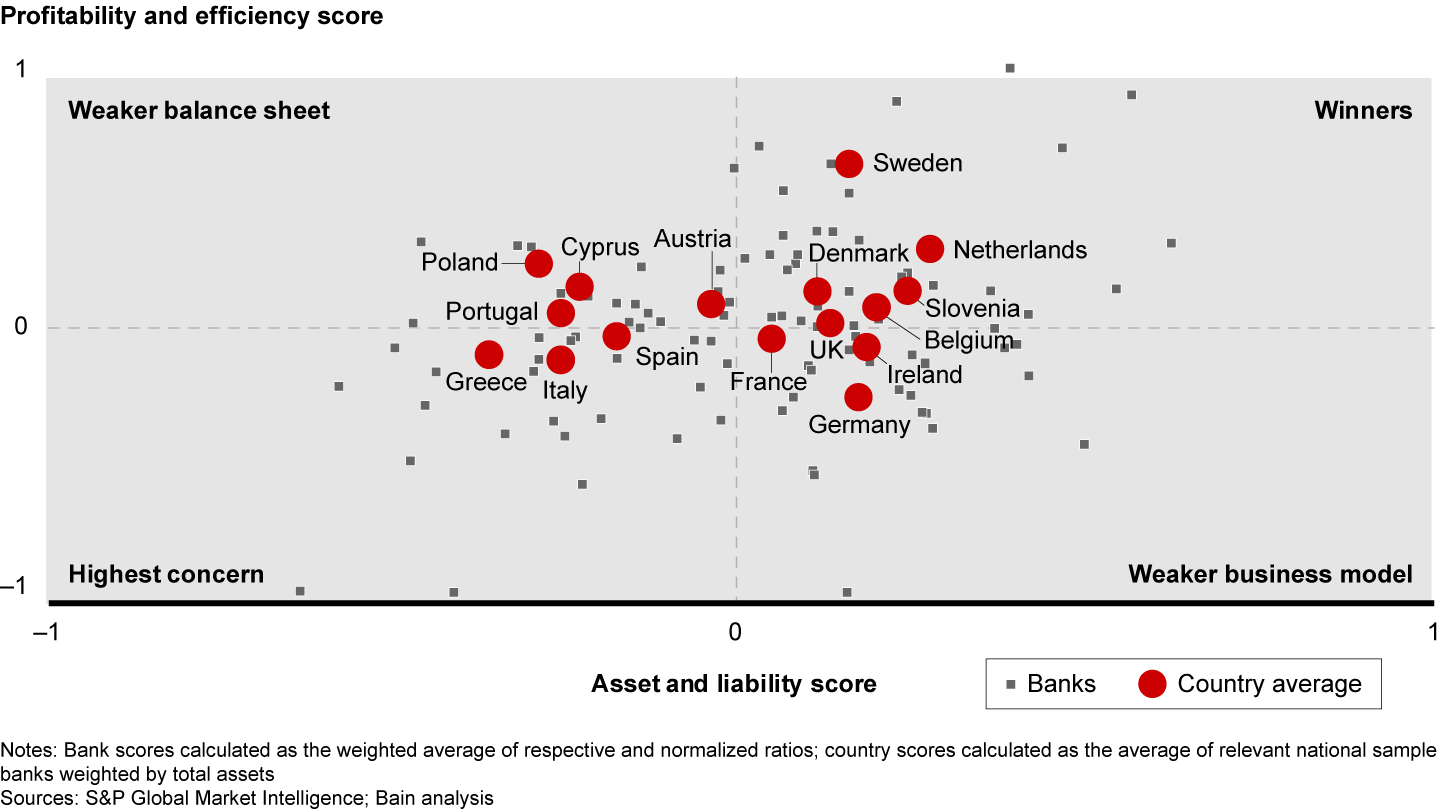

It’s worth noting that virtually all banks that disappeared in Europe over the past decade fell into the highest-concern category, and at least four of them were resolved. Three are in the lowest possible position for the business model, with a weak balance sheet as well, in Germany, Italy and Portugal. The equity market’s pricing is directionally correct between the winners and highest-concern banks. Winners trade on average at three times those of highest concern. Still, the market is severely pricing banks with resilient balance sheets but poor business models, as the price-to-book average of weaker business models almost matches the highest-concern level. The challenges and path forward for a bank will depend on its relative position. What banks need to work on now depends on their relative position.
Figure 4
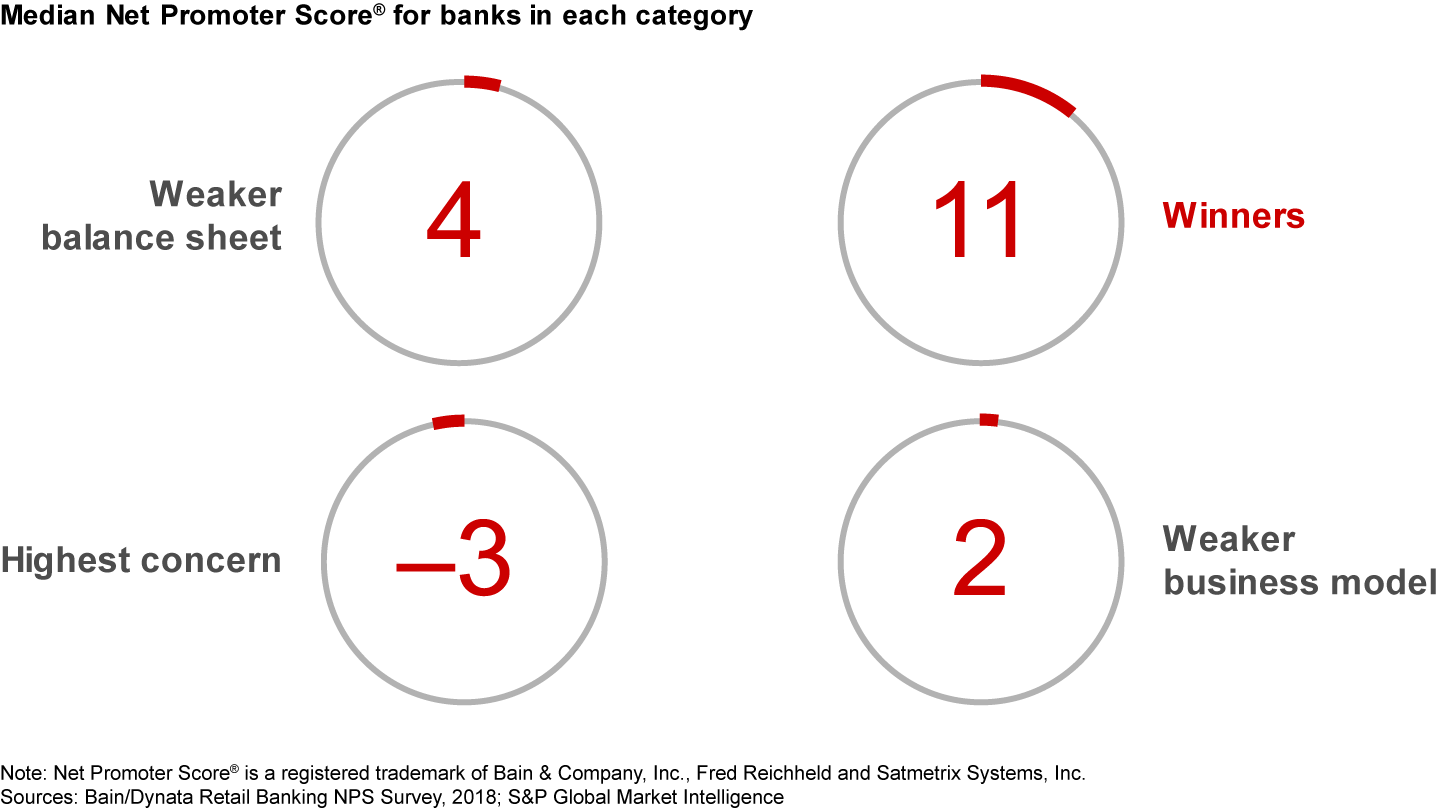

When a downturn materializes, it could be a “fasten your seatbelts” moment. More borrowers will have difficulty repaying their loans, with the main concern being business borrowers, given their loan size and the sequence of deterioration. If history is any guide, and depending on the severity of the downturn, two to five banks whose performance classifies them in the highest-concern group could disappear, most likely by absorption, within the next couple of years. More jarring to investors, a couple of large banks with weaker balance sheets that have sailed under the radar due to their strong in-year performance could hit the ropes as well. By contrast, more agile banks are improving their early warning systems using advanced analytics, creating mechanisms to be able to increase the resilience of their balance sheet. How the scoring model worksThe scoring model in Bain’s health check of the banking system gathers data in six areas, with the heaviest weighting on asset quality (see figure). 
Profitability. The key determinant of sustainable success or failure, it measures the ability to create economic value and to preserve or improve risk protection for creditors. Performance metrics include preprovision income as a percentage of risk-weighted assets and net income as a percentage of risk-weighted assets. Efficiency. Cost containment is a strategic focal point; it allows banks to satisfy stakeholders’ requirements without overly aggressive risk taking. Performance metrics include operating expenses as a percentage of net revenue. Asset quality. A main factor in future earnings and capital generation or erosion, loan quality is a key to determining a bank’s stability. Nonperforming loans predict future losses. Performance metrics as a percentage of gross loans include problem loans, loan-loss provisions and corporate loans. Capital adequacy. Banks typically fail due to losses in the loan portfolio, poor business models or fraud—all of which lead to a decline in capital. In the case of low profitability, capital is the most important buffer for absorbing risk costs. Performance metrics include Tier 1 capital as a percentage of risk-weighted assets and tangible common equity as a percentage of average risk-weighted assets. Liquidity. Illiquidity is often a proximate cause of failure as banks might not any longer be able to finance themselves under pressure. Access to market funding may not be based on long-term relationships but rather on creditworthiness. Performance metrics include gross loans as a percentage of total deposits and total debt—that is, liquid assets as a percentage of total assets. Operating environment. Bank performance is often constrained by violent economic cycles, adverse political decisions or weak legal systems. Declines in economic growth correlate highly with worsening asset quality. Performance metrics include assessment of sovereign credit rating and corruption. Net Promoter Score® is a registered trademark of Bain & Company, Inc., Fred Reichheld and Satmetrix Systems, Inc. João Soares is a partner with Bain & Company’s Financial Services practice. He is based in London. The author thanks Justyna Nowicka and Emeric Karacsonyi for their contribution to the European health check analysis. |