
Skip to Content
  • Offices

    Offices

    North & Latin America
    • Atlanta
    • Austin
    • Bogota
    • Boston
    • Buenos Aires
    • Chicago
    • Dallas
    • Denver
    • Houston
    • Los Angeles
    • Mexico City
    • Minneapolis
    • Monterrey
    • Montreal
    • New York
    • Rio de Janeiro
    • San Francisco
    • Santiago
    • São Paulo
    • Seattle
    • Silicon Valley
    • Toronto
    • Washington, DC
    Europe & Africa
    • Amsterdam
    • Athens
    • Berlin
    • Brussels
    • Copenhagen
    • Dusseldorf
    • Frankfurt
    • Helsinki
    • Istanbul
    • Johannesburg
    • Kyiv
    • Lisbon
    • London
    • Madrid
    • Milan
    • Munich
    • Oslo
    • Paris
    • Rome
    • Stockholm
    • Vienna
    • Warsaw
    • Zurich
    Middle East
    • Doha
    • Dubai
    • Riyadh
    Asia & Australia
    • Bangkok
    • Beijing
    • Bengaluru
    • Brisbane
    • Ho Chi Minh City
    • Hong Kong
    • Jakarta
    • Kuala Lumpur
    • Manila
    • Melbourne
    • Mumbai
    • New Delhi
    • Perth
    • Seoul
    • Shanghai
    • Singapore
    • Sydney
    • Tokyo
    See all offices
  • Alumni
  • Media Center
  • Subscribe
  • Contact
  • Global | English

    Select your region and language

    Global
    • Global (English)
    North & Latin America
    • Brazil (Português)
    • Argentina (Español)
    • Canada (Français)
    • Chile (Español)
    • Colombia (Español)
    Europe, Middle East, & Africa
    • France (Français)
    • DACH Region (Deutsch)
    • Italy (Italiano)
    • Spain (Español)
    • Greece (Elliniká)
    Asia & Australia
    • China (中文版)
    • Korea (한국어)
    • Japan (日本語)
  • Saved items (0)
    Saved items (0)

    You have no saved items.

    Bookmark content that interests you and it will be saved here for you to read or share later.

    Explore Bain Insights
  • Industries
    Main menu

    Industries

    • Aerospace & Defense
    • Agribusiness
    • Chemicals
    • Construction & Infrastructure
    • Consumer Products
    • Financial Services
    • Healthcare & Life Sciences
    • Industrial Machinery & Equipment
    • Media & Entertainment
      Industries
      Media & Entertainment
      • Media Lab
    • Metals
    • Mining
    • Oil & Gas
    • Paper & Packaging
    • Private Equity
      Industries
      Private Equity
      • Due Diligence
      • Exit Planning
      • Firm Strategy & Operations
      • Portfolio Value Creation
    • Social Impact
    • Retail
    • Technology
    • Telecommunications
      Industries
      Telecommunications
      • Capital Expenditure
      • Telco Digital Transformation
    • Transportation
    • Travel & Leisure
    • Utilities & Renewables
  • Consulting Services
    Main menu

    Consulting Services

    • Customer Experience
    • Sustainability
    • Innovation
    • M&A
    • Operations
    • People & Organization
    • Private Equity
    • Sales & Marketing
    • Strategy
    • AI, Insights, and Solutions
    • Technology
    • Transformation
  • Digital
  • Insights
    Main menu

    Insights

    • Industry Insights
    • Services Insights
    • Bain Books
    • Webinars
    • Bain Futures
    View all Insights
    Featured topics
    • Tariff Response
    • Artificial Intelligence
    • Thriving in Uncertainty
    • Executive Conversations
    • Macro Trends
    • M&A Report
    • Healthcare Private Equity Report
    • Paper & Packaging Report
    • Technology Report
    • CEO's Guide to Sustainability
    • CEO Insights
    • CFO Insights
    • COO Insights
    • CIO Insights
    • CMO Insights
    View all featured topics
  • About
    Main menu

    About

    • What We Do
    • What We Believe
    • Our People & Leadership
    • Client Results
    • Awards & Recognition
    • Global Affiliations
    Further: Our global responsibility
    • Sustainability
    • Social Impact
    • World Economic Forum
    Learn more about Further
  • Careers
    Main menu

    Careers

    • Work with Us
      Careers
      Work with Us
      • Find Your Place
      • Our Work Areas
      • Integrated Teams
      • Students
      • Internships & Programs
      • Recruiting Events
    • Life at Bain
      Careers
      Life at Bain
      • Blog: Inside Bain
      • Career Stories
      • Our People
      • Where We Work
      • Supporting Your Growth
      • Affinity Groups
      • Benefits
    • Impact Stories
    • Hiring Process
      Careers
      Hiring Process
      • What to Expect
      • Interviewing
    FIND JOBS
  • Offices
    Main menu

    Offices

    • North & Latin America
      Offices
      North & Latin America
      • Atlanta
      • Austin
      • Bogota
      • Boston
      • Buenos Aires
      • Chicago
      • Dallas
      • Denver
      • Houston
      • Los Angeles
      • Mexico City
      • Minneapolis
      • Monterrey
      • Montreal
      • New York
      • Rio de Janeiro
      • San Francisco
      • Santiago
      • São Paulo
      • Seattle
      • Silicon Valley
      • Toronto
      • Washington, DC
    • Europe & Africa
      Offices
      Europe & Africa
      • Amsterdam
      • Athens
      • Berlin
      • Brussels
      • Copenhagen
      • Dusseldorf
      • Frankfurt
      • Helsinki
      • Istanbul
      • Johannesburg
      • Kyiv
      • Lisbon
      • London
      • Madrid
      • Milan
      • Munich
      • Oslo
      • Paris
      • Rome
      • Stockholm
      • Vienna
      • Warsaw
      • Zurich
    • Middle East
      Offices
      Middle East
      • Doha
      • Dubai
      • Riyadh
    • Asia & Australia
      Offices
      Asia & Australia
      • Bangkok
      • Beijing
      • Bengaluru
      • Brisbane
      • Ho Chi Minh City
      • Hong Kong
      • Jakarta
      • Kuala Lumpur
      • Manila
      • Melbourne
      • Mumbai
      • New Delhi
      • Perth
      • Seoul
      • Shanghai
      • Singapore
      • Sydney
      • Tokyo
    See all offices
  • Alumni
  • Media Center
  • Subscribe
  • Contact
  • Global | English
    Main menu

    Select your region and language

    • Global
      Select your region and language
      Global
      • Global (English)
    • North & Latin America
      Select your region and language
      North & Latin America
      • Brazil (Português)
      • Argentina (Español)
      • Canada (Français)
      • Chile (Español)
      • Colombia (Español)
    • Europe, Middle East, & Africa
      Select your region and language
      Europe, Middle East, & Africa
      • France (Français)
      • DACH Region (Deutsch)
      • Italy (Italiano)
      • Spain (Español)
      • Greece (Elliniká)
    • Asia & Australia
      Select your region and language
      Asia & Australia
      • China (中文版)
      • Korea (한국어)
      • Japan (日本語)
  • Saved items  (0)
    Main menu
    Saved items (0)

    You have no saved items.

    Bookmark content that interests you and it will be saved here for you to read or share later.

    Explore Bain Insights
  • Industries
    • Industries

      • Aerospace & Defense
      • Agribusiness
      • Chemicals
      • Construction & Infrastructure
      • Consumer Products
      • Financial Services
      • Healthcare & Life Sciences
      • Industrial Machinery & Equipment
      • Media & Entertainment
      • Metals
      • Mining
      • Oil & Gas
      • Paper & Packaging
      • Private Equity
      • Social Impact
      • Retail
      • Technology
      • Telecommunications
      • Transportation
      • Travel & Leisure
      • Utilities & Renewables
  • Consulting Services
    • Consulting Services

      • Customer Experience
      • Sustainability
      • Innovation
      • M&A
      • Operations
      • People & Organization
      • Private Equity
      • Sales & Marketing
      • Strategy
      • AI, Insights, and Solutions
      • Technology
      • Transformation
  • Digital
  • Insights
    • Insights

      • Industry Insights
      • Services Insights
      • Bain Books
      • Webinars
      • Bain Futures
      View all Insights
      Featured topics
      • Tariff Response
      • Artificial Intelligence
      • Thriving in Uncertainty
      • Executive Conversations
      • Macro Trends
      • M&A Report
      • Healthcare Private Equity Report
      • Paper & Packaging Report
      • Technology Report
      • CEO's Guide to Sustainability
      • CEO Insights
      • CFO Insights
      • COO Insights
      • CIO Insights
      • CMO Insights
      View all featured topics
  • About
    • About

      • What We Do
      • What We Believe
      • Our People & Leadership
      • Client Results
      • Awards & Recognition
      • Global Affiliations
      Further: Our global responsibility
      • Sustainability
      • Social Impact
      • World Economic Forum
      Learn more about Further
  • Careers
    Popular Searches
    • Agile
    • Digital
    • Strategy
    Your Previous Searches
      Recently Visited Pages

      Content added to saved items

      Saved items (0)

      Removed from saved items

      Saved items (0)

      Brief

      Rethinking Your ERP Strategy to Gain Digital Competitive Advantage

      Rethinking Your ERP Strategy to Gain Digital Competitive Advantage

      A core set of critical functionalities loosely coupled with best-of-breed third-party SaaS delivers better insights and performance.

      By Florian Braun and Henrik Östhed

      • min read
      }

      Brief

      Rethinking Your ERP Strategy to Gain Digital Competitive Advantage
      en
      At a Glance
      • Enterprise resource planning (ERP) systems help many companies manage functions ranging from supply chain to human resources and finance. But over the years, ERP suites have become complex, rigid structures potentially limiting the benefits of digitalization.
      • Leading companies are taking advantage of the natural upgrade cycle of their ERP systems to fully rethink their ERP strategy, narrowing the core to a limited set of standard functionalities, loosely coupled with functional and industry-specific applications hosted in the cloud.
      • By aligning ERP upgrades with strategic goals and appetite for risk, companies can reap the benefits of digitalization, including best-of-breed, cloud-hosted applications and direct connections to vital data feeds.

      With Oracle and SAP announcing they will phase out standard support for older versions of their enterprise resource planning (ERP) suites over the next few years, executives whose businesses run on these systems are taking advantage of the moment to reevaluate their ERP programs. Many of these companies struggle with their inflexible and monolithic ERP systems, the result of years of customization and M&A activity that forced them to cobble together different systems from acquired companies. These complex ERP systems help run organizations (see Figure 1), but they do a poor job supporting companies’ aspirations to develop nimbler ways of working and unlock the benefits of digitalization and cloud computing.

      Figure 1
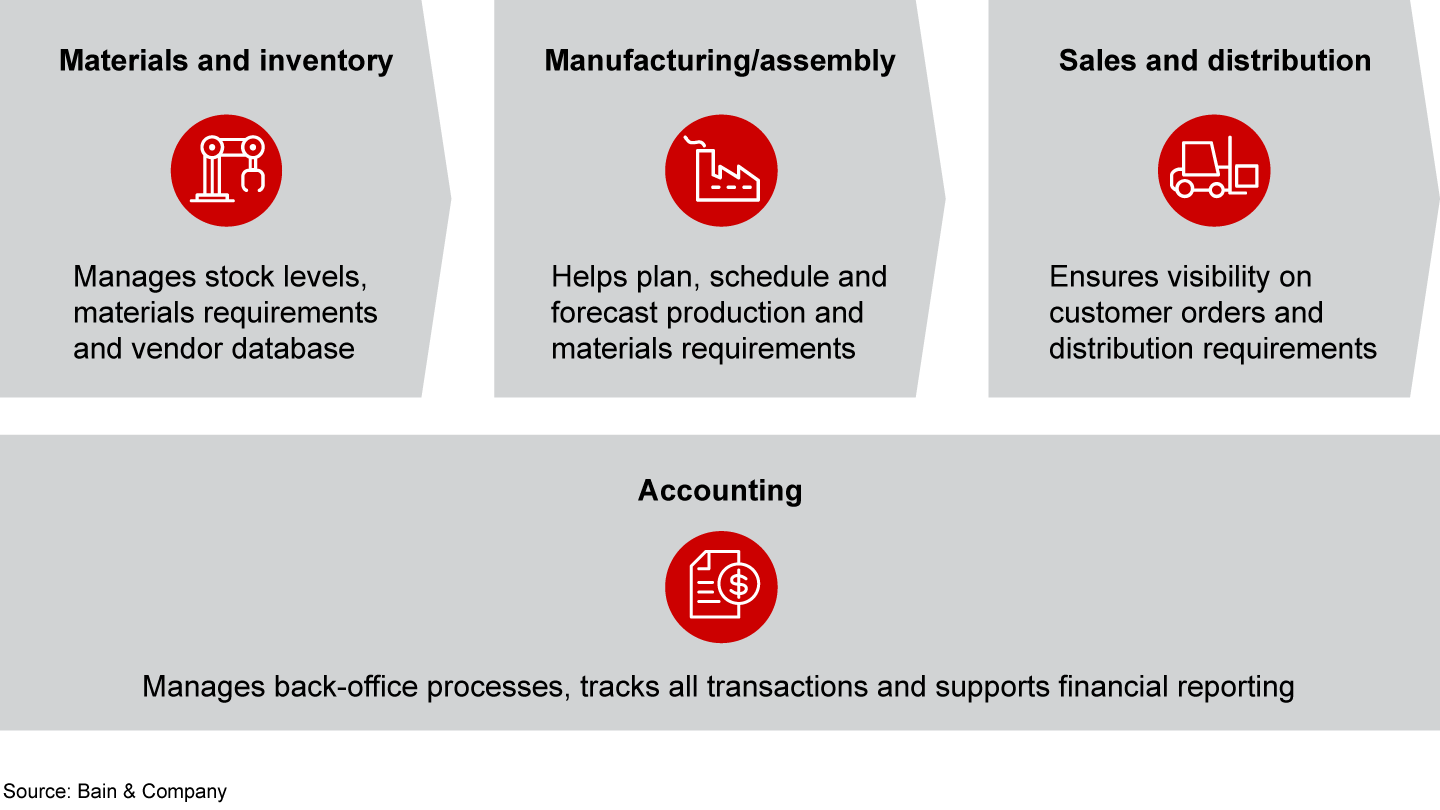
      ERP systems manage core operational business processes
      ERP systems manage core operational business processes
      ERP systems manage core operational business processes

      What most companies need instead are flexible systems that allow them to respond rapidly to customer needs and new opportunities in an increasingly competitive environment. These next generation, modern ERP systems are likely to have a smaller core of critical business processes (such as transaction management and tracking), with lightweight connections to more specific functional and industry applications that live on the cloud, including third-party solutions such as Workday for human resources and Salesforce.com for customer relationship management (see Figure 2). By maintaining their connections to the legacy systems that keep the company running and deploying flexible microservices, modern ERP systems can help companies achieve a competitive advantage.

      Figure 2
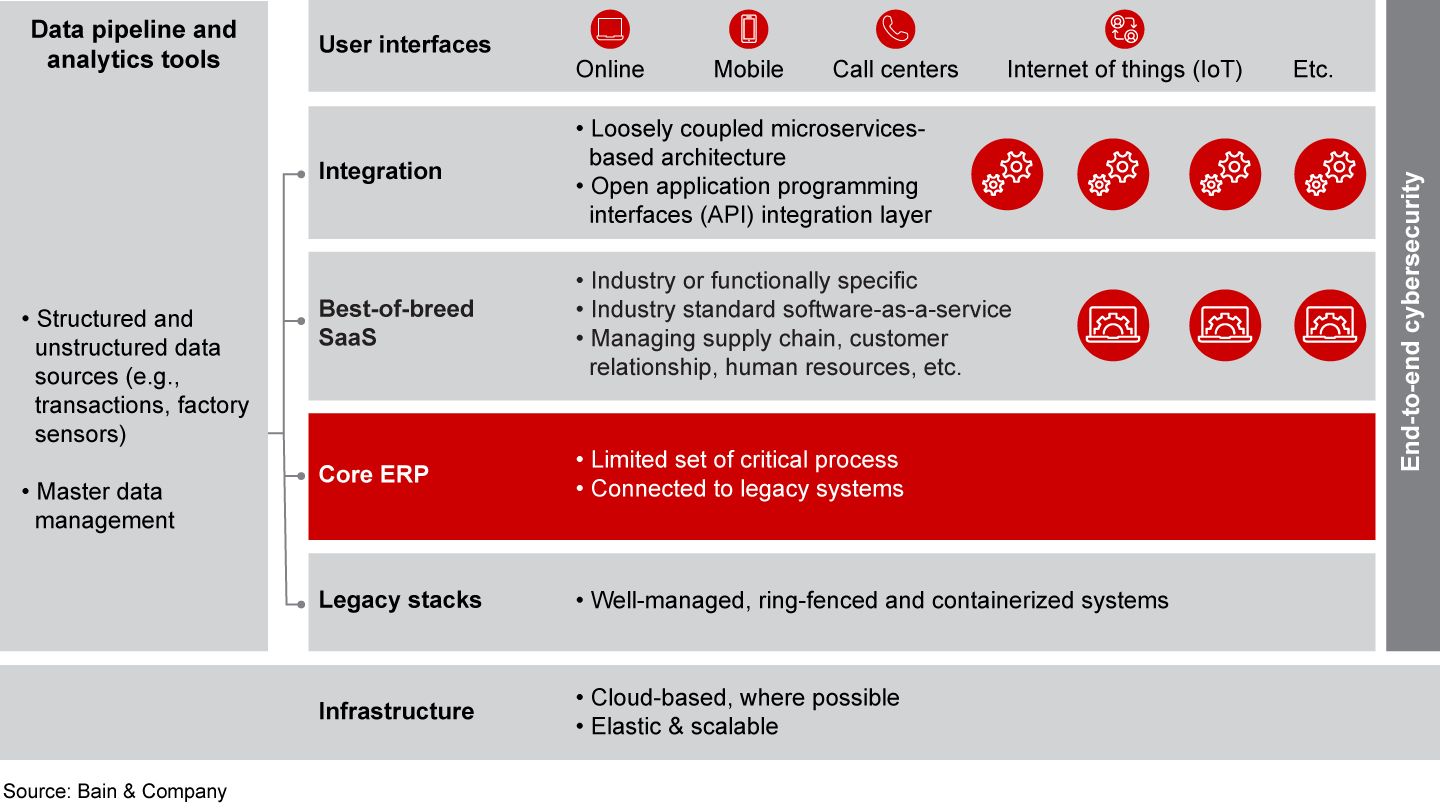
      Modern architectures are likely to have a smaller ERP core supported by best-of-breed, third-party SaaS solutions
      Modern architectures are likely to have a smaller ERP core supported by best-of-breed, third-party SaaS solutions
      Modern architectures are likely to have a smaller ERP core supported by best-of-breed, third-party SaaS solutions

      Today, most ERP systems run on-premise or on a private cloud. Increasingly, companies will want to become more comfortable working with cloud-hosted systems. Since the cloud makes it easier for vendors to deploy rapidly evolving technologies—such as machine learning, the Internet of Things, artificial intelligence and data analytics—and stay current with updates, cloud systems are likely to dominate in the future. As they do, ERP will evolve from providing mere efficiency to delivering valuable insights and ensuring predictability. It won’t happen overnight: many third-party solutions will take time to mature, and customers are likely to sweat out their investments in current systems. But since the transition seems inevitable, executives can begin to evaluate their options by considering several key issues (see Figure 3).

      Figure 3
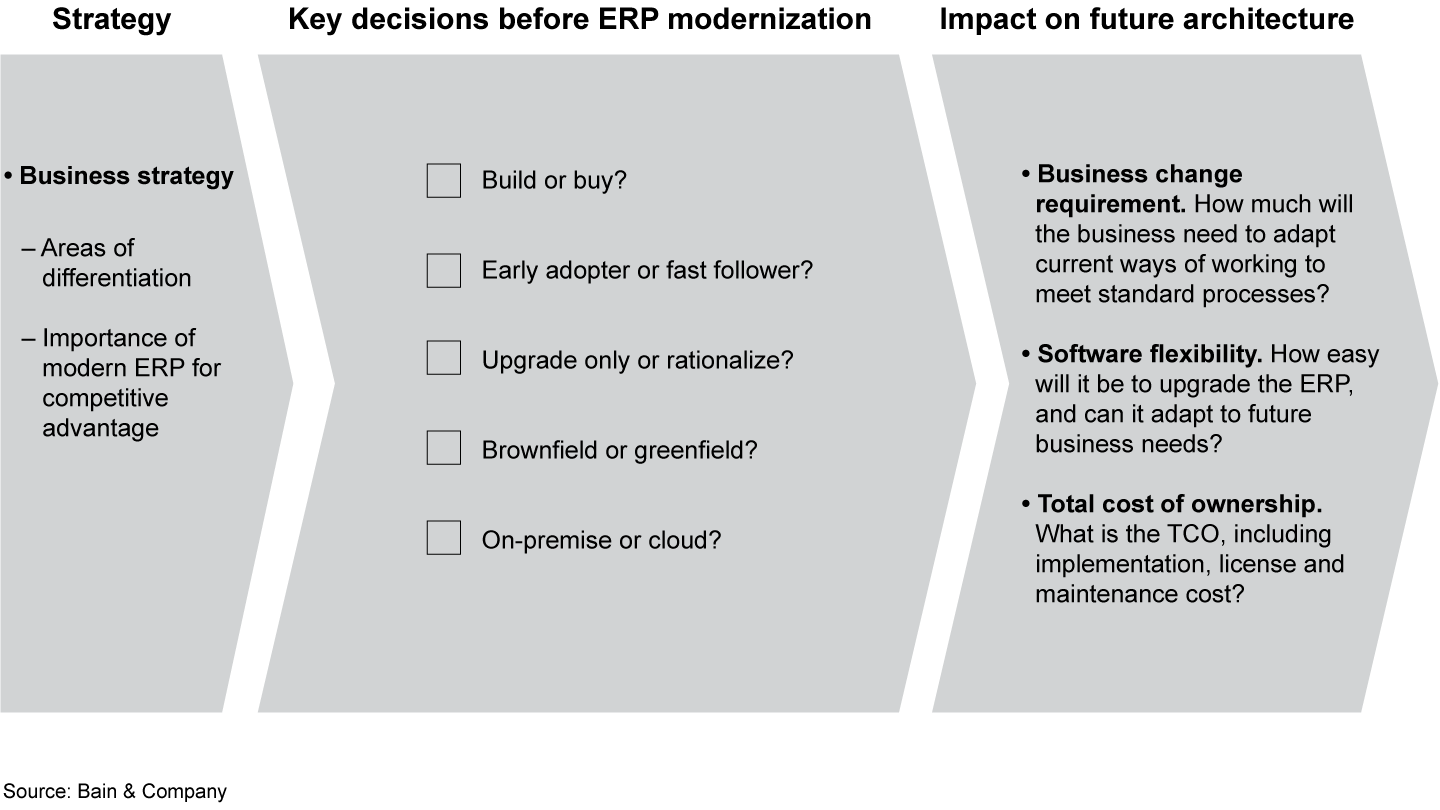
      Before embarking on an ERP modernization journey, companies need to make key decisions that will affect future flexibility and costs

      Build or buy? As executives think about their ERP upgrade path, the most critical questions include how to choose a configuration that supports their strategic goals, as well as the level of investment and the appetite for risk. Some leading companies may decide there is a competitive advantage in developing a bespoke ERP solution, as Amazon and Tesla have done. This is an expensive and disruptive option, although it does allow for total customization and freedom from external vendors. Most companies, however, will choose to purchase an off-the-shelf core ERP system to benefit from the ERP vendor’s experience, while also investing in some level of customization and third-party solutions for specific functions or industries.

      Early adopter or fast follower? Another critical question is whether to embrace new technologies for the competitive edge they might offer, or to wait and benefit from the experience of others. Early adopters are typically smaller, more disruptive players who can tap certain advantages by developing the system with the ERP vendor, or an industry solution with a third-party vendor. They might gain an edge, but they must have the patience and ability to work with the vendor to improve the system. Larger companies with less appetite for risk are more likely to be fast followers, letting others work out the bugs and then investing in a more fully baked product. This pattern may be more cost-effective, but it also risks lagging behind fast movers while waiting for the ideal solution.

      Upgrade only or rationalize? Companies whose ERP systems result from accretive M&A activity can decide to continue on this path and still gain the benefits of technical upgrades—a reasonable option for companies that can tolerate a complex ERP architecture. However, most organizations can gain more by rationalizing and consolidating their multiple systems into one. This may be more expensive and disruptive in the short term, but it is likely to deliver greater benefits over time, including lower maintenance costs, better data quality and integrated reporting across the entire business. Eventually, every company will need to make this transition. The longer they put it off, the greater the pressure to ensure a flawless implementation. 

      Brownfield or greenfield? A closely related decision is whether to continue upgrading or to deploy a new ERP solution. A brownfield approach is cheaper and less disruptive and may be appropriate for less complex ERP instances where minimal changes are required. But a greenfield approach may be worth the investment for companies with highly complex or customized processes that could benefit from complete redefinition. Many executives see this moment as a once-in-a-generation opportunity to invest in a more robust and adaptable solution that will allow the company to operate more nimbly. The decision to commit at this level remains a difficult one, but executives should make it based on how much the business depends on its ERP system.

      On-premise or cloud? A range of hosting options are available, and executive teams should make their decisions based on their broader IT strategy and the importance of their ERP systems. The simple answer is that companies should move more of their operational systems to the cloud. But the reality is that most have so many existing applications, with such a large investment in existing, on-premise licensed software, that cloud migration will take many years—and, in fact, some legacy apps that just do their job quietly in the background should stay on-premise. ERP vendors can help by building bridges that encourage companies to migrate their workloads to the cloud. As these systems are increasingly cloud-based, with integral connections to other cloud-based applications and data sources, customers will find it easier and more reassuring to move more of their workload to the cloud. Companies that fail to make the most of these cloud connections are depriving themselves of access to the best-of-breed solutions that could give them a competitive edge.

      Bain Partner Florian Braun explains how the most proactive companies can get ahead by reevaluating their current ERP models.

      Better performance through modern ERP

      Armed with the answers to these questions, executives can begin to put in place a plan to modernize their ERP systems and transform their organizations. The experience of leaders who have undertaken this transformation shows that the effort can deliver significant gains, including better access to data, more efficient use of resources and reduced operating expenses.

      For example, a large industrial company with global operations was seeking to improve its performance by transforming its management of financial transactions. A key component was improving the connections between its core ERP system and new sources of data, internal and external, in order to deliver sharper insights that could improve decision making. A side benefit was that by improving the system’s access to automated data flows, the company substantially reduced the amount of time it spent gathering data—freeing up resources that it shifted to data analysis that boosted the organization’s financial intelligence.

      In another case, a large international financial services institution, active in retail and corporate banking services, implemented a modern technology stack supporting its processes across all business units. The core ERP environment strengthened the entire organization, enabling a consistent approach for data and analytics, customer experience and technology management. These technology principles served as “guardrails” that enabled the individual business units to release new services and functionality quickly to their customers. Modernizing the technology stack with an open and flexible ERP core, while consolidating and rationalizing the number of systems, significantly reduced costs and improved the customer experience by deploying consistent and complete data and advanced analytics. 

      Reducing risk of the transformation

      Finally, among the greatest barriers to improving ERP systems are the scars that executive teams bear from previous upgrade efforts. Most ERP upgrade projects fail to deliver at least some of their goals, and many executives are hesitant to invest time and resources in an endeavour with such long odds for success.

      There are, however, strategies to help executives reduce the risk of deployment—not only of the ERP platform itself, but also its connections and integration with other essential applications and operations.

      • Create a compelling business case (both monetary and nonmonetary) to generate a pull from the business rather than a push from IT.
      • Learn from the tech industry’s best practices and adapt your process to those, rather than change the technology to support your process.
      • Be very clear on the scope of the modern ERP core and understand that one platform will not support all business processes, end to end.
      • Migrate the elements first that create the most business sense and value, but do not lose sight of the potential integration challenges and benefits.
      • Manage and prioritize this effort as one of your most important business initiatives, with CEO sponsorship and active involvement of all the organization’s businesses.

      No transformation of this scale can ever be easy. However, by answering questions about the scope and nature of the upgrade, and by adhering to some simple and practical strategic guidelines, executives can manage the risks of modernizing their ERP systems to gain maximum competitive advantage in a more connected world.

      Florian Braun and Henrik Östhed are partners with Bain's Global Information Technology practice. They are based in London and San Francisco, respectively.

      Authors
      • Headshot of Florian Braun
        Florian Braun
        Partner, London
      • Headshot of Henrik Östhed
        Henrik Östhed
        Alumni, San Francisco
      Contact us
      Related Industries
      • Software
      • Technology
      Related Consulting Services
      • Enterprise Technology
      How We Can Help
      • Systems & Architecture
      • Technology Cost Management
      Technology
      Technology Budgets Hit Hard by Covid-19

      More than half of US companies said they would reduce IT spending, especially in healthcare, retail and industrial manufacturing.

      Read More
      Technology
      Software M&A

      The good news: Most deal best practices still apply to AI acquisitions.

      Read More
      Technology Cost Management
      Scaling AI to Transform the Enterprise

      Five insights from Gartner IT Symposium/Xpo 2025.

      Read More
      Technology
      How Businesses Can Prepare for Post-Quantum Cybersecurity Threats

      Your company will soon face attackers armed with quantum technology. Will you be ready?

      Read More
      Technology
      Where Have All the Sales Reps Gone?

      The math has changed: Future growth won’t reflect the size of the sales staff, but how much value you add.

      Read More
      Published in April 2019
      Tags
      • Enterprise Technology
      • Software
      • Systems & Architecture
      • Technology
      • Technology Cost Management

      How We've Helped Clients

      Helping a Midsize ERP Player Compete against the Giants

      Read case study

      Sales and Marketing Video: A Marketing Transformation Puts a Software Leader Back on Top

      Read case study

      Performance Improvement Aggressively growing an IT service provider with a high-performance culture

      Read case study

      Ready to talk?

      We work with ambitious leaders who want to define the future, not hide from it. Together, we achieve extraordinary outcomes.

      Stay ahead in a rapidly changing world. Subscribe to Bain Insights, our monthly look at the critical issues facing global businesses.

      *I have read and understand Bain’s Privacy Notice.

      Please read and agree to the Privacy Policy.
      Bain & Company
      Contact us Sustainability Accessibility Terms of use Privacy Modern Slavery Act Statement Cookie Policy Sitemap Log In

      © 1996-2026 Bain & Company, Inc.

      Contact Bain

      How can we help you?

      • Business inquiry
      • Career information
      • Press relations
      • Partnership request
      • Speaker request
      See all offices