

Brief

At a Glance
- Asia-Pacific is propelling the retail industry, generating about three-quarters of global growth. Through its digital innovation, it also offers the world a window to the future.
- Planning across this fast-evolving region can be tricky, though, as its markets are so diverse. However, our analysis suggests countries fall into four clusters, each with its own trajectory.
- Successful future strategies in Asia-Pacific will be very different from those that powered the industry’s historic development. Six actions in particular should give retailers an edge.
Imagine a retail world in which cash is dead and phone screens are the new storefronts. Physical stores still exist, but mostly as showrooms for more involved purchases or as stockists of items for immediate consumption. Artificial intelligence sets product prices and technologists outnumber merchants at head office. Around the world, Covid-19 has accelerated retail’s transition to a digital future that might well look like this. But it’s clear which region will get there first: Asia-Pacific.
In China and other parts of the region, retail is leapfrogging development stages that the US and Europe once toiled through. Instead of expanding physical store space to Western levels of saturation, executives are seeking urgent answers to cutting-edge e-commerce questions. How should we work with “super-apps” such as WeChat, Paytm and Gojek? Should we team up with an ecosystem such as Alibaba, Tencent or Flipkart? How can we solve the “last-mile” delivery challenge, given that competitors are delivering within 30 minutes of an order? What new store formats would optimize our omnichannel reach?
This advanced digital maturity is one reason why Asia-Pacific should remain the industry’s growth engine, as well as its window to the future. Currently, the region is generating about three-quarters of global retail growth and about two-thirds of online growth. From 2014 to 2019, the compound annual growth rate for Asia-Pacific retail sales was more than quadruple that of the rest of the world. Online sales growth was nearly double the rest of the world’s, even though Asia-Pacific e-commerce was starting from a higher base (online penetration in the region grew from 9% to 19% between 2014 and 2019, while rising from 6% to 11% in the rest of the world.)
In a region of 48 countries that includes the mature markets of Australia and Japan, there’s no single path to a thriving future. Yet we do see similarities in how the nimblest executive teams are seizing opportunities. Crucially, they are prioritizing action in six areas: reinventing their value proposition, winning digital engagement, futureproofing assets and operations, mastering the last mile and supply chain resilience, defining their ecosystem destination and retooling for digital. Retailers that master these imperatives should gain a sustainable edge over rivals.
Making sense of Asia-Pacific’s retail diversity
Across Asia-Pacific retail, there’s massive variation. In India, for example, traditional family-run stores (kiranas) and stalls still make up the majority of retail sales, but in Japan small family operations like these were mostly overtaken by chains and big-box formats long ago.
To tease out the hidden patterns across this diverse landscape, we first gauged the maturity of key markets in the region by assessing retailer concentration ratios, the build-out of physical selling space per capita and other measures of local development. Then we mapped that maturity assessment against the current ferocity of that country’s digital disruption, using metrics such as online retail penetration and the e-commerce market share of top digital players.
Segmented in this way, Asia-Pacific countries cluster into four categories, each with its own trajectory (see Figure 1). India, Vietnam and Indonesia are fast modernizers. Their disruption and maturity levels may be low today, but they are primed for disproportionate digital acceleration. Just look at India: Its second-biggest retailer by sales is not a brick-and-mortar chain but Flipkart, a digital native founded in 2007 and now majority-owned by Walmart.
Figure 1
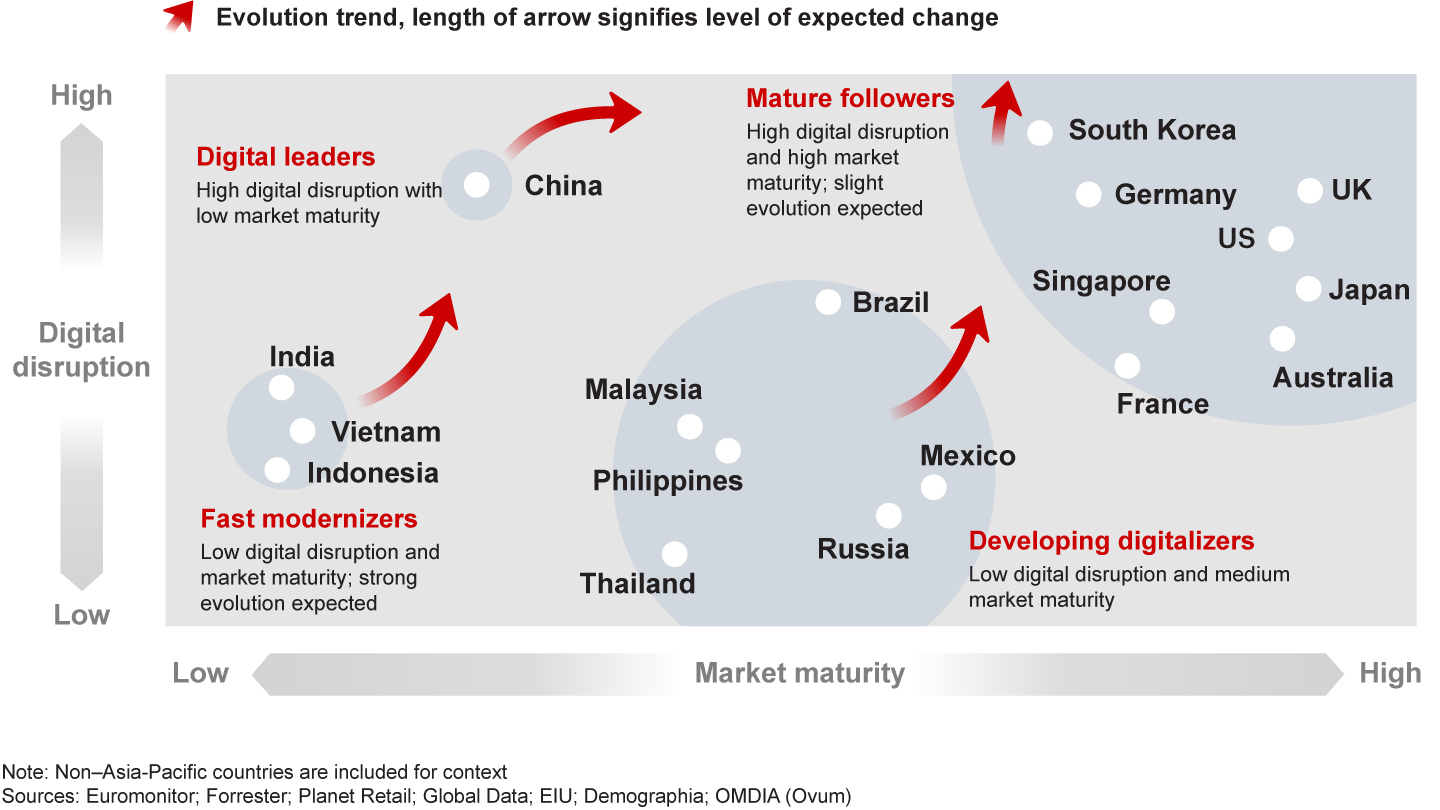

Fast modernizers are likely to come to resemble China today. Currently, China stands on its own as a digital leader exhibiting high disruption and low market maturity (for example, physical selling space per capita in China is only 30% of the comparable US figure.) China is poised to remain in the e-commerce vanguard, aided by domestic digital giants such as Alibaba, JD.com and Pinduoduo.
South Korea, Singapore, Japan and Australia are Asia-Pacific’s mature followers. In these countries both disruption and maturity are high, and future evolution is likely to be more measured in many cases. South Korea stands out as the leader within this category. Its digital prowess, exemplified by omnichannel leaders such as Lotte and Shinesegae, points the way to what is possible for other mature followers in Asia-Pacific and beyond, including the US, the UK and France.
The final cluster of countries consists of developing digitalizers: Malaysia, the Philippines and Thailand, whose low digital disruption and medium maturity is reminiscent of Russia, Mexico and Brazil. They are heading for mature follower status.
Six imperatives to thrive in Asia-Pacific’s retail future
In all four Asia-Pacific market clusters, there are outstanding retailers whose executive teams have proved themselves adept at anticipating and adapting to rapid change. Covid-19 has only accelerated many of the trends that were already on the radar screens of these companies.
The pandemic has most obviously hastened the migration of sales from brick-and-mortar stores to online channels. It has also increased demand for fast and reliable delivery—most vividly seen in the surging adoption of online grocery (see the Bain Brief “How to Ramp Up Online Grocery—without Breaking the Bank”).
Covid-19 has given fresh impetus to other shifts, widening the economic gap between haves and have-nots and further fragmenting the path to purchase by impelling consumers to shop (and live) through mobile phones. That’s on top of the operational repercussions of the virus, such as the paramount need to safeguard employees and customers, and other, non-Covid-related trends.
The most effective responses to these myriad challenges are going to look very different than the strategies that worked in the past. In particular, we think executive teams can succeed by focusing on six imperatives.
- Reinvent your value proposition
Even after the transformative growth of the last few decades, Asia-Pacific consumers are still becoming more middle class and urban—and more digitally driven, too, aided by the fact that those born after the 1990s are heavily represented in regional demographics. With the exception of China and India, dual-income households are on the rise as women continue to join the workforce. Yet the gap between richest and poorest has also widened in many parts of the region, and Covid-19 is ratcheting up pressure on the most deprived by increasing unemployment.
Retailers must ensure their value proposition meets the needs of this fast-evolving customer base. That might involve putting ultra-convenience at the heart of their offering in response to denser urbanization and the rise of time-poor dual-income households; ready meals are already growing in popularity, for instance—their penetration rate more than doubled in South Korea and Thailand between 2010 and 2019.
As more consumers struggle financially in Covid-19’s economically destructive wake, some retailers might benefit from pushing deeper into value/discount formats and offers. (Aldi and Don Quijote have done just that in Australia and Japan respectively, expanding their discount store network by almost 10% a year.) Others might tilt toward rising interest in health, wellness and sustainability—or use advanced analytics to meet swelling demand for personalization.
- Win digital engagement
Whatever a retailer’s evolving value proposition, improved digital engagement with shoppers is likely to be vital—particularly through mobile phones. Asia-Pacific consumers already tend to do most of their online shopping through their phones, and this trend is set to deepen, with Forrester forecasting that 70% to 85% of e-commerce will be conducted by phone in 2023 in key regional markets (vs. a forecast of 43% in the US).
Amid this mobile migration, the path to purchase is still fragmenting. People are buying more through super-apps such as WeChat, Paytm, KakaoTalk and Grab. E-commerce through social media has also been gaining ground in recent years, as shown by Chinese influencer Li Jiaqi’s success at selling lipstick on Taobao livestreams or the video app Douyin. Consumers have increasingly turned to social commerce like this during the pandemic. When Bain & Company surveyed 4,700 consumers in China this spring, they told us that they were now more likely to use livestreams and short-form videos as a research and purchasing tool than they had been before Covid-19 (see Figure 2).
Figure 2
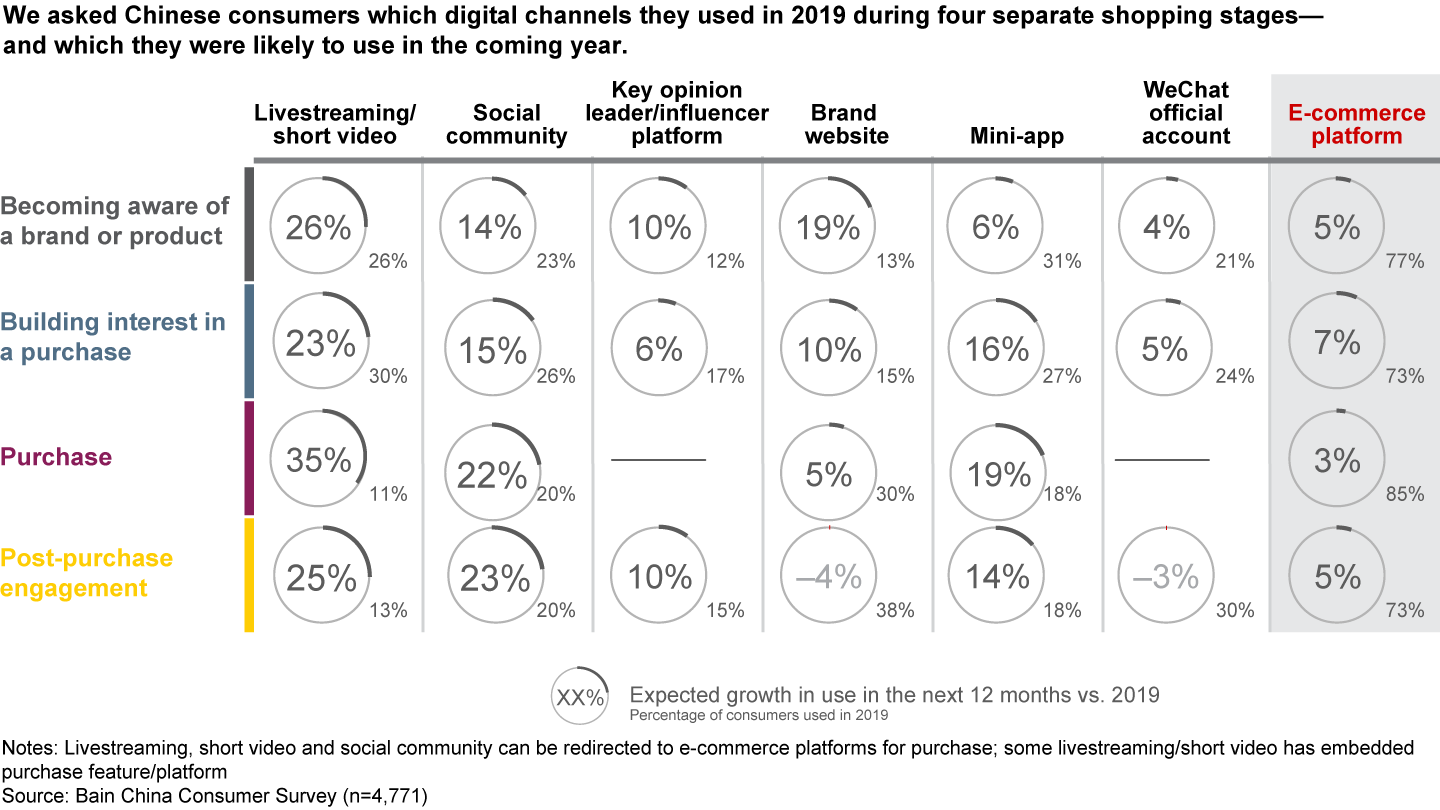

Asia-Pacific retailers have to follow the eyeballs of their customers. They need to optimize their presence on super-apps and social commerce channels (perhaps even nurturing their own Li Jiaqis). They should keep asking themselves if they are serving up the right content formats for current preferences (today, that might be short-form video, tomorrow, something new.)
Regardless of the channel, retailers need to keep improving the user experience online. For many, there is still much work to do. When Bain surveyed 1,100 consumers in Australia in May 2020, we found their willingness to recommend a retailer, measured as a Net Promoter Score®, tended to be lower for online purchases than in-store shopping. For the most alienated online shoppers, website problems were a serious issue, comprising more than one quarter of the reasons given for their dissatisfaction.
- Futureproof assets and operations
In Asia-Pacific, only retailers in Australia and Japan (and to a lesser extent South Korea) have built out their physical store networks as extensively as their counterparts in the US and Western Europe. Outside these territories, the region’s retailers are finding growth enough online and are now unlikely to expand their physical network to anything like Western levels of ubiquity (see Figure 3).
Figure 3
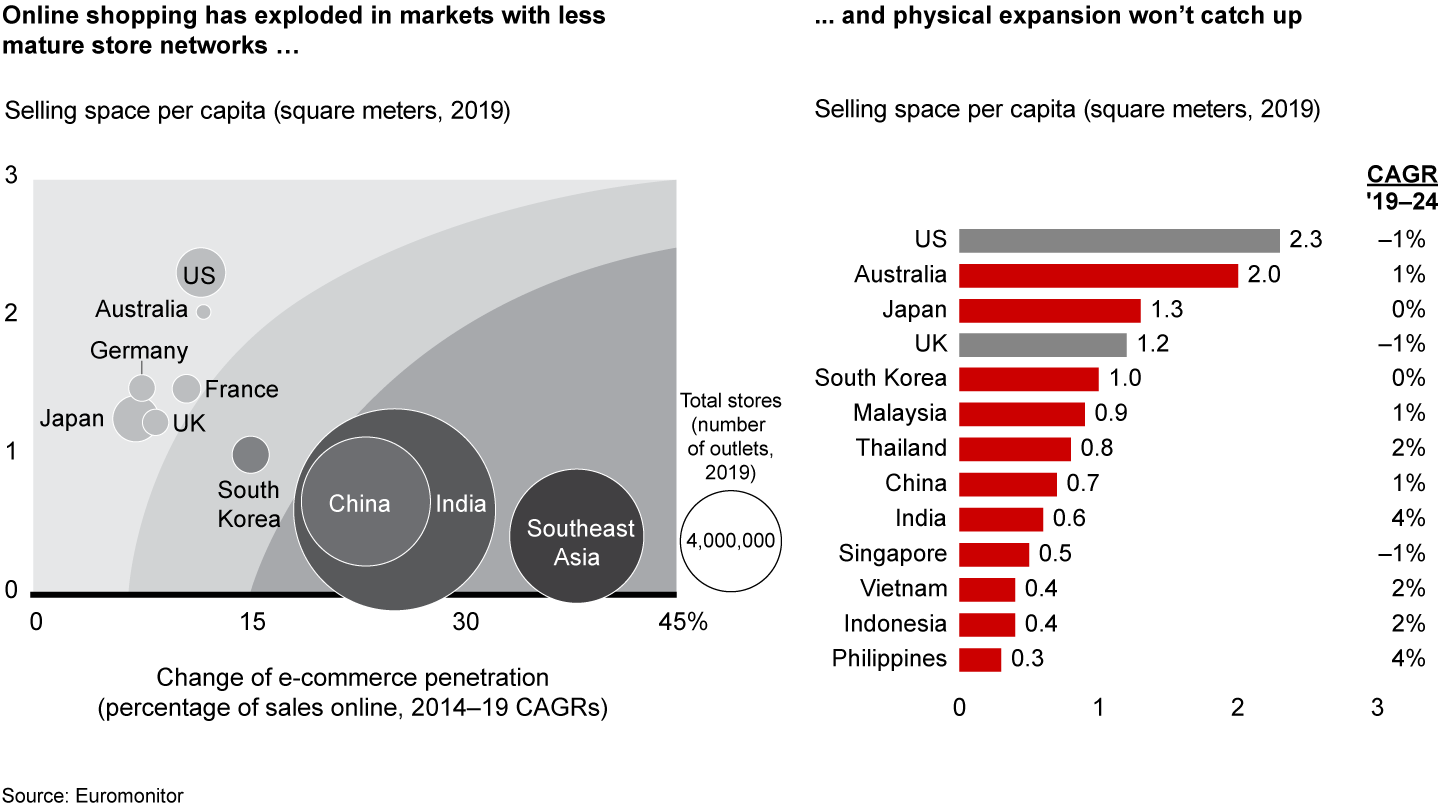

Old formats will need to be updated—or even abandoned. The online migration of sales, hastened by Covid-19, is squeezing supermarkets and hypermarkets. For example, sales per square meter in hypermarkets declined by 6% in South Korea and 14% in China between 2014 and 2019; rising costs make that declining sales density unsustainable. Conversely, convenience stores have already been gaining traction. In China and South Korea, they were the fastest-growing format between 2014 and 2019, posting double-digit growth. That growth reflects how shopping has become more local across the region, a trend that has now been given extra momentum by Covid-19.
Stores will need to change role as well as format, contributing to a more seamless omnichannel whole as the sales mix tilts further to e-commerce. More stores will operate as showrooms or hubs for order picking or click-and-collect services, with increasing level of automation (as is already the case at cutting-edge stores operated by Emart in South Korea and Hema in China.)
Given rising labor costs (up by half in China since 2014) and expensive real estate in many Asia-Pacific cities, it is more important than ever that retailers scour their cost base for savings. Moving to zero-base costs can help, while investing in technology to improve operations can create a virtuous circle of savings and improved customer experience. Examples include scan-and-go payment technologies, smart shelves, radio-frequency identification and predictive ordering and replenishment.
- Master the last mile and supply chain resilience
Consumers want faster and cheaper home delivery. Hema set a new standard when it offered home delivery 30 minutes from ordering (within a 3-kilometer radius). That’s a challenge to e-commerce economics around the world but particularly so in Asia-Pacific, given its geographic diversity. There isn’t a single fulfillment model that can span the regional differences in e-commerce demand, urban density, real estate market dynamics, labor costs and logistical maturity.
Retailers will instead need to tailor their last-mile approach to local conditions (see Figure 4). For instance, highly centralized and automated fulfillment centers work well in Sydney, with its expensive real estate and workers; its logistical maturity is also ideal for home delivery by truck. Shanghai suits a mix of centralized and hyperlocal fulfillment, trucks and nimbler two-wheelers, manual and automated picking. In Mumbai and Jakarta, with their patchier roads and lower-cost labor, the pendulum swings much further toward hyperlocal fulfillment, motorbikes, scooters and picking-by-hand.
Figure 4
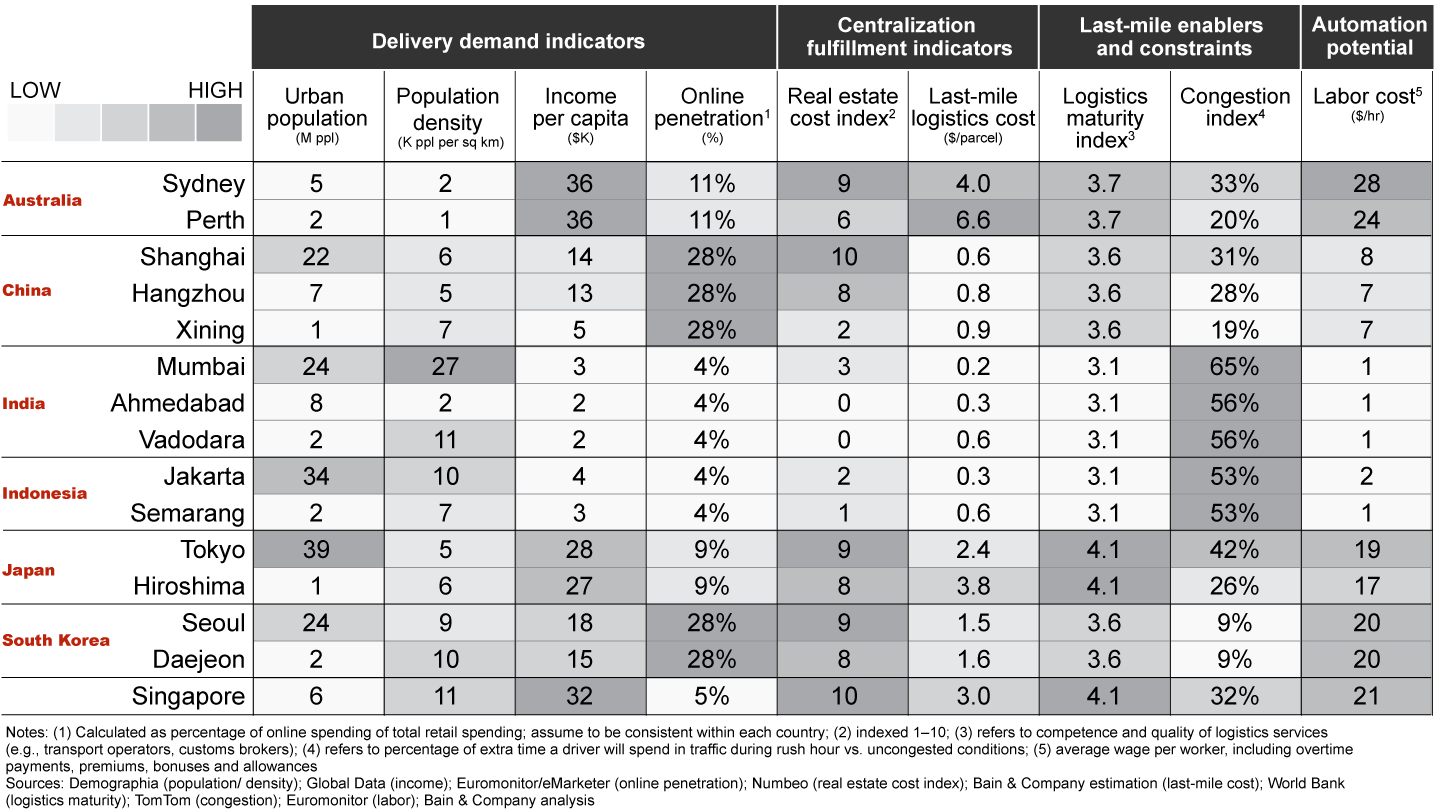

Executive teams also need to anticipate how macrotrends will shape last-mile economics and understand the developments that make investments in automation more feasible, be that rising labor costs or hitting scale thresholds (such as the number of customers and the density of delivery routes in a given area). At the same time, retailers need to be attuned to the way that Covid-19 is likely to lead to shorter, more local and more automated supply chains as companies seek greater resilience.
- Define your ecosystem destination
Ecosystem pioneers Alibaba and Tencent have company. Technology groups, retail incumbents and others are nurturing their own ecosystems, including Korea’s Kakao, Naver and Shinsegae, Singapore’s Grab, Walmart and Reliance Industries in India and Woolworths in Australia.
Ecosystem players are increasingly disrupting retail value chains, using their scale and capabilities to provide B2B wholesale services to retailers (as Udaan is doing in India), logistics solutions (such as those offered by China’s JD Daojia and Cainiao), payment propositions (see India’s Paytm) or data and analytics services (ecosystem players in this field include Alibaba and Naver).
The pandemic has strengthened ecosystems strategically. Under pressure to accelerate their digital retooling, traditional retailers have sought out ecosystem partnerships. Such alliances can offer retailers a capital-light business model and fast access to scale advantages they might not have the time or the balance sheet to build. In turn, traditional retailers give the ecosystem player access to a physical network; for example, Amazon India uses Future Group’s retail stores for deliveries.
“Define ecosystem destination” is still a crucial task on the to-do list of many executive teams in the region. Completing it will involve answering a series of questions. Should we build our own ecosystem, acquire new capabilities or partner with others?
- Retool for digital
Asia-Pacific retailers have been at the forefront of new technology adoption. Consequently, digital insurgents are now sitting on vast stores of data—rich with insights that can solidify and extend their competitive advantage. For instance, WeChat’s payment services handle more than 300,000 transactions per second, Alibaba’s Taobao and Tmall sites host more than 10 million retailers and its DingTalk collaboration platform has more than 200 million users—the data just keeps flooding in.
Tmall uses customer-centric data to understand assortment productivity and identify new trends and products for specific customer segments. It’s also helping its retail partners optimize assortment at a local level using location-based data.
Many retailers will need to acquire new skills in advanced analytics to exploit the full potential of their data. Executive teams should also hone capabilities in other key areas of technology: artificial intelligence, the Internet of Things, virtual reality and augmented reality, autonomous robotics and cybersecurity. Tomorrow’s winners will ruthlessly prioritize the new use cases that can deliver the biggest benefits to customers (and their bottom line). This will require a reallocation of capital toward digital solutions—as Woolworths has done in Australia, with the announcement of significant investments in distribution center automation.
At the same time, they’ll reset their operating model: embracing agile ways of working and leading, cultivating links with external experts (such as incubators and venture capitalists) and incentivizing risk-taking and innovation.
Creating retail’s future
Even before Covid-19, it wasn’t an easy time to be a retailer. Leaders had to balance a range of competing priorities, running the business at the same time as changing its very essence. All of a sudden, the time frames for change have shortened dramatically.
However, Asia-Pacific retailers remain unusually well placed to cope with the disruption. Profit pools remain healthy, and the region boasts many companies that are already attuned to the industry’s new digital future—and in some cases are creating that future themselves.
Net Promoter®, Net Promoter System®, Net Promoter Score®, NPS® and NPS Prism® are registered trademarks and service marks of Bain & Company, Inc., Fred Reichheld and Satmetrix Systems, Inc.
Published in August 2020