
Skip to Content
  • Offices

    Offices

    North & Latin America
    • Atlanta
    • Austin
    • Bogota
    • Boston
    • Buenos Aires
    • Chicago
    • Dallas
    • Denver
    • Houston
    • Los Angeles
    • Mexico City
    • Minneapolis
    • Monterrey
    • Montreal
    • New York
    • Rio de Janeiro
    • San Francisco
    • Santiago
    • São Paulo
    • Seattle
    • Silicon Valley
    • Toronto
    • Washington, DC
    Europe & Africa
    • Amsterdam
    • Athens
    • Berlin
    • Brussels
    • Copenhagen
    • Dusseldorf
    • Frankfurt
    • Helsinki
    • Istanbul
    • Johannesburg
    • Kyiv
    • Lisbon
    • London
    • Madrid
    • Milan
    • Munich
    • Oslo
    • Paris
    • Rome
    • Stockholm
    • Vienna
    • Warsaw
    • Zurich
    Middle East
    • Doha
    • Dubai
    • Riyadh
    Asia & Australia
    • Bangkok
    • Beijing
    • Bengaluru
    • Brisbane
    • Ho Chi Minh City
    • Hong Kong
    • Jakarta
    • Kuala Lumpur
    • Manila
    • Melbourne
    • Mumbai
    • New Delhi
    • Perth
    • Seoul
    • Shanghai
    • Singapore
    • Sydney
    • Tokyo
    See all offices
  • Alumni
  • Media Center
  • Subscribe
  • Contact
  • Global | English

    Select your region and language

    Global
    • Global (English)
    North & Latin America
    • Brazil (Português)
    • Argentina (Español)
    • Canada (Français)
    • Chile (Español)
    • Colombia (Español)
    Europe, Middle East, & Africa
    • France (Français)
    • DACH Region (Deutsch)
    • Italy (Italiano)
    • Spain (Español)
    • Greece (Elliniká)
    Asia & Australia
    • China (中文版)
    • Korea (한국어)
    • Japan (日本語)
  • Saved items (0)
    Saved items (0)

    You have no saved items.

    Bookmark content that interests you and it will be saved here for you to read or share later.

    Explore Bain Insights
  • Industries
    Main menu

    Industries

    • Aerospace & Defense
    • Agribusiness
    • Chemicals
    • Construction & Infrastructure
    • Consumer Products
    • Financial Services
    • Healthcare & Life Sciences
    • Industrial Machinery & Equipment
    • Media & Entertainment
      Industries
      Media & Entertainment
      • Media Lab
    • Metals
    • Mining
    • Oil & Gas
    • Paper & Packaging
    • Private Equity
      Industries
      Private Equity
      • Due Diligence
      • Exit Planning
      • Firm Strategy & Operations
      • Portfolio Value Creation
    • Social Impact
    • Retail
    • Technology
    • Telecommunications
      Industries
      Telecommunications
      • Capital Expenditure
      • Telco Digital Transformation
    • Transportation
    • Travel & Leisure
    • Utilities & Renewables
  • Consulting Services
    Main menu

    Consulting Services

    • Customer Experience
    • Sustainability
    • Innovation
    • M&A
    • Operations
    • People & Organization
    • Private Equity
    • Sales & Marketing
    • Strategy
    • AI, Insights, and Solutions
    • Technology
    • Transformation
  • Digital
  • Insights
    Main menu

    Insights

    • Industry Insights
    • Services Insights
    • Bain Books
    • Webinars
    • Bain Futures
    View all Insights
    Featured topics
    • Tariff Response
    • Artificial Intelligence
    • Thriving in Uncertainty
    • Executive Conversations
    • Macro Trends
    • M&A Report
    • Healthcare Private Equity Report
    • Paper & Packaging Report
    • Technology Report
    • CEO's Guide to Sustainability
    • CEO Insights
    • CFO Insights
    • COO Insights
    • CIO Insights
    • CMO Insights
    View all featured topics
  • About
    Main menu

    About

    • What We Do
    • What We Believe
    • Our People & Leadership
    • Client Results
    • Awards & Recognition
    • Global Affiliations
    Further: Our global responsibility
    • Sustainability
    • Social Impact
    • World Economic Forum
    Learn more about Further
  • Careers
    Main menu

    Careers

    • Work with Us
      Careers
      Work with Us
      • Find Your Place
      • Our Work Areas
      • Integrated Teams
      • Students
      • Internships & Programs
      • Recruiting Events
    • Life at Bain
      Careers
      Life at Bain
      • Blog: Inside Bain
      • Career Stories
      • Our People
      • Where We Work
      • Supporting Your Growth
      • Affinity Groups
      • Benefits
    • Impact Stories
    • Hiring Process
      Careers
      Hiring Process
      • What to Expect
      • Interviewing
    FIND JOBS
  • Offices
    Main menu

    Offices

    • North & Latin America
      Offices
      North & Latin America
      • Atlanta
      • Austin
      • Bogota
      • Boston
      • Buenos Aires
      • Chicago
      • Dallas
      • Denver
      • Houston
      • Los Angeles
      • Mexico City
      • Minneapolis
      • Monterrey
      • Montreal
      • New York
      • Rio de Janeiro
      • San Francisco
      • Santiago
      • São Paulo
      • Seattle
      • Silicon Valley
      • Toronto
      • Washington, DC
    • Europe & Africa
      Offices
      Europe & Africa
      • Amsterdam
      • Athens
      • Berlin
      • Brussels
      • Copenhagen
      • Dusseldorf
      • Frankfurt
      • Helsinki
      • Istanbul
      • Johannesburg
      • Kyiv
      • Lisbon
      • London
      • Madrid
      • Milan
      • Munich
      • Oslo
      • Paris
      • Rome
      • Stockholm
      • Vienna
      • Warsaw
      • Zurich
    • Middle East
      Offices
      Middle East
      • Doha
      • Dubai
      • Riyadh
    • Asia & Australia
      Offices
      Asia & Australia
      • Bangkok
      • Beijing
      • Bengaluru
      • Brisbane
      • Ho Chi Minh City
      • Hong Kong
      • Jakarta
      • Kuala Lumpur
      • Manila
      • Melbourne
      • Mumbai
      • New Delhi
      • Perth
      • Seoul
      • Shanghai
      • Singapore
      • Sydney
      • Tokyo
    See all offices
  • Alumni
  • Media Center
  • Subscribe
  • Contact
  • Global | English
    Main menu

    Select your region and language

    • Global
      Select your region and language
      Global
      • Global (English)
    • North & Latin America
      Select your region and language
      North & Latin America
      • Brazil (Português)
      • Argentina (Español)
      • Canada (Français)
      • Chile (Español)
      • Colombia (Español)
    • Europe, Middle East, & Africa
      Select your region and language
      Europe, Middle East, & Africa
      • France (Français)
      • DACH Region (Deutsch)
      • Italy (Italiano)
      • Spain (Español)
      • Greece (Elliniká)
    • Asia & Australia
      Select your region and language
      Asia & Australia
      • China (中文版)
      • Korea (한국어)
      • Japan (日本語)
  • Saved items  (0)
    Main menu
    Saved items (0)

    You have no saved items.

    Bookmark content that interests you and it will be saved here for you to read or share later.

    Explore Bain Insights
  • Industries
    • Industries

      • Aerospace & Defense
      • Agribusiness
      • Chemicals
      • Construction & Infrastructure
      • Consumer Products
      • Financial Services
      • Healthcare & Life Sciences
      • Industrial Machinery & Equipment
      • Media & Entertainment
      • Metals
      • Mining
      • Oil & Gas
      • Paper & Packaging
      • Private Equity
      • Social Impact
      • Retail
      • Technology
      • Telecommunications
      • Transportation
      • Travel & Leisure
      • Utilities & Renewables
  • Consulting Services
    • Consulting Services

      • Customer Experience
      • Sustainability
      • Innovation
      • M&A
      • Operations
      • People & Organization
      • Private Equity
      • Sales & Marketing
      • Strategy
      • AI, Insights, and Solutions
      • Technology
      • Transformation
  • Digital
  • Insights
    • Insights

      • Industry Insights
      • Services Insights
      • Bain Books
      • Webinars
      • Bain Futures
      View all Insights
      Featured topics
      • Tariff Response
      • Artificial Intelligence
      • Thriving in Uncertainty
      • Executive Conversations
      • Macro Trends
      • M&A Report
      • Healthcare Private Equity Report
      • Paper & Packaging Report
      • Technology Report
      • CEO's Guide to Sustainability
      • CEO Insights
      • CFO Insights
      • COO Insights
      • CIO Insights
      • CMO Insights
      View all featured topics
  • About
    • About

      • What We Do
      • What We Believe
      • Our People & Leadership
      • Client Results
      • Awards & Recognition
      • Global Affiliations
      Further: Our global responsibility
      • Sustainability
      • Social Impact
      • World Economic Forum
      Learn more about Further
  • Careers
    Popular Searches
    • Agile
    • Digital
    • Strategy
    Your Previous Searches
      Recently Visited Pages

      Content added to saved items

      Saved items (0)

      Removed from saved items

      Saved items (0)

      Brief

      Unfolding the Benefits of Digital in Paper and Packaging

      Unfolding the Benefits of Digital in Paper and Packaging

      Even as digital reduces demand for paper it creates new opportunities in product, supply chain and customer innovation.

      By Ilkka Leppävuori, Will Poindexter and Oliver Straehle

      • min read
      }

      Brief

      Unfolding the Benefits of Digital in Paper and Packaging
      en

      There’s no question that the rise of digital technology poses threats to the paper and packaging industries. Demand for paper has fallen as business and transactions move online, particularly in more developed markets where Bain estimates that consumption may decline by 3% to 5% per year. Contracts, invoices and everyday communication flow without paper, and consumers are switching from print magazines and newspapers to online and mobile versions.

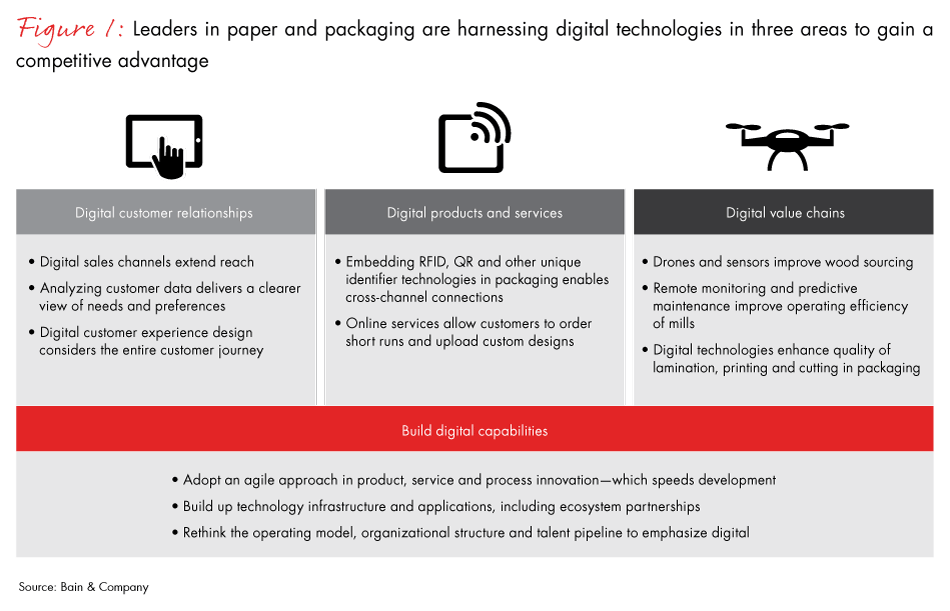
      There is, however, another side of the digital story in paper and packaging, one that creates opportunities for cost savings and product innovations with new revenue streams. As in other industries, leading paper and packaging companies are showing how to harness this new potential to gain competitive advantage, particularly in three areas (see Figure 1):

      • Digital customer relationships. As customers’ expectations rise, they want more transparency and closer control over their orders.
      • Digital products and services. As new technologies gain scale and become more affordable, innovations in packaging offer better tracking and new insights.
      • Digital value chains. From more accurate sensor and scanning technology in the forest through more efficient operations in the mill or plant and better predictive maintenance throughout the process, the connections across the value chain are becoming more seamless and integrated.

      But as these leaders can attest, success in digital doesn’t come easily. Established firms, some with operating models that have served them well for decades, need to discover and develop new ways of working—digital operating models—as they adopt new technologies. Disruption isn’t easy in this industry, due to high entry barriers, and that has led established companies to move less aggressively into digital than their peers in other industries. That could change as more incumbents recognize the growing threat from digital innovators and new attackers—and come to realize that digital is a must-have to achieve the next level in productivity and customer service.

      unfolding-the-benefits-of-digital-paper-fig01_embed

      Digital opportunities in paper and packaging


      To get up to speed, most paper and packaging companies will need to invest significant time and effort developing the digital capabilities needed to capture the potential. The first step is getting a clear view of the areas undergoing the most rapid and significant changes. With that knowledge in hand, executives can then look to their own organizations to determine where they should begin their own digital transformations.

      • Digital customer relationships. Thank Amazon, Uber and hundreds of other consumer companies for raising business customers’ expectations about transparency and efficiency. Customers now ask: “If I can easily order and track a taxi on my mobile, why can’t I do the same for a large commercial order?” With the bar raised, paper and packaging companies have to step up to deliver better transparency along with more efficient online ordering and billing capabilities—or they risk losing share to someone who can.

        Of course, digital’s potential goes beyond improving existing transactions to enabling new ones. The most advanced packaging companies now make it easier for customers to collaborate with them, uploading personalized designs or ordering small-batch runs for special promotions. Some of these online systems are easier to use than others, and with competitors only a click away, companies need to make the user experience easy and enjoyable to keep from losing business to their more digitally savvy competitors. At first, newcomers may capture only small orders, but are likely to take on larger volumes as their businesses grow.

        Beyond these customer-facing capabilities, the data collected through digital transactions can allow paper and packaging companies to develop deeper insight into their customers’ purchase history and preferences. A better understanding of customers and their purchasing patterns can shape upstream production to reduce lead times and identify new opportunities for cross sales and innovation.

      • Digital products and services. One of the most promising top-line opportunities in digital technology is intelligent packaging. RFID tags in packages and labels have been in development for more than a decade, but so far their costs have limited their placement to luxury or other high-margin goods, where the need to verify authenticity justifies the costs. Stora Enso, for example, has partnered with chipmaker NXP to integrate RFID into packages of luxury goods such as champagne or fragrances, to ensure authenticity and even to produce lighting or other display effects. Beyond luxury and other consumer goods, RFID tags could have broad applicability in industrial applications—for example, improving inventory management and authenticating spare parts for industrial equipment.

        Another form of intelligent packaging relies on the humble QR code, which has become important in offline-to-online commerce around the world, but especially in China, where the introduction of QR codes coincided with the rapid rise of mobile phones. When the enormously popular WeChat service began including a QR code scanner in its app in 2012, it encouraged merchants to include the code in packages as well as their ads, and to work with WeChat to connect their products with online promotions and sales. Other large online services like Alibaba and Baidu joined the trend, incorporating the codes into their apps and enabling more offline-to-online promotions and other connections.

        The QR code phenomenon has also begun to take off in Europe and North America. Its success in Asia suggests that packaging companies could be in a position to play an active role in providing technology platforms for similar applications elsewhere in the world. For example, liquid packaging equipment and materials providers like Tetra Pak and SIG Combibloc have broad experience across the dairy industry which is valuable to their customers around the world. As more dairies rely on packaging to make the connection from online marketing and other aspects of customer engagement to their products, these equipment makers will be in a position to provide the technology platform to help them make that connection.

      • Digital value chains. For years, paper mills and converters have used sensors to monitor the condition of equipment and the quality of the paper products being manufactured. As sensors and related digital technologies become more sophisticated and less expensive, they can help paper companies create value in new ways.

        Drones and sensors improve the accuracy in estimating the potential of forests, and they can sharpen the ability to estimate the value of a harvest. In the Nordics, online sales channels and digital document management today facilitate forest contract negotiations and sales in ways that reduce “windshield time”—the long hours that agents might otherwise have to spend traveling to arrange deals. Scanners and X-ray technology at saw mills can help calculate the ideal cuts to maximize the value of the wood.

        In mills and plants, digital technology makes it possible to monitor and operate facilities more efficiently—and even remotely. Digital sensors, wireless networks and apps on tablets can free technicians from the control room, allowing them to carry out inspections or repairs while staying in touch with central controls. Connected equipment and better data on its condition can also help operators plan preventive maintenance more efficiently, avoiding expensive downtime and damaged equipment or product.

      Infographic

      The Digital Opportunity in Paper & Packaging

      Three steps paper and packaging companies can take to become digital leaders.

      Toward a digital paper company


      A successful multiyear transformation into a more digital operating model begins with a diagnostic geared toward gaining a better understanding of how new technologies are changing the paper and packaging industry, especially the expectations of customers. This assessment should include a comprehensive review of the company’s current and planned digital initiatives as well as its capability gaps—and those of important competitors. Leaders need to be aware of the execution risks, and take an honest appraisal of their own organizational readiness for the transformation. Risks include investing too thinly in digital initiatives, chasing too many opportunities at once, failing to develop the right roles with decision rights, and making do with existing IT talent where new digital capabilities are sorely needed.

      With this fact base in hand, executives can begin to prioritize their digital initiatives for operations, customer engagement and new products like intelligent packaging. By focusing teams on priorities, they can accelerate progress on those actions that are most likely to increase margins and raise the share price. A key element of this is a blueprint with clear responsibilities and timelines.

      As in other industries, successful implementation of digital technologies requires digital design thinking, greater cross-functional cooperation and nimble decision making. Some companies are looking to the example of the software industry where agile and scrum methodologies have successfully reduced development times. One European package maker expanded its use of scrum beyond software development to better understand customer insights and ensure they found their way into new products. In one case, this agile approach radically reduced product definition times from more than a year to a couple of weeks—and, at the same time, delivered new insights on business models and how to put them into practice.

      Ilkka Leppävuori, who leads Bain's Forest Products, Paper and Packaging practice in Europe, the Middle East and Africa, shares three areas where digitalization can be effective in paper and packaging companies.

      Throughout, executives need to take a coherent, holistic, top-down approach. Successfully deploying new technologies requires an effective cross-functional approach that includes:

      • assessing opportunities and threats, by business and by function;
      • reconfiguring the operating model, the organizational design and business processes to support a digital company;
      • identifying capability gaps and learning to see technology and data skills as sources of advantages rather than as back-office functions;
      • hiring digitally savvy talent while also improving the digital skills of existing staff;
      • finding the right partners—not just technology vendors, but also those that can supply or aggregate complementary products (Most industrial companies find that they need to partner with analytics service providers, rather than attempting to develop their own world-class analytics capabilities in-house.); and
      • allocating people and capital where they can add the most value, setting targets and tracking progress with performance metrics.

      Digital transformation offers tremendous opportunity in the paper and packaging industry, but success will require a significant investment in new talent and capabilities, as well as careful prioritization. Executives must be deliberate about picking the right opportunities for their market and regulatory environment. As with all large transformations, they should think of this as a multiyear journey, even though in this case one of the most important aspects of the change will be acquiring the ability to innovate in short cycles and deploy new products and services more rapidly.

      Ilkka Leppävuori, Will Poindexter and Oliver Straehle are partners with Bain & Company in Helsinki, Chicago and Zurich, respectively. Ilkka and Oliver work with Bain’s Industrial Goods and Services practice, and Ilkka leads the Forest Products, Paper and Packaging practice in Europe, the Middle East and Africa. Will is a leader in Bain’s Digital and Information Technology practices.


      unfolding-the-benefits-of-digital-paper-fig01_full
      Authors
      • Headshot of Ilkka Leppävuori
        Ilkka Leppävuori
        Partner, Helsinki
      • Headshot of Will Poindexter
        Will Poindexter
        Partner, Denver
      • Headshot of Oliver Straehle
        Oliver Straehle
        Partner, Zurich
      Contact us
      Related Industries
      • Advanced Manufacturing & Services
      • Paper & Packaging
      Related Consulting Services
      • Digital
      • Enterprise Technology
      Advanced Manufacturing & Services
      Digital Strategy for a B2B World

      B2B companies demand their own approach to digital.

      Read More
      Digital
      Leading a 360-Degree Digital Transition

      Embracing the digital revolution is about bold management, not just technology.

      Read More
      Digital
      The Intangible Benefits of a Digital Supply Chain

      Does your digital supply chain serve your strategy?

      Read More
      Advanced Manufacturing & Services
      How Can AI Be Used in Machinery & Equipment?

      Explore the use cases with the highest potential.

      Read More
      Advanced Manufacturing & Services
      Transforming Maintenance with Artificial Intelligence

      With little to no capex, companies can turn maintenance into an engine of cash flow.

      Read More
      Published in March 2017
      Tags
      • Advanced Manufacturing & Services
      • Digital
      • Enterprise Technology
      • Paper & Packaging

      How We've Helped Clients

      Supply Chain Security Mitigates a Sovereign Wealth Fund’s Construction Disruptions

      Read case study

      A Packaging Company Unboxes a New Go-to-Market Strategy

      Read case study

      Manufacturing A Paper Company Optimizes Its Industrial Footprint

      Read case study

      Ready to talk?

      We work with ambitious leaders who want to define the future, not hide from it. Together, we achieve extraordinary outcomes.

      Stay ahead in a rapidly changing world. Subscribe to Bain Insights, our monthly look at the critical issues facing global businesses.

      *I have read and understand Bain’s Privacy Notice.

      Please read and agree to the Privacy Policy.
      Bain & Company
      Contact us Sustainability Accessibility Terms of use Privacy Modern Slavery Act Statement Cookie Policy Sitemap Log In

      © 1996-2026 Bain & Company, Inc.

      Contact Bain

      How can we help you?

      • Business inquiry
      • Career information
      • Press relations
      • Partnership request
      • Speaker request
      See all offices