Skip to Content
  • Offices

    Offices

    North & Latin America
    • Atlanta
    • Austin
    • Bogota
    • Boston
    • Buenos Aires
    • Chicago
    • Dallas
    • Denver
    • Houston
    • Los Angeles
    • Mexico City
    • Minneapolis
    • Monterrey
    • Montreal
    • New York
    • Rio de Janeiro
    • San Francisco
    • Santiago
    • São Paulo
    • Seattle
    • Silicon Valley
    • Toronto
    • Washington, DC
    Europe & Africa
    • Amsterdam
    • Athens
    • Berlin
    • Brussels
    • Copenhagen
    • Dusseldorf
    • Frankfurt
    • Helsinki
    • Istanbul
    • Johannesburg
    • Kyiv
    • Lisbon
    • London
    • Madrid
    • Milan
    • Munich
    • Oslo
    • Paris
    • Rome
    • Stockholm
    • Vienna
    • Warsaw
    • Zurich
    Middle East
    • Doha
    • Dubai
    • Riyadh
    Asia & Australia
    • Bangkok
    • Beijing
    • Bengaluru
    • Brisbane
    • Ho Chi Minh City
    • Hong Kong
    • Jakarta
    • Kuala Lumpur
    • Manila
    • Melbourne
    • Mumbai
    • New Delhi
    • Perth
    • Seoul
    • Shanghai
    • Singapore
    • Sydney
    • Tokyo
    See all offices
  • Alumni
  • Media Center
  • Subscribe
  • Contact
  • Global | English

    Select your region and language

    Global
    • Global (English)
    North & Latin America
    • Brazil (Português)
    • Argentina (Español)
    • Canada (Français)
    • Chile (Español)
    • Colombia (Español)
    Europe, Middle East, & Africa
    • France (Français)
    • DACH Region (Deutsch)
    • Italy (Italiano)
    • Spain (Español)
    • Greece (Elliniká)
    Asia & Australia
    • China (中文版)
    • Korea (한국어)
    • Japan (日本語)
  • Saved items (0)
    Saved items (0)

    You have no saved items.

    Bookmark content that interests you and it will be saved here for you to read or share later.

    Explore Bain Insights
  • Industries
    Main menu

    Industries

    • Aerospace & Defense
    • Agribusiness
    • Chemicals
    • Construction & Infrastructure
    • Consumer Products
    • Financial Services
    • Healthcare & Life Sciences
    • Industrial Machinery & Equipment
    • Media & Entertainment
      Industries
      Media & Entertainment
      • Media Lab
    • Metals
    • Mining
    • Oil & Gas
    • Paper & Packaging
    • Private Equity
      Industries
      Private Equity
      • Due Diligence
      • Exit Planning
      • Firm Strategy & Operations
      • Portfolio Value Creation
    • Social Impact
    • Retail
    • Technology
    • Telecommunications
      Industries
      Telecommunications
      • Capital Expenditure
      • Telco Digital Transformation
    • Transportation
    • Travel & Leisure
    • Utilities & Renewables
  • Consulting Services
    Main menu

    Consulting Services

    • Customer Experience
    • Sustainability
    • Innovation
    • M&A
    • Operations
    • People & Organization
    • Private Equity
    • Sales & Marketing
    • Strategy
    • AI, Insights, and Solutions
    • Technology
    • Transformation
  • Digital
  • Insights
    Main menu

    Insights

    • Industry Insights
    • Services Insights
    • Bain Books
    • Webinars
    • Bain Futures
    View all Insights
    Featured topics
    • Tariff Response
    • Artificial Intelligence
    • Thriving in Uncertainty
    • Executive Conversations
    • Macro Trends
    • M&A Report
    • Healthcare Private Equity Report
    • Paper & Packaging Report
    • Technology Report
    • CEO's Guide to Sustainability
    • CEO Insights
    • CFO Insights
    • COO Insights
    • CIO Insights
    • CMO Insights
    View all featured topics
  • About
    Main menu

    About

    • What We Do
    • What We Believe
    • Our People & Leadership
    • Client Results
    • Awards & Recognition
    • Global Affiliations
    Further: Our global responsibility
    • Sustainability
    • Social Impact
    • World Economic Forum
    Learn more about Further
  • Careers
    Main menu

    Careers

    • Work with Us
      Careers
      Work with Us
      • Find Your Place
      • Our Work Areas
      • Integrated Teams
      • Students
      • Internships & Programs
      • Recruiting Events
    • Life at Bain
      Careers
      Life at Bain
      • Blog: Inside Bain
      • Career Stories
      • Our People
      • Where We Work
      • Supporting Your Growth
      • Affinity Groups
      • Benefits
    • Impact Stories
    • Hiring Process
      Careers
      Hiring Process
      • What to Expect
      • Interviewing
    FIND JOBS
  • Offices
    Main menu

    Offices

    • North & Latin America
      Offices
      North & Latin America
      • Atlanta
      • Austin
      • Bogota
      • Boston
      • Buenos Aires
      • Chicago
      • Dallas
      • Denver
      • Houston
      • Los Angeles
      • Mexico City
      • Minneapolis
      • Monterrey
      • Montreal
      • New York
      • Rio de Janeiro
      • San Francisco
      • Santiago
      • São Paulo
      • Seattle
      • Silicon Valley
      • Toronto
      • Washington, DC
    • Europe & Africa
      Offices
      Europe & Africa
      • Amsterdam
      • Athens
      • Berlin
      • Brussels
      • Copenhagen
      • Dusseldorf
      • Frankfurt
      • Helsinki
      • Istanbul
      • Johannesburg
      • Kyiv
      • Lisbon
      • London
      • Madrid
      • Milan
      • Munich
      • Oslo
      • Paris
      • Rome
      • Stockholm
      • Vienna
      • Warsaw
      • Zurich
    • Middle East
      Offices
      Middle East
      • Doha
      • Dubai
      • Riyadh
    • Asia & Australia
      Offices
      Asia & Australia
      • Bangkok
      • Beijing
      • Bengaluru
      • Brisbane
      • Ho Chi Minh City
      • Hong Kong
      • Jakarta
      • Kuala Lumpur
      • Manila
      • Melbourne
      • Mumbai
      • New Delhi
      • Perth
      • Seoul
      • Shanghai
      • Singapore
      • Sydney
      • Tokyo
    See all offices
  • Alumni
  • Media Center
  • Subscribe
  • Contact
  • Global | English
    Main menu

    Select your region and language

    • Global
      Select your region and language
      Global
      • Global (English)
    • North & Latin America
      Select your region and language
      North & Latin America
      • Brazil (Português)
      • Argentina (Español)
      • Canada (Français)
      • Chile (Español)
      • Colombia (Español)
    • Europe, Middle East, & Africa
      Select your region and language
      Europe, Middle East, & Africa
      • France (Français)
      • DACH Region (Deutsch)
      • Italy (Italiano)
      • Spain (Español)
      • Greece (Elliniká)
    • Asia & Australia
      Select your region and language
      Asia & Australia
      • China (中文版)
      • Korea (한국어)
      • Japan (日本語)
  • Saved items  (0)
    Main menu
    Saved items (0)

    You have no saved items.

    Bookmark content that interests you and it will be saved here for you to read or share later.

    Explore Bain Insights
  • Industries
    • Industries

      • Aerospace & Defense
      • Agribusiness
      • Chemicals
      • Construction & Infrastructure
      • Consumer Products
      • Financial Services
      • Healthcare & Life Sciences
      • Industrial Machinery & Equipment
      • Media & Entertainment
      • Metals
      • Mining
      • Oil & Gas
      • Paper & Packaging
      • Private Equity
      • Social Impact
      • Retail
      • Technology
      • Telecommunications
      • Transportation
      • Travel & Leisure
      • Utilities & Renewables
  • Consulting Services
    • Consulting Services

      • Customer Experience
      • Sustainability
      • Innovation
      • M&A
      • Operations
      • People & Organization
      • Private Equity
      • Sales & Marketing
      • Strategy
      • AI, Insights, and Solutions
      • Technology
      • Transformation
  • Digital
  • Insights
    • Insights

      • Industry Insights
      • Services Insights
      • Bain Books
      • Webinars
      • Bain Futures
      View all Insights
      Featured topics
      • Tariff Response
      • Artificial Intelligence
      • Thriving in Uncertainty
      • Executive Conversations
      • Macro Trends
      • M&A Report
      • Healthcare Private Equity Report
      • Paper & Packaging Report
      • Technology Report
      • CEO's Guide to Sustainability
      • CEO Insights
      • CFO Insights
      • COO Insights
      • CIO Insights
      • CMO Insights
      View all featured topics
  • About
    • About

      • What We Do
      • What We Believe
      • Our People & Leadership
      • Client Results
      • Awards & Recognition
      • Global Affiliations
      Further: Our global responsibility
      • Sustainability
      • Social Impact
      • World Economic Forum
      Learn more about Further
  • Careers
    Popular Searches
    • Agile
    • Digital
    • Strategy
    Your Previous Searches
      Recently Visited Pages

      Content added to saved items

      Saved items (0)

      Removed from saved items

      Saved items (0)

      Brief

      Why Better Performance Management Spurs Banks to Deliver More Value

      Why Better Performance Management Spurs Banks to Deliver More Value

      Plagued by complexity and fragmented management, banks can optimize their business portfolios by taking an integrated approach to performance management.

      By Jan-Alexander Huber, Tom De Waele and Stephan Erni

      • min read
      }

      Brief

      Why Better Performance Management Spurs Banks to Deliver More Value
      en
      At a Glance
      • Large banks in Europe and Asia-Pacific are under pressure from investors to deliver more value and from regulators to justify their business models. Their returns on equity and price-to-book ratios lag their peers in North America.
      • For most banks, the way they manage performance is not up to the task. Too often, performance management is fragmented among business units and regions, which makes it difficult to optimize profitability or create value for the entire group.
      • An integrated performance management approach, supported by enterprise-wide data and analytics, gives senior management a sturdier fact base with which to restructure the portfolio.
      • Integrating performance management will allow banks to realign their business portfolios for long-term value, giving investors and regulators more confidence in banks’ business plans.

      Ever since the global financial crisis a decade ago, banks have taken pains to reduce risks in their balance sheets and restructure their cost bases. These moves, along with economic prosperity and ample liquidity in many countries (and state support for banks on the edge), helped banks to navigate the turmoil. In most cases, their financial results, risk profiles and resilience to shocks have improved.

      Many banks, however, remain vulnerable to the deterioration of their customers’ economic circumstances. Risks such as college loan debt in the US could suddenly worsen and trigger a broad hit to a bank’s financial position. In addition, fintechs and large technology firms have encroached upon areas such as deposit taking, lending and payments, bringing new competition and more uncertainty about the sustainability of revenue and profit pools.

      These uncertainties have created a persistent valuation shortfall for many banks since 2010. It’s most acute in Europe, where large banks trade at a discount compared with their international peers. Their revenues have been declining while cost reductions have mostly failed to materialize. European banks struggle to generate a high enough return on equity (ROE) to cover their cost of capital, and those in Asia-Pacific have settled at low levels; North American peers, on the other hand, have been able to push ROE above 10%. Investors remain skeptical on the industry outlook for both Europe and Asia-Pacific, and that sentiment is reflected in their lower price-to-book ratios. Aggregate valuation in Europe has significantly decreased since 2010, and it has stagnated in Asia-Pacific (excluding China). Only North America’s large banks have been able to create shareholder value on an aggregated basis by delivering record results during recent periods (see Figure 1). In addition, banks that primarily serve fast-growing regions such as the Middle East have generally seen superior returns and valuations in recent years.

      Figure 1
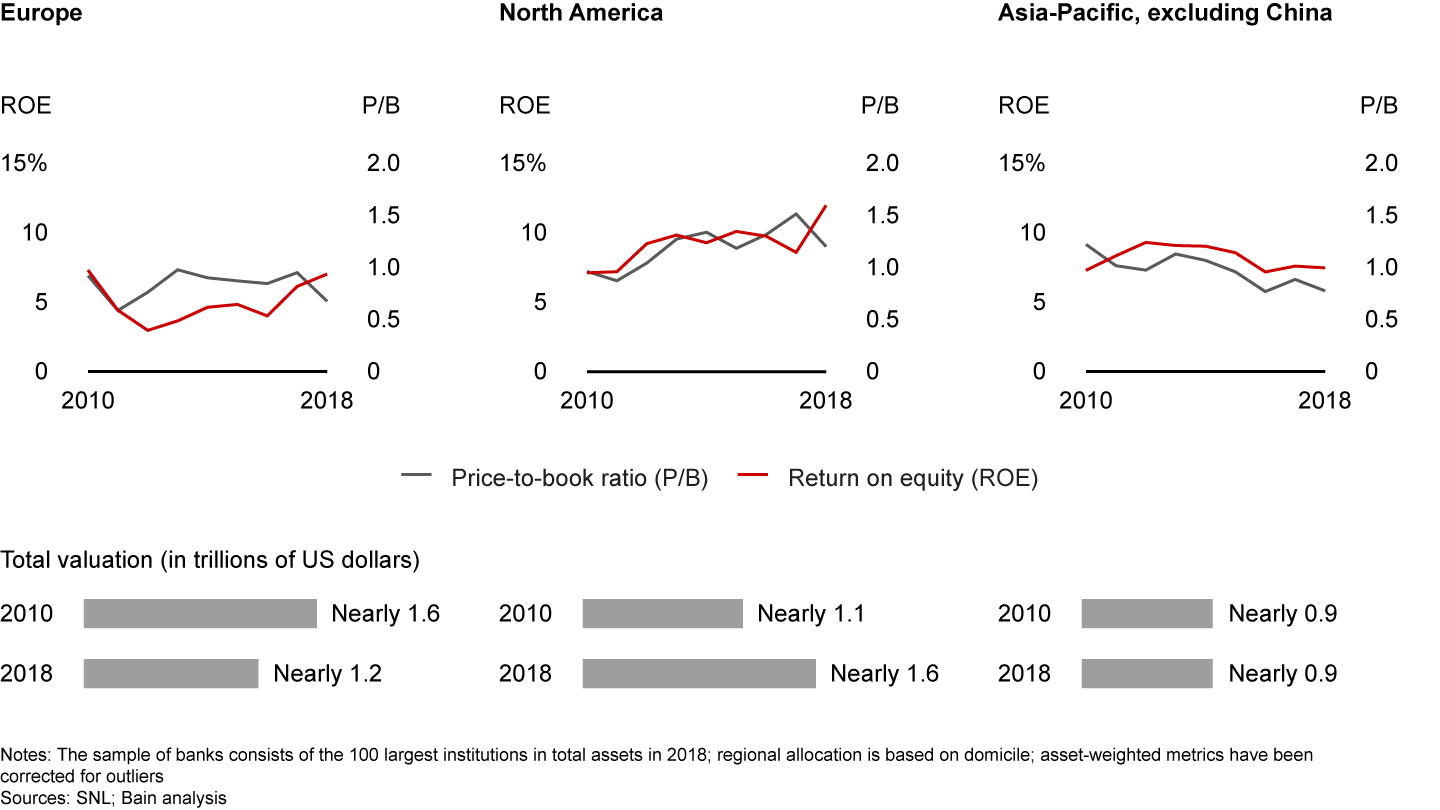
      While regional performance varies, European and Asian banks broadly have not delivered on performance promises and value creation
      While regional performance varies, European and Asian banks broadly have not delivered on performance promises and value creation
      While regional performance varies, European and Asian banks broadly have not delivered on performance promises and value creation

      Banks continue to face pressure from regulators, which look not only at the details of the balance sheet for capital and liquidity profiles and the profit-and-loss statement for operational performance but also examine the viability of the business model for the future. That means bank executives must minimize any deviation from their stated business plan. With fewer degrees of freedom, they must tightly monitor and control ongoing performance, which requires them to understand specifically what drives performance.

      At the same time, investors and rating agencies are demanding transparency into how each business unit of a bank is performing. The market is less patient about thin or inadequate explanations of performance shortfalls as they have fast access to comparison data as well as more opportunities for alternative investments.

      Dealing with these pressures and bridging the valuation chasm will require attention to three capabilities:

      • taking a more integrated approach to performance management, practiced deliberately and explicitly in the daily business across the entire bank;
      • using data and advanced analytics to feed performance management with enhanced insights and to capitalize on the value of available data; and
      • based on those insights, implementing measures to reshape the target business portfolio, which will no doubt entail uncomfortable decisions and actions, such as exiting businesses as well as strengthening core businesses organically or through acquisitions.

      Time to reduce complexity

      Performance management to date has evolved somewhat haphazardly, with additions or subtractions to the business portfolio often made because of specific demands from regulators or expectations from investors.

      As a result, performance management tends to be fragmented in terms of responsibilities, methods and processes. It’s rare to encounter an integrated approach across the entire group.

      To compound the problem, banks’ complexity has increased. Mergers and acquisitions usually come with their own systems and processes. And while implementation of regulatory-driven legal entity restructuring and prudential measures may have improved resilience, they also have added layers of complexity and cost. Further, as banks have built out adjacent businesses and digital innovations, they still rely on legacy platforms, IT systems and performance management solutions such as standalone risk or finance systems. At one global wealth management firm, for instance, the US business as well as performance management run on different systems despite the global nature of the business. As a result, rolling up data and producing useful analysis takes extra time and effort.

      Fragmented performance management hinders senior management teams from making good trade-offs when allocating capital—and from effectively or efficiently steering the overall enterprise toward value creation. It encourages gaming the system to optimize individual objectives (individual business units or departments) rather than overall value creation.

      Some banks have begun to restructure their footprints beyond what’s required by regulatory guidance. Citi decided in 2014 to pull up stakes on its consumer banking business in 11 markets, including Japan and Egypt, as a reaction to rising operating expenses. HSBC, as part of its goal to optimize the global network and reduce complexity, sold its entire business in Brazil in 2016, thereby reducing risk-weighted assets by roughly $37 billion. In 2018, JPMorgan Chase shuttered investment accounts for retail clients living outside the US in order to focus on its domestic market. And in early 2019, Goldman Sachs announced that it’s further downsizing commodity trading activities by the fixed-income team.

      Each move helps these banks focus on their core. We advocate going even further to integrate the management of all the parts (retail, wholesale, private bank, regions and so on) into a view of the whole at the highest group level.

      An integrated view, backed by reliable metrics, will ensure a more objective, arm’s-length allocation of capital toward the best opportunities and enable a bank to exploit the full potential of its balance sheet. It’s a welcome antidote to the politicking by individual business heads that understandably want to optimize their own units. More transparency on how value is created throughout the group and how costs should be allocated to each unit will give senior management greater confidence when weighing the trade-offs of each investment: Do we want to continue with the fixed-income business, which consumes a lot of capital? Should we continue with a global footprint or focus on select markets and client segments? Should we have a retail card unit in our domestic business or not?

      A path to create long-term value

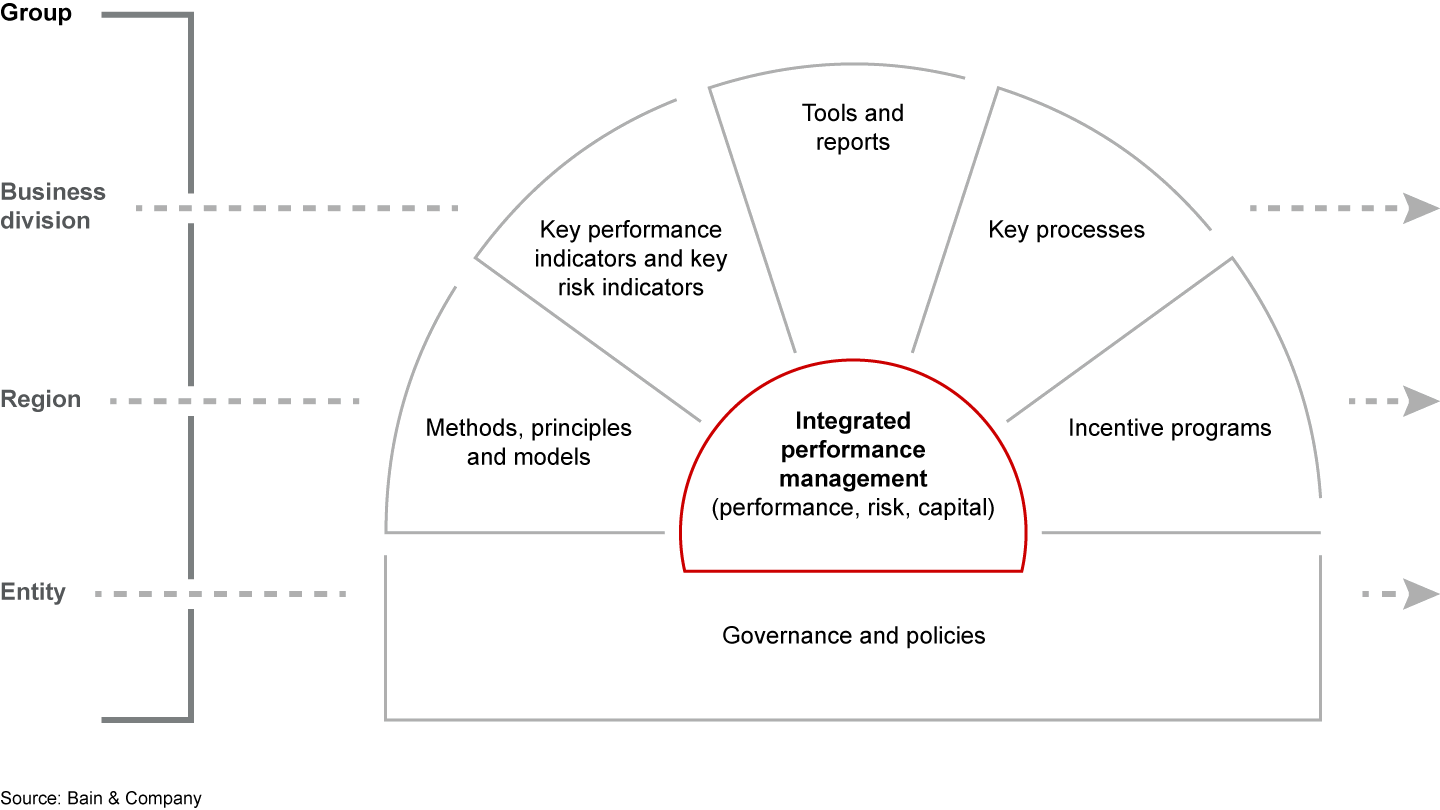
      Putting integrated performance management in place follows a sequence of steps (see Figure 2).

      Figure 2
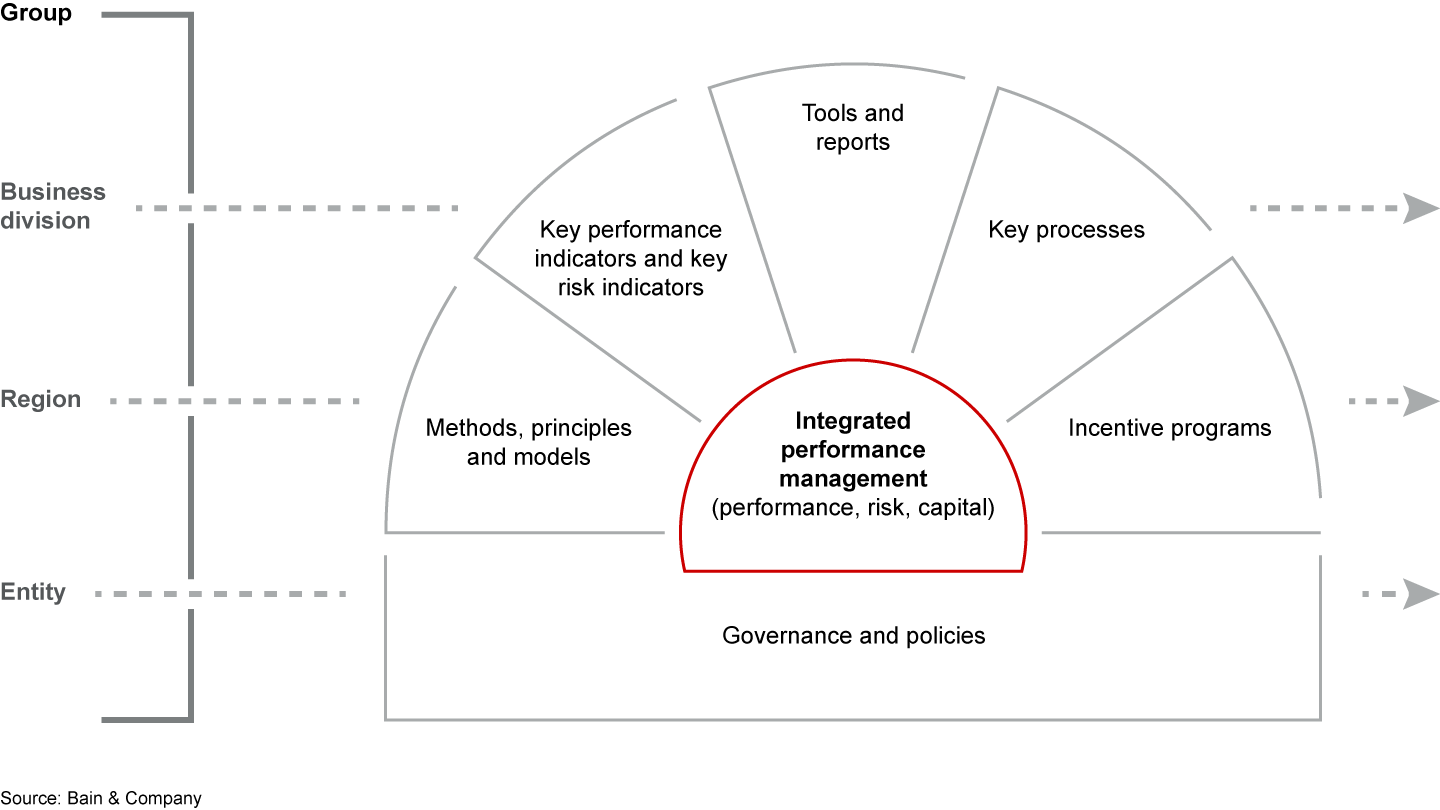
      An integrated performance management approach needs to account for the complexity of a bank’s footprint
      An integrated performance management approach needs to account for the complexity of a bank’s footprint
      An integrated performance management approach needs to account for the complexity of a bank’s footprint
      • Define the methods, principles and models that all divisions, regions and entities in the group will use to cover areas such as forecasting, measuring and backtesting pricing, cost allocation, risk assessment and capital decisions.
      • Choose key indicators of performance and risk. These indicators need to capture the value being created while being unambiguous, simple, transparent and robust over time. Leading banks have introduced indicators that cascade down to ROE or return on risk-weighted assets for individual customer segments across the group.
      • Determine tools and reporting solutions. The point of a tailored tool set and reporting suite is to ensure that useful insights emerge. Leading banks have heavily redesigned their tool and reporting architecture, and they have eliminated many nonessential reports to focus on critical insights for value generation as well as for regulators, investors and rating agencies.
      • Make key processes more stringent. Operational and strategic planning processes should integrate their data handling in a way that increases the development of useful insights. Business review meetings then should integrate the judgment of all the stakeholders so that they can take collective action.
      • Align incentives across business divisions, regions and entities at all levels of the organization. Best-practice banks link incentives across hierarchies through role-specific targets. Front-office incentives might include price or margin realization, while back-office incentives focus on reducing defects.
      • Shore up governance through clear roles and accountabilities for improving performance. Best-practice banks have set up dedicated responsibilities to implement, calibrate and operate a performance management framework across the group. Designing and implementing the approach tends to reside with the chief financial officer or chief risk officer, while the chief executive officer determines targets. The treasurer also contributes, because effective capital allocation helps to generate value in a capital-constrained environment.

      Data and analytics improve the time, cost, quality and reliability of insights, helping the banks to take appropriate actions. Among the high-value applications are risk assessment, compliance and financial analysis, using a range of emerging tools such as:

      • artificial intelligence in dynamic control and prediction models for financial forecasts and risk assessments;
      • big data analytics to determine a client’s current and potential profitability;
      • robotics and automation to accelerate straight-through processing; and
      • visualization that intuitively illustrates key insights for dashboards.

      Leading banks have been investing in advanced analytics and shoring up the quality, integration and accessibility of their data (while taking care not to compromise confidentiality). They are carving out the appropriate use cases for data and improving governance as well, because clear roles and responsibilities are critical to ensure that high-quality data translates to practical insights.

      Making the hard decisions

      Over the past decade, banks have gone through substantial de-risking of their balance sheets. Their business models, though, are relatively unchanged. Most large banks remain complex and fragmented, with a variety of businesses not necessarily generating synergies. It is essential that banks pose the tough questions regarding which businesses to continue operating, which to divest and in which to increase investments. Any assumed positive effects of diversification and synergies must be weighed against the execution risks from realigning the business portfolio (see Figure 3).

      Figure 3
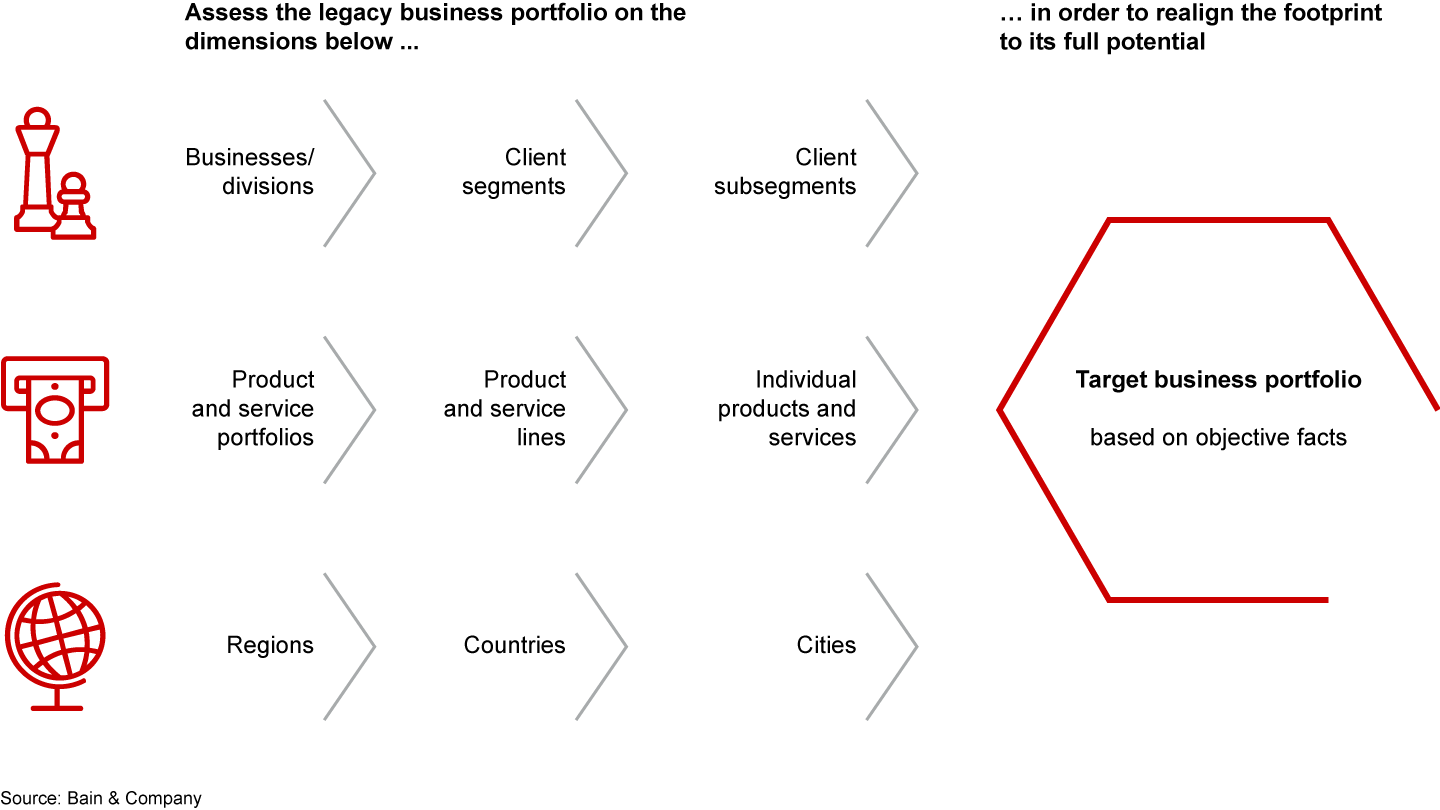
      Banks should assess the performance and future potential of the entire business portfolio
      Banks should assess the performance and future potential of the entire business portfolio
      Banks should assess the performance and future potential of the entire business portfolio

      Integrated performance management raises the odds of successfully realigning the portfolio and creating long-term value as it is based on objective facts and insights. Banks that lack an integrated approach and a willingness to act on the insights will suffer in their businesses and their valuations, especially when the macro environment deteriorates to the point of a recession and as technology firms further poach their customer bases.

      Jan-Alexander Huber and Tom de Waele are partners and Stephan Erni is a principal with Bain & Company’s Financial Services practice. They are based, respectively, in Berlin, Dubai and Zurich.

      Authors
      • Headshot of Jan-Frederic Schulz
        Jan-Frederic Schulz
        Associate Partner, Zurich
      • Headshot of Tom De Waele
        Tom De Waele
        Partner, Middle East
      • Headshot of Stephan Erni
        Stephan Erni
        Alumni, Zurich
      Contact us
      Related Industries
      • Banking
      Related Consulting Services
      • Accelerated Performance Transformation
      How We Can Help
      • Complexity Management
      Banking
      AI Won’t Just Cut Costs, It Will Reinvent the Customer Experience

      Beyond efficiency, AI helps create a more personalized experience that delivers a triple play of customer loyalty, employee engagement, and revenue growth.

      Read More
      Banking
      Banking M&A

      As conditions shift, leading banks are fusing scale with scope to create future-ready organizations.

      Read More
      Complexity Management
      Complexity Reduction

      Complexity Reduction is a process to help companies simplify their strategy, organization, products, processes, and technology.

      Read More
      Accelerated Performance Transformation
      Don’t Underestimate the Cost of Overcapacity

      Overcapacity is endemic to the paper and packaging industry, but these actions can help you maintain margins.

      Read More
      Banking
      Stablecoins Could Make Cross-Border Payments Faster, Cheaper, and More Transparent

      Most CFOs are not using stablecoins today, but evolving regulations could reduce risk and create competitive advantage.

      Read More
      Published in July 2019
      Tags
      • Accelerated Performance Transformation
      • Banking
      • Complexity Management

      How We've Helped Clients

      Digital A European Banking Giant Rises to the Fintech Challenge

      Read case study

      Digital A Traditional Bank Pursues Digital in a Nontraditional Way

      Read case study

      Sales and Marketing A Global Bank Digitizes the Customer Experience

      Read case study

      Ready to talk?

      We work with ambitious leaders who want to define the future, not hide from it. Together, we achieve extraordinary outcomes.

      Stay ahead in a rapidly changing world. Subscribe to Bain Insights, our monthly look at the critical issues facing global businesses.

      *I have read and understand Bain’s Privacy Notice.

      Please read and agree to the Privacy Policy.
      Bain & Company
      Contact us Sustainability Accessibility Terms of use Privacy Modern Slavery Act Statement Cookie Policy Sitemap Log In

      © 1996-2026 Bain & Company, Inc.

      Contact Bain

      How can we help you?

      • Business inquiry
      • Career information
      • Press relations
      • Partnership request
      • Speaker request
      See all offices