

Global Healthcare Private Equity Report

At a Glance
- Remaining confident: Healthcare private equity has proved more resilient than overall PE activity in prior recessions, with a track record of quick rebounds and compelling returns coming out of the downturn.
- Navigating current macro challenges: However, the macro environment today is distinct from prior recessions, with inflationary and credit pressures shaping HCPE as we head into 2023. While the effects of these dynamics are felt across HCPE, the impact is most acutely felt in the provider space.
- Winning in a downturn: If recessionary trends continue, PE funds have an opportunity to tailor their strategies to meet current challenges by targeting downturn-resilient investment themes, being more creative in their deal strategies to make transactions happen in a credit-constrained environment, and updating value creation playbooks to respond to near-term headwinds against revenue expansion.
This article is part of Bain's 2023 Global Healthcare Private Equity and M&A Report.
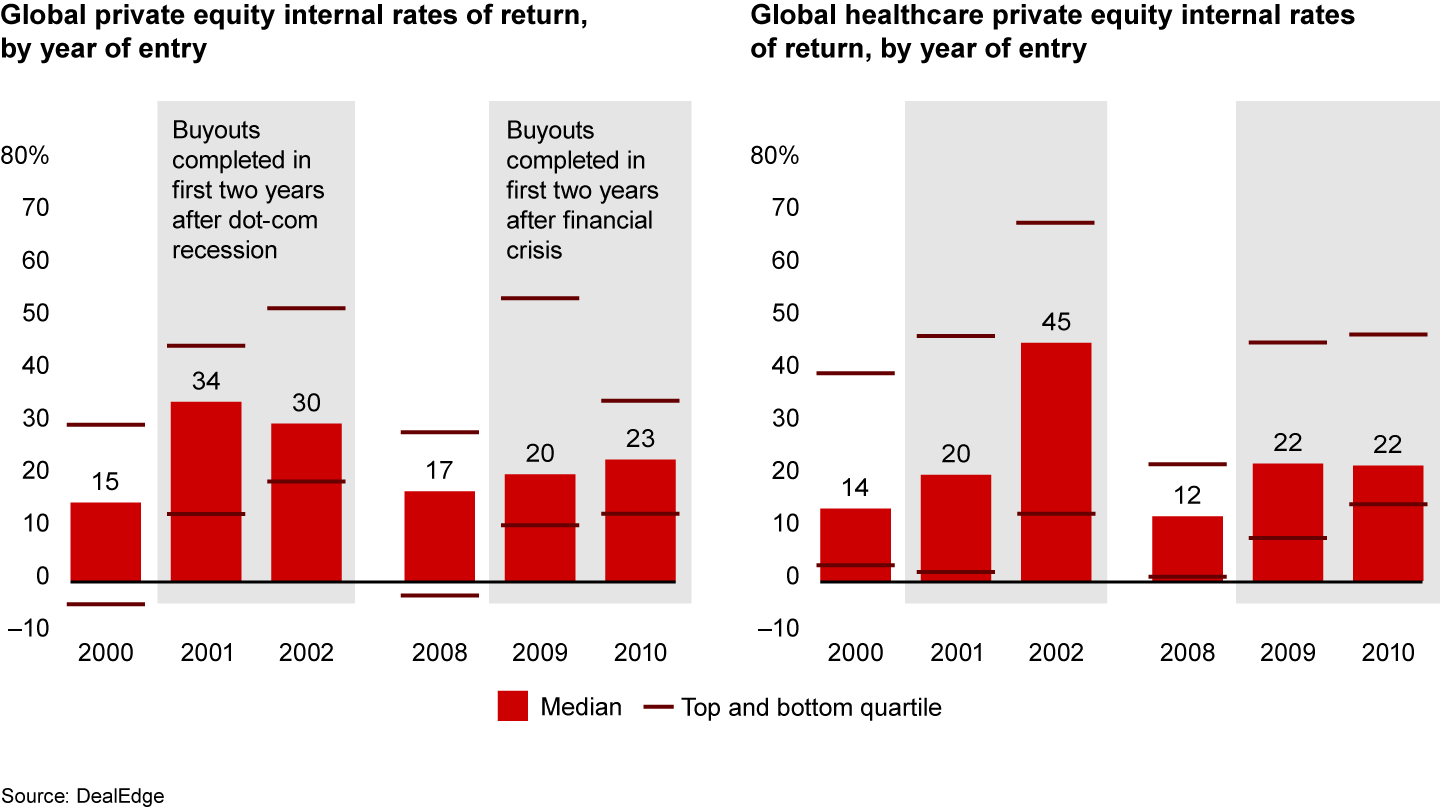
In prior downturns, healthcare private equity (HCPE) remained an attractive area for investment relative to private equity overall. After the 2000–01 downturn driven by the dot-com bubble, returns for healthcare deals that closed in the next two years averaged more than 30% (see Figure 1). Similarly, coming out of the global financial crisis in 2008–09, healthcare deals rebounded quickly; healthcare deals completed in 2009–10 had higher median returns than deals that closed the year heading into the financial crisis. This trend holds true for private equity broadly, but for healthcare private equity the returns were particularly attractive: For HCPE transactions in the first two years coming out of a recession, the top quartile earned internal rates of return of roughly 40% or greater.
Figure 1

Current macro challenges: Inflation and interest rates make this downturn different
While we remain confident in healthcare private equity’s relative attractiveness in a downturn, no two cycles are the same. If current trends continue, this downturn will have different implications for PE activity writ large and healthcare private equity specifically. Unlike the recessions in 2000-01 and 2008-09, current macro challenges are fueled by geopolitical uncertainty from Russia’s ongoing invasion of Ukraine and resulting energy supply insecurity, inflation at levels not seen in decades, and rising interest rates restricting credit access. Additionally, the recent stream of high-profile bank failures creates a host of other uncertainties for HCPE investors and their portfolio companies.
Wage inflation has varied by geography but rose to elevated levels in 2022 (roughly 5% in the US and around 4% in the European Union). Healthcare wage inflation is driven by two factors: General goods inflation drives demand for higher compensation, and healthcare-specific labor shortages exacerbate the general trend. Provider businesses are markedly exposed to labor cost increases as workforce salaries and wages represent roughly 50% of operating expenses for hospitals; this can be even higher in more labor-intensive provider businesses such as home care, personal care services, and hospice. While costs are up, reimbursement is only modestly higher as rates are negotiated on a multiyear basis with payers or adjusted annually by governments.
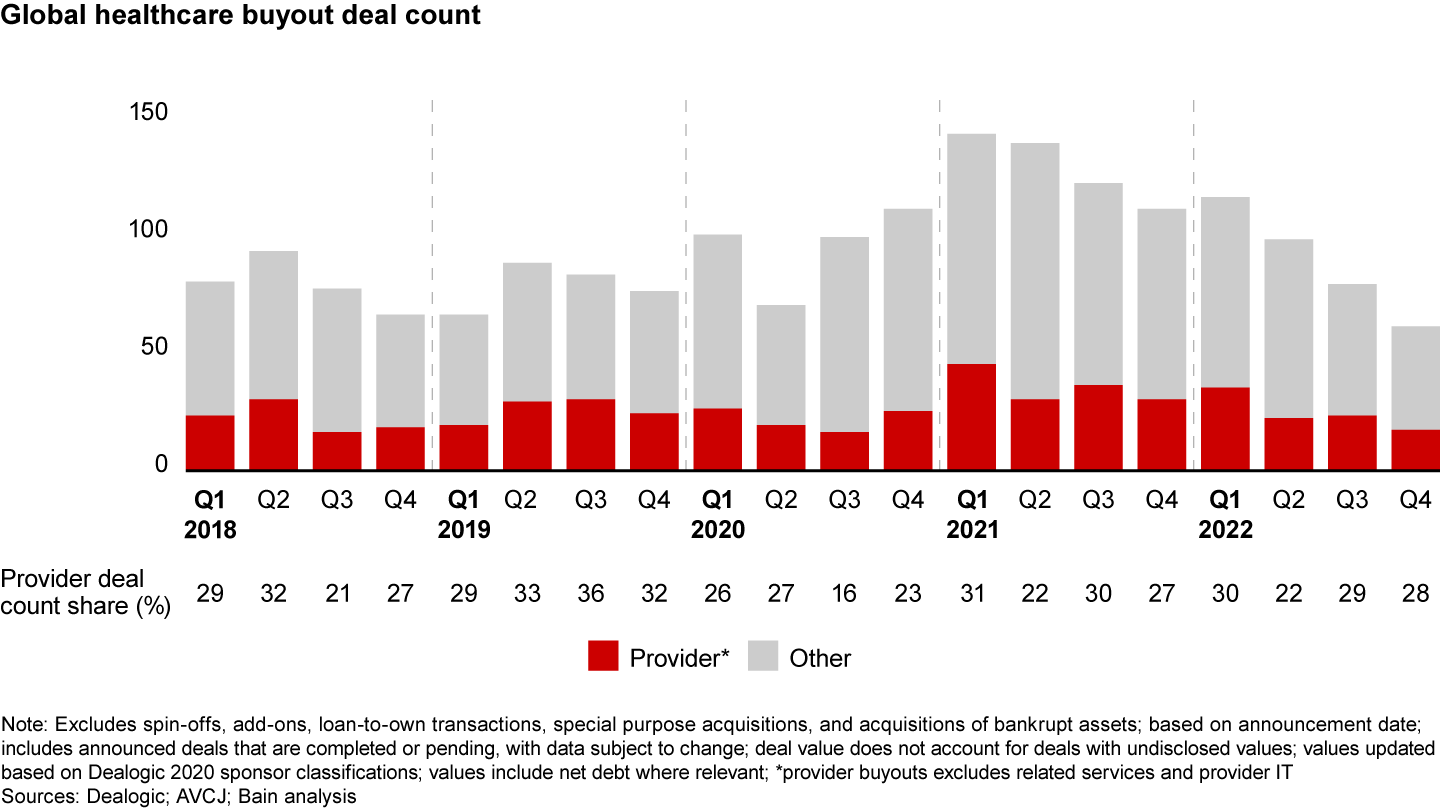
If these dynamics result in depressed 2022 EBITDA values for provider businesses, sponsors may look to hold their provider businesses through the downturn, reducing potential provider deal volumes further into 2023. Provider-based businesses (excluding related services and healthcare IT) typically represent around 20%–30% of HCPE buyout transactions. While we have not seen a disproportionate decline in provider activity on an annual basis, provider deals dropped nearly 50% from Q3 to Q4, and may continue to impact HCPE deal volumes in 2023.
In parallel to the challenges presented by labor inflation, changes in central banks’ policies to temper price pressures in Europe and North America have restricted financing availability and driven up interest rates. Deal activity in the second half of 2022 reflects signs of these financing constraints, with fewer overall deals done compared with the first half of 2022 (see Figure 2).
Figure 2

Financing constraints are affecting two areas in particular—later-stage growth assets and small and midcap (SMID-cap) biopharma assets. Later-stage growth equity assets have seen multiples decline due to changes in the macro environment and far fewer deals announced. Some late-stage companies will be able to avoid fund-raising at a down round given strength in business and financial runway, but others will need to come back to the market to raise funds to survive. The focus of SMID-cap biopharma assets on earlier-stage drug development inherently creates a higher risk profile, making financing less available and more expensive for such deals. We expect the headwinds for SMID-cap biopharma to carry over to the service providers that focus on SMID-cap biopharma and early-stage drug development.
Winning in a downturn: Investing in recession-resilient themes
While the current macro context creates inherent challenges for investors, it also creates compelling pockets of opportunity. Sponsors are seeking out investment themes that play both to long-term trends and are poised to be resilient in a recession. Similarly, constraints on capital and inflationary pressures are causing PE sponsors to be more creative in how they get deals done.
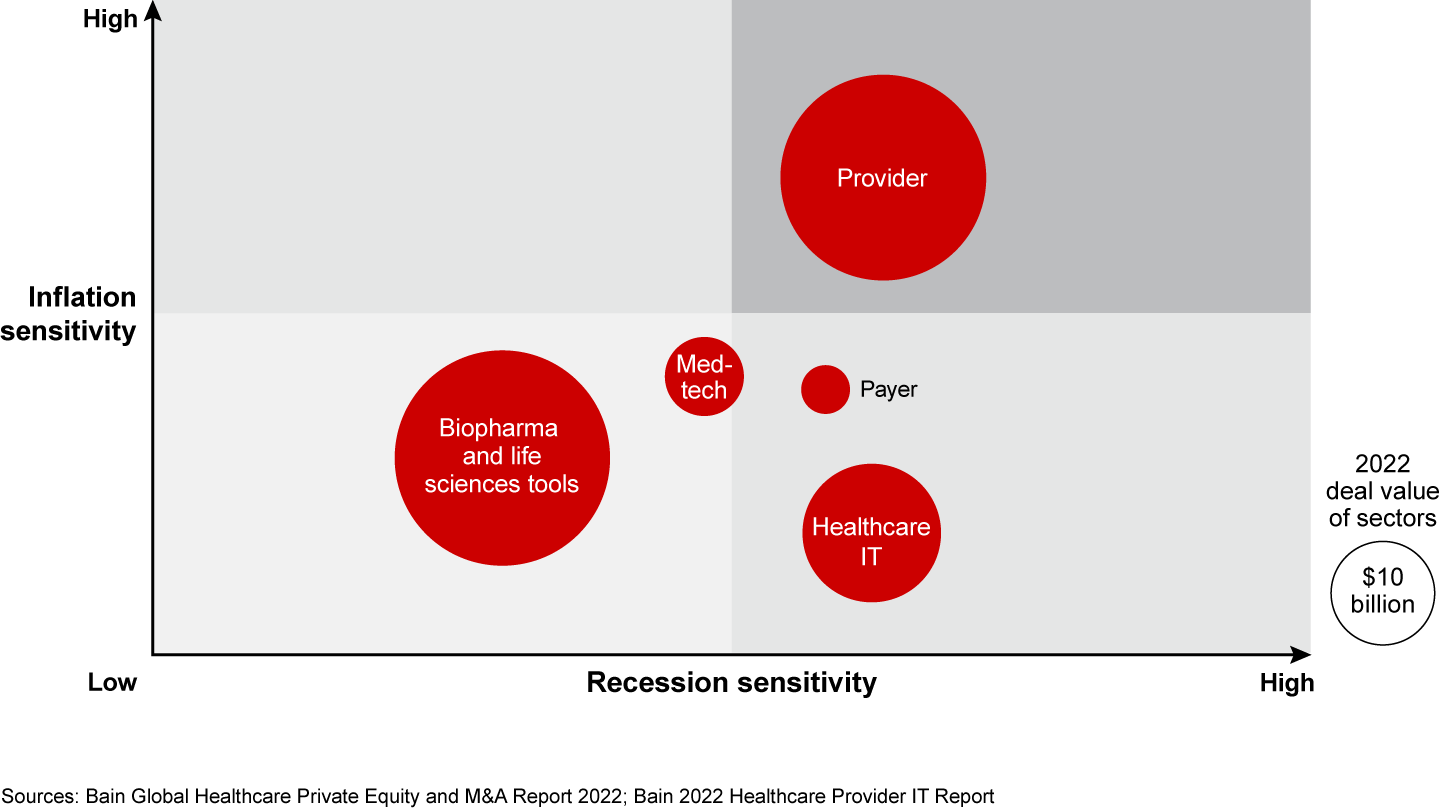
Recessionary and inflationary pressures will have different consequences across healthcare subsectors. At a high level, we expect provider businesses to be hit harder by a recession and inflation, while biopharma and life sciences tools businesses are likely to be more insulated (see Figure 3).
Figure 3

Within each subsector, however, assets face varying levels of exposure to the current macro challenges, including staffing shortages, rising labor costs, supply-chain constraints, and depressed consumer demand. Assets whose business models or broader end-market trends provide insulation from a downturn are well positioned as near-term investment opportunities; their fundamentals also position them to be attractive bets coming out of a recession.
- Payer/provider
- Nondiscretionary provider specialties with high private pay exposure: Specialties with favorable payer mixes (such as more cash pay or private pay), attractive consumer demographics, and more limited reliance on patient financing are likely to be more insulated and better positioned to maintain margins. Specialties like veterinary, dental, radiology, oral surgery, and vision have historically been less affected in a downturn, making them interesting investment opportunities this go-round as well. Recent examples include AEA Investors and ADIA’s acquisition of AmeriVet and TSG and Leon Capital Group’s Specialty Dental Brands deal. That said, some subsectors that are more discretionary in nature, such as dermatology and medical aesthetics, may be hit harder.
- Next-generation office-based specialties: Subsectors like cardiology and orthopedics that are riding site of care shift and value-based care penetration tailwinds are likely to remain attractive. This trend can be seen through the continued expansion of Webster Equity Partners’ Cardiovascular Associates of America (CVAUSA) cardiology platform and Welsh, Carson, Anderson & Stowe’s United Musculoskeletal Partners (UMP) orthopedics platform.
- Medicaid services: Medicaid enrollment tends to increase in downturns due to a rise in unemployment; outsourced service providers are also positioned to help state agencies effectively manage their costs and spending. For example, Carlyle expanded on this theme by merging Kepro with CNSI. Investors considering plays in Medicaid services should take note of the impact of potential enrollment redetermination in 2023.
- Healthcare IT
- Operational efficiency: Healthcare IT (HCIT) businesses that allow companies—whether provider groups or biopharma assets—to “do more with less” will likely be attractive as companies look to manage their labor costs and turn to tech as a tool to drive higher EBITDA. Bain Capital’s LeanTaaS provides software solutions for optimizing operations and capacity management. Berkshire Partners’ and Warburg Pincus’s coinvestment in Ensemble Health Partners supports revenue cycle management through a combination of services and technology. In late 2021, WCAS brought together EnableComp and Argos Health, a revenue cycle platform specializing in the management and resolution of complex claims.
- Sticky revenue: While new customer adoption typically slows during a downturn, mission-critical HCIT businesses with recurring revenue models tend to have sticky customer relationships and better visibility into financial outlook. LeanTaaS and Intelligent Medical Objects are both built on software-as-a-service-based models that should benefit from stable rates and a sticky user base.
- Biopharma and life sciences tools
- Contract services: Three types of contracted biopharma assets are likely to prove more resilient in a recession: first, assets that focus on research and early development, such as clinical research organizations (CROs) and specialized contact development and manufacturing organizations (CDMOs); second, assets that focus on commercial-scale manufacturing, ideally for large pharma sponsors; and third, assets that focus on late-stage development work on drugs that are expected to enjoy clear clinical differentiation. For assets that fit one of those descriptions, their customers’ revenue stream and ability to invest in new services and technologies are likely to be more protected than assets that serve late-stage biotechs focused on a single development program that has failed to attract a large pharma partner. Bridgepoint’s investment in CDMO Novasep (via their PharmaZell portfolio company) highlights CDMOs’ attractiveness. In a downturn, late-stage biotechs may cut their spending as debt financing dries up and issuing equity becomes unfavorable. Assets that serve those types of customers may face a harsher environment in 2023.
- Commercialization services: Given their focus on later-stage drugs (and thus larger pharma sponsors) and the continued challenges of bringing new drugs to market, commercialization-services providers are expected to remain attractive. Astorg’s acquisition of OPEN Health speaks to this type of asset.
- Life sciences tools: Life sciences tools companies with a “razor and blade” approach to products or subscription model for services may prove particularly recession resilient as they have a sticky user base with reasonable price elasticity. New Mountain Capital’s acquisition of the three life sciences tools divisions from PerkinElmer, including OneSource, speaks to this type of asset. OneSource’s equipment servicing business may prove sticky with customers even in a downturn as biotechs try to optimize performance with existing equipment vs. investing in new tools.
Downturn dealmaking: Applying creative deal strategies
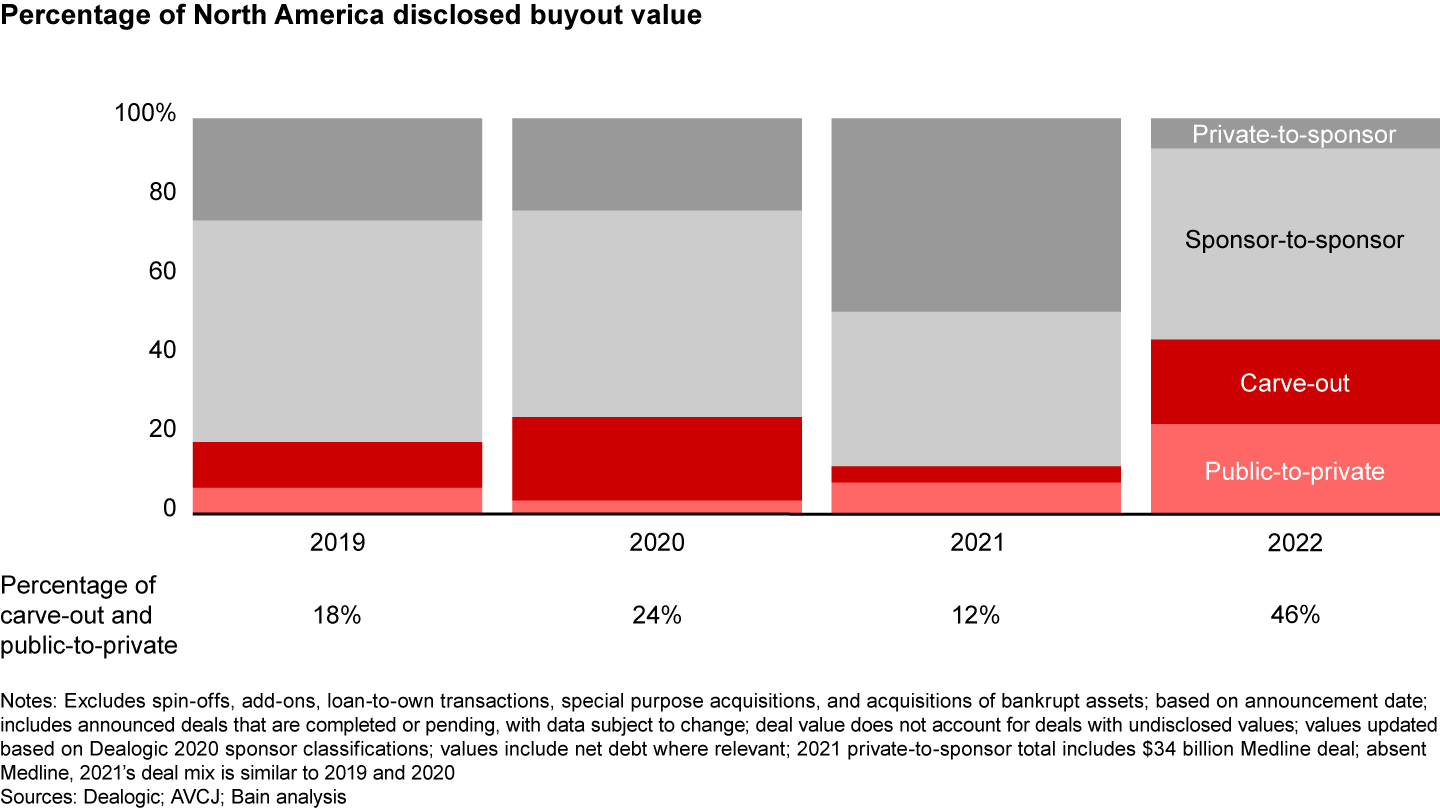
Relative to prior years, 2022 has already seen a mix shift in deal types as sponsors look to get deals done within the current macro constraints. For example, in North America, public-to-private deals have made a much larger contribution to total deal value than in the past three years (see Figure 4).
Figure 4

If tight credit continues into 2023, this may limit both the number of deals that come to market through traditional processes and the ability of sponsors to finance deals. In parallel, macro uncertainty may create concerns about near-term profitability negatively impacting deal quality.
To get deals done, funds may need to continue to broaden the aperture on their deal strategy. For example:
- Public-to-private: Off-peak public market valuations present opportunities for take-private deals. As public markets fluctuate in response to uncertainty, many companies may be unable to realize the valuations that characterized 2021 IPOs, creating opportunities to take companies private at favorable multiples. In May, Clayton, Dubilier & Rice and TPG announced plans to acquire Covetrus, a global leader in animal-health technology and services at an enterprise valuation of approximately $4 billion. Patient Square Capital took Hanger private in October in a deal valuing the company at over $1.25 billion.
- Carve-outs and spin-offs: We anticipate more carve-outs as companies refocus in a downturn and unlock cash for strategic priorities within their core. Scale deals that speak to this trend include Gentiva Certified Healthcare d/b/a Kindred at Home’s carve-out from Humana by Clayton, Dubilier & Rice. Looking ahead to 2023, companies including Medtronic, Baxter International, 3M, and Johnson & Johnson have already announced plans to divest parts of their portfolios and/or create standalone healthcare-focused companies; and we expect other corporates may follow suit, creating potential opportunities for PE funds.
- Minority recapitalizations: This approach creates opportunities for both buyers and sellers in a capital-constrained world. For buyers, minority investments mean buyers can sidestep having to refinance existing leverage and can benefit from existing lenders’ familiarity with the business. For sellers, partial exits offer PE funds a mechanism to drive returns for their existing limited partners while continuing to hold a stake in the asset to capitalize on future growth potential.
- Opportunistic investing: The downturn may create more opportunities to compete within distressed assets—for example, among SMID-cap biopharma companies, provider businesses that are differentially hit hard by macro trends, or assets affected by changes in regulation (for example, the No Surprises Act). Sponsors can be thoughtful in how they structure deal terms to bound the downside risk and/or prioritize assets where they have conviction in the assets’ underlying strengths or longer-term secular tailwinds, with the hopes of generating a higher return at exit.
- Platform buy and build: While tuck-ins for existing platforms are tried-and-true value creation strategies, they may become differentially actionable in a recession. The smaller size of these deals makes them easier to fund in tight credit markets (through free-cash flow or by leveraging relationships with existing lenders who know the core business). Similarly, in the provider space, independent practices may be more interested to sell to the right PE partner to help them navigate the effects of a contraction on their business. Several scale PE platforms with potential for continued rollups traded, such as IVIRMA to KKR in fertility. In the gastroenterology space, GI Alliance announced a physician-led buyout facilitated by a $785 million noncontrol investment from Apollo Hybrid Value funds to support continued acquisition growth.
2023 is likely to present new challenges for private equity investors—both in healthcare and beyond. Healthcare private equity’s resiliency in prior cycles and underlying market tailwinds suggest this sector should remain well positioned in a downturn once again. However, investors will need to fine-tune their investment theses and develop new playbooks to win good deals in this environment. If investors are able to place the right bets, they stand to benefit from the strong returns seen by top-quartile HCPE deals in prior downturns.

DealEdge Sector Study: Healthcare Private Equity
DealEdge® is the private equity industry’s leading provider of deal-level performance and operational analytics. Get groundbreaking deal-level analysis of PE healthcare performance, value creation, and more in our latest report. DealEdge’s inaugural Sector Study covers 1,500 deals across 62 healthcare subsectors, ranging from Retail Health to MedTech. Download now.
Read our 2023 Global Healthcare Private Equity and M&A Report
Overview
Hot Topics
Regions
Sectors
First published in 4월 2023