
Skip to Content
  • 오피스

    오피스

    미주
    • Atlanta
    • Austin
    • Bogota
    • Boston
    • Buenos Aires
    • Chicago
    • Dallas
    • Denver
    • Houston
    • Los Angeles
    • Mexico City
    • Minneapolis
    • Monterrey
    • Montreal
    • New York
    • Rio de Janeiro
    • San Francisco
    • Santiago
    • São Paulo
    • Seattle
    • Silicon Valley
    • Toronto
    • Washington, DC
    유럽, 중동, 아프리카
    • Amsterdam
    • Athens
    • Berlin
    • Brussels
    • Copenhagen
    • Doha
    • Dubai
    • Dusseldorf
    • Frankfurt
    • Helsinki
    • Istanbul
    • Johannesburg
    • Kyiv
    • Lisbon
    • London
    • Madrid
    • Milan
    • Munich
    • Oslo
    • Paris
    • Riyadh
    • Rome
    • Stockholm
    • Vienna
    • Warsaw
    • Zurich
    아시아, 호주
    • Bangkok
    • Beijing
    • Bengaluru
    • Brisbane
    • Ho Chi Minh City
    • Hong Kong
    • Jakarta
    • Kuala Lumpur
    • Manila
    • Melbourne
    • Mumbai
    • New Delhi
    • Perth
    • Seoul
    • Shanghai
    • Singapore
    • Sydney
    • Tokyo
    오피스 전체보기
  • 얼럼나이
  • 미디어 센터
  • 구독
  • 연락처
  • Korea | 한국어

    지역 및 언어 선택

    글로벌
    • Global (English)
    미주
    • Brazil (Português)
    • Argentina (Español)
    • Canada (Français)
    • Chile (Español)
    • Colombia (Español)
    유럽, 중동, 아프리카
    • France (Français)
    • DACH Region (Deutsch)
    • Italy (Italiano)
    • Spain (Español)
    • Greece (Elliniká)
    아시아, 호주
    • China (中文版)
    • Korea (한국어)
    • Japan (日本語)
  • Saved items (0)
    Saved items (0)

    You have no saved items.

    관심 있는 내용을 북마크하여 Red 폴더에 저장할 수 있습니다. Red 폴더 에서 저장된 내용을 읽거나 공유해보세요.

    Explore Bain Insights
  • 산업
    메인 메뉴

    산업

    • 우주항공, 방산 및 정부 서비스
    • 농업 관련 산업
    • 화학
    • 인프라, 건설 및 건축 자재
    • 소비재
    • 금융 서비스
    • 헬스케어
    • 산업용 기계 및 장비
    • 미디어 및 엔터테인먼트
    • 금속
    • 광업
    • 석유 및 가스
    • 제지 및 패키징 산업
    • 사모펀드
    • 사회 및 공공 부문
    • 유통
    • 기술
    • 텔레콤
    • 운송
    • 여행·여가
    • 유틸리티 및 재생가능 에너지
  • 컨설팅 서비스
    메인 메뉴

    컨설팅 서비스

    • Customer Experience
    • ESG
    • Innovation
    • M&A
    • 운영
    • 조직
    • 사모펀드
    • 고객 전략 및 마케팅
    • 전략
    • AI, 인사이트 및 솔루션
    • Technology
    • 변화 혁신
  • Digital
  • 인사이트
  • 베인 소개
    메인 메뉴

    베인 소개

    • 업무 소개
    • 베인의 신념
    • 구성원 및 리더십 소개
    • 고객 성과
    • 주요 수상 경력
    • 글로벌 파트너사
    Further: Our global responsibility
    • 다양성과 포용
    • 사회 공헌 활동
    • Sustainability
    • World Economic Forum
    Learn more about Further
  • Careers
    메인 메뉴

    Careers

    • Work with Us
      Careers
      Work with Us
      • Find Your Place
      • Our Work Areas
      • Integrated Teams
      • Students
      • Internships & Programs
      • Recruiting Events
    • Life at Bain
      Careers
      Life at Bain
      • Blog: Inside Bain
      • Career Stories
      • Our People
      • Where We Work
      • Supporting Your Growth
      • Affinity Groups
      • Benefits
    • Impact Stories
    • Hiring Process
      Careers
      Hiring Process
      • What to Expect
      • Interviewing
    FIND JOBS
  • 오피스
    메인 메뉴

    오피스

    • 미주
      오피스
      미주
      • Atlanta
      • Austin
      • Bogota
      • Boston
      • Buenos Aires
      • Chicago
      • Dallas
      • Denver
      • Houston
      • Los Angeles
      • Mexico City
      • Minneapolis
      • Monterrey
      • Montreal
      • New York
      • Rio de Janeiro
      • San Francisco
      • Santiago
      • São Paulo
      • Seattle
      • Silicon Valley
      • Toronto
      • Washington, DC
    • 유럽, 중동, 아프리카
      오피스
      유럽, 중동, 아프리카
      • Amsterdam
      • Athens
      • Berlin
      • Brussels
      • Copenhagen
      • Doha
      • Dubai
      • Dusseldorf
      • Frankfurt
      • Helsinki
      • Istanbul
      • Johannesburg
      • Kyiv
      • Lisbon
      • London
      • Madrid
      • Milan
      • Munich
      • Oslo
      • Paris
      • Riyadh
      • Rome
      • Stockholm
      • Vienna
      • Warsaw
      • Zurich
    • 아시아, 호주
      오피스
      아시아, 호주
      • Bangkok
      • Beijing
      • Bengaluru
      • Brisbane
      • Ho Chi Minh City
      • Hong Kong
      • Jakarta
      • Kuala Lumpur
      • Manila
      • Melbourne
      • Mumbai
      • New Delhi
      • Perth
      • Seoul
      • Shanghai
      • Singapore
      • Sydney
      • Tokyo
    오피스 전체보기
  • 얼럼나이
  • 미디어 센터
  • 구독
  • 연락처
  • Korea | 한국어
    메인 메뉴

    지역 및 언어 선택

    • 글로벌
      지역 및 언어 선택
      글로벌
      • Global (English)
    • 미주
      지역 및 언어 선택
      미주
      • Brazil (Português)
      • Argentina (Español)
      • Canada (Français)
      • Chile (Español)
      • Colombia (Español)
    • 유럽, 중동, 아프리카
      지역 및 언어 선택
      유럽, 중동, 아프리카
      • France (Français)
      • DACH Region (Deutsch)
      • Italy (Italiano)
      • Spain (Español)
      • Greece (Elliniká)
    • 아시아, 호주
      지역 및 언어 선택
      아시아, 호주
      • China (中文版)
      • Korea (한국어)
      • Japan (日本語)
  • Saved items  (0)
    메인 메뉴
    Saved items (0)

    You have no saved items.

    관심 있는 내용을 북마크하여 Red 폴더에 저장할 수 있습니다. Red 폴더 에서 저장된 내용을 읽거나 공유해보세요.

    Explore Bain Insights
  • 산업
    • 산업

      • 우주항공, 방산 및 정부 서비스
      • 농업 관련 산업
      • 화학
      • 인프라, 건설 및 건축 자재
      • 소비재
      • 금융 서비스
      • 헬스케어
      • 산업용 기계 및 장비
      • 미디어 및 엔터테인먼트
      • 금속
      • 광업
      • 석유 및 가스
      • 제지 및 패키징 산업
      • 사모펀드
      • 사회 및 공공 부문
      • 유통
      • 기술
      • 텔레콤
      • 운송
      • 여행·여가
      • 유틸리티 및 재생가능 에너지
  • 컨설팅 서비스
    • 컨설팅 서비스

      • Customer Experience
      • ESG
      • Innovation
      • M&A
      • 운영
      • 조직
      • 사모펀드
      • 고객 전략 및 마케팅
      • 전략
      • AI, 인사이트 및 솔루션
      • Technology
      • 변화 혁신
  • Digital
  • 인사이트
  • 베인 소개
    • 베인 소개

      • 업무 소개
      • 베인의 신념
      • 구성원 및 리더십 소개
      • 고객 성과
      • 주요 수상 경력
      • 글로벌 파트너사
      Further: Our global responsibility
      • 다양성과 포용
      • 사회 공헌 활동
      • Sustainability
      • World Economic Forum
      Learn more about Further
  • Careers
    최근 검색어
      최근 방문 페이지

      Content added to saved items

      Saved items (0)

      Removed from saved items

      Saved items (0)

      Energy & Natural Resources Report

      Pricing for Inflation in Energy and Natural Resources

      Pricing for Inflation in Energy and Natural Resources

      Companies are building dynamic pricing capabilities as they come to terms with the persistence of volatility and inflation.

      글 Jens Friis Hjortegaard, Emily Kasavana, Nimit Mehta, and David Schottland

      • 읽기 소요시간
      }

      Report

      Pricing for Inflation in Energy and Natural Resources
      en
      한눈에 보기
      • Many executives at energy and natural resources companies thought inflation would be short-lived and that their positions on the value chain would protect them from increases.
      • But inflation has persisted and looks likely to continue, along with pricing volatility. Companies need to adjust their pricing policies.
      • The current crisis could spur companies to build up dynamic pricing capabilities that adapt to inflation spikes and prevent margin leakage.
      • Carefully evaluating the profitability of customers and products, effectively enforcing contract terms, and centralizing pricing decisions are just some of the ways companies are responding.

      This article is part of Bain’s Energy and Natural Resources Report 2022

      Explore the report

      No company is immune. After years of low volatility and stable inflation rates, energy and natural resources (ENR) companies have faced a steady stream of disruption: Covid-19 and its bounce back, unpredictable events like the Texas electricity blackouts or the container ship Ever Given blocking the Suez Canal, and now the war in Ukraine, which will reverberate in commodity markets for a long time.

      Pair these disruptions with broad, continuing inflation, worker shortages, and rising labor costs, and it isn’t news that many companies are struggling to recoup cost increases, leading to flat or even declining margins even as they post record top-line results and sell out their products (see Figure 1).  

      Figure 1
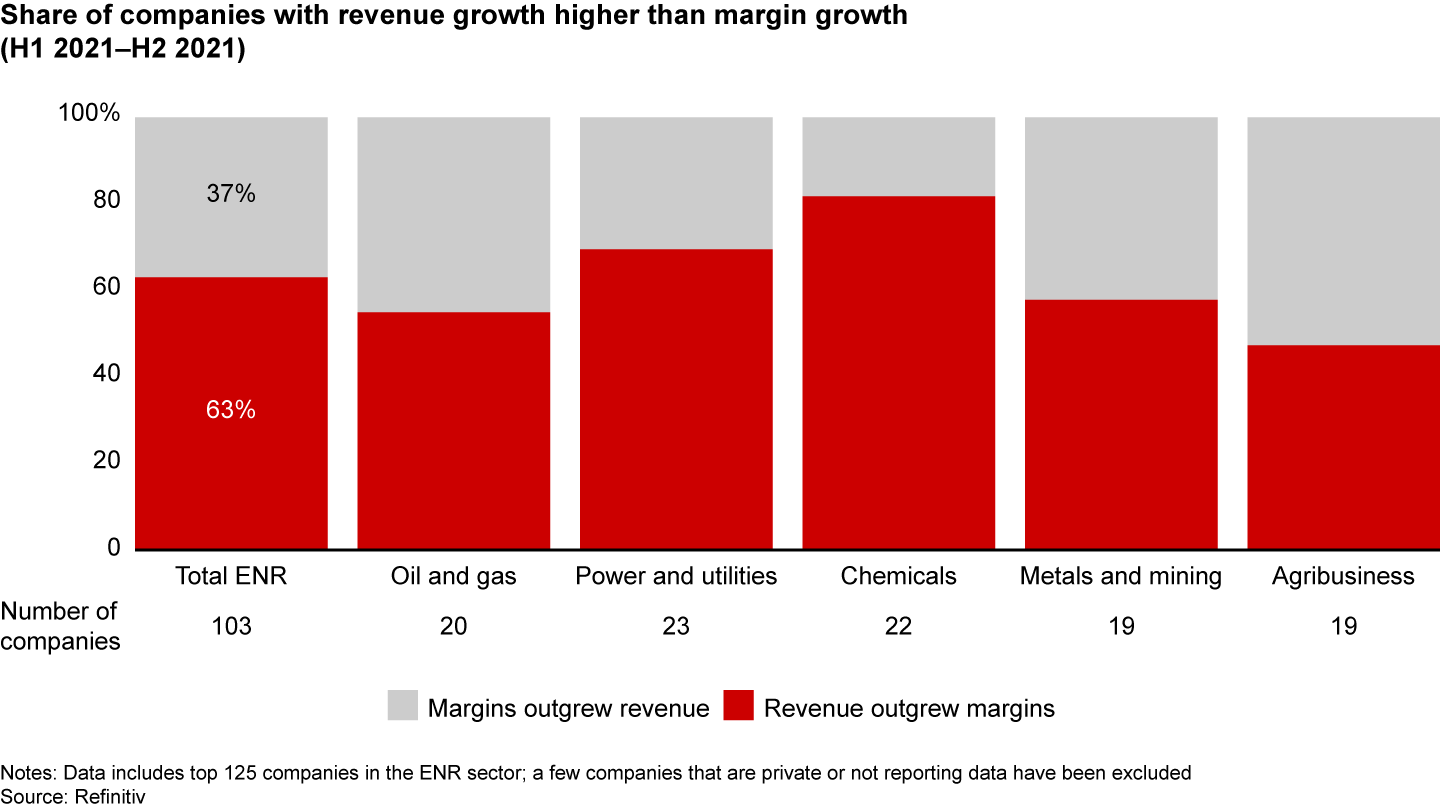
      Margin growth hasn’t kept up with revenue growth for 63% of energy and resources companies

      Seeing the blind spots

      Until recently, many executives have heralded two prevailing responses to this environment that, when taken together, create a blind spot for ENR companies and their approach to pricing.

      “This is temporary and will soon pass.” Over the past year or two, many executives have taken the stance that they just need to get through the next three or four months, until business as usual returns. However, if history is a guide, while inflation spikes may resolve after a couple of years, possibly tempered by recession, volatility is likely to persist. Consider chemicals. Coming out of the 2008 financial crisis, price volatility continued for nearly seven years before the sector stabilized (see Figure 2). The reality is beginning to sink in for many executives: This may be more than a temporary phenomenon.

      Figure 2
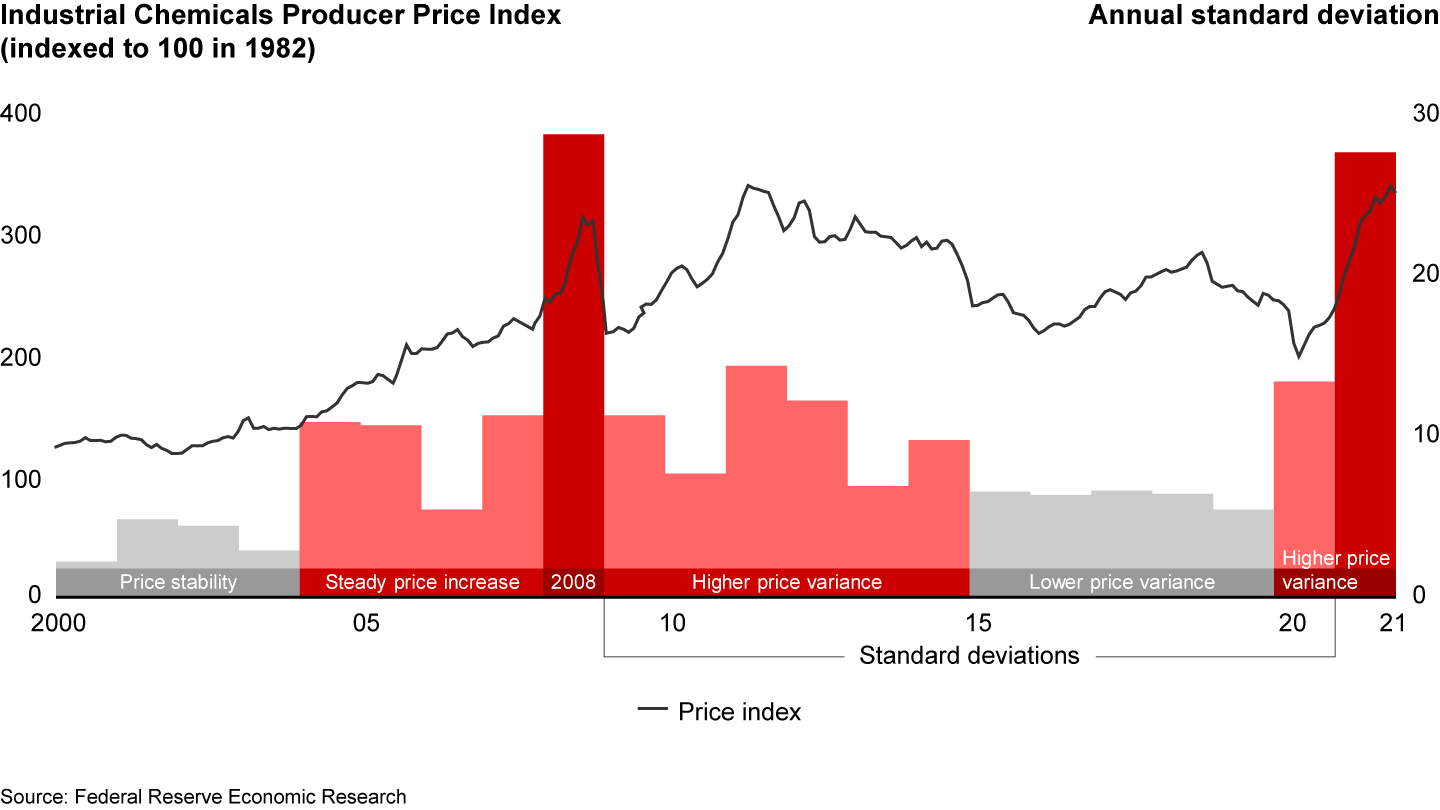
      In 2021, pricing was more variable than in any year since 2008

      “We’re structurally protected from this.” Many ENR companies feel that their positions near the beginning of their value chains protects them from cost pressures. Even when the cost of inputs rises, they can usually make up margins in their sales. But this focus on raw inputs overlooks the other costs of doing business, which are also rising. Shipping costs have doubled since March 2021, and labor costs in the US were up 4.5% in the fiscal year ended March 2022, an increase from 2.6% the previous year (see Figure 3).

      Figure 3
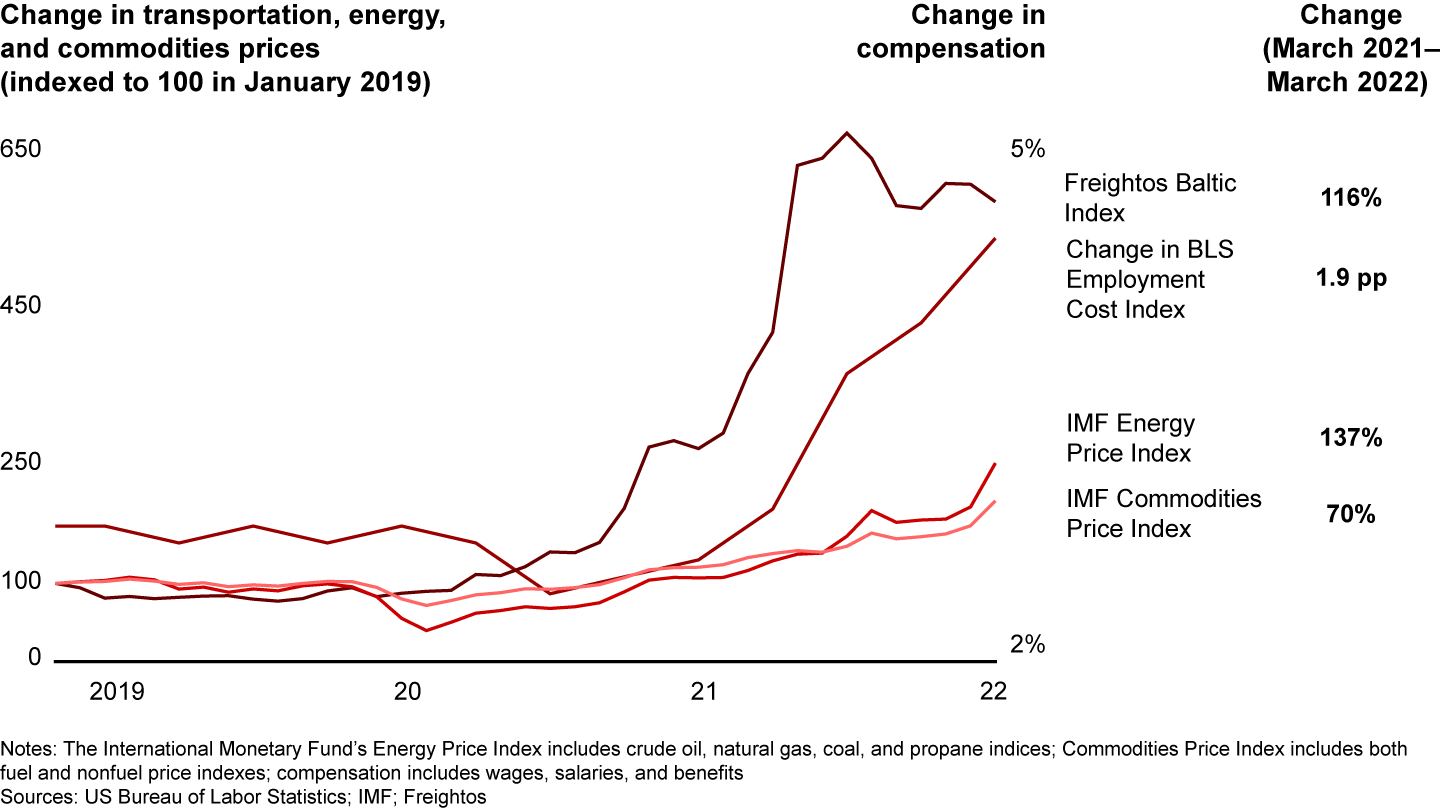
      Companies face a perfect storm of rising costs for transportation, labor, energy, and raw inputs

      Amid all this turbulence, executive teams have been applying the same pricing playbooks, policies, and approaches that they used before this upheaval. Maybe it shouldn’t be surprising; prolonged inflation like this hasn’t reared its head since the 1970s. Most corporate leaders haven’t had to deal with macroinflation during their careers, leaving them unsure of how to proceed.

      One thing is becoming clear, though: What worked before, no longer works as well. Dynamic pricing will become more important. Frequency of increases, decision rights, rigor of cost forecasts, back-order and freight policies, contract terms and conditions—everything is on the table as executive teams grapple with how best to protect margins without upsetting customers. 

      The crisis as catalyst

      Over the past year, executives have been trying out a range of actions to redefine their approach to pricing. Volatility and inflation may be the forcing mechanism of the moment. But by building pricing capabilities that allow them to react and adjust quickly, they’re positioning their companies for long-term success.

      • Recognize not all customers are the same. As economics change, so does the profitability of products and customers. In a volatile environment, companies need to understand those changes and take action. Some products cost more to deliver, and those increases need to be passed along. We’ve seen more companies willing to walk away from low-value customers, especially when capacity is constrained—although sales teams shouldn’t bear the brunt of this approach. At one power grid hardware company, a review showed where inflation was creating a gap between “sold” profitability and “delivered” profitability on many projects. By adjusting contracts and pricing to account for this, the company ensured they were capturing the value they intended.

      • Exchange price for other valuable features. As prices increase, some companies are offering other incentives to customers, like volume guarantees, exclusivity periods, or better service. When prices rose at one agrichemicals company, it began offering price hedging to customers. Developing the capabilities to manage the hedging actually made pricing more predictable for customers and created a new revenue stream that helped stem a margin leak.

      • Enforce what’s already in the contract. Price increase contingencies in contracts are of little value if companies don’t enforce them. Many are now going back to review those terms, estimating the value of enforcing them, and equipping their commercial teams with the right data and scripts to have these difficult conversations with confidence.  One company found it had simply misapplied indexes on one contract, leading to more than $10 million of missed revenue over several years.

      • Consider indirect increases. In addition to price increases tied to inflation indexes, companies are getting more comfortable adding surcharges for fuel, expedited shipping, inventory holding, and longer payment terms. Cost-of-living adjustments (COLA) are also playing a meaningful role in recovering cost increases in recent months. Some are tightening up on special exceptions, like small or rush orders, that create margin leaks. The average industrial company loses over 6% of revenue through off-invoice discounts and leakage, according to a global sample analyzed by Bain and PricefxPlasmaTM.

      • Adjust the product mix.  During a period of inflation and supply shocks, deciding what to sell can be even more important than deciding whom to sell to. It’s critical to have a view of profitability by SKU, as well as by customer. One power producer has reacted to volatile costs by selling different types of power packages, while also rethinking the mix of its power-generating assets. Just as firing bad customers makes sense, so does shifting away from marginally profitable products. 

      • Centralize pricing decisions. Companies often push pricing decisions close to the customer, but in volatile or inflationary times, centralized decisions can make more sense. Individuals and sales teams can’t always make decisions that reflect companywide constraints and options. Data on cost increases may not show up in sales tools. We’re seeing companies organize global pricing programs that are far more directive to regional or business unit champions, to ensure that inflation costs are addressed.

      No one can be certain, but history suggests that inflation bouts typically last about 30 months. However, the cure is often a recession, so volatility may persist even as prices level off.  There are also plenty of signs to suggest structurally long-term inflation, including an aging workforce, investment costs of the energy transition, and repatriation of supply chains. Even after the high-single-digit inflation numbers are reined in, we may return to higher base levels than in the 2010s.

      In any case, the various potential outcomes all lead to the same takeaway: Companies that acknowledge the persistence of volatility and rewrite their pricing playbooks are more likely to maximize price realization, expand margins, and take advantage of pricing as a competitive weapon.

      Read the Next Chapter

      M&A Opportunities in the Energy Transition

      Data-rich perspectives

      • Execs on energy transition

      • Investing in Engine 2

      • Energy investors and ESG

      • Responding to Ukraine crisis

      Transition trends

      • Talent and inclusivity

      • Building coalitions for decarbonization

      • Circularity in plastics

      Strategic capabilities

      • How to do Engine 2

      • Operations through disruptions

      • Pricing and inflation

      • M&A opportunities

      • Delivering decarbonization

      Read our Energy and Natural Resources Report 2022

      Explore the full report Download PDF
      저자
      • Headshot of Jens Friis Hjortegaard
        Jens Friis Hjortegaard
        파트너, Copenhagen
      • Headshot of Emily Kasavana
        Emily Kasavana
        파트너, Denver
      • Headshot of Nimit Mehta
        Nimit Mehta
        파트너, New York
      • Headshot of David Schottland
        David Schottland
        파트너, New York
      문의하기
      관련 산업
      • 금속 및 광업
      • 농업 관련 산업
      • 석유 및 가스
      • 에너지와 천연자원
      • 유틸리티 및 재생가능 에너지
      • 화학
      관련 컨설팅 서비스
      • Customer Experience
      • Pricing
      최적의 솔루션 찾기
      • B2B Pricing
      Energy and Natural Resources Report
      State of the Transition 2023: Global Energy and Natural Resource Executive Perspectives

      Bain’s third annual survey on the energy transition finds executives increasing investments in low-carbon businesses, but skeptical of consumers’ willingness to pay more.

      자세히 보기
      Managing Inflation
      The New Case for Zero-Based Cost Management

      A clean-sheet approach helps leaders produce savings that stick—even in turbulent times.

      자세히 보기
      에너지와 천연자원
      Sustaining Capital: From Chaos to Discipline

      Fragmented budgets, poor visibility, and missed forecasts are fixable with the right approach.

      자세히 보기
      B2B Pricing
      Per-Seat Software Pricing Isn’t Dead, but New Models Are Gaining Steam

      AI features force vendors to rethink pricing models, raising several tough challenges.

      자세히 보기
      Customer Experience
      Accelerating Performance Despite Inflation

      Turbulent times shouldn’t stop companies from pursuing full potential and business resiliency.

      자세히 보기
      First published in 6월 2022
      태그
      • 금속 및 광업
      • 농업 관련 산업
      • 석유 및 가스
      • 에너지와 천연자원
      • 유틸리티 및 재생가능 에너지
      • 화학
      • B2B Pricing
      • Customer Experience
      • Energy and Natural Resources Report
      • Managing Inflation
      • Pricing

      프로젝트 사례

      전략 New products propel profitability for metals manufacturer

      See more related case studies

      M&A An OFS captures post-merger growth synergies

      See more related case studies

      M&A Broader market plus tighter sales strategy equals big success for a portfolio company

      See more related case studies

      베인에 궁금하신 점이 있으신가요?

      베인은 주저 없이 변화를 마주할 줄 아는 용감한 리더들과 함께합니다. 그리고, 이들의 담대한 용기는 고객사의 성공으로 이어집니다.

      PricefxPlasma™ is a trademark of Price f(x) AG.

      급변하는 비즈니스 환경에서 살아남기 위한 선도자의 시각. 월간 Bain Insights에서 글로벌 비즈니스의 핵심 이슈를 확인하십시오.

      *개인정보 정책을 읽었으며 그 내용에 동의합니다.

      Privacy Policy를 읽고 동의해주십시오.
      Bain & Company
      문의하기 환경정책 Accessibility 이용약관 개인정보 보호 쿠키 사용 정책 Sitemap Log In

      © 1996-2026 Bain & Company, Inc.

      문의하기

      무엇을 도와드릴까요?

      • 프로젝트 문의
      • 채용 정보
      • 언론
      • 제휴 문의
      • 연사 초청
      오피스 전체보기